


Plans for the largest grocery merger in American history are over.
A day after a federal judge delivered a serious blow to the merger, Albertsons announced Wednesday it was giving up on the controversial deal to join forces with its competitor Kroger and sued the chain, alleging it failed to do enough to win government approval for the $24.6-billion agreement.
Albertsons released a statement claiming Kroger was guilty of a “willful breach of contract and breach of the covenant of good faith and fair dealing” due to what it said was “Kroger’s failure to exercise ‘best efforts’ and to take ‘any and all actions’ to secure regulatory approval of the companies’ agreed merger transaction.”
A Kroger representative called Albertsons’ claims “baseless and without merit” and was “clearly an attempt to deflect responsibility.”
“Kroger refutes these allegations in the strongest possible terms, especially in light of Albertsons’ repeated intentional material breaches and interference throughout the merger process.”
Albertsons’ decision to end its corporate courtship and sue its would-be partner came on the heels of a ruling by U.S. District Court Judge Adrienne Nelson, who on Tuesday issued a preliminary injunction blocking the merger, finding it would quash competition and leave consumers in many parts of the country without meaningful choices when shopping for food. That decision followed a three-week hearing in Portland, Ore., over the summer.
Shortly after Nelson’s ruling, a state judge in Seattle issued a permanent injunction barring the merger in Washington after also concluding it would lessen competition in the state and violate Washington’s consumer-protection laws.
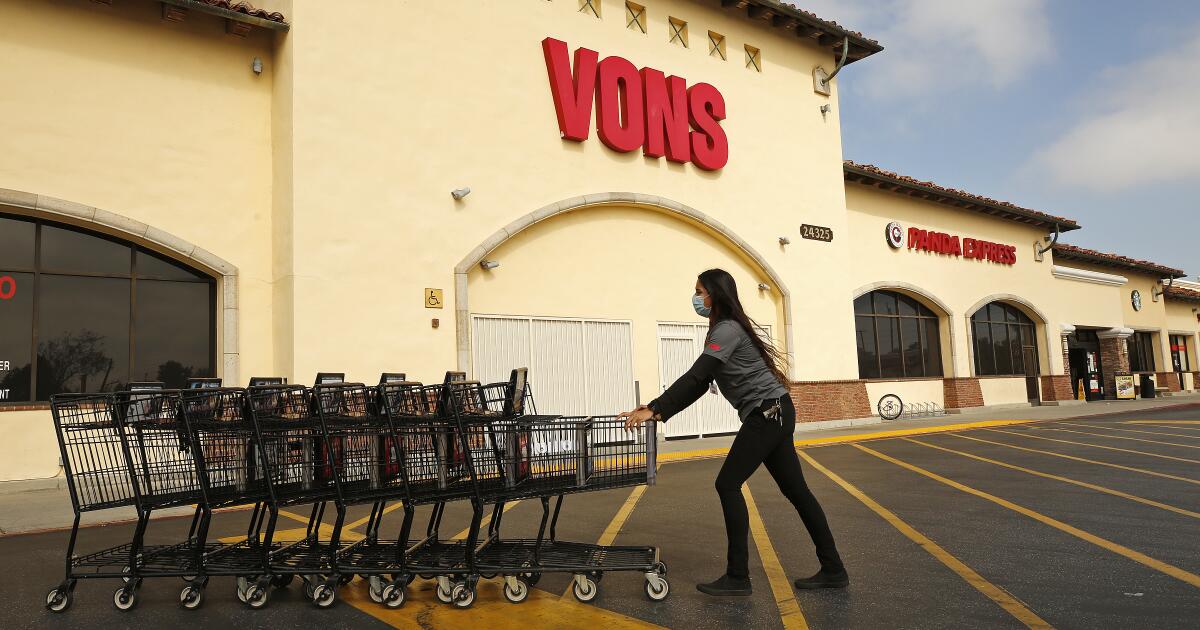
Under the terms of the proposed merger, which the two companies unveiled in 2022, Kroger was to acquire Albertsons. The newly formed behemoth would have operated more than 5,000 stores in 48 states, government regulators claimed. Albertsons owns the well-known brands Pavilions, Safeway and Vons. Kroger operates Ralphs, Food4Less, Fred Meyer, Fry’s, Quality Food Centers and other grocery stores.
Kroger and Albertsons defended their decision to merge, saying that joining forces would help them compete with big retailers such as Walmart, Costco and Amazon. But the deal quickly came under fire with U.S. regulators arguing that allowing it to go through would hurt consumers. In February, the Federal Trade Commission, along with California and several other states, sued to stop it, claiming the lack of competition would lead to higher grocery prices, reduce food quality and customer service and harm grocery workers who are pushing for better working conditions and wages.
To address those concerns, Kroger and Albertsons proposed selling 579 of their stores to another company, C&S Wholesale Grocers, including 63 stores in California, mainly in Southern California.
Nelson was not persuaded by the chains’ proposed solution. In her ruling she wrote, the “evidence shows that defendants engage in substantial head-to-head competition and the proposed merger would remove that competition. As a result, the proposed merger is likely to lead to unilateral competitive effects and is presumptively unlawful.”

Plans for the largest grocery merger in American history are over.
A day after a federal judge delivered a serious blow to the merger, Albertsons announced Wednesday it was giving up on the controversial deal to join forces with its competitor Kroger and sued the chain, alleging it failed to do enough to win government approval for the $24.6-billion agreement.
Albertsons released a statement claiming Kroger was guilty of a “willful breach of contract and breach of the covenant of good faith and fair dealing” due to what it said was “Kroger’s failure to exercise ‘best efforts’ and to take ‘any and all actions’ to secure regulatory approval of the companies’ agreed merger transaction.”
A Kroger representative called Albertsons’ claims “baseless and without merit” and was “clearly an attempt to deflect responsibility.”
“Kroger refutes these allegations in the strongest possible terms, especially in light of Albertsons’ repeated intentional material breaches and interference throughout the merger process.”
Albertsons’ decision to end its corporate courtship and sue its would-be partner came on the heels of a ruling by U.S. District Court Judge Adrienne Nelson, who on Tuesday issued a preliminary injunction blocking the merger, finding it would quash competition and leave consumers in many parts of the country without meaningful choices when shopping for food. That decision followed a three-week hearing in Portland, Ore., over the summer.
Shortly after Nelson’s ruling, a state judge in Seattle issued a permanent injunction barring the merger in Washington after also concluding it would lessen competition in the state and violate Washington’s consumer-protection laws.
Under the terms of the proposed merger, which the two companies unveiled in 2022, Kroger was to acquire Albertsons. The newly formed behemoth would have operated more than 5,000 stores in 48 states, government regulators claimed. Albertsons owns the well-known brands Pavilions, Safeway and Vons. Kroger operates Ralphs, Food4Less, Fred Meyer, Fry’s, Quality Food Centers and other grocery stores.
Kroger and Albertsons defended their decision to merge, saying that joining forces would help them compete with big retailers such as Walmart, Costco and Amazon. But the deal quickly came under fire with U.S. regulators arguing that allowing it to go through would hurt consumers. In February, the Federal Trade Commission, along with California and several other states, sued to stop it, claiming the lack of competition would lead to higher grocery prices, reduce food quality and customer service and harm grocery workers who are pushing for better working conditions and wages.
To address those concerns, Kroger and Albertsons proposed selling 579 of their stores to another company, C&S Wholesale Grocers, including 63 stores in California, mainly in Southern California.
Nelson was not persuaded by the chains’ proposed solution. In her ruling she wrote, the “evidence shows that defendants engage in substantial head-to-head competition and the proposed merger would remove that competition. As a result, the proposed merger is likely to lead to unilateral competitive effects and is presumptively unlawful.”

Plans for the largest grocery merger in American history are over.
A day after a federal judge delivered a serious blow to the merger, Albertsons announced Wednesday it was giving up on the controversial deal to join forces with its competitor Kroger and sued the chain, alleging it failed to do enough to win government approval for the $24.6-billion agreement.
Albertsons released a statement claiming Kroger was guilty of a “willful breach of contract and breach of the covenant of good faith and fair dealing” due to what it said was “Kroger’s failure to exercise ‘best efforts’ and to take ‘any and all actions’ to secure regulatory approval of the companies’ agreed merger transaction.”
A Kroger representative called Albertsons’ claims “baseless and without merit” and was “clearly an attempt to deflect responsibility.”
“Kroger refutes these allegations in the strongest possible terms, especially in light of Albertsons’ repeated intentional material breaches and interference throughout the merger process.”
Albertsons’ decision to end its corporate courtship and sue its would-be partner came on the heels of a ruling by U.S. District Court Judge Adrienne Nelson, who on Tuesday issued a preliminary injunction blocking the merger, finding it would quash competition and leave consumers in many parts of the country without meaningful choices when shopping for food. That decision followed a three-week hearing in Portland, Ore., over the summer.
Shortly after Nelson’s ruling, a state judge in Seattle issued a permanent injunction barring the merger in Washington after also concluding it would lessen competition in the state and violate Washington’s consumer-protection laws.
Under the terms of the proposed merger, which the two companies unveiled in 2022, Kroger was to acquire Albertsons. The newly formed behemoth would have operated more than 5,000 stores in 48 states, government regulators claimed. Albertsons owns the well-known brands Pavilions, Safeway and Vons. Kroger operates Ralphs, Food4Less, Fred Meyer, Fry’s, Quality Food Centers and other grocery stores.
Kroger and Albertsons defended their decision to merge, saying that joining forces would help them compete with big retailers such as Walmart, Costco and Amazon. But the deal quickly came under fire with U.S. regulators arguing that allowing it to go through would hurt consumers. In February, the Federal Trade Commission, along with California and several other states, sued to stop it, claiming the lack of competition would lead to higher grocery prices, reduce food quality and customer service and harm grocery workers who are pushing for better working conditions and wages.
To address those concerns, Kroger and Albertsons proposed selling 579 of their stores to another company, C&S Wholesale Grocers, including 63 stores in California, mainly in Southern California.
Nelson was not persuaded by the chains’ proposed solution. In her ruling she wrote, the “evidence shows that defendants engage in substantial head-to-head competition and the proposed merger would remove that competition. As a result, the proposed merger is likely to lead to unilateral competitive effects and is presumptively unlawful.”
Plans for the largest grocery merger in American history are over.
A day after a federal judge delivered a serious blow to the merger, Albertsons announced Wednesday it was giving up on the controversial deal to join forces with its competitor Kroger and sued the chain, alleging it failed to do enough to win government approval for the $24.6-billion agreement.
Albertsons released a statement claiming Kroger was guilty of a “willful breach of contract and breach of the covenant of good faith and fair dealing” due to what it said was “Kroger’s failure to exercise ‘best efforts’ and to take ‘any and all actions’ to secure regulatory approval of the companies’ agreed merger transaction.”
A Kroger representative called Albertsons’ claims “baseless and without merit” and was “clearly an attempt to deflect responsibility.”
“Kroger refutes these allegations in the strongest possible terms, especially in light of Albertsons’ repeated intentional material breaches and interference throughout the merger process.”
Albertsons’ decision to end its corporate courtship and sue its would-be partner came on the heels of a ruling by U.S. District Court Judge Adrienne Nelson, who on Tuesday issued a preliminary injunction blocking the merger, finding it would quash competition and leave consumers in many parts of the country without meaningful choices when shopping for food. That decision followed a three-week hearing in Portland, Ore., over the summer.
Shortly after Nelson’s ruling, a state judge in Seattle issued a permanent injunction barring the merger in Washington after also concluding it would lessen competition in the state and violate Washington’s consumer-protection laws.
Under the terms of the proposed merger, which the two companies unveiled in 2022, Kroger was to acquire Albertsons. The newly formed behemoth would have operated more than 5,000 stores in 48 states, government regulators claimed. Albertsons owns the well-known brands Pavilions, Safeway and Vons. Kroger operates Ralphs, Food4Less, Fred Meyer, Fry’s, Quality Food Centers and other grocery stores.
Kroger and Albertsons defended their decision to merge, saying that joining forces would help them compete with big retailers such as Walmart, Costco and Amazon. But the deal quickly came under fire with U.S. regulators arguing that allowing it to go through would hurt consumers. In February, the Federal Trade Commission, along with California and several other states, sued to stop it, claiming the lack of competition would lead to higher grocery prices, reduce food quality and customer service and harm grocery workers who are pushing for better working conditions and wages.
To address those concerns, Kroger and Albertsons proposed selling 579 of their stores to another company, C&S Wholesale Grocers, including 63 stores in California, mainly in Southern California.
Nelson was not persuaded by the chains’ proposed solution. In her ruling she wrote, the “evidence shows that defendants engage in substantial head-to-head competition and the proposed merger would remove that competition. As a result, the proposed merger is likely to lead to unilateral competitive effects and is presumptively unlawful.”

Plans for the largest grocery merger in American history are over.
A day after a federal judge delivered a serious blow to the merger, Albertsons announced Wednesday it was giving up on the controversial deal to join forces with its competitor Kroger and sued the chain, alleging it failed to do enough to win government approval for the $24.6-billion agreement.
Albertsons released a statement claiming Kroger was guilty of a “willful breach of contract and breach of the covenant of good faith and fair dealing” due to what it said was “Kroger’s failure to exercise ‘best efforts’ and to take ‘any and all actions’ to secure regulatory approval of the companies’ agreed merger transaction.”
A Kroger representative called Albertsons’ claims “baseless and without merit” and was “clearly an attempt to deflect responsibility.”
“Kroger refutes these allegations in the strongest possible terms, especially in light of Albertsons’ repeated intentional material breaches and interference throughout the merger process.”
Albertsons’ decision to end its corporate courtship and sue its would-be partner came on the heels of a ruling by U.S. District Court Judge Adrienne Nelson, who on Tuesday issued a preliminary injunction blocking the merger, finding it would quash competition and leave consumers in many parts of the country without meaningful choices when shopping for food. That decision followed a three-week hearing in Portland, Ore., over the summer.
Shortly after Nelson’s ruling, a state judge in Seattle issued a permanent injunction barring the merger in Washington after also concluding it would lessen competition in the state and violate Washington’s consumer-protection laws.
Under the terms of the proposed merger, which the two companies unveiled in 2022, Kroger was to acquire Albertsons. The newly formed behemoth would have operated more than 5,000 stores in 48 states, government regulators claimed. Albertsons owns the well-known brands Pavilions, Safeway and Vons. Kroger operates Ralphs, Food4Less, Fred Meyer, Fry’s, Quality Food Centers and other grocery stores.
Kroger and Albertsons defended their decision to merge, saying that joining forces would help them compete with big retailers such as Walmart, Costco and Amazon. But the deal quickly came under fire with U.S. regulators arguing that allowing it to go through would hurt consumers. In February, the Federal Trade Commission, along with California and several other states, sued to stop it, claiming the lack of competition would lead to higher grocery prices, reduce food quality and customer service and harm grocery workers who are pushing for better working conditions and wages.
To address those concerns, Kroger and Albertsons proposed selling 579 of their stores to another company, C&S Wholesale Grocers, including 63 stores in California, mainly in Southern California.
Nelson was not persuaded by the chains’ proposed solution. In her ruling she wrote, the “evidence shows that defendants engage in substantial head-to-head competition and the proposed merger would remove that competition. As a result, the proposed merger is likely to lead to unilateral competitive effects and is presumptively unlawful.”
Plans for the largest grocery merger in American history are over.
A day after a federal judge delivered a serious blow to the merger, Albertsons announced Wednesday it was giving up on the controversial deal to join forces with its competitor Kroger and sued the chain, alleging it failed to do enough to win government approval for the $24.6-billion agreement.
Albertsons released a statement claiming Kroger was guilty of a “willful breach of contract and breach of the covenant of good faith and fair dealing” due to what it said was “Kroger’s failure to exercise ‘best efforts’ and to take ‘any and all actions’ to secure regulatory approval of the companies’ agreed merger transaction.”
A Kroger representative called Albertsons’ claims “baseless and without merit” and was “clearly an attempt to deflect responsibility.”
“Kroger refutes these allegations in the strongest possible terms, especially in light of Albertsons’ repeated intentional material breaches and interference throughout the merger process.”
Albertsons’ decision to end its corporate courtship and sue its would-be partner came on the heels of a ruling by U.S. District Court Judge Adrienne Nelson, who on Tuesday issued a preliminary injunction blocking the merger, finding it would quash competition and leave consumers in many parts of the country without meaningful choices when shopping for food. That decision followed a three-week hearing in Portland, Ore., over the summer.
Shortly after Nelson’s ruling, a state judge in Seattle issued a permanent injunction barring the merger in Washington after also concluding it would lessen competition in the state and violate Washington’s consumer-protection laws.
Under the terms of the proposed merger, which the two companies unveiled in 2022, Kroger was to acquire Albertsons. The newly formed behemoth would have operated more than 5,000 stores in 48 states, government regulators claimed. Albertsons owns the well-known brands Pavilions, Safeway and Vons. Kroger operates Ralphs, Food4Less, Fred Meyer, Fry’s, Quality Food Centers and other grocery stores.
Kroger and Albertsons defended their decision to merge, saying that joining forces would help them compete with big retailers such as Walmart, Costco and Amazon. But the deal quickly came under fire with U.S. regulators arguing that allowing it to go through would hurt consumers. In February, the Federal Trade Commission, along with California and several other states, sued to stop it, claiming the lack of competition would lead to higher grocery prices, reduce food quality and customer service and harm grocery workers who are pushing for better working conditions and wages.
To address those concerns, Kroger and Albertsons proposed selling 579 of their stores to another company, C&S Wholesale Grocers, including 63 stores in California, mainly in Southern California.
Nelson was not persuaded by the chains’ proposed solution. In her ruling she wrote, the “evidence shows that defendants engage in substantial head-to-head competition and the proposed merger would remove that competition. As a result, the proposed merger is likely to lead to unilateral competitive effects and is presumptively unlawful.”
Plans for the largest grocery merger in American history are over.
A day after a federal judge delivered a serious blow to the merger, Albertsons announced Wednesday it was giving up on the controversial deal to join forces with its competitor Kroger and sued the chain, alleging it failed to do enough to win government approval for the $24.6-billion agreement.
Albertsons released a statement claiming Kroger was guilty of a “willful breach of contract and breach of the covenant of good faith and fair dealing” due to what it said was “Kroger’s failure to exercise ‘best efforts’ and to take ‘any and all actions’ to secure regulatory approval of the companies’ agreed merger transaction.”
A Kroger representative called Albertsons’ claims “baseless and without merit” and was “clearly an attempt to deflect responsibility.”
“Kroger refutes these allegations in the strongest possible terms, especially in light of Albertsons’ repeated intentional material breaches and interference throughout the merger process.”
Albertsons’ decision to end its corporate courtship and sue its would-be partner came on the heels of a ruling by U.S. District Court Judge Adrienne Nelson, who on Tuesday issued a preliminary injunction blocking the merger, finding it would quash competition and leave consumers in many parts of the country without meaningful choices when shopping for food. That decision followed a three-week hearing in Portland, Ore., over the summer.
Shortly after Nelson’s ruling, a state judge in Seattle issued a permanent injunction barring the merger in Washington after also concluding it would lessen competition in the state and violate Washington’s consumer-protection laws.
Under the terms of the proposed merger, which the two companies unveiled in 2022, Kroger was to acquire Albertsons. The newly formed behemoth would have operated more than 5,000 stores in 48 states, government regulators claimed. Albertsons owns the well-known brands Pavilions, Safeway and Vons. Kroger operates Ralphs, Food4Less, Fred Meyer, Fry’s, Quality Food Centers and other grocery stores.
Kroger and Albertsons defended their decision to merge, saying that joining forces would help them compete with big retailers such as Walmart, Costco and Amazon. But the deal quickly came under fire with U.S. regulators arguing that allowing it to go through would hurt consumers. In February, the Federal Trade Commission, along with California and several other states, sued to stop it, claiming the lack of competition would lead to higher grocery prices, reduce food quality and customer service and harm grocery workers who are pushing for better working conditions and wages.
To address those concerns, Kroger and Albertsons proposed selling 579 of their stores to another company, C&S Wholesale Grocers, including 63 stores in California, mainly in Southern California.
Nelson was not persuaded by the chains’ proposed solution. In her ruling she wrote, the “evidence shows that defendants engage in substantial head-to-head competition and the proposed merger would remove that competition. As a result, the proposed merger is likely to lead to unilateral competitive effects and is presumptively unlawful.”
Plans for the largest grocery merger in American history are over.
A day after a federal judge delivered a serious blow to the merger, Albertsons announced Wednesday it was giving up on the controversial deal to join forces with its competitor Kroger and sued the chain, alleging it failed to do enough to win government approval for the $24.6-billion agreement.
Albertsons released a statement claiming Kroger was guilty of a “willful breach of contract and breach of the covenant of good faith and fair dealing” due to what it said was “Kroger’s failure to exercise ‘best efforts’ and to take ‘any and all actions’ to secure regulatory approval of the companies’ agreed merger transaction.”
A Kroger representative called Albertsons’ claims “baseless and without merit” and was “clearly an attempt to deflect responsibility.”
“Kroger refutes these allegations in the strongest possible terms, especially in light of Albertsons’ repeated intentional material breaches and interference throughout the merger process.”
Albertsons’ decision to end its corporate courtship and sue its would-be partner came on the heels of a ruling by U.S. District Court Judge Adrienne Nelson, who on Tuesday issued a preliminary injunction blocking the merger, finding it would quash competition and leave consumers in many parts of the country without meaningful choices when shopping for food. That decision followed a three-week hearing in Portland, Ore., over the summer.
Shortly after Nelson’s ruling, a state judge in Seattle issued a permanent injunction barring the merger in Washington after also concluding it would lessen competition in the state and violate Washington’s consumer-protection laws.
Under the terms of the proposed merger, which the two companies unveiled in 2022, Kroger was to acquire Albertsons. The newly formed behemoth would have operated more than 5,000 stores in 48 states, government regulators claimed. Albertsons owns the well-known brands Pavilions, Safeway and Vons. Kroger operates Ralphs, Food4Less, Fred Meyer, Fry’s, Quality Food Centers and other grocery stores.
Kroger and Albertsons defended their decision to merge, saying that joining forces would help them compete with big retailers such as Walmart, Costco and Amazon. But the deal quickly came under fire with U.S. regulators arguing that allowing it to go through would hurt consumers. In February, the Federal Trade Commission, along with California and several other states, sued to stop it, claiming the lack of competition would lead to higher grocery prices, reduce food quality and customer service and harm grocery workers who are pushing for better working conditions and wages.
To address those concerns, Kroger and Albertsons proposed selling 579 of their stores to another company, C&S Wholesale Grocers, including 63 stores in California, mainly in Southern California.
Nelson was not persuaded by the chains’ proposed solution. In her ruling she wrote, the “evidence shows that defendants engage in substantial head-to-head competition and the proposed merger would remove that competition. As a result, the proposed merger is likely to lead to unilateral competitive effects and is presumptively unlawful.”

