

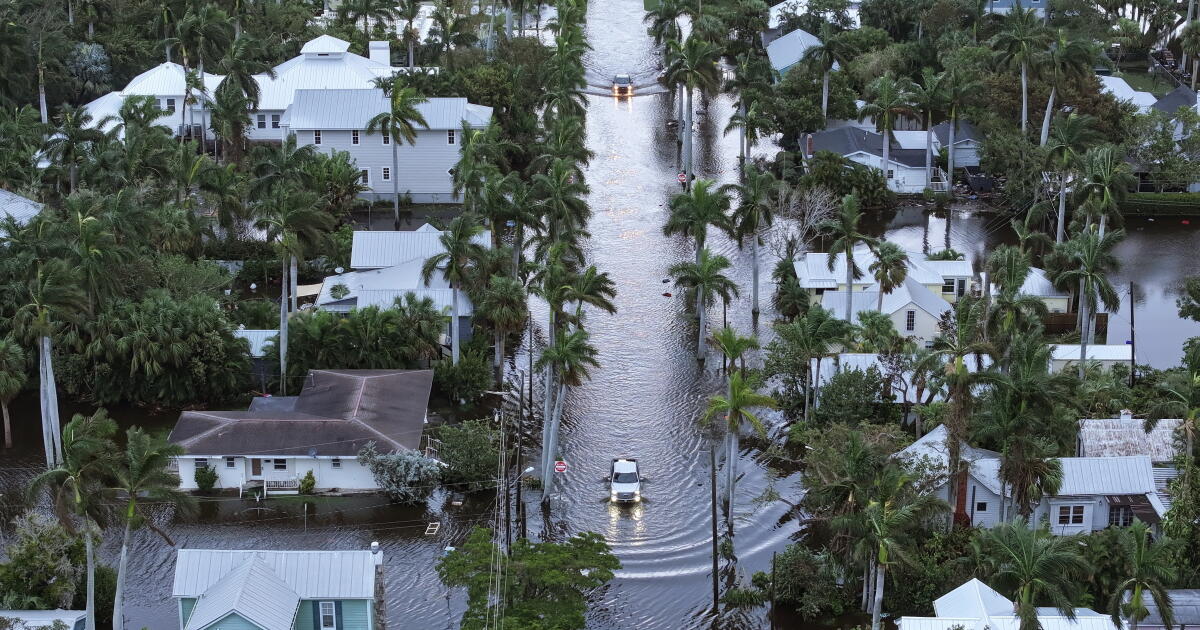

Search and rescue teams fanned across Florida on Thursday morning after Hurricane Milton barreled into Sarasota as one of the most powerful storms to ever hit central west Florida, striking a densely populated coastline with storm surges up to 10 feet and 120 mph winds and pummeling communities across the state with deadly tornadoes.
After making landfall near Siesta Key, a barrier island near Sarasota, around 8:30 p.m. Eastern time Wednesday, Milton cut a wide path of damage, flooding homes, downing trees and cutting power to more than 3 million Floridians.
At a morning news conference, Gov. Ron DeSantis said rescue missions were underway throughout the night and “it was too soon to tell” how many people had died in the storm. “We will better understand the damage as the day progresses,” he said.
The governor said Milton moved quickly, bringing “much destruction and damage.” But he also expressed relief that Milton was ultimately not as powerful as many feared.
“What can we say is the storm was significant, but thankfully this was not the worst-case scenario,” DeSantis added. “The hurricane did weaken before landfall and the storm surge, as initially reported, has not been as significant overall as what was observed for Hurricane Helene.”
In St. Petersburg, Milton tore the roof off Tropicana Field, the Tampa Bay Rays stadium that served as a “base camp” for thousands of emergency workers and first responders and hurled a construction crane near a luxury high rise onto an office building that houses the offices of the Tampa Bay Times newspaper.
Even before the storm made landfall on Florida’s west coast, it spawned dozens of tornadoes across the state. About 125 homes — mostly mobile homes in senior living communities — were destroyed, according to Kevin Guthrie, director of Florida’s Division of Emergency Management.
On the east coast, firefighters in Palm Beach County rescued multiple people trapped under rubble and in overturned vehicles. In St. Lucie County, officials confirmed four fatalities after two tornadoes touched down and caused significant damage to homes in the Spanish Lakes Country Club senior living community and the Portofino Shores gated community.
“Their whole homes with them inside were lifted up, moved, destroyed,” St. Lucie County Sheriff Keith Pearson told CNN News Central on Thursday morning as he described the devastation at the Spanish Lakes Country Club. “I mean everything in the hurricane or this tornado’s path is gone.”
As dawn broke Thursday and Milton pulled offshore from Florida and onto the Atlantic Ocean as a weakened Category 1 hurricane, officials warned that a large swath of the east coast was still under threat.
“There is a danger of life-threatening storm surge from #Milton along the coast from east-central Florida northward to southern Georgia, “ the National Hurricane Center warned.
By 8 a.m. EDT, more than 4.4 million people up and down the east coast were under hurricane warnings and more than 4.3 million, predominantly on Florida’s gulf coast, were under a flood warning, according to the National Weather Service.
A homeless person slept under a wheelchair alongside a parking garage in deserted downtown Tampa on Wednesday as the hurricane approached.
(Rebecca Blackwell / Associated Press)
More than 3.2 million Florida customers were without power, according to Poweroutage.us, which tracks national power outages.
Residents across the city of St. Petersburg had no running water after a water main break forced city officials to shut off potable water at midnight.
Officials in the hard-hit cities of St. Petersburg, Tampa and Sarasota urged residents to stay home Thursday morning, warning of downed power lines and flooding.
The third hurricane to make landfall in Florida this year, Milton came less than two weeks after Hurricane Helene barreled into Florida’s rural Big Bend region, killing more than 230 people. It cut a path of destruction across the Southeast, including the portion of west central Florida now hit by Milton.
But this is not the first time Florida has been pummeled by a succession of hurricanes.
In 2004, four back-to-back hurricanes — Charley, Frances, Ivan and Jeanne —– barreled through the state in six weeks. Those storms, ranging from a Category 4 to a Category 2 hurricane, displaced millions of residents and represented the most active yearly hurricane season since Texas saw four hurricanes in 1886, according to a NOAA report.
Milton comes just weeks before the Nov. 5 presidential election, as hurricane response has become a political issue and a wave of rumors, misinformation and conspiracy theories have spread on social media about Helene and the response by the Federal Emergency Management Agency.
Ahead of Milton’s arrival, FEMA said it had more than 1,000 responders on the ground in Florida to conduct search and rescue and support hurricane response efforts. The federal agency also had meals and water ready to deploy to feed millions.
After Milton made landfall, Sarasota Mayor Liz Alpert said she received a call Wednesday afternoon from President Biden, who offered federal support to communities battered by the storm.
“He understands this is going to be an unprecedented type of hurricane and also understands it will take a lot from the federal government to help us recover in Sarasota,” Alpert said in a statement.

Search and rescue teams fanned across Florida on Thursday morning after Hurricane Milton barreled into Sarasota as one of the most powerful storms to ever hit central west Florida, striking a densely populated coastline with storm surges up to 10 feet and 120 mph winds and pummeling communities across the state with deadly tornadoes.
After making landfall near Siesta Key, a barrier island near Sarasota, around 8:30 p.m. Eastern time Wednesday, Milton cut a wide path of damage, flooding homes, downing trees and cutting power to more than 3 million Floridians.
At a morning news conference, Gov. Ron DeSantis said rescue missions were underway throughout the night and “it was too soon to tell” how many people had died in the storm. “We will better understand the damage as the day progresses,” he said.
The governor said Milton moved quickly, bringing “much destruction and damage.” But he also expressed relief that Milton was ultimately not as powerful as many feared.
“What can we say is the storm was significant, but thankfully this was not the worst-case scenario,” DeSantis added. “The hurricane did weaken before landfall and the storm surge, as initially reported, has not been as significant overall as what was observed for Hurricane Helene.”
In St. Petersburg, Milton tore the roof off Tropicana Field, the Tampa Bay Rays stadium that served as a “base camp” for thousands of emergency workers and first responders and hurled a construction crane near a luxury high rise onto an office building that houses the offices of the Tampa Bay Times newspaper.
Even before the storm made landfall on Florida’s west coast, it spawned dozens of tornadoes across the state. About 125 homes — mostly mobile homes in senior living communities — were destroyed, according to Kevin Guthrie, director of Florida’s Division of Emergency Management.
On the east coast, firefighters in Palm Beach County rescued multiple people trapped under rubble and in overturned vehicles. In St. Lucie County, officials confirmed four fatalities after two tornadoes touched down and caused significant damage to homes in the Spanish Lakes Country Club senior living community and the Portofino Shores gated community.
“Their whole homes with them inside were lifted up, moved, destroyed,” St. Lucie County Sheriff Keith Pearson told CNN News Central on Thursday morning as he described the devastation at the Spanish Lakes Country Club. “I mean everything in the hurricane or this tornado’s path is gone.”
As dawn broke Thursday and Milton pulled offshore from Florida and onto the Atlantic Ocean as a weakened Category 1 hurricane, officials warned that a large swath of the east coast was still under threat.
“There is a danger of life-threatening storm surge from #Milton along the coast from east-central Florida northward to southern Georgia, “ the National Hurricane Center warned.
By 8 a.m. EDT, more than 4.4 million people up and down the east coast were under hurricane warnings and more than 4.3 million, predominantly on Florida’s gulf coast, were under a flood warning, according to the National Weather Service.
A homeless person slept under a wheelchair alongside a parking garage in deserted downtown Tampa on Wednesday as the hurricane approached.
(Rebecca Blackwell / Associated Press)
More than 3.2 million Florida customers were without power, according to Poweroutage.us, which tracks national power outages.
Residents across the city of St. Petersburg had no running water after a water main break forced city officials to shut off potable water at midnight.
Officials in the hard-hit cities of St. Petersburg, Tampa and Sarasota urged residents to stay home Thursday morning, warning of downed power lines and flooding.
The third hurricane to make landfall in Florida this year, Milton came less than two weeks after Hurricane Helene barreled into Florida’s rural Big Bend region, killing more than 230 people. It cut a path of destruction across the Southeast, including the portion of west central Florida now hit by Milton.
But this is not the first time Florida has been pummeled by a succession of hurricanes.
In 2004, four back-to-back hurricanes — Charley, Frances, Ivan and Jeanne —– barreled through the state in six weeks. Those storms, ranging from a Category 4 to a Category 2 hurricane, displaced millions of residents and represented the most active yearly hurricane season since Texas saw four hurricanes in 1886, according to a NOAA report.
Milton comes just weeks before the Nov. 5 presidential election, as hurricane response has become a political issue and a wave of rumors, misinformation and conspiracy theories have spread on social media about Helene and the response by the Federal Emergency Management Agency.
Ahead of Milton’s arrival, FEMA said it had more than 1,000 responders on the ground in Florida to conduct search and rescue and support hurricane response efforts. The federal agency also had meals and water ready to deploy to feed millions.
After Milton made landfall, Sarasota Mayor Liz Alpert said she received a call Wednesday afternoon from President Biden, who offered federal support to communities battered by the storm.
“He understands this is going to be an unprecedented type of hurricane and also understands it will take a lot from the federal government to help us recover in Sarasota,” Alpert said in a statement.

Search and rescue teams fanned across Florida on Thursday morning after Hurricane Milton barreled into Sarasota as one of the most powerful storms to ever hit central west Florida, striking a densely populated coastline with storm surges up to 10 feet and 120 mph winds and pummeling communities across the state with deadly tornadoes.
After making landfall near Siesta Key, a barrier island near Sarasota, around 8:30 p.m. Eastern time Wednesday, Milton cut a wide path of damage, flooding homes, downing trees and cutting power to more than 3 million Floridians.
At a morning news conference, Gov. Ron DeSantis said rescue missions were underway throughout the night and “it was too soon to tell” how many people had died in the storm. “We will better understand the damage as the day progresses,” he said.
The governor said Milton moved quickly, bringing “much destruction and damage.” But he also expressed relief that Milton was ultimately not as powerful as many feared.
“What can we say is the storm was significant, but thankfully this was not the worst-case scenario,” DeSantis added. “The hurricane did weaken before landfall and the storm surge, as initially reported, has not been as significant overall as what was observed for Hurricane Helene.”
In St. Petersburg, Milton tore the roof off Tropicana Field, the Tampa Bay Rays stadium that served as a “base camp” for thousands of emergency workers and first responders and hurled a construction crane near a luxury high rise onto an office building that houses the offices of the Tampa Bay Times newspaper.
Even before the storm made landfall on Florida’s west coast, it spawned dozens of tornadoes across the state. About 125 homes — mostly mobile homes in senior living communities — were destroyed, according to Kevin Guthrie, director of Florida’s Division of Emergency Management.
On the east coast, firefighters in Palm Beach County rescued multiple people trapped under rubble and in overturned vehicles. In St. Lucie County, officials confirmed four fatalities after two tornadoes touched down and caused significant damage to homes in the Spanish Lakes Country Club senior living community and the Portofino Shores gated community.
“Their whole homes with them inside were lifted up, moved, destroyed,” St. Lucie County Sheriff Keith Pearson told CNN News Central on Thursday morning as he described the devastation at the Spanish Lakes Country Club. “I mean everything in the hurricane or this tornado’s path is gone.”
As dawn broke Thursday and Milton pulled offshore from Florida and onto the Atlantic Ocean as a weakened Category 1 hurricane, officials warned that a large swath of the east coast was still under threat.
“There is a danger of life-threatening storm surge from #Milton along the coast from east-central Florida northward to southern Georgia, “ the National Hurricane Center warned.
By 8 a.m. EDT, more than 4.4 million people up and down the east coast were under hurricane warnings and more than 4.3 million, predominantly on Florida’s gulf coast, were under a flood warning, according to the National Weather Service.
A homeless person slept under a wheelchair alongside a parking garage in deserted downtown Tampa on Wednesday as the hurricane approached.
(Rebecca Blackwell / Associated Press)
More than 3.2 million Florida customers were without power, according to Poweroutage.us, which tracks national power outages.
Residents across the city of St. Petersburg had no running water after a water main break forced city officials to shut off potable water at midnight.
Officials in the hard-hit cities of St. Petersburg, Tampa and Sarasota urged residents to stay home Thursday morning, warning of downed power lines and flooding.
The third hurricane to make landfall in Florida this year, Milton came less than two weeks after Hurricane Helene barreled into Florida’s rural Big Bend region, killing more than 230 people. It cut a path of destruction across the Southeast, including the portion of west central Florida now hit by Milton.
But this is not the first time Florida has been pummeled by a succession of hurricanes.
In 2004, four back-to-back hurricanes — Charley, Frances, Ivan and Jeanne —– barreled through the state in six weeks. Those storms, ranging from a Category 4 to a Category 2 hurricane, displaced millions of residents and represented the most active yearly hurricane season since Texas saw four hurricanes in 1886, according to a NOAA report.
Milton comes just weeks before the Nov. 5 presidential election, as hurricane response has become a political issue and a wave of rumors, misinformation and conspiracy theories have spread on social media about Helene and the response by the Federal Emergency Management Agency.
Ahead of Milton’s arrival, FEMA said it had more than 1,000 responders on the ground in Florida to conduct search and rescue and support hurricane response efforts. The federal agency also had meals and water ready to deploy to feed millions.
After Milton made landfall, Sarasota Mayor Liz Alpert said she received a call Wednesday afternoon from President Biden, who offered federal support to communities battered by the storm.
“He understands this is going to be an unprecedented type of hurricane and also understands it will take a lot from the federal government to help us recover in Sarasota,” Alpert said in a statement.

Search and rescue teams fanned across Florida on Thursday morning after Hurricane Milton barreled into Sarasota as one of the most powerful storms to ever hit central west Florida, striking a densely populated coastline with storm surges up to 10 feet and 120 mph winds and pummeling communities across the state with deadly tornadoes.
After making landfall near Siesta Key, a barrier island near Sarasota, around 8:30 p.m. Eastern time Wednesday, Milton cut a wide path of damage, flooding homes, downing trees and cutting power to more than 3 million Floridians.
At a morning news conference, Gov. Ron DeSantis said rescue missions were underway throughout the night and “it was too soon to tell” how many people had died in the storm. “We will better understand the damage as the day progresses,” he said.
The governor said Milton moved quickly, bringing “much destruction and damage.” But he also expressed relief that Milton was ultimately not as powerful as many feared.
“What can we say is the storm was significant, but thankfully this was not the worst-case scenario,” DeSantis added. “The hurricane did weaken before landfall and the storm surge, as initially reported, has not been as significant overall as what was observed for Hurricane Helene.”
In St. Petersburg, Milton tore the roof off Tropicana Field, the Tampa Bay Rays stadium that served as a “base camp” for thousands of emergency workers and first responders and hurled a construction crane near a luxury high rise onto an office building that houses the offices of the Tampa Bay Times newspaper.
Even before the storm made landfall on Florida’s west coast, it spawned dozens of tornadoes across the state. About 125 homes — mostly mobile homes in senior living communities — were destroyed, according to Kevin Guthrie, director of Florida’s Division of Emergency Management.
On the east coast, firefighters in Palm Beach County rescued multiple people trapped under rubble and in overturned vehicles. In St. Lucie County, officials confirmed four fatalities after two tornadoes touched down and caused significant damage to homes in the Spanish Lakes Country Club senior living community and the Portofino Shores gated community.
“Their whole homes with them inside were lifted up, moved, destroyed,” St. Lucie County Sheriff Keith Pearson told CNN News Central on Thursday morning as he described the devastation at the Spanish Lakes Country Club. “I mean everything in the hurricane or this tornado’s path is gone.”
As dawn broke Thursday and Milton pulled offshore from Florida and onto the Atlantic Ocean as a weakened Category 1 hurricane, officials warned that a large swath of the east coast was still under threat.
“There is a danger of life-threatening storm surge from #Milton along the coast from east-central Florida northward to southern Georgia, “ the National Hurricane Center warned.
By 8 a.m. EDT, more than 4.4 million people up and down the east coast were under hurricane warnings and more than 4.3 million, predominantly on Florida’s gulf coast, were under a flood warning, according to the National Weather Service.
A homeless person slept under a wheelchair alongside a parking garage in deserted downtown Tampa on Wednesday as the hurricane approached.
(Rebecca Blackwell / Associated Press)
More than 3.2 million Florida customers were without power, according to Poweroutage.us, which tracks national power outages.
Residents across the city of St. Petersburg had no running water after a water main break forced city officials to shut off potable water at midnight.
Officials in the hard-hit cities of St. Petersburg, Tampa and Sarasota urged residents to stay home Thursday morning, warning of downed power lines and flooding.
The third hurricane to make landfall in Florida this year, Milton came less than two weeks after Hurricane Helene barreled into Florida’s rural Big Bend region, killing more than 230 people. It cut a path of destruction across the Southeast, including the portion of west central Florida now hit by Milton.
But this is not the first time Florida has been pummeled by a succession of hurricanes.
In 2004, four back-to-back hurricanes — Charley, Frances, Ivan and Jeanne —– barreled through the state in six weeks. Those storms, ranging from a Category 4 to a Category 2 hurricane, displaced millions of residents and represented the most active yearly hurricane season since Texas saw four hurricanes in 1886, according to a NOAA report.
Milton comes just weeks before the Nov. 5 presidential election, as hurricane response has become a political issue and a wave of rumors, misinformation and conspiracy theories have spread on social media about Helene and the response by the Federal Emergency Management Agency.
Ahead of Milton’s arrival, FEMA said it had more than 1,000 responders on the ground in Florida to conduct search and rescue and support hurricane response efforts. The federal agency also had meals and water ready to deploy to feed millions.
After Milton made landfall, Sarasota Mayor Liz Alpert said she received a call Wednesday afternoon from President Biden, who offered federal support to communities battered by the storm.
“He understands this is going to be an unprecedented type of hurricane and also understands it will take a lot from the federal government to help us recover in Sarasota,” Alpert said in a statement.

