

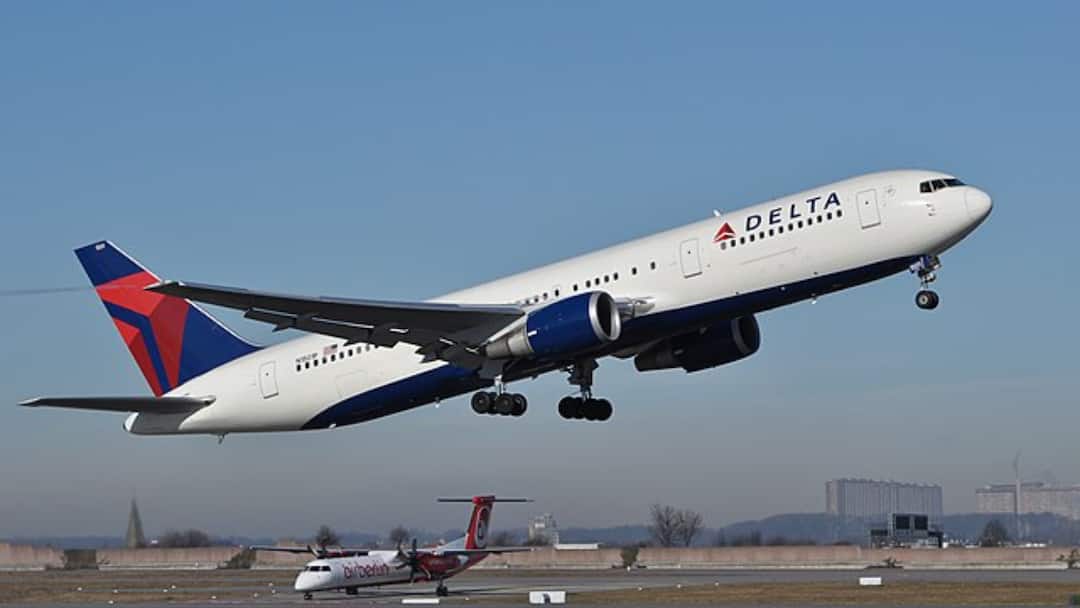
Passengers on a Delta Air Lines flight between the US cities of Salt Lake City (Utah) and Portland (Oregon) reportedly suffered ruptured eardrums and bloody noses on account of a pressurisation issue. The incident took place on Sunday, and the US airline has since issued an apology for the episode.
According to the Utah-based KSL TV, the flight faced pressurisation issues while it was at 10,000 ft in the air.
A passenger, Caryn Allen, was quoted as saying that it didn’t take long for the passengers to notice something was wrong with flight 1203. When she looked towards her husband, she said, she saw “he had both of his hands over his ears” and was leaning forward. She soon noticed that they weren’t the only ones in pain.
She said a man in the other aisle had “a very bad nose, bloody nose”, and others were trying to help him.
Another passenger, Jaci Purser, said she felt a stabbing pain in her ears. When she touched her ear and looked, she saw blood, she added. “I heard some air come out and then it started bubbling. It sounded like my ear was bubbling, my right ear, and I touched my ear, and there was blood coming out,” Purser told CNN.
Several passengers told KSL TV that they felt the plane dip and, when they looked out, they were circling the Great Salt Lake. Caryn Allen said the crew announced that they were going to head back to the airport, but didn’t explain why.
Delta Air Lines, in a written statement, said the Boeing 737-900 aircraft had a pressurisation issue, but didn’t explain what caused the problem. A retired Delta pilot, Valerie Walker, told KSL TV that such issues are not typically caused by pilot error. It’s “an automatic thing” a plane does, pilots monitor it to see if it’s working as it should, she said.
The issue is often related to the ‘outflow valve’ that regulates the cabin pressure, or it could be a faulty sensor “telling the outflow valve to do the wrong thing”, Walker said. Walker told KSL TV while pressurisation issues are considered abnormal, they aren’t typically classified as emergencies.
When the plane landed at 8.30 am, paramedics were waiting at the airport for the injured, and 10 people were evaluated. Delta Air Lines paid for cabs to take the bleeding passengers to hospital.
The retired pilot said there are ways to cope with cabin pressure issues. “You can chew gum, [hold] your nose and blowing out, but not blowing air pressure out, and you’ll hear it, feel your ears click. And if you have a baby, try to feed them or something where they’re swallowing,” Walker was quoted as saying by the news outlet.

Passengers on a Delta Air Lines flight between the US cities of Salt Lake City (Utah) and Portland (Oregon) reportedly suffered ruptured eardrums and bloody noses on account of a pressurisation issue. The incident took place on Sunday, and the US airline has since issued an apology for the episode.
According to the Utah-based KSL TV, the flight faced pressurisation issues while it was at 10,000 ft in the air.
A passenger, Caryn Allen, was quoted as saying that it didn’t take long for the passengers to notice something was wrong with flight 1203. When she looked towards her husband, she said, she saw “he had both of his hands over his ears” and was leaning forward. She soon noticed that they weren’t the only ones in pain.
She said a man in the other aisle had “a very bad nose, bloody nose”, and others were trying to help him.
Another passenger, Jaci Purser, said she felt a stabbing pain in her ears. When she touched her ear and looked, she saw blood, she added. “I heard some air come out and then it started bubbling. It sounded like my ear was bubbling, my right ear, and I touched my ear, and there was blood coming out,” Purser told CNN.
Several passengers told KSL TV that they felt the plane dip and, when they looked out, they were circling the Great Salt Lake. Caryn Allen said the crew announced that they were going to head back to the airport, but didn’t explain why.
Delta Air Lines, in a written statement, said the Boeing 737-900 aircraft had a pressurisation issue, but didn’t explain what caused the problem. A retired Delta pilot, Valerie Walker, told KSL TV that such issues are not typically caused by pilot error. It’s “an automatic thing” a plane does, pilots monitor it to see if it’s working as it should, she said.
The issue is often related to the ‘outflow valve’ that regulates the cabin pressure, or it could be a faulty sensor “telling the outflow valve to do the wrong thing”, Walker said. Walker told KSL TV while pressurisation issues are considered abnormal, they aren’t typically classified as emergencies.
When the plane landed at 8.30 am, paramedics were waiting at the airport for the injured, and 10 people were evaluated. Delta Air Lines paid for cabs to take the bleeding passengers to hospital.
The retired pilot said there are ways to cope with cabin pressure issues. “You can chew gum, [hold] your nose and blowing out, but not blowing air pressure out, and you’ll hear it, feel your ears click. And if you have a baby, try to feed them or something where they’re swallowing,” Walker was quoted as saying by the news outlet.

Passengers on a Delta Air Lines flight between the US cities of Salt Lake City (Utah) and Portland (Oregon) reportedly suffered ruptured eardrums and bloody noses on account of a pressurisation issue. The incident took place on Sunday, and the US airline has since issued an apology for the episode.
According to the Utah-based KSL TV, the flight faced pressurisation issues while it was at 10,000 ft in the air.
A passenger, Caryn Allen, was quoted as saying that it didn’t take long for the passengers to notice something was wrong with flight 1203. When she looked towards her husband, she said, she saw “he had both of his hands over his ears” and was leaning forward. She soon noticed that they weren’t the only ones in pain.
She said a man in the other aisle had “a very bad nose, bloody nose”, and others were trying to help him.
Another passenger, Jaci Purser, said she felt a stabbing pain in her ears. When she touched her ear and looked, she saw blood, she added. “I heard some air come out and then it started bubbling. It sounded like my ear was bubbling, my right ear, and I touched my ear, and there was blood coming out,” Purser told CNN.
Several passengers told KSL TV that they felt the plane dip and, when they looked out, they were circling the Great Salt Lake. Caryn Allen said the crew announced that they were going to head back to the airport, but didn’t explain why.
Delta Air Lines, in a written statement, said the Boeing 737-900 aircraft had a pressurisation issue, but didn’t explain what caused the problem. A retired Delta pilot, Valerie Walker, told KSL TV that such issues are not typically caused by pilot error. It’s “an automatic thing” a plane does, pilots monitor it to see if it’s working as it should, she said.
The issue is often related to the ‘outflow valve’ that regulates the cabin pressure, or it could be a faulty sensor “telling the outflow valve to do the wrong thing”, Walker said. Walker told KSL TV while pressurisation issues are considered abnormal, they aren’t typically classified as emergencies.
When the plane landed at 8.30 am, paramedics were waiting at the airport for the injured, and 10 people were evaluated. Delta Air Lines paid for cabs to take the bleeding passengers to hospital.
The retired pilot said there are ways to cope with cabin pressure issues. “You can chew gum, [hold] your nose and blowing out, but not blowing air pressure out, and you’ll hear it, feel your ears click. And if you have a baby, try to feed them or something where they’re swallowing,” Walker was quoted as saying by the news outlet.
Passengers on a Delta Air Lines flight between the US cities of Salt Lake City (Utah) and Portland (Oregon) reportedly suffered ruptured eardrums and bloody noses on account of a pressurisation issue. The incident took place on Sunday, and the US airline has since issued an apology for the episode.
According to the Utah-based KSL TV, the flight faced pressurisation issues while it was at 10,000 ft in the air.
A passenger, Caryn Allen, was quoted as saying that it didn’t take long for the passengers to notice something was wrong with flight 1203. When she looked towards her husband, she said, she saw “he had both of his hands over his ears” and was leaning forward. She soon noticed that they weren’t the only ones in pain.
She said a man in the other aisle had “a very bad nose, bloody nose”, and others were trying to help him.
Another passenger, Jaci Purser, said she felt a stabbing pain in her ears. When she touched her ear and looked, she saw blood, she added. “I heard some air come out and then it started bubbling. It sounded like my ear was bubbling, my right ear, and I touched my ear, and there was blood coming out,” Purser told CNN.
Several passengers told KSL TV that they felt the plane dip and, when they looked out, they were circling the Great Salt Lake. Caryn Allen said the crew announced that they were going to head back to the airport, but didn’t explain why.
Delta Air Lines, in a written statement, said the Boeing 737-900 aircraft had a pressurisation issue, but didn’t explain what caused the problem. A retired Delta pilot, Valerie Walker, told KSL TV that such issues are not typically caused by pilot error. It’s “an automatic thing” a plane does, pilots monitor it to see if it’s working as it should, she said.
The issue is often related to the ‘outflow valve’ that regulates the cabin pressure, or it could be a faulty sensor “telling the outflow valve to do the wrong thing”, Walker said. Walker told KSL TV while pressurisation issues are considered abnormal, they aren’t typically classified as emergencies.
When the plane landed at 8.30 am, paramedics were waiting at the airport for the injured, and 10 people were evaluated. Delta Air Lines paid for cabs to take the bleeding passengers to hospital.
The retired pilot said there are ways to cope with cabin pressure issues. “You can chew gum, [hold] your nose and blowing out, but not blowing air pressure out, and you’ll hear it, feel your ears click. And if you have a baby, try to feed them or something where they’re swallowing,” Walker was quoted as saying by the news outlet.

Passengers on a Delta Air Lines flight between the US cities of Salt Lake City (Utah) and Portland (Oregon) reportedly suffered ruptured eardrums and bloody noses on account of a pressurisation issue. The incident took place on Sunday, and the US airline has since issued an apology for the episode.
According to the Utah-based KSL TV, the flight faced pressurisation issues while it was at 10,000 ft in the air.
A passenger, Caryn Allen, was quoted as saying that it didn’t take long for the passengers to notice something was wrong with flight 1203. When she looked towards her husband, she said, she saw “he had both of his hands over his ears” and was leaning forward. She soon noticed that they weren’t the only ones in pain.
She said a man in the other aisle had “a very bad nose, bloody nose”, and others were trying to help him.
Another passenger, Jaci Purser, said she felt a stabbing pain in her ears. When she touched her ear and looked, she saw blood, she added. “I heard some air come out and then it started bubbling. It sounded like my ear was bubbling, my right ear, and I touched my ear, and there was blood coming out,” Purser told CNN.
Several passengers told KSL TV that they felt the plane dip and, when they looked out, they were circling the Great Salt Lake. Caryn Allen said the crew announced that they were going to head back to the airport, but didn’t explain why.
Delta Air Lines, in a written statement, said the Boeing 737-900 aircraft had a pressurisation issue, but didn’t explain what caused the problem. A retired Delta pilot, Valerie Walker, told KSL TV that such issues are not typically caused by pilot error. It’s “an automatic thing” a plane does, pilots monitor it to see if it’s working as it should, she said.
The issue is often related to the ‘outflow valve’ that regulates the cabin pressure, or it could be a faulty sensor “telling the outflow valve to do the wrong thing”, Walker said. Walker told KSL TV while pressurisation issues are considered abnormal, they aren’t typically classified as emergencies.
When the plane landed at 8.30 am, paramedics were waiting at the airport for the injured, and 10 people were evaluated. Delta Air Lines paid for cabs to take the bleeding passengers to hospital.
The retired pilot said there are ways to cope with cabin pressure issues. “You can chew gum, [hold] your nose and blowing out, but not blowing air pressure out, and you’ll hear it, feel your ears click. And if you have a baby, try to feed them or something where they’re swallowing,” Walker was quoted as saying by the news outlet.
Passengers on a Delta Air Lines flight between the US cities of Salt Lake City (Utah) and Portland (Oregon) reportedly suffered ruptured eardrums and bloody noses on account of a pressurisation issue. The incident took place on Sunday, and the US airline has since issued an apology for the episode.
According to the Utah-based KSL TV, the flight faced pressurisation issues while it was at 10,000 ft in the air.
A passenger, Caryn Allen, was quoted as saying that it didn’t take long for the passengers to notice something was wrong with flight 1203. When she looked towards her husband, she said, she saw “he had both of his hands over his ears” and was leaning forward. She soon noticed that they weren’t the only ones in pain.
She said a man in the other aisle had “a very bad nose, bloody nose”, and others were trying to help him.
Another passenger, Jaci Purser, said she felt a stabbing pain in her ears. When she touched her ear and looked, she saw blood, she added. “I heard some air come out and then it started bubbling. It sounded like my ear was bubbling, my right ear, and I touched my ear, and there was blood coming out,” Purser told CNN.
Several passengers told KSL TV that they felt the plane dip and, when they looked out, they were circling the Great Salt Lake. Caryn Allen said the crew announced that they were going to head back to the airport, but didn’t explain why.
Delta Air Lines, in a written statement, said the Boeing 737-900 aircraft had a pressurisation issue, but didn’t explain what caused the problem. A retired Delta pilot, Valerie Walker, told KSL TV that such issues are not typically caused by pilot error. It’s “an automatic thing” a plane does, pilots monitor it to see if it’s working as it should, she said.
The issue is often related to the ‘outflow valve’ that regulates the cabin pressure, or it could be a faulty sensor “telling the outflow valve to do the wrong thing”, Walker said. Walker told KSL TV while pressurisation issues are considered abnormal, they aren’t typically classified as emergencies.
When the plane landed at 8.30 am, paramedics were waiting at the airport for the injured, and 10 people were evaluated. Delta Air Lines paid for cabs to take the bleeding passengers to hospital.
The retired pilot said there are ways to cope with cabin pressure issues. “You can chew gum, [hold] your nose and blowing out, but not blowing air pressure out, and you’ll hear it, feel your ears click. And if you have a baby, try to feed them or something where they’re swallowing,” Walker was quoted as saying by the news outlet.
Passengers on a Delta Air Lines flight between the US cities of Salt Lake City (Utah) and Portland (Oregon) reportedly suffered ruptured eardrums and bloody noses on account of a pressurisation issue. The incident took place on Sunday, and the US airline has since issued an apology for the episode.
According to the Utah-based KSL TV, the flight faced pressurisation issues while it was at 10,000 ft in the air.
A passenger, Caryn Allen, was quoted as saying that it didn’t take long for the passengers to notice something was wrong with flight 1203. When she looked towards her husband, she said, she saw “he had both of his hands over his ears” and was leaning forward. She soon noticed that they weren’t the only ones in pain.
She said a man in the other aisle had “a very bad nose, bloody nose”, and others were trying to help him.
Another passenger, Jaci Purser, said she felt a stabbing pain in her ears. When she touched her ear and looked, she saw blood, she added. “I heard some air come out and then it started bubbling. It sounded like my ear was bubbling, my right ear, and I touched my ear, and there was blood coming out,” Purser told CNN.
Several passengers told KSL TV that they felt the plane dip and, when they looked out, they were circling the Great Salt Lake. Caryn Allen said the crew announced that they were going to head back to the airport, but didn’t explain why.
Delta Air Lines, in a written statement, said the Boeing 737-900 aircraft had a pressurisation issue, but didn’t explain what caused the problem. A retired Delta pilot, Valerie Walker, told KSL TV that such issues are not typically caused by pilot error. It’s “an automatic thing” a plane does, pilots monitor it to see if it’s working as it should, she said.
The issue is often related to the ‘outflow valve’ that regulates the cabin pressure, or it could be a faulty sensor “telling the outflow valve to do the wrong thing”, Walker said. Walker told KSL TV while pressurisation issues are considered abnormal, they aren’t typically classified as emergencies.
When the plane landed at 8.30 am, paramedics were waiting at the airport for the injured, and 10 people were evaluated. Delta Air Lines paid for cabs to take the bleeding passengers to hospital.
The retired pilot said there are ways to cope with cabin pressure issues. “You can chew gum, [hold] your nose and blowing out, but not blowing air pressure out, and you’ll hear it, feel your ears click. And if you have a baby, try to feed them or something where they’re swallowing,” Walker was quoted as saying by the news outlet.
Passengers on a Delta Air Lines flight between the US cities of Salt Lake City (Utah) and Portland (Oregon) reportedly suffered ruptured eardrums and bloody noses on account of a pressurisation issue. The incident took place on Sunday, and the US airline has since issued an apology for the episode.
According to the Utah-based KSL TV, the flight faced pressurisation issues while it was at 10,000 ft in the air.
A passenger, Caryn Allen, was quoted as saying that it didn’t take long for the passengers to notice something was wrong with flight 1203. When she looked towards her husband, she said, she saw “he had both of his hands over his ears” and was leaning forward. She soon noticed that they weren’t the only ones in pain.
She said a man in the other aisle had “a very bad nose, bloody nose”, and others were trying to help him.
Another passenger, Jaci Purser, said she felt a stabbing pain in her ears. When she touched her ear and looked, she saw blood, she added. “I heard some air come out and then it started bubbling. It sounded like my ear was bubbling, my right ear, and I touched my ear, and there was blood coming out,” Purser told CNN.
Several passengers told KSL TV that they felt the plane dip and, when they looked out, they were circling the Great Salt Lake. Caryn Allen said the crew announced that they were going to head back to the airport, but didn’t explain why.
Delta Air Lines, in a written statement, said the Boeing 737-900 aircraft had a pressurisation issue, but didn’t explain what caused the problem. A retired Delta pilot, Valerie Walker, told KSL TV that such issues are not typically caused by pilot error. It’s “an automatic thing” a plane does, pilots monitor it to see if it’s working as it should, she said.
The issue is often related to the ‘outflow valve’ that regulates the cabin pressure, or it could be a faulty sensor “telling the outflow valve to do the wrong thing”, Walker said. Walker told KSL TV while pressurisation issues are considered abnormal, they aren’t typically classified as emergencies.
When the plane landed at 8.30 am, paramedics were waiting at the airport for the injured, and 10 people were evaluated. Delta Air Lines paid for cabs to take the bleeding passengers to hospital.
The retired pilot said there are ways to cope with cabin pressure issues. “You can chew gum, [hold] your nose and blowing out, but not blowing air pressure out, and you’ll hear it, feel your ears click. And if you have a baby, try to feed them or something where they’re swallowing,” Walker was quoted as saying by the news outlet.

Passengers on a Delta Air Lines flight between the US cities of Salt Lake City (Utah) and Portland (Oregon) reportedly suffered ruptured eardrums and bloody noses on account of a pressurisation issue. The incident took place on Sunday, and the US airline has since issued an apology for the episode.
According to the Utah-based KSL TV, the flight faced pressurisation issues while it was at 10,000 ft in the air.
A passenger, Caryn Allen, was quoted as saying that it didn’t take long for the passengers to notice something was wrong with flight 1203. When she looked towards her husband, she said, she saw “he had both of his hands over his ears” and was leaning forward. She soon noticed that they weren’t the only ones in pain.
She said a man in the other aisle had “a very bad nose, bloody nose”, and others were trying to help him.
Another passenger, Jaci Purser, said she felt a stabbing pain in her ears. When she touched her ear and looked, she saw blood, she added. “I heard some air come out and then it started bubbling. It sounded like my ear was bubbling, my right ear, and I touched my ear, and there was blood coming out,” Purser told CNN.
Several passengers told KSL TV that they felt the plane dip and, when they looked out, they were circling the Great Salt Lake. Caryn Allen said the crew announced that they were going to head back to the airport, but didn’t explain why.
Delta Air Lines, in a written statement, said the Boeing 737-900 aircraft had a pressurisation issue, but didn’t explain what caused the problem. A retired Delta pilot, Valerie Walker, told KSL TV that such issues are not typically caused by pilot error. It’s “an automatic thing” a plane does, pilots monitor it to see if it’s working as it should, she said.
The issue is often related to the ‘outflow valve’ that regulates the cabin pressure, or it could be a faulty sensor “telling the outflow valve to do the wrong thing”, Walker said. Walker told KSL TV while pressurisation issues are considered abnormal, they aren’t typically classified as emergencies.
When the plane landed at 8.30 am, paramedics were waiting at the airport for the injured, and 10 people were evaluated. Delta Air Lines paid for cabs to take the bleeding passengers to hospital.
The retired pilot said there are ways to cope with cabin pressure issues. “You can chew gum, [hold] your nose and blowing out, but not blowing air pressure out, and you’ll hear it, feel your ears click. And if you have a baby, try to feed them or something where they’re swallowing,” Walker was quoted as saying by the news outlet.
Passengers on a Delta Air Lines flight between the US cities of Salt Lake City (Utah) and Portland (Oregon) reportedly suffered ruptured eardrums and bloody noses on account of a pressurisation issue. The incident took place on Sunday, and the US airline has since issued an apology for the episode.
According to the Utah-based KSL TV, the flight faced pressurisation issues while it was at 10,000 ft in the air.
A passenger, Caryn Allen, was quoted as saying that it didn’t take long for the passengers to notice something was wrong with flight 1203. When she looked towards her husband, she said, she saw “he had both of his hands over his ears” and was leaning forward. She soon noticed that they weren’t the only ones in pain.
She said a man in the other aisle had “a very bad nose, bloody nose”, and others were trying to help him.
Another passenger, Jaci Purser, said she felt a stabbing pain in her ears. When she touched her ear and looked, she saw blood, she added. “I heard some air come out and then it started bubbling. It sounded like my ear was bubbling, my right ear, and I touched my ear, and there was blood coming out,” Purser told CNN.
Several passengers told KSL TV that they felt the plane dip and, when they looked out, they were circling the Great Salt Lake. Caryn Allen said the crew announced that they were going to head back to the airport, but didn’t explain why.
Delta Air Lines, in a written statement, said the Boeing 737-900 aircraft had a pressurisation issue, but didn’t explain what caused the problem. A retired Delta pilot, Valerie Walker, told KSL TV that such issues are not typically caused by pilot error. It’s “an automatic thing” a plane does, pilots monitor it to see if it’s working as it should, she said.
The issue is often related to the ‘outflow valve’ that regulates the cabin pressure, or it could be a faulty sensor “telling the outflow valve to do the wrong thing”, Walker said. Walker told KSL TV while pressurisation issues are considered abnormal, they aren’t typically classified as emergencies.
When the plane landed at 8.30 am, paramedics were waiting at the airport for the injured, and 10 people were evaluated. Delta Air Lines paid for cabs to take the bleeding passengers to hospital.
The retired pilot said there are ways to cope with cabin pressure issues. “You can chew gum, [hold] your nose and blowing out, but not blowing air pressure out, and you’ll hear it, feel your ears click. And if you have a baby, try to feed them or something where they’re swallowing,” Walker was quoted as saying by the news outlet.
Passengers on a Delta Air Lines flight between the US cities of Salt Lake City (Utah) and Portland (Oregon) reportedly suffered ruptured eardrums and bloody noses on account of a pressurisation issue. The incident took place on Sunday, and the US airline has since issued an apology for the episode.
According to the Utah-based KSL TV, the flight faced pressurisation issues while it was at 10,000 ft in the air.
A passenger, Caryn Allen, was quoted as saying that it didn’t take long for the passengers to notice something was wrong with flight 1203. When she looked towards her husband, she said, she saw “he had both of his hands over his ears” and was leaning forward. She soon noticed that they weren’t the only ones in pain.
She said a man in the other aisle had “a very bad nose, bloody nose”, and others were trying to help him.
Another passenger, Jaci Purser, said she felt a stabbing pain in her ears. When she touched her ear and looked, she saw blood, she added. “I heard some air come out and then it started bubbling. It sounded like my ear was bubbling, my right ear, and I touched my ear, and there was blood coming out,” Purser told CNN.
Several passengers told KSL TV that they felt the plane dip and, when they looked out, they were circling the Great Salt Lake. Caryn Allen said the crew announced that they were going to head back to the airport, but didn’t explain why.
Delta Air Lines, in a written statement, said the Boeing 737-900 aircraft had a pressurisation issue, but didn’t explain what caused the problem. A retired Delta pilot, Valerie Walker, told KSL TV that such issues are not typically caused by pilot error. It’s “an automatic thing” a plane does, pilots monitor it to see if it’s working as it should, she said.
The issue is often related to the ‘outflow valve’ that regulates the cabin pressure, or it could be a faulty sensor “telling the outflow valve to do the wrong thing”, Walker said. Walker told KSL TV while pressurisation issues are considered abnormal, they aren’t typically classified as emergencies.
When the plane landed at 8.30 am, paramedics were waiting at the airport for the injured, and 10 people were evaluated. Delta Air Lines paid for cabs to take the bleeding passengers to hospital.
The retired pilot said there are ways to cope with cabin pressure issues. “You can chew gum, [hold] your nose and blowing out, but not blowing air pressure out, and you’ll hear it, feel your ears click. And if you have a baby, try to feed them or something where they’re swallowing,” Walker was quoted as saying by the news outlet.
Passengers on a Delta Air Lines flight between the US cities of Salt Lake City (Utah) and Portland (Oregon) reportedly suffered ruptured eardrums and bloody noses on account of a pressurisation issue. The incident took place on Sunday, and the US airline has since issued an apology for the episode.
According to the Utah-based KSL TV, the flight faced pressurisation issues while it was at 10,000 ft in the air.
A passenger, Caryn Allen, was quoted as saying that it didn’t take long for the passengers to notice something was wrong with flight 1203. When she looked towards her husband, she said, she saw “he had both of his hands over his ears” and was leaning forward. She soon noticed that they weren’t the only ones in pain.
She said a man in the other aisle had “a very bad nose, bloody nose”, and others were trying to help him.
Another passenger, Jaci Purser, said she felt a stabbing pain in her ears. When she touched her ear and looked, she saw blood, she added. “I heard some air come out and then it started bubbling. It sounded like my ear was bubbling, my right ear, and I touched my ear, and there was blood coming out,” Purser told CNN.
Several passengers told KSL TV that they felt the plane dip and, when they looked out, they were circling the Great Salt Lake. Caryn Allen said the crew announced that they were going to head back to the airport, but didn’t explain why.
Delta Air Lines, in a written statement, said the Boeing 737-900 aircraft had a pressurisation issue, but didn’t explain what caused the problem. A retired Delta pilot, Valerie Walker, told KSL TV that such issues are not typically caused by pilot error. It’s “an automatic thing” a plane does, pilots monitor it to see if it’s working as it should, she said.
The issue is often related to the ‘outflow valve’ that regulates the cabin pressure, or it could be a faulty sensor “telling the outflow valve to do the wrong thing”, Walker said. Walker told KSL TV while pressurisation issues are considered abnormal, they aren’t typically classified as emergencies.
When the plane landed at 8.30 am, paramedics were waiting at the airport for the injured, and 10 people were evaluated. Delta Air Lines paid for cabs to take the bleeding passengers to hospital.
The retired pilot said there are ways to cope with cabin pressure issues. “You can chew gum, [hold] your nose and blowing out, but not blowing air pressure out, and you’ll hear it, feel your ears click. And if you have a baby, try to feed them or something where they’re swallowing,” Walker was quoted as saying by the news outlet.
Passengers on a Delta Air Lines flight between the US cities of Salt Lake City (Utah) and Portland (Oregon) reportedly suffered ruptured eardrums and bloody noses on account of a pressurisation issue. The incident took place on Sunday, and the US airline has since issued an apology for the episode.
According to the Utah-based KSL TV, the flight faced pressurisation issues while it was at 10,000 ft in the air.
A passenger, Caryn Allen, was quoted as saying that it didn’t take long for the passengers to notice something was wrong with flight 1203. When she looked towards her husband, she said, she saw “he had both of his hands over his ears” and was leaning forward. She soon noticed that they weren’t the only ones in pain.
She said a man in the other aisle had “a very bad nose, bloody nose”, and others were trying to help him.
Another passenger, Jaci Purser, said she felt a stabbing pain in her ears. When she touched her ear and looked, she saw blood, she added. “I heard some air come out and then it started bubbling. It sounded like my ear was bubbling, my right ear, and I touched my ear, and there was blood coming out,” Purser told CNN.
Several passengers told KSL TV that they felt the plane dip and, when they looked out, they were circling the Great Salt Lake. Caryn Allen said the crew announced that they were going to head back to the airport, but didn’t explain why.
Delta Air Lines, in a written statement, said the Boeing 737-900 aircraft had a pressurisation issue, but didn’t explain what caused the problem. A retired Delta pilot, Valerie Walker, told KSL TV that such issues are not typically caused by pilot error. It’s “an automatic thing” a plane does, pilots monitor it to see if it’s working as it should, she said.
The issue is often related to the ‘outflow valve’ that regulates the cabin pressure, or it could be a faulty sensor “telling the outflow valve to do the wrong thing”, Walker said. Walker told KSL TV while pressurisation issues are considered abnormal, they aren’t typically classified as emergencies.
When the plane landed at 8.30 am, paramedics were waiting at the airport for the injured, and 10 people were evaluated. Delta Air Lines paid for cabs to take the bleeding passengers to hospital.
The retired pilot said there are ways to cope with cabin pressure issues. “You can chew gum, [hold] your nose and blowing out, but not blowing air pressure out, and you’ll hear it, feel your ears click. And if you have a baby, try to feed them or something where they’re swallowing,” Walker was quoted as saying by the news outlet.
Passengers on a Delta Air Lines flight between the US cities of Salt Lake City (Utah) and Portland (Oregon) reportedly suffered ruptured eardrums and bloody noses on account of a pressurisation issue. The incident took place on Sunday, and the US airline has since issued an apology for the episode.
According to the Utah-based KSL TV, the flight faced pressurisation issues while it was at 10,000 ft in the air.
A passenger, Caryn Allen, was quoted as saying that it didn’t take long for the passengers to notice something was wrong with flight 1203. When she looked towards her husband, she said, she saw “he had both of his hands over his ears” and was leaning forward. She soon noticed that they weren’t the only ones in pain.
She said a man in the other aisle had “a very bad nose, bloody nose”, and others were trying to help him.
Another passenger, Jaci Purser, said she felt a stabbing pain in her ears. When she touched her ear and looked, she saw blood, she added. “I heard some air come out and then it started bubbling. It sounded like my ear was bubbling, my right ear, and I touched my ear, and there was blood coming out,” Purser told CNN.
Several passengers told KSL TV that they felt the plane dip and, when they looked out, they were circling the Great Salt Lake. Caryn Allen said the crew announced that they were going to head back to the airport, but didn’t explain why.
Delta Air Lines, in a written statement, said the Boeing 737-900 aircraft had a pressurisation issue, but didn’t explain what caused the problem. A retired Delta pilot, Valerie Walker, told KSL TV that such issues are not typically caused by pilot error. It’s “an automatic thing” a plane does, pilots monitor it to see if it’s working as it should, she said.
The issue is often related to the ‘outflow valve’ that regulates the cabin pressure, or it could be a faulty sensor “telling the outflow valve to do the wrong thing”, Walker said. Walker told KSL TV while pressurisation issues are considered abnormal, they aren’t typically classified as emergencies.
When the plane landed at 8.30 am, paramedics were waiting at the airport for the injured, and 10 people were evaluated. Delta Air Lines paid for cabs to take the bleeding passengers to hospital.
The retired pilot said there are ways to cope with cabin pressure issues. “You can chew gum, [hold] your nose and blowing out, but not blowing air pressure out, and you’ll hear it, feel your ears click. And if you have a baby, try to feed them or something where they’re swallowing,” Walker was quoted as saying by the news outlet.
Passengers on a Delta Air Lines flight between the US cities of Salt Lake City (Utah) and Portland (Oregon) reportedly suffered ruptured eardrums and bloody noses on account of a pressurisation issue. The incident took place on Sunday, and the US airline has since issued an apology for the episode.
According to the Utah-based KSL TV, the flight faced pressurisation issues while it was at 10,000 ft in the air.
A passenger, Caryn Allen, was quoted as saying that it didn’t take long for the passengers to notice something was wrong with flight 1203. When she looked towards her husband, she said, she saw “he had both of his hands over his ears” and was leaning forward. She soon noticed that they weren’t the only ones in pain.
She said a man in the other aisle had “a very bad nose, bloody nose”, and others were trying to help him.
Another passenger, Jaci Purser, said she felt a stabbing pain in her ears. When she touched her ear and looked, she saw blood, she added. “I heard some air come out and then it started bubbling. It sounded like my ear was bubbling, my right ear, and I touched my ear, and there was blood coming out,” Purser told CNN.
Several passengers told KSL TV that they felt the plane dip and, when they looked out, they were circling the Great Salt Lake. Caryn Allen said the crew announced that they were going to head back to the airport, but didn’t explain why.
Delta Air Lines, in a written statement, said the Boeing 737-900 aircraft had a pressurisation issue, but didn’t explain what caused the problem. A retired Delta pilot, Valerie Walker, told KSL TV that such issues are not typically caused by pilot error. It’s “an automatic thing” a plane does, pilots monitor it to see if it’s working as it should, she said.
The issue is often related to the ‘outflow valve’ that regulates the cabin pressure, or it could be a faulty sensor “telling the outflow valve to do the wrong thing”, Walker said. Walker told KSL TV while pressurisation issues are considered abnormal, they aren’t typically classified as emergencies.
When the plane landed at 8.30 am, paramedics were waiting at the airport for the injured, and 10 people were evaluated. Delta Air Lines paid for cabs to take the bleeding passengers to hospital.
The retired pilot said there are ways to cope with cabin pressure issues. “You can chew gum, [hold] your nose and blowing out, but not blowing air pressure out, and you’ll hear it, feel your ears click. And if you have a baby, try to feed them or something where they’re swallowing,” Walker was quoted as saying by the news outlet.
Passengers on a Delta Air Lines flight between the US cities of Salt Lake City (Utah) and Portland (Oregon) reportedly suffered ruptured eardrums and bloody noses on account of a pressurisation issue. The incident took place on Sunday, and the US airline has since issued an apology for the episode.
According to the Utah-based KSL TV, the flight faced pressurisation issues while it was at 10,000 ft in the air.
A passenger, Caryn Allen, was quoted as saying that it didn’t take long for the passengers to notice something was wrong with flight 1203. When she looked towards her husband, she said, she saw “he had both of his hands over his ears” and was leaning forward. She soon noticed that they weren’t the only ones in pain.
She said a man in the other aisle had “a very bad nose, bloody nose”, and others were trying to help him.
Another passenger, Jaci Purser, said she felt a stabbing pain in her ears. When she touched her ear and looked, she saw blood, she added. “I heard some air come out and then it started bubbling. It sounded like my ear was bubbling, my right ear, and I touched my ear, and there was blood coming out,” Purser told CNN.
Several passengers told KSL TV that they felt the plane dip and, when they looked out, they were circling the Great Salt Lake. Caryn Allen said the crew announced that they were going to head back to the airport, but didn’t explain why.
Delta Air Lines, in a written statement, said the Boeing 737-900 aircraft had a pressurisation issue, but didn’t explain what caused the problem. A retired Delta pilot, Valerie Walker, told KSL TV that such issues are not typically caused by pilot error. It’s “an automatic thing” a plane does, pilots monitor it to see if it’s working as it should, she said.
The issue is often related to the ‘outflow valve’ that regulates the cabin pressure, or it could be a faulty sensor “telling the outflow valve to do the wrong thing”, Walker said. Walker told KSL TV while pressurisation issues are considered abnormal, they aren’t typically classified as emergencies.
When the plane landed at 8.30 am, paramedics were waiting at the airport for the injured, and 10 people were evaluated. Delta Air Lines paid for cabs to take the bleeding passengers to hospital.
The retired pilot said there are ways to cope with cabin pressure issues. “You can chew gum, [hold] your nose and blowing out, but not blowing air pressure out, and you’ll hear it, feel your ears click. And if you have a baby, try to feed them or something where they’re swallowing,” Walker was quoted as saying by the news outlet.

