

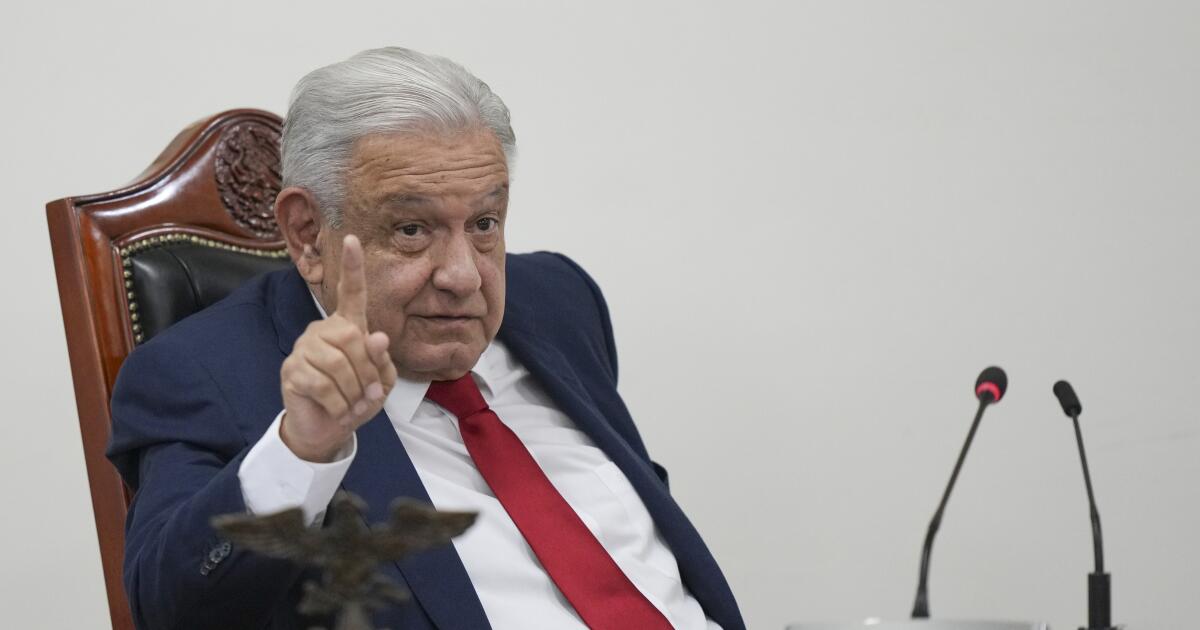
Mexican President Andrés Manuel López Obrador announced a “pause” in the relationship with the United States and Canadian embassies after the ambassadors from those countries criticized his plan to dramatically overhaul the justice system.
“They have to learn to respect the sovereignty of Mexico,” López Obrador told journalists Tuesday morning at his daily news conference.
His comments came after U.S. Ambassador Ken Salazar and his Canadian counterpart expressed their concern about sweeping changes proposed by López Obrador to the nation’s courts.
Under the plan, which the president hopes to push through Congress during his final month in office in September, federal judges, including members of the Supreme Court, would lose their jobs, and their replacements would be elected by popular vote.
López Obrador says the reform is necessary because the courts, which have ruled against several of his pet legislative efforts in recent years, are corrupt.
Critics say there’s no evidence of that, and that putting judges on the nation’s highest courts up for election would politicize the judiciary and give even more power to López Obrador’s ruling Morena party.
Having swept elections in recent years, the party would almost certainly have an outsized influence over which judges win.
The U.S and Canadian embassies did not immediately respond to requests for comment after López Obrador’s announcement Tuesday.
Salazar, who has had a close relationship with López Obrador, came out publicly against the president’s plan last week, saying the overhaul would “threaten the historic trade relationship we have built, which relies on investors’ confidence in Mexico’s legal framework.”
“Direct elections would also make it easier for cartels and other bad actors to take advantage of politically motivated and inexperienced judges,” said Salazar, who before becoming ambassador served as a senator, Interior secretary and as Colorado’s attorney general.
“Based on my lifelong experience supporting the rule of law, I believe popular direct election of judges is a major risk to the functioning of Mexico’s democracy,” he said.
López Obrador has railed against those comments in recent days. When asked on Tuesday whether he was speaking to Salazar, he said that his relationship with the ambassador had been “on pause.”
“We are not going to tell him to leave the country,” the president said of Salazar. “But we do have to read him the Constitution — it is like reading him the riot act.”
He later added that Mexico’s communication with the U.S. and Canadian embassies was “on pause.” But he said the broader U.S.-Mexico bilateral relationship continued.
López Obrador’s push of the judicial reform has riled markets, with the peso losing value against the dollar and U.S. banks including Morgan Stanley, Bank of America and Fitch Ratings warning that the plan carries financial risks for Mexico and could cripple bilateral trade.
On Oct. 1, his successor, Claudia Sheinbaum will be sworn in to office. A political protege of López Obrador, she has said she supports the judicial overhaul.

Mexican President Andrés Manuel López Obrador announced a “pause” in the relationship with the United States and Canadian embassies after the ambassadors from those countries criticized his plan to dramatically overhaul the justice system.
“They have to learn to respect the sovereignty of Mexico,” López Obrador told journalists Tuesday morning at his daily news conference.
His comments came after U.S. Ambassador Ken Salazar and his Canadian counterpart expressed their concern about sweeping changes proposed by López Obrador to the nation’s courts.
Under the plan, which the president hopes to push through Congress during his final month in office in September, federal judges, including members of the Supreme Court, would lose their jobs, and their replacements would be elected by popular vote.
López Obrador says the reform is necessary because the courts, which have ruled against several of his pet legislative efforts in recent years, are corrupt.
Critics say there’s no evidence of that, and that putting judges on the nation’s highest courts up for election would politicize the judiciary and give even more power to López Obrador’s ruling Morena party.
Having swept elections in recent years, the party would almost certainly have an outsized influence over which judges win.
The U.S and Canadian embassies did not immediately respond to requests for comment after López Obrador’s announcement Tuesday.
Salazar, who has had a close relationship with López Obrador, came out publicly against the president’s plan last week, saying the overhaul would “threaten the historic trade relationship we have built, which relies on investors’ confidence in Mexico’s legal framework.”
“Direct elections would also make it easier for cartels and other bad actors to take advantage of politically motivated and inexperienced judges,” said Salazar, who before becoming ambassador served as a senator, Interior secretary and as Colorado’s attorney general.
“Based on my lifelong experience supporting the rule of law, I believe popular direct election of judges is a major risk to the functioning of Mexico’s democracy,” he said.
López Obrador has railed against those comments in recent days. When asked on Tuesday whether he was speaking to Salazar, he said that his relationship with the ambassador had been “on pause.”
“We are not going to tell him to leave the country,” the president said of Salazar. “But we do have to read him the Constitution — it is like reading him the riot act.”
He later added that Mexico’s communication with the U.S. and Canadian embassies was “on pause.” But he said the broader U.S.-Mexico bilateral relationship continued.
López Obrador’s push of the judicial reform has riled markets, with the peso losing value against the dollar and U.S. banks including Morgan Stanley, Bank of America and Fitch Ratings warning that the plan carries financial risks for Mexico and could cripple bilateral trade.
On Oct. 1, his successor, Claudia Sheinbaum will be sworn in to office. A political protege of López Obrador, she has said she supports the judicial overhaul.

Mexican President Andrés Manuel López Obrador announced a “pause” in the relationship with the United States and Canadian embassies after the ambassadors from those countries criticized his plan to dramatically overhaul the justice system.
“They have to learn to respect the sovereignty of Mexico,” López Obrador told journalists Tuesday morning at his daily news conference.
His comments came after U.S. Ambassador Ken Salazar and his Canadian counterpart expressed their concern about sweeping changes proposed by López Obrador to the nation’s courts.
Under the plan, which the president hopes to push through Congress during his final month in office in September, federal judges, including members of the Supreme Court, would lose their jobs, and their replacements would be elected by popular vote.
López Obrador says the reform is necessary because the courts, which have ruled against several of his pet legislative efforts in recent years, are corrupt.
Critics say there’s no evidence of that, and that putting judges on the nation’s highest courts up for election would politicize the judiciary and give even more power to López Obrador’s ruling Morena party.
Having swept elections in recent years, the party would almost certainly have an outsized influence over which judges win.
The U.S and Canadian embassies did not immediately respond to requests for comment after López Obrador’s announcement Tuesday.
Salazar, who has had a close relationship with López Obrador, came out publicly against the president’s plan last week, saying the overhaul would “threaten the historic trade relationship we have built, which relies on investors’ confidence in Mexico’s legal framework.”
“Direct elections would also make it easier for cartels and other bad actors to take advantage of politically motivated and inexperienced judges,” said Salazar, who before becoming ambassador served as a senator, Interior secretary and as Colorado’s attorney general.
“Based on my lifelong experience supporting the rule of law, I believe popular direct election of judges is a major risk to the functioning of Mexico’s democracy,” he said.
López Obrador has railed against those comments in recent days. When asked on Tuesday whether he was speaking to Salazar, he said that his relationship with the ambassador had been “on pause.”
“We are not going to tell him to leave the country,” the president said of Salazar. “But we do have to read him the Constitution — it is like reading him the riot act.”
He later added that Mexico’s communication with the U.S. and Canadian embassies was “on pause.” But he said the broader U.S.-Mexico bilateral relationship continued.
López Obrador’s push of the judicial reform has riled markets, with the peso losing value against the dollar and U.S. banks including Morgan Stanley, Bank of America and Fitch Ratings warning that the plan carries financial risks for Mexico and could cripple bilateral trade.
On Oct. 1, his successor, Claudia Sheinbaum will be sworn in to office. A political protege of López Obrador, she has said she supports the judicial overhaul.
Mexican President Andrés Manuel López Obrador announced a “pause” in the relationship with the United States and Canadian embassies after the ambassadors from those countries criticized his plan to dramatically overhaul the justice system.
“They have to learn to respect the sovereignty of Mexico,” López Obrador told journalists Tuesday morning at his daily news conference.
His comments came after U.S. Ambassador Ken Salazar and his Canadian counterpart expressed their concern about sweeping changes proposed by López Obrador to the nation’s courts.
Under the plan, which the president hopes to push through Congress during his final month in office in September, federal judges, including members of the Supreme Court, would lose their jobs, and their replacements would be elected by popular vote.
López Obrador says the reform is necessary because the courts, which have ruled against several of his pet legislative efforts in recent years, are corrupt.
Critics say there’s no evidence of that, and that putting judges on the nation’s highest courts up for election would politicize the judiciary and give even more power to López Obrador’s ruling Morena party.
Having swept elections in recent years, the party would almost certainly have an outsized influence over which judges win.
The U.S and Canadian embassies did not immediately respond to requests for comment after López Obrador’s announcement Tuesday.
Salazar, who has had a close relationship with López Obrador, came out publicly against the president’s plan last week, saying the overhaul would “threaten the historic trade relationship we have built, which relies on investors’ confidence in Mexico’s legal framework.”
“Direct elections would also make it easier for cartels and other bad actors to take advantage of politically motivated and inexperienced judges,” said Salazar, who before becoming ambassador served as a senator, Interior secretary and as Colorado’s attorney general.
“Based on my lifelong experience supporting the rule of law, I believe popular direct election of judges is a major risk to the functioning of Mexico’s democracy,” he said.
López Obrador has railed against those comments in recent days. When asked on Tuesday whether he was speaking to Salazar, he said that his relationship with the ambassador had been “on pause.”
“We are not going to tell him to leave the country,” the president said of Salazar. “But we do have to read him the Constitution — it is like reading him the riot act.”
He later added that Mexico’s communication with the U.S. and Canadian embassies was “on pause.” But he said the broader U.S.-Mexico bilateral relationship continued.
López Obrador’s push of the judicial reform has riled markets, with the peso losing value against the dollar and U.S. banks including Morgan Stanley, Bank of America and Fitch Ratings warning that the plan carries financial risks for Mexico and could cripple bilateral trade.
On Oct. 1, his successor, Claudia Sheinbaum will be sworn in to office. A political protege of López Obrador, she has said she supports the judicial overhaul.

Mexican President Andrés Manuel López Obrador announced a “pause” in the relationship with the United States and Canadian embassies after the ambassadors from those countries criticized his plan to dramatically overhaul the justice system.
“They have to learn to respect the sovereignty of Mexico,” López Obrador told journalists Tuesday morning at his daily news conference.
His comments came after U.S. Ambassador Ken Salazar and his Canadian counterpart expressed their concern about sweeping changes proposed by López Obrador to the nation’s courts.
Under the plan, which the president hopes to push through Congress during his final month in office in September, federal judges, including members of the Supreme Court, would lose their jobs, and their replacements would be elected by popular vote.
López Obrador says the reform is necessary because the courts, which have ruled against several of his pet legislative efforts in recent years, are corrupt.
Critics say there’s no evidence of that, and that putting judges on the nation’s highest courts up for election would politicize the judiciary and give even more power to López Obrador’s ruling Morena party.
Having swept elections in recent years, the party would almost certainly have an outsized influence over which judges win.
The U.S and Canadian embassies did not immediately respond to requests for comment after López Obrador’s announcement Tuesday.
Salazar, who has had a close relationship with López Obrador, came out publicly against the president’s plan last week, saying the overhaul would “threaten the historic trade relationship we have built, which relies on investors’ confidence in Mexico’s legal framework.”
“Direct elections would also make it easier for cartels and other bad actors to take advantage of politically motivated and inexperienced judges,” said Salazar, who before becoming ambassador served as a senator, Interior secretary and as Colorado’s attorney general.
“Based on my lifelong experience supporting the rule of law, I believe popular direct election of judges is a major risk to the functioning of Mexico’s democracy,” he said.
López Obrador has railed against those comments in recent days. When asked on Tuesday whether he was speaking to Salazar, he said that his relationship with the ambassador had been “on pause.”
“We are not going to tell him to leave the country,” the president said of Salazar. “But we do have to read him the Constitution — it is like reading him the riot act.”
He later added that Mexico’s communication with the U.S. and Canadian embassies was “on pause.” But he said the broader U.S.-Mexico bilateral relationship continued.
López Obrador’s push of the judicial reform has riled markets, with the peso losing value against the dollar and U.S. banks including Morgan Stanley, Bank of America and Fitch Ratings warning that the plan carries financial risks for Mexico and could cripple bilateral trade.
On Oct. 1, his successor, Claudia Sheinbaum will be sworn in to office. A political protege of López Obrador, she has said she supports the judicial overhaul.
Mexican President Andrés Manuel López Obrador announced a “pause” in the relationship with the United States and Canadian embassies after the ambassadors from those countries criticized his plan to dramatically overhaul the justice system.
“They have to learn to respect the sovereignty of Mexico,” López Obrador told journalists Tuesday morning at his daily news conference.
His comments came after U.S. Ambassador Ken Salazar and his Canadian counterpart expressed their concern about sweeping changes proposed by López Obrador to the nation’s courts.
Under the plan, which the president hopes to push through Congress during his final month in office in September, federal judges, including members of the Supreme Court, would lose their jobs, and their replacements would be elected by popular vote.
López Obrador says the reform is necessary because the courts, which have ruled against several of his pet legislative efforts in recent years, are corrupt.
Critics say there’s no evidence of that, and that putting judges on the nation’s highest courts up for election would politicize the judiciary and give even more power to López Obrador’s ruling Morena party.
Having swept elections in recent years, the party would almost certainly have an outsized influence over which judges win.
The U.S and Canadian embassies did not immediately respond to requests for comment after López Obrador’s announcement Tuesday.
Salazar, who has had a close relationship with López Obrador, came out publicly against the president’s plan last week, saying the overhaul would “threaten the historic trade relationship we have built, which relies on investors’ confidence in Mexico’s legal framework.”
“Direct elections would also make it easier for cartels and other bad actors to take advantage of politically motivated and inexperienced judges,” said Salazar, who before becoming ambassador served as a senator, Interior secretary and as Colorado’s attorney general.
“Based on my lifelong experience supporting the rule of law, I believe popular direct election of judges is a major risk to the functioning of Mexico’s democracy,” he said.
López Obrador has railed against those comments in recent days. When asked on Tuesday whether he was speaking to Salazar, he said that his relationship with the ambassador had been “on pause.”
“We are not going to tell him to leave the country,” the president said of Salazar. “But we do have to read him the Constitution — it is like reading him the riot act.”
He later added that Mexico’s communication with the U.S. and Canadian embassies was “on pause.” But he said the broader U.S.-Mexico bilateral relationship continued.
López Obrador’s push of the judicial reform has riled markets, with the peso losing value against the dollar and U.S. banks including Morgan Stanley, Bank of America and Fitch Ratings warning that the plan carries financial risks for Mexico and could cripple bilateral trade.
On Oct. 1, his successor, Claudia Sheinbaum will be sworn in to office. A political protege of López Obrador, she has said she supports the judicial overhaul.
Mexican President Andrés Manuel López Obrador announced a “pause” in the relationship with the United States and Canadian embassies after the ambassadors from those countries criticized his plan to dramatically overhaul the justice system.
“They have to learn to respect the sovereignty of Mexico,” López Obrador told journalists Tuesday morning at his daily news conference.
His comments came after U.S. Ambassador Ken Salazar and his Canadian counterpart expressed their concern about sweeping changes proposed by López Obrador to the nation’s courts.
Under the plan, which the president hopes to push through Congress during his final month in office in September, federal judges, including members of the Supreme Court, would lose their jobs, and their replacements would be elected by popular vote.
López Obrador says the reform is necessary because the courts, which have ruled against several of his pet legislative efforts in recent years, are corrupt.
Critics say there’s no evidence of that, and that putting judges on the nation’s highest courts up for election would politicize the judiciary and give even more power to López Obrador’s ruling Morena party.
Having swept elections in recent years, the party would almost certainly have an outsized influence over which judges win.
The U.S and Canadian embassies did not immediately respond to requests for comment after López Obrador’s announcement Tuesday.
Salazar, who has had a close relationship with López Obrador, came out publicly against the president’s plan last week, saying the overhaul would “threaten the historic trade relationship we have built, which relies on investors’ confidence in Mexico’s legal framework.”
“Direct elections would also make it easier for cartels and other bad actors to take advantage of politically motivated and inexperienced judges,” said Salazar, who before becoming ambassador served as a senator, Interior secretary and as Colorado’s attorney general.
“Based on my lifelong experience supporting the rule of law, I believe popular direct election of judges is a major risk to the functioning of Mexico’s democracy,” he said.
López Obrador has railed against those comments in recent days. When asked on Tuesday whether he was speaking to Salazar, he said that his relationship with the ambassador had been “on pause.”
“We are not going to tell him to leave the country,” the president said of Salazar. “But we do have to read him the Constitution — it is like reading him the riot act.”
He later added that Mexico’s communication with the U.S. and Canadian embassies was “on pause.” But he said the broader U.S.-Mexico bilateral relationship continued.
López Obrador’s push of the judicial reform has riled markets, with the peso losing value against the dollar and U.S. banks including Morgan Stanley, Bank of America and Fitch Ratings warning that the plan carries financial risks for Mexico and could cripple bilateral trade.
On Oct. 1, his successor, Claudia Sheinbaum will be sworn in to office. A political protege of López Obrador, she has said she supports the judicial overhaul.
Mexican President Andrés Manuel López Obrador announced a “pause” in the relationship with the United States and Canadian embassies after the ambassadors from those countries criticized his plan to dramatically overhaul the justice system.
“They have to learn to respect the sovereignty of Mexico,” López Obrador told journalists Tuesday morning at his daily news conference.
His comments came after U.S. Ambassador Ken Salazar and his Canadian counterpart expressed their concern about sweeping changes proposed by López Obrador to the nation’s courts.
Under the plan, which the president hopes to push through Congress during his final month in office in September, federal judges, including members of the Supreme Court, would lose their jobs, and their replacements would be elected by popular vote.
López Obrador says the reform is necessary because the courts, which have ruled against several of his pet legislative efforts in recent years, are corrupt.
Critics say there’s no evidence of that, and that putting judges on the nation’s highest courts up for election would politicize the judiciary and give even more power to López Obrador’s ruling Morena party.
Having swept elections in recent years, the party would almost certainly have an outsized influence over which judges win.
The U.S and Canadian embassies did not immediately respond to requests for comment after López Obrador’s announcement Tuesday.
Salazar, who has had a close relationship with López Obrador, came out publicly against the president’s plan last week, saying the overhaul would “threaten the historic trade relationship we have built, which relies on investors’ confidence in Mexico’s legal framework.”
“Direct elections would also make it easier for cartels and other bad actors to take advantage of politically motivated and inexperienced judges,” said Salazar, who before becoming ambassador served as a senator, Interior secretary and as Colorado’s attorney general.
“Based on my lifelong experience supporting the rule of law, I believe popular direct election of judges is a major risk to the functioning of Mexico’s democracy,” he said.
López Obrador has railed against those comments in recent days. When asked on Tuesday whether he was speaking to Salazar, he said that his relationship with the ambassador had been “on pause.”
“We are not going to tell him to leave the country,” the president said of Salazar. “But we do have to read him the Constitution — it is like reading him the riot act.”
He later added that Mexico’s communication with the U.S. and Canadian embassies was “on pause.” But he said the broader U.S.-Mexico bilateral relationship continued.
López Obrador’s push of the judicial reform has riled markets, with the peso losing value against the dollar and U.S. banks including Morgan Stanley, Bank of America and Fitch Ratings warning that the plan carries financial risks for Mexico and could cripple bilateral trade.
On Oct. 1, his successor, Claudia Sheinbaum will be sworn in to office. A political protege of López Obrador, she has said she supports the judicial overhaul.

Mexican President Andrés Manuel López Obrador announced a “pause” in the relationship with the United States and Canadian embassies after the ambassadors from those countries criticized his plan to dramatically overhaul the justice system.
“They have to learn to respect the sovereignty of Mexico,” López Obrador told journalists Tuesday morning at his daily news conference.
His comments came after U.S. Ambassador Ken Salazar and his Canadian counterpart expressed their concern about sweeping changes proposed by López Obrador to the nation’s courts.
Under the plan, which the president hopes to push through Congress during his final month in office in September, federal judges, including members of the Supreme Court, would lose their jobs, and their replacements would be elected by popular vote.
López Obrador says the reform is necessary because the courts, which have ruled against several of his pet legislative efforts in recent years, are corrupt.
Critics say there’s no evidence of that, and that putting judges on the nation’s highest courts up for election would politicize the judiciary and give even more power to López Obrador’s ruling Morena party.
Having swept elections in recent years, the party would almost certainly have an outsized influence over which judges win.
The U.S and Canadian embassies did not immediately respond to requests for comment after López Obrador’s announcement Tuesday.
Salazar, who has had a close relationship with López Obrador, came out publicly against the president’s plan last week, saying the overhaul would “threaten the historic trade relationship we have built, which relies on investors’ confidence in Mexico’s legal framework.”
“Direct elections would also make it easier for cartels and other bad actors to take advantage of politically motivated and inexperienced judges,” said Salazar, who before becoming ambassador served as a senator, Interior secretary and as Colorado’s attorney general.
“Based on my lifelong experience supporting the rule of law, I believe popular direct election of judges is a major risk to the functioning of Mexico’s democracy,” he said.
López Obrador has railed against those comments in recent days. When asked on Tuesday whether he was speaking to Salazar, he said that his relationship with the ambassador had been “on pause.”
“We are not going to tell him to leave the country,” the president said of Salazar. “But we do have to read him the Constitution — it is like reading him the riot act.”
He later added that Mexico’s communication with the U.S. and Canadian embassies was “on pause.” But he said the broader U.S.-Mexico bilateral relationship continued.
López Obrador’s push of the judicial reform has riled markets, with the peso losing value against the dollar and U.S. banks including Morgan Stanley, Bank of America and Fitch Ratings warning that the plan carries financial risks for Mexico and could cripple bilateral trade.
On Oct. 1, his successor, Claudia Sheinbaum will be sworn in to office. A political protege of López Obrador, she has said she supports the judicial overhaul.
Mexican President Andrés Manuel López Obrador announced a “pause” in the relationship with the United States and Canadian embassies after the ambassadors from those countries criticized his plan to dramatically overhaul the justice system.
“They have to learn to respect the sovereignty of Mexico,” López Obrador told journalists Tuesday morning at his daily news conference.
His comments came after U.S. Ambassador Ken Salazar and his Canadian counterpart expressed their concern about sweeping changes proposed by López Obrador to the nation’s courts.
Under the plan, which the president hopes to push through Congress during his final month in office in September, federal judges, including members of the Supreme Court, would lose their jobs, and their replacements would be elected by popular vote.
López Obrador says the reform is necessary because the courts, which have ruled against several of his pet legislative efforts in recent years, are corrupt.
Critics say there’s no evidence of that, and that putting judges on the nation’s highest courts up for election would politicize the judiciary and give even more power to López Obrador’s ruling Morena party.
Having swept elections in recent years, the party would almost certainly have an outsized influence over which judges win.
The U.S and Canadian embassies did not immediately respond to requests for comment after López Obrador’s announcement Tuesday.
Salazar, who has had a close relationship with López Obrador, came out publicly against the president’s plan last week, saying the overhaul would “threaten the historic trade relationship we have built, which relies on investors’ confidence in Mexico’s legal framework.”
“Direct elections would also make it easier for cartels and other bad actors to take advantage of politically motivated and inexperienced judges,” said Salazar, who before becoming ambassador served as a senator, Interior secretary and as Colorado’s attorney general.
“Based on my lifelong experience supporting the rule of law, I believe popular direct election of judges is a major risk to the functioning of Mexico’s democracy,” he said.
López Obrador has railed against those comments in recent days. When asked on Tuesday whether he was speaking to Salazar, he said that his relationship with the ambassador had been “on pause.”
“We are not going to tell him to leave the country,” the president said of Salazar. “But we do have to read him the Constitution — it is like reading him the riot act.”
He later added that Mexico’s communication with the U.S. and Canadian embassies was “on pause.” But he said the broader U.S.-Mexico bilateral relationship continued.
López Obrador’s push of the judicial reform has riled markets, with the peso losing value against the dollar and U.S. banks including Morgan Stanley, Bank of America and Fitch Ratings warning that the plan carries financial risks for Mexico and could cripple bilateral trade.
On Oct. 1, his successor, Claudia Sheinbaum will be sworn in to office. A political protege of López Obrador, she has said she supports the judicial overhaul.
Mexican President Andrés Manuel López Obrador announced a “pause” in the relationship with the United States and Canadian embassies after the ambassadors from those countries criticized his plan to dramatically overhaul the justice system.
“They have to learn to respect the sovereignty of Mexico,” López Obrador told journalists Tuesday morning at his daily news conference.
His comments came after U.S. Ambassador Ken Salazar and his Canadian counterpart expressed their concern about sweeping changes proposed by López Obrador to the nation’s courts.
Under the plan, which the president hopes to push through Congress during his final month in office in September, federal judges, including members of the Supreme Court, would lose their jobs, and their replacements would be elected by popular vote.
López Obrador says the reform is necessary because the courts, which have ruled against several of his pet legislative efforts in recent years, are corrupt.
Critics say there’s no evidence of that, and that putting judges on the nation’s highest courts up for election would politicize the judiciary and give even more power to López Obrador’s ruling Morena party.
Having swept elections in recent years, the party would almost certainly have an outsized influence over which judges win.
The U.S and Canadian embassies did not immediately respond to requests for comment after López Obrador’s announcement Tuesday.
Salazar, who has had a close relationship with López Obrador, came out publicly against the president’s plan last week, saying the overhaul would “threaten the historic trade relationship we have built, which relies on investors’ confidence in Mexico’s legal framework.”
“Direct elections would also make it easier for cartels and other bad actors to take advantage of politically motivated and inexperienced judges,” said Salazar, who before becoming ambassador served as a senator, Interior secretary and as Colorado’s attorney general.
“Based on my lifelong experience supporting the rule of law, I believe popular direct election of judges is a major risk to the functioning of Mexico’s democracy,” he said.
López Obrador has railed against those comments in recent days. When asked on Tuesday whether he was speaking to Salazar, he said that his relationship with the ambassador had been “on pause.”
“We are not going to tell him to leave the country,” the president said of Salazar. “But we do have to read him the Constitution — it is like reading him the riot act.”
He later added that Mexico’s communication with the U.S. and Canadian embassies was “on pause.” But he said the broader U.S.-Mexico bilateral relationship continued.
López Obrador’s push of the judicial reform has riled markets, with the peso losing value against the dollar and U.S. banks including Morgan Stanley, Bank of America and Fitch Ratings warning that the plan carries financial risks for Mexico and could cripple bilateral trade.
On Oct. 1, his successor, Claudia Sheinbaum will be sworn in to office. A political protege of López Obrador, she has said she supports the judicial overhaul.
Mexican President Andrés Manuel López Obrador announced a “pause” in the relationship with the United States and Canadian embassies after the ambassadors from those countries criticized his plan to dramatically overhaul the justice system.
“They have to learn to respect the sovereignty of Mexico,” López Obrador told journalists Tuesday morning at his daily news conference.
His comments came after U.S. Ambassador Ken Salazar and his Canadian counterpart expressed their concern about sweeping changes proposed by López Obrador to the nation’s courts.
Under the plan, which the president hopes to push through Congress during his final month in office in September, federal judges, including members of the Supreme Court, would lose their jobs, and their replacements would be elected by popular vote.
López Obrador says the reform is necessary because the courts, which have ruled against several of his pet legislative efforts in recent years, are corrupt.
Critics say there’s no evidence of that, and that putting judges on the nation’s highest courts up for election would politicize the judiciary and give even more power to López Obrador’s ruling Morena party.
Having swept elections in recent years, the party would almost certainly have an outsized influence over which judges win.
The U.S and Canadian embassies did not immediately respond to requests for comment after López Obrador’s announcement Tuesday.
Salazar, who has had a close relationship with López Obrador, came out publicly against the president’s plan last week, saying the overhaul would “threaten the historic trade relationship we have built, which relies on investors’ confidence in Mexico’s legal framework.”
“Direct elections would also make it easier for cartels and other bad actors to take advantage of politically motivated and inexperienced judges,” said Salazar, who before becoming ambassador served as a senator, Interior secretary and as Colorado’s attorney general.
“Based on my lifelong experience supporting the rule of law, I believe popular direct election of judges is a major risk to the functioning of Mexico’s democracy,” he said.
López Obrador has railed against those comments in recent days. When asked on Tuesday whether he was speaking to Salazar, he said that his relationship with the ambassador had been “on pause.”
“We are not going to tell him to leave the country,” the president said of Salazar. “But we do have to read him the Constitution — it is like reading him the riot act.”
He later added that Mexico’s communication with the U.S. and Canadian embassies was “on pause.” But he said the broader U.S.-Mexico bilateral relationship continued.
López Obrador’s push of the judicial reform has riled markets, with the peso losing value against the dollar and U.S. banks including Morgan Stanley, Bank of America and Fitch Ratings warning that the plan carries financial risks for Mexico and could cripple bilateral trade.
On Oct. 1, his successor, Claudia Sheinbaum will be sworn in to office. A political protege of López Obrador, she has said she supports the judicial overhaul.
Mexican President Andrés Manuel López Obrador announced a “pause” in the relationship with the United States and Canadian embassies after the ambassadors from those countries criticized his plan to dramatically overhaul the justice system.
“They have to learn to respect the sovereignty of Mexico,” López Obrador told journalists Tuesday morning at his daily news conference.
His comments came after U.S. Ambassador Ken Salazar and his Canadian counterpart expressed their concern about sweeping changes proposed by López Obrador to the nation’s courts.
Under the plan, which the president hopes to push through Congress during his final month in office in September, federal judges, including members of the Supreme Court, would lose their jobs, and their replacements would be elected by popular vote.
López Obrador says the reform is necessary because the courts, which have ruled against several of his pet legislative efforts in recent years, are corrupt.
Critics say there’s no evidence of that, and that putting judges on the nation’s highest courts up for election would politicize the judiciary and give even more power to López Obrador’s ruling Morena party.
Having swept elections in recent years, the party would almost certainly have an outsized influence over which judges win.
The U.S and Canadian embassies did not immediately respond to requests for comment after López Obrador’s announcement Tuesday.
Salazar, who has had a close relationship with López Obrador, came out publicly against the president’s plan last week, saying the overhaul would “threaten the historic trade relationship we have built, which relies on investors’ confidence in Mexico’s legal framework.”
“Direct elections would also make it easier for cartels and other bad actors to take advantage of politically motivated and inexperienced judges,” said Salazar, who before becoming ambassador served as a senator, Interior secretary and as Colorado’s attorney general.
“Based on my lifelong experience supporting the rule of law, I believe popular direct election of judges is a major risk to the functioning of Mexico’s democracy,” he said.
López Obrador has railed against those comments in recent days. When asked on Tuesday whether he was speaking to Salazar, he said that his relationship with the ambassador had been “on pause.”
“We are not going to tell him to leave the country,” the president said of Salazar. “But we do have to read him the Constitution — it is like reading him the riot act.”
He later added that Mexico’s communication with the U.S. and Canadian embassies was “on pause.” But he said the broader U.S.-Mexico bilateral relationship continued.
López Obrador’s push of the judicial reform has riled markets, with the peso losing value against the dollar and U.S. banks including Morgan Stanley, Bank of America and Fitch Ratings warning that the plan carries financial risks for Mexico and could cripple bilateral trade.
On Oct. 1, his successor, Claudia Sheinbaum will be sworn in to office. A political protege of López Obrador, she has said she supports the judicial overhaul.
Mexican President Andrés Manuel López Obrador announced a “pause” in the relationship with the United States and Canadian embassies after the ambassadors from those countries criticized his plan to dramatically overhaul the justice system.
“They have to learn to respect the sovereignty of Mexico,” López Obrador told journalists Tuesday morning at his daily news conference.
His comments came after U.S. Ambassador Ken Salazar and his Canadian counterpart expressed their concern about sweeping changes proposed by López Obrador to the nation’s courts.
Under the plan, which the president hopes to push through Congress during his final month in office in September, federal judges, including members of the Supreme Court, would lose their jobs, and their replacements would be elected by popular vote.
López Obrador says the reform is necessary because the courts, which have ruled against several of his pet legislative efforts in recent years, are corrupt.
Critics say there’s no evidence of that, and that putting judges on the nation’s highest courts up for election would politicize the judiciary and give even more power to López Obrador’s ruling Morena party.
Having swept elections in recent years, the party would almost certainly have an outsized influence over which judges win.
The U.S and Canadian embassies did not immediately respond to requests for comment after López Obrador’s announcement Tuesday.
Salazar, who has had a close relationship with López Obrador, came out publicly against the president’s plan last week, saying the overhaul would “threaten the historic trade relationship we have built, which relies on investors’ confidence in Mexico’s legal framework.”
“Direct elections would also make it easier for cartels and other bad actors to take advantage of politically motivated and inexperienced judges,” said Salazar, who before becoming ambassador served as a senator, Interior secretary and as Colorado’s attorney general.
“Based on my lifelong experience supporting the rule of law, I believe popular direct election of judges is a major risk to the functioning of Mexico’s democracy,” he said.
López Obrador has railed against those comments in recent days. When asked on Tuesday whether he was speaking to Salazar, he said that his relationship with the ambassador had been “on pause.”
“We are not going to tell him to leave the country,” the president said of Salazar. “But we do have to read him the Constitution — it is like reading him the riot act.”
He later added that Mexico’s communication with the U.S. and Canadian embassies was “on pause.” But he said the broader U.S.-Mexico bilateral relationship continued.
López Obrador’s push of the judicial reform has riled markets, with the peso losing value against the dollar and U.S. banks including Morgan Stanley, Bank of America and Fitch Ratings warning that the plan carries financial risks for Mexico and could cripple bilateral trade.
On Oct. 1, his successor, Claudia Sheinbaum will be sworn in to office. A political protege of López Obrador, she has said she supports the judicial overhaul.
Mexican President Andrés Manuel López Obrador announced a “pause” in the relationship with the United States and Canadian embassies after the ambassadors from those countries criticized his plan to dramatically overhaul the justice system.
“They have to learn to respect the sovereignty of Mexico,” López Obrador told journalists Tuesday morning at his daily news conference.
His comments came after U.S. Ambassador Ken Salazar and his Canadian counterpart expressed their concern about sweeping changes proposed by López Obrador to the nation’s courts.
Under the plan, which the president hopes to push through Congress during his final month in office in September, federal judges, including members of the Supreme Court, would lose their jobs, and their replacements would be elected by popular vote.
López Obrador says the reform is necessary because the courts, which have ruled against several of his pet legislative efforts in recent years, are corrupt.
Critics say there’s no evidence of that, and that putting judges on the nation’s highest courts up for election would politicize the judiciary and give even more power to López Obrador’s ruling Morena party.
Having swept elections in recent years, the party would almost certainly have an outsized influence over which judges win.
The U.S and Canadian embassies did not immediately respond to requests for comment after López Obrador’s announcement Tuesday.
Salazar, who has had a close relationship with López Obrador, came out publicly against the president’s plan last week, saying the overhaul would “threaten the historic trade relationship we have built, which relies on investors’ confidence in Mexico’s legal framework.”
“Direct elections would also make it easier for cartels and other bad actors to take advantage of politically motivated and inexperienced judges,” said Salazar, who before becoming ambassador served as a senator, Interior secretary and as Colorado’s attorney general.
“Based on my lifelong experience supporting the rule of law, I believe popular direct election of judges is a major risk to the functioning of Mexico’s democracy,” he said.
López Obrador has railed against those comments in recent days. When asked on Tuesday whether he was speaking to Salazar, he said that his relationship with the ambassador had been “on pause.”
“We are not going to tell him to leave the country,” the president said of Salazar. “But we do have to read him the Constitution — it is like reading him the riot act.”
He later added that Mexico’s communication with the U.S. and Canadian embassies was “on pause.” But he said the broader U.S.-Mexico bilateral relationship continued.
López Obrador’s push of the judicial reform has riled markets, with the peso losing value against the dollar and U.S. banks including Morgan Stanley, Bank of America and Fitch Ratings warning that the plan carries financial risks for Mexico and could cripple bilateral trade.
On Oct. 1, his successor, Claudia Sheinbaum will be sworn in to office. A political protege of López Obrador, she has said she supports the judicial overhaul.
Mexican President Andrés Manuel López Obrador announced a “pause” in the relationship with the United States and Canadian embassies after the ambassadors from those countries criticized his plan to dramatically overhaul the justice system.
“They have to learn to respect the sovereignty of Mexico,” López Obrador told journalists Tuesday morning at his daily news conference.
His comments came after U.S. Ambassador Ken Salazar and his Canadian counterpart expressed their concern about sweeping changes proposed by López Obrador to the nation’s courts.
Under the plan, which the president hopes to push through Congress during his final month in office in September, federal judges, including members of the Supreme Court, would lose their jobs, and their replacements would be elected by popular vote.
López Obrador says the reform is necessary because the courts, which have ruled against several of his pet legislative efforts in recent years, are corrupt.
Critics say there’s no evidence of that, and that putting judges on the nation’s highest courts up for election would politicize the judiciary and give even more power to López Obrador’s ruling Morena party.
Having swept elections in recent years, the party would almost certainly have an outsized influence over which judges win.
The U.S and Canadian embassies did not immediately respond to requests for comment after López Obrador’s announcement Tuesday.
Salazar, who has had a close relationship with López Obrador, came out publicly against the president’s plan last week, saying the overhaul would “threaten the historic trade relationship we have built, which relies on investors’ confidence in Mexico’s legal framework.”
“Direct elections would also make it easier for cartels and other bad actors to take advantage of politically motivated and inexperienced judges,” said Salazar, who before becoming ambassador served as a senator, Interior secretary and as Colorado’s attorney general.
“Based on my lifelong experience supporting the rule of law, I believe popular direct election of judges is a major risk to the functioning of Mexico’s democracy,” he said.
López Obrador has railed against those comments in recent days. When asked on Tuesday whether he was speaking to Salazar, he said that his relationship with the ambassador had been “on pause.”
“We are not going to tell him to leave the country,” the president said of Salazar. “But we do have to read him the Constitution — it is like reading him the riot act.”
He later added that Mexico’s communication with the U.S. and Canadian embassies was “on pause.” But he said the broader U.S.-Mexico bilateral relationship continued.
López Obrador’s push of the judicial reform has riled markets, with the peso losing value against the dollar and U.S. banks including Morgan Stanley, Bank of America and Fitch Ratings warning that the plan carries financial risks for Mexico and could cripple bilateral trade.
On Oct. 1, his successor, Claudia Sheinbaum will be sworn in to office. A political protege of López Obrador, she has said she supports the judicial overhaul.

