

The single most abused, misused and misunderstood word in American politics is “unity.”
All presidential candidates vow to unite Americans. Nearly every pundit and public intellectual laments the lack of unity.
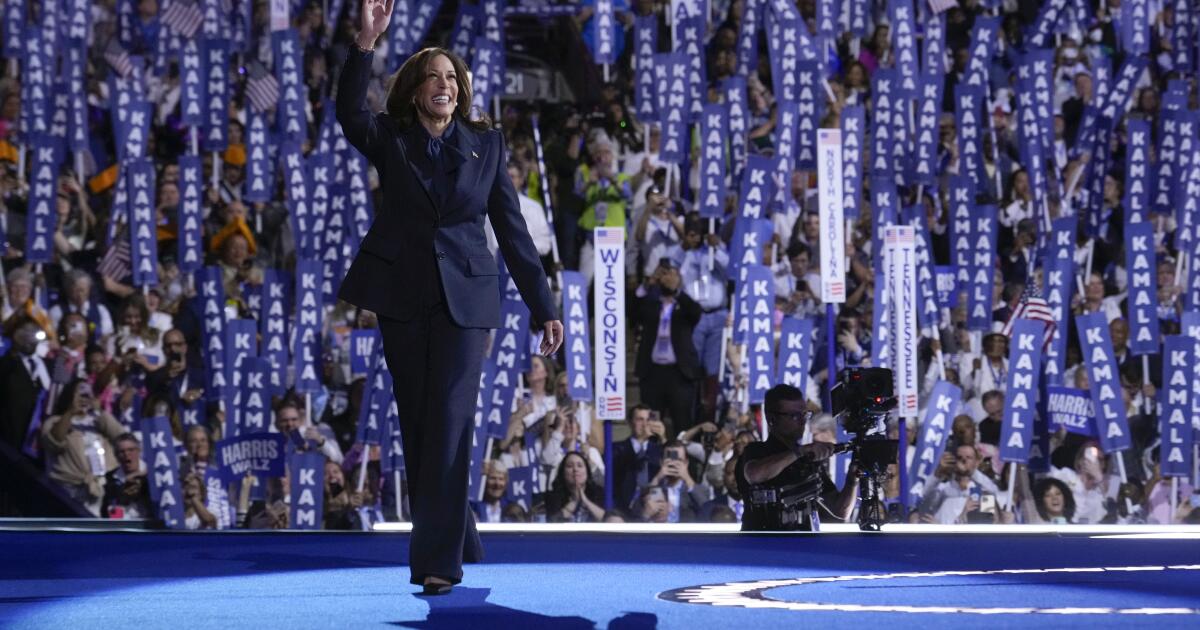
“When America is united, America is totally unstoppable,” Donald Trump declared in his inaugural address. “With unity, we can do great things. Important things,” insisted Joe Biden in his. Kamala Harris proclaimed in her acceptance speech at the Democratic convention that “in unity, there is strength.”
Such statements get to the first problem with the cult of unity: It’s an appeal to power. There is strength in unity, sure, but strength is an entirely amoral concept. Strength to do what?
Lynch mobs are unified, which is why they are terrifying. The namesake of fascism, the fasces, was a bundle of rods representing the idea of strength in numbers.
I’m not saying unity is necessarily bad, but its goodness depends entirely on what you do with it. If politicians routinely used the term “power” instead of “unity,” more people might understand that skepticism is warranted when politicians demand or claim it for their agenda.
Second, our infatuation with unity runs against the grain of the Constitution. Presidents often talk as if they are running for prime minister in a parliamentary system. They promise to do things on “Day One” of their administration that a president cannot do alone under our system.
Trump vowed to be a “dictator” on Day One of a second administration (with specific regard to immigration and oil-drilling). In 2019, Harris promised that if elected president, she would repeal the Trump tax cuts on “Day One.” Presidents can issue (often dubious) executive orders on Day One, but they cannot pass or repeal laws. That’s Congress’ job.
And Congress isn’t elected to follow the president’s orders. The often cockamamie idea of electoral mandates for presidents is irrelevant. Legislators are answerable to their own voters and constituents.
If Trump wins the election, Democrats aren’t going to feel particularly obliged to rubber-stamp his agenda. And if Harris wins, Republicans won’t reflexively defer to hers. A president can tell senators or representatives, “Look, I was elected to do X” all they like, but at least some can fairly respond, “Yeah, and I was elected to try to stop you.”
This is a constitutional feature, not a bug. My American Enterprise Institute colleague Yuval Levin underscores this point in “American Covenant,” the best book on the Constitution I’ve read. The Constitution was designed to foster political competition — between the executive and legislative branches, among and within the states, and between the federal government and the states. The separation of powers, the structure of Congress and constant elections are intended to create conflict and tension — “productive tension,” in Levin’s words.
This competition is supposed to yield better and more democratically legitimate policies through vociferous disagreement. The Constitution’s goal is disagreement, not superficial agreement forced by populist appeals to unity.
The most beneficial form of unity is consensus reached by fierce but good-faith argument. The only other form of unity that should be expected or demanded of Americans is fidelity to the Constitution’s rules on how these arguments are conducted and how officials use the power granted to them. No president can be a dictator on any day so long as the Constitution remains in force.
I dislike the asininity and demagoguery that polarization produces as much as anybody. But the problem is not disagreement so much as an inability to disagree better. Indeed, much of what drives our acidic disunity is the partisan desire to steamroll political opponents with forced unity and power not granted by the Constitution.
Politicians’ frequent assertions that “the time for debate is over” amount to an undemocratic insistence that “my critics need to shut up and get with my program.” Sometimes critics are well advised to shut up, but only if they have decisively lost the argument. And even then, our system protects dissent because the founders recognized that free speech is indispensable to a free society and that the majority sometimes gets it wrong.
When that happens, the dissenters should be able to say, “We told you so.” I’m hoping to live long enough to say exactly that when we return to the system of productive political disagreement enshrined in the Constitution.





