

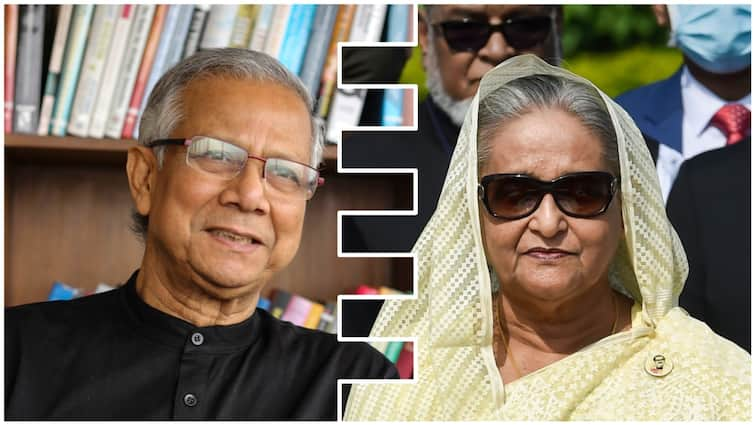
The Muhammad Yunus-led Bangladesh interim government withdrew the diplomatic passport of former Prime Minister Sheikh Hasina, who had fled to India following a students-led protests. The decision was taken earlier this month but was made public on Thursday, August 22. The development coincided with the arrival of a United Nations delegation in Dhaka to evaluate the necessity of an investigation into alleged human rights abuses.
More than 450 people lost their lives in the weeks before and following Hasina’s removal from power. Protesters eventually overran her official residence in Dhaka, ending her 15-year reign.
In a statement, the interior ministry said that diplomatic passports held by Hasina, as well as by former ministers and ex-parliamentarians no longer in office, would be invalidated.
This decision now presents a diplomatic challenge for India, where Hasina has sought refuge. Prime Minister Narendra Modi’s government has maintained a close relationship with Hasina. The ousted Bangladeshi PM had been a more favourable ally than her rival Khaleda Zia’s Bangladesh Nationalist Party, which was perceived as more of a conservative Islamist outfit.
Despite hosting Hasina, PM Modi extended his support to Bangladesh’s new leader, Nobel laureate Muhammad Yunus, who is currently leading the interim administration. “The former Prime Minister, her advisors, and all members of the dissolved national assembly were granted diplomatic passports because of their official positions,” Bangladesh’s Interior Ministry stated, adding “With their removal or retirement, these diplomatic passports, including those of their spouses, must be revoked.”
The new government in Dhaka indicated that Hasina and her former officials could apply for ordinary passports, but these would be subject to approval. “If these individuals apply for standard passports, their applications must receive clearance from two security agencies before issuance,” the ministry added.
Hasina’s administration is accused of major human rights violations, including the mass detention and extrajudicial killings of political opponents. Last week, the UN suggested in a preliminary report that there were “strong indications, warranting further independent investigation, that the security forces used unnecessary and disproportionate force”. Yunus has assured that his administration will provide “full cooperation” to the UN investigators, reported news agency AFP.
In a related development, a war crimes tribunal established by Hasina has initiated three investigations into its founder concerning the recent unrest.

The Muhammad Yunus-led Bangladesh interim government withdrew the diplomatic passport of former Prime Minister Sheikh Hasina, who had fled to India following a students-led protests. The decision was taken earlier this month but was made public on Thursday, August 22. The development coincided with the arrival of a United Nations delegation in Dhaka to evaluate the necessity of an investigation into alleged human rights abuses.
More than 450 people lost their lives in the weeks before and following Hasina’s removal from power. Protesters eventually overran her official residence in Dhaka, ending her 15-year reign.
In a statement, the interior ministry said that diplomatic passports held by Hasina, as well as by former ministers and ex-parliamentarians no longer in office, would be invalidated.
This decision now presents a diplomatic challenge for India, where Hasina has sought refuge. Prime Minister Narendra Modi’s government has maintained a close relationship with Hasina. The ousted Bangladeshi PM had been a more favourable ally than her rival Khaleda Zia’s Bangladesh Nationalist Party, which was perceived as more of a conservative Islamist outfit.
Despite hosting Hasina, PM Modi extended his support to Bangladesh’s new leader, Nobel laureate Muhammad Yunus, who is currently leading the interim administration. “The former Prime Minister, her advisors, and all members of the dissolved national assembly were granted diplomatic passports because of their official positions,” Bangladesh’s Interior Ministry stated, adding “With their removal or retirement, these diplomatic passports, including those of their spouses, must be revoked.”
The new government in Dhaka indicated that Hasina and her former officials could apply for ordinary passports, but these would be subject to approval. “If these individuals apply for standard passports, their applications must receive clearance from two security agencies before issuance,” the ministry added.
Hasina’s administration is accused of major human rights violations, including the mass detention and extrajudicial killings of political opponents. Last week, the UN suggested in a preliminary report that there were “strong indications, warranting further independent investigation, that the security forces used unnecessary and disproportionate force”. Yunus has assured that his administration will provide “full cooperation” to the UN investigators, reported news agency AFP.
In a related development, a war crimes tribunal established by Hasina has initiated three investigations into its founder concerning the recent unrest.

The Muhammad Yunus-led Bangladesh interim government withdrew the diplomatic passport of former Prime Minister Sheikh Hasina, who had fled to India following a students-led protests. The decision was taken earlier this month but was made public on Thursday, August 22. The development coincided with the arrival of a United Nations delegation in Dhaka to evaluate the necessity of an investigation into alleged human rights abuses.
More than 450 people lost their lives in the weeks before and following Hasina’s removal from power. Protesters eventually overran her official residence in Dhaka, ending her 15-year reign.
In a statement, the interior ministry said that diplomatic passports held by Hasina, as well as by former ministers and ex-parliamentarians no longer in office, would be invalidated.
This decision now presents a diplomatic challenge for India, where Hasina has sought refuge. Prime Minister Narendra Modi’s government has maintained a close relationship with Hasina. The ousted Bangladeshi PM had been a more favourable ally than her rival Khaleda Zia’s Bangladesh Nationalist Party, which was perceived as more of a conservative Islamist outfit.
Despite hosting Hasina, PM Modi extended his support to Bangladesh’s new leader, Nobel laureate Muhammad Yunus, who is currently leading the interim administration. “The former Prime Minister, her advisors, and all members of the dissolved national assembly were granted diplomatic passports because of their official positions,” Bangladesh’s Interior Ministry stated, adding “With their removal or retirement, these diplomatic passports, including those of their spouses, must be revoked.”
The new government in Dhaka indicated that Hasina and her former officials could apply for ordinary passports, but these would be subject to approval. “If these individuals apply for standard passports, their applications must receive clearance from two security agencies before issuance,” the ministry added.
Hasina’s administration is accused of major human rights violations, including the mass detention and extrajudicial killings of political opponents. Last week, the UN suggested in a preliminary report that there were “strong indications, warranting further independent investigation, that the security forces used unnecessary and disproportionate force”. Yunus has assured that his administration will provide “full cooperation” to the UN investigators, reported news agency AFP.
In a related development, a war crimes tribunal established by Hasina has initiated three investigations into its founder concerning the recent unrest.
The Muhammad Yunus-led Bangladesh interim government withdrew the diplomatic passport of former Prime Minister Sheikh Hasina, who had fled to India following a students-led protests. The decision was taken earlier this month but was made public on Thursday, August 22. The development coincided with the arrival of a United Nations delegation in Dhaka to evaluate the necessity of an investigation into alleged human rights abuses.
More than 450 people lost their lives in the weeks before and following Hasina’s removal from power. Protesters eventually overran her official residence in Dhaka, ending her 15-year reign.
In a statement, the interior ministry said that diplomatic passports held by Hasina, as well as by former ministers and ex-parliamentarians no longer in office, would be invalidated.
This decision now presents a diplomatic challenge for India, where Hasina has sought refuge. Prime Minister Narendra Modi’s government has maintained a close relationship with Hasina. The ousted Bangladeshi PM had been a more favourable ally than her rival Khaleda Zia’s Bangladesh Nationalist Party, which was perceived as more of a conservative Islamist outfit.
Despite hosting Hasina, PM Modi extended his support to Bangladesh’s new leader, Nobel laureate Muhammad Yunus, who is currently leading the interim administration. “The former Prime Minister, her advisors, and all members of the dissolved national assembly were granted diplomatic passports because of their official positions,” Bangladesh’s Interior Ministry stated, adding “With their removal or retirement, these diplomatic passports, including those of their spouses, must be revoked.”
The new government in Dhaka indicated that Hasina and her former officials could apply for ordinary passports, but these would be subject to approval. “If these individuals apply for standard passports, their applications must receive clearance from two security agencies before issuance,” the ministry added.
Hasina’s administration is accused of major human rights violations, including the mass detention and extrajudicial killings of political opponents. Last week, the UN suggested in a preliminary report that there were “strong indications, warranting further independent investigation, that the security forces used unnecessary and disproportionate force”. Yunus has assured that his administration will provide “full cooperation” to the UN investigators, reported news agency AFP.
In a related development, a war crimes tribunal established by Hasina has initiated three investigations into its founder concerning the recent unrest.

The Muhammad Yunus-led Bangladesh interim government withdrew the diplomatic passport of former Prime Minister Sheikh Hasina, who had fled to India following a students-led protests. The decision was taken earlier this month but was made public on Thursday, August 22. The development coincided with the arrival of a United Nations delegation in Dhaka to evaluate the necessity of an investigation into alleged human rights abuses.
More than 450 people lost their lives in the weeks before and following Hasina’s removal from power. Protesters eventually overran her official residence in Dhaka, ending her 15-year reign.
In a statement, the interior ministry said that diplomatic passports held by Hasina, as well as by former ministers and ex-parliamentarians no longer in office, would be invalidated.
This decision now presents a diplomatic challenge for India, where Hasina has sought refuge. Prime Minister Narendra Modi’s government has maintained a close relationship with Hasina. The ousted Bangladeshi PM had been a more favourable ally than her rival Khaleda Zia’s Bangladesh Nationalist Party, which was perceived as more of a conservative Islamist outfit.
Despite hosting Hasina, PM Modi extended his support to Bangladesh’s new leader, Nobel laureate Muhammad Yunus, who is currently leading the interim administration. “The former Prime Minister, her advisors, and all members of the dissolved national assembly were granted diplomatic passports because of their official positions,” Bangladesh’s Interior Ministry stated, adding “With their removal or retirement, these diplomatic passports, including those of their spouses, must be revoked.”
The new government in Dhaka indicated that Hasina and her former officials could apply for ordinary passports, but these would be subject to approval. “If these individuals apply for standard passports, their applications must receive clearance from two security agencies before issuance,” the ministry added.
Hasina’s administration is accused of major human rights violations, including the mass detention and extrajudicial killings of political opponents. Last week, the UN suggested in a preliminary report that there were “strong indications, warranting further independent investigation, that the security forces used unnecessary and disproportionate force”. Yunus has assured that his administration will provide “full cooperation” to the UN investigators, reported news agency AFP.
In a related development, a war crimes tribunal established by Hasina has initiated three investigations into its founder concerning the recent unrest.
The Muhammad Yunus-led Bangladesh interim government withdrew the diplomatic passport of former Prime Minister Sheikh Hasina, who had fled to India following a students-led protests. The decision was taken earlier this month but was made public on Thursday, August 22. The development coincided with the arrival of a United Nations delegation in Dhaka to evaluate the necessity of an investigation into alleged human rights abuses.
More than 450 people lost their lives in the weeks before and following Hasina’s removal from power. Protesters eventually overran her official residence in Dhaka, ending her 15-year reign.
In a statement, the interior ministry said that diplomatic passports held by Hasina, as well as by former ministers and ex-parliamentarians no longer in office, would be invalidated.
This decision now presents a diplomatic challenge for India, where Hasina has sought refuge. Prime Minister Narendra Modi’s government has maintained a close relationship with Hasina. The ousted Bangladeshi PM had been a more favourable ally than her rival Khaleda Zia’s Bangladesh Nationalist Party, which was perceived as more of a conservative Islamist outfit.
Despite hosting Hasina, PM Modi extended his support to Bangladesh’s new leader, Nobel laureate Muhammad Yunus, who is currently leading the interim administration. “The former Prime Minister, her advisors, and all members of the dissolved national assembly were granted diplomatic passports because of their official positions,” Bangladesh’s Interior Ministry stated, adding “With their removal or retirement, these diplomatic passports, including those of their spouses, must be revoked.”
The new government in Dhaka indicated that Hasina and her former officials could apply for ordinary passports, but these would be subject to approval. “If these individuals apply for standard passports, their applications must receive clearance from two security agencies before issuance,” the ministry added.
Hasina’s administration is accused of major human rights violations, including the mass detention and extrajudicial killings of political opponents. Last week, the UN suggested in a preliminary report that there were “strong indications, warranting further independent investigation, that the security forces used unnecessary and disproportionate force”. Yunus has assured that his administration will provide “full cooperation” to the UN investigators, reported news agency AFP.
In a related development, a war crimes tribunal established by Hasina has initiated three investigations into its founder concerning the recent unrest.
The Muhammad Yunus-led Bangladesh interim government withdrew the diplomatic passport of former Prime Minister Sheikh Hasina, who had fled to India following a students-led protests. The decision was taken earlier this month but was made public on Thursday, August 22. The development coincided with the arrival of a United Nations delegation in Dhaka to evaluate the necessity of an investigation into alleged human rights abuses.
More than 450 people lost their lives in the weeks before and following Hasina’s removal from power. Protesters eventually overran her official residence in Dhaka, ending her 15-year reign.
In a statement, the interior ministry said that diplomatic passports held by Hasina, as well as by former ministers and ex-parliamentarians no longer in office, would be invalidated.
This decision now presents a diplomatic challenge for India, where Hasina has sought refuge. Prime Minister Narendra Modi’s government has maintained a close relationship with Hasina. The ousted Bangladeshi PM had been a more favourable ally than her rival Khaleda Zia’s Bangladesh Nationalist Party, which was perceived as more of a conservative Islamist outfit.
Despite hosting Hasina, PM Modi extended his support to Bangladesh’s new leader, Nobel laureate Muhammad Yunus, who is currently leading the interim administration. “The former Prime Minister, her advisors, and all members of the dissolved national assembly were granted diplomatic passports because of their official positions,” Bangladesh’s Interior Ministry stated, adding “With their removal or retirement, these diplomatic passports, including those of their spouses, must be revoked.”
The new government in Dhaka indicated that Hasina and her former officials could apply for ordinary passports, but these would be subject to approval. “If these individuals apply for standard passports, their applications must receive clearance from two security agencies before issuance,” the ministry added.
Hasina’s administration is accused of major human rights violations, including the mass detention and extrajudicial killings of political opponents. Last week, the UN suggested in a preliminary report that there were “strong indications, warranting further independent investigation, that the security forces used unnecessary and disproportionate force”. Yunus has assured that his administration will provide “full cooperation” to the UN investigators, reported news agency AFP.
In a related development, a war crimes tribunal established by Hasina has initiated three investigations into its founder concerning the recent unrest.
The Muhammad Yunus-led Bangladesh interim government withdrew the diplomatic passport of former Prime Minister Sheikh Hasina, who had fled to India following a students-led protests. The decision was taken earlier this month but was made public on Thursday, August 22. The development coincided with the arrival of a United Nations delegation in Dhaka to evaluate the necessity of an investigation into alleged human rights abuses.
More than 450 people lost their lives in the weeks before and following Hasina’s removal from power. Protesters eventually overran her official residence in Dhaka, ending her 15-year reign.
In a statement, the interior ministry said that diplomatic passports held by Hasina, as well as by former ministers and ex-parliamentarians no longer in office, would be invalidated.
This decision now presents a diplomatic challenge for India, where Hasina has sought refuge. Prime Minister Narendra Modi’s government has maintained a close relationship with Hasina. The ousted Bangladeshi PM had been a more favourable ally than her rival Khaleda Zia’s Bangladesh Nationalist Party, which was perceived as more of a conservative Islamist outfit.
Despite hosting Hasina, PM Modi extended his support to Bangladesh’s new leader, Nobel laureate Muhammad Yunus, who is currently leading the interim administration. “The former Prime Minister, her advisors, and all members of the dissolved national assembly were granted diplomatic passports because of their official positions,” Bangladesh’s Interior Ministry stated, adding “With their removal or retirement, these diplomatic passports, including those of their spouses, must be revoked.”
The new government in Dhaka indicated that Hasina and her former officials could apply for ordinary passports, but these would be subject to approval. “If these individuals apply for standard passports, their applications must receive clearance from two security agencies before issuance,” the ministry added.
Hasina’s administration is accused of major human rights violations, including the mass detention and extrajudicial killings of political opponents. Last week, the UN suggested in a preliminary report that there were “strong indications, warranting further independent investigation, that the security forces used unnecessary and disproportionate force”. Yunus has assured that his administration will provide “full cooperation” to the UN investigators, reported news agency AFP.
In a related development, a war crimes tribunal established by Hasina has initiated three investigations into its founder concerning the recent unrest.

The Muhammad Yunus-led Bangladesh interim government withdrew the diplomatic passport of former Prime Minister Sheikh Hasina, who had fled to India following a students-led protests. The decision was taken earlier this month but was made public on Thursday, August 22. The development coincided with the arrival of a United Nations delegation in Dhaka to evaluate the necessity of an investigation into alleged human rights abuses.
More than 450 people lost their lives in the weeks before and following Hasina’s removal from power. Protesters eventually overran her official residence in Dhaka, ending her 15-year reign.
In a statement, the interior ministry said that diplomatic passports held by Hasina, as well as by former ministers and ex-parliamentarians no longer in office, would be invalidated.
This decision now presents a diplomatic challenge for India, where Hasina has sought refuge. Prime Minister Narendra Modi’s government has maintained a close relationship with Hasina. The ousted Bangladeshi PM had been a more favourable ally than her rival Khaleda Zia’s Bangladesh Nationalist Party, which was perceived as more of a conservative Islamist outfit.
Despite hosting Hasina, PM Modi extended his support to Bangladesh’s new leader, Nobel laureate Muhammad Yunus, who is currently leading the interim administration. “The former Prime Minister, her advisors, and all members of the dissolved national assembly were granted diplomatic passports because of their official positions,” Bangladesh’s Interior Ministry stated, adding “With their removal or retirement, these diplomatic passports, including those of their spouses, must be revoked.”
The new government in Dhaka indicated that Hasina and her former officials could apply for ordinary passports, but these would be subject to approval. “If these individuals apply for standard passports, their applications must receive clearance from two security agencies before issuance,” the ministry added.
Hasina’s administration is accused of major human rights violations, including the mass detention and extrajudicial killings of political opponents. Last week, the UN suggested in a preliminary report that there were “strong indications, warranting further independent investigation, that the security forces used unnecessary and disproportionate force”. Yunus has assured that his administration will provide “full cooperation” to the UN investigators, reported news agency AFP.
In a related development, a war crimes tribunal established by Hasina has initiated three investigations into its founder concerning the recent unrest.
The Muhammad Yunus-led Bangladesh interim government withdrew the diplomatic passport of former Prime Minister Sheikh Hasina, who had fled to India following a students-led protests. The decision was taken earlier this month but was made public on Thursday, August 22. The development coincided with the arrival of a United Nations delegation in Dhaka to evaluate the necessity of an investigation into alleged human rights abuses.
More than 450 people lost their lives in the weeks before and following Hasina’s removal from power. Protesters eventually overran her official residence in Dhaka, ending her 15-year reign.
In a statement, the interior ministry said that diplomatic passports held by Hasina, as well as by former ministers and ex-parliamentarians no longer in office, would be invalidated.
This decision now presents a diplomatic challenge for India, where Hasina has sought refuge. Prime Minister Narendra Modi’s government has maintained a close relationship with Hasina. The ousted Bangladeshi PM had been a more favourable ally than her rival Khaleda Zia’s Bangladesh Nationalist Party, which was perceived as more of a conservative Islamist outfit.
Despite hosting Hasina, PM Modi extended his support to Bangladesh’s new leader, Nobel laureate Muhammad Yunus, who is currently leading the interim administration. “The former Prime Minister, her advisors, and all members of the dissolved national assembly were granted diplomatic passports because of their official positions,” Bangladesh’s Interior Ministry stated, adding “With their removal or retirement, these diplomatic passports, including those of their spouses, must be revoked.”
The new government in Dhaka indicated that Hasina and her former officials could apply for ordinary passports, but these would be subject to approval. “If these individuals apply for standard passports, their applications must receive clearance from two security agencies before issuance,” the ministry added.
Hasina’s administration is accused of major human rights violations, including the mass detention and extrajudicial killings of political opponents. Last week, the UN suggested in a preliminary report that there were “strong indications, warranting further independent investigation, that the security forces used unnecessary and disproportionate force”. Yunus has assured that his administration will provide “full cooperation” to the UN investigators, reported news agency AFP.
In a related development, a war crimes tribunal established by Hasina has initiated three investigations into its founder concerning the recent unrest.
The Muhammad Yunus-led Bangladesh interim government withdrew the diplomatic passport of former Prime Minister Sheikh Hasina, who had fled to India following a students-led protests. The decision was taken earlier this month but was made public on Thursday, August 22. The development coincided with the arrival of a United Nations delegation in Dhaka to evaluate the necessity of an investigation into alleged human rights abuses.
More than 450 people lost their lives in the weeks before and following Hasina’s removal from power. Protesters eventually overran her official residence in Dhaka, ending her 15-year reign.
In a statement, the interior ministry said that diplomatic passports held by Hasina, as well as by former ministers and ex-parliamentarians no longer in office, would be invalidated.
This decision now presents a diplomatic challenge for India, where Hasina has sought refuge. Prime Minister Narendra Modi’s government has maintained a close relationship with Hasina. The ousted Bangladeshi PM had been a more favourable ally than her rival Khaleda Zia’s Bangladesh Nationalist Party, which was perceived as more of a conservative Islamist outfit.
Despite hosting Hasina, PM Modi extended his support to Bangladesh’s new leader, Nobel laureate Muhammad Yunus, who is currently leading the interim administration. “The former Prime Minister, her advisors, and all members of the dissolved national assembly were granted diplomatic passports because of their official positions,” Bangladesh’s Interior Ministry stated, adding “With their removal or retirement, these diplomatic passports, including those of their spouses, must be revoked.”
The new government in Dhaka indicated that Hasina and her former officials could apply for ordinary passports, but these would be subject to approval. “If these individuals apply for standard passports, their applications must receive clearance from two security agencies before issuance,” the ministry added.
Hasina’s administration is accused of major human rights violations, including the mass detention and extrajudicial killings of political opponents. Last week, the UN suggested in a preliminary report that there were “strong indications, warranting further independent investigation, that the security forces used unnecessary and disproportionate force”. Yunus has assured that his administration will provide “full cooperation” to the UN investigators, reported news agency AFP.
In a related development, a war crimes tribunal established by Hasina has initiated three investigations into its founder concerning the recent unrest.
The Muhammad Yunus-led Bangladesh interim government withdrew the diplomatic passport of former Prime Minister Sheikh Hasina, who had fled to India following a students-led protests. The decision was taken earlier this month but was made public on Thursday, August 22. The development coincided with the arrival of a United Nations delegation in Dhaka to evaluate the necessity of an investigation into alleged human rights abuses.
More than 450 people lost their lives in the weeks before and following Hasina’s removal from power. Protesters eventually overran her official residence in Dhaka, ending her 15-year reign.
In a statement, the interior ministry said that diplomatic passports held by Hasina, as well as by former ministers and ex-parliamentarians no longer in office, would be invalidated.
This decision now presents a diplomatic challenge for India, where Hasina has sought refuge. Prime Minister Narendra Modi’s government has maintained a close relationship with Hasina. The ousted Bangladeshi PM had been a more favourable ally than her rival Khaleda Zia’s Bangladesh Nationalist Party, which was perceived as more of a conservative Islamist outfit.
Despite hosting Hasina, PM Modi extended his support to Bangladesh’s new leader, Nobel laureate Muhammad Yunus, who is currently leading the interim administration. “The former Prime Minister, her advisors, and all members of the dissolved national assembly were granted diplomatic passports because of their official positions,” Bangladesh’s Interior Ministry stated, adding “With their removal or retirement, these diplomatic passports, including those of their spouses, must be revoked.”
The new government in Dhaka indicated that Hasina and her former officials could apply for ordinary passports, but these would be subject to approval. “If these individuals apply for standard passports, their applications must receive clearance from two security agencies before issuance,” the ministry added.
Hasina’s administration is accused of major human rights violations, including the mass detention and extrajudicial killings of political opponents. Last week, the UN suggested in a preliminary report that there were “strong indications, warranting further independent investigation, that the security forces used unnecessary and disproportionate force”. Yunus has assured that his administration will provide “full cooperation” to the UN investigators, reported news agency AFP.
In a related development, a war crimes tribunal established by Hasina has initiated three investigations into its founder concerning the recent unrest.
The Muhammad Yunus-led Bangladesh interim government withdrew the diplomatic passport of former Prime Minister Sheikh Hasina, who had fled to India following a students-led protests. The decision was taken earlier this month but was made public on Thursday, August 22. The development coincided with the arrival of a United Nations delegation in Dhaka to evaluate the necessity of an investigation into alleged human rights abuses.
More than 450 people lost their lives in the weeks before and following Hasina’s removal from power. Protesters eventually overran her official residence in Dhaka, ending her 15-year reign.
In a statement, the interior ministry said that diplomatic passports held by Hasina, as well as by former ministers and ex-parliamentarians no longer in office, would be invalidated.
This decision now presents a diplomatic challenge for India, where Hasina has sought refuge. Prime Minister Narendra Modi’s government has maintained a close relationship with Hasina. The ousted Bangladeshi PM had been a more favourable ally than her rival Khaleda Zia’s Bangladesh Nationalist Party, which was perceived as more of a conservative Islamist outfit.
Despite hosting Hasina, PM Modi extended his support to Bangladesh’s new leader, Nobel laureate Muhammad Yunus, who is currently leading the interim administration. “The former Prime Minister, her advisors, and all members of the dissolved national assembly were granted diplomatic passports because of their official positions,” Bangladesh’s Interior Ministry stated, adding “With their removal or retirement, these diplomatic passports, including those of their spouses, must be revoked.”
The new government in Dhaka indicated that Hasina and her former officials could apply for ordinary passports, but these would be subject to approval. “If these individuals apply for standard passports, their applications must receive clearance from two security agencies before issuance,” the ministry added.
Hasina’s administration is accused of major human rights violations, including the mass detention and extrajudicial killings of political opponents. Last week, the UN suggested in a preliminary report that there were “strong indications, warranting further independent investigation, that the security forces used unnecessary and disproportionate force”. Yunus has assured that his administration will provide “full cooperation” to the UN investigators, reported news agency AFP.
In a related development, a war crimes tribunal established by Hasina has initiated three investigations into its founder concerning the recent unrest.
The Muhammad Yunus-led Bangladesh interim government withdrew the diplomatic passport of former Prime Minister Sheikh Hasina, who had fled to India following a students-led protests. The decision was taken earlier this month but was made public on Thursday, August 22. The development coincided with the arrival of a United Nations delegation in Dhaka to evaluate the necessity of an investigation into alleged human rights abuses.
More than 450 people lost their lives in the weeks before and following Hasina’s removal from power. Protesters eventually overran her official residence in Dhaka, ending her 15-year reign.
In a statement, the interior ministry said that diplomatic passports held by Hasina, as well as by former ministers and ex-parliamentarians no longer in office, would be invalidated.
This decision now presents a diplomatic challenge for India, where Hasina has sought refuge. Prime Minister Narendra Modi’s government has maintained a close relationship with Hasina. The ousted Bangladeshi PM had been a more favourable ally than her rival Khaleda Zia’s Bangladesh Nationalist Party, which was perceived as more of a conservative Islamist outfit.
Despite hosting Hasina, PM Modi extended his support to Bangladesh’s new leader, Nobel laureate Muhammad Yunus, who is currently leading the interim administration. “The former Prime Minister, her advisors, and all members of the dissolved national assembly were granted diplomatic passports because of their official positions,” Bangladesh’s Interior Ministry stated, adding “With their removal or retirement, these diplomatic passports, including those of their spouses, must be revoked.”
The new government in Dhaka indicated that Hasina and her former officials could apply for ordinary passports, but these would be subject to approval. “If these individuals apply for standard passports, their applications must receive clearance from two security agencies before issuance,” the ministry added.
Hasina’s administration is accused of major human rights violations, including the mass detention and extrajudicial killings of political opponents. Last week, the UN suggested in a preliminary report that there were “strong indications, warranting further independent investigation, that the security forces used unnecessary and disproportionate force”. Yunus has assured that his administration will provide “full cooperation” to the UN investigators, reported news agency AFP.
In a related development, a war crimes tribunal established by Hasina has initiated three investigations into its founder concerning the recent unrest.
The Muhammad Yunus-led Bangladesh interim government withdrew the diplomatic passport of former Prime Minister Sheikh Hasina, who had fled to India following a students-led protests. The decision was taken earlier this month but was made public on Thursday, August 22. The development coincided with the arrival of a United Nations delegation in Dhaka to evaluate the necessity of an investigation into alleged human rights abuses.
More than 450 people lost their lives in the weeks before and following Hasina’s removal from power. Protesters eventually overran her official residence in Dhaka, ending her 15-year reign.
In a statement, the interior ministry said that diplomatic passports held by Hasina, as well as by former ministers and ex-parliamentarians no longer in office, would be invalidated.
This decision now presents a diplomatic challenge for India, where Hasina has sought refuge. Prime Minister Narendra Modi’s government has maintained a close relationship with Hasina. The ousted Bangladeshi PM had been a more favourable ally than her rival Khaleda Zia’s Bangladesh Nationalist Party, which was perceived as more of a conservative Islamist outfit.
Despite hosting Hasina, PM Modi extended his support to Bangladesh’s new leader, Nobel laureate Muhammad Yunus, who is currently leading the interim administration. “The former Prime Minister, her advisors, and all members of the dissolved national assembly were granted diplomatic passports because of their official positions,” Bangladesh’s Interior Ministry stated, adding “With their removal or retirement, these diplomatic passports, including those of their spouses, must be revoked.”
The new government in Dhaka indicated that Hasina and her former officials could apply for ordinary passports, but these would be subject to approval. “If these individuals apply for standard passports, their applications must receive clearance from two security agencies before issuance,” the ministry added.
Hasina’s administration is accused of major human rights violations, including the mass detention and extrajudicial killings of political opponents. Last week, the UN suggested in a preliminary report that there were “strong indications, warranting further independent investigation, that the security forces used unnecessary and disproportionate force”. Yunus has assured that his administration will provide “full cooperation” to the UN investigators, reported news agency AFP.
In a related development, a war crimes tribunal established by Hasina has initiated three investigations into its founder concerning the recent unrest.
The Muhammad Yunus-led Bangladesh interim government withdrew the diplomatic passport of former Prime Minister Sheikh Hasina, who had fled to India following a students-led protests. The decision was taken earlier this month but was made public on Thursday, August 22. The development coincided with the arrival of a United Nations delegation in Dhaka to evaluate the necessity of an investigation into alleged human rights abuses.
More than 450 people lost their lives in the weeks before and following Hasina’s removal from power. Protesters eventually overran her official residence in Dhaka, ending her 15-year reign.
In a statement, the interior ministry said that diplomatic passports held by Hasina, as well as by former ministers and ex-parliamentarians no longer in office, would be invalidated.
This decision now presents a diplomatic challenge for India, where Hasina has sought refuge. Prime Minister Narendra Modi’s government has maintained a close relationship with Hasina. The ousted Bangladeshi PM had been a more favourable ally than her rival Khaleda Zia’s Bangladesh Nationalist Party, which was perceived as more of a conservative Islamist outfit.
Despite hosting Hasina, PM Modi extended his support to Bangladesh’s new leader, Nobel laureate Muhammad Yunus, who is currently leading the interim administration. “The former Prime Minister, her advisors, and all members of the dissolved national assembly were granted diplomatic passports because of their official positions,” Bangladesh’s Interior Ministry stated, adding “With their removal or retirement, these diplomatic passports, including those of their spouses, must be revoked.”
The new government in Dhaka indicated that Hasina and her former officials could apply for ordinary passports, but these would be subject to approval. “If these individuals apply for standard passports, their applications must receive clearance from two security agencies before issuance,” the ministry added.
Hasina’s administration is accused of major human rights violations, including the mass detention and extrajudicial killings of political opponents. Last week, the UN suggested in a preliminary report that there were “strong indications, warranting further independent investigation, that the security forces used unnecessary and disproportionate force”. Yunus has assured that his administration will provide “full cooperation” to the UN investigators, reported news agency AFP.
In a related development, a war crimes tribunal established by Hasina has initiated three investigations into its founder concerning the recent unrest.

