

Israel conducted an airstrike Tuesday, targeting what it said was the senior Hezbollah commander responsible for a rocket attack over the weekend that killed a dozen Syrian children and young adults in the Israeli-occupied Golan Heights.
Lebanon has held its collective breath for days, with speculation rampant over what Israel’s response would be following a missile strike on Saturday that hit a football field in Majdal Shams, a Syrian town in the Golan Heights.
Israel blamed Hezbollah for the attack, a charge the Iran-backed faction denied. A day later, Israel’s air force said it hit seven Hezbollah targets deep in Lebanon.
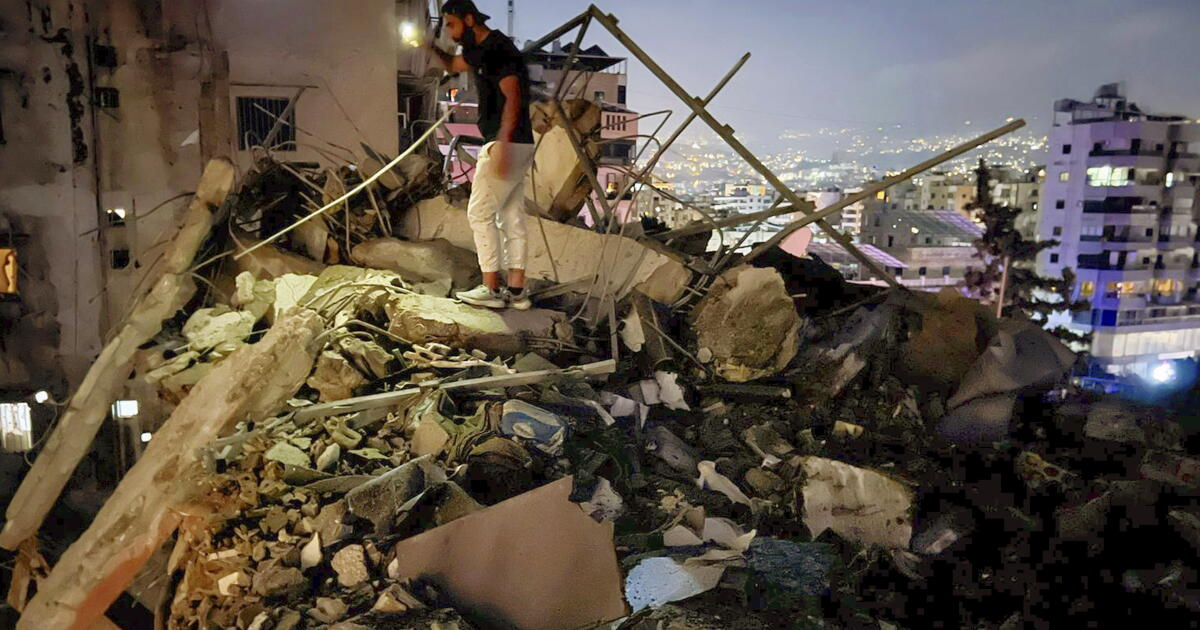
The airstrikes Tuesday evening appeared to be more limited, hitting a residential building near a hospital in the Hezbollah-dominated suburb of Beirut known as the Dahieh. Residents near the site of the blast said they heard a trio of explosions. The state-run National News Agency said it was the work of a drone firing three missiles.
“It shook the ground. It felt really close,” said one gas station attendant who asked not to be named.
The Israeli military claimed responsibility for the attack, saying it had “carried out a targeted strike in Beirut, on the commander responsible for the murder of the children in Majdal Shams and the killing of numerous additional Israeli civilians.”
“Hezbollah crossed the red line,” wrote Israeli Defense Minister Yoav Gallant. Israeli officials claimed their target was killed.
Reporters were not initially permitted access to the site of the attack, but a reporter with the Hezbollah-affiliated Al-Manar station said a woman was killed and several children wounded.
More than two hours later, rescue crews, along with masked soldiers and Hezbollah personnel were still trying to access the wreckage of the building, which is situated in an alleyway near a pharmacy and a hair salon.
Pro-Hezbollah officials, speaking on local media channels, said the operation had failed to kill its intended target, whom Israeli outlets identified as Fuad Shukr, also known as Hajj Mohsin, a senior advisor to Hezbollah’s top leadership and in charge of the group’s precision missile program.
Though Hezbollah and Israel are longtime enemies, in recent years the fighting between the two had been limited to little more than the occasional exchange of missives. But tensions escalated after Hamas’ Oct. 7 attack against Israel, and Israel’s subsequent military offensive in Gaza. Hezbollah escalated a rocket campaign along the Israel-Lebanon border in solidarity with Hamas militants.
Since then, the tense quiet that once reigned on the border has been replaced by an almost daily exchange of fire. Both sides insist they do not want an all-out war, but say they are prepared for it.

Israel conducted an airstrike Tuesday, targeting what it said was the senior Hezbollah commander responsible for a rocket attack over the weekend that killed a dozen Syrian children and young adults in the Israeli-occupied Golan Heights.
Lebanon has held its collective breath for days, with speculation rampant over what Israel’s response would be following a missile strike on Saturday that hit a football field in Majdal Shams, a Syrian town in the Golan Heights.
Israel blamed Hezbollah for the attack, a charge the Iran-backed faction denied. A day later, Israel’s air force said it hit seven Hezbollah targets deep in Lebanon.
The airstrikes Tuesday evening appeared to be more limited, hitting a residential building near a hospital in the Hezbollah-dominated suburb of Beirut known as the Dahieh. Residents near the site of the blast said they heard a trio of explosions. The state-run National News Agency said it was the work of a drone firing three missiles.
“It shook the ground. It felt really close,” said one gas station attendant who asked not to be named.
The Israeli military claimed responsibility for the attack, saying it had “carried out a targeted strike in Beirut, on the commander responsible for the murder of the children in Majdal Shams and the killing of numerous additional Israeli civilians.”
“Hezbollah crossed the red line,” wrote Israeli Defense Minister Yoav Gallant. Israeli officials claimed their target was killed.
Reporters were not initially permitted access to the site of the attack, but a reporter with the Hezbollah-affiliated Al-Manar station said a woman was killed and several children wounded.
More than two hours later, rescue crews, along with masked soldiers and Hezbollah personnel were still trying to access the wreckage of the building, which is situated in an alleyway near a pharmacy and a hair salon.
Pro-Hezbollah officials, speaking on local media channels, said the operation had failed to kill its intended target, whom Israeli outlets identified as Fuad Shukr, also known as Hajj Mohsin, a senior advisor to Hezbollah’s top leadership and in charge of the group’s precision missile program.
Though Hezbollah and Israel are longtime enemies, in recent years the fighting between the two had been limited to little more than the occasional exchange of missives. But tensions escalated after Hamas’ Oct. 7 attack against Israel, and Israel’s subsequent military offensive in Gaza. Hezbollah escalated a rocket campaign along the Israel-Lebanon border in solidarity with Hamas militants.
Since then, the tense quiet that once reigned on the border has been replaced by an almost daily exchange of fire. Both sides insist they do not want an all-out war, but say they are prepared for it.

Israel conducted an airstrike Tuesday, targeting what it said was the senior Hezbollah commander responsible for a rocket attack over the weekend that killed a dozen Syrian children and young adults in the Israeli-occupied Golan Heights.
Lebanon has held its collective breath for days, with speculation rampant over what Israel’s response would be following a missile strike on Saturday that hit a football field in Majdal Shams, a Syrian town in the Golan Heights.
Israel blamed Hezbollah for the attack, a charge the Iran-backed faction denied. A day later, Israel’s air force said it hit seven Hezbollah targets deep in Lebanon.
The airstrikes Tuesday evening appeared to be more limited, hitting a residential building near a hospital in the Hezbollah-dominated suburb of Beirut known as the Dahieh. Residents near the site of the blast said they heard a trio of explosions. The state-run National News Agency said it was the work of a drone firing three missiles.
“It shook the ground. It felt really close,” said one gas station attendant who asked not to be named.
The Israeli military claimed responsibility for the attack, saying it had “carried out a targeted strike in Beirut, on the commander responsible for the murder of the children in Majdal Shams and the killing of numerous additional Israeli civilians.”
“Hezbollah crossed the red line,” wrote Israeli Defense Minister Yoav Gallant. Israeli officials claimed their target was killed.
Reporters were not initially permitted access to the site of the attack, but a reporter with the Hezbollah-affiliated Al-Manar station said a woman was killed and several children wounded.
More than two hours later, rescue crews, along with masked soldiers and Hezbollah personnel were still trying to access the wreckage of the building, which is situated in an alleyway near a pharmacy and a hair salon.
Pro-Hezbollah officials, speaking on local media channels, said the operation had failed to kill its intended target, whom Israeli outlets identified as Fuad Shukr, also known as Hajj Mohsin, a senior advisor to Hezbollah’s top leadership and in charge of the group’s precision missile program.
Though Hezbollah and Israel are longtime enemies, in recent years the fighting between the two had been limited to little more than the occasional exchange of missives. But tensions escalated after Hamas’ Oct. 7 attack against Israel, and Israel’s subsequent military offensive in Gaza. Hezbollah escalated a rocket campaign along the Israel-Lebanon border in solidarity with Hamas militants.
Since then, the tense quiet that once reigned on the border has been replaced by an almost daily exchange of fire. Both sides insist they do not want an all-out war, but say they are prepared for it.

Israel conducted an airstrike Tuesday, targeting what it said was the senior Hezbollah commander responsible for a rocket attack over the weekend that killed a dozen Syrian children and young adults in the Israeli-occupied Golan Heights.
Lebanon has held its collective breath for days, with speculation rampant over what Israel’s response would be following a missile strike on Saturday that hit a football field in Majdal Shams, a Syrian town in the Golan Heights.
Israel blamed Hezbollah for the attack, a charge the Iran-backed faction denied. A day later, Israel’s air force said it hit seven Hezbollah targets deep in Lebanon.
The airstrikes Tuesday evening appeared to be more limited, hitting a residential building near a hospital in the Hezbollah-dominated suburb of Beirut known as the Dahieh. Residents near the site of the blast said they heard a trio of explosions. The state-run National News Agency said it was the work of a drone firing three missiles.
“It shook the ground. It felt really close,” said one gas station attendant who asked not to be named.
The Israeli military claimed responsibility for the attack, saying it had “carried out a targeted strike in Beirut, on the commander responsible for the murder of the children in Majdal Shams and the killing of numerous additional Israeli civilians.”
“Hezbollah crossed the red line,” wrote Israeli Defense Minister Yoav Gallant. Israeli officials claimed their target was killed.
Reporters were not initially permitted access to the site of the attack, but a reporter with the Hezbollah-affiliated Al-Manar station said a woman was killed and several children wounded.
More than two hours later, rescue crews, along with masked soldiers and Hezbollah personnel were still trying to access the wreckage of the building, which is situated in an alleyway near a pharmacy and a hair salon.
Pro-Hezbollah officials, speaking on local media channels, said the operation had failed to kill its intended target, whom Israeli outlets identified as Fuad Shukr, also known as Hajj Mohsin, a senior advisor to Hezbollah’s top leadership and in charge of the group’s precision missile program.
Though Hezbollah and Israel are longtime enemies, in recent years the fighting between the two had been limited to little more than the occasional exchange of missives. But tensions escalated after Hamas’ Oct. 7 attack against Israel, and Israel’s subsequent military offensive in Gaza. Hezbollah escalated a rocket campaign along the Israel-Lebanon border in solidarity with Hamas militants.
Since then, the tense quiet that once reigned on the border has been replaced by an almost daily exchange of fire. Both sides insist they do not want an all-out war, but say they are prepared for it.

Israel conducted an airstrike Tuesday, targeting what it said was the senior Hezbollah commander responsible for a rocket attack over the weekend that killed a dozen Syrian children and young adults in the Israeli-occupied Golan Heights.
Lebanon has held its collective breath for days, with speculation rampant over what Israel’s response would be following a missile strike on Saturday that hit a football field in Majdal Shams, a Syrian town in the Golan Heights.
Israel blamed Hezbollah for the attack, a charge the Iran-backed faction denied. A day later, Israel’s air force said it hit seven Hezbollah targets deep in Lebanon.
The airstrikes Tuesday evening appeared to be more limited, hitting a residential building near a hospital in the Hezbollah-dominated suburb of Beirut known as the Dahieh. Residents near the site of the blast said they heard a trio of explosions. The state-run National News Agency said it was the work of a drone firing three missiles.
“It shook the ground. It felt really close,” said one gas station attendant who asked not to be named.
The Israeli military claimed responsibility for the attack, saying it had “carried out a targeted strike in Beirut, on the commander responsible for the murder of the children in Majdal Shams and the killing of numerous additional Israeli civilians.”
“Hezbollah crossed the red line,” wrote Israeli Defense Minister Yoav Gallant. Israeli officials claimed their target was killed.
Reporters were not initially permitted access to the site of the attack, but a reporter with the Hezbollah-affiliated Al-Manar station said a woman was killed and several children wounded.
More than two hours later, rescue crews, along with masked soldiers and Hezbollah personnel were still trying to access the wreckage of the building, which is situated in an alleyway near a pharmacy and a hair salon.
Pro-Hezbollah officials, speaking on local media channels, said the operation had failed to kill its intended target, whom Israeli outlets identified as Fuad Shukr, also known as Hajj Mohsin, a senior advisor to Hezbollah’s top leadership and in charge of the group’s precision missile program.
Though Hezbollah and Israel are longtime enemies, in recent years the fighting between the two had been limited to little more than the occasional exchange of missives. But tensions escalated after Hamas’ Oct. 7 attack against Israel, and Israel’s subsequent military offensive in Gaza. Hezbollah escalated a rocket campaign along the Israel-Lebanon border in solidarity with Hamas militants.
Since then, the tense quiet that once reigned on the border has been replaced by an almost daily exchange of fire. Both sides insist they do not want an all-out war, but say they are prepared for it.

