

Is Bibi back?
Exit polls late Tuesday from Israel’s fifth national election in less than four years suggested that former Prime Minister Benjamin Netanyahu and his far-right allies might have secured enough parliamentary seats — barely — to engineer his return as the country’s leader.
If borne out by the official tally, the outcome would mark the latest sea change in the political fortunes of Netanyahu — universally known by his nickname, Bibi — a polarizing but charismatic figure who is on trial for corruption and was pushed from power last year.
The prospect of a nationalist-religious government led by Netanyahu, 73, was alarming to many Israelis, as was the apparent ascension of far-right politician Itamar Ben Gvir, a onetime fringe figure excoriated by critics for racism against Palestinians. The exit polls by Israel’s three main broadcasters indicated that Ben Gvir’s party, Religious Zionism, would emerge as the third-largest in the Knesset, Israel’s parliament.
Experts note that in the past, the official count has diverged from exit polls. But if the preliminary indications prove accurate, Netanyahu and his coalition partners — Religious Zionism among them — would secure at least the 61 votes necessary for a Knesset majority. A final tally is not expected until Friday.
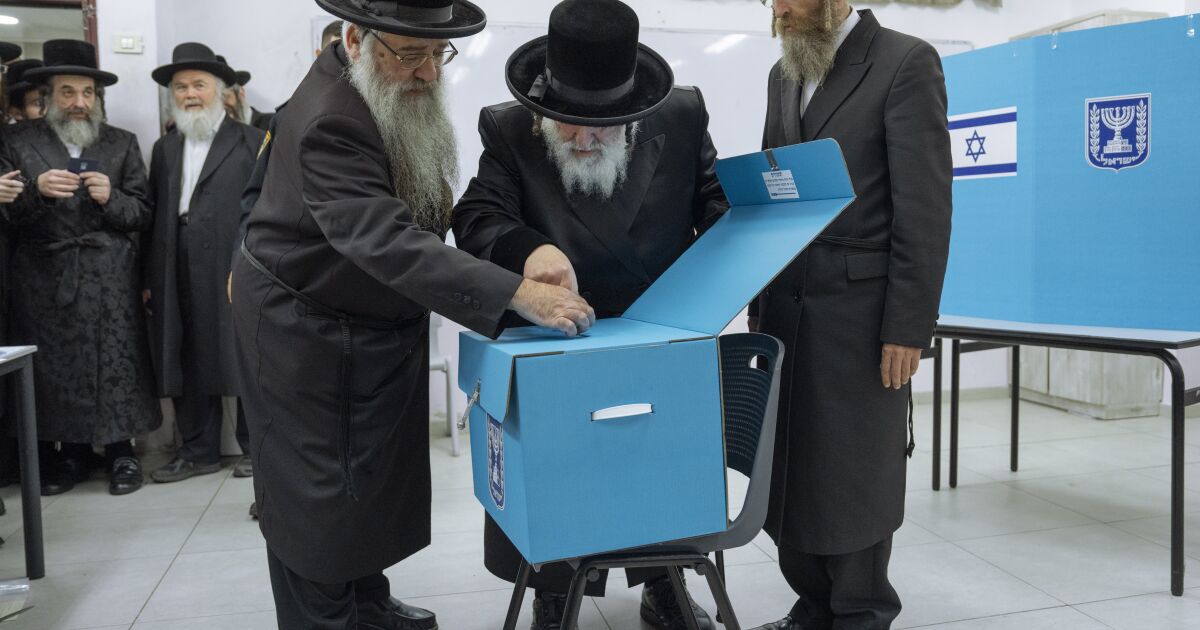
Turnout was high despite — or perhaps because of — weariness with political gridlock that has plagued the country for nearly four years.
If reinstalled as prime minister, Netanyahu would be better positioned to battle the charges against him. He has repeatedly denounced prosecutors and judges as engaging in a “witch hunt,” galvanizing fears among opponents that he poses an ongoing threat to the rule of law and to Israel’s democracy.
Netanyahu’s principal rival is Yair Lapid, the centrist caretaker prime minister. Neither Lapid’s party, Yesh Atid, nor Netanyahu’s Likud Party came close to winning a parliamentary majority on their own, but before the vote, each sought support from smaller parties from across the ideological spectrum in order to secure a governing majority.
The president typically gives the party with the largest parliamentary representation the first chance to form a coalition with smaller parties, a process that can end in deadlock or drag on over a period of weeks.
The fragile opposition coalition behind Netanyahu’s dramatic 2021 ouster dissolved earlier this year, and the latest election — like previous ones — was viewed as a referendum on him. His conservative backers support increased control over daily life by religious authorities and a hard-line stance toward the Palestinians.
Yohanan Plesner, president of the Israel Democracy Institute, said the prospective new coalition would “seek to politicize the judiciary and weaken the checks and balances that exist between the branches of government, and serve as fundamental components of Israeli democracy.”
Forming a new government, and holding it together, would be a challenge even for Netanyahu, who is known as a political survivor. Heading into this election, he pivoted to a full-on embrace of far-right figures, including Ben Gvir, the onetime protégé of a racist rabbi who was assassinated in the 1990s, and Bezalel Smotrich, whose extreme views have become increasingly part of the Israeli political mainstream.
Ben Gvir is known for inflammatory gestures such as brandishing a handgun in a Jerusalem neighborhood that has seen years of angry Palestinian protests and urging police to use lethal force against stone-throwing demonstrators. If his party is part of the winning coalition, he is expected to try to become head of the ministry that oversees the police.
Despite the controversy that has surrounded Netanyahu for years, he has commanded an intensely loyal base of support, even after being put on trial for fraud, breach of trust and accepting bribes. He has vehemently denied any wrongdoing.
The exit polls were welcome news for Yedidyah Furman, a 24-year-old who voted in Raanana, near Tel Aviv, casting his ballot for Ben Gvir’s party.
“I think this shows that the public in Israel is looking for a leadership that will restore security to the streets, and a leadership that preserves and respects Israel’s Jewish tradition,” Furman said.
Benjamin Brown, a professor of Jewish thought at Hebrew University, said Netanyahu’s alliances affirm his willingness to make whatever compromises he deems necessary to return to power.
“Politicians seek allies when they didn’t want to have them in the first place but recognize this is the way they try to form a coalition,” he said.
Netanyahu presided over collapsed Israeli-Palestinian peace talks in 2014 and the 11-day battle between Israel and Hamas, a Palestinian militant group that rules over Gaza, in May 2021 that killed at least 230 Palestinians and at least 12 Israelis.
His government in 2018 enacted a law proclaiming that the right of national self-determination in Israel is unique to Jews and downgrading the status of the Arabic language.
The eight-party alliance that in 2021 ousted Netanyahu, who had refused to resign amid the corruption allegations, had little in common besides a desire to get rid of him. After defections cost the coalition the seats it needed to survive, new elections were called, opening the door to a comeback by Netanyahu, the country’s longest-serving prime minister.
When Netanyahu’s legal problems caught up with him, resulting in court proceedings, some erstwhile allies refused to sit in his coalition. After previous elections, that helped stymie his efforts to secure a Knesset majority.
Now, some of those he is expected to bring into his coalition have indicated that they will seek to change the legal code in ways that could help him avoid conviction or jail time.
Leila Miller reported from Tel Aviv and Laura King reported from Washington, D.C.

Is Bibi back?
Exit polls late Tuesday from Israel’s fifth national election in less than four years suggested that former Prime Minister Benjamin Netanyahu and his far-right allies might have secured enough parliamentary seats — barely — to engineer his return as the country’s leader.
If borne out by the official tally, the outcome would mark the latest sea change in the political fortunes of Netanyahu — universally known by his nickname, Bibi — a polarizing but charismatic figure who is on trial for corruption and was pushed from power last year.
The prospect of a nationalist-religious government led by Netanyahu, 73, was alarming to many Israelis, as was the apparent ascension of far-right politician Itamar Ben Gvir, a onetime fringe figure excoriated by critics for racism against Palestinians. The exit polls by Israel’s three main broadcasters indicated that Ben Gvir’s party, Religious Zionism, would emerge as the third-largest in the Knesset, Israel’s parliament.
Experts note that in the past, the official count has diverged from exit polls. But if the preliminary indications prove accurate, Netanyahu and his coalition partners — Religious Zionism among them — would secure at least the 61 votes necessary for a Knesset majority. A final tally is not expected until Friday.
Turnout was high despite — or perhaps because of — weariness with political gridlock that has plagued the country for nearly four years.
If reinstalled as prime minister, Netanyahu would be better positioned to battle the charges against him. He has repeatedly denounced prosecutors and judges as engaging in a “witch hunt,” galvanizing fears among opponents that he poses an ongoing threat to the rule of law and to Israel’s democracy.
Netanyahu’s principal rival is Yair Lapid, the centrist caretaker prime minister. Neither Lapid’s party, Yesh Atid, nor Netanyahu’s Likud Party came close to winning a parliamentary majority on their own, but before the vote, each sought support from smaller parties from across the ideological spectrum in order to secure a governing majority.
The president typically gives the party with the largest parliamentary representation the first chance to form a coalition with smaller parties, a process that can end in deadlock or drag on over a period of weeks.
The fragile opposition coalition behind Netanyahu’s dramatic 2021 ouster dissolved earlier this year, and the latest election — like previous ones — was viewed as a referendum on him. His conservative backers support increased control over daily life by religious authorities and a hard-line stance toward the Palestinians.
Yohanan Plesner, president of the Israel Democracy Institute, said the prospective new coalition would “seek to politicize the judiciary and weaken the checks and balances that exist between the branches of government, and serve as fundamental components of Israeli democracy.”
Forming a new government, and holding it together, would be a challenge even for Netanyahu, who is known as a political survivor. Heading into this election, he pivoted to a full-on embrace of far-right figures, including Ben Gvir, the onetime protégé of a racist rabbi who was assassinated in the 1990s, and Bezalel Smotrich, whose extreme views have become increasingly part of the Israeli political mainstream.
Ben Gvir is known for inflammatory gestures such as brandishing a handgun in a Jerusalem neighborhood that has seen years of angry Palestinian protests and urging police to use lethal force against stone-throwing demonstrators. If his party is part of the winning coalition, he is expected to try to become head of the ministry that oversees the police.
Despite the controversy that has surrounded Netanyahu for years, he has commanded an intensely loyal base of support, even after being put on trial for fraud, breach of trust and accepting bribes. He has vehemently denied any wrongdoing.
The exit polls were welcome news for Yedidyah Furman, a 24-year-old who voted in Raanana, near Tel Aviv, casting his ballot for Ben Gvir’s party.
“I think this shows that the public in Israel is looking for a leadership that will restore security to the streets, and a leadership that preserves and respects Israel’s Jewish tradition,” Furman said.
Benjamin Brown, a professor of Jewish thought at Hebrew University, said Netanyahu’s alliances affirm his willingness to make whatever compromises he deems necessary to return to power.
“Politicians seek allies when they didn’t want to have them in the first place but recognize this is the way they try to form a coalition,” he said.
Netanyahu presided over collapsed Israeli-Palestinian peace talks in 2014 and the 11-day battle between Israel and Hamas, a Palestinian militant group that rules over Gaza, in May 2021 that killed at least 230 Palestinians and at least 12 Israelis.
His government in 2018 enacted a law proclaiming that the right of national self-determination in Israel is unique to Jews and downgrading the status of the Arabic language.
The eight-party alliance that in 2021 ousted Netanyahu, who had refused to resign amid the corruption allegations, had little in common besides a desire to get rid of him. After defections cost the coalition the seats it needed to survive, new elections were called, opening the door to a comeback by Netanyahu, the country’s longest-serving prime minister.
When Netanyahu’s legal problems caught up with him, resulting in court proceedings, some erstwhile allies refused to sit in his coalition. After previous elections, that helped stymie his efforts to secure a Knesset majority.
Now, some of those he is expected to bring into his coalition have indicated that they will seek to change the legal code in ways that could help him avoid conviction or jail time.
Leila Miller reported from Tel Aviv and Laura King reported from Washington, D.C.

Is Bibi back?
Exit polls late Tuesday from Israel’s fifth national election in less than four years suggested that former Prime Minister Benjamin Netanyahu and his far-right allies might have secured enough parliamentary seats — barely — to engineer his return as the country’s leader.
If borne out by the official tally, the outcome would mark the latest sea change in the political fortunes of Netanyahu — universally known by his nickname, Bibi — a polarizing but charismatic figure who is on trial for corruption and was pushed from power last year.
The prospect of a nationalist-religious government led by Netanyahu, 73, was alarming to many Israelis, as was the apparent ascension of far-right politician Itamar Ben Gvir, a onetime fringe figure excoriated by critics for racism against Palestinians. The exit polls by Israel’s three main broadcasters indicated that Ben Gvir’s party, Religious Zionism, would emerge as the third-largest in the Knesset, Israel’s parliament.
Experts note that in the past, the official count has diverged from exit polls. But if the preliminary indications prove accurate, Netanyahu and his coalition partners — Religious Zionism among them — would secure at least the 61 votes necessary for a Knesset majority. A final tally is not expected until Friday.
Turnout was high despite — or perhaps because of — weariness with political gridlock that has plagued the country for nearly four years.
If reinstalled as prime minister, Netanyahu would be better positioned to battle the charges against him. He has repeatedly denounced prosecutors and judges as engaging in a “witch hunt,” galvanizing fears among opponents that he poses an ongoing threat to the rule of law and to Israel’s democracy.
Netanyahu’s principal rival is Yair Lapid, the centrist caretaker prime minister. Neither Lapid’s party, Yesh Atid, nor Netanyahu’s Likud Party came close to winning a parliamentary majority on their own, but before the vote, each sought support from smaller parties from across the ideological spectrum in order to secure a governing majority.
The president typically gives the party with the largest parliamentary representation the first chance to form a coalition with smaller parties, a process that can end in deadlock or drag on over a period of weeks.
The fragile opposition coalition behind Netanyahu’s dramatic 2021 ouster dissolved earlier this year, and the latest election — like previous ones — was viewed as a referendum on him. His conservative backers support increased control over daily life by religious authorities and a hard-line stance toward the Palestinians.
Yohanan Plesner, president of the Israel Democracy Institute, said the prospective new coalition would “seek to politicize the judiciary and weaken the checks and balances that exist between the branches of government, and serve as fundamental components of Israeli democracy.”
Forming a new government, and holding it together, would be a challenge even for Netanyahu, who is known as a political survivor. Heading into this election, he pivoted to a full-on embrace of far-right figures, including Ben Gvir, the onetime protégé of a racist rabbi who was assassinated in the 1990s, and Bezalel Smotrich, whose extreme views have become increasingly part of the Israeli political mainstream.
Ben Gvir is known for inflammatory gestures such as brandishing a handgun in a Jerusalem neighborhood that has seen years of angry Palestinian protests and urging police to use lethal force against stone-throwing demonstrators. If his party is part of the winning coalition, he is expected to try to become head of the ministry that oversees the police.
Despite the controversy that has surrounded Netanyahu for years, he has commanded an intensely loyal base of support, even after being put on trial for fraud, breach of trust and accepting bribes. He has vehemently denied any wrongdoing.
The exit polls were welcome news for Yedidyah Furman, a 24-year-old who voted in Raanana, near Tel Aviv, casting his ballot for Ben Gvir’s party.
“I think this shows that the public in Israel is looking for a leadership that will restore security to the streets, and a leadership that preserves and respects Israel’s Jewish tradition,” Furman said.
Benjamin Brown, a professor of Jewish thought at Hebrew University, said Netanyahu’s alliances affirm his willingness to make whatever compromises he deems necessary to return to power.
“Politicians seek allies when they didn’t want to have them in the first place but recognize this is the way they try to form a coalition,” he said.
Netanyahu presided over collapsed Israeli-Palestinian peace talks in 2014 and the 11-day battle between Israel and Hamas, a Palestinian militant group that rules over Gaza, in May 2021 that killed at least 230 Palestinians and at least 12 Israelis.
His government in 2018 enacted a law proclaiming that the right of national self-determination in Israel is unique to Jews and downgrading the status of the Arabic language.
The eight-party alliance that in 2021 ousted Netanyahu, who had refused to resign amid the corruption allegations, had little in common besides a desire to get rid of him. After defections cost the coalition the seats it needed to survive, new elections were called, opening the door to a comeback by Netanyahu, the country’s longest-serving prime minister.
When Netanyahu’s legal problems caught up with him, resulting in court proceedings, some erstwhile allies refused to sit in his coalition. After previous elections, that helped stymie his efforts to secure a Knesset majority.
Now, some of those he is expected to bring into his coalition have indicated that they will seek to change the legal code in ways that could help him avoid conviction or jail time.
Leila Miller reported from Tel Aviv and Laura King reported from Washington, D.C.
Is Bibi back?
Exit polls late Tuesday from Israel’s fifth national election in less than four years suggested that former Prime Minister Benjamin Netanyahu and his far-right allies might have secured enough parliamentary seats — barely — to engineer his return as the country’s leader.
If borne out by the official tally, the outcome would mark the latest sea change in the political fortunes of Netanyahu — universally known by his nickname, Bibi — a polarizing but charismatic figure who is on trial for corruption and was pushed from power last year.
The prospect of a nationalist-religious government led by Netanyahu, 73, was alarming to many Israelis, as was the apparent ascension of far-right politician Itamar Ben Gvir, a onetime fringe figure excoriated by critics for racism against Palestinians. The exit polls by Israel’s three main broadcasters indicated that Ben Gvir’s party, Religious Zionism, would emerge as the third-largest in the Knesset, Israel’s parliament.
Experts note that in the past, the official count has diverged from exit polls. But if the preliminary indications prove accurate, Netanyahu and his coalition partners — Religious Zionism among them — would secure at least the 61 votes necessary for a Knesset majority. A final tally is not expected until Friday.
Turnout was high despite — or perhaps because of — weariness with political gridlock that has plagued the country for nearly four years.
If reinstalled as prime minister, Netanyahu would be better positioned to battle the charges against him. He has repeatedly denounced prosecutors and judges as engaging in a “witch hunt,” galvanizing fears among opponents that he poses an ongoing threat to the rule of law and to Israel’s democracy.
Netanyahu’s principal rival is Yair Lapid, the centrist caretaker prime minister. Neither Lapid’s party, Yesh Atid, nor Netanyahu’s Likud Party came close to winning a parliamentary majority on their own, but before the vote, each sought support from smaller parties from across the ideological spectrum in order to secure a governing majority.
The president typically gives the party with the largest parliamentary representation the first chance to form a coalition with smaller parties, a process that can end in deadlock or drag on over a period of weeks.
The fragile opposition coalition behind Netanyahu’s dramatic 2021 ouster dissolved earlier this year, and the latest election — like previous ones — was viewed as a referendum on him. His conservative backers support increased control over daily life by religious authorities and a hard-line stance toward the Palestinians.
Yohanan Plesner, president of the Israel Democracy Institute, said the prospective new coalition would “seek to politicize the judiciary and weaken the checks and balances that exist between the branches of government, and serve as fundamental components of Israeli democracy.”
Forming a new government, and holding it together, would be a challenge even for Netanyahu, who is known as a political survivor. Heading into this election, he pivoted to a full-on embrace of far-right figures, including Ben Gvir, the onetime protégé of a racist rabbi who was assassinated in the 1990s, and Bezalel Smotrich, whose extreme views have become increasingly part of the Israeli political mainstream.
Ben Gvir is known for inflammatory gestures such as brandishing a handgun in a Jerusalem neighborhood that has seen years of angry Palestinian protests and urging police to use lethal force against stone-throwing demonstrators. If his party is part of the winning coalition, he is expected to try to become head of the ministry that oversees the police.
Despite the controversy that has surrounded Netanyahu for years, he has commanded an intensely loyal base of support, even after being put on trial for fraud, breach of trust and accepting bribes. He has vehemently denied any wrongdoing.
The exit polls were welcome news for Yedidyah Furman, a 24-year-old who voted in Raanana, near Tel Aviv, casting his ballot for Ben Gvir’s party.
“I think this shows that the public in Israel is looking for a leadership that will restore security to the streets, and a leadership that preserves and respects Israel’s Jewish tradition,” Furman said.
Benjamin Brown, a professor of Jewish thought at Hebrew University, said Netanyahu’s alliances affirm his willingness to make whatever compromises he deems necessary to return to power.
“Politicians seek allies when they didn’t want to have them in the first place but recognize this is the way they try to form a coalition,” he said.
Netanyahu presided over collapsed Israeli-Palestinian peace talks in 2014 and the 11-day battle between Israel and Hamas, a Palestinian militant group that rules over Gaza, in May 2021 that killed at least 230 Palestinians and at least 12 Israelis.
His government in 2018 enacted a law proclaiming that the right of national self-determination in Israel is unique to Jews and downgrading the status of the Arabic language.
The eight-party alliance that in 2021 ousted Netanyahu, who had refused to resign amid the corruption allegations, had little in common besides a desire to get rid of him. After defections cost the coalition the seats it needed to survive, new elections were called, opening the door to a comeback by Netanyahu, the country’s longest-serving prime minister.
When Netanyahu’s legal problems caught up with him, resulting in court proceedings, some erstwhile allies refused to sit in his coalition. After previous elections, that helped stymie his efforts to secure a Knesset majority.
Now, some of those he is expected to bring into his coalition have indicated that they will seek to change the legal code in ways that could help him avoid conviction or jail time.
Leila Miller reported from Tel Aviv and Laura King reported from Washington, D.C.

Is Bibi back?
Exit polls late Tuesday from Israel’s fifth national election in less than four years suggested that former Prime Minister Benjamin Netanyahu and his far-right allies might have secured enough parliamentary seats — barely — to engineer his return as the country’s leader.
If borne out by the official tally, the outcome would mark the latest sea change in the political fortunes of Netanyahu — universally known by his nickname, Bibi — a polarizing but charismatic figure who is on trial for corruption and was pushed from power last year.
The prospect of a nationalist-religious government led by Netanyahu, 73, was alarming to many Israelis, as was the apparent ascension of far-right politician Itamar Ben Gvir, a onetime fringe figure excoriated by critics for racism against Palestinians. The exit polls by Israel’s three main broadcasters indicated that Ben Gvir’s party, Religious Zionism, would emerge as the third-largest in the Knesset, Israel’s parliament.
Experts note that in the past, the official count has diverged from exit polls. But if the preliminary indications prove accurate, Netanyahu and his coalition partners — Religious Zionism among them — would secure at least the 61 votes necessary for a Knesset majority. A final tally is not expected until Friday.
Turnout was high despite — or perhaps because of — weariness with political gridlock that has plagued the country for nearly four years.
If reinstalled as prime minister, Netanyahu would be better positioned to battle the charges against him. He has repeatedly denounced prosecutors and judges as engaging in a “witch hunt,” galvanizing fears among opponents that he poses an ongoing threat to the rule of law and to Israel’s democracy.
Netanyahu’s principal rival is Yair Lapid, the centrist caretaker prime minister. Neither Lapid’s party, Yesh Atid, nor Netanyahu’s Likud Party came close to winning a parliamentary majority on their own, but before the vote, each sought support from smaller parties from across the ideological spectrum in order to secure a governing majority.
The president typically gives the party with the largest parliamentary representation the first chance to form a coalition with smaller parties, a process that can end in deadlock or drag on over a period of weeks.
The fragile opposition coalition behind Netanyahu’s dramatic 2021 ouster dissolved earlier this year, and the latest election — like previous ones — was viewed as a referendum on him. His conservative backers support increased control over daily life by religious authorities and a hard-line stance toward the Palestinians.
Yohanan Plesner, president of the Israel Democracy Institute, said the prospective new coalition would “seek to politicize the judiciary and weaken the checks and balances that exist between the branches of government, and serve as fundamental components of Israeli democracy.”
Forming a new government, and holding it together, would be a challenge even for Netanyahu, who is known as a political survivor. Heading into this election, he pivoted to a full-on embrace of far-right figures, including Ben Gvir, the onetime protégé of a racist rabbi who was assassinated in the 1990s, and Bezalel Smotrich, whose extreme views have become increasingly part of the Israeli political mainstream.
Ben Gvir is known for inflammatory gestures such as brandishing a handgun in a Jerusalem neighborhood that has seen years of angry Palestinian protests and urging police to use lethal force against stone-throwing demonstrators. If his party is part of the winning coalition, he is expected to try to become head of the ministry that oversees the police.
Despite the controversy that has surrounded Netanyahu for years, he has commanded an intensely loyal base of support, even after being put on trial for fraud, breach of trust and accepting bribes. He has vehemently denied any wrongdoing.
The exit polls were welcome news for Yedidyah Furman, a 24-year-old who voted in Raanana, near Tel Aviv, casting his ballot for Ben Gvir’s party.
“I think this shows that the public in Israel is looking for a leadership that will restore security to the streets, and a leadership that preserves and respects Israel’s Jewish tradition,” Furman said.
Benjamin Brown, a professor of Jewish thought at Hebrew University, said Netanyahu’s alliances affirm his willingness to make whatever compromises he deems necessary to return to power.
“Politicians seek allies when they didn’t want to have them in the first place but recognize this is the way they try to form a coalition,” he said.
Netanyahu presided over collapsed Israeli-Palestinian peace talks in 2014 and the 11-day battle between Israel and Hamas, a Palestinian militant group that rules over Gaza, in May 2021 that killed at least 230 Palestinians and at least 12 Israelis.
His government in 2018 enacted a law proclaiming that the right of national self-determination in Israel is unique to Jews and downgrading the status of the Arabic language.
The eight-party alliance that in 2021 ousted Netanyahu, who had refused to resign amid the corruption allegations, had little in common besides a desire to get rid of him. After defections cost the coalition the seats it needed to survive, new elections were called, opening the door to a comeback by Netanyahu, the country’s longest-serving prime minister.
When Netanyahu’s legal problems caught up with him, resulting in court proceedings, some erstwhile allies refused to sit in his coalition. After previous elections, that helped stymie his efforts to secure a Knesset majority.
Now, some of those he is expected to bring into his coalition have indicated that they will seek to change the legal code in ways that could help him avoid conviction or jail time.
Leila Miller reported from Tel Aviv and Laura King reported from Washington, D.C.
Is Bibi back?
Exit polls late Tuesday from Israel’s fifth national election in less than four years suggested that former Prime Minister Benjamin Netanyahu and his far-right allies might have secured enough parliamentary seats — barely — to engineer his return as the country’s leader.
If borne out by the official tally, the outcome would mark the latest sea change in the political fortunes of Netanyahu — universally known by his nickname, Bibi — a polarizing but charismatic figure who is on trial for corruption and was pushed from power last year.
The prospect of a nationalist-religious government led by Netanyahu, 73, was alarming to many Israelis, as was the apparent ascension of far-right politician Itamar Ben Gvir, a onetime fringe figure excoriated by critics for racism against Palestinians. The exit polls by Israel’s three main broadcasters indicated that Ben Gvir’s party, Religious Zionism, would emerge as the third-largest in the Knesset, Israel’s parliament.
Experts note that in the past, the official count has diverged from exit polls. But if the preliminary indications prove accurate, Netanyahu and his coalition partners — Religious Zionism among them — would secure at least the 61 votes necessary for a Knesset majority. A final tally is not expected until Friday.
Turnout was high despite — or perhaps because of — weariness with political gridlock that has plagued the country for nearly four years.
If reinstalled as prime minister, Netanyahu would be better positioned to battle the charges against him. He has repeatedly denounced prosecutors and judges as engaging in a “witch hunt,” galvanizing fears among opponents that he poses an ongoing threat to the rule of law and to Israel’s democracy.
Netanyahu’s principal rival is Yair Lapid, the centrist caretaker prime minister. Neither Lapid’s party, Yesh Atid, nor Netanyahu’s Likud Party came close to winning a parliamentary majority on their own, but before the vote, each sought support from smaller parties from across the ideological spectrum in order to secure a governing majority.
The president typically gives the party with the largest parliamentary representation the first chance to form a coalition with smaller parties, a process that can end in deadlock or drag on over a period of weeks.
The fragile opposition coalition behind Netanyahu’s dramatic 2021 ouster dissolved earlier this year, and the latest election — like previous ones — was viewed as a referendum on him. His conservative backers support increased control over daily life by religious authorities and a hard-line stance toward the Palestinians.
Yohanan Plesner, president of the Israel Democracy Institute, said the prospective new coalition would “seek to politicize the judiciary and weaken the checks and balances that exist between the branches of government, and serve as fundamental components of Israeli democracy.”
Forming a new government, and holding it together, would be a challenge even for Netanyahu, who is known as a political survivor. Heading into this election, he pivoted to a full-on embrace of far-right figures, including Ben Gvir, the onetime protégé of a racist rabbi who was assassinated in the 1990s, and Bezalel Smotrich, whose extreme views have become increasingly part of the Israeli political mainstream.
Ben Gvir is known for inflammatory gestures such as brandishing a handgun in a Jerusalem neighborhood that has seen years of angry Palestinian protests and urging police to use lethal force against stone-throwing demonstrators. If his party is part of the winning coalition, he is expected to try to become head of the ministry that oversees the police.
Despite the controversy that has surrounded Netanyahu for years, he has commanded an intensely loyal base of support, even after being put on trial for fraud, breach of trust and accepting bribes. He has vehemently denied any wrongdoing.
The exit polls were welcome news for Yedidyah Furman, a 24-year-old who voted in Raanana, near Tel Aviv, casting his ballot for Ben Gvir’s party.
“I think this shows that the public in Israel is looking for a leadership that will restore security to the streets, and a leadership that preserves and respects Israel’s Jewish tradition,” Furman said.
Benjamin Brown, a professor of Jewish thought at Hebrew University, said Netanyahu’s alliances affirm his willingness to make whatever compromises he deems necessary to return to power.
“Politicians seek allies when they didn’t want to have them in the first place but recognize this is the way they try to form a coalition,” he said.
Netanyahu presided over collapsed Israeli-Palestinian peace talks in 2014 and the 11-day battle between Israel and Hamas, a Palestinian militant group that rules over Gaza, in May 2021 that killed at least 230 Palestinians and at least 12 Israelis.
His government in 2018 enacted a law proclaiming that the right of national self-determination in Israel is unique to Jews and downgrading the status of the Arabic language.
The eight-party alliance that in 2021 ousted Netanyahu, who had refused to resign amid the corruption allegations, had little in common besides a desire to get rid of him. After defections cost the coalition the seats it needed to survive, new elections were called, opening the door to a comeback by Netanyahu, the country’s longest-serving prime minister.
When Netanyahu’s legal problems caught up with him, resulting in court proceedings, some erstwhile allies refused to sit in his coalition. After previous elections, that helped stymie his efforts to secure a Knesset majority.
Now, some of those he is expected to bring into his coalition have indicated that they will seek to change the legal code in ways that could help him avoid conviction or jail time.
Leila Miller reported from Tel Aviv and Laura King reported from Washington, D.C.
Is Bibi back?
Exit polls late Tuesday from Israel’s fifth national election in less than four years suggested that former Prime Minister Benjamin Netanyahu and his far-right allies might have secured enough parliamentary seats — barely — to engineer his return as the country’s leader.
If borne out by the official tally, the outcome would mark the latest sea change in the political fortunes of Netanyahu — universally known by his nickname, Bibi — a polarizing but charismatic figure who is on trial for corruption and was pushed from power last year.
The prospect of a nationalist-religious government led by Netanyahu, 73, was alarming to many Israelis, as was the apparent ascension of far-right politician Itamar Ben Gvir, a onetime fringe figure excoriated by critics for racism against Palestinians. The exit polls by Israel’s three main broadcasters indicated that Ben Gvir’s party, Religious Zionism, would emerge as the third-largest in the Knesset, Israel’s parliament.
Experts note that in the past, the official count has diverged from exit polls. But if the preliminary indications prove accurate, Netanyahu and his coalition partners — Religious Zionism among them — would secure at least the 61 votes necessary for a Knesset majority. A final tally is not expected until Friday.
Turnout was high despite — or perhaps because of — weariness with political gridlock that has plagued the country for nearly four years.
If reinstalled as prime minister, Netanyahu would be better positioned to battle the charges against him. He has repeatedly denounced prosecutors and judges as engaging in a “witch hunt,” galvanizing fears among opponents that he poses an ongoing threat to the rule of law and to Israel’s democracy.
Netanyahu’s principal rival is Yair Lapid, the centrist caretaker prime minister. Neither Lapid’s party, Yesh Atid, nor Netanyahu’s Likud Party came close to winning a parliamentary majority on their own, but before the vote, each sought support from smaller parties from across the ideological spectrum in order to secure a governing majority.
The president typically gives the party with the largest parliamentary representation the first chance to form a coalition with smaller parties, a process that can end in deadlock or drag on over a period of weeks.
The fragile opposition coalition behind Netanyahu’s dramatic 2021 ouster dissolved earlier this year, and the latest election — like previous ones — was viewed as a referendum on him. His conservative backers support increased control over daily life by religious authorities and a hard-line stance toward the Palestinians.
Yohanan Plesner, president of the Israel Democracy Institute, said the prospective new coalition would “seek to politicize the judiciary and weaken the checks and balances that exist between the branches of government, and serve as fundamental components of Israeli democracy.”
Forming a new government, and holding it together, would be a challenge even for Netanyahu, who is known as a political survivor. Heading into this election, he pivoted to a full-on embrace of far-right figures, including Ben Gvir, the onetime protégé of a racist rabbi who was assassinated in the 1990s, and Bezalel Smotrich, whose extreme views have become increasingly part of the Israeli political mainstream.
Ben Gvir is known for inflammatory gestures such as brandishing a handgun in a Jerusalem neighborhood that has seen years of angry Palestinian protests and urging police to use lethal force against stone-throwing demonstrators. If his party is part of the winning coalition, he is expected to try to become head of the ministry that oversees the police.
Despite the controversy that has surrounded Netanyahu for years, he has commanded an intensely loyal base of support, even after being put on trial for fraud, breach of trust and accepting bribes. He has vehemently denied any wrongdoing.
The exit polls were welcome news for Yedidyah Furman, a 24-year-old who voted in Raanana, near Tel Aviv, casting his ballot for Ben Gvir’s party.
“I think this shows that the public in Israel is looking for a leadership that will restore security to the streets, and a leadership that preserves and respects Israel’s Jewish tradition,” Furman said.
Benjamin Brown, a professor of Jewish thought at Hebrew University, said Netanyahu’s alliances affirm his willingness to make whatever compromises he deems necessary to return to power.
“Politicians seek allies when they didn’t want to have them in the first place but recognize this is the way they try to form a coalition,” he said.
Netanyahu presided over collapsed Israeli-Palestinian peace talks in 2014 and the 11-day battle between Israel and Hamas, a Palestinian militant group that rules over Gaza, in May 2021 that killed at least 230 Palestinians and at least 12 Israelis.
His government in 2018 enacted a law proclaiming that the right of national self-determination in Israel is unique to Jews and downgrading the status of the Arabic language.
The eight-party alliance that in 2021 ousted Netanyahu, who had refused to resign amid the corruption allegations, had little in common besides a desire to get rid of him. After defections cost the coalition the seats it needed to survive, new elections were called, opening the door to a comeback by Netanyahu, the country’s longest-serving prime minister.
When Netanyahu’s legal problems caught up with him, resulting in court proceedings, some erstwhile allies refused to sit in his coalition. After previous elections, that helped stymie his efforts to secure a Knesset majority.
Now, some of those he is expected to bring into his coalition have indicated that they will seek to change the legal code in ways that could help him avoid conviction or jail time.
Leila Miller reported from Tel Aviv and Laura King reported from Washington, D.C.
Is Bibi back?
Exit polls late Tuesday from Israel’s fifth national election in less than four years suggested that former Prime Minister Benjamin Netanyahu and his far-right allies might have secured enough parliamentary seats — barely — to engineer his return as the country’s leader.
If borne out by the official tally, the outcome would mark the latest sea change in the political fortunes of Netanyahu — universally known by his nickname, Bibi — a polarizing but charismatic figure who is on trial for corruption and was pushed from power last year.
The prospect of a nationalist-religious government led by Netanyahu, 73, was alarming to many Israelis, as was the apparent ascension of far-right politician Itamar Ben Gvir, a onetime fringe figure excoriated by critics for racism against Palestinians. The exit polls by Israel’s three main broadcasters indicated that Ben Gvir’s party, Religious Zionism, would emerge as the third-largest in the Knesset, Israel’s parliament.
Experts note that in the past, the official count has diverged from exit polls. But if the preliminary indications prove accurate, Netanyahu and his coalition partners — Religious Zionism among them — would secure at least the 61 votes necessary for a Knesset majority. A final tally is not expected until Friday.
Turnout was high despite — or perhaps because of — weariness with political gridlock that has plagued the country for nearly four years.
If reinstalled as prime minister, Netanyahu would be better positioned to battle the charges against him. He has repeatedly denounced prosecutors and judges as engaging in a “witch hunt,” galvanizing fears among opponents that he poses an ongoing threat to the rule of law and to Israel’s democracy.
Netanyahu’s principal rival is Yair Lapid, the centrist caretaker prime minister. Neither Lapid’s party, Yesh Atid, nor Netanyahu’s Likud Party came close to winning a parliamentary majority on their own, but before the vote, each sought support from smaller parties from across the ideological spectrum in order to secure a governing majority.
The president typically gives the party with the largest parliamentary representation the first chance to form a coalition with smaller parties, a process that can end in deadlock or drag on over a period of weeks.
The fragile opposition coalition behind Netanyahu’s dramatic 2021 ouster dissolved earlier this year, and the latest election — like previous ones — was viewed as a referendum on him. His conservative backers support increased control over daily life by religious authorities and a hard-line stance toward the Palestinians.
Yohanan Plesner, president of the Israel Democracy Institute, said the prospective new coalition would “seek to politicize the judiciary and weaken the checks and balances that exist between the branches of government, and serve as fundamental components of Israeli democracy.”
Forming a new government, and holding it together, would be a challenge even for Netanyahu, who is known as a political survivor. Heading into this election, he pivoted to a full-on embrace of far-right figures, including Ben Gvir, the onetime protégé of a racist rabbi who was assassinated in the 1990s, and Bezalel Smotrich, whose extreme views have become increasingly part of the Israeli political mainstream.
Ben Gvir is known for inflammatory gestures such as brandishing a handgun in a Jerusalem neighborhood that has seen years of angry Palestinian protests and urging police to use lethal force against stone-throwing demonstrators. If his party is part of the winning coalition, he is expected to try to become head of the ministry that oversees the police.
Despite the controversy that has surrounded Netanyahu for years, he has commanded an intensely loyal base of support, even after being put on trial for fraud, breach of trust and accepting bribes. He has vehemently denied any wrongdoing.
The exit polls were welcome news for Yedidyah Furman, a 24-year-old who voted in Raanana, near Tel Aviv, casting his ballot for Ben Gvir’s party.
“I think this shows that the public in Israel is looking for a leadership that will restore security to the streets, and a leadership that preserves and respects Israel’s Jewish tradition,” Furman said.
Benjamin Brown, a professor of Jewish thought at Hebrew University, said Netanyahu’s alliances affirm his willingness to make whatever compromises he deems necessary to return to power.
“Politicians seek allies when they didn’t want to have them in the first place but recognize this is the way they try to form a coalition,” he said.
Netanyahu presided over collapsed Israeli-Palestinian peace talks in 2014 and the 11-day battle between Israel and Hamas, a Palestinian militant group that rules over Gaza, in May 2021 that killed at least 230 Palestinians and at least 12 Israelis.
His government in 2018 enacted a law proclaiming that the right of national self-determination in Israel is unique to Jews and downgrading the status of the Arabic language.
The eight-party alliance that in 2021 ousted Netanyahu, who had refused to resign amid the corruption allegations, had little in common besides a desire to get rid of him. After defections cost the coalition the seats it needed to survive, new elections were called, opening the door to a comeback by Netanyahu, the country’s longest-serving prime minister.
When Netanyahu’s legal problems caught up with him, resulting in court proceedings, some erstwhile allies refused to sit in his coalition. After previous elections, that helped stymie his efforts to secure a Knesset majority.
Now, some of those he is expected to bring into his coalition have indicated that they will seek to change the legal code in ways that could help him avoid conviction or jail time.
Leila Miller reported from Tel Aviv and Laura King reported from Washington, D.C.

Is Bibi back?
Exit polls late Tuesday from Israel’s fifth national election in less than four years suggested that former Prime Minister Benjamin Netanyahu and his far-right allies might have secured enough parliamentary seats — barely — to engineer his return as the country’s leader.
If borne out by the official tally, the outcome would mark the latest sea change in the political fortunes of Netanyahu — universally known by his nickname, Bibi — a polarizing but charismatic figure who is on trial for corruption and was pushed from power last year.
The prospect of a nationalist-religious government led by Netanyahu, 73, was alarming to many Israelis, as was the apparent ascension of far-right politician Itamar Ben Gvir, a onetime fringe figure excoriated by critics for racism against Palestinians. The exit polls by Israel’s three main broadcasters indicated that Ben Gvir’s party, Religious Zionism, would emerge as the third-largest in the Knesset, Israel’s parliament.
Experts note that in the past, the official count has diverged from exit polls. But if the preliminary indications prove accurate, Netanyahu and his coalition partners — Religious Zionism among them — would secure at least the 61 votes necessary for a Knesset majority. A final tally is not expected until Friday.
Turnout was high despite — or perhaps because of — weariness with political gridlock that has plagued the country for nearly four years.
If reinstalled as prime minister, Netanyahu would be better positioned to battle the charges against him. He has repeatedly denounced prosecutors and judges as engaging in a “witch hunt,” galvanizing fears among opponents that he poses an ongoing threat to the rule of law and to Israel’s democracy.
Netanyahu’s principal rival is Yair Lapid, the centrist caretaker prime minister. Neither Lapid’s party, Yesh Atid, nor Netanyahu’s Likud Party came close to winning a parliamentary majority on their own, but before the vote, each sought support from smaller parties from across the ideological spectrum in order to secure a governing majority.
The president typically gives the party with the largest parliamentary representation the first chance to form a coalition with smaller parties, a process that can end in deadlock or drag on over a period of weeks.
The fragile opposition coalition behind Netanyahu’s dramatic 2021 ouster dissolved earlier this year, and the latest election — like previous ones — was viewed as a referendum on him. His conservative backers support increased control over daily life by religious authorities and a hard-line stance toward the Palestinians.
Yohanan Plesner, president of the Israel Democracy Institute, said the prospective new coalition would “seek to politicize the judiciary and weaken the checks and balances that exist between the branches of government, and serve as fundamental components of Israeli democracy.”
Forming a new government, and holding it together, would be a challenge even for Netanyahu, who is known as a political survivor. Heading into this election, he pivoted to a full-on embrace of far-right figures, including Ben Gvir, the onetime protégé of a racist rabbi who was assassinated in the 1990s, and Bezalel Smotrich, whose extreme views have become increasingly part of the Israeli political mainstream.
Ben Gvir is known for inflammatory gestures such as brandishing a handgun in a Jerusalem neighborhood that has seen years of angry Palestinian protests and urging police to use lethal force against stone-throwing demonstrators. If his party is part of the winning coalition, he is expected to try to become head of the ministry that oversees the police.
Despite the controversy that has surrounded Netanyahu for years, he has commanded an intensely loyal base of support, even after being put on trial for fraud, breach of trust and accepting bribes. He has vehemently denied any wrongdoing.
The exit polls were welcome news for Yedidyah Furman, a 24-year-old who voted in Raanana, near Tel Aviv, casting his ballot for Ben Gvir’s party.
“I think this shows that the public in Israel is looking for a leadership that will restore security to the streets, and a leadership that preserves and respects Israel’s Jewish tradition,” Furman said.
Benjamin Brown, a professor of Jewish thought at Hebrew University, said Netanyahu’s alliances affirm his willingness to make whatever compromises he deems necessary to return to power.
“Politicians seek allies when they didn’t want to have them in the first place but recognize this is the way they try to form a coalition,” he said.
Netanyahu presided over collapsed Israeli-Palestinian peace talks in 2014 and the 11-day battle between Israel and Hamas, a Palestinian militant group that rules over Gaza, in May 2021 that killed at least 230 Palestinians and at least 12 Israelis.
His government in 2018 enacted a law proclaiming that the right of national self-determination in Israel is unique to Jews and downgrading the status of the Arabic language.
The eight-party alliance that in 2021 ousted Netanyahu, who had refused to resign amid the corruption allegations, had little in common besides a desire to get rid of him. After defections cost the coalition the seats it needed to survive, new elections were called, opening the door to a comeback by Netanyahu, the country’s longest-serving prime minister.
When Netanyahu’s legal problems caught up with him, resulting in court proceedings, some erstwhile allies refused to sit in his coalition. After previous elections, that helped stymie his efforts to secure a Knesset majority.
Now, some of those he is expected to bring into his coalition have indicated that they will seek to change the legal code in ways that could help him avoid conviction or jail time.
Leila Miller reported from Tel Aviv and Laura King reported from Washington, D.C.
Is Bibi back?
Exit polls late Tuesday from Israel’s fifth national election in less than four years suggested that former Prime Minister Benjamin Netanyahu and his far-right allies might have secured enough parliamentary seats — barely — to engineer his return as the country’s leader.
If borne out by the official tally, the outcome would mark the latest sea change in the political fortunes of Netanyahu — universally known by his nickname, Bibi — a polarizing but charismatic figure who is on trial for corruption and was pushed from power last year.
The prospect of a nationalist-religious government led by Netanyahu, 73, was alarming to many Israelis, as was the apparent ascension of far-right politician Itamar Ben Gvir, a onetime fringe figure excoriated by critics for racism against Palestinians. The exit polls by Israel’s three main broadcasters indicated that Ben Gvir’s party, Religious Zionism, would emerge as the third-largest in the Knesset, Israel’s parliament.
Experts note that in the past, the official count has diverged from exit polls. But if the preliminary indications prove accurate, Netanyahu and his coalition partners — Religious Zionism among them — would secure at least the 61 votes necessary for a Knesset majority. A final tally is not expected until Friday.
Turnout was high despite — or perhaps because of — weariness with political gridlock that has plagued the country for nearly four years.
If reinstalled as prime minister, Netanyahu would be better positioned to battle the charges against him. He has repeatedly denounced prosecutors and judges as engaging in a “witch hunt,” galvanizing fears among opponents that he poses an ongoing threat to the rule of law and to Israel’s democracy.
Netanyahu’s principal rival is Yair Lapid, the centrist caretaker prime minister. Neither Lapid’s party, Yesh Atid, nor Netanyahu’s Likud Party came close to winning a parliamentary majority on their own, but before the vote, each sought support from smaller parties from across the ideological spectrum in order to secure a governing majority.
The president typically gives the party with the largest parliamentary representation the first chance to form a coalition with smaller parties, a process that can end in deadlock or drag on over a period of weeks.
The fragile opposition coalition behind Netanyahu’s dramatic 2021 ouster dissolved earlier this year, and the latest election — like previous ones — was viewed as a referendum on him. His conservative backers support increased control over daily life by religious authorities and a hard-line stance toward the Palestinians.
Yohanan Plesner, president of the Israel Democracy Institute, said the prospective new coalition would “seek to politicize the judiciary and weaken the checks and balances that exist between the branches of government, and serve as fundamental components of Israeli democracy.”
Forming a new government, and holding it together, would be a challenge even for Netanyahu, who is known as a political survivor. Heading into this election, he pivoted to a full-on embrace of far-right figures, including Ben Gvir, the onetime protégé of a racist rabbi who was assassinated in the 1990s, and Bezalel Smotrich, whose extreme views have become increasingly part of the Israeli political mainstream.
Ben Gvir is known for inflammatory gestures such as brandishing a handgun in a Jerusalem neighborhood that has seen years of angry Palestinian protests and urging police to use lethal force against stone-throwing demonstrators. If his party is part of the winning coalition, he is expected to try to become head of the ministry that oversees the police.
Despite the controversy that has surrounded Netanyahu for years, he has commanded an intensely loyal base of support, even after being put on trial for fraud, breach of trust and accepting bribes. He has vehemently denied any wrongdoing.
The exit polls were welcome news for Yedidyah Furman, a 24-year-old who voted in Raanana, near Tel Aviv, casting his ballot for Ben Gvir’s party.
“I think this shows that the public in Israel is looking for a leadership that will restore security to the streets, and a leadership that preserves and respects Israel’s Jewish tradition,” Furman said.
Benjamin Brown, a professor of Jewish thought at Hebrew University, said Netanyahu’s alliances affirm his willingness to make whatever compromises he deems necessary to return to power.
“Politicians seek allies when they didn’t want to have them in the first place but recognize this is the way they try to form a coalition,” he said.
Netanyahu presided over collapsed Israeli-Palestinian peace talks in 2014 and the 11-day battle between Israel and Hamas, a Palestinian militant group that rules over Gaza, in May 2021 that killed at least 230 Palestinians and at least 12 Israelis.
His government in 2018 enacted a law proclaiming that the right of national self-determination in Israel is unique to Jews and downgrading the status of the Arabic language.
The eight-party alliance that in 2021 ousted Netanyahu, who had refused to resign amid the corruption allegations, had little in common besides a desire to get rid of him. After defections cost the coalition the seats it needed to survive, new elections were called, opening the door to a comeback by Netanyahu, the country’s longest-serving prime minister.
When Netanyahu’s legal problems caught up with him, resulting in court proceedings, some erstwhile allies refused to sit in his coalition. After previous elections, that helped stymie his efforts to secure a Knesset majority.
Now, some of those he is expected to bring into his coalition have indicated that they will seek to change the legal code in ways that could help him avoid conviction or jail time.
Leila Miller reported from Tel Aviv and Laura King reported from Washington, D.C.
Is Bibi back?
Exit polls late Tuesday from Israel’s fifth national election in less than four years suggested that former Prime Minister Benjamin Netanyahu and his far-right allies might have secured enough parliamentary seats — barely — to engineer his return as the country’s leader.
If borne out by the official tally, the outcome would mark the latest sea change in the political fortunes of Netanyahu — universally known by his nickname, Bibi — a polarizing but charismatic figure who is on trial for corruption and was pushed from power last year.
The prospect of a nationalist-religious government led by Netanyahu, 73, was alarming to many Israelis, as was the apparent ascension of far-right politician Itamar Ben Gvir, a onetime fringe figure excoriated by critics for racism against Palestinians. The exit polls by Israel’s three main broadcasters indicated that Ben Gvir’s party, Religious Zionism, would emerge as the third-largest in the Knesset, Israel’s parliament.
Experts note that in the past, the official count has diverged from exit polls. But if the preliminary indications prove accurate, Netanyahu and his coalition partners — Religious Zionism among them — would secure at least the 61 votes necessary for a Knesset majority. A final tally is not expected until Friday.
Turnout was high despite — or perhaps because of — weariness with political gridlock that has plagued the country for nearly four years.
If reinstalled as prime minister, Netanyahu would be better positioned to battle the charges against him. He has repeatedly denounced prosecutors and judges as engaging in a “witch hunt,” galvanizing fears among opponents that he poses an ongoing threat to the rule of law and to Israel’s democracy.
Netanyahu’s principal rival is Yair Lapid, the centrist caretaker prime minister. Neither Lapid’s party, Yesh Atid, nor Netanyahu’s Likud Party came close to winning a parliamentary majority on their own, but before the vote, each sought support from smaller parties from across the ideological spectrum in order to secure a governing majority.
The president typically gives the party with the largest parliamentary representation the first chance to form a coalition with smaller parties, a process that can end in deadlock or drag on over a period of weeks.
The fragile opposition coalition behind Netanyahu’s dramatic 2021 ouster dissolved earlier this year, and the latest election — like previous ones — was viewed as a referendum on him. His conservative backers support increased control over daily life by religious authorities and a hard-line stance toward the Palestinians.
Yohanan Plesner, president of the Israel Democracy Institute, said the prospective new coalition would “seek to politicize the judiciary and weaken the checks and balances that exist between the branches of government, and serve as fundamental components of Israeli democracy.”
Forming a new government, and holding it together, would be a challenge even for Netanyahu, who is known as a political survivor. Heading into this election, he pivoted to a full-on embrace of far-right figures, including Ben Gvir, the onetime protégé of a racist rabbi who was assassinated in the 1990s, and Bezalel Smotrich, whose extreme views have become increasingly part of the Israeli political mainstream.
Ben Gvir is known for inflammatory gestures such as brandishing a handgun in a Jerusalem neighborhood that has seen years of angry Palestinian protests and urging police to use lethal force against stone-throwing demonstrators. If his party is part of the winning coalition, he is expected to try to become head of the ministry that oversees the police.
Despite the controversy that has surrounded Netanyahu for years, he has commanded an intensely loyal base of support, even after being put on trial for fraud, breach of trust and accepting bribes. He has vehemently denied any wrongdoing.
The exit polls were welcome news for Yedidyah Furman, a 24-year-old who voted in Raanana, near Tel Aviv, casting his ballot for Ben Gvir’s party.
“I think this shows that the public in Israel is looking for a leadership that will restore security to the streets, and a leadership that preserves and respects Israel’s Jewish tradition,” Furman said.
Benjamin Brown, a professor of Jewish thought at Hebrew University, said Netanyahu’s alliances affirm his willingness to make whatever compromises he deems necessary to return to power.
“Politicians seek allies when they didn’t want to have them in the first place but recognize this is the way they try to form a coalition,” he said.
Netanyahu presided over collapsed Israeli-Palestinian peace talks in 2014 and the 11-day battle between Israel and Hamas, a Palestinian militant group that rules over Gaza, in May 2021 that killed at least 230 Palestinians and at least 12 Israelis.
His government in 2018 enacted a law proclaiming that the right of national self-determination in Israel is unique to Jews and downgrading the status of the Arabic language.
The eight-party alliance that in 2021 ousted Netanyahu, who had refused to resign amid the corruption allegations, had little in common besides a desire to get rid of him. After defections cost the coalition the seats it needed to survive, new elections were called, opening the door to a comeback by Netanyahu, the country’s longest-serving prime minister.
When Netanyahu’s legal problems caught up with him, resulting in court proceedings, some erstwhile allies refused to sit in his coalition. After previous elections, that helped stymie his efforts to secure a Knesset majority.
Now, some of those he is expected to bring into his coalition have indicated that they will seek to change the legal code in ways that could help him avoid conviction or jail time.
Leila Miller reported from Tel Aviv and Laura King reported from Washington, D.C.
Is Bibi back?
Exit polls late Tuesday from Israel’s fifth national election in less than four years suggested that former Prime Minister Benjamin Netanyahu and his far-right allies might have secured enough parliamentary seats — barely — to engineer his return as the country’s leader.
If borne out by the official tally, the outcome would mark the latest sea change in the political fortunes of Netanyahu — universally known by his nickname, Bibi — a polarizing but charismatic figure who is on trial for corruption and was pushed from power last year.
The prospect of a nationalist-religious government led by Netanyahu, 73, was alarming to many Israelis, as was the apparent ascension of far-right politician Itamar Ben Gvir, a onetime fringe figure excoriated by critics for racism against Palestinians. The exit polls by Israel’s three main broadcasters indicated that Ben Gvir’s party, Religious Zionism, would emerge as the third-largest in the Knesset, Israel’s parliament.
Experts note that in the past, the official count has diverged from exit polls. But if the preliminary indications prove accurate, Netanyahu and his coalition partners — Religious Zionism among them — would secure at least the 61 votes necessary for a Knesset majority. A final tally is not expected until Friday.
Turnout was high despite — or perhaps because of — weariness with political gridlock that has plagued the country for nearly four years.
If reinstalled as prime minister, Netanyahu would be better positioned to battle the charges against him. He has repeatedly denounced prosecutors and judges as engaging in a “witch hunt,” galvanizing fears among opponents that he poses an ongoing threat to the rule of law and to Israel’s democracy.
Netanyahu’s principal rival is Yair Lapid, the centrist caretaker prime minister. Neither Lapid’s party, Yesh Atid, nor Netanyahu’s Likud Party came close to winning a parliamentary majority on their own, but before the vote, each sought support from smaller parties from across the ideological spectrum in order to secure a governing majority.
The president typically gives the party with the largest parliamentary representation the first chance to form a coalition with smaller parties, a process that can end in deadlock or drag on over a period of weeks.
The fragile opposition coalition behind Netanyahu’s dramatic 2021 ouster dissolved earlier this year, and the latest election — like previous ones — was viewed as a referendum on him. His conservative backers support increased control over daily life by religious authorities and a hard-line stance toward the Palestinians.
Yohanan Plesner, president of the Israel Democracy Institute, said the prospective new coalition would “seek to politicize the judiciary and weaken the checks and balances that exist between the branches of government, and serve as fundamental components of Israeli democracy.”
Forming a new government, and holding it together, would be a challenge even for Netanyahu, who is known as a political survivor. Heading into this election, he pivoted to a full-on embrace of far-right figures, including Ben Gvir, the onetime protégé of a racist rabbi who was assassinated in the 1990s, and Bezalel Smotrich, whose extreme views have become increasingly part of the Israeli political mainstream.
Ben Gvir is known for inflammatory gestures such as brandishing a handgun in a Jerusalem neighborhood that has seen years of angry Palestinian protests and urging police to use lethal force against stone-throwing demonstrators. If his party is part of the winning coalition, he is expected to try to become head of the ministry that oversees the police.
Despite the controversy that has surrounded Netanyahu for years, he has commanded an intensely loyal base of support, even after being put on trial for fraud, breach of trust and accepting bribes. He has vehemently denied any wrongdoing.
The exit polls were welcome news for Yedidyah Furman, a 24-year-old who voted in Raanana, near Tel Aviv, casting his ballot for Ben Gvir’s party.
“I think this shows that the public in Israel is looking for a leadership that will restore security to the streets, and a leadership that preserves and respects Israel’s Jewish tradition,” Furman said.
Benjamin Brown, a professor of Jewish thought at Hebrew University, said Netanyahu’s alliances affirm his willingness to make whatever compromises he deems necessary to return to power.
“Politicians seek allies when they didn’t want to have them in the first place but recognize this is the way they try to form a coalition,” he said.
Netanyahu presided over collapsed Israeli-Palestinian peace talks in 2014 and the 11-day battle between Israel and Hamas, a Palestinian militant group that rules over Gaza, in May 2021 that killed at least 230 Palestinians and at least 12 Israelis.
His government in 2018 enacted a law proclaiming that the right of national self-determination in Israel is unique to Jews and downgrading the status of the Arabic language.
The eight-party alliance that in 2021 ousted Netanyahu, who had refused to resign amid the corruption allegations, had little in common besides a desire to get rid of him. After defections cost the coalition the seats it needed to survive, new elections were called, opening the door to a comeback by Netanyahu, the country’s longest-serving prime minister.
When Netanyahu’s legal problems caught up with him, resulting in court proceedings, some erstwhile allies refused to sit in his coalition. After previous elections, that helped stymie his efforts to secure a Knesset majority.
Now, some of those he is expected to bring into his coalition have indicated that they will seek to change the legal code in ways that could help him avoid conviction or jail time.
Leila Miller reported from Tel Aviv and Laura King reported from Washington, D.C.
Is Bibi back?
Exit polls late Tuesday from Israel’s fifth national election in less than four years suggested that former Prime Minister Benjamin Netanyahu and his far-right allies might have secured enough parliamentary seats — barely — to engineer his return as the country’s leader.
If borne out by the official tally, the outcome would mark the latest sea change in the political fortunes of Netanyahu — universally known by his nickname, Bibi — a polarizing but charismatic figure who is on trial for corruption and was pushed from power last year.
The prospect of a nationalist-religious government led by Netanyahu, 73, was alarming to many Israelis, as was the apparent ascension of far-right politician Itamar Ben Gvir, a onetime fringe figure excoriated by critics for racism against Palestinians. The exit polls by Israel’s three main broadcasters indicated that Ben Gvir’s party, Religious Zionism, would emerge as the third-largest in the Knesset, Israel’s parliament.
Experts note that in the past, the official count has diverged from exit polls. But if the preliminary indications prove accurate, Netanyahu and his coalition partners — Religious Zionism among them — would secure at least the 61 votes necessary for a Knesset majority. A final tally is not expected until Friday.
Turnout was high despite — or perhaps because of — weariness with political gridlock that has plagued the country for nearly four years.
If reinstalled as prime minister, Netanyahu would be better positioned to battle the charges against him. He has repeatedly denounced prosecutors and judges as engaging in a “witch hunt,” galvanizing fears among opponents that he poses an ongoing threat to the rule of law and to Israel’s democracy.
Netanyahu’s principal rival is Yair Lapid, the centrist caretaker prime minister. Neither Lapid’s party, Yesh Atid, nor Netanyahu’s Likud Party came close to winning a parliamentary majority on their own, but before the vote, each sought support from smaller parties from across the ideological spectrum in order to secure a governing majority.
The president typically gives the party with the largest parliamentary representation the first chance to form a coalition with smaller parties, a process that can end in deadlock or drag on over a period of weeks.
The fragile opposition coalition behind Netanyahu’s dramatic 2021 ouster dissolved earlier this year, and the latest election — like previous ones — was viewed as a referendum on him. His conservative backers support increased control over daily life by religious authorities and a hard-line stance toward the Palestinians.
Yohanan Plesner, president of the Israel Democracy Institute, said the prospective new coalition would “seek to politicize the judiciary and weaken the checks and balances that exist between the branches of government, and serve as fundamental components of Israeli democracy.”
Forming a new government, and holding it together, would be a challenge even for Netanyahu, who is known as a political survivor. Heading into this election, he pivoted to a full-on embrace of far-right figures, including Ben Gvir, the onetime protégé of a racist rabbi who was assassinated in the 1990s, and Bezalel Smotrich, whose extreme views have become increasingly part of the Israeli political mainstream.
Ben Gvir is known for inflammatory gestures such as brandishing a handgun in a Jerusalem neighborhood that has seen years of angry Palestinian protests and urging police to use lethal force against stone-throwing demonstrators. If his party is part of the winning coalition, he is expected to try to become head of the ministry that oversees the police.
Despite the controversy that has surrounded Netanyahu for years, he has commanded an intensely loyal base of support, even after being put on trial for fraud, breach of trust and accepting bribes. He has vehemently denied any wrongdoing.
The exit polls were welcome news for Yedidyah Furman, a 24-year-old who voted in Raanana, near Tel Aviv, casting his ballot for Ben Gvir’s party.
“I think this shows that the public in Israel is looking for a leadership that will restore security to the streets, and a leadership that preserves and respects Israel’s Jewish tradition,” Furman said.
Benjamin Brown, a professor of Jewish thought at Hebrew University, said Netanyahu’s alliances affirm his willingness to make whatever compromises he deems necessary to return to power.
“Politicians seek allies when they didn’t want to have them in the first place but recognize this is the way they try to form a coalition,” he said.
Netanyahu presided over collapsed Israeli-Palestinian peace talks in 2014 and the 11-day battle between Israel and Hamas, a Palestinian militant group that rules over Gaza, in May 2021 that killed at least 230 Palestinians and at least 12 Israelis.
His government in 2018 enacted a law proclaiming that the right of national self-determination in Israel is unique to Jews and downgrading the status of the Arabic language.
The eight-party alliance that in 2021 ousted Netanyahu, who had refused to resign amid the corruption allegations, had little in common besides a desire to get rid of him. After defections cost the coalition the seats it needed to survive, new elections were called, opening the door to a comeback by Netanyahu, the country’s longest-serving prime minister.
When Netanyahu’s legal problems caught up with him, resulting in court proceedings, some erstwhile allies refused to sit in his coalition. After previous elections, that helped stymie his efforts to secure a Knesset majority.
Now, some of those he is expected to bring into his coalition have indicated that they will seek to change the legal code in ways that could help him avoid conviction or jail time.
Leila Miller reported from Tel Aviv and Laura King reported from Washington, D.C.
Is Bibi back?
Exit polls late Tuesday from Israel’s fifth national election in less than four years suggested that former Prime Minister Benjamin Netanyahu and his far-right allies might have secured enough parliamentary seats — barely — to engineer his return as the country’s leader.
If borne out by the official tally, the outcome would mark the latest sea change in the political fortunes of Netanyahu — universally known by his nickname, Bibi — a polarizing but charismatic figure who is on trial for corruption and was pushed from power last year.
The prospect of a nationalist-religious government led by Netanyahu, 73, was alarming to many Israelis, as was the apparent ascension of far-right politician Itamar Ben Gvir, a onetime fringe figure excoriated by critics for racism against Palestinians. The exit polls by Israel’s three main broadcasters indicated that Ben Gvir’s party, Religious Zionism, would emerge as the third-largest in the Knesset, Israel’s parliament.
Experts note that in the past, the official count has diverged from exit polls. But if the preliminary indications prove accurate, Netanyahu and his coalition partners — Religious Zionism among them — would secure at least the 61 votes necessary for a Knesset majority. A final tally is not expected until Friday.
Turnout was high despite — or perhaps because of — weariness with political gridlock that has plagued the country for nearly four years.
If reinstalled as prime minister, Netanyahu would be better positioned to battle the charges against him. He has repeatedly denounced prosecutors and judges as engaging in a “witch hunt,” galvanizing fears among opponents that he poses an ongoing threat to the rule of law and to Israel’s democracy.
Netanyahu’s principal rival is Yair Lapid, the centrist caretaker prime minister. Neither Lapid’s party, Yesh Atid, nor Netanyahu’s Likud Party came close to winning a parliamentary majority on their own, but before the vote, each sought support from smaller parties from across the ideological spectrum in order to secure a governing majority.
The president typically gives the party with the largest parliamentary representation the first chance to form a coalition with smaller parties, a process that can end in deadlock or drag on over a period of weeks.
The fragile opposition coalition behind Netanyahu’s dramatic 2021 ouster dissolved earlier this year, and the latest election — like previous ones — was viewed as a referendum on him. His conservative backers support increased control over daily life by religious authorities and a hard-line stance toward the Palestinians.
Yohanan Plesner, president of the Israel Democracy Institute, said the prospective new coalition would “seek to politicize the judiciary and weaken the checks and balances that exist between the branches of government, and serve as fundamental components of Israeli democracy.”
Forming a new government, and holding it together, would be a challenge even for Netanyahu, who is known as a political survivor. Heading into this election, he pivoted to a full-on embrace of far-right figures, including Ben Gvir, the onetime protégé of a racist rabbi who was assassinated in the 1990s, and Bezalel Smotrich, whose extreme views have become increasingly part of the Israeli political mainstream.
Ben Gvir is known for inflammatory gestures such as brandishing a handgun in a Jerusalem neighborhood that has seen years of angry Palestinian protests and urging police to use lethal force against stone-throwing demonstrators. If his party is part of the winning coalition, he is expected to try to become head of the ministry that oversees the police.
Despite the controversy that has surrounded Netanyahu for years, he has commanded an intensely loyal base of support, even after being put on trial for fraud, breach of trust and accepting bribes. He has vehemently denied any wrongdoing.
The exit polls were welcome news for Yedidyah Furman, a 24-year-old who voted in Raanana, near Tel Aviv, casting his ballot for Ben Gvir’s party.
“I think this shows that the public in Israel is looking for a leadership that will restore security to the streets, and a leadership that preserves and respects Israel’s Jewish tradition,” Furman said.
Benjamin Brown, a professor of Jewish thought at Hebrew University, said Netanyahu’s alliances affirm his willingness to make whatever compromises he deems necessary to return to power.
“Politicians seek allies when they didn’t want to have them in the first place but recognize this is the way they try to form a coalition,” he said.
Netanyahu presided over collapsed Israeli-Palestinian peace talks in 2014 and the 11-day battle between Israel and Hamas, a Palestinian militant group that rules over Gaza, in May 2021 that killed at least 230 Palestinians and at least 12 Israelis.
His government in 2018 enacted a law proclaiming that the right of national self-determination in Israel is unique to Jews and downgrading the status of the Arabic language.
The eight-party alliance that in 2021 ousted Netanyahu, who had refused to resign amid the corruption allegations, had little in common besides a desire to get rid of him. After defections cost the coalition the seats it needed to survive, new elections were called, opening the door to a comeback by Netanyahu, the country’s longest-serving prime minister.
When Netanyahu’s legal problems caught up with him, resulting in court proceedings, some erstwhile allies refused to sit in his coalition. After previous elections, that helped stymie his efforts to secure a Knesset majority.
Now, some of those he is expected to bring into his coalition have indicated that they will seek to change the legal code in ways that could help him avoid conviction or jail time.
Leila Miller reported from Tel Aviv and Laura King reported from Washington, D.C.
Is Bibi back?
Exit polls late Tuesday from Israel’s fifth national election in less than four years suggested that former Prime Minister Benjamin Netanyahu and his far-right allies might have secured enough parliamentary seats — barely — to engineer his return as the country’s leader.
If borne out by the official tally, the outcome would mark the latest sea change in the political fortunes of Netanyahu — universally known by his nickname, Bibi — a polarizing but charismatic figure who is on trial for corruption and was pushed from power last year.
The prospect of a nationalist-religious government led by Netanyahu, 73, was alarming to many Israelis, as was the apparent ascension of far-right politician Itamar Ben Gvir, a onetime fringe figure excoriated by critics for racism against Palestinians. The exit polls by Israel’s three main broadcasters indicated that Ben Gvir’s party, Religious Zionism, would emerge as the third-largest in the Knesset, Israel’s parliament.
Experts note that in the past, the official count has diverged from exit polls. But if the preliminary indications prove accurate, Netanyahu and his coalition partners — Religious Zionism among them — would secure at least the 61 votes necessary for a Knesset majority. A final tally is not expected until Friday.
Turnout was high despite — or perhaps because of — weariness with political gridlock that has plagued the country for nearly four years.
If reinstalled as prime minister, Netanyahu would be better positioned to battle the charges against him. He has repeatedly denounced prosecutors and judges as engaging in a “witch hunt,” galvanizing fears among opponents that he poses an ongoing threat to the rule of law and to Israel’s democracy.
Netanyahu’s principal rival is Yair Lapid, the centrist caretaker prime minister. Neither Lapid’s party, Yesh Atid, nor Netanyahu’s Likud Party came close to winning a parliamentary majority on their own, but before the vote, each sought support from smaller parties from across the ideological spectrum in order to secure a governing majority.
The president typically gives the party with the largest parliamentary representation the first chance to form a coalition with smaller parties, a process that can end in deadlock or drag on over a period of weeks.
The fragile opposition coalition behind Netanyahu’s dramatic 2021 ouster dissolved earlier this year, and the latest election — like previous ones — was viewed as a referendum on him. His conservative backers support increased control over daily life by religious authorities and a hard-line stance toward the Palestinians.
Yohanan Plesner, president of the Israel Democracy Institute, said the prospective new coalition would “seek to politicize the judiciary and weaken the checks and balances that exist between the branches of government, and serve as fundamental components of Israeli democracy.”
Forming a new government, and holding it together, would be a challenge even for Netanyahu, who is known as a political survivor. Heading into this election, he pivoted to a full-on embrace of far-right figures, including Ben Gvir, the onetime protégé of a racist rabbi who was assassinated in the 1990s, and Bezalel Smotrich, whose extreme views have become increasingly part of the Israeli political mainstream.
Ben Gvir is known for inflammatory gestures such as brandishing a handgun in a Jerusalem neighborhood that has seen years of angry Palestinian protests and urging police to use lethal force against stone-throwing demonstrators. If his party is part of the winning coalition, he is expected to try to become head of the ministry that oversees the police.
Despite the controversy that has surrounded Netanyahu for years, he has commanded an intensely loyal base of support, even after being put on trial for fraud, breach of trust and accepting bribes. He has vehemently denied any wrongdoing.
The exit polls were welcome news for Yedidyah Furman, a 24-year-old who voted in Raanana, near Tel Aviv, casting his ballot for Ben Gvir’s party.
“I think this shows that the public in Israel is looking for a leadership that will restore security to the streets, and a leadership that preserves and respects Israel’s Jewish tradition,” Furman said.
Benjamin Brown, a professor of Jewish thought at Hebrew University, said Netanyahu’s alliances affirm his willingness to make whatever compromises he deems necessary to return to power.
“Politicians seek allies when they didn’t want to have them in the first place but recognize this is the way they try to form a coalition,” he said.
Netanyahu presided over collapsed Israeli-Palestinian peace talks in 2014 and the 11-day battle between Israel and Hamas, a Palestinian militant group that rules over Gaza, in May 2021 that killed at least 230 Palestinians and at least 12 Israelis.
His government in 2018 enacted a law proclaiming that the right of national self-determination in Israel is unique to Jews and downgrading the status of the Arabic language.
The eight-party alliance that in 2021 ousted Netanyahu, who had refused to resign amid the corruption allegations, had little in common besides a desire to get rid of him. After defections cost the coalition the seats it needed to survive, new elections were called, opening the door to a comeback by Netanyahu, the country’s longest-serving prime minister.
When Netanyahu’s legal problems caught up with him, resulting in court proceedings, some erstwhile allies refused to sit in his coalition. After previous elections, that helped stymie his efforts to secure a Knesset majority.
Now, some of those he is expected to bring into his coalition have indicated that they will seek to change the legal code in ways that could help him avoid conviction or jail time.
Leila Miller reported from Tel Aviv and Laura King reported from Washington, D.C.
Is Bibi back?
Exit polls late Tuesday from Israel’s fifth national election in less than four years suggested that former Prime Minister Benjamin Netanyahu and his far-right allies might have secured enough parliamentary seats — barely — to engineer his return as the country’s leader.
If borne out by the official tally, the outcome would mark the latest sea change in the political fortunes of Netanyahu — universally known by his nickname, Bibi — a polarizing but charismatic figure who is on trial for corruption and was pushed from power last year.
The prospect of a nationalist-religious government led by Netanyahu, 73, was alarming to many Israelis, as was the apparent ascension of far-right politician Itamar Ben Gvir, a onetime fringe figure excoriated by critics for racism against Palestinians. The exit polls by Israel’s three main broadcasters indicated that Ben Gvir’s party, Religious Zionism, would emerge as the third-largest in the Knesset, Israel’s parliament.
Experts note that in the past, the official count has diverged from exit polls. But if the preliminary indications prove accurate, Netanyahu and his coalition partners — Religious Zionism among them — would secure at least the 61 votes necessary for a Knesset majority. A final tally is not expected until Friday.
Turnout was high despite — or perhaps because of — weariness with political gridlock that has plagued the country for nearly four years.
If reinstalled as prime minister, Netanyahu would be better positioned to battle the charges against him. He has repeatedly denounced prosecutors and judges as engaging in a “witch hunt,” galvanizing fears among opponents that he poses an ongoing threat to the rule of law and to Israel’s democracy.
Netanyahu’s principal rival is Yair Lapid, the centrist caretaker prime minister. Neither Lapid’s party, Yesh Atid, nor Netanyahu’s Likud Party came close to winning a parliamentary majority on their own, but before the vote, each sought support from smaller parties from across the ideological spectrum in order to secure a governing majority.
The president typically gives the party with the largest parliamentary representation the first chance to form a coalition with smaller parties, a process that can end in deadlock or drag on over a period of weeks.
The fragile opposition coalition behind Netanyahu’s dramatic 2021 ouster dissolved earlier this year, and the latest election — like previous ones — was viewed as a referendum on him. His conservative backers support increased control over daily life by religious authorities and a hard-line stance toward the Palestinians.
Yohanan Plesner, president of the Israel Democracy Institute, said the prospective new coalition would “seek to politicize the judiciary and weaken the checks and balances that exist between the branches of government, and serve as fundamental components of Israeli democracy.”
Forming a new government, and holding it together, would be a challenge even for Netanyahu, who is known as a political survivor. Heading into this election, he pivoted to a full-on embrace of far-right figures, including Ben Gvir, the onetime protégé of a racist rabbi who was assassinated in the 1990s, and Bezalel Smotrich, whose extreme views have become increasingly part of the Israeli political mainstream.
Ben Gvir is known for inflammatory gestures such as brandishing a handgun in a Jerusalem neighborhood that has seen years of angry Palestinian protests and urging police to use lethal force against stone-throwing demonstrators. If his party is part of the winning coalition, he is expected to try to become head of the ministry that oversees the police.
Despite the controversy that has surrounded Netanyahu for years, he has commanded an intensely loyal base of support, even after being put on trial for fraud, breach of trust and accepting bribes. He has vehemently denied any wrongdoing.
The exit polls were welcome news for Yedidyah Furman, a 24-year-old who voted in Raanana, near Tel Aviv, casting his ballot for Ben Gvir’s party.
“I think this shows that the public in Israel is looking for a leadership that will restore security to the streets, and a leadership that preserves and respects Israel’s Jewish tradition,” Furman said.
Benjamin Brown, a professor of Jewish thought at Hebrew University, said Netanyahu’s alliances affirm his willingness to make whatever compromises he deems necessary to return to power.
“Politicians seek allies when they didn’t want to have them in the first place but recognize this is the way they try to form a coalition,” he said.
Netanyahu presided over collapsed Israeli-Palestinian peace talks in 2014 and the 11-day battle between Israel and Hamas, a Palestinian militant group that rules over Gaza, in May 2021 that killed at least 230 Palestinians and at least 12 Israelis.
His government in 2018 enacted a law proclaiming that the right of national self-determination in Israel is unique to Jews and downgrading the status of the Arabic language.
The eight-party alliance that in 2021 ousted Netanyahu, who had refused to resign amid the corruption allegations, had little in common besides a desire to get rid of him. After defections cost the coalition the seats it needed to survive, new elections were called, opening the door to a comeback by Netanyahu, the country’s longest-serving prime minister.
When Netanyahu’s legal problems caught up with him, resulting in court proceedings, some erstwhile allies refused to sit in his coalition. After previous elections, that helped stymie his efforts to secure a Knesset majority.
Now, some of those he is expected to bring into his coalition have indicated that they will seek to change the legal code in ways that could help him avoid conviction or jail time.
Leila Miller reported from Tel Aviv and Laura King reported from Washington, D.C.

