

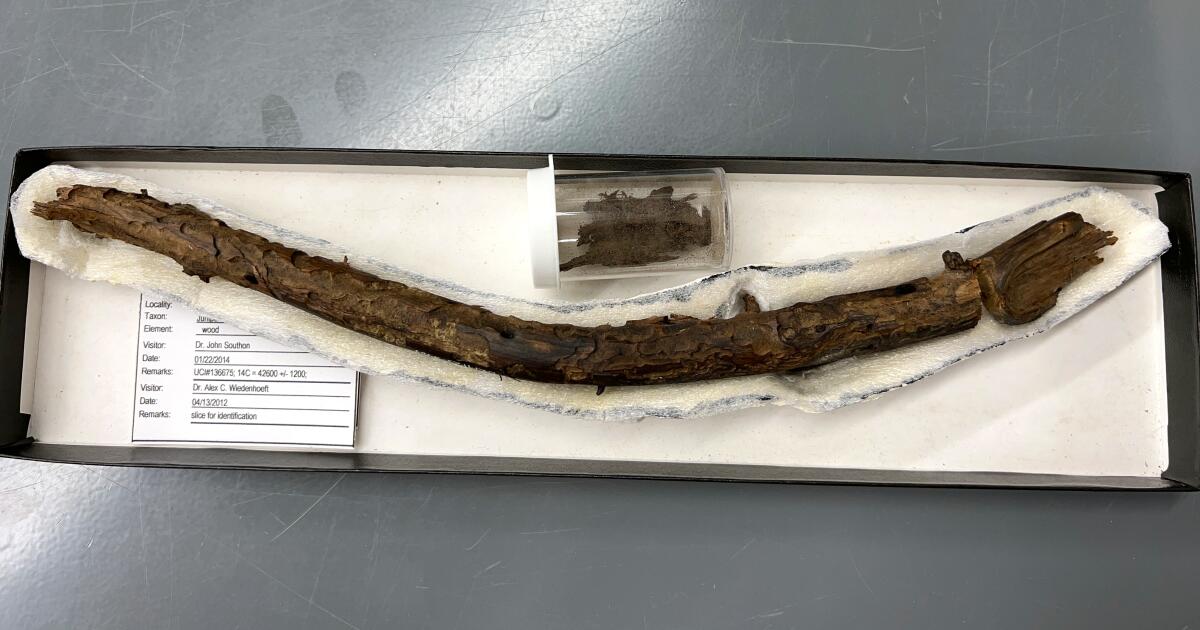
At the La Brea Tar Pits and Museum, Jessie George and other paleobotanists — the folks who study ancient plants the way paleontologists study prehistoric bones — are compiling a list of California native plants that survived the Ice Age and the region’s first huge climate change and are still alive today.
The researchers believe we have much to learn from these resilient plants that adapted after millennia of severe temperature change, drought and wildfire that changed Southern California from moist and cool woodlands to the dry, shrubby chaparral landscape we see today.
Newsletter
Sign up for our L.A. Times Plants newsletter
At the start of each month, get a roundup of upcoming plant-related activities and events in Southern California, along with links to tips and articles you may have missed.
You may occasionally receive promotional content from the Los Angeles Times.
Maybe, they say, these hardy plants can help our urban landscapes weather our current climate change.
Note that not all these survivors would be happy living near the Tar Pits today, and those are marked with an asterisk (*). Most pines, for instance, prefer wetter, cooler parts of the state, like the Central Coast, George said, and would not fare well in Southern California’s hot, dry climate.
If you have a question about whether a native plant would work well in your area, talk to the experts at places like the Tree of Life Nursery and Theodore Payne Foundation, or consult the California Native Plant Society’s handy native plant database at Calscape.
For more on these Ice Age survivors, read our July 1 L.A. Times Plants newsletter.
Trees/tall shrubs
- Monterey cypress (Hesperocyparis macrocarpa)
- Cypress (Hesperocyparis sp.)*
- California juniper (Juniperus californica)
- Rocky Mountain juniper (Juniperus scopulorum)*
- Bishop pine (Pinus muricata)*
- Monterey pine (Pinus radiata)*
- Pine (Pinus sp.)*
- Torrey pine (Pinus torreyana)*
- Blue elderberry (Sambucus mexicana)
- American dogwood (Cornus sericea)*
- Eastwood manzanita (Arctostaphylos cf. glandulosa)
- Big berry manzanita (Arctostaphylos glauca)
- Coast live oak (Quercus agrifolia)
- Scrub oak (Quercus dumosa)
- Southern California black walnut (Juglans californica)
- California sycamore (Platanus racemosa)
- Box elder (Acer negundo)
- Willow (Salix sp.)
Grasses/rushes
- Sedge (Carex sp.)
- Spikerush (Eleocharis sp.)
- Fimbry (Fimbristylis sp.)
- Barley (Hordeum sp.)
Shrubs/vines
- Big saltbush (Atriplex lentiformis)
- Poison oak (Toxicodendron diversilobum)
- Baccharis (Baccharis sp.)
- Ceanothus (Ceanothus sp.)
- Chamise (Adenostoma fasciculatum)
- Toyon (Heteromeles arbutifolia)
- California blackberry (Rubus ursinus)
- Grape (Vitis sp.)
- Parish’s purple nightshade (Solanum parishii)
Perennial herbs
- Bur-reed (Sparganium eurycarpum)
- Water parsley (Oenanthe sarmentosa)*
- Ragweed (Ambrosia psilostachya)
- Deltoid balsam root (Balsamorhiza deltoidea)*
- Thistle (Cirsium sp.)
- Aster (Symphyotrichum sp.)
- Blue-eyed grass (Sisyrinchium bellum)
- Willow dock (Rumex salicifolius)
- White water buttercup (Ranunculus aquatilis)*
- Three-petaled bedstraw (Galium trifidum)*
Annual herbs
- Sunflower (Helianthus annuus)
- Common madia (Madia elegans)
- Clustered tarweed (Deinandra fasciculata)
- Cocklebur (Xanthium strumarium)
- False rosinweed (Osmadenia tenella)
- Fiddleneck (Amsinckia sp.)
- Phacelia (Phacelia sp.)
- Carolina geranium (Geranium carolinianum)
- Parry’s mallow (Eremalche parryi)
- Red maids (Calandrinia menziesii)
- Miner’s lettuce (Claytonia perfoliata)
- Water montia (Montia fontana)
- Little spring beauty (Claytonia exigua)*
- California poppy (Eschscholzia californica)
- Purple owl’s clover (Castilleja exserta)
- Nuttall’s snapdragon (Antirrhinum nuttallianum)

At the La Brea Tar Pits and Museum, Jessie George and other paleobotanists — the folks who study ancient plants the way paleontologists study prehistoric bones — are compiling a list of California native plants that survived the Ice Age and the region’s first huge climate change and are still alive today.
The researchers believe we have much to learn from these resilient plants that adapted after millennia of severe temperature change, drought and wildfire that changed Southern California from moist and cool woodlands to the dry, shrubby chaparral landscape we see today.
Newsletter
Sign up for our L.A. Times Plants newsletter
At the start of each month, get a roundup of upcoming plant-related activities and events in Southern California, along with links to tips and articles you may have missed.
You may occasionally receive promotional content from the Los Angeles Times.
Maybe, they say, these hardy plants can help our urban landscapes weather our current climate change.
Note that not all these survivors would be happy living near the Tar Pits today, and those are marked with an asterisk (*). Most pines, for instance, prefer wetter, cooler parts of the state, like the Central Coast, George said, and would not fare well in Southern California’s hot, dry climate.
If you have a question about whether a native plant would work well in your area, talk to the experts at places like the Tree of Life Nursery and Theodore Payne Foundation, or consult the California Native Plant Society’s handy native plant database at Calscape.
For more on these Ice Age survivors, read our July 1 L.A. Times Plants newsletter.
Trees/tall shrubs
- Monterey cypress (Hesperocyparis macrocarpa)
- Cypress (Hesperocyparis sp.)*
- California juniper (Juniperus californica)
- Rocky Mountain juniper (Juniperus scopulorum)*
- Bishop pine (Pinus muricata)*
- Monterey pine (Pinus radiata)*
- Pine (Pinus sp.)*
- Torrey pine (Pinus torreyana)*
- Blue elderberry (Sambucus mexicana)
- American dogwood (Cornus sericea)*
- Eastwood manzanita (Arctostaphylos cf. glandulosa)
- Big berry manzanita (Arctostaphylos glauca)
- Coast live oak (Quercus agrifolia)
- Scrub oak (Quercus dumosa)
- Southern California black walnut (Juglans californica)
- California sycamore (Platanus racemosa)
- Box elder (Acer negundo)
- Willow (Salix sp.)
Grasses/rushes
- Sedge (Carex sp.)
- Spikerush (Eleocharis sp.)
- Fimbry (Fimbristylis sp.)
- Barley (Hordeum sp.)
Shrubs/vines
- Big saltbush (Atriplex lentiformis)
- Poison oak (Toxicodendron diversilobum)
- Baccharis (Baccharis sp.)
- Ceanothus (Ceanothus sp.)
- Chamise (Adenostoma fasciculatum)
- Toyon (Heteromeles arbutifolia)
- California blackberry (Rubus ursinus)
- Grape (Vitis sp.)
- Parish’s purple nightshade (Solanum parishii)
Perennial herbs
- Bur-reed (Sparganium eurycarpum)
- Water parsley (Oenanthe sarmentosa)*
- Ragweed (Ambrosia psilostachya)
- Deltoid balsam root (Balsamorhiza deltoidea)*
- Thistle (Cirsium sp.)
- Aster (Symphyotrichum sp.)
- Blue-eyed grass (Sisyrinchium bellum)
- Willow dock (Rumex salicifolius)
- White water buttercup (Ranunculus aquatilis)*
- Three-petaled bedstraw (Galium trifidum)*
Annual herbs
- Sunflower (Helianthus annuus)
- Common madia (Madia elegans)
- Clustered tarweed (Deinandra fasciculata)
- Cocklebur (Xanthium strumarium)
- False rosinweed (Osmadenia tenella)
- Fiddleneck (Amsinckia sp.)
- Phacelia (Phacelia sp.)
- Carolina geranium (Geranium carolinianum)
- Parry’s mallow (Eremalche parryi)
- Red maids (Calandrinia menziesii)
- Miner’s lettuce (Claytonia perfoliata)
- Water montia (Montia fontana)
- Little spring beauty (Claytonia exigua)*
- California poppy (Eschscholzia californica)
- Purple owl’s clover (Castilleja exserta)
- Nuttall’s snapdragon (Antirrhinum nuttallianum)

At the La Brea Tar Pits and Museum, Jessie George and other paleobotanists — the folks who study ancient plants the way paleontologists study prehistoric bones — are compiling a list of California native plants that survived the Ice Age and the region’s first huge climate change and are still alive today.
The researchers believe we have much to learn from these resilient plants that adapted after millennia of severe temperature change, drought and wildfire that changed Southern California from moist and cool woodlands to the dry, shrubby chaparral landscape we see today.
Newsletter
Sign up for our L.A. Times Plants newsletter
At the start of each month, get a roundup of upcoming plant-related activities and events in Southern California, along with links to tips and articles you may have missed.
You may occasionally receive promotional content from the Los Angeles Times.
Maybe, they say, these hardy plants can help our urban landscapes weather our current climate change.
Note that not all these survivors would be happy living near the Tar Pits today, and those are marked with an asterisk (*). Most pines, for instance, prefer wetter, cooler parts of the state, like the Central Coast, George said, and would not fare well in Southern California’s hot, dry climate.
If you have a question about whether a native plant would work well in your area, talk to the experts at places like the Tree of Life Nursery and Theodore Payne Foundation, or consult the California Native Plant Society’s handy native plant database at Calscape.
For more on these Ice Age survivors, read our July 1 L.A. Times Plants newsletter.
Trees/tall shrubs
- Monterey cypress (Hesperocyparis macrocarpa)
- Cypress (Hesperocyparis sp.)*
- California juniper (Juniperus californica)
- Rocky Mountain juniper (Juniperus scopulorum)*
- Bishop pine (Pinus muricata)*
- Monterey pine (Pinus radiata)*
- Pine (Pinus sp.)*
- Torrey pine (Pinus torreyana)*
- Blue elderberry (Sambucus mexicana)
- American dogwood (Cornus sericea)*
- Eastwood manzanita (Arctostaphylos cf. glandulosa)
- Big berry manzanita (Arctostaphylos glauca)
- Coast live oak (Quercus agrifolia)
- Scrub oak (Quercus dumosa)
- Southern California black walnut (Juglans californica)
- California sycamore (Platanus racemosa)
- Box elder (Acer negundo)
- Willow (Salix sp.)
Grasses/rushes
- Sedge (Carex sp.)
- Spikerush (Eleocharis sp.)
- Fimbry (Fimbristylis sp.)
- Barley (Hordeum sp.)
Shrubs/vines
- Big saltbush (Atriplex lentiformis)
- Poison oak (Toxicodendron diversilobum)
- Baccharis (Baccharis sp.)
- Ceanothus (Ceanothus sp.)
- Chamise (Adenostoma fasciculatum)
- Toyon (Heteromeles arbutifolia)
- California blackberry (Rubus ursinus)
- Grape (Vitis sp.)
- Parish’s purple nightshade (Solanum parishii)
Perennial herbs
- Bur-reed (Sparganium eurycarpum)
- Water parsley (Oenanthe sarmentosa)*
- Ragweed (Ambrosia psilostachya)
- Deltoid balsam root (Balsamorhiza deltoidea)*
- Thistle (Cirsium sp.)
- Aster (Symphyotrichum sp.)
- Blue-eyed grass (Sisyrinchium bellum)
- Willow dock (Rumex salicifolius)
- White water buttercup (Ranunculus aquatilis)*
- Three-petaled bedstraw (Galium trifidum)*
Annual herbs
- Sunflower (Helianthus annuus)
- Common madia (Madia elegans)
- Clustered tarweed (Deinandra fasciculata)
- Cocklebur (Xanthium strumarium)
- False rosinweed (Osmadenia tenella)
- Fiddleneck (Amsinckia sp.)
- Phacelia (Phacelia sp.)
- Carolina geranium (Geranium carolinianum)
- Parry’s mallow (Eremalche parryi)
- Red maids (Calandrinia menziesii)
- Miner’s lettuce (Claytonia perfoliata)
- Water montia (Montia fontana)
- Little spring beauty (Claytonia exigua)*
- California poppy (Eschscholzia californica)
- Purple owl’s clover (Castilleja exserta)
- Nuttall’s snapdragon (Antirrhinum nuttallianum)
At the La Brea Tar Pits and Museum, Jessie George and other paleobotanists — the folks who study ancient plants the way paleontologists study prehistoric bones — are compiling a list of California native plants that survived the Ice Age and the region’s first huge climate change and are still alive today.
The researchers believe we have much to learn from these resilient plants that adapted after millennia of severe temperature change, drought and wildfire that changed Southern California from moist and cool woodlands to the dry, shrubby chaparral landscape we see today.
Newsletter
Sign up for our L.A. Times Plants newsletter
At the start of each month, get a roundup of upcoming plant-related activities and events in Southern California, along with links to tips and articles you may have missed.
You may occasionally receive promotional content from the Los Angeles Times.
Maybe, they say, these hardy plants can help our urban landscapes weather our current climate change.
Note that not all these survivors would be happy living near the Tar Pits today, and those are marked with an asterisk (*). Most pines, for instance, prefer wetter, cooler parts of the state, like the Central Coast, George said, and would not fare well in Southern California’s hot, dry climate.
If you have a question about whether a native plant would work well in your area, talk to the experts at places like the Tree of Life Nursery and Theodore Payne Foundation, or consult the California Native Plant Society’s handy native plant database at Calscape.
For more on these Ice Age survivors, read our July 1 L.A. Times Plants newsletter.
Trees/tall shrubs
- Monterey cypress (Hesperocyparis macrocarpa)
- Cypress (Hesperocyparis sp.)*
- California juniper (Juniperus californica)
- Rocky Mountain juniper (Juniperus scopulorum)*
- Bishop pine (Pinus muricata)*
- Monterey pine (Pinus radiata)*
- Pine (Pinus sp.)*
- Torrey pine (Pinus torreyana)*
- Blue elderberry (Sambucus mexicana)
- American dogwood (Cornus sericea)*
- Eastwood manzanita (Arctostaphylos cf. glandulosa)
- Big berry manzanita (Arctostaphylos glauca)
- Coast live oak (Quercus agrifolia)
- Scrub oak (Quercus dumosa)
- Southern California black walnut (Juglans californica)
- California sycamore (Platanus racemosa)
- Box elder (Acer negundo)
- Willow (Salix sp.)
Grasses/rushes
- Sedge (Carex sp.)
- Spikerush (Eleocharis sp.)
- Fimbry (Fimbristylis sp.)
- Barley (Hordeum sp.)
Shrubs/vines
- Big saltbush (Atriplex lentiformis)
- Poison oak (Toxicodendron diversilobum)
- Baccharis (Baccharis sp.)
- Ceanothus (Ceanothus sp.)
- Chamise (Adenostoma fasciculatum)
- Toyon (Heteromeles arbutifolia)
- California blackberry (Rubus ursinus)
- Grape (Vitis sp.)
- Parish’s purple nightshade (Solanum parishii)
Perennial herbs
- Bur-reed (Sparganium eurycarpum)
- Water parsley (Oenanthe sarmentosa)*
- Ragweed (Ambrosia psilostachya)
- Deltoid balsam root (Balsamorhiza deltoidea)*
- Thistle (Cirsium sp.)
- Aster (Symphyotrichum sp.)
- Blue-eyed grass (Sisyrinchium bellum)
- Willow dock (Rumex salicifolius)
- White water buttercup (Ranunculus aquatilis)*
- Three-petaled bedstraw (Galium trifidum)*
Annual herbs
- Sunflower (Helianthus annuus)
- Common madia (Madia elegans)
- Clustered tarweed (Deinandra fasciculata)
- Cocklebur (Xanthium strumarium)
- False rosinweed (Osmadenia tenella)
- Fiddleneck (Amsinckia sp.)
- Phacelia (Phacelia sp.)
- Carolina geranium (Geranium carolinianum)
- Parry’s mallow (Eremalche parryi)
- Red maids (Calandrinia menziesii)
- Miner’s lettuce (Claytonia perfoliata)
- Water montia (Montia fontana)
- Little spring beauty (Claytonia exigua)*
- California poppy (Eschscholzia californica)
- Purple owl’s clover (Castilleja exserta)
- Nuttall’s snapdragon (Antirrhinum nuttallianum)

At the La Brea Tar Pits and Museum, Jessie George and other paleobotanists — the folks who study ancient plants the way paleontologists study prehistoric bones — are compiling a list of California native plants that survived the Ice Age and the region’s first huge climate change and are still alive today.
The researchers believe we have much to learn from these resilient plants that adapted after millennia of severe temperature change, drought and wildfire that changed Southern California from moist and cool woodlands to the dry, shrubby chaparral landscape we see today.
Newsletter
Sign up for our L.A. Times Plants newsletter
At the start of each month, get a roundup of upcoming plant-related activities and events in Southern California, along with links to tips and articles you may have missed.
You may occasionally receive promotional content from the Los Angeles Times.
Maybe, they say, these hardy plants can help our urban landscapes weather our current climate change.
Note that not all these survivors would be happy living near the Tar Pits today, and those are marked with an asterisk (*). Most pines, for instance, prefer wetter, cooler parts of the state, like the Central Coast, George said, and would not fare well in Southern California’s hot, dry climate.
If you have a question about whether a native plant would work well in your area, talk to the experts at places like the Tree of Life Nursery and Theodore Payne Foundation, or consult the California Native Plant Society’s handy native plant database at Calscape.
For more on these Ice Age survivors, read our July 1 L.A. Times Plants newsletter.
Trees/tall shrubs
- Monterey cypress (Hesperocyparis macrocarpa)
- Cypress (Hesperocyparis sp.)*
- California juniper (Juniperus californica)
- Rocky Mountain juniper (Juniperus scopulorum)*
- Bishop pine (Pinus muricata)*
- Monterey pine (Pinus radiata)*
- Pine (Pinus sp.)*
- Torrey pine (Pinus torreyana)*
- Blue elderberry (Sambucus mexicana)
- American dogwood (Cornus sericea)*
- Eastwood manzanita (Arctostaphylos cf. glandulosa)
- Big berry manzanita (Arctostaphylos glauca)
- Coast live oak (Quercus agrifolia)
- Scrub oak (Quercus dumosa)
- Southern California black walnut (Juglans californica)
- California sycamore (Platanus racemosa)
- Box elder (Acer negundo)
- Willow (Salix sp.)
Grasses/rushes
- Sedge (Carex sp.)
- Spikerush (Eleocharis sp.)
- Fimbry (Fimbristylis sp.)
- Barley (Hordeum sp.)
Shrubs/vines
- Big saltbush (Atriplex lentiformis)
- Poison oak (Toxicodendron diversilobum)
- Baccharis (Baccharis sp.)
- Ceanothus (Ceanothus sp.)
- Chamise (Adenostoma fasciculatum)
- Toyon (Heteromeles arbutifolia)
- California blackberry (Rubus ursinus)
- Grape (Vitis sp.)
- Parish’s purple nightshade (Solanum parishii)
Perennial herbs
- Bur-reed (Sparganium eurycarpum)
- Water parsley (Oenanthe sarmentosa)*
- Ragweed (Ambrosia psilostachya)
- Deltoid balsam root (Balsamorhiza deltoidea)*
- Thistle (Cirsium sp.)
- Aster (Symphyotrichum sp.)
- Blue-eyed grass (Sisyrinchium bellum)
- Willow dock (Rumex salicifolius)
- White water buttercup (Ranunculus aquatilis)*
- Three-petaled bedstraw (Galium trifidum)*
Annual herbs
- Sunflower (Helianthus annuus)
- Common madia (Madia elegans)
- Clustered tarweed (Deinandra fasciculata)
- Cocklebur (Xanthium strumarium)
- False rosinweed (Osmadenia tenella)
- Fiddleneck (Amsinckia sp.)
- Phacelia (Phacelia sp.)
- Carolina geranium (Geranium carolinianum)
- Parry’s mallow (Eremalche parryi)
- Red maids (Calandrinia menziesii)
- Miner’s lettuce (Claytonia perfoliata)
- Water montia (Montia fontana)
- Little spring beauty (Claytonia exigua)*
- California poppy (Eschscholzia californica)
- Purple owl’s clover (Castilleja exserta)
- Nuttall’s snapdragon (Antirrhinum nuttallianum)
At the La Brea Tar Pits and Museum, Jessie George and other paleobotanists — the folks who study ancient plants the way paleontologists study prehistoric bones — are compiling a list of California native plants that survived the Ice Age and the region’s first huge climate change and are still alive today.
The researchers believe we have much to learn from these resilient plants that adapted after millennia of severe temperature change, drought and wildfire that changed Southern California from moist and cool woodlands to the dry, shrubby chaparral landscape we see today.
Newsletter
Sign up for our L.A. Times Plants newsletter
At the start of each month, get a roundup of upcoming plant-related activities and events in Southern California, along with links to tips and articles you may have missed.
You may occasionally receive promotional content from the Los Angeles Times.
Maybe, they say, these hardy plants can help our urban landscapes weather our current climate change.
Note that not all these survivors would be happy living near the Tar Pits today, and those are marked with an asterisk (*). Most pines, for instance, prefer wetter, cooler parts of the state, like the Central Coast, George said, and would not fare well in Southern California’s hot, dry climate.
If you have a question about whether a native plant would work well in your area, talk to the experts at places like the Tree of Life Nursery and Theodore Payne Foundation, or consult the California Native Plant Society’s handy native plant database at Calscape.
For more on these Ice Age survivors, read our July 1 L.A. Times Plants newsletter.
Trees/tall shrubs
- Monterey cypress (Hesperocyparis macrocarpa)
- Cypress (Hesperocyparis sp.)*
- California juniper (Juniperus californica)
- Rocky Mountain juniper (Juniperus scopulorum)*
- Bishop pine (Pinus muricata)*
- Monterey pine (Pinus radiata)*
- Pine (Pinus sp.)*
- Torrey pine (Pinus torreyana)*
- Blue elderberry (Sambucus mexicana)
- American dogwood (Cornus sericea)*
- Eastwood manzanita (Arctostaphylos cf. glandulosa)
- Big berry manzanita (Arctostaphylos glauca)
- Coast live oak (Quercus agrifolia)
- Scrub oak (Quercus dumosa)
- Southern California black walnut (Juglans californica)
- California sycamore (Platanus racemosa)
- Box elder (Acer negundo)
- Willow (Salix sp.)
Grasses/rushes
- Sedge (Carex sp.)
- Spikerush (Eleocharis sp.)
- Fimbry (Fimbristylis sp.)
- Barley (Hordeum sp.)
Shrubs/vines
- Big saltbush (Atriplex lentiformis)
- Poison oak (Toxicodendron diversilobum)
- Baccharis (Baccharis sp.)
- Ceanothus (Ceanothus sp.)
- Chamise (Adenostoma fasciculatum)
- Toyon (Heteromeles arbutifolia)
- California blackberry (Rubus ursinus)
- Grape (Vitis sp.)
- Parish’s purple nightshade (Solanum parishii)
Perennial herbs
- Bur-reed (Sparganium eurycarpum)
- Water parsley (Oenanthe sarmentosa)*
- Ragweed (Ambrosia psilostachya)
- Deltoid balsam root (Balsamorhiza deltoidea)*
- Thistle (Cirsium sp.)
- Aster (Symphyotrichum sp.)
- Blue-eyed grass (Sisyrinchium bellum)
- Willow dock (Rumex salicifolius)
- White water buttercup (Ranunculus aquatilis)*
- Three-petaled bedstraw (Galium trifidum)*
Annual herbs
- Sunflower (Helianthus annuus)
- Common madia (Madia elegans)
- Clustered tarweed (Deinandra fasciculata)
- Cocklebur (Xanthium strumarium)
- False rosinweed (Osmadenia tenella)
- Fiddleneck (Amsinckia sp.)
- Phacelia (Phacelia sp.)
- Carolina geranium (Geranium carolinianum)
- Parry’s mallow (Eremalche parryi)
- Red maids (Calandrinia menziesii)
- Miner’s lettuce (Claytonia perfoliata)
- Water montia (Montia fontana)
- Little spring beauty (Claytonia exigua)*
- California poppy (Eschscholzia californica)
- Purple owl’s clover (Castilleja exserta)
- Nuttall’s snapdragon (Antirrhinum nuttallianum)
At the La Brea Tar Pits and Museum, Jessie George and other paleobotanists — the folks who study ancient plants the way paleontologists study prehistoric bones — are compiling a list of California native plants that survived the Ice Age and the region’s first huge climate change and are still alive today.
The researchers believe we have much to learn from these resilient plants that adapted after millennia of severe temperature change, drought and wildfire that changed Southern California from moist and cool woodlands to the dry, shrubby chaparral landscape we see today.
Newsletter
Sign up for our L.A. Times Plants newsletter
At the start of each month, get a roundup of upcoming plant-related activities and events in Southern California, along with links to tips and articles you may have missed.
You may occasionally receive promotional content from the Los Angeles Times.
Maybe, they say, these hardy plants can help our urban landscapes weather our current climate change.
Note that not all these survivors would be happy living near the Tar Pits today, and those are marked with an asterisk (*). Most pines, for instance, prefer wetter, cooler parts of the state, like the Central Coast, George said, and would not fare well in Southern California’s hot, dry climate.
If you have a question about whether a native plant would work well in your area, talk to the experts at places like the Tree of Life Nursery and Theodore Payne Foundation, or consult the California Native Plant Society’s handy native plant database at Calscape.
For more on these Ice Age survivors, read our July 1 L.A. Times Plants newsletter.
Trees/tall shrubs
- Monterey cypress (Hesperocyparis macrocarpa)
- Cypress (Hesperocyparis sp.)*
- California juniper (Juniperus californica)
- Rocky Mountain juniper (Juniperus scopulorum)*
- Bishop pine (Pinus muricata)*
- Monterey pine (Pinus radiata)*
- Pine (Pinus sp.)*
- Torrey pine (Pinus torreyana)*
- Blue elderberry (Sambucus mexicana)
- American dogwood (Cornus sericea)*
- Eastwood manzanita (Arctostaphylos cf. glandulosa)
- Big berry manzanita (Arctostaphylos glauca)
- Coast live oak (Quercus agrifolia)
- Scrub oak (Quercus dumosa)
- Southern California black walnut (Juglans californica)
- California sycamore (Platanus racemosa)
- Box elder (Acer negundo)
- Willow (Salix sp.)
Grasses/rushes
- Sedge (Carex sp.)
- Spikerush (Eleocharis sp.)
- Fimbry (Fimbristylis sp.)
- Barley (Hordeum sp.)
Shrubs/vines
- Big saltbush (Atriplex lentiformis)
- Poison oak (Toxicodendron diversilobum)
- Baccharis (Baccharis sp.)
- Ceanothus (Ceanothus sp.)
- Chamise (Adenostoma fasciculatum)
- Toyon (Heteromeles arbutifolia)
- California blackberry (Rubus ursinus)
- Grape (Vitis sp.)
- Parish’s purple nightshade (Solanum parishii)
Perennial herbs
- Bur-reed (Sparganium eurycarpum)
- Water parsley (Oenanthe sarmentosa)*
- Ragweed (Ambrosia psilostachya)
- Deltoid balsam root (Balsamorhiza deltoidea)*
- Thistle (Cirsium sp.)
- Aster (Symphyotrichum sp.)
- Blue-eyed grass (Sisyrinchium bellum)
- Willow dock (Rumex salicifolius)
- White water buttercup (Ranunculus aquatilis)*
- Three-petaled bedstraw (Galium trifidum)*
Annual herbs
- Sunflower (Helianthus annuus)
- Common madia (Madia elegans)
- Clustered tarweed (Deinandra fasciculata)
- Cocklebur (Xanthium strumarium)
- False rosinweed (Osmadenia tenella)
- Fiddleneck (Amsinckia sp.)
- Phacelia (Phacelia sp.)
- Carolina geranium (Geranium carolinianum)
- Parry’s mallow (Eremalche parryi)
- Red maids (Calandrinia menziesii)
- Miner’s lettuce (Claytonia perfoliata)
- Water montia (Montia fontana)
- Little spring beauty (Claytonia exigua)*
- California poppy (Eschscholzia californica)
- Purple owl’s clover (Castilleja exserta)
- Nuttall’s snapdragon (Antirrhinum nuttallianum)
At the La Brea Tar Pits and Museum, Jessie George and other paleobotanists — the folks who study ancient plants the way paleontologists study prehistoric bones — are compiling a list of California native plants that survived the Ice Age and the region’s first huge climate change and are still alive today.
The researchers believe we have much to learn from these resilient plants that adapted after millennia of severe temperature change, drought and wildfire that changed Southern California from moist and cool woodlands to the dry, shrubby chaparral landscape we see today.
Newsletter
Sign up for our L.A. Times Plants newsletter
At the start of each month, get a roundup of upcoming plant-related activities and events in Southern California, along with links to tips and articles you may have missed.
You may occasionally receive promotional content from the Los Angeles Times.
Maybe, they say, these hardy plants can help our urban landscapes weather our current climate change.
Note that not all these survivors would be happy living near the Tar Pits today, and those are marked with an asterisk (*). Most pines, for instance, prefer wetter, cooler parts of the state, like the Central Coast, George said, and would not fare well in Southern California’s hot, dry climate.
If you have a question about whether a native plant would work well in your area, talk to the experts at places like the Tree of Life Nursery and Theodore Payne Foundation, or consult the California Native Plant Society’s handy native plant database at Calscape.
For more on these Ice Age survivors, read our July 1 L.A. Times Plants newsletter.
Trees/tall shrubs
- Monterey cypress (Hesperocyparis macrocarpa)
- Cypress (Hesperocyparis sp.)*
- California juniper (Juniperus californica)
- Rocky Mountain juniper (Juniperus scopulorum)*
- Bishop pine (Pinus muricata)*
- Monterey pine (Pinus radiata)*
- Pine (Pinus sp.)*
- Torrey pine (Pinus torreyana)*
- Blue elderberry (Sambucus mexicana)
- American dogwood (Cornus sericea)*
- Eastwood manzanita (Arctostaphylos cf. glandulosa)
- Big berry manzanita (Arctostaphylos glauca)
- Coast live oak (Quercus agrifolia)
- Scrub oak (Quercus dumosa)
- Southern California black walnut (Juglans californica)
- California sycamore (Platanus racemosa)
- Box elder (Acer negundo)
- Willow (Salix sp.)
Grasses/rushes
- Sedge (Carex sp.)
- Spikerush (Eleocharis sp.)
- Fimbry (Fimbristylis sp.)
- Barley (Hordeum sp.)
Shrubs/vines
- Big saltbush (Atriplex lentiformis)
- Poison oak (Toxicodendron diversilobum)
- Baccharis (Baccharis sp.)
- Ceanothus (Ceanothus sp.)
- Chamise (Adenostoma fasciculatum)
- Toyon (Heteromeles arbutifolia)
- California blackberry (Rubus ursinus)
- Grape (Vitis sp.)
- Parish’s purple nightshade (Solanum parishii)
Perennial herbs
- Bur-reed (Sparganium eurycarpum)
- Water parsley (Oenanthe sarmentosa)*
- Ragweed (Ambrosia psilostachya)
- Deltoid balsam root (Balsamorhiza deltoidea)*
- Thistle (Cirsium sp.)
- Aster (Symphyotrichum sp.)
- Blue-eyed grass (Sisyrinchium bellum)
- Willow dock (Rumex salicifolius)
- White water buttercup (Ranunculus aquatilis)*
- Three-petaled bedstraw (Galium trifidum)*
Annual herbs
- Sunflower (Helianthus annuus)
- Common madia (Madia elegans)
- Clustered tarweed (Deinandra fasciculata)
- Cocklebur (Xanthium strumarium)
- False rosinweed (Osmadenia tenella)
- Fiddleneck (Amsinckia sp.)
- Phacelia (Phacelia sp.)
- Carolina geranium (Geranium carolinianum)
- Parry’s mallow (Eremalche parryi)
- Red maids (Calandrinia menziesii)
- Miner’s lettuce (Claytonia perfoliata)
- Water montia (Montia fontana)
- Little spring beauty (Claytonia exigua)*
- California poppy (Eschscholzia californica)
- Purple owl’s clover (Castilleja exserta)
- Nuttall’s snapdragon (Antirrhinum nuttallianum)

At the La Brea Tar Pits and Museum, Jessie George and other paleobotanists — the folks who study ancient plants the way paleontologists study prehistoric bones — are compiling a list of California native plants that survived the Ice Age and the region’s first huge climate change and are still alive today.
The researchers believe we have much to learn from these resilient plants that adapted after millennia of severe temperature change, drought and wildfire that changed Southern California from moist and cool woodlands to the dry, shrubby chaparral landscape we see today.
Newsletter
Sign up for our L.A. Times Plants newsletter
At the start of each month, get a roundup of upcoming plant-related activities and events in Southern California, along with links to tips and articles you may have missed.
You may occasionally receive promotional content from the Los Angeles Times.
Maybe, they say, these hardy plants can help our urban landscapes weather our current climate change.
Note that not all these survivors would be happy living near the Tar Pits today, and those are marked with an asterisk (*). Most pines, for instance, prefer wetter, cooler parts of the state, like the Central Coast, George said, and would not fare well in Southern California’s hot, dry climate.
If you have a question about whether a native plant would work well in your area, talk to the experts at places like the Tree of Life Nursery and Theodore Payne Foundation, or consult the California Native Plant Society’s handy native plant database at Calscape.
For more on these Ice Age survivors, read our July 1 L.A. Times Plants newsletter.
Trees/tall shrubs
- Monterey cypress (Hesperocyparis macrocarpa)
- Cypress (Hesperocyparis sp.)*
- California juniper (Juniperus californica)
- Rocky Mountain juniper (Juniperus scopulorum)*
- Bishop pine (Pinus muricata)*
- Monterey pine (Pinus radiata)*
- Pine (Pinus sp.)*
- Torrey pine (Pinus torreyana)*
- Blue elderberry (Sambucus mexicana)
- American dogwood (Cornus sericea)*
- Eastwood manzanita (Arctostaphylos cf. glandulosa)
- Big berry manzanita (Arctostaphylos glauca)
- Coast live oak (Quercus agrifolia)
- Scrub oak (Quercus dumosa)
- Southern California black walnut (Juglans californica)
- California sycamore (Platanus racemosa)
- Box elder (Acer negundo)
- Willow (Salix sp.)
Grasses/rushes
- Sedge (Carex sp.)
- Spikerush (Eleocharis sp.)
- Fimbry (Fimbristylis sp.)
- Barley (Hordeum sp.)
Shrubs/vines
- Big saltbush (Atriplex lentiformis)
- Poison oak (Toxicodendron diversilobum)
- Baccharis (Baccharis sp.)
- Ceanothus (Ceanothus sp.)
- Chamise (Adenostoma fasciculatum)
- Toyon (Heteromeles arbutifolia)
- California blackberry (Rubus ursinus)
- Grape (Vitis sp.)
- Parish’s purple nightshade (Solanum parishii)
Perennial herbs
- Bur-reed (Sparganium eurycarpum)
- Water parsley (Oenanthe sarmentosa)*
- Ragweed (Ambrosia psilostachya)
- Deltoid balsam root (Balsamorhiza deltoidea)*
- Thistle (Cirsium sp.)
- Aster (Symphyotrichum sp.)
- Blue-eyed grass (Sisyrinchium bellum)
- Willow dock (Rumex salicifolius)
- White water buttercup (Ranunculus aquatilis)*
- Three-petaled bedstraw (Galium trifidum)*
Annual herbs
- Sunflower (Helianthus annuus)
- Common madia (Madia elegans)
- Clustered tarweed (Deinandra fasciculata)
- Cocklebur (Xanthium strumarium)
- False rosinweed (Osmadenia tenella)
- Fiddleneck (Amsinckia sp.)
- Phacelia (Phacelia sp.)
- Carolina geranium (Geranium carolinianum)
- Parry’s mallow (Eremalche parryi)
- Red maids (Calandrinia menziesii)
- Miner’s lettuce (Claytonia perfoliata)
- Water montia (Montia fontana)
- Little spring beauty (Claytonia exigua)*
- California poppy (Eschscholzia californica)
- Purple owl’s clover (Castilleja exserta)
- Nuttall’s snapdragon (Antirrhinum nuttallianum)
At the La Brea Tar Pits and Museum, Jessie George and other paleobotanists — the folks who study ancient plants the way paleontologists study prehistoric bones — are compiling a list of California native plants that survived the Ice Age and the region’s first huge climate change and are still alive today.
The researchers believe we have much to learn from these resilient plants that adapted after millennia of severe temperature change, drought and wildfire that changed Southern California from moist and cool woodlands to the dry, shrubby chaparral landscape we see today.
Newsletter
Sign up for our L.A. Times Plants newsletter
At the start of each month, get a roundup of upcoming plant-related activities and events in Southern California, along with links to tips and articles you may have missed.
You may occasionally receive promotional content from the Los Angeles Times.
Maybe, they say, these hardy plants can help our urban landscapes weather our current climate change.
Note that not all these survivors would be happy living near the Tar Pits today, and those are marked with an asterisk (*). Most pines, for instance, prefer wetter, cooler parts of the state, like the Central Coast, George said, and would not fare well in Southern California’s hot, dry climate.
If you have a question about whether a native plant would work well in your area, talk to the experts at places like the Tree of Life Nursery and Theodore Payne Foundation, or consult the California Native Plant Society’s handy native plant database at Calscape.
For more on these Ice Age survivors, read our July 1 L.A. Times Plants newsletter.
Trees/tall shrubs
- Monterey cypress (Hesperocyparis macrocarpa)
- Cypress (Hesperocyparis sp.)*
- California juniper (Juniperus californica)
- Rocky Mountain juniper (Juniperus scopulorum)*
- Bishop pine (Pinus muricata)*
- Monterey pine (Pinus radiata)*
- Pine (Pinus sp.)*
- Torrey pine (Pinus torreyana)*
- Blue elderberry (Sambucus mexicana)
- American dogwood (Cornus sericea)*
- Eastwood manzanita (Arctostaphylos cf. glandulosa)
- Big berry manzanita (Arctostaphylos glauca)
- Coast live oak (Quercus agrifolia)
- Scrub oak (Quercus dumosa)
- Southern California black walnut (Juglans californica)
- California sycamore (Platanus racemosa)
- Box elder (Acer negundo)
- Willow (Salix sp.)
Grasses/rushes
- Sedge (Carex sp.)
- Spikerush (Eleocharis sp.)
- Fimbry (Fimbristylis sp.)
- Barley (Hordeum sp.)
Shrubs/vines
- Big saltbush (Atriplex lentiformis)
- Poison oak (Toxicodendron diversilobum)
- Baccharis (Baccharis sp.)
- Ceanothus (Ceanothus sp.)
- Chamise (Adenostoma fasciculatum)
- Toyon (Heteromeles arbutifolia)
- California blackberry (Rubus ursinus)
- Grape (Vitis sp.)
- Parish’s purple nightshade (Solanum parishii)
Perennial herbs
- Bur-reed (Sparganium eurycarpum)
- Water parsley (Oenanthe sarmentosa)*
- Ragweed (Ambrosia psilostachya)
- Deltoid balsam root (Balsamorhiza deltoidea)*
- Thistle (Cirsium sp.)
- Aster (Symphyotrichum sp.)
- Blue-eyed grass (Sisyrinchium bellum)
- Willow dock (Rumex salicifolius)
- White water buttercup (Ranunculus aquatilis)*
- Three-petaled bedstraw (Galium trifidum)*
Annual herbs
- Sunflower (Helianthus annuus)
- Common madia (Madia elegans)
- Clustered tarweed (Deinandra fasciculata)
- Cocklebur (Xanthium strumarium)
- False rosinweed (Osmadenia tenella)
- Fiddleneck (Amsinckia sp.)
- Phacelia (Phacelia sp.)
- Carolina geranium (Geranium carolinianum)
- Parry’s mallow (Eremalche parryi)
- Red maids (Calandrinia menziesii)
- Miner’s lettuce (Claytonia perfoliata)
- Water montia (Montia fontana)
- Little spring beauty (Claytonia exigua)*
- California poppy (Eschscholzia californica)
- Purple owl’s clover (Castilleja exserta)
- Nuttall’s snapdragon (Antirrhinum nuttallianum)
At the La Brea Tar Pits and Museum, Jessie George and other paleobotanists — the folks who study ancient plants the way paleontologists study prehistoric bones — are compiling a list of California native plants that survived the Ice Age and the region’s first huge climate change and are still alive today.
The researchers believe we have much to learn from these resilient plants that adapted after millennia of severe temperature change, drought and wildfire that changed Southern California from moist and cool woodlands to the dry, shrubby chaparral landscape we see today.
Newsletter
Sign up for our L.A. Times Plants newsletter
At the start of each month, get a roundup of upcoming plant-related activities and events in Southern California, along with links to tips and articles you may have missed.
You may occasionally receive promotional content from the Los Angeles Times.
Maybe, they say, these hardy plants can help our urban landscapes weather our current climate change.
Note that not all these survivors would be happy living near the Tar Pits today, and those are marked with an asterisk (*). Most pines, for instance, prefer wetter, cooler parts of the state, like the Central Coast, George said, and would not fare well in Southern California’s hot, dry climate.
If you have a question about whether a native plant would work well in your area, talk to the experts at places like the Tree of Life Nursery and Theodore Payne Foundation, or consult the California Native Plant Society’s handy native plant database at Calscape.
For more on these Ice Age survivors, read our July 1 L.A. Times Plants newsletter.
Trees/tall shrubs
- Monterey cypress (Hesperocyparis macrocarpa)
- Cypress (Hesperocyparis sp.)*
- California juniper (Juniperus californica)
- Rocky Mountain juniper (Juniperus scopulorum)*
- Bishop pine (Pinus muricata)*
- Monterey pine (Pinus radiata)*
- Pine (Pinus sp.)*
- Torrey pine (Pinus torreyana)*
- Blue elderberry (Sambucus mexicana)
- American dogwood (Cornus sericea)*
- Eastwood manzanita (Arctostaphylos cf. glandulosa)
- Big berry manzanita (Arctostaphylos glauca)
- Coast live oak (Quercus agrifolia)
- Scrub oak (Quercus dumosa)
- Southern California black walnut (Juglans californica)
- California sycamore (Platanus racemosa)
- Box elder (Acer negundo)
- Willow (Salix sp.)
Grasses/rushes
- Sedge (Carex sp.)
- Spikerush (Eleocharis sp.)
- Fimbry (Fimbristylis sp.)
- Barley (Hordeum sp.)
Shrubs/vines
- Big saltbush (Atriplex lentiformis)
- Poison oak (Toxicodendron diversilobum)
- Baccharis (Baccharis sp.)
- Ceanothus (Ceanothus sp.)
- Chamise (Adenostoma fasciculatum)
- Toyon (Heteromeles arbutifolia)
- California blackberry (Rubus ursinus)
- Grape (Vitis sp.)
- Parish’s purple nightshade (Solanum parishii)
Perennial herbs
- Bur-reed (Sparganium eurycarpum)
- Water parsley (Oenanthe sarmentosa)*
- Ragweed (Ambrosia psilostachya)
- Deltoid balsam root (Balsamorhiza deltoidea)*
- Thistle (Cirsium sp.)
- Aster (Symphyotrichum sp.)
- Blue-eyed grass (Sisyrinchium bellum)
- Willow dock (Rumex salicifolius)
- White water buttercup (Ranunculus aquatilis)*
- Three-petaled bedstraw (Galium trifidum)*
Annual herbs
- Sunflower (Helianthus annuus)
- Common madia (Madia elegans)
- Clustered tarweed (Deinandra fasciculata)
- Cocklebur (Xanthium strumarium)
- False rosinweed (Osmadenia tenella)
- Fiddleneck (Amsinckia sp.)
- Phacelia (Phacelia sp.)
- Carolina geranium (Geranium carolinianum)
- Parry’s mallow (Eremalche parryi)
- Red maids (Calandrinia menziesii)
- Miner’s lettuce (Claytonia perfoliata)
- Water montia (Montia fontana)
- Little spring beauty (Claytonia exigua)*
- California poppy (Eschscholzia californica)
- Purple owl’s clover (Castilleja exserta)
- Nuttall’s snapdragon (Antirrhinum nuttallianum)
At the La Brea Tar Pits and Museum, Jessie George and other paleobotanists — the folks who study ancient plants the way paleontologists study prehistoric bones — are compiling a list of California native plants that survived the Ice Age and the region’s first huge climate change and are still alive today.
The researchers believe we have much to learn from these resilient plants that adapted after millennia of severe temperature change, drought and wildfire that changed Southern California from moist and cool woodlands to the dry, shrubby chaparral landscape we see today.
Newsletter
Sign up for our L.A. Times Plants newsletter
At the start of each month, get a roundup of upcoming plant-related activities and events in Southern California, along with links to tips and articles you may have missed.
You may occasionally receive promotional content from the Los Angeles Times.
Maybe, they say, these hardy plants can help our urban landscapes weather our current climate change.
Note that not all these survivors would be happy living near the Tar Pits today, and those are marked with an asterisk (*). Most pines, for instance, prefer wetter, cooler parts of the state, like the Central Coast, George said, and would not fare well in Southern California’s hot, dry climate.
If you have a question about whether a native plant would work well in your area, talk to the experts at places like the Tree of Life Nursery and Theodore Payne Foundation, or consult the California Native Plant Society’s handy native plant database at Calscape.
For more on these Ice Age survivors, read our July 1 L.A. Times Plants newsletter.
Trees/tall shrubs
- Monterey cypress (Hesperocyparis macrocarpa)
- Cypress (Hesperocyparis sp.)*
- California juniper (Juniperus californica)
- Rocky Mountain juniper (Juniperus scopulorum)*
- Bishop pine (Pinus muricata)*
- Monterey pine (Pinus radiata)*
- Pine (Pinus sp.)*
- Torrey pine (Pinus torreyana)*
- Blue elderberry (Sambucus mexicana)
- American dogwood (Cornus sericea)*
- Eastwood manzanita (Arctostaphylos cf. glandulosa)
- Big berry manzanita (Arctostaphylos glauca)
- Coast live oak (Quercus agrifolia)
- Scrub oak (Quercus dumosa)
- Southern California black walnut (Juglans californica)
- California sycamore (Platanus racemosa)
- Box elder (Acer negundo)
- Willow (Salix sp.)
Grasses/rushes
- Sedge (Carex sp.)
- Spikerush (Eleocharis sp.)
- Fimbry (Fimbristylis sp.)
- Barley (Hordeum sp.)
Shrubs/vines
- Big saltbush (Atriplex lentiformis)
- Poison oak (Toxicodendron diversilobum)
- Baccharis (Baccharis sp.)
- Ceanothus (Ceanothus sp.)
- Chamise (Adenostoma fasciculatum)
- Toyon (Heteromeles arbutifolia)
- California blackberry (Rubus ursinus)
- Grape (Vitis sp.)
- Parish’s purple nightshade (Solanum parishii)
Perennial herbs
- Bur-reed (Sparganium eurycarpum)
- Water parsley (Oenanthe sarmentosa)*
- Ragweed (Ambrosia psilostachya)
- Deltoid balsam root (Balsamorhiza deltoidea)*
- Thistle (Cirsium sp.)
- Aster (Symphyotrichum sp.)
- Blue-eyed grass (Sisyrinchium bellum)
- Willow dock (Rumex salicifolius)
- White water buttercup (Ranunculus aquatilis)*
- Three-petaled bedstraw (Galium trifidum)*
Annual herbs
- Sunflower (Helianthus annuus)
- Common madia (Madia elegans)
- Clustered tarweed (Deinandra fasciculata)
- Cocklebur (Xanthium strumarium)
- False rosinweed (Osmadenia tenella)
- Fiddleneck (Amsinckia sp.)
- Phacelia (Phacelia sp.)
- Carolina geranium (Geranium carolinianum)
- Parry’s mallow (Eremalche parryi)
- Red maids (Calandrinia menziesii)
- Miner’s lettuce (Claytonia perfoliata)
- Water montia (Montia fontana)
- Little spring beauty (Claytonia exigua)*
- California poppy (Eschscholzia californica)
- Purple owl’s clover (Castilleja exserta)
- Nuttall’s snapdragon (Antirrhinum nuttallianum)
At the La Brea Tar Pits and Museum, Jessie George and other paleobotanists — the folks who study ancient plants the way paleontologists study prehistoric bones — are compiling a list of California native plants that survived the Ice Age and the region’s first huge climate change and are still alive today.
The researchers believe we have much to learn from these resilient plants that adapted after millennia of severe temperature change, drought and wildfire that changed Southern California from moist and cool woodlands to the dry, shrubby chaparral landscape we see today.
Newsletter
Sign up for our L.A. Times Plants newsletter
At the start of each month, get a roundup of upcoming plant-related activities and events in Southern California, along with links to tips and articles you may have missed.
You may occasionally receive promotional content from the Los Angeles Times.
Maybe, they say, these hardy plants can help our urban landscapes weather our current climate change.
Note that not all these survivors would be happy living near the Tar Pits today, and those are marked with an asterisk (*). Most pines, for instance, prefer wetter, cooler parts of the state, like the Central Coast, George said, and would not fare well in Southern California’s hot, dry climate.
If you have a question about whether a native plant would work well in your area, talk to the experts at places like the Tree of Life Nursery and Theodore Payne Foundation, or consult the California Native Plant Society’s handy native plant database at Calscape.
For more on these Ice Age survivors, read our July 1 L.A. Times Plants newsletter.
Trees/tall shrubs
- Monterey cypress (Hesperocyparis macrocarpa)
- Cypress (Hesperocyparis sp.)*
- California juniper (Juniperus californica)
- Rocky Mountain juniper (Juniperus scopulorum)*
- Bishop pine (Pinus muricata)*
- Monterey pine (Pinus radiata)*
- Pine (Pinus sp.)*
- Torrey pine (Pinus torreyana)*
- Blue elderberry (Sambucus mexicana)
- American dogwood (Cornus sericea)*
- Eastwood manzanita (Arctostaphylos cf. glandulosa)
- Big berry manzanita (Arctostaphylos glauca)
- Coast live oak (Quercus agrifolia)
- Scrub oak (Quercus dumosa)
- Southern California black walnut (Juglans californica)
- California sycamore (Platanus racemosa)
- Box elder (Acer negundo)
- Willow (Salix sp.)
Grasses/rushes
- Sedge (Carex sp.)
- Spikerush (Eleocharis sp.)
- Fimbry (Fimbristylis sp.)
- Barley (Hordeum sp.)
Shrubs/vines
- Big saltbush (Atriplex lentiformis)
- Poison oak (Toxicodendron diversilobum)
- Baccharis (Baccharis sp.)
- Ceanothus (Ceanothus sp.)
- Chamise (Adenostoma fasciculatum)
- Toyon (Heteromeles arbutifolia)
- California blackberry (Rubus ursinus)
- Grape (Vitis sp.)
- Parish’s purple nightshade (Solanum parishii)
Perennial herbs
- Bur-reed (Sparganium eurycarpum)
- Water parsley (Oenanthe sarmentosa)*
- Ragweed (Ambrosia psilostachya)
- Deltoid balsam root (Balsamorhiza deltoidea)*
- Thistle (Cirsium sp.)
- Aster (Symphyotrichum sp.)
- Blue-eyed grass (Sisyrinchium bellum)
- Willow dock (Rumex salicifolius)
- White water buttercup (Ranunculus aquatilis)*
- Three-petaled bedstraw (Galium trifidum)*
Annual herbs
- Sunflower (Helianthus annuus)
- Common madia (Madia elegans)
- Clustered tarweed (Deinandra fasciculata)
- Cocklebur (Xanthium strumarium)
- False rosinweed (Osmadenia tenella)
- Fiddleneck (Amsinckia sp.)
- Phacelia (Phacelia sp.)
- Carolina geranium (Geranium carolinianum)
- Parry’s mallow (Eremalche parryi)
- Red maids (Calandrinia menziesii)
- Miner’s lettuce (Claytonia perfoliata)
- Water montia (Montia fontana)
- Little spring beauty (Claytonia exigua)*
- California poppy (Eschscholzia californica)
- Purple owl’s clover (Castilleja exserta)
- Nuttall’s snapdragon (Antirrhinum nuttallianum)
At the La Brea Tar Pits and Museum, Jessie George and other paleobotanists — the folks who study ancient plants the way paleontologists study prehistoric bones — are compiling a list of California native plants that survived the Ice Age and the region’s first huge climate change and are still alive today.
The researchers believe we have much to learn from these resilient plants that adapted after millennia of severe temperature change, drought and wildfire that changed Southern California from moist and cool woodlands to the dry, shrubby chaparral landscape we see today.
Newsletter
Sign up for our L.A. Times Plants newsletter
At the start of each month, get a roundup of upcoming plant-related activities and events in Southern California, along with links to tips and articles you may have missed.
You may occasionally receive promotional content from the Los Angeles Times.
Maybe, they say, these hardy plants can help our urban landscapes weather our current climate change.
Note that not all these survivors would be happy living near the Tar Pits today, and those are marked with an asterisk (*). Most pines, for instance, prefer wetter, cooler parts of the state, like the Central Coast, George said, and would not fare well in Southern California’s hot, dry climate.
If you have a question about whether a native plant would work well in your area, talk to the experts at places like the Tree of Life Nursery and Theodore Payne Foundation, or consult the California Native Plant Society’s handy native plant database at Calscape.
For more on these Ice Age survivors, read our July 1 L.A. Times Plants newsletter.
Trees/tall shrubs
- Monterey cypress (Hesperocyparis macrocarpa)
- Cypress (Hesperocyparis sp.)*
- California juniper (Juniperus californica)
- Rocky Mountain juniper (Juniperus scopulorum)*
- Bishop pine (Pinus muricata)*
- Monterey pine (Pinus radiata)*
- Pine (Pinus sp.)*
- Torrey pine (Pinus torreyana)*
- Blue elderberry (Sambucus mexicana)
- American dogwood (Cornus sericea)*
- Eastwood manzanita (Arctostaphylos cf. glandulosa)
- Big berry manzanita (Arctostaphylos glauca)
- Coast live oak (Quercus agrifolia)
- Scrub oak (Quercus dumosa)
- Southern California black walnut (Juglans californica)
- California sycamore (Platanus racemosa)
- Box elder (Acer negundo)
- Willow (Salix sp.)
Grasses/rushes
- Sedge (Carex sp.)
- Spikerush (Eleocharis sp.)
- Fimbry (Fimbristylis sp.)
- Barley (Hordeum sp.)
Shrubs/vines
- Big saltbush (Atriplex lentiformis)
- Poison oak (Toxicodendron diversilobum)
- Baccharis (Baccharis sp.)
- Ceanothus (Ceanothus sp.)
- Chamise (Adenostoma fasciculatum)
- Toyon (Heteromeles arbutifolia)
- California blackberry (Rubus ursinus)
- Grape (Vitis sp.)
- Parish’s purple nightshade (Solanum parishii)
Perennial herbs
- Bur-reed (Sparganium eurycarpum)
- Water parsley (Oenanthe sarmentosa)*
- Ragweed (Ambrosia psilostachya)
- Deltoid balsam root (Balsamorhiza deltoidea)*
- Thistle (Cirsium sp.)
- Aster (Symphyotrichum sp.)
- Blue-eyed grass (Sisyrinchium bellum)
- Willow dock (Rumex salicifolius)
- White water buttercup (Ranunculus aquatilis)*
- Three-petaled bedstraw (Galium trifidum)*
Annual herbs
- Sunflower (Helianthus annuus)
- Common madia (Madia elegans)
- Clustered tarweed (Deinandra fasciculata)
- Cocklebur (Xanthium strumarium)
- False rosinweed (Osmadenia tenella)
- Fiddleneck (Amsinckia sp.)
- Phacelia (Phacelia sp.)
- Carolina geranium (Geranium carolinianum)
- Parry’s mallow (Eremalche parryi)
- Red maids (Calandrinia menziesii)
- Miner’s lettuce (Claytonia perfoliata)
- Water montia (Montia fontana)
- Little spring beauty (Claytonia exigua)*
- California poppy (Eschscholzia californica)
- Purple owl’s clover (Castilleja exserta)
- Nuttall’s snapdragon (Antirrhinum nuttallianum)
At the La Brea Tar Pits and Museum, Jessie George and other paleobotanists — the folks who study ancient plants the way paleontologists study prehistoric bones — are compiling a list of California native plants that survived the Ice Age and the region’s first huge climate change and are still alive today.
The researchers believe we have much to learn from these resilient plants that adapted after millennia of severe temperature change, drought and wildfire that changed Southern California from moist and cool woodlands to the dry, shrubby chaparral landscape we see today.
Newsletter
Sign up for our L.A. Times Plants newsletter
At the start of each month, get a roundup of upcoming plant-related activities and events in Southern California, along with links to tips and articles you may have missed.
You may occasionally receive promotional content from the Los Angeles Times.
Maybe, they say, these hardy plants can help our urban landscapes weather our current climate change.
Note that not all these survivors would be happy living near the Tar Pits today, and those are marked with an asterisk (*). Most pines, for instance, prefer wetter, cooler parts of the state, like the Central Coast, George said, and would not fare well in Southern California’s hot, dry climate.
If you have a question about whether a native plant would work well in your area, talk to the experts at places like the Tree of Life Nursery and Theodore Payne Foundation, or consult the California Native Plant Society’s handy native plant database at Calscape.
For more on these Ice Age survivors, read our July 1 L.A. Times Plants newsletter.
Trees/tall shrubs
- Monterey cypress (Hesperocyparis macrocarpa)
- Cypress (Hesperocyparis sp.)*
- California juniper (Juniperus californica)
- Rocky Mountain juniper (Juniperus scopulorum)*
- Bishop pine (Pinus muricata)*
- Monterey pine (Pinus radiata)*
- Pine (Pinus sp.)*
- Torrey pine (Pinus torreyana)*
- Blue elderberry (Sambucus mexicana)
- American dogwood (Cornus sericea)*
- Eastwood manzanita (Arctostaphylos cf. glandulosa)
- Big berry manzanita (Arctostaphylos glauca)
- Coast live oak (Quercus agrifolia)
- Scrub oak (Quercus dumosa)
- Southern California black walnut (Juglans californica)
- California sycamore (Platanus racemosa)
- Box elder (Acer negundo)
- Willow (Salix sp.)
Grasses/rushes
- Sedge (Carex sp.)
- Spikerush (Eleocharis sp.)
- Fimbry (Fimbristylis sp.)
- Barley (Hordeum sp.)
Shrubs/vines
- Big saltbush (Atriplex lentiformis)
- Poison oak (Toxicodendron diversilobum)
- Baccharis (Baccharis sp.)
- Ceanothus (Ceanothus sp.)
- Chamise (Adenostoma fasciculatum)
- Toyon (Heteromeles arbutifolia)
- California blackberry (Rubus ursinus)
- Grape (Vitis sp.)
- Parish’s purple nightshade (Solanum parishii)
Perennial herbs
- Bur-reed (Sparganium eurycarpum)
- Water parsley (Oenanthe sarmentosa)*
- Ragweed (Ambrosia psilostachya)
- Deltoid balsam root (Balsamorhiza deltoidea)*
- Thistle (Cirsium sp.)
- Aster (Symphyotrichum sp.)
- Blue-eyed grass (Sisyrinchium bellum)
- Willow dock (Rumex salicifolius)
- White water buttercup (Ranunculus aquatilis)*
- Three-petaled bedstraw (Galium trifidum)*
Annual herbs
- Sunflower (Helianthus annuus)
- Common madia (Madia elegans)
- Clustered tarweed (Deinandra fasciculata)
- Cocklebur (Xanthium strumarium)
- False rosinweed (Osmadenia tenella)
- Fiddleneck (Amsinckia sp.)
- Phacelia (Phacelia sp.)
- Carolina geranium (Geranium carolinianum)
- Parry’s mallow (Eremalche parryi)
- Red maids (Calandrinia menziesii)
- Miner’s lettuce (Claytonia perfoliata)
- Water montia (Montia fontana)
- Little spring beauty (Claytonia exigua)*
- California poppy (Eschscholzia californica)
- Purple owl’s clover (Castilleja exserta)
- Nuttall’s snapdragon (Antirrhinum nuttallianum)
At the La Brea Tar Pits and Museum, Jessie George and other paleobotanists — the folks who study ancient plants the way paleontologists study prehistoric bones — are compiling a list of California native plants that survived the Ice Age and the region’s first huge climate change and are still alive today.
The researchers believe we have much to learn from these resilient plants that adapted after millennia of severe temperature change, drought and wildfire that changed Southern California from moist and cool woodlands to the dry, shrubby chaparral landscape we see today.
Newsletter
Sign up for our L.A. Times Plants newsletter
At the start of each month, get a roundup of upcoming plant-related activities and events in Southern California, along with links to tips and articles you may have missed.
You may occasionally receive promotional content from the Los Angeles Times.
Maybe, they say, these hardy plants can help our urban landscapes weather our current climate change.
Note that not all these survivors would be happy living near the Tar Pits today, and those are marked with an asterisk (*). Most pines, for instance, prefer wetter, cooler parts of the state, like the Central Coast, George said, and would not fare well in Southern California’s hot, dry climate.
If you have a question about whether a native plant would work well in your area, talk to the experts at places like the Tree of Life Nursery and Theodore Payne Foundation, or consult the California Native Plant Society’s handy native plant database at Calscape.
For more on these Ice Age survivors, read our July 1 L.A. Times Plants newsletter.
Trees/tall shrubs
- Monterey cypress (Hesperocyparis macrocarpa)
- Cypress (Hesperocyparis sp.)*
- California juniper (Juniperus californica)
- Rocky Mountain juniper (Juniperus scopulorum)*
- Bishop pine (Pinus muricata)*
- Monterey pine (Pinus radiata)*
- Pine (Pinus sp.)*
- Torrey pine (Pinus torreyana)*
- Blue elderberry (Sambucus mexicana)
- American dogwood (Cornus sericea)*
- Eastwood manzanita (Arctostaphylos cf. glandulosa)
- Big berry manzanita (Arctostaphylos glauca)
- Coast live oak (Quercus agrifolia)
- Scrub oak (Quercus dumosa)
- Southern California black walnut (Juglans californica)
- California sycamore (Platanus racemosa)
- Box elder (Acer negundo)
- Willow (Salix sp.)
Grasses/rushes
- Sedge (Carex sp.)
- Spikerush (Eleocharis sp.)
- Fimbry (Fimbristylis sp.)
- Barley (Hordeum sp.)
Shrubs/vines
- Big saltbush (Atriplex lentiformis)
- Poison oak (Toxicodendron diversilobum)
- Baccharis (Baccharis sp.)
- Ceanothus (Ceanothus sp.)
- Chamise (Adenostoma fasciculatum)
- Toyon (Heteromeles arbutifolia)
- California blackberry (Rubus ursinus)
- Grape (Vitis sp.)
- Parish’s purple nightshade (Solanum parishii)
Perennial herbs
- Bur-reed (Sparganium eurycarpum)
- Water parsley (Oenanthe sarmentosa)*
- Ragweed (Ambrosia psilostachya)
- Deltoid balsam root (Balsamorhiza deltoidea)*
- Thistle (Cirsium sp.)
- Aster (Symphyotrichum sp.)
- Blue-eyed grass (Sisyrinchium bellum)
- Willow dock (Rumex salicifolius)
- White water buttercup (Ranunculus aquatilis)*
- Three-petaled bedstraw (Galium trifidum)*
Annual herbs
- Sunflower (Helianthus annuus)
- Common madia (Madia elegans)
- Clustered tarweed (Deinandra fasciculata)
- Cocklebur (Xanthium strumarium)
- False rosinweed (Osmadenia tenella)
- Fiddleneck (Amsinckia sp.)
- Phacelia (Phacelia sp.)
- Carolina geranium (Geranium carolinianum)
- Parry’s mallow (Eremalche parryi)
- Red maids (Calandrinia menziesii)
- Miner’s lettuce (Claytonia perfoliata)
- Water montia (Montia fontana)
- Little spring beauty (Claytonia exigua)*
- California poppy (Eschscholzia californica)
- Purple owl’s clover (Castilleja exserta)
- Nuttall’s snapdragon (Antirrhinum nuttallianum)

