



The first time Americans younger than 21 years old could vote in a presidential election was when George McGovern challenged President Nixon in 1972, and conventional wisdom gave McGovern the edge with this new segment of the electorate. After all, McGovern was a Democrat who opposed the Vietnam War when college campuses were seething with protest, the military draft was still in effect and youthful rebellion was having a moment.
And yet on election day, Nixon drew surprising support from nearly half of first-time voters on his way to a landslide victory. Antiwar sentiment might have been widespread, but it wasn’t electorally consequential.
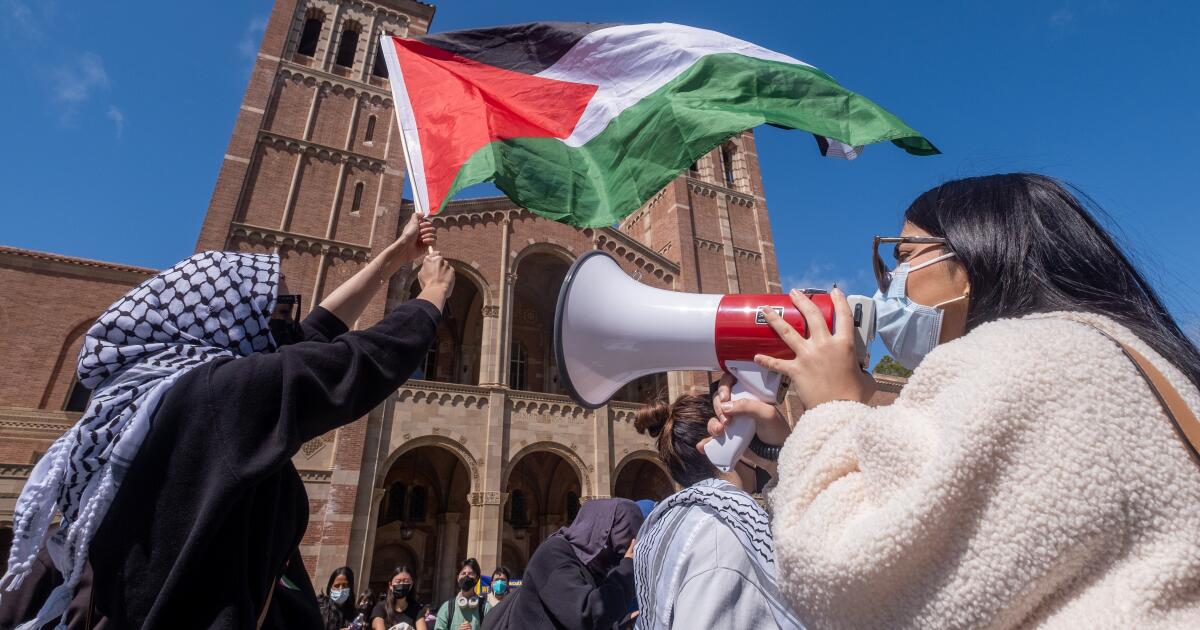
Today, as campus activism continues against U.S. support for Israel in its fight with Hamas in Gaza, young voters — who usually support Democrats — are threatening to withhold their votes from President Biden in protest. History may repeat itself. Their activism may amount to little when votes are counted in November. But if the conflict drives key votes, it could not only put Biden’s reelection at risk but also herald a turning point. This generation and this issue may greatly widen the perception of what matters most for emerging voters.
“Unlike some other foreign policy issues, young people may be viewing this conflict through a different lens that is informed by their generational experiences and, especially, their concerns about racial justice,” Alberto Medina wrote in a report for CIRCLE, the Center for Information and Research on Civic Learning and Engagement at Tufts University.
Although foreign affairs rarely sway voters in this country, young people may not be considering domestic and foreign issues in distinct silos but rather viewing them as deeply interconnected.
Polls already indicate a significant generation gap in how Americans view the Israeli-Hamas conflict; a Pew Research Center survey published in March shows 18- to 29-year-olds were far more critical of Israel and its government, and far more sympathetic to Hamas, than were their elders. Here’s just one data point, of many: Only 38% of the younger cohort said that Israel’s reason to fight Hamas was valid. Among those 65 and older, it was 78%.
That same survey showed that more than a third of the voters under 30 believed that Biden is favoring the Israelis too much in this conflict, far more than any other age group and a number that polls show is rising over time.
Those who argue, or perhaps wish, that this antipathy will not meaningfully affect electoral behavior in November can point to plenty of evidence beyond the historical anomaly it would represent. Polls show that fewer young people are closely following the conflict and as a result are less knowledgeable about it than their elders. And while the campus protesters, especially at elite universities, have dominated media coverage, they still represent a fraction of potential voters under 30. That was true in the Vietnam era as well — one 1969 study found that only 22% of college freshmen participated in a protest against the U.S. government in the previous year.
“There’s a very slim percentage of young people who identify as activist in a deep and sustained fashion,” Jerusha Conner, a professor of education at Villanova University who studies student engagement, told me.
Nonetheless, fueled by the ubiquity of social media, the focus on identity politics and the consequences of globalization, many younger people clearly view the Israel-Hamas war not as a distant problem but rather an outrage felt personally.
This wider perspective may in part reflect the way they have come to understand other issues as clearly both local and global. There’s a solid argument that policies dealing with climate change, for example, cannot be seen simply as domestic issues for those who are inheriting a hotter, more dangerous, less hospitable world. In an April poll, Pew found that 59% of voters under 30 in the U.S. ranked climate change as their top international priority — placing it far above more conventional foreign issues such as relations with China, Russia, NATO or North Korea.
The framing of the Israel-Hamas conflict in moral terms related to identity also brings it close to home. Many American Jews have long viewed the welfare of Israel as central to their identity; in growing numbers, other Americans, especially young Americans of color, connect what they consider oppressive Palestinian suffering with the racial injustice they observe and experience in this country.
Noting these trends, Conner is still not sure how or even whether this wider framing will directly affect voting behavior in November, even among voters active in campus protests. In 2020, she points out, “many activists were not enthused about Biden, but they held their nose and voted for him as a strategic choice. We could see some of the same this time. They are sorely disappointed by him but are savvy enough to understand the stakes.”
Even so, she sees an underlying challenge to the conventional wisdom about the way foreign ramifications of issues and foreign affairs could affect a U.S. election. In their broadest iteration, climate, immigration, reproductive rights, human rights — and the war in Gaza — represent “existential threats to this generation,” she said. “They see the connections. It’s all of a piece.”
Jane Eisner is the former editor in chief of the Forward, a national Jewish news outlet, and the former director of academic affairs at Columbia Journalism School.

The first time Americans younger than 21 years old could vote in a presidential election was when George McGovern challenged President Nixon in 1972, and conventional wisdom gave McGovern the edge with this new segment of the electorate. After all, McGovern was a Democrat who opposed the Vietnam War when college campuses were seething with protest, the military draft was still in effect and youthful rebellion was having a moment.
And yet on election day, Nixon drew surprising support from nearly half of first-time voters on his way to a landslide victory. Antiwar sentiment might have been widespread, but it wasn’t electorally consequential.
Today, as campus activism continues against U.S. support for Israel in its fight with Hamas in Gaza, young voters — who usually support Democrats — are threatening to withhold their votes from President Biden in protest. History may repeat itself. Their activism may amount to little when votes are counted in November. But if the conflict drives key votes, it could not only put Biden’s reelection at risk but also herald a turning point. This generation and this issue may greatly widen the perception of what matters most for emerging voters.
“Unlike some other foreign policy issues, young people may be viewing this conflict through a different lens that is informed by their generational experiences and, especially, their concerns about racial justice,” Alberto Medina wrote in a report for CIRCLE, the Center for Information and Research on Civic Learning and Engagement at Tufts University.
Although foreign affairs rarely sway voters in this country, young people may not be considering domestic and foreign issues in distinct silos but rather viewing them as deeply interconnected.
Polls already indicate a significant generation gap in how Americans view the Israeli-Hamas conflict; a Pew Research Center survey published in March shows 18- to 29-year-olds were far more critical of Israel and its government, and far more sympathetic to Hamas, than were their elders. Here’s just one data point, of many: Only 38% of the younger cohort said that Israel’s reason to fight Hamas was valid. Among those 65 and older, it was 78%.
That same survey showed that more than a third of the voters under 30 believed that Biden is favoring the Israelis too much in this conflict, far more than any other age group and a number that polls show is rising over time.
Those who argue, or perhaps wish, that this antipathy will not meaningfully affect electoral behavior in November can point to plenty of evidence beyond the historical anomaly it would represent. Polls show that fewer young people are closely following the conflict and as a result are less knowledgeable about it than their elders. And while the campus protesters, especially at elite universities, have dominated media coverage, they still represent a fraction of potential voters under 30. That was true in the Vietnam era as well — one 1969 study found that only 22% of college freshmen participated in a protest against the U.S. government in the previous year.
“There’s a very slim percentage of young people who identify as activist in a deep and sustained fashion,” Jerusha Conner, a professor of education at Villanova University who studies student engagement, told me.
Nonetheless, fueled by the ubiquity of social media, the focus on identity politics and the consequences of globalization, many younger people clearly view the Israel-Hamas war not as a distant problem but rather an outrage felt personally.
This wider perspective may in part reflect the way they have come to understand other issues as clearly both local and global. There’s a solid argument that policies dealing with climate change, for example, cannot be seen simply as domestic issues for those who are inheriting a hotter, more dangerous, less hospitable world. In an April poll, Pew found that 59% of voters under 30 in the U.S. ranked climate change as their top international priority — placing it far above more conventional foreign issues such as relations with China, Russia, NATO or North Korea.
The framing of the Israel-Hamas conflict in moral terms related to identity also brings it close to home. Many American Jews have long viewed the welfare of Israel as central to their identity; in growing numbers, other Americans, especially young Americans of color, connect what they consider oppressive Palestinian suffering with the racial injustice they observe and experience in this country.
Noting these trends, Conner is still not sure how or even whether this wider framing will directly affect voting behavior in November, even among voters active in campus protests. In 2020, she points out, “many activists were not enthused about Biden, but they held their nose and voted for him as a strategic choice. We could see some of the same this time. They are sorely disappointed by him but are savvy enough to understand the stakes.”
Even so, she sees an underlying challenge to the conventional wisdom about the way foreign ramifications of issues and foreign affairs could affect a U.S. election. In their broadest iteration, climate, immigration, reproductive rights, human rights — and the war in Gaza — represent “existential threats to this generation,” she said. “They see the connections. It’s all of a piece.”
Jane Eisner is the former editor in chief of the Forward, a national Jewish news outlet, and the former director of academic affairs at Columbia Journalism School.

The first time Americans younger than 21 years old could vote in a presidential election was when George McGovern challenged President Nixon in 1972, and conventional wisdom gave McGovern the edge with this new segment of the electorate. After all, McGovern was a Democrat who opposed the Vietnam War when college campuses were seething with protest, the military draft was still in effect and youthful rebellion was having a moment.
And yet on election day, Nixon drew surprising support from nearly half of first-time voters on his way to a landslide victory. Antiwar sentiment might have been widespread, but it wasn’t electorally consequential.
Today, as campus activism continues against U.S. support for Israel in its fight with Hamas in Gaza, young voters — who usually support Democrats — are threatening to withhold their votes from President Biden in protest. History may repeat itself. Their activism may amount to little when votes are counted in November. But if the conflict drives key votes, it could not only put Biden’s reelection at risk but also herald a turning point. This generation and this issue may greatly widen the perception of what matters most for emerging voters.
“Unlike some other foreign policy issues, young people may be viewing this conflict through a different lens that is informed by their generational experiences and, especially, their concerns about racial justice,” Alberto Medina wrote in a report for CIRCLE, the Center for Information and Research on Civic Learning and Engagement at Tufts University.
Although foreign affairs rarely sway voters in this country, young people may not be considering domestic and foreign issues in distinct silos but rather viewing them as deeply interconnected.
Polls already indicate a significant generation gap in how Americans view the Israeli-Hamas conflict; a Pew Research Center survey published in March shows 18- to 29-year-olds were far more critical of Israel and its government, and far more sympathetic to Hamas, than were their elders. Here’s just one data point, of many: Only 38% of the younger cohort said that Israel’s reason to fight Hamas was valid. Among those 65 and older, it was 78%.
That same survey showed that more than a third of the voters under 30 believed that Biden is favoring the Israelis too much in this conflict, far more than any other age group and a number that polls show is rising over time.
Those who argue, or perhaps wish, that this antipathy will not meaningfully affect electoral behavior in November can point to plenty of evidence beyond the historical anomaly it would represent. Polls show that fewer young people are closely following the conflict and as a result are less knowledgeable about it than their elders. And while the campus protesters, especially at elite universities, have dominated media coverage, they still represent a fraction of potential voters under 30. That was true in the Vietnam era as well — one 1969 study found that only 22% of college freshmen participated in a protest against the U.S. government in the previous year.
“There’s a very slim percentage of young people who identify as activist in a deep and sustained fashion,” Jerusha Conner, a professor of education at Villanova University who studies student engagement, told me.
Nonetheless, fueled by the ubiquity of social media, the focus on identity politics and the consequences of globalization, many younger people clearly view the Israel-Hamas war not as a distant problem but rather an outrage felt personally.
This wider perspective may in part reflect the way they have come to understand other issues as clearly both local and global. There’s a solid argument that policies dealing with climate change, for example, cannot be seen simply as domestic issues for those who are inheriting a hotter, more dangerous, less hospitable world. In an April poll, Pew found that 59% of voters under 30 in the U.S. ranked climate change as their top international priority — placing it far above more conventional foreign issues such as relations with China, Russia, NATO or North Korea.
The framing of the Israel-Hamas conflict in moral terms related to identity also brings it close to home. Many American Jews have long viewed the welfare of Israel as central to their identity; in growing numbers, other Americans, especially young Americans of color, connect what they consider oppressive Palestinian suffering with the racial injustice they observe and experience in this country.
Noting these trends, Conner is still not sure how or even whether this wider framing will directly affect voting behavior in November, even among voters active in campus protests. In 2020, she points out, “many activists were not enthused about Biden, but they held their nose and voted for him as a strategic choice. We could see some of the same this time. They are sorely disappointed by him but are savvy enough to understand the stakes.”
Even so, she sees an underlying challenge to the conventional wisdom about the way foreign ramifications of issues and foreign affairs could affect a U.S. election. In their broadest iteration, climate, immigration, reproductive rights, human rights — and the war in Gaza — represent “existential threats to this generation,” she said. “They see the connections. It’s all of a piece.”
Jane Eisner is the former editor in chief of the Forward, a national Jewish news outlet, and the former director of academic affairs at Columbia Journalism School.
The first time Americans younger than 21 years old could vote in a presidential election was when George McGovern challenged President Nixon in 1972, and conventional wisdom gave McGovern the edge with this new segment of the electorate. After all, McGovern was a Democrat who opposed the Vietnam War when college campuses were seething with protest, the military draft was still in effect and youthful rebellion was having a moment.
And yet on election day, Nixon drew surprising support from nearly half of first-time voters on his way to a landslide victory. Antiwar sentiment might have been widespread, but it wasn’t electorally consequential.
Today, as campus activism continues against U.S. support for Israel in its fight with Hamas in Gaza, young voters — who usually support Democrats — are threatening to withhold their votes from President Biden in protest. History may repeat itself. Their activism may amount to little when votes are counted in November. But if the conflict drives key votes, it could not only put Biden’s reelection at risk but also herald a turning point. This generation and this issue may greatly widen the perception of what matters most for emerging voters.
“Unlike some other foreign policy issues, young people may be viewing this conflict through a different lens that is informed by their generational experiences and, especially, their concerns about racial justice,” Alberto Medina wrote in a report for CIRCLE, the Center for Information and Research on Civic Learning and Engagement at Tufts University.
Although foreign affairs rarely sway voters in this country, young people may not be considering domestic and foreign issues in distinct silos but rather viewing them as deeply interconnected.
Polls already indicate a significant generation gap in how Americans view the Israeli-Hamas conflict; a Pew Research Center survey published in March shows 18- to 29-year-olds were far more critical of Israel and its government, and far more sympathetic to Hamas, than were their elders. Here’s just one data point, of many: Only 38% of the younger cohort said that Israel’s reason to fight Hamas was valid. Among those 65 and older, it was 78%.
That same survey showed that more than a third of the voters under 30 believed that Biden is favoring the Israelis too much in this conflict, far more than any other age group and a number that polls show is rising over time.
Those who argue, or perhaps wish, that this antipathy will not meaningfully affect electoral behavior in November can point to plenty of evidence beyond the historical anomaly it would represent. Polls show that fewer young people are closely following the conflict and as a result are less knowledgeable about it than their elders. And while the campus protesters, especially at elite universities, have dominated media coverage, they still represent a fraction of potential voters under 30. That was true in the Vietnam era as well — one 1969 study found that only 22% of college freshmen participated in a protest against the U.S. government in the previous year.
“There’s a very slim percentage of young people who identify as activist in a deep and sustained fashion,” Jerusha Conner, a professor of education at Villanova University who studies student engagement, told me.
Nonetheless, fueled by the ubiquity of social media, the focus on identity politics and the consequences of globalization, many younger people clearly view the Israel-Hamas war not as a distant problem but rather an outrage felt personally.
This wider perspective may in part reflect the way they have come to understand other issues as clearly both local and global. There’s a solid argument that policies dealing with climate change, for example, cannot be seen simply as domestic issues for those who are inheriting a hotter, more dangerous, less hospitable world. In an April poll, Pew found that 59% of voters under 30 in the U.S. ranked climate change as their top international priority — placing it far above more conventional foreign issues such as relations with China, Russia, NATO or North Korea.
The framing of the Israel-Hamas conflict in moral terms related to identity also brings it close to home. Many American Jews have long viewed the welfare of Israel as central to their identity; in growing numbers, other Americans, especially young Americans of color, connect what they consider oppressive Palestinian suffering with the racial injustice they observe and experience in this country.
Noting these trends, Conner is still not sure how or even whether this wider framing will directly affect voting behavior in November, even among voters active in campus protests. In 2020, she points out, “many activists were not enthused about Biden, but they held their nose and voted for him as a strategic choice. We could see some of the same this time. They are sorely disappointed by him but are savvy enough to understand the stakes.”
Even so, she sees an underlying challenge to the conventional wisdom about the way foreign ramifications of issues and foreign affairs could affect a U.S. election. In their broadest iteration, climate, immigration, reproductive rights, human rights — and the war in Gaza — represent “existential threats to this generation,” she said. “They see the connections. It’s all of a piece.”
Jane Eisner is the former editor in chief of the Forward, a national Jewish news outlet, and the former director of academic affairs at Columbia Journalism School.

