

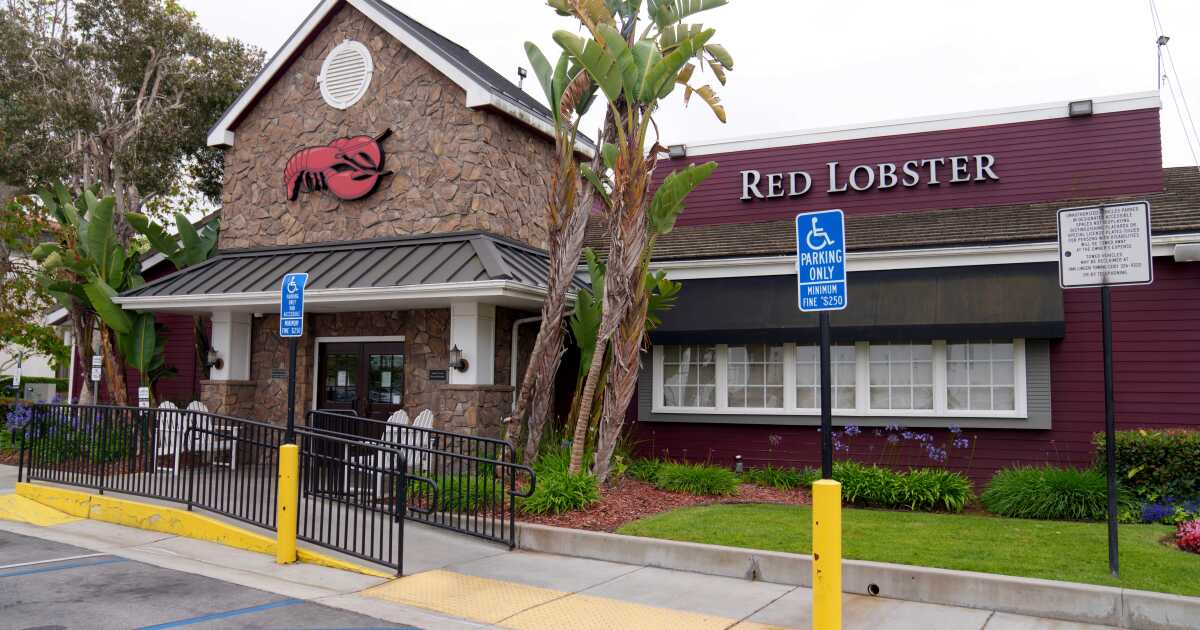

Red Lobster, the seafood chain whose cheddar biscuits and bottomless shrimp specials have long captivated the American palate and pocketbook, filed for Chapter 11 bankruptcy protection Sunday.
The behemoth of casual dining, which abruptly shuttered dozens of locations last week, has floundered in recent years, beset by managerial missteps, the impact of a sale to a private equity firm a decade ago and, most recently, its inability to bounce back after pandemic closures battered the restaurant industry.
In a court filing, the Orlando, Fla.-based company said it has more than 100,000 creditors and between $1 billion and $10 billion in estimated liabilities. The chain said it saw a net loss of $76 million during the last fiscal year alone.
“This restructuring is the best path forward for Red Lobster,” Chief Executive Jonathan Tibus said in a statement.
The chain said its remaining locations — about 580 across the U.S. and Canada, as well franchise locations in a handful of other countries — will operate as usual throughout the bankruptcy process.
Despite its dire situation, the chain painted itself in court papers as a diminished but still powerful company.
“Today, Red Lobster is the largest casual dining seafood chain in the United States,” the filing says — with “the largest” underlined for emphasis. The chain purchases 20% of all North American lobster tails sold, it said, and more than 15% of the world’s supply of rock lobster.
But the company acknowledged that its performance has deteriorated in recent years. In the bankruptcy filing, it says that the number of customers each year has dropped by nearly a third since 2019.
Several factors contributed to losses last year, the company said, including market forces, such as inflation, and above-market rates paid for rent at several locations.
For years, Red Lobster, which was founded in 1968 in Lakeland, Fla., was owned by Darden Restaurants, the company that owns Olive Garden and LongHorn Steakhouse. In 2014, Darden sold the chain to Golden Gate Capital, a San Francisco private equity firm, for more than $2 billion.
As part of that sale, Red Lobster agreed to spin off its real estate assets in a sale-leaseback transaction, requiring the chain to pay rent for locations it once owned. Last year, Red Lobster shelled out more than $190 million in lease obligations, according to the bankruptcy filing.
Another serious misstep: last year’s “Ultimate Endless Shrimp” promotion for $20.
During a presentation last year, Ludovic Garnier, chief financial officer of Thai Union Group, a seafood conglomerate that eventually took over the equity firm’s stake in Red Lobster, blamed the shrimp deal in large part for an operating loss of about $11 million during the third quarter.
Debtors are investigating the circumstances surrounding the promotion, bankruptcy records show.
While a single bungled promotion wouldn’t fell a company unless it was already teetering, the all-you-can-eat deal was a blunder, experts say.
Red Lobster launched the promotion as consumers were on the hunt for a good deal, said Jim Salera, a research analyst at Stephens who tracks the restaurant industry. Instead of accomplishing what the company had hoped for — enticing swaths of people who would buy pricey drinks, desserts and other add-on charges or those who would become brand loyalists — the promotion was viewed by many consumers as a challenge, Salera said.
“People were literally going in to just eat the endless shrimp and maybe a Diet Coke,” he said. “They’re really not engaging with the brand; they’re engaging with the price point.”

Red Lobster, the seafood chain whose cheddar biscuits and bottomless shrimp specials have long captivated the American palate and pocketbook, filed for Chapter 11 bankruptcy protection Sunday.
The behemoth of casual dining, which abruptly shuttered dozens of locations last week, has floundered in recent years, beset by managerial missteps, the impact of a sale to a private equity firm a decade ago and, most recently, its inability to bounce back after pandemic closures battered the restaurant industry.
In a court filing, the Orlando, Fla.-based company said it has more than 100,000 creditors and between $1 billion and $10 billion in estimated liabilities. The chain said it saw a net loss of $76 million during the last fiscal year alone.
“This restructuring is the best path forward for Red Lobster,” Chief Executive Jonathan Tibus said in a statement.
The chain said its remaining locations — about 580 across the U.S. and Canada, as well franchise locations in a handful of other countries — will operate as usual throughout the bankruptcy process.
Despite its dire situation, the chain painted itself in court papers as a diminished but still powerful company.
“Today, Red Lobster is the largest casual dining seafood chain in the United States,” the filing says — with “the largest” underlined for emphasis. The chain purchases 20% of all North American lobster tails sold, it said, and more than 15% of the world’s supply of rock lobster.
But the company acknowledged that its performance has deteriorated in recent years. In the bankruptcy filing, it says that the number of customers each year has dropped by nearly a third since 2019.
Several factors contributed to losses last year, the company said, including market forces, such as inflation, and above-market rates paid for rent at several locations.
For years, Red Lobster, which was founded in 1968 in Lakeland, Fla., was owned by Darden Restaurants, the company that owns Olive Garden and LongHorn Steakhouse. In 2014, Darden sold the chain to Golden Gate Capital, a San Francisco private equity firm, for more than $2 billion.
As part of that sale, Red Lobster agreed to spin off its real estate assets in a sale-leaseback transaction, requiring the chain to pay rent for locations it once owned. Last year, Red Lobster shelled out more than $190 million in lease obligations, according to the bankruptcy filing.
Another serious misstep: last year’s “Ultimate Endless Shrimp” promotion for $20.
During a presentation last year, Ludovic Garnier, chief financial officer of Thai Union Group, a seafood conglomerate that eventually took over the equity firm’s stake in Red Lobster, blamed the shrimp deal in large part for an operating loss of about $11 million during the third quarter.
Debtors are investigating the circumstances surrounding the promotion, bankruptcy records show.
While a single bungled promotion wouldn’t fell a company unless it was already teetering, the all-you-can-eat deal was a blunder, experts say.
Red Lobster launched the promotion as consumers were on the hunt for a good deal, said Jim Salera, a research analyst at Stephens who tracks the restaurant industry. Instead of accomplishing what the company had hoped for — enticing swaths of people who would buy pricey drinks, desserts and other add-on charges or those who would become brand loyalists — the promotion was viewed by many consumers as a challenge, Salera said.
“People were literally going in to just eat the endless shrimp and maybe a Diet Coke,” he said. “They’re really not engaging with the brand; they’re engaging with the price point.”

Red Lobster, the seafood chain whose cheddar biscuits and bottomless shrimp specials have long captivated the American palate and pocketbook, filed for Chapter 11 bankruptcy protection Sunday.
The behemoth of casual dining, which abruptly shuttered dozens of locations last week, has floundered in recent years, beset by managerial missteps, the impact of a sale to a private equity firm a decade ago and, most recently, its inability to bounce back after pandemic closures battered the restaurant industry.
In a court filing, the Orlando, Fla.-based company said it has more than 100,000 creditors and between $1 billion and $10 billion in estimated liabilities. The chain said it saw a net loss of $76 million during the last fiscal year alone.
“This restructuring is the best path forward for Red Lobster,” Chief Executive Jonathan Tibus said in a statement.
The chain said its remaining locations — about 580 across the U.S. and Canada, as well franchise locations in a handful of other countries — will operate as usual throughout the bankruptcy process.
Despite its dire situation, the chain painted itself in court papers as a diminished but still powerful company.
“Today, Red Lobster is the largest casual dining seafood chain in the United States,” the filing says — with “the largest” underlined for emphasis. The chain purchases 20% of all North American lobster tails sold, it said, and more than 15% of the world’s supply of rock lobster.
But the company acknowledged that its performance has deteriorated in recent years. In the bankruptcy filing, it says that the number of customers each year has dropped by nearly a third since 2019.
Several factors contributed to losses last year, the company said, including market forces, such as inflation, and above-market rates paid for rent at several locations.
For years, Red Lobster, which was founded in 1968 in Lakeland, Fla., was owned by Darden Restaurants, the company that owns Olive Garden and LongHorn Steakhouse. In 2014, Darden sold the chain to Golden Gate Capital, a San Francisco private equity firm, for more than $2 billion.
As part of that sale, Red Lobster agreed to spin off its real estate assets in a sale-leaseback transaction, requiring the chain to pay rent for locations it once owned. Last year, Red Lobster shelled out more than $190 million in lease obligations, according to the bankruptcy filing.
Another serious misstep: last year’s “Ultimate Endless Shrimp” promotion for $20.
During a presentation last year, Ludovic Garnier, chief financial officer of Thai Union Group, a seafood conglomerate that eventually took over the equity firm’s stake in Red Lobster, blamed the shrimp deal in large part for an operating loss of about $11 million during the third quarter.
Debtors are investigating the circumstances surrounding the promotion, bankruptcy records show.
While a single bungled promotion wouldn’t fell a company unless it was already teetering, the all-you-can-eat deal was a blunder, experts say.
Red Lobster launched the promotion as consumers were on the hunt for a good deal, said Jim Salera, a research analyst at Stephens who tracks the restaurant industry. Instead of accomplishing what the company had hoped for — enticing swaths of people who would buy pricey drinks, desserts and other add-on charges or those who would become brand loyalists — the promotion was viewed by many consumers as a challenge, Salera said.
“People were literally going in to just eat the endless shrimp and maybe a Diet Coke,” he said. “They’re really not engaging with the brand; they’re engaging with the price point.”

Red Lobster, the seafood chain whose cheddar biscuits and bottomless shrimp specials have long captivated the American palate and pocketbook, filed for Chapter 11 bankruptcy protection Sunday.
The behemoth of casual dining, which abruptly shuttered dozens of locations last week, has floundered in recent years, beset by managerial missteps, the impact of a sale to a private equity firm a decade ago and, most recently, its inability to bounce back after pandemic closures battered the restaurant industry.
In a court filing, the Orlando, Fla.-based company said it has more than 100,000 creditors and between $1 billion and $10 billion in estimated liabilities. The chain said it saw a net loss of $76 million during the last fiscal year alone.
“This restructuring is the best path forward for Red Lobster,” Chief Executive Jonathan Tibus said in a statement.
The chain said its remaining locations — about 580 across the U.S. and Canada, as well franchise locations in a handful of other countries — will operate as usual throughout the bankruptcy process.
Despite its dire situation, the chain painted itself in court papers as a diminished but still powerful company.
“Today, Red Lobster is the largest casual dining seafood chain in the United States,” the filing says — with “the largest” underlined for emphasis. The chain purchases 20% of all North American lobster tails sold, it said, and more than 15% of the world’s supply of rock lobster.
But the company acknowledged that its performance has deteriorated in recent years. In the bankruptcy filing, it says that the number of customers each year has dropped by nearly a third since 2019.
Several factors contributed to losses last year, the company said, including market forces, such as inflation, and above-market rates paid for rent at several locations.
For years, Red Lobster, which was founded in 1968 in Lakeland, Fla., was owned by Darden Restaurants, the company that owns Olive Garden and LongHorn Steakhouse. In 2014, Darden sold the chain to Golden Gate Capital, a San Francisco private equity firm, for more than $2 billion.
As part of that sale, Red Lobster agreed to spin off its real estate assets in a sale-leaseback transaction, requiring the chain to pay rent for locations it once owned. Last year, Red Lobster shelled out more than $190 million in lease obligations, according to the bankruptcy filing.
Another serious misstep: last year’s “Ultimate Endless Shrimp” promotion for $20.
During a presentation last year, Ludovic Garnier, chief financial officer of Thai Union Group, a seafood conglomerate that eventually took over the equity firm’s stake in Red Lobster, blamed the shrimp deal in large part for an operating loss of about $11 million during the third quarter.
Debtors are investigating the circumstances surrounding the promotion, bankruptcy records show.
While a single bungled promotion wouldn’t fell a company unless it was already teetering, the all-you-can-eat deal was a blunder, experts say.
Red Lobster launched the promotion as consumers were on the hunt for a good deal, said Jim Salera, a research analyst at Stephens who tracks the restaurant industry. Instead of accomplishing what the company had hoped for — enticing swaths of people who would buy pricey drinks, desserts and other add-on charges or those who would become brand loyalists — the promotion was viewed by many consumers as a challenge, Salera said.
“People were literally going in to just eat the endless shrimp and maybe a Diet Coke,” he said. “They’re really not engaging with the brand; they’re engaging with the price point.”