

Democrats and Republicans expressed frustration Monday as they grilled Gov. Gavin Newsom’s top housing officials in a tense legislative hearing about how billions of state dollars have been spent on the worsening homelessness crisis.
The hearing by the Assembly budget subcommittee on accountability and oversight came after a state audit released last month found that California has failed to adequately track the outcomes of its vast spending on homelessness programs, raising questions about efficacy and transparency.
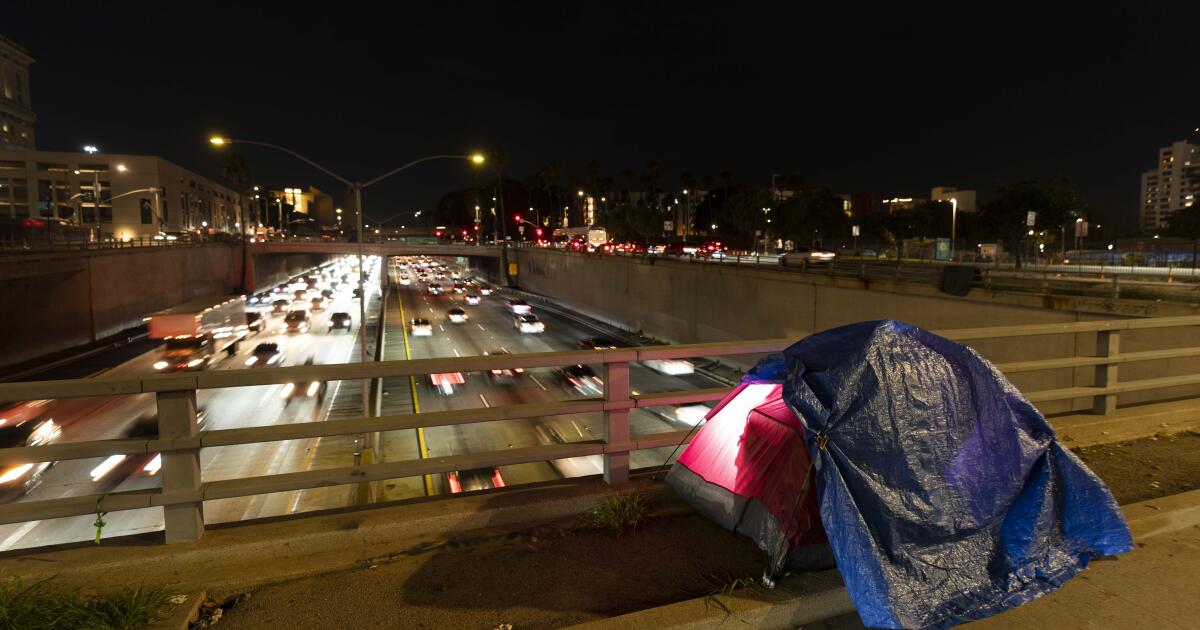
California has spent more than $20 billion over the past five years to help people get off the streets, but homelessness has continued to rise — jumping by 6% in 2023 to more than 180,000 people. California has been the state with the largest homeless population for more than a decade, according to the latest federal data.
The audit raised concerns in the Legislature about whether the spending has worked and could hamper requests by cities and counties for more money to address the crisis as the state faces a massive budget deficit.
Assemblymember Phil Ting (D-San Francisco) hammered Newsom officials Monday, demanding data regarding how specific programs have worked to get homeless people sheltered. The officials repeatedly said the information is not yet available.
“You come to a budget committee, and there’s no numbers,” Ting said. “How many people have we helped? How many people are off the street? … Because that’s what the public wants to know. What’s the money been spent on?”
Meghan Marshall, executive officer of the California Interagency Council on Homelessness, said the system is undergoing a “transformation,” and officials are still working on reporting requirements mandated by a law Newsom signed in 2021.
New data about how homelessness funding has been spent should be available as soon as July, Marshall said, adding that the state is “working through data quality issues.”
A frustrated Ting said, “That sounds like an excuse.”
Last month’s state audit found that Marshall’s council has not evaluated program success or consistently monitored spending. The audit said California “must do more to assess the cost-effectiveness of its homelessness programs.”
Megan Kirkeby, a deputy director for the California Department of Housing and Community Development, said cities and counties that received some grants were not previously required to show the state how they spent homelessness program funding.
“I don’t think that’s something to be proud of. I don’t think that’s something we feel good about. I don’t think that’s something that we accept,” Kirkeby said, adding that the state has made significant progress and is in “the first phases of a culture change.”
The audit results have rekindled debate about state and local officials’ roles in handling the crisis.
Last month, Newsom, a Democrat, called for more oversight of cities and counties and threatened to withhold homelessness funding from those that fail to produce results, saying, “I’m not interested in funding failure any longer.”
Los Angeles Mayor Karen Bass, San Diego Mayor Todd Gloria, Sacramento Mayor Darrell Steinberg — all Democrats — and other leaders of California’s largest cities traveled to the state Capitol last month to lobby for more homelessness funding.
Newsom has proposed ending grants that have been given to some cities and counties since 2019 to combat homelessness, while maintaining other programs dedicated to the crisis, as he and lawmakers negotiate how to lessen the budget deficit.
Gloria on Monday urged lawmakers to increase that funding by $1 billion, pointing to recently compiled data showing that at least 150,000 people have been served through programs in Fresno, Riverside and other cities.
“We welcome being held accountable,” Gloria said.
Republicans pointed to the lack of data as the fallout of the Democrats’ firm grip on power in Sacramento, with some suggesting that the spending has gone unchecked because of one-party rule.
“The long and short of it is we have to stop measuring success by how many dollars we’re spending,” said Assembymember Josh Hoover (R-Folsom), who was among those who called for the state audit. “I am frustrated by the lack of urgency that I see today and the lack of data.”
Democrats, too, voiced frustrations with city and county leaders who are asking for more money — and with Newsom officials who could not supply them with the information they sought.
“We can’t just be shoveling money at a problem without knowing if we’re spending the money wisely, in the most cost-effective way,” Assemblymember Al Muratsuchi (D-Rolling Hills Estates) said. “This should not be a reason for us to stop addressing this crisis, but we need to get smarter in terms of how we’re spending the money.”

Democrats and Republicans expressed frustration Monday as they grilled Gov. Gavin Newsom’s top housing officials in a tense legislative hearing about how billions of state dollars have been spent on the worsening homelessness crisis.
The hearing by the Assembly budget subcommittee on accountability and oversight came after a state audit released last month found that California has failed to adequately track the outcomes of its vast spending on homelessness programs, raising questions about efficacy and transparency.
California has spent more than $20 billion over the past five years to help people get off the streets, but homelessness has continued to rise — jumping by 6% in 2023 to more than 180,000 people. California has been the state with the largest homeless population for more than a decade, according to the latest federal data.
The audit raised concerns in the Legislature about whether the spending has worked and could hamper requests by cities and counties for more money to address the crisis as the state faces a massive budget deficit.
Assemblymember Phil Ting (D-San Francisco) hammered Newsom officials Monday, demanding data regarding how specific programs have worked to get homeless people sheltered. The officials repeatedly said the information is not yet available.
“You come to a budget committee, and there’s no numbers,” Ting said. “How many people have we helped? How many people are off the street? … Because that’s what the public wants to know. What’s the money been spent on?”
Meghan Marshall, executive officer of the California Interagency Council on Homelessness, said the system is undergoing a “transformation,” and officials are still working on reporting requirements mandated by a law Newsom signed in 2021.
New data about how homelessness funding has been spent should be available as soon as July, Marshall said, adding that the state is “working through data quality issues.”
A frustrated Ting said, “That sounds like an excuse.”
Last month’s state audit found that Marshall’s council has not evaluated program success or consistently monitored spending. The audit said California “must do more to assess the cost-effectiveness of its homelessness programs.”
Megan Kirkeby, a deputy director for the California Department of Housing and Community Development, said cities and counties that received some grants were not previously required to show the state how they spent homelessness program funding.
“I don’t think that’s something to be proud of. I don’t think that’s something we feel good about. I don’t think that’s something that we accept,” Kirkeby said, adding that the state has made significant progress and is in “the first phases of a culture change.”
The audit results have rekindled debate about state and local officials’ roles in handling the crisis.
Last month, Newsom, a Democrat, called for more oversight of cities and counties and threatened to withhold homelessness funding from those that fail to produce results, saying, “I’m not interested in funding failure any longer.”
Los Angeles Mayor Karen Bass, San Diego Mayor Todd Gloria, Sacramento Mayor Darrell Steinberg — all Democrats — and other leaders of California’s largest cities traveled to the state Capitol last month to lobby for more homelessness funding.
Newsom has proposed ending grants that have been given to some cities and counties since 2019 to combat homelessness, while maintaining other programs dedicated to the crisis, as he and lawmakers negotiate how to lessen the budget deficit.
Gloria on Monday urged lawmakers to increase that funding by $1 billion, pointing to recently compiled data showing that at least 150,000 people have been served through programs in Fresno, Riverside and other cities.
“We welcome being held accountable,” Gloria said.
Republicans pointed to the lack of data as the fallout of the Democrats’ firm grip on power in Sacramento, with some suggesting that the spending has gone unchecked because of one-party rule.
“The long and short of it is we have to stop measuring success by how many dollars we’re spending,” said Assembymember Josh Hoover (R-Folsom), who was among those who called for the state audit. “I am frustrated by the lack of urgency that I see today and the lack of data.”
Democrats, too, voiced frustrations with city and county leaders who are asking for more money — and with Newsom officials who could not supply them with the information they sought.
“We can’t just be shoveling money at a problem without knowing if we’re spending the money wisely, in the most cost-effective way,” Assemblymember Al Muratsuchi (D-Rolling Hills Estates) said. “This should not be a reason for us to stop addressing this crisis, but we need to get smarter in terms of how we’re spending the money.”

Democrats and Republicans expressed frustration Monday as they grilled Gov. Gavin Newsom’s top housing officials in a tense legislative hearing about how billions of state dollars have been spent on the worsening homelessness crisis.
The hearing by the Assembly budget subcommittee on accountability and oversight came after a state audit released last month found that California has failed to adequately track the outcomes of its vast spending on homelessness programs, raising questions about efficacy and transparency.
California has spent more than $20 billion over the past five years to help people get off the streets, but homelessness has continued to rise — jumping by 6% in 2023 to more than 180,000 people. California has been the state with the largest homeless population for more than a decade, according to the latest federal data.
The audit raised concerns in the Legislature about whether the spending has worked and could hamper requests by cities and counties for more money to address the crisis as the state faces a massive budget deficit.
Assemblymember Phil Ting (D-San Francisco) hammered Newsom officials Monday, demanding data regarding how specific programs have worked to get homeless people sheltered. The officials repeatedly said the information is not yet available.
“You come to a budget committee, and there’s no numbers,” Ting said. “How many people have we helped? How many people are off the street? … Because that’s what the public wants to know. What’s the money been spent on?”
Meghan Marshall, executive officer of the California Interagency Council on Homelessness, said the system is undergoing a “transformation,” and officials are still working on reporting requirements mandated by a law Newsom signed in 2021.
New data about how homelessness funding has been spent should be available as soon as July, Marshall said, adding that the state is “working through data quality issues.”
A frustrated Ting said, “That sounds like an excuse.”
Last month’s state audit found that Marshall’s council has not evaluated program success or consistently monitored spending. The audit said California “must do more to assess the cost-effectiveness of its homelessness programs.”
Megan Kirkeby, a deputy director for the California Department of Housing and Community Development, said cities and counties that received some grants were not previously required to show the state how they spent homelessness program funding.
“I don’t think that’s something to be proud of. I don’t think that’s something we feel good about. I don’t think that’s something that we accept,” Kirkeby said, adding that the state has made significant progress and is in “the first phases of a culture change.”
The audit results have rekindled debate about state and local officials’ roles in handling the crisis.
Last month, Newsom, a Democrat, called for more oversight of cities and counties and threatened to withhold homelessness funding from those that fail to produce results, saying, “I’m not interested in funding failure any longer.”
Los Angeles Mayor Karen Bass, San Diego Mayor Todd Gloria, Sacramento Mayor Darrell Steinberg — all Democrats — and other leaders of California’s largest cities traveled to the state Capitol last month to lobby for more homelessness funding.
Newsom has proposed ending grants that have been given to some cities and counties since 2019 to combat homelessness, while maintaining other programs dedicated to the crisis, as he and lawmakers negotiate how to lessen the budget deficit.
Gloria on Monday urged lawmakers to increase that funding by $1 billion, pointing to recently compiled data showing that at least 150,000 people have been served through programs in Fresno, Riverside and other cities.
“We welcome being held accountable,” Gloria said.
Republicans pointed to the lack of data as the fallout of the Democrats’ firm grip on power in Sacramento, with some suggesting that the spending has gone unchecked because of one-party rule.
“The long and short of it is we have to stop measuring success by how many dollars we’re spending,” said Assembymember Josh Hoover (R-Folsom), who was among those who called for the state audit. “I am frustrated by the lack of urgency that I see today and the lack of data.”
Democrats, too, voiced frustrations with city and county leaders who are asking for more money — and with Newsom officials who could not supply them with the information they sought.
“We can’t just be shoveling money at a problem without knowing if we’re spending the money wisely, in the most cost-effective way,” Assemblymember Al Muratsuchi (D-Rolling Hills Estates) said. “This should not be a reason for us to stop addressing this crisis, but we need to get smarter in terms of how we’re spending the money.”

Democrats and Republicans expressed frustration Monday as they grilled Gov. Gavin Newsom’s top housing officials in a tense legislative hearing about how billions of state dollars have been spent on the worsening homelessness crisis.
The hearing by the Assembly budget subcommittee on accountability and oversight came after a state audit released last month found that California has failed to adequately track the outcomes of its vast spending on homelessness programs, raising questions about efficacy and transparency.
California has spent more than $20 billion over the past five years to help people get off the streets, but homelessness has continued to rise — jumping by 6% in 2023 to more than 180,000 people. California has been the state with the largest homeless population for more than a decade, according to the latest federal data.
The audit raised concerns in the Legislature about whether the spending has worked and could hamper requests by cities and counties for more money to address the crisis as the state faces a massive budget deficit.
Assemblymember Phil Ting (D-San Francisco) hammered Newsom officials Monday, demanding data regarding how specific programs have worked to get homeless people sheltered. The officials repeatedly said the information is not yet available.
“You come to a budget committee, and there’s no numbers,” Ting said. “How many people have we helped? How many people are off the street? … Because that’s what the public wants to know. What’s the money been spent on?”
Meghan Marshall, executive officer of the California Interagency Council on Homelessness, said the system is undergoing a “transformation,” and officials are still working on reporting requirements mandated by a law Newsom signed in 2021.
New data about how homelessness funding has been spent should be available as soon as July, Marshall said, adding that the state is “working through data quality issues.”
A frustrated Ting said, “That sounds like an excuse.”
Last month’s state audit found that Marshall’s council has not evaluated program success or consistently monitored spending. The audit said California “must do more to assess the cost-effectiveness of its homelessness programs.”
Megan Kirkeby, a deputy director for the California Department of Housing and Community Development, said cities and counties that received some grants were not previously required to show the state how they spent homelessness program funding.
“I don’t think that’s something to be proud of. I don’t think that’s something we feel good about. I don’t think that’s something that we accept,” Kirkeby said, adding that the state has made significant progress and is in “the first phases of a culture change.”
The audit results have rekindled debate about state and local officials’ roles in handling the crisis.
Last month, Newsom, a Democrat, called for more oversight of cities and counties and threatened to withhold homelessness funding from those that fail to produce results, saying, “I’m not interested in funding failure any longer.”
Los Angeles Mayor Karen Bass, San Diego Mayor Todd Gloria, Sacramento Mayor Darrell Steinberg — all Democrats — and other leaders of California’s largest cities traveled to the state Capitol last month to lobby for more homelessness funding.
Newsom has proposed ending grants that have been given to some cities and counties since 2019 to combat homelessness, while maintaining other programs dedicated to the crisis, as he and lawmakers negotiate how to lessen the budget deficit.
Gloria on Monday urged lawmakers to increase that funding by $1 billion, pointing to recently compiled data showing that at least 150,000 people have been served through programs in Fresno, Riverside and other cities.
“We welcome being held accountable,” Gloria said.
Republicans pointed to the lack of data as the fallout of the Democrats’ firm grip on power in Sacramento, with some suggesting that the spending has gone unchecked because of one-party rule.
“The long and short of it is we have to stop measuring success by how many dollars we’re spending,” said Assembymember Josh Hoover (R-Folsom), who was among those who called for the state audit. “I am frustrated by the lack of urgency that I see today and the lack of data.”
Democrats, too, voiced frustrations with city and county leaders who are asking for more money — and with Newsom officials who could not supply them with the information they sought.
“We can’t just be shoveling money at a problem without knowing if we’re spending the money wisely, in the most cost-effective way,” Assemblymember Al Muratsuchi (D-Rolling Hills Estates) said. “This should not be a reason for us to stop addressing this crisis, but we need to get smarter in terms of how we’re spending the money.”

Democrats and Republicans expressed frustration Monday as they grilled Gov. Gavin Newsom’s top housing officials in a tense legislative hearing about how billions of state dollars have been spent on the worsening homelessness crisis.
The hearing by the Assembly budget subcommittee on accountability and oversight came after a state audit released last month found that California has failed to adequately track the outcomes of its vast spending on homelessness programs, raising questions about efficacy and transparency.
California has spent more than $20 billion over the past five years to help people get off the streets, but homelessness has continued to rise — jumping by 6% in 2023 to more than 180,000 people. California has been the state with the largest homeless population for more than a decade, according to the latest federal data.
The audit raised concerns in the Legislature about whether the spending has worked and could hamper requests by cities and counties for more money to address the crisis as the state faces a massive budget deficit.
Assemblymember Phil Ting (D-San Francisco) hammered Newsom officials Monday, demanding data regarding how specific programs have worked to get homeless people sheltered. The officials repeatedly said the information is not yet available.
“You come to a budget committee, and there’s no numbers,” Ting said. “How many people have we helped? How many people are off the street? … Because that’s what the public wants to know. What’s the money been spent on?”
Meghan Marshall, executive officer of the California Interagency Council on Homelessness, said the system is undergoing a “transformation,” and officials are still working on reporting requirements mandated by a law Newsom signed in 2021.
New data about how homelessness funding has been spent should be available as soon as July, Marshall said, adding that the state is “working through data quality issues.”
A frustrated Ting said, “That sounds like an excuse.”
Last month’s state audit found that Marshall’s council has not evaluated program success or consistently monitored spending. The audit said California “must do more to assess the cost-effectiveness of its homelessness programs.”
Megan Kirkeby, a deputy director for the California Department of Housing and Community Development, said cities and counties that received some grants were not previously required to show the state how they spent homelessness program funding.
“I don’t think that’s something to be proud of. I don’t think that’s something we feel good about. I don’t think that’s something that we accept,” Kirkeby said, adding that the state has made significant progress and is in “the first phases of a culture change.”
The audit results have rekindled debate about state and local officials’ roles in handling the crisis.
Last month, Newsom, a Democrat, called for more oversight of cities and counties and threatened to withhold homelessness funding from those that fail to produce results, saying, “I’m not interested in funding failure any longer.”
Los Angeles Mayor Karen Bass, San Diego Mayor Todd Gloria, Sacramento Mayor Darrell Steinberg — all Democrats — and other leaders of California’s largest cities traveled to the state Capitol last month to lobby for more homelessness funding.
Newsom has proposed ending grants that have been given to some cities and counties since 2019 to combat homelessness, while maintaining other programs dedicated to the crisis, as he and lawmakers negotiate how to lessen the budget deficit.
Gloria on Monday urged lawmakers to increase that funding by $1 billion, pointing to recently compiled data showing that at least 150,000 people have been served through programs in Fresno, Riverside and other cities.
“We welcome being held accountable,” Gloria said.
Republicans pointed to the lack of data as the fallout of the Democrats’ firm grip on power in Sacramento, with some suggesting that the spending has gone unchecked because of one-party rule.
“The long and short of it is we have to stop measuring success by how many dollars we’re spending,” said Assembymember Josh Hoover (R-Folsom), who was among those who called for the state audit. “I am frustrated by the lack of urgency that I see today and the lack of data.”
Democrats, too, voiced frustrations with city and county leaders who are asking for more money — and with Newsom officials who could not supply them with the information they sought.
“We can’t just be shoveling money at a problem without knowing if we’re spending the money wisely, in the most cost-effective way,” Assemblymember Al Muratsuchi (D-Rolling Hills Estates) said. “This should not be a reason for us to stop addressing this crisis, but we need to get smarter in terms of how we’re spending the money.”