

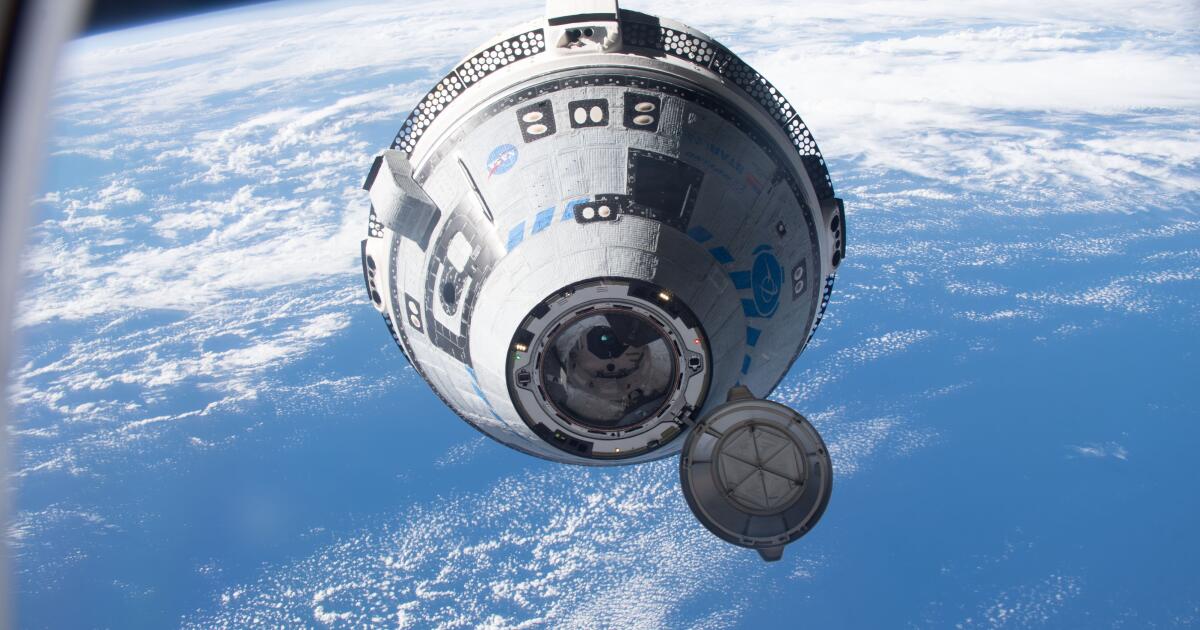

The launch of Boeing’s Starliner capsule to the International Space Station was scrubbed Monday evening due to a malfunctioning valve on the Atlas V rocket that would blast it into space. It was not immediately certain when it would be rescheduled.
The rocket is a reliable workhorse and is made by the United Launch Alliance, a joint venture of Boeing and Lockheed Martin. After years of delays in Boeing’s Starliner program, the launch with two astronauts aboard is considered crucial.
NASA said an oxygen relief valve on the rocket’s Centaur second stage was “buzzing,” or rapidly opening and closing, and would be closely examined to determine whether it needed to be replaced because of cycling too many times.
The space agency said the launch could be rescheduled as soon as Tuesday or possibly Friday or Saturday. NASA officials said that the crew was never in danger and that the launch might have proceeded if it were a satellite launch.
The decision to scrub the launch was made by NASA, Boeing and the United Launch Alliance.
Boeing’s new Starliner capsule was scheduled to blast off with a crew last summer, but a problem was discovered with its parachute system and the use of flammable tape in the craft, a mile of which was removed. It had been just the most recent of several delays prior to Monday.
This week’s flight plan called for NASA astronauts Barry Wilmore and Sunita Williams to spend a minimum of eight days testing the docked Starliner before returning to Earth as soon as May 15.
Boeing’s capsule is intended to provide NASA with a second U.S. vehicle to reach the space station — along with SpaceX’s Crew Dragon capsule. A prior unmanned Starliner test flight last year docked with the station, but the first flight in 2019 failed to reach it.
The stakes are high for Boeing, which received a $4.2-billion contract from NASA in 2014 to service the International Space Station, while rival SpaceX of Hawthorne received a smaller $2.6-billion contract to also provide the service — and has already sent eight crews to the station.
Boeing is counting on the Starliner to be a success, given the company’s tarnished reputation after two crashes of its 737 Max 8 jets and a door plug that blew out of a 737 Max 9 flight this year on its way to Ontario International Airport in San Bernardino County. The company also had to absorb a reported $1.5 billion in Starliner cost overruns.
NASA selected the companies to provide it with American launch services after having to rely on the Russian program since the space shuttle program ended in 2011.

The launch of Boeing’s Starliner capsule to the International Space Station was scrubbed Monday evening due to a malfunctioning valve on the Atlas V rocket that would blast it into space. It was not immediately certain when it would be rescheduled.
The rocket is a reliable workhorse and is made by the United Launch Alliance, a joint venture of Boeing and Lockheed Martin. After years of delays in Boeing’s Starliner program, the launch with two astronauts aboard is considered crucial.
NASA said an oxygen relief valve on the rocket’s Centaur second stage was “buzzing,” or rapidly opening and closing, and would be closely examined to determine whether it needed to be replaced because of cycling too many times.
The space agency said the launch could be rescheduled as soon as Tuesday or possibly Friday or Saturday. NASA officials said that the crew was never in danger and that the launch might have proceeded if it were a satellite launch.
The decision to scrub the launch was made by NASA, Boeing and the United Launch Alliance.
Boeing’s new Starliner capsule was scheduled to blast off with a crew last summer, but a problem was discovered with its parachute system and the use of flammable tape in the craft, a mile of which was removed. It had been just the most recent of several delays prior to Monday.
This week’s flight plan called for NASA astronauts Barry Wilmore and Sunita Williams to spend a minimum of eight days testing the docked Starliner before returning to Earth as soon as May 15.
Boeing’s capsule is intended to provide NASA with a second U.S. vehicle to reach the space station — along with SpaceX’s Crew Dragon capsule. A prior unmanned Starliner test flight last year docked with the station, but the first flight in 2019 failed to reach it.
The stakes are high for Boeing, which received a $4.2-billion contract from NASA in 2014 to service the International Space Station, while rival SpaceX of Hawthorne received a smaller $2.6-billion contract to also provide the service — and has already sent eight crews to the station.
Boeing is counting on the Starliner to be a success, given the company’s tarnished reputation after two crashes of its 737 Max 8 jets and a door plug that blew out of a 737 Max 9 flight this year on its way to Ontario International Airport in San Bernardino County. The company also had to absorb a reported $1.5 billion in Starliner cost overruns.
NASA selected the companies to provide it with American launch services after having to rely on the Russian program since the space shuttle program ended in 2011.

The launch of Boeing’s Starliner capsule to the International Space Station was scrubbed Monday evening due to a malfunctioning valve on the Atlas V rocket that would blast it into space. It was not immediately certain when it would be rescheduled.
The rocket is a reliable workhorse and is made by the United Launch Alliance, a joint venture of Boeing and Lockheed Martin. After years of delays in Boeing’s Starliner program, the launch with two astronauts aboard is considered crucial.
NASA said an oxygen relief valve on the rocket’s Centaur second stage was “buzzing,” or rapidly opening and closing, and would be closely examined to determine whether it needed to be replaced because of cycling too many times.
The space agency said the launch could be rescheduled as soon as Tuesday or possibly Friday or Saturday. NASA officials said that the crew was never in danger and that the launch might have proceeded if it were a satellite launch.
The decision to scrub the launch was made by NASA, Boeing and the United Launch Alliance.
Boeing’s new Starliner capsule was scheduled to blast off with a crew last summer, but a problem was discovered with its parachute system and the use of flammable tape in the craft, a mile of which was removed. It had been just the most recent of several delays prior to Monday.
This week’s flight plan called for NASA astronauts Barry Wilmore and Sunita Williams to spend a minimum of eight days testing the docked Starliner before returning to Earth as soon as May 15.
Boeing’s capsule is intended to provide NASA with a second U.S. vehicle to reach the space station — along with SpaceX’s Crew Dragon capsule. A prior unmanned Starliner test flight last year docked with the station, but the first flight in 2019 failed to reach it.
The stakes are high for Boeing, which received a $4.2-billion contract from NASA in 2014 to service the International Space Station, while rival SpaceX of Hawthorne received a smaller $2.6-billion contract to also provide the service — and has already sent eight crews to the station.
Boeing is counting on the Starliner to be a success, given the company’s tarnished reputation after two crashes of its 737 Max 8 jets and a door plug that blew out of a 737 Max 9 flight this year on its way to Ontario International Airport in San Bernardino County. The company also had to absorb a reported $1.5 billion in Starliner cost overruns.
NASA selected the companies to provide it with American launch services after having to rely on the Russian program since the space shuttle program ended in 2011.

The launch of Boeing’s Starliner capsule to the International Space Station was scrubbed Monday evening due to a malfunctioning valve on the Atlas V rocket that would blast it into space. It was not immediately certain when it would be rescheduled.
The rocket is a reliable workhorse and is made by the United Launch Alliance, a joint venture of Boeing and Lockheed Martin. After years of delays in Boeing’s Starliner program, the launch with two astronauts aboard is considered crucial.
NASA said an oxygen relief valve on the rocket’s Centaur second stage was “buzzing,” or rapidly opening and closing, and would be closely examined to determine whether it needed to be replaced because of cycling too many times.
The space agency said the launch could be rescheduled as soon as Tuesday or possibly Friday or Saturday. NASA officials said that the crew was never in danger and that the launch might have proceeded if it were a satellite launch.
The decision to scrub the launch was made by NASA, Boeing and the United Launch Alliance.
Boeing’s new Starliner capsule was scheduled to blast off with a crew last summer, but a problem was discovered with its parachute system and the use of flammable tape in the craft, a mile of which was removed. It had been just the most recent of several delays prior to Monday.
This week’s flight plan called for NASA astronauts Barry Wilmore and Sunita Williams to spend a minimum of eight days testing the docked Starliner before returning to Earth as soon as May 15.
Boeing’s capsule is intended to provide NASA with a second U.S. vehicle to reach the space station — along with SpaceX’s Crew Dragon capsule. A prior unmanned Starliner test flight last year docked with the station, but the first flight in 2019 failed to reach it.
The stakes are high for Boeing, which received a $4.2-billion contract from NASA in 2014 to service the International Space Station, while rival SpaceX of Hawthorne received a smaller $2.6-billion contract to also provide the service — and has already sent eight crews to the station.
Boeing is counting on the Starliner to be a success, given the company’s tarnished reputation after two crashes of its 737 Max 8 jets and a door plug that blew out of a 737 Max 9 flight this year on its way to Ontario International Airport in San Bernardino County. The company also had to absorb a reported $1.5 billion in Starliner cost overruns.
NASA selected the companies to provide it with American launch services after having to rely on the Russian program since the space shuttle program ended in 2011.