

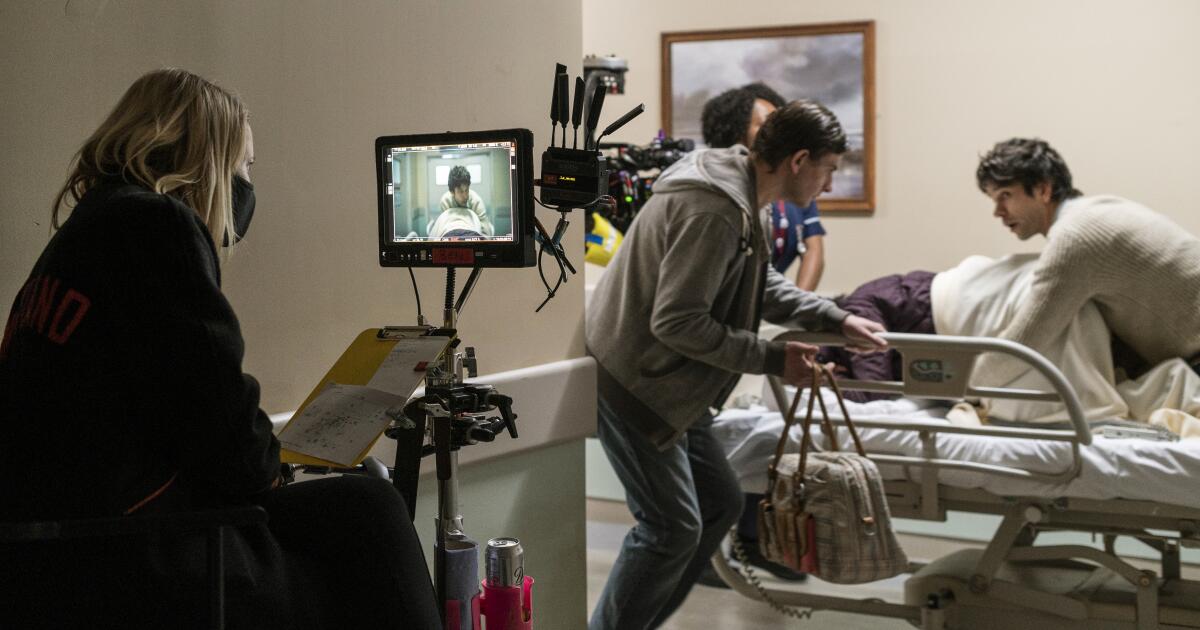

Global film and TV production was down 7% during the first quarter of 2024 compared with the previous year, according to a Wednesday report by film and TV tracking company ProdPro that illustrates Hollywood’s slow return to work in the wake of the writers’ and actors’ strikes.
ProdPro, a relatively new firm that follows film and TV production around the world, also found that production volume and spending levels were 50% lower over the last 12 months compared with the same period a year ago.
In the aftermath of the dual strikes — which largely halted film and TV shoots for about six months straight — entertainment workers and companies alike seemed eager to get back to business and resume filming immediately. But production has not rebounded as quickly or strongly as many had hoped, particularly in the Los Angeles area.
The recent decline in production continues a larger downward trend dating back to late 2022, when the entertainment industry began to feel the consequences of studios’ overspending during the streaming wars of the early 2020s. Since then, companies have been cutting back on staff and content in an effort to make up for their financial losses.
During the first week of 2024, 73 English-language scripted film and TV projects were actively shooting in the United States, compared with 136 in the first week of 2022, per ProdPro. By late March 2024, that number had risen to 135 — still lagging behind 2022’s total of 157.
Globally, 148 scripted TV productions began filming in the first quarter of 2024, compared with 140 during the same stretch in 2023; while only 165 feature films began shooting in the first quarter of 2024 compared with 216 in 2023, according to ProdPro.
While production for the big and small screen has been sluggish this year so far, ProdPro reported that “a significant number” of TV series and feature films are currently in development and on track to start shooting in the third and fourth quarters of 2024.
The ProdPro study notes that “studios are presumed to be holding back in part because of the uncertainty around the ongoing” contract campaigns by the International Alliance of Theatrical Stage Employees and Teamsters Local 399 — two labor unions advocating for Hollywood crew members.
On Monday, IATSE entered general contract negotiations with the Alliance of Motion Picture and Television Producers, which represents the major studios such as Disney, Warner Bros. and Netflix. This is the most critical phase of negotiations that could result, depending on how talks go, in a tentative deal or another work stoppage.
General negotiations are expected to cover issues related to pay, pension and health benefits, work-life balance, job security, streaming residuals and artificial intelligence.
“It’s civil,” Matthew Loeb, IATSE’s international president, previously told The Times about the current stage of bargaining. “Everybody wants to avoid a strike. But that’s not to say that it’s a foregone conclusion that they’ll meet our demands.”

Global film and TV production was down 7% during the first quarter of 2024 compared with the previous year, according to a Wednesday report by film and TV tracking company ProdPro that illustrates Hollywood’s slow return to work in the wake of the writers’ and actors’ strikes.
ProdPro, a relatively new firm that follows film and TV production around the world, also found that production volume and spending levels were 50% lower over the last 12 months compared with the same period a year ago.
In the aftermath of the dual strikes — which largely halted film and TV shoots for about six months straight — entertainment workers and companies alike seemed eager to get back to business and resume filming immediately. But production has not rebounded as quickly or strongly as many had hoped, particularly in the Los Angeles area.
The recent decline in production continues a larger downward trend dating back to late 2022, when the entertainment industry began to feel the consequences of studios’ overspending during the streaming wars of the early 2020s. Since then, companies have been cutting back on staff and content in an effort to make up for their financial losses.
During the first week of 2024, 73 English-language scripted film and TV projects were actively shooting in the United States, compared with 136 in the first week of 2022, per ProdPro. By late March 2024, that number had risen to 135 — still lagging behind 2022’s total of 157.
Globally, 148 scripted TV productions began filming in the first quarter of 2024, compared with 140 during the same stretch in 2023; while only 165 feature films began shooting in the first quarter of 2024 compared with 216 in 2023, according to ProdPro.
While production for the big and small screen has been sluggish this year so far, ProdPro reported that “a significant number” of TV series and feature films are currently in development and on track to start shooting in the third and fourth quarters of 2024.
The ProdPro study notes that “studios are presumed to be holding back in part because of the uncertainty around the ongoing” contract campaigns by the International Alliance of Theatrical Stage Employees and Teamsters Local 399 — two labor unions advocating for Hollywood crew members.
On Monday, IATSE entered general contract negotiations with the Alliance of Motion Picture and Television Producers, which represents the major studios such as Disney, Warner Bros. and Netflix. This is the most critical phase of negotiations that could result, depending on how talks go, in a tentative deal or another work stoppage.
General negotiations are expected to cover issues related to pay, pension and health benefits, work-life balance, job security, streaming residuals and artificial intelligence.
“It’s civil,” Matthew Loeb, IATSE’s international president, previously told The Times about the current stage of bargaining. “Everybody wants to avoid a strike. But that’s not to say that it’s a foregone conclusion that they’ll meet our demands.”

Global film and TV production was down 7% during the first quarter of 2024 compared with the previous year, according to a Wednesday report by film and TV tracking company ProdPro that illustrates Hollywood’s slow return to work in the wake of the writers’ and actors’ strikes.
ProdPro, a relatively new firm that follows film and TV production around the world, also found that production volume and spending levels were 50% lower over the last 12 months compared with the same period a year ago.
In the aftermath of the dual strikes — which largely halted film and TV shoots for about six months straight — entertainment workers and companies alike seemed eager to get back to business and resume filming immediately. But production has not rebounded as quickly or strongly as many had hoped, particularly in the Los Angeles area.
The recent decline in production continues a larger downward trend dating back to late 2022, when the entertainment industry began to feel the consequences of studios’ overspending during the streaming wars of the early 2020s. Since then, companies have been cutting back on staff and content in an effort to make up for their financial losses.
During the first week of 2024, 73 English-language scripted film and TV projects were actively shooting in the United States, compared with 136 in the first week of 2022, per ProdPro. By late March 2024, that number had risen to 135 — still lagging behind 2022’s total of 157.
Globally, 148 scripted TV productions began filming in the first quarter of 2024, compared with 140 during the same stretch in 2023; while only 165 feature films began shooting in the first quarter of 2024 compared with 216 in 2023, according to ProdPro.
While production for the big and small screen has been sluggish this year so far, ProdPro reported that “a significant number” of TV series and feature films are currently in development and on track to start shooting in the third and fourth quarters of 2024.
The ProdPro study notes that “studios are presumed to be holding back in part because of the uncertainty around the ongoing” contract campaigns by the International Alliance of Theatrical Stage Employees and Teamsters Local 399 — two labor unions advocating for Hollywood crew members.
On Monday, IATSE entered general contract negotiations with the Alliance of Motion Picture and Television Producers, which represents the major studios such as Disney, Warner Bros. and Netflix. This is the most critical phase of negotiations that could result, depending on how talks go, in a tentative deal or another work stoppage.
General negotiations are expected to cover issues related to pay, pension and health benefits, work-life balance, job security, streaming residuals and artificial intelligence.
“It’s civil,” Matthew Loeb, IATSE’s international president, previously told The Times about the current stage of bargaining. “Everybody wants to avoid a strike. But that’s not to say that it’s a foregone conclusion that they’ll meet our demands.”

Global film and TV production was down 7% during the first quarter of 2024 compared with the previous year, according to a Wednesday report by film and TV tracking company ProdPro that illustrates Hollywood’s slow return to work in the wake of the writers’ and actors’ strikes.
ProdPro, a relatively new firm that follows film and TV production around the world, also found that production volume and spending levels were 50% lower over the last 12 months compared with the same period a year ago.
In the aftermath of the dual strikes — which largely halted film and TV shoots for about six months straight — entertainment workers and companies alike seemed eager to get back to business and resume filming immediately. But production has not rebounded as quickly or strongly as many had hoped, particularly in the Los Angeles area.
The recent decline in production continues a larger downward trend dating back to late 2022, when the entertainment industry began to feel the consequences of studios’ overspending during the streaming wars of the early 2020s. Since then, companies have been cutting back on staff and content in an effort to make up for their financial losses.
During the first week of 2024, 73 English-language scripted film and TV projects were actively shooting in the United States, compared with 136 in the first week of 2022, per ProdPro. By late March 2024, that number had risen to 135 — still lagging behind 2022’s total of 157.
Globally, 148 scripted TV productions began filming in the first quarter of 2024, compared with 140 during the same stretch in 2023; while only 165 feature films began shooting in the first quarter of 2024 compared with 216 in 2023, according to ProdPro.
While production for the big and small screen has been sluggish this year so far, ProdPro reported that “a significant number” of TV series and feature films are currently in development and on track to start shooting in the third and fourth quarters of 2024.
The ProdPro study notes that “studios are presumed to be holding back in part because of the uncertainty around the ongoing” contract campaigns by the International Alliance of Theatrical Stage Employees and Teamsters Local 399 — two labor unions advocating for Hollywood crew members.
On Monday, IATSE entered general contract negotiations with the Alliance of Motion Picture and Television Producers, which represents the major studios such as Disney, Warner Bros. and Netflix. This is the most critical phase of negotiations that could result, depending on how talks go, in a tentative deal or another work stoppage.
General negotiations are expected to cover issues related to pay, pension and health benefits, work-life balance, job security, streaming residuals and artificial intelligence.
“It’s civil,” Matthew Loeb, IATSE’s international president, previously told The Times about the current stage of bargaining. “Everybody wants to avoid a strike. But that’s not to say that it’s a foregone conclusion that they’ll meet our demands.”

