

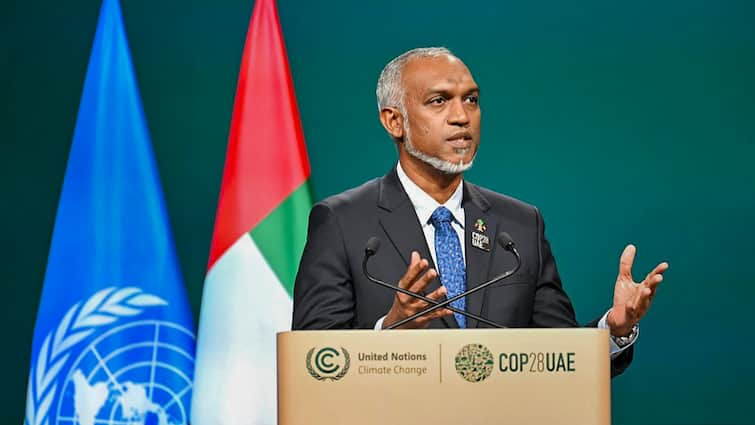


New Delhi: The Maldives on Sunday is conducting its fourth multi-party parliamentary election, being seen as a litmus test for President Mohamed Muizzu’s stance towards India and his perceived alignment with China.
With 368 candidates vying for 93 parliamentary seats, this election marks a pivotal moment in Muizzu’s tenure, characterised by a shift towards China since assuming office last September.
Here Are The Key Updates:
- Against the backdrop of its pristine beaches and luxury resorts, the Maldives finds itself at the centre of a geopolitical tug-of-war between India and China, both keen on extending their influence over this strategically positioned island nation in the Indian Ocean. As global east-west shipping routes pass through the region, the outcome of Sunday’s election carries significant implications for regional dynamics.
- Approximately 2,84,000 eligible voters are participating in the polls, with tentative results anticipated later in the day.
- “Geopolitics is very much in the background as the parties campaign for votes in Sunday’s election. He came to power on a promise to send back Indian troops and he is working on it. The parliament has not been cooperating with him since he came to power,” news agency AFP quoted a senior aide of Muizzu as saying.
- Muizzu’s presidency, initially perceived as a continuation of his pro-China predecessor Abdulla Yameen’s policies, has witnessed a notable departure from pro-India approaches, raising concerns in New Delhi.
- Since Muizzu assumed the presidency, tensions have flared between him and Yameen, resulting in a rift between the two, in response to which the latter formed a party known as the People’s National Front, which, too is taking part in the elections.
- The Maldives, known for its exquisite natural beauty, emerged as a geopolitical hotspot in recent times, marked by the expulsion of Indian military personnel and the awarding of key infrastructure contracts to Chinese state-owned enterprises.
- Tensions further escalated following disparaging remarks targeting Prime Minister Narendra Modi and his visit to Lakshadweep, prompting a diplomatic fallout between the two nations.
- Although the Maldivian government swiftly distanced itself from the derogatory comments and took disciplinary action against three ministers involved, the incident underscored the deepening rift between Male and New Delhi.

New Delhi: The Maldives on Sunday is conducting its fourth multi-party parliamentary election, being seen as a litmus test for President Mohamed Muizzu’s stance towards India and his perceived alignment with China.
With 368 candidates vying for 93 parliamentary seats, this election marks a pivotal moment in Muizzu’s tenure, characterised by a shift towards China since assuming office last September.
Here Are The Key Updates:
- Against the backdrop of its pristine beaches and luxury resorts, the Maldives finds itself at the centre of a geopolitical tug-of-war between India and China, both keen on extending their influence over this strategically positioned island nation in the Indian Ocean. As global east-west shipping routes pass through the region, the outcome of Sunday’s election carries significant implications for regional dynamics.
- Approximately 2,84,000 eligible voters are participating in the polls, with tentative results anticipated later in the day.
- “Geopolitics is very much in the background as the parties campaign for votes in Sunday’s election. He came to power on a promise to send back Indian troops and he is working on it. The parliament has not been cooperating with him since he came to power,” news agency AFP quoted a senior aide of Muizzu as saying.
- Muizzu’s presidency, initially perceived as a continuation of his pro-China predecessor Abdulla Yameen’s policies, has witnessed a notable departure from pro-India approaches, raising concerns in New Delhi.
- Since Muizzu assumed the presidency, tensions have flared between him and Yameen, resulting in a rift between the two, in response to which the latter formed a party known as the People’s National Front, which, too is taking part in the elections.
- The Maldives, known for its exquisite natural beauty, emerged as a geopolitical hotspot in recent times, marked by the expulsion of Indian military personnel and the awarding of key infrastructure contracts to Chinese state-owned enterprises.
- Tensions further escalated following disparaging remarks targeting Prime Minister Narendra Modi and his visit to Lakshadweep, prompting a diplomatic fallout between the two nations.
- Although the Maldivian government swiftly distanced itself from the derogatory comments and took disciplinary action against three ministers involved, the incident underscored the deepening rift between Male and New Delhi.

New Delhi: The Maldives on Sunday is conducting its fourth multi-party parliamentary election, being seen as a litmus test for President Mohamed Muizzu’s stance towards India and his perceived alignment with China.
With 368 candidates vying for 93 parliamentary seats, this election marks a pivotal moment in Muizzu’s tenure, characterised by a shift towards China since assuming office last September.
Here Are The Key Updates:
- Against the backdrop of its pristine beaches and luxury resorts, the Maldives finds itself at the centre of a geopolitical tug-of-war between India and China, both keen on extending their influence over this strategically positioned island nation in the Indian Ocean. As global east-west shipping routes pass through the region, the outcome of Sunday’s election carries significant implications for regional dynamics.
- Approximately 2,84,000 eligible voters are participating in the polls, with tentative results anticipated later in the day.
- “Geopolitics is very much in the background as the parties campaign for votes in Sunday’s election. He came to power on a promise to send back Indian troops and he is working on it. The parliament has not been cooperating with him since he came to power,” news agency AFP quoted a senior aide of Muizzu as saying.
- Muizzu’s presidency, initially perceived as a continuation of his pro-China predecessor Abdulla Yameen’s policies, has witnessed a notable departure from pro-India approaches, raising concerns in New Delhi.
- Since Muizzu assumed the presidency, tensions have flared between him and Yameen, resulting in a rift between the two, in response to which the latter formed a party known as the People’s National Front, which, too is taking part in the elections.
- The Maldives, known for its exquisite natural beauty, emerged as a geopolitical hotspot in recent times, marked by the expulsion of Indian military personnel and the awarding of key infrastructure contracts to Chinese state-owned enterprises.
- Tensions further escalated following disparaging remarks targeting Prime Minister Narendra Modi and his visit to Lakshadweep, prompting a diplomatic fallout between the two nations.
- Although the Maldivian government swiftly distanced itself from the derogatory comments and took disciplinary action against three ministers involved, the incident underscored the deepening rift between Male and New Delhi.

New Delhi: The Maldives on Sunday is conducting its fourth multi-party parliamentary election, being seen as a litmus test for President Mohamed Muizzu’s stance towards India and his perceived alignment with China.
With 368 candidates vying for 93 parliamentary seats, this election marks a pivotal moment in Muizzu’s tenure, characterised by a shift towards China since assuming office last September.
Here Are The Key Updates:
- Against the backdrop of its pristine beaches and luxury resorts, the Maldives finds itself at the centre of a geopolitical tug-of-war between India and China, both keen on extending their influence over this strategically positioned island nation in the Indian Ocean. As global east-west shipping routes pass through the region, the outcome of Sunday’s election carries significant implications for regional dynamics.
- Approximately 2,84,000 eligible voters are participating in the polls, with tentative results anticipated later in the day.
- “Geopolitics is very much in the background as the parties campaign for votes in Sunday’s election. He came to power on a promise to send back Indian troops and he is working on it. The parliament has not been cooperating with him since he came to power,” news agency AFP quoted a senior aide of Muizzu as saying.
- Muizzu’s presidency, initially perceived as a continuation of his pro-China predecessor Abdulla Yameen’s policies, has witnessed a notable departure from pro-India approaches, raising concerns in New Delhi.
- Since Muizzu assumed the presidency, tensions have flared between him and Yameen, resulting in a rift between the two, in response to which the latter formed a party known as the People’s National Front, which, too is taking part in the elections.
- The Maldives, known for its exquisite natural beauty, emerged as a geopolitical hotspot in recent times, marked by the expulsion of Indian military personnel and the awarding of key infrastructure contracts to Chinese state-owned enterprises.
- Tensions further escalated following disparaging remarks targeting Prime Minister Narendra Modi and his visit to Lakshadweep, prompting a diplomatic fallout between the two nations.
- Although the Maldivian government swiftly distanced itself from the derogatory comments and took disciplinary action against three ministers involved, the incident underscored the deepening rift between Male and New Delhi.

New Delhi: The Maldives on Sunday is conducting its fourth multi-party parliamentary election, being seen as a litmus test for President Mohamed Muizzu’s stance towards India and his perceived alignment with China.
With 368 candidates vying for 93 parliamentary seats, this election marks a pivotal moment in Muizzu’s tenure, characterised by a shift towards China since assuming office last September.
Here Are The Key Updates:
- Against the backdrop of its pristine beaches and luxury resorts, the Maldives finds itself at the centre of a geopolitical tug-of-war between India and China, both keen on extending their influence over this strategically positioned island nation in the Indian Ocean. As global east-west shipping routes pass through the region, the outcome of Sunday’s election carries significant implications for regional dynamics.
- Approximately 2,84,000 eligible voters are participating in the polls, with tentative results anticipated later in the day.
- “Geopolitics is very much in the background as the parties campaign for votes in Sunday’s election. He came to power on a promise to send back Indian troops and he is working on it. The parliament has not been cooperating with him since he came to power,” news agency AFP quoted a senior aide of Muizzu as saying.
- Muizzu’s presidency, initially perceived as a continuation of his pro-China predecessor Abdulla Yameen’s policies, has witnessed a notable departure from pro-India approaches, raising concerns in New Delhi.
- Since Muizzu assumed the presidency, tensions have flared between him and Yameen, resulting in a rift between the two, in response to which the latter formed a party known as the People’s National Front, which, too is taking part in the elections.
- The Maldives, known for its exquisite natural beauty, emerged as a geopolitical hotspot in recent times, marked by the expulsion of Indian military personnel and the awarding of key infrastructure contracts to Chinese state-owned enterprises.
- Tensions further escalated following disparaging remarks targeting Prime Minister Narendra Modi and his visit to Lakshadweep, prompting a diplomatic fallout between the two nations.
- Although the Maldivian government swiftly distanced itself from the derogatory comments and took disciplinary action against three ministers involved, the incident underscored the deepening rift between Male and New Delhi.
New Delhi: The Maldives on Sunday is conducting its fourth multi-party parliamentary election, being seen as a litmus test for President Mohamed Muizzu’s stance towards India and his perceived alignment with China.
With 368 candidates vying for 93 parliamentary seats, this election marks a pivotal moment in Muizzu’s tenure, characterised by a shift towards China since assuming office last September.
Here Are The Key Updates:
- Against the backdrop of its pristine beaches and luxury resorts, the Maldives finds itself at the centre of a geopolitical tug-of-war between India and China, both keen on extending their influence over this strategically positioned island nation in the Indian Ocean. As global east-west shipping routes pass through the region, the outcome of Sunday’s election carries significant implications for regional dynamics.
- Approximately 2,84,000 eligible voters are participating in the polls, with tentative results anticipated later in the day.
- “Geopolitics is very much in the background as the parties campaign for votes in Sunday’s election. He came to power on a promise to send back Indian troops and he is working on it. The parliament has not been cooperating with him since he came to power,” news agency AFP quoted a senior aide of Muizzu as saying.
- Muizzu’s presidency, initially perceived as a continuation of his pro-China predecessor Abdulla Yameen’s policies, has witnessed a notable departure from pro-India approaches, raising concerns in New Delhi.
- Since Muizzu assumed the presidency, tensions have flared between him and Yameen, resulting in a rift between the two, in response to which the latter formed a party known as the People’s National Front, which, too is taking part in the elections.
- The Maldives, known for its exquisite natural beauty, emerged as a geopolitical hotspot in recent times, marked by the expulsion of Indian military personnel and the awarding of key infrastructure contracts to Chinese state-owned enterprises.
- Tensions further escalated following disparaging remarks targeting Prime Minister Narendra Modi and his visit to Lakshadweep, prompting a diplomatic fallout between the two nations.
- Although the Maldivian government swiftly distanced itself from the derogatory comments and took disciplinary action against three ministers involved, the incident underscored the deepening rift between Male and New Delhi.
New Delhi: The Maldives on Sunday is conducting its fourth multi-party parliamentary election, being seen as a litmus test for President Mohamed Muizzu’s stance towards India and his perceived alignment with China.
With 368 candidates vying for 93 parliamentary seats, this election marks a pivotal moment in Muizzu’s tenure, characterised by a shift towards China since assuming office last September.
Here Are The Key Updates:
- Against the backdrop of its pristine beaches and luxury resorts, the Maldives finds itself at the centre of a geopolitical tug-of-war between India and China, both keen on extending their influence over this strategically positioned island nation in the Indian Ocean. As global east-west shipping routes pass through the region, the outcome of Sunday’s election carries significant implications for regional dynamics.
- Approximately 2,84,000 eligible voters are participating in the polls, with tentative results anticipated later in the day.
- “Geopolitics is very much in the background as the parties campaign for votes in Sunday’s election. He came to power on a promise to send back Indian troops and he is working on it. The parliament has not been cooperating with him since he came to power,” news agency AFP quoted a senior aide of Muizzu as saying.
- Muizzu’s presidency, initially perceived as a continuation of his pro-China predecessor Abdulla Yameen’s policies, has witnessed a notable departure from pro-India approaches, raising concerns in New Delhi.
- Since Muizzu assumed the presidency, tensions have flared between him and Yameen, resulting in a rift between the two, in response to which the latter formed a party known as the People’s National Front, which, too is taking part in the elections.
- The Maldives, known for its exquisite natural beauty, emerged as a geopolitical hotspot in recent times, marked by the expulsion of Indian military personnel and the awarding of key infrastructure contracts to Chinese state-owned enterprises.
- Tensions further escalated following disparaging remarks targeting Prime Minister Narendra Modi and his visit to Lakshadweep, prompting a diplomatic fallout between the two nations.
- Although the Maldivian government swiftly distanced itself from the derogatory comments and took disciplinary action against three ministers involved, the incident underscored the deepening rift between Male and New Delhi.
New Delhi: The Maldives on Sunday is conducting its fourth multi-party parliamentary election, being seen as a litmus test for President Mohamed Muizzu’s stance towards India and his perceived alignment with China.
With 368 candidates vying for 93 parliamentary seats, this election marks a pivotal moment in Muizzu’s tenure, characterised by a shift towards China since assuming office last September.
Here Are The Key Updates:
- Against the backdrop of its pristine beaches and luxury resorts, the Maldives finds itself at the centre of a geopolitical tug-of-war between India and China, both keen on extending their influence over this strategically positioned island nation in the Indian Ocean. As global east-west shipping routes pass through the region, the outcome of Sunday’s election carries significant implications for regional dynamics.
- Approximately 2,84,000 eligible voters are participating in the polls, with tentative results anticipated later in the day.
- “Geopolitics is very much in the background as the parties campaign for votes in Sunday’s election. He came to power on a promise to send back Indian troops and he is working on it. The parliament has not been cooperating with him since he came to power,” news agency AFP quoted a senior aide of Muizzu as saying.
- Muizzu’s presidency, initially perceived as a continuation of his pro-China predecessor Abdulla Yameen’s policies, has witnessed a notable departure from pro-India approaches, raising concerns in New Delhi.
- Since Muizzu assumed the presidency, tensions have flared between him and Yameen, resulting in a rift between the two, in response to which the latter formed a party known as the People’s National Front, which, too is taking part in the elections.
- The Maldives, known for its exquisite natural beauty, emerged as a geopolitical hotspot in recent times, marked by the expulsion of Indian military personnel and the awarding of key infrastructure contracts to Chinese state-owned enterprises.
- Tensions further escalated following disparaging remarks targeting Prime Minister Narendra Modi and his visit to Lakshadweep, prompting a diplomatic fallout between the two nations.
- Although the Maldivian government swiftly distanced itself from the derogatory comments and took disciplinary action against three ministers involved, the incident underscored the deepening rift between Male and New Delhi.
New Delhi: The Maldives on Sunday is conducting its fourth multi-party parliamentary election, being seen as a litmus test for President Mohamed Muizzu’s stance towards India and his perceived alignment with China.
With 368 candidates vying for 93 parliamentary seats, this election marks a pivotal moment in Muizzu’s tenure, characterised by a shift towards China since assuming office last September.
Here Are The Key Updates:
- Against the backdrop of its pristine beaches and luxury resorts, the Maldives finds itself at the centre of a geopolitical tug-of-war between India and China, both keen on extending their influence over this strategically positioned island nation in the Indian Ocean. As global east-west shipping routes pass through the region, the outcome of Sunday’s election carries significant implications for regional dynamics.
- Approximately 2,84,000 eligible voters are participating in the polls, with tentative results anticipated later in the day.
- “Geopolitics is very much in the background as the parties campaign for votes in Sunday’s election. He came to power on a promise to send back Indian troops and he is working on it. The parliament has not been cooperating with him since he came to power,” news agency AFP quoted a senior aide of Muizzu as saying.
- Muizzu’s presidency, initially perceived as a continuation of his pro-China predecessor Abdulla Yameen’s policies, has witnessed a notable departure from pro-India approaches, raising concerns in New Delhi.
- Since Muizzu assumed the presidency, tensions have flared between him and Yameen, resulting in a rift between the two, in response to which the latter formed a party known as the People’s National Front, which, too is taking part in the elections.
- The Maldives, known for its exquisite natural beauty, emerged as a geopolitical hotspot in recent times, marked by the expulsion of Indian military personnel and the awarding of key infrastructure contracts to Chinese state-owned enterprises.
- Tensions further escalated following disparaging remarks targeting Prime Minister Narendra Modi and his visit to Lakshadweep, prompting a diplomatic fallout between the two nations.
- Although the Maldivian government swiftly distanced itself from the derogatory comments and took disciplinary action against three ministers involved, the incident underscored the deepening rift between Male and New Delhi.
New Delhi: The Maldives on Sunday is conducting its fourth multi-party parliamentary election, being seen as a litmus test for President Mohamed Muizzu’s stance towards India and his perceived alignment with China.
With 368 candidates vying for 93 parliamentary seats, this election marks a pivotal moment in Muizzu’s tenure, characterised by a shift towards China since assuming office last September.
Here Are The Key Updates:
- Against the backdrop of its pristine beaches and luxury resorts, the Maldives finds itself at the centre of a geopolitical tug-of-war between India and China, both keen on extending their influence over this strategically positioned island nation in the Indian Ocean. As global east-west shipping routes pass through the region, the outcome of Sunday’s election carries significant implications for regional dynamics.
- Approximately 2,84,000 eligible voters are participating in the polls, with tentative results anticipated later in the day.
- “Geopolitics is very much in the background as the parties campaign for votes in Sunday’s election. He came to power on a promise to send back Indian troops and he is working on it. The parliament has not been cooperating with him since he came to power,” news agency AFP quoted a senior aide of Muizzu as saying.
- Muizzu’s presidency, initially perceived as a continuation of his pro-China predecessor Abdulla Yameen’s policies, has witnessed a notable departure from pro-India approaches, raising concerns in New Delhi.
- Since Muizzu assumed the presidency, tensions have flared between him and Yameen, resulting in a rift between the two, in response to which the latter formed a party known as the People’s National Front, which, too is taking part in the elections.
- The Maldives, known for its exquisite natural beauty, emerged as a geopolitical hotspot in recent times, marked by the expulsion of Indian military personnel and the awarding of key infrastructure contracts to Chinese state-owned enterprises.
- Tensions further escalated following disparaging remarks targeting Prime Minister Narendra Modi and his visit to Lakshadweep, prompting a diplomatic fallout between the two nations.
- Although the Maldivian government swiftly distanced itself from the derogatory comments and took disciplinary action against three ministers involved, the incident underscored the deepening rift between Male and New Delhi.
New Delhi: The Maldives on Sunday is conducting its fourth multi-party parliamentary election, being seen as a litmus test for President Mohamed Muizzu’s stance towards India and his perceived alignment with China.
With 368 candidates vying for 93 parliamentary seats, this election marks a pivotal moment in Muizzu’s tenure, characterised by a shift towards China since assuming office last September.
Here Are The Key Updates:
- Against the backdrop of its pristine beaches and luxury resorts, the Maldives finds itself at the centre of a geopolitical tug-of-war between India and China, both keen on extending their influence over this strategically positioned island nation in the Indian Ocean. As global east-west shipping routes pass through the region, the outcome of Sunday’s election carries significant implications for regional dynamics.
- Approximately 2,84,000 eligible voters are participating in the polls, with tentative results anticipated later in the day.
- “Geopolitics is very much in the background as the parties campaign for votes in Sunday’s election. He came to power on a promise to send back Indian troops and he is working on it. The parliament has not been cooperating with him since he came to power,” news agency AFP quoted a senior aide of Muizzu as saying.
- Muizzu’s presidency, initially perceived as a continuation of his pro-China predecessor Abdulla Yameen’s policies, has witnessed a notable departure from pro-India approaches, raising concerns in New Delhi.
- Since Muizzu assumed the presidency, tensions have flared between him and Yameen, resulting in a rift between the two, in response to which the latter formed a party known as the People’s National Front, which, too is taking part in the elections.
- The Maldives, known for its exquisite natural beauty, emerged as a geopolitical hotspot in recent times, marked by the expulsion of Indian military personnel and the awarding of key infrastructure contracts to Chinese state-owned enterprises.
- Tensions further escalated following disparaging remarks targeting Prime Minister Narendra Modi and his visit to Lakshadweep, prompting a diplomatic fallout between the two nations.
- Although the Maldivian government swiftly distanced itself from the derogatory comments and took disciplinary action against three ministers involved, the incident underscored the deepening rift between Male and New Delhi.
New Delhi: The Maldives on Sunday is conducting its fourth multi-party parliamentary election, being seen as a litmus test for President Mohamed Muizzu’s stance towards India and his perceived alignment with China.
With 368 candidates vying for 93 parliamentary seats, this election marks a pivotal moment in Muizzu’s tenure, characterised by a shift towards China since assuming office last September.
Here Are The Key Updates:
- Against the backdrop of its pristine beaches and luxury resorts, the Maldives finds itself at the centre of a geopolitical tug-of-war between India and China, both keen on extending their influence over this strategically positioned island nation in the Indian Ocean. As global east-west shipping routes pass through the region, the outcome of Sunday’s election carries significant implications for regional dynamics.
- Approximately 2,84,000 eligible voters are participating in the polls, with tentative results anticipated later in the day.
- “Geopolitics is very much in the background as the parties campaign for votes in Sunday’s election. He came to power on a promise to send back Indian troops and he is working on it. The parliament has not been cooperating with him since he came to power,” news agency AFP quoted a senior aide of Muizzu as saying.
- Muizzu’s presidency, initially perceived as a continuation of his pro-China predecessor Abdulla Yameen’s policies, has witnessed a notable departure from pro-India approaches, raising concerns in New Delhi.
- Since Muizzu assumed the presidency, tensions have flared between him and Yameen, resulting in a rift between the two, in response to which the latter formed a party known as the People’s National Front, which, too is taking part in the elections.
- The Maldives, known for its exquisite natural beauty, emerged as a geopolitical hotspot in recent times, marked by the expulsion of Indian military personnel and the awarding of key infrastructure contracts to Chinese state-owned enterprises.
- Tensions further escalated following disparaging remarks targeting Prime Minister Narendra Modi and his visit to Lakshadweep, prompting a diplomatic fallout between the two nations.
- Although the Maldivian government swiftly distanced itself from the derogatory comments and took disciplinary action against three ministers involved, the incident underscored the deepening rift between Male and New Delhi.
New Delhi: The Maldives on Sunday is conducting its fourth multi-party parliamentary election, being seen as a litmus test for President Mohamed Muizzu’s stance towards India and his perceived alignment with China.
With 368 candidates vying for 93 parliamentary seats, this election marks a pivotal moment in Muizzu’s tenure, characterised by a shift towards China since assuming office last September.
Here Are The Key Updates:
- Against the backdrop of its pristine beaches and luxury resorts, the Maldives finds itself at the centre of a geopolitical tug-of-war between India and China, both keen on extending their influence over this strategically positioned island nation in the Indian Ocean. As global east-west shipping routes pass through the region, the outcome of Sunday’s election carries significant implications for regional dynamics.
- Approximately 2,84,000 eligible voters are participating in the polls, with tentative results anticipated later in the day.
- “Geopolitics is very much in the background as the parties campaign for votes in Sunday’s election. He came to power on a promise to send back Indian troops and he is working on it. The parliament has not been cooperating with him since he came to power,” news agency AFP quoted a senior aide of Muizzu as saying.
- Muizzu’s presidency, initially perceived as a continuation of his pro-China predecessor Abdulla Yameen’s policies, has witnessed a notable departure from pro-India approaches, raising concerns in New Delhi.
- Since Muizzu assumed the presidency, tensions have flared between him and Yameen, resulting in a rift between the two, in response to which the latter formed a party known as the People’s National Front, which, too is taking part in the elections.
- The Maldives, known for its exquisite natural beauty, emerged as a geopolitical hotspot in recent times, marked by the expulsion of Indian military personnel and the awarding of key infrastructure contracts to Chinese state-owned enterprises.
- Tensions further escalated following disparaging remarks targeting Prime Minister Narendra Modi and his visit to Lakshadweep, prompting a diplomatic fallout between the two nations.
- Although the Maldivian government swiftly distanced itself from the derogatory comments and took disciplinary action against three ministers involved, the incident underscored the deepening rift between Male and New Delhi.
New Delhi: The Maldives on Sunday is conducting its fourth multi-party parliamentary election, being seen as a litmus test for President Mohamed Muizzu’s stance towards India and his perceived alignment with China.
With 368 candidates vying for 93 parliamentary seats, this election marks a pivotal moment in Muizzu’s tenure, characterised by a shift towards China since assuming office last September.
Here Are The Key Updates:
- Against the backdrop of its pristine beaches and luxury resorts, the Maldives finds itself at the centre of a geopolitical tug-of-war between India and China, both keen on extending their influence over this strategically positioned island nation in the Indian Ocean. As global east-west shipping routes pass through the region, the outcome of Sunday’s election carries significant implications for regional dynamics.
- Approximately 2,84,000 eligible voters are participating in the polls, with tentative results anticipated later in the day.
- “Geopolitics is very much in the background as the parties campaign for votes in Sunday’s election. He came to power on a promise to send back Indian troops and he is working on it. The parliament has not been cooperating with him since he came to power,” news agency AFP quoted a senior aide of Muizzu as saying.
- Muizzu’s presidency, initially perceived as a continuation of his pro-China predecessor Abdulla Yameen’s policies, has witnessed a notable departure from pro-India approaches, raising concerns in New Delhi.
- Since Muizzu assumed the presidency, tensions have flared between him and Yameen, resulting in a rift between the two, in response to which the latter formed a party known as the People’s National Front, which, too is taking part in the elections.
- The Maldives, known for its exquisite natural beauty, emerged as a geopolitical hotspot in recent times, marked by the expulsion of Indian military personnel and the awarding of key infrastructure contracts to Chinese state-owned enterprises.
- Tensions further escalated following disparaging remarks targeting Prime Minister Narendra Modi and his visit to Lakshadweep, prompting a diplomatic fallout between the two nations.
- Although the Maldivian government swiftly distanced itself from the derogatory comments and took disciplinary action against three ministers involved, the incident underscored the deepening rift between Male and New Delhi.
New Delhi: The Maldives on Sunday is conducting its fourth multi-party parliamentary election, being seen as a litmus test for President Mohamed Muizzu’s stance towards India and his perceived alignment with China.
With 368 candidates vying for 93 parliamentary seats, this election marks a pivotal moment in Muizzu’s tenure, characterised by a shift towards China since assuming office last September.
Here Are The Key Updates:
- Against the backdrop of its pristine beaches and luxury resorts, the Maldives finds itself at the centre of a geopolitical tug-of-war between India and China, both keen on extending their influence over this strategically positioned island nation in the Indian Ocean. As global east-west shipping routes pass through the region, the outcome of Sunday’s election carries significant implications for regional dynamics.
- Approximately 2,84,000 eligible voters are participating in the polls, with tentative results anticipated later in the day.
- “Geopolitics is very much in the background as the parties campaign for votes in Sunday’s election. He came to power on a promise to send back Indian troops and he is working on it. The parliament has not been cooperating with him since he came to power,” news agency AFP quoted a senior aide of Muizzu as saying.
- Muizzu’s presidency, initially perceived as a continuation of his pro-China predecessor Abdulla Yameen’s policies, has witnessed a notable departure from pro-India approaches, raising concerns in New Delhi.
- Since Muizzu assumed the presidency, tensions have flared between him and Yameen, resulting in a rift between the two, in response to which the latter formed a party known as the People’s National Front, which, too is taking part in the elections.
- The Maldives, known for its exquisite natural beauty, emerged as a geopolitical hotspot in recent times, marked by the expulsion of Indian military personnel and the awarding of key infrastructure contracts to Chinese state-owned enterprises.
- Tensions further escalated following disparaging remarks targeting Prime Minister Narendra Modi and his visit to Lakshadweep, prompting a diplomatic fallout between the two nations.
- Although the Maldivian government swiftly distanced itself from the derogatory comments and took disciplinary action against three ministers involved, the incident underscored the deepening rift between Male and New Delhi.
New Delhi: The Maldives on Sunday is conducting its fourth multi-party parliamentary election, being seen as a litmus test for President Mohamed Muizzu’s stance towards India and his perceived alignment with China.
With 368 candidates vying for 93 parliamentary seats, this election marks a pivotal moment in Muizzu’s tenure, characterised by a shift towards China since assuming office last September.
Here Are The Key Updates:
- Against the backdrop of its pristine beaches and luxury resorts, the Maldives finds itself at the centre of a geopolitical tug-of-war between India and China, both keen on extending their influence over this strategically positioned island nation in the Indian Ocean. As global east-west shipping routes pass through the region, the outcome of Sunday’s election carries significant implications for regional dynamics.
- Approximately 2,84,000 eligible voters are participating in the polls, with tentative results anticipated later in the day.
- “Geopolitics is very much in the background as the parties campaign for votes in Sunday’s election. He came to power on a promise to send back Indian troops and he is working on it. The parliament has not been cooperating with him since he came to power,” news agency AFP quoted a senior aide of Muizzu as saying.
- Muizzu’s presidency, initially perceived as a continuation of his pro-China predecessor Abdulla Yameen’s policies, has witnessed a notable departure from pro-India approaches, raising concerns in New Delhi.
- Since Muizzu assumed the presidency, tensions have flared between him and Yameen, resulting in a rift between the two, in response to which the latter formed a party known as the People’s National Front, which, too is taking part in the elections.
- The Maldives, known for its exquisite natural beauty, emerged as a geopolitical hotspot in recent times, marked by the expulsion of Indian military personnel and the awarding of key infrastructure contracts to Chinese state-owned enterprises.
- Tensions further escalated following disparaging remarks targeting Prime Minister Narendra Modi and his visit to Lakshadweep, prompting a diplomatic fallout between the two nations.
- Although the Maldivian government swiftly distanced itself from the derogatory comments and took disciplinary action against three ministers involved, the incident underscored the deepening rift between Male and New Delhi.
