

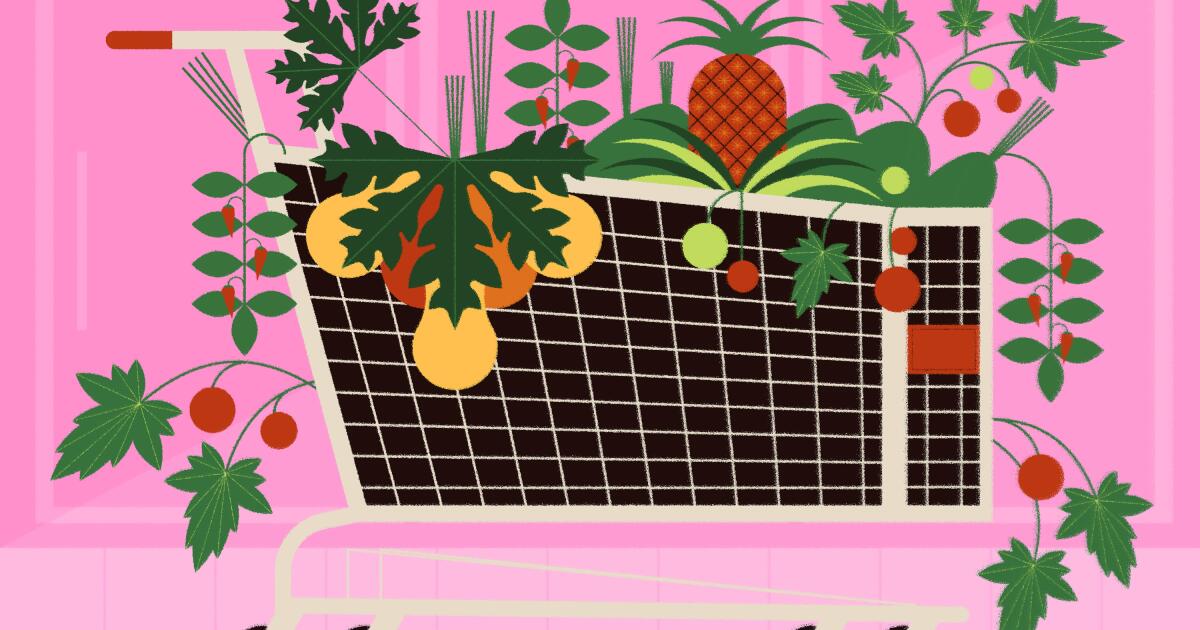
Red ripe tomatoes, juicy pineapple and tongue-scorching peppers — the produce aisle at the grocery store is full of possibilities for cooking a great meal, but it can also be a great starting point for a prolific garden.
There are many types of produce on store shelves that can be turned into thriving garden plants through seed saving and propagation, which can help to stretch a grocery bill and make for a fun experiment.
Lauri Kranz, an urban farmer, garden builder and co-owner of L.A. Homefarm — a Glassell Park market featuring produce from local farms — loves growing things from seeds of produce she bought at markets. She enjoys the exponential growth factor of this kind of gardening.
“You can get so much food from the one seed, the one potato,” she said. “I love that.”
Kenneth Sparks, a.k.a. Farmer Ken, an urban farmer and garden trainer who sells his produce at Los Angeles County markets, says it doesn’t take a lot of effort to grow things from grocery store produce, but he said it’s important that gardeners go into the process with a little bit of knowledge. He recommends they research the best times of year to plant certain vegetables and fruits and that they look into their USDA Zone and Sunset Climate Zone to know what to expect from their Los Angeles County microclimate.
Kranz said the supplies you will need will vary depending on what you are growing, but recommends having some organic soil and terracotta pots in a range of sizes on hand for planting and transplanting.
Here’s a look at some great grocery store options.

Red ripe tomatoes, juicy pineapple and tongue-scorching peppers — the produce aisle at the grocery store is full of possibilities for cooking a great meal, but it can also be a great starting point for a prolific garden.
There are many types of produce on store shelves that can be turned into thriving garden plants through seed saving and propagation, which can help to stretch a grocery bill and make for a fun experiment.
Lauri Kranz, an urban farmer, garden builder and co-owner of L.A. Homefarm — a Glassell Park market featuring produce from local farms — loves growing things from seeds of produce she bought at markets. She enjoys the exponential growth factor of this kind of gardening.
“You can get so much food from the one seed, the one potato,” she said. “I love that.”
Kenneth Sparks, a.k.a. Farmer Ken, an urban farmer and garden trainer who sells his produce at Los Angeles County markets, says it doesn’t take a lot of effort to grow things from grocery store produce, but he said it’s important that gardeners go into the process with a little bit of knowledge. He recommends they research the best times of year to plant certain vegetables and fruits and that they look into their USDA Zone and Sunset Climate Zone to know what to expect from their Los Angeles County microclimate.
Kranz said the supplies you will need will vary depending on what you are growing, but recommends having some organic soil and terracotta pots in a range of sizes on hand for planting and transplanting.
Here’s a look at some great grocery store options.

Red ripe tomatoes, juicy pineapple and tongue-scorching peppers — the produce aisle at the grocery store is full of possibilities for cooking a great meal, but it can also be a great starting point for a prolific garden.
There are many types of produce on store shelves that can be turned into thriving garden plants through seed saving and propagation, which can help to stretch a grocery bill and make for a fun experiment.
Lauri Kranz, an urban farmer, garden builder and co-owner of L.A. Homefarm — a Glassell Park market featuring produce from local farms — loves growing things from seeds of produce she bought at markets. She enjoys the exponential growth factor of this kind of gardening.
“You can get so much food from the one seed, the one potato,” she said. “I love that.”
Kenneth Sparks, a.k.a. Farmer Ken, an urban farmer and garden trainer who sells his produce at Los Angeles County markets, says it doesn’t take a lot of effort to grow things from grocery store produce, but he said it’s important that gardeners go into the process with a little bit of knowledge. He recommends they research the best times of year to plant certain vegetables and fruits and that they look into their USDA Zone and Sunset Climate Zone to know what to expect from their Los Angeles County microclimate.
Kranz said the supplies you will need will vary depending on what you are growing, but recommends having some organic soil and terracotta pots in a range of sizes on hand for planting and transplanting.
Here’s a look at some great grocery store options.
Red ripe tomatoes, juicy pineapple and tongue-scorching peppers — the produce aisle at the grocery store is full of possibilities for cooking a great meal, but it can also be a great starting point for a prolific garden.
There are many types of produce on store shelves that can be turned into thriving garden plants through seed saving and propagation, which can help to stretch a grocery bill and make for a fun experiment.
Lauri Kranz, an urban farmer, garden builder and co-owner of L.A. Homefarm — a Glassell Park market featuring produce from local farms — loves growing things from seeds of produce she bought at markets. She enjoys the exponential growth factor of this kind of gardening.
“You can get so much food from the one seed, the one potato,” she said. “I love that.”
Kenneth Sparks, a.k.a. Farmer Ken, an urban farmer and garden trainer who sells his produce at Los Angeles County markets, says it doesn’t take a lot of effort to grow things from grocery store produce, but he said it’s important that gardeners go into the process with a little bit of knowledge. He recommends they research the best times of year to plant certain vegetables and fruits and that they look into their USDA Zone and Sunset Climate Zone to know what to expect from their Los Angeles County microclimate.
Kranz said the supplies you will need will vary depending on what you are growing, but recommends having some organic soil and terracotta pots in a range of sizes on hand for planting and transplanting.
Here’s a look at some great grocery store options.

Red ripe tomatoes, juicy pineapple and tongue-scorching peppers — the produce aisle at the grocery store is full of possibilities for cooking a great meal, but it can also be a great starting point for a prolific garden.
There are many types of produce on store shelves that can be turned into thriving garden plants through seed saving and propagation, which can help to stretch a grocery bill and make for a fun experiment.
Lauri Kranz, an urban farmer, garden builder and co-owner of L.A. Homefarm — a Glassell Park market featuring produce from local farms — loves growing things from seeds of produce she bought at markets. She enjoys the exponential growth factor of this kind of gardening.
“You can get so much food from the one seed, the one potato,” she said. “I love that.”
Kenneth Sparks, a.k.a. Farmer Ken, an urban farmer and garden trainer who sells his produce at Los Angeles County markets, says it doesn’t take a lot of effort to grow things from grocery store produce, but he said it’s important that gardeners go into the process with a little bit of knowledge. He recommends they research the best times of year to plant certain vegetables and fruits and that they look into their USDA Zone and Sunset Climate Zone to know what to expect from their Los Angeles County microclimate.
Kranz said the supplies you will need will vary depending on what you are growing, but recommends having some organic soil and terracotta pots in a range of sizes on hand for planting and transplanting.
Here’s a look at some great grocery store options.
Red ripe tomatoes, juicy pineapple and tongue-scorching peppers — the produce aisle at the grocery store is full of possibilities for cooking a great meal, but it can also be a great starting point for a prolific garden.
There are many types of produce on store shelves that can be turned into thriving garden plants through seed saving and propagation, which can help to stretch a grocery bill and make for a fun experiment.
Lauri Kranz, an urban farmer, garden builder and co-owner of L.A. Homefarm — a Glassell Park market featuring produce from local farms — loves growing things from seeds of produce she bought at markets. She enjoys the exponential growth factor of this kind of gardening.
“You can get so much food from the one seed, the one potato,” she said. “I love that.”
Kenneth Sparks, a.k.a. Farmer Ken, an urban farmer and garden trainer who sells his produce at Los Angeles County markets, says it doesn’t take a lot of effort to grow things from grocery store produce, but he said it’s important that gardeners go into the process with a little bit of knowledge. He recommends they research the best times of year to plant certain vegetables and fruits and that they look into their USDA Zone and Sunset Climate Zone to know what to expect from their Los Angeles County microclimate.
Kranz said the supplies you will need will vary depending on what you are growing, but recommends having some organic soil and terracotta pots in a range of sizes on hand for planting and transplanting.
Here’s a look at some great grocery store options.
Red ripe tomatoes, juicy pineapple and tongue-scorching peppers — the produce aisle at the grocery store is full of possibilities for cooking a great meal, but it can also be a great starting point for a prolific garden.
There are many types of produce on store shelves that can be turned into thriving garden plants through seed saving and propagation, which can help to stretch a grocery bill and make for a fun experiment.
Lauri Kranz, an urban farmer, garden builder and co-owner of L.A. Homefarm — a Glassell Park market featuring produce from local farms — loves growing things from seeds of produce she bought at markets. She enjoys the exponential growth factor of this kind of gardening.
“You can get so much food from the one seed, the one potato,” she said. “I love that.”
Kenneth Sparks, a.k.a. Farmer Ken, an urban farmer and garden trainer who sells his produce at Los Angeles County markets, says it doesn’t take a lot of effort to grow things from grocery store produce, but he said it’s important that gardeners go into the process with a little bit of knowledge. He recommends they research the best times of year to plant certain vegetables and fruits and that they look into their USDA Zone and Sunset Climate Zone to know what to expect from their Los Angeles County microclimate.
Kranz said the supplies you will need will vary depending on what you are growing, but recommends having some organic soil and terracotta pots in a range of sizes on hand for planting and transplanting.
Here’s a look at some great grocery store options.
Red ripe tomatoes, juicy pineapple and tongue-scorching peppers — the produce aisle at the grocery store is full of possibilities for cooking a great meal, but it can also be a great starting point for a prolific garden.
There are many types of produce on store shelves that can be turned into thriving garden plants through seed saving and propagation, which can help to stretch a grocery bill and make for a fun experiment.
Lauri Kranz, an urban farmer, garden builder and co-owner of L.A. Homefarm — a Glassell Park market featuring produce from local farms — loves growing things from seeds of produce she bought at markets. She enjoys the exponential growth factor of this kind of gardening.
“You can get so much food from the one seed, the one potato,” she said. “I love that.”
Kenneth Sparks, a.k.a. Farmer Ken, an urban farmer and garden trainer who sells his produce at Los Angeles County markets, says it doesn’t take a lot of effort to grow things from grocery store produce, but he said it’s important that gardeners go into the process with a little bit of knowledge. He recommends they research the best times of year to plant certain vegetables and fruits and that they look into their USDA Zone and Sunset Climate Zone to know what to expect from their Los Angeles County microclimate.
Kranz said the supplies you will need will vary depending on what you are growing, but recommends having some organic soil and terracotta pots in a range of sizes on hand for planting and transplanting.
Here’s a look at some great grocery store options.

Red ripe tomatoes, juicy pineapple and tongue-scorching peppers — the produce aisle at the grocery store is full of possibilities for cooking a great meal, but it can also be a great starting point for a prolific garden.
There are many types of produce on store shelves that can be turned into thriving garden plants through seed saving and propagation, which can help to stretch a grocery bill and make for a fun experiment.
Lauri Kranz, an urban farmer, garden builder and co-owner of L.A. Homefarm — a Glassell Park market featuring produce from local farms — loves growing things from seeds of produce she bought at markets. She enjoys the exponential growth factor of this kind of gardening.
“You can get so much food from the one seed, the one potato,” she said. “I love that.”
Kenneth Sparks, a.k.a. Farmer Ken, an urban farmer and garden trainer who sells his produce at Los Angeles County markets, says it doesn’t take a lot of effort to grow things from grocery store produce, but he said it’s important that gardeners go into the process with a little bit of knowledge. He recommends they research the best times of year to plant certain vegetables and fruits and that they look into their USDA Zone and Sunset Climate Zone to know what to expect from their Los Angeles County microclimate.
Kranz said the supplies you will need will vary depending on what you are growing, but recommends having some organic soil and terracotta pots in a range of sizes on hand for planting and transplanting.
Here’s a look at some great grocery store options.
Red ripe tomatoes, juicy pineapple and tongue-scorching peppers — the produce aisle at the grocery store is full of possibilities for cooking a great meal, but it can also be a great starting point for a prolific garden.
There are many types of produce on store shelves that can be turned into thriving garden plants through seed saving and propagation, which can help to stretch a grocery bill and make for a fun experiment.
Lauri Kranz, an urban farmer, garden builder and co-owner of L.A. Homefarm — a Glassell Park market featuring produce from local farms — loves growing things from seeds of produce she bought at markets. She enjoys the exponential growth factor of this kind of gardening.
“You can get so much food from the one seed, the one potato,” she said. “I love that.”
Kenneth Sparks, a.k.a. Farmer Ken, an urban farmer and garden trainer who sells his produce at Los Angeles County markets, says it doesn’t take a lot of effort to grow things from grocery store produce, but he said it’s important that gardeners go into the process with a little bit of knowledge. He recommends they research the best times of year to plant certain vegetables and fruits and that they look into their USDA Zone and Sunset Climate Zone to know what to expect from their Los Angeles County microclimate.
Kranz said the supplies you will need will vary depending on what you are growing, but recommends having some organic soil and terracotta pots in a range of sizes on hand for planting and transplanting.
Here’s a look at some great grocery store options.
Red ripe tomatoes, juicy pineapple and tongue-scorching peppers — the produce aisle at the grocery store is full of possibilities for cooking a great meal, but it can also be a great starting point for a prolific garden.
There are many types of produce on store shelves that can be turned into thriving garden plants through seed saving and propagation, which can help to stretch a grocery bill and make for a fun experiment.
Lauri Kranz, an urban farmer, garden builder and co-owner of L.A. Homefarm — a Glassell Park market featuring produce from local farms — loves growing things from seeds of produce she bought at markets. She enjoys the exponential growth factor of this kind of gardening.
“You can get so much food from the one seed, the one potato,” she said. “I love that.”
Kenneth Sparks, a.k.a. Farmer Ken, an urban farmer and garden trainer who sells his produce at Los Angeles County markets, says it doesn’t take a lot of effort to grow things from grocery store produce, but he said it’s important that gardeners go into the process with a little bit of knowledge. He recommends they research the best times of year to plant certain vegetables and fruits and that they look into their USDA Zone and Sunset Climate Zone to know what to expect from their Los Angeles County microclimate.
Kranz said the supplies you will need will vary depending on what you are growing, but recommends having some organic soil and terracotta pots in a range of sizes on hand for planting and transplanting.
Here’s a look at some great grocery store options.
Red ripe tomatoes, juicy pineapple and tongue-scorching peppers — the produce aisle at the grocery store is full of possibilities for cooking a great meal, but it can also be a great starting point for a prolific garden.
There are many types of produce on store shelves that can be turned into thriving garden plants through seed saving and propagation, which can help to stretch a grocery bill and make for a fun experiment.
Lauri Kranz, an urban farmer, garden builder and co-owner of L.A. Homefarm — a Glassell Park market featuring produce from local farms — loves growing things from seeds of produce she bought at markets. She enjoys the exponential growth factor of this kind of gardening.
“You can get so much food from the one seed, the one potato,” she said. “I love that.”
Kenneth Sparks, a.k.a. Farmer Ken, an urban farmer and garden trainer who sells his produce at Los Angeles County markets, says it doesn’t take a lot of effort to grow things from grocery store produce, but he said it’s important that gardeners go into the process with a little bit of knowledge. He recommends they research the best times of year to plant certain vegetables and fruits and that they look into their USDA Zone and Sunset Climate Zone to know what to expect from their Los Angeles County microclimate.
Kranz said the supplies you will need will vary depending on what you are growing, but recommends having some organic soil and terracotta pots in a range of sizes on hand for planting and transplanting.
Here’s a look at some great grocery store options.
Red ripe tomatoes, juicy pineapple and tongue-scorching peppers — the produce aisle at the grocery store is full of possibilities for cooking a great meal, but it can also be a great starting point for a prolific garden.
There are many types of produce on store shelves that can be turned into thriving garden plants through seed saving and propagation, which can help to stretch a grocery bill and make for a fun experiment.
Lauri Kranz, an urban farmer, garden builder and co-owner of L.A. Homefarm — a Glassell Park market featuring produce from local farms — loves growing things from seeds of produce she bought at markets. She enjoys the exponential growth factor of this kind of gardening.
“You can get so much food from the one seed, the one potato,” she said. “I love that.”
Kenneth Sparks, a.k.a. Farmer Ken, an urban farmer and garden trainer who sells his produce at Los Angeles County markets, says it doesn’t take a lot of effort to grow things from grocery store produce, but he said it’s important that gardeners go into the process with a little bit of knowledge. He recommends they research the best times of year to plant certain vegetables and fruits and that they look into their USDA Zone and Sunset Climate Zone to know what to expect from their Los Angeles County microclimate.
Kranz said the supplies you will need will vary depending on what you are growing, but recommends having some organic soil and terracotta pots in a range of sizes on hand for planting and transplanting.
Here’s a look at some great grocery store options.
Red ripe tomatoes, juicy pineapple and tongue-scorching peppers — the produce aisle at the grocery store is full of possibilities for cooking a great meal, but it can also be a great starting point for a prolific garden.
There are many types of produce on store shelves that can be turned into thriving garden plants through seed saving and propagation, which can help to stretch a grocery bill and make for a fun experiment.
Lauri Kranz, an urban farmer, garden builder and co-owner of L.A. Homefarm — a Glassell Park market featuring produce from local farms — loves growing things from seeds of produce she bought at markets. She enjoys the exponential growth factor of this kind of gardening.
“You can get so much food from the one seed, the one potato,” she said. “I love that.”
Kenneth Sparks, a.k.a. Farmer Ken, an urban farmer and garden trainer who sells his produce at Los Angeles County markets, says it doesn’t take a lot of effort to grow things from grocery store produce, but he said it’s important that gardeners go into the process with a little bit of knowledge. He recommends they research the best times of year to plant certain vegetables and fruits and that they look into their USDA Zone and Sunset Climate Zone to know what to expect from their Los Angeles County microclimate.
Kranz said the supplies you will need will vary depending on what you are growing, but recommends having some organic soil and terracotta pots in a range of sizes on hand for planting and transplanting.
Here’s a look at some great grocery store options.
Red ripe tomatoes, juicy pineapple and tongue-scorching peppers — the produce aisle at the grocery store is full of possibilities for cooking a great meal, but it can also be a great starting point for a prolific garden.
There are many types of produce on store shelves that can be turned into thriving garden plants through seed saving and propagation, which can help to stretch a grocery bill and make for a fun experiment.
Lauri Kranz, an urban farmer, garden builder and co-owner of L.A. Homefarm — a Glassell Park market featuring produce from local farms — loves growing things from seeds of produce she bought at markets. She enjoys the exponential growth factor of this kind of gardening.
“You can get so much food from the one seed, the one potato,” she said. “I love that.”
Kenneth Sparks, a.k.a. Farmer Ken, an urban farmer and garden trainer who sells his produce at Los Angeles County markets, says it doesn’t take a lot of effort to grow things from grocery store produce, but he said it’s important that gardeners go into the process with a little bit of knowledge. He recommends they research the best times of year to plant certain vegetables and fruits and that they look into their USDA Zone and Sunset Climate Zone to know what to expect from their Los Angeles County microclimate.
Kranz said the supplies you will need will vary depending on what you are growing, but recommends having some organic soil and terracotta pots in a range of sizes on hand for planting and transplanting.
Here’s a look at some great grocery store options.
Red ripe tomatoes, juicy pineapple and tongue-scorching peppers — the produce aisle at the grocery store is full of possibilities for cooking a great meal, but it can also be a great starting point for a prolific garden.
There are many types of produce on store shelves that can be turned into thriving garden plants through seed saving and propagation, which can help to stretch a grocery bill and make for a fun experiment.
Lauri Kranz, an urban farmer, garden builder and co-owner of L.A. Homefarm — a Glassell Park market featuring produce from local farms — loves growing things from seeds of produce she bought at markets. She enjoys the exponential growth factor of this kind of gardening.
“You can get so much food from the one seed, the one potato,” she said. “I love that.”
Kenneth Sparks, a.k.a. Farmer Ken, an urban farmer and garden trainer who sells his produce at Los Angeles County markets, says it doesn’t take a lot of effort to grow things from grocery store produce, but he said it’s important that gardeners go into the process with a little bit of knowledge. He recommends they research the best times of year to plant certain vegetables and fruits and that they look into their USDA Zone and Sunset Climate Zone to know what to expect from their Los Angeles County microclimate.
Kranz said the supplies you will need will vary depending on what you are growing, but recommends having some organic soil and terracotta pots in a range of sizes on hand for planting and transplanting.
Here’s a look at some great grocery store options.

