

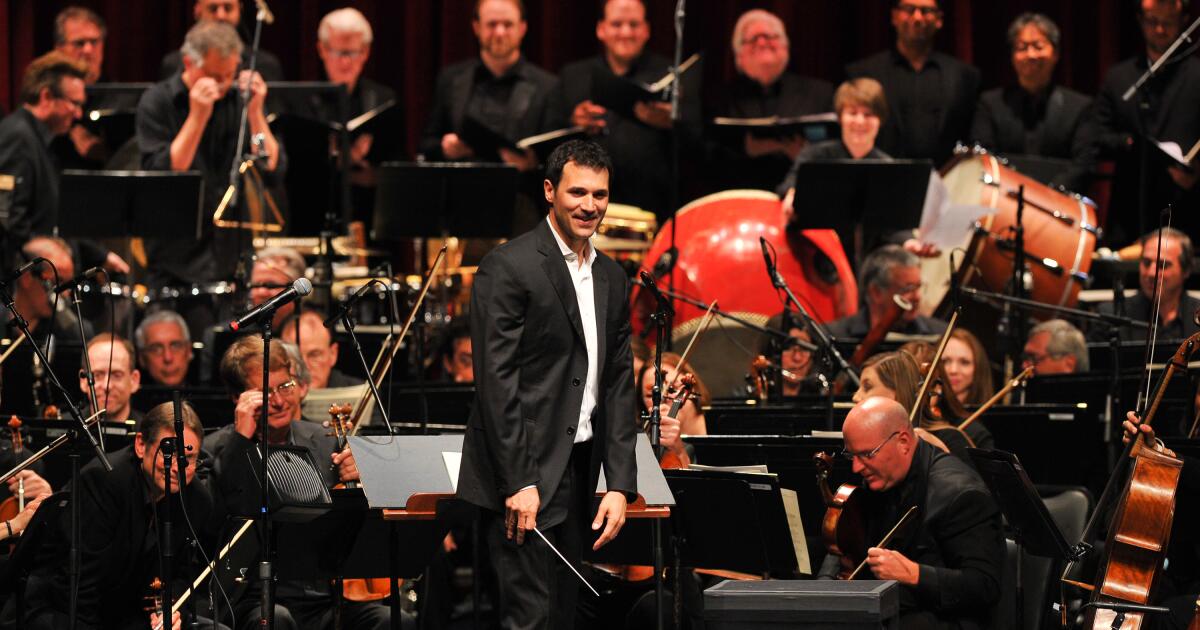

Hollywood musicians have reached a tentative agreement with the major entertainment companies after a month of bargaining.
The American Federation of Musicians, which represents some 3,000 instrumentalists working in the film and TV industry, announced Friday that its bargaining committee had unanimously recommended new movie and TV contracts negotiated by the union and the Alliance of Motion Picture and Television Producers.
The tentative agreement will affect the musicians who record scores for films and TV series and occasionally appear onscreen in musical scenes.
“This agreement is a major win for musicians who have long been under-compensated for their work in the digital age,” said Tino Gagliardi, international president and chief negotiator of the AFM, in a statement.
The union said terms of the proposed three-year contract — which expired in November and was extended six months — will be disclosed after members vote on it.
“We have secured historic breakthroughs in streaming residuals, established critical guardrails against the misuse of AI, gained meaningful wage increases and made other important improvements,” Gagliardi added. “This agreement represents a watershed moment for the artists who create the soundtracks for countless film and TV productions.”
The settlement was made just over a week before the alliance is set to dive into yet another round of contract negotiations with IATSE and Teamsters, two unions representing Hollywood crew members.
Come March 4, all eyes will be on the crew as below-the-line workers bargain for higher wages and job protections in the wake of the overlapping writers’ and actors’ strikes, which left thousands of IATSE members jobless.
Gagliardi thanked the writers, actors and crew members unions on Friday for their support, which he hailed as “yet another powerful reminder that when we have solidarity in the labor movement, we can achieve great things.”
Representatives for the AMPTP did not immediately respond to a request for comment.
Marc Sazer, a Los Angeles violinist currently serving as vice president of AFM Local 47, offered “kudos to the musicians themselves” for banding together and turning their community “into something much more cohesive than it’s ever been before.”
A key priority for the AFM heading into contract negotiations was setting up a residual payment system for Hollywood musicians working for streaming platforms — a system that previously did not exist.
Sazer and his fellow Hollywood musicians are planning to celebrate this weekend at a bar in Studio City called Residuals.

Hollywood musicians have reached a tentative agreement with the major entertainment companies after a month of bargaining.
The American Federation of Musicians, which represents some 3,000 instrumentalists working in the film and TV industry, announced Friday that its bargaining committee had unanimously recommended new movie and TV contracts negotiated by the union and the Alliance of Motion Picture and Television Producers.
The tentative agreement will affect the musicians who record scores for films and TV series and occasionally appear onscreen in musical scenes.
“This agreement is a major win for musicians who have long been under-compensated for their work in the digital age,” said Tino Gagliardi, international president and chief negotiator of the AFM, in a statement.
The union said terms of the proposed three-year contract — which expired in November and was extended six months — will be disclosed after members vote on it.
“We have secured historic breakthroughs in streaming residuals, established critical guardrails against the misuse of AI, gained meaningful wage increases and made other important improvements,” Gagliardi added. “This agreement represents a watershed moment for the artists who create the soundtracks for countless film and TV productions.”
The settlement was made just over a week before the alliance is set to dive into yet another round of contract negotiations with IATSE and Teamsters, two unions representing Hollywood crew members.
Come March 4, all eyes will be on the crew as below-the-line workers bargain for higher wages and job protections in the wake of the overlapping writers’ and actors’ strikes, which left thousands of IATSE members jobless.
Gagliardi thanked the writers, actors and crew members unions on Friday for their support, which he hailed as “yet another powerful reminder that when we have solidarity in the labor movement, we can achieve great things.”
Representatives for the AMPTP did not immediately respond to a request for comment.
Marc Sazer, a Los Angeles violinist currently serving as vice president of AFM Local 47, offered “kudos to the musicians themselves” for banding together and turning their community “into something much more cohesive than it’s ever been before.”
A key priority for the AFM heading into contract negotiations was setting up a residual payment system for Hollywood musicians working for streaming platforms — a system that previously did not exist.
Sazer and his fellow Hollywood musicians are planning to celebrate this weekend at a bar in Studio City called Residuals.

Hollywood musicians have reached a tentative agreement with the major entertainment companies after a month of bargaining.
The American Federation of Musicians, which represents some 3,000 instrumentalists working in the film and TV industry, announced Friday that its bargaining committee had unanimously recommended new movie and TV contracts negotiated by the union and the Alliance of Motion Picture and Television Producers.
The tentative agreement will affect the musicians who record scores for films and TV series and occasionally appear onscreen in musical scenes.
“This agreement is a major win for musicians who have long been under-compensated for their work in the digital age,” said Tino Gagliardi, international president and chief negotiator of the AFM, in a statement.
The union said terms of the proposed three-year contract — which expired in November and was extended six months — will be disclosed after members vote on it.
“We have secured historic breakthroughs in streaming residuals, established critical guardrails against the misuse of AI, gained meaningful wage increases and made other important improvements,” Gagliardi added. “This agreement represents a watershed moment for the artists who create the soundtracks for countless film and TV productions.”
The settlement was made just over a week before the alliance is set to dive into yet another round of contract negotiations with IATSE and Teamsters, two unions representing Hollywood crew members.
Come March 4, all eyes will be on the crew as below-the-line workers bargain for higher wages and job protections in the wake of the overlapping writers’ and actors’ strikes, which left thousands of IATSE members jobless.
Gagliardi thanked the writers, actors and crew members unions on Friday for their support, which he hailed as “yet another powerful reminder that when we have solidarity in the labor movement, we can achieve great things.”
Representatives for the AMPTP did not immediately respond to a request for comment.
Marc Sazer, a Los Angeles violinist currently serving as vice president of AFM Local 47, offered “kudos to the musicians themselves” for banding together and turning their community “into something much more cohesive than it’s ever been before.”
A key priority for the AFM heading into contract negotiations was setting up a residual payment system for Hollywood musicians working for streaming platforms — a system that previously did not exist.
Sazer and his fellow Hollywood musicians are planning to celebrate this weekend at a bar in Studio City called Residuals.
Hollywood musicians have reached a tentative agreement with the major entertainment companies after a month of bargaining.
The American Federation of Musicians, which represents some 3,000 instrumentalists working in the film and TV industry, announced Friday that its bargaining committee had unanimously recommended new movie and TV contracts negotiated by the union and the Alliance of Motion Picture and Television Producers.
The tentative agreement will affect the musicians who record scores for films and TV series and occasionally appear onscreen in musical scenes.
“This agreement is a major win for musicians who have long been under-compensated for their work in the digital age,” said Tino Gagliardi, international president and chief negotiator of the AFM, in a statement.
The union said terms of the proposed three-year contract — which expired in November and was extended six months — will be disclosed after members vote on it.
“We have secured historic breakthroughs in streaming residuals, established critical guardrails against the misuse of AI, gained meaningful wage increases and made other important improvements,” Gagliardi added. “This agreement represents a watershed moment for the artists who create the soundtracks for countless film and TV productions.”
The settlement was made just over a week before the alliance is set to dive into yet another round of contract negotiations with IATSE and Teamsters, two unions representing Hollywood crew members.
Come March 4, all eyes will be on the crew as below-the-line workers bargain for higher wages and job protections in the wake of the overlapping writers’ and actors’ strikes, which left thousands of IATSE members jobless.
Gagliardi thanked the writers, actors and crew members unions on Friday for their support, which he hailed as “yet another powerful reminder that when we have solidarity in the labor movement, we can achieve great things.”
Representatives for the AMPTP did not immediately respond to a request for comment.
Marc Sazer, a Los Angeles violinist currently serving as vice president of AFM Local 47, offered “kudos to the musicians themselves” for banding together and turning their community “into something much more cohesive than it’s ever been before.”
A key priority for the AFM heading into contract negotiations was setting up a residual payment system for Hollywood musicians working for streaming platforms — a system that previously did not exist.
Sazer and his fellow Hollywood musicians are planning to celebrate this weekend at a bar in Studio City called Residuals.

Hollywood musicians have reached a tentative agreement with the major entertainment companies after a month of bargaining.
The American Federation of Musicians, which represents some 3,000 instrumentalists working in the film and TV industry, announced Friday that its bargaining committee had unanimously recommended new movie and TV contracts negotiated by the union and the Alliance of Motion Picture and Television Producers.
The tentative agreement will affect the musicians who record scores for films and TV series and occasionally appear onscreen in musical scenes.
“This agreement is a major win for musicians who have long been under-compensated for their work in the digital age,” said Tino Gagliardi, international president and chief negotiator of the AFM, in a statement.
The union said terms of the proposed three-year contract — which expired in November and was extended six months — will be disclosed after members vote on it.
“We have secured historic breakthroughs in streaming residuals, established critical guardrails against the misuse of AI, gained meaningful wage increases and made other important improvements,” Gagliardi added. “This agreement represents a watershed moment for the artists who create the soundtracks for countless film and TV productions.”
The settlement was made just over a week before the alliance is set to dive into yet another round of contract negotiations with IATSE and Teamsters, two unions representing Hollywood crew members.
Come March 4, all eyes will be on the crew as below-the-line workers bargain for higher wages and job protections in the wake of the overlapping writers’ and actors’ strikes, which left thousands of IATSE members jobless.
Gagliardi thanked the writers, actors and crew members unions on Friday for their support, which he hailed as “yet another powerful reminder that when we have solidarity in the labor movement, we can achieve great things.”
Representatives for the AMPTP did not immediately respond to a request for comment.
Marc Sazer, a Los Angeles violinist currently serving as vice president of AFM Local 47, offered “kudos to the musicians themselves” for banding together and turning their community “into something much more cohesive than it’s ever been before.”
A key priority for the AFM heading into contract negotiations was setting up a residual payment system for Hollywood musicians working for streaming platforms — a system that previously did not exist.
Sazer and his fellow Hollywood musicians are planning to celebrate this weekend at a bar in Studio City called Residuals.
Hollywood musicians have reached a tentative agreement with the major entertainment companies after a month of bargaining.
The American Federation of Musicians, which represents some 3,000 instrumentalists working in the film and TV industry, announced Friday that its bargaining committee had unanimously recommended new movie and TV contracts negotiated by the union and the Alliance of Motion Picture and Television Producers.
The tentative agreement will affect the musicians who record scores for films and TV series and occasionally appear onscreen in musical scenes.
“This agreement is a major win for musicians who have long been under-compensated for their work in the digital age,” said Tino Gagliardi, international president and chief negotiator of the AFM, in a statement.
The union said terms of the proposed three-year contract — which expired in November and was extended six months — will be disclosed after members vote on it.
“We have secured historic breakthroughs in streaming residuals, established critical guardrails against the misuse of AI, gained meaningful wage increases and made other important improvements,” Gagliardi added. “This agreement represents a watershed moment for the artists who create the soundtracks for countless film and TV productions.”
The settlement was made just over a week before the alliance is set to dive into yet another round of contract negotiations with IATSE and Teamsters, two unions representing Hollywood crew members.
Come March 4, all eyes will be on the crew as below-the-line workers bargain for higher wages and job protections in the wake of the overlapping writers’ and actors’ strikes, which left thousands of IATSE members jobless.
Gagliardi thanked the writers, actors and crew members unions on Friday for their support, which he hailed as “yet another powerful reminder that when we have solidarity in the labor movement, we can achieve great things.”
Representatives for the AMPTP did not immediately respond to a request for comment.
Marc Sazer, a Los Angeles violinist currently serving as vice president of AFM Local 47, offered “kudos to the musicians themselves” for banding together and turning their community “into something much more cohesive than it’s ever been before.”
A key priority for the AFM heading into contract negotiations was setting up a residual payment system for Hollywood musicians working for streaming platforms — a system that previously did not exist.
Sazer and his fellow Hollywood musicians are planning to celebrate this weekend at a bar in Studio City called Residuals.
Hollywood musicians have reached a tentative agreement with the major entertainment companies after a month of bargaining.
The American Federation of Musicians, which represents some 3,000 instrumentalists working in the film and TV industry, announced Friday that its bargaining committee had unanimously recommended new movie and TV contracts negotiated by the union and the Alliance of Motion Picture and Television Producers.
The tentative agreement will affect the musicians who record scores for films and TV series and occasionally appear onscreen in musical scenes.
“This agreement is a major win for musicians who have long been under-compensated for their work in the digital age,” said Tino Gagliardi, international president and chief negotiator of the AFM, in a statement.
The union said terms of the proposed three-year contract — which expired in November and was extended six months — will be disclosed after members vote on it.
“We have secured historic breakthroughs in streaming residuals, established critical guardrails against the misuse of AI, gained meaningful wage increases and made other important improvements,” Gagliardi added. “This agreement represents a watershed moment for the artists who create the soundtracks for countless film and TV productions.”
The settlement was made just over a week before the alliance is set to dive into yet another round of contract negotiations with IATSE and Teamsters, two unions representing Hollywood crew members.
Come March 4, all eyes will be on the crew as below-the-line workers bargain for higher wages and job protections in the wake of the overlapping writers’ and actors’ strikes, which left thousands of IATSE members jobless.
Gagliardi thanked the writers, actors and crew members unions on Friday for their support, which he hailed as “yet another powerful reminder that when we have solidarity in the labor movement, we can achieve great things.”
Representatives for the AMPTP did not immediately respond to a request for comment.
Marc Sazer, a Los Angeles violinist currently serving as vice president of AFM Local 47, offered “kudos to the musicians themselves” for banding together and turning their community “into something much more cohesive than it’s ever been before.”
A key priority for the AFM heading into contract negotiations was setting up a residual payment system for Hollywood musicians working for streaming platforms — a system that previously did not exist.
Sazer and his fellow Hollywood musicians are planning to celebrate this weekend at a bar in Studio City called Residuals.
Hollywood musicians have reached a tentative agreement with the major entertainment companies after a month of bargaining.
The American Federation of Musicians, which represents some 3,000 instrumentalists working in the film and TV industry, announced Friday that its bargaining committee had unanimously recommended new movie and TV contracts negotiated by the union and the Alliance of Motion Picture and Television Producers.
The tentative agreement will affect the musicians who record scores for films and TV series and occasionally appear onscreen in musical scenes.
“This agreement is a major win for musicians who have long been under-compensated for their work in the digital age,” said Tino Gagliardi, international president and chief negotiator of the AFM, in a statement.
The union said terms of the proposed three-year contract — which expired in November and was extended six months — will be disclosed after members vote on it.
“We have secured historic breakthroughs in streaming residuals, established critical guardrails against the misuse of AI, gained meaningful wage increases and made other important improvements,” Gagliardi added. “This agreement represents a watershed moment for the artists who create the soundtracks for countless film and TV productions.”
The settlement was made just over a week before the alliance is set to dive into yet another round of contract negotiations with IATSE and Teamsters, two unions representing Hollywood crew members.
Come March 4, all eyes will be on the crew as below-the-line workers bargain for higher wages and job protections in the wake of the overlapping writers’ and actors’ strikes, which left thousands of IATSE members jobless.
Gagliardi thanked the writers, actors and crew members unions on Friday for their support, which he hailed as “yet another powerful reminder that when we have solidarity in the labor movement, we can achieve great things.”
Representatives for the AMPTP did not immediately respond to a request for comment.
Marc Sazer, a Los Angeles violinist currently serving as vice president of AFM Local 47, offered “kudos to the musicians themselves” for banding together and turning their community “into something much more cohesive than it’s ever been before.”
A key priority for the AFM heading into contract negotiations was setting up a residual payment system for Hollywood musicians working for streaming platforms — a system that previously did not exist.
Sazer and his fellow Hollywood musicians are planning to celebrate this weekend at a bar in Studio City called Residuals.

