


It’s funny how a streak can work at the Academy Awards. Sheer volume of nominations is no guarantee of a sweep — two of the most-nominated films ever, “All About Eve” (1950) and “La La Land” (2016) each won six Oscars out of 14 nominations, whereas “Titanic” (1997) won 11 of its 14 noms. (Though for a second in 2017, it seemed like “La La Land” might have earned a seventh Oscar, until it was announced there had been a mistake and “Moonlight” was revealed as the actual best picture winner.)
But you can’t earn 11 Academy Awards without first being nominated for that many — and only one film has ever won all 11 of its total nominations. That happened on Feb. 29, 2004, at the 76th Academy Awards at the Kodak Theatre in Hollywood, when “The Lord of the Rings: The Return of the King,” picked up its 11th Oscar of the evening as the best picture winner.
By then, it all but seemed a done deal. “LOTR” and its crew (though not its cast) had been showered throughout the night with award after award. Director Peter Jackson earned all three of his Oscars that evening, as did his partner and film producer Fran Walsh (who became the first woman to earn three awards for the same film). With Oscar No. 11, the final film in a trilogy that adapted J.R.R. Tolkien’s novel tied with “Titanic” and “Ben Hur” (1959).
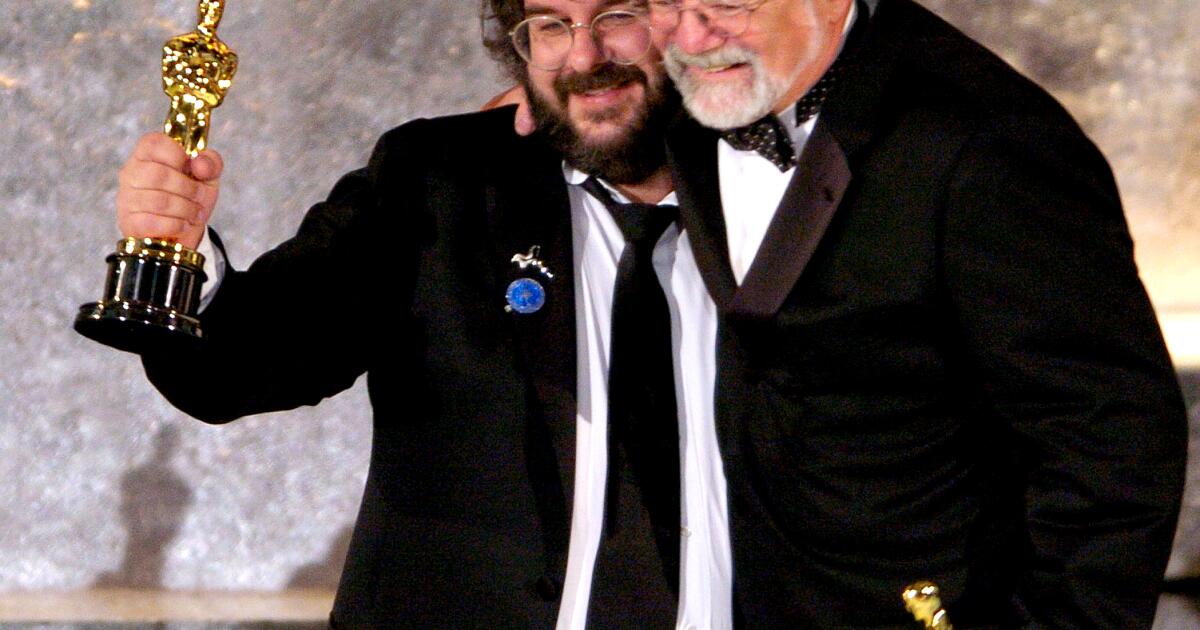
“It’s a clean sweep,” revealed best picture presenter Steven Spielberg, opening the envelope that gave the final victory to the film. Jackson, Walsh and producer Barrie M. Osborne, along with stars Elijah Wood, Sean Astin, Billy Boyd, Dominic Monaghan, Liv Tyler, Ian McKellen and executive producers Bob Shaye and Michael Lynne all gathered on stage for the victory lap.
“This is just unbelievable,” said Jackson. “I’m so honored, touched and relieved that the academy and the members of the academy that have supported us have seen past the trolls and the wizards and the hobbits and are recognizing fantasy this year. Fantasy is an F-word that hopefully the five-second delay won’t do anything with.” He went on to thank the people of New Zealand, where the films were made, then handed the microphone off to Osborne.
“I started out in the business 35 years ago getting people coffee,” said Osborne, who earned his first Oscar with the best picture reveal. “After these many years to receive this award is really a thrill for all of us, and we all thank the academy. It’s really a tribute to the talents of all the people, both in front of the camera and behind the camera, that we win this award. I want to thank in particular my partner Carol, my beautiful daughter Danielle, and my 87-year-old dad, who’s out there in the back somewhere here to celebrate this with us. I want to thank also J.R.R. Tolkien and also the fans that supported us on this journey.”
Jackson and company beat out some stiff competition, though only one of the other titles went home empty-handed: “Seabiscuit,” which had been up for seven awards and won none of them. “Lost in Translation” had earned an original screenplay Oscar for writer-director Sofia Coppola; Peter Weir’s “Master and Commander: The Far Side of the World” won for cinematography (Russell Boyd) and sound editing (Richard King); and “Mystic River” won awards for actors Sean Penn (leading) and Tim Robbins (supporting).

It’s funny how a streak can work at the Academy Awards. Sheer volume of nominations is no guarantee of a sweep — two of the most-nominated films ever, “All About Eve” (1950) and “La La Land” (2016) each won six Oscars out of 14 nominations, whereas “Titanic” (1997) won 11 of its 14 noms. (Though for a second in 2017, it seemed like “La La Land” might have earned a seventh Oscar, until it was announced there had been a mistake and “Moonlight” was revealed as the actual best picture winner.)
But you can’t earn 11 Academy Awards without first being nominated for that many — and only one film has ever won all 11 of its total nominations. That happened on Feb. 29, 2004, at the 76th Academy Awards at the Kodak Theatre in Hollywood, when “The Lord of the Rings: The Return of the King,” picked up its 11th Oscar of the evening as the best picture winner.
By then, it all but seemed a done deal. “LOTR” and its crew (though not its cast) had been showered throughout the night with award after award. Director Peter Jackson earned all three of his Oscars that evening, as did his partner and film producer Fran Walsh (who became the first woman to earn three awards for the same film). With Oscar No. 11, the final film in a trilogy that adapted J.R.R. Tolkien’s novel tied with “Titanic” and “Ben Hur” (1959).
“It’s a clean sweep,” revealed best picture presenter Steven Spielberg, opening the envelope that gave the final victory to the film. Jackson, Walsh and producer Barrie M. Osborne, along with stars Elijah Wood, Sean Astin, Billy Boyd, Dominic Monaghan, Liv Tyler, Ian McKellen and executive producers Bob Shaye and Michael Lynne all gathered on stage for the victory lap.
“This is just unbelievable,” said Jackson. “I’m so honored, touched and relieved that the academy and the members of the academy that have supported us have seen past the trolls and the wizards and the hobbits and are recognizing fantasy this year. Fantasy is an F-word that hopefully the five-second delay won’t do anything with.” He went on to thank the people of New Zealand, where the films were made, then handed the microphone off to Osborne.
“I started out in the business 35 years ago getting people coffee,” said Osborne, who earned his first Oscar with the best picture reveal. “After these many years to receive this award is really a thrill for all of us, and we all thank the academy. It’s really a tribute to the talents of all the people, both in front of the camera and behind the camera, that we win this award. I want to thank in particular my partner Carol, my beautiful daughter Danielle, and my 87-year-old dad, who’s out there in the back somewhere here to celebrate this with us. I want to thank also J.R.R. Tolkien and also the fans that supported us on this journey.”
Jackson and company beat out some stiff competition, though only one of the other titles went home empty-handed: “Seabiscuit,” which had been up for seven awards and won none of them. “Lost in Translation” had earned an original screenplay Oscar for writer-director Sofia Coppola; Peter Weir’s “Master and Commander: The Far Side of the World” won for cinematography (Russell Boyd) and sound editing (Richard King); and “Mystic River” won awards for actors Sean Penn (leading) and Tim Robbins (supporting).

It’s funny how a streak can work at the Academy Awards. Sheer volume of nominations is no guarantee of a sweep — two of the most-nominated films ever, “All About Eve” (1950) and “La La Land” (2016) each won six Oscars out of 14 nominations, whereas “Titanic” (1997) won 11 of its 14 noms. (Though for a second in 2017, it seemed like “La La Land” might have earned a seventh Oscar, until it was announced there had been a mistake and “Moonlight” was revealed as the actual best picture winner.)
But you can’t earn 11 Academy Awards without first being nominated for that many — and only one film has ever won all 11 of its total nominations. That happened on Feb. 29, 2004, at the 76th Academy Awards at the Kodak Theatre in Hollywood, when “The Lord of the Rings: The Return of the King,” picked up its 11th Oscar of the evening as the best picture winner.
By then, it all but seemed a done deal. “LOTR” and its crew (though not its cast) had been showered throughout the night with award after award. Director Peter Jackson earned all three of his Oscars that evening, as did his partner and film producer Fran Walsh (who became the first woman to earn three awards for the same film). With Oscar No. 11, the final film in a trilogy that adapted J.R.R. Tolkien’s novel tied with “Titanic” and “Ben Hur” (1959).
“It’s a clean sweep,” revealed best picture presenter Steven Spielberg, opening the envelope that gave the final victory to the film. Jackson, Walsh and producer Barrie M. Osborne, along with stars Elijah Wood, Sean Astin, Billy Boyd, Dominic Monaghan, Liv Tyler, Ian McKellen and executive producers Bob Shaye and Michael Lynne all gathered on stage for the victory lap.
“This is just unbelievable,” said Jackson. “I’m so honored, touched and relieved that the academy and the members of the academy that have supported us have seen past the trolls and the wizards and the hobbits and are recognizing fantasy this year. Fantasy is an F-word that hopefully the five-second delay won’t do anything with.” He went on to thank the people of New Zealand, where the films were made, then handed the microphone off to Osborne.
“I started out in the business 35 years ago getting people coffee,” said Osborne, who earned his first Oscar with the best picture reveal. “After these many years to receive this award is really a thrill for all of us, and we all thank the academy. It’s really a tribute to the talents of all the people, both in front of the camera and behind the camera, that we win this award. I want to thank in particular my partner Carol, my beautiful daughter Danielle, and my 87-year-old dad, who’s out there in the back somewhere here to celebrate this with us. I want to thank also J.R.R. Tolkien and also the fans that supported us on this journey.”
Jackson and company beat out some stiff competition, though only one of the other titles went home empty-handed: “Seabiscuit,” which had been up for seven awards and won none of them. “Lost in Translation” had earned an original screenplay Oscar for writer-director Sofia Coppola; Peter Weir’s “Master and Commander: The Far Side of the World” won for cinematography (Russell Boyd) and sound editing (Richard King); and “Mystic River” won awards for actors Sean Penn (leading) and Tim Robbins (supporting).
It’s funny how a streak can work at the Academy Awards. Sheer volume of nominations is no guarantee of a sweep — two of the most-nominated films ever, “All About Eve” (1950) and “La La Land” (2016) each won six Oscars out of 14 nominations, whereas “Titanic” (1997) won 11 of its 14 noms. (Though for a second in 2017, it seemed like “La La Land” might have earned a seventh Oscar, until it was announced there had been a mistake and “Moonlight” was revealed as the actual best picture winner.)
But you can’t earn 11 Academy Awards without first being nominated for that many — and only one film has ever won all 11 of its total nominations. That happened on Feb. 29, 2004, at the 76th Academy Awards at the Kodak Theatre in Hollywood, when “The Lord of the Rings: The Return of the King,” picked up its 11th Oscar of the evening as the best picture winner.
By then, it all but seemed a done deal. “LOTR” and its crew (though not its cast) had been showered throughout the night with award after award. Director Peter Jackson earned all three of his Oscars that evening, as did his partner and film producer Fran Walsh (who became the first woman to earn three awards for the same film). With Oscar No. 11, the final film in a trilogy that adapted J.R.R. Tolkien’s novel tied with “Titanic” and “Ben Hur” (1959).
“It’s a clean sweep,” revealed best picture presenter Steven Spielberg, opening the envelope that gave the final victory to the film. Jackson, Walsh and producer Barrie M. Osborne, along with stars Elijah Wood, Sean Astin, Billy Boyd, Dominic Monaghan, Liv Tyler, Ian McKellen and executive producers Bob Shaye and Michael Lynne all gathered on stage for the victory lap.
“This is just unbelievable,” said Jackson. “I’m so honored, touched and relieved that the academy and the members of the academy that have supported us have seen past the trolls and the wizards and the hobbits and are recognizing fantasy this year. Fantasy is an F-word that hopefully the five-second delay won’t do anything with.” He went on to thank the people of New Zealand, where the films were made, then handed the microphone off to Osborne.
“I started out in the business 35 years ago getting people coffee,” said Osborne, who earned his first Oscar with the best picture reveal. “After these many years to receive this award is really a thrill for all of us, and we all thank the academy. It’s really a tribute to the talents of all the people, both in front of the camera and behind the camera, that we win this award. I want to thank in particular my partner Carol, my beautiful daughter Danielle, and my 87-year-old dad, who’s out there in the back somewhere here to celebrate this with us. I want to thank also J.R.R. Tolkien and also the fans that supported us on this journey.”
Jackson and company beat out some stiff competition, though only one of the other titles went home empty-handed: “Seabiscuit,” which had been up for seven awards and won none of them. “Lost in Translation” had earned an original screenplay Oscar for writer-director Sofia Coppola; Peter Weir’s “Master and Commander: The Far Side of the World” won for cinematography (Russell Boyd) and sound editing (Richard King); and “Mystic River” won awards for actors Sean Penn (leading) and Tim Robbins (supporting).

It’s funny how a streak can work at the Academy Awards. Sheer volume of nominations is no guarantee of a sweep — two of the most-nominated films ever, “All About Eve” (1950) and “La La Land” (2016) each won six Oscars out of 14 nominations, whereas “Titanic” (1997) won 11 of its 14 noms. (Though for a second in 2017, it seemed like “La La Land” might have earned a seventh Oscar, until it was announced there had been a mistake and “Moonlight” was revealed as the actual best picture winner.)
But you can’t earn 11 Academy Awards without first being nominated for that many — and only one film has ever won all 11 of its total nominations. That happened on Feb. 29, 2004, at the 76th Academy Awards at the Kodak Theatre in Hollywood, when “The Lord of the Rings: The Return of the King,” picked up its 11th Oscar of the evening as the best picture winner.
By then, it all but seemed a done deal. “LOTR” and its crew (though not its cast) had been showered throughout the night with award after award. Director Peter Jackson earned all three of his Oscars that evening, as did his partner and film producer Fran Walsh (who became the first woman to earn three awards for the same film). With Oscar No. 11, the final film in a trilogy that adapted J.R.R. Tolkien’s novel tied with “Titanic” and “Ben Hur” (1959).
“It’s a clean sweep,” revealed best picture presenter Steven Spielberg, opening the envelope that gave the final victory to the film. Jackson, Walsh and producer Barrie M. Osborne, along with stars Elijah Wood, Sean Astin, Billy Boyd, Dominic Monaghan, Liv Tyler, Ian McKellen and executive producers Bob Shaye and Michael Lynne all gathered on stage for the victory lap.
“This is just unbelievable,” said Jackson. “I’m so honored, touched and relieved that the academy and the members of the academy that have supported us have seen past the trolls and the wizards and the hobbits and are recognizing fantasy this year. Fantasy is an F-word that hopefully the five-second delay won’t do anything with.” He went on to thank the people of New Zealand, where the films were made, then handed the microphone off to Osborne.
“I started out in the business 35 years ago getting people coffee,” said Osborne, who earned his first Oscar with the best picture reveal. “After these many years to receive this award is really a thrill for all of us, and we all thank the academy. It’s really a tribute to the talents of all the people, both in front of the camera and behind the camera, that we win this award. I want to thank in particular my partner Carol, my beautiful daughter Danielle, and my 87-year-old dad, who’s out there in the back somewhere here to celebrate this with us. I want to thank also J.R.R. Tolkien and also the fans that supported us on this journey.”
Jackson and company beat out some stiff competition, though only one of the other titles went home empty-handed: “Seabiscuit,” which had been up for seven awards and won none of them. “Lost in Translation” had earned an original screenplay Oscar for writer-director Sofia Coppola; Peter Weir’s “Master and Commander: The Far Side of the World” won for cinematography (Russell Boyd) and sound editing (Richard King); and “Mystic River” won awards for actors Sean Penn (leading) and Tim Robbins (supporting).
It’s funny how a streak can work at the Academy Awards. Sheer volume of nominations is no guarantee of a sweep — two of the most-nominated films ever, “All About Eve” (1950) and “La La Land” (2016) each won six Oscars out of 14 nominations, whereas “Titanic” (1997) won 11 of its 14 noms. (Though for a second in 2017, it seemed like “La La Land” might have earned a seventh Oscar, until it was announced there had been a mistake and “Moonlight” was revealed as the actual best picture winner.)
But you can’t earn 11 Academy Awards without first being nominated for that many — and only one film has ever won all 11 of its total nominations. That happened on Feb. 29, 2004, at the 76th Academy Awards at the Kodak Theatre in Hollywood, when “The Lord of the Rings: The Return of the King,” picked up its 11th Oscar of the evening as the best picture winner.
By then, it all but seemed a done deal. “LOTR” and its crew (though not its cast) had been showered throughout the night with award after award. Director Peter Jackson earned all three of his Oscars that evening, as did his partner and film producer Fran Walsh (who became the first woman to earn three awards for the same film). With Oscar No. 11, the final film in a trilogy that adapted J.R.R. Tolkien’s novel tied with “Titanic” and “Ben Hur” (1959).
“It’s a clean sweep,” revealed best picture presenter Steven Spielberg, opening the envelope that gave the final victory to the film. Jackson, Walsh and producer Barrie M. Osborne, along with stars Elijah Wood, Sean Astin, Billy Boyd, Dominic Monaghan, Liv Tyler, Ian McKellen and executive producers Bob Shaye and Michael Lynne all gathered on stage for the victory lap.
“This is just unbelievable,” said Jackson. “I’m so honored, touched and relieved that the academy and the members of the academy that have supported us have seen past the trolls and the wizards and the hobbits and are recognizing fantasy this year. Fantasy is an F-word that hopefully the five-second delay won’t do anything with.” He went on to thank the people of New Zealand, where the films were made, then handed the microphone off to Osborne.
“I started out in the business 35 years ago getting people coffee,” said Osborne, who earned his first Oscar with the best picture reveal. “After these many years to receive this award is really a thrill for all of us, and we all thank the academy. It’s really a tribute to the talents of all the people, both in front of the camera and behind the camera, that we win this award. I want to thank in particular my partner Carol, my beautiful daughter Danielle, and my 87-year-old dad, who’s out there in the back somewhere here to celebrate this with us. I want to thank also J.R.R. Tolkien and also the fans that supported us on this journey.”
Jackson and company beat out some stiff competition, though only one of the other titles went home empty-handed: “Seabiscuit,” which had been up for seven awards and won none of them. “Lost in Translation” had earned an original screenplay Oscar for writer-director Sofia Coppola; Peter Weir’s “Master and Commander: The Far Side of the World” won for cinematography (Russell Boyd) and sound editing (Richard King); and “Mystic River” won awards for actors Sean Penn (leading) and Tim Robbins (supporting).
It’s funny how a streak can work at the Academy Awards. Sheer volume of nominations is no guarantee of a sweep — two of the most-nominated films ever, “All About Eve” (1950) and “La La Land” (2016) each won six Oscars out of 14 nominations, whereas “Titanic” (1997) won 11 of its 14 noms. (Though for a second in 2017, it seemed like “La La Land” might have earned a seventh Oscar, until it was announced there had been a mistake and “Moonlight” was revealed as the actual best picture winner.)
But you can’t earn 11 Academy Awards without first being nominated for that many — and only one film has ever won all 11 of its total nominations. That happened on Feb. 29, 2004, at the 76th Academy Awards at the Kodak Theatre in Hollywood, when “The Lord of the Rings: The Return of the King,” picked up its 11th Oscar of the evening as the best picture winner.
By then, it all but seemed a done deal. “LOTR” and its crew (though not its cast) had been showered throughout the night with award after award. Director Peter Jackson earned all three of his Oscars that evening, as did his partner and film producer Fran Walsh (who became the first woman to earn three awards for the same film). With Oscar No. 11, the final film in a trilogy that adapted J.R.R. Tolkien’s novel tied with “Titanic” and “Ben Hur” (1959).
“It’s a clean sweep,” revealed best picture presenter Steven Spielberg, opening the envelope that gave the final victory to the film. Jackson, Walsh and producer Barrie M. Osborne, along with stars Elijah Wood, Sean Astin, Billy Boyd, Dominic Monaghan, Liv Tyler, Ian McKellen and executive producers Bob Shaye and Michael Lynne all gathered on stage for the victory lap.
“This is just unbelievable,” said Jackson. “I’m so honored, touched and relieved that the academy and the members of the academy that have supported us have seen past the trolls and the wizards and the hobbits and are recognizing fantasy this year. Fantasy is an F-word that hopefully the five-second delay won’t do anything with.” He went on to thank the people of New Zealand, where the films were made, then handed the microphone off to Osborne.
“I started out in the business 35 years ago getting people coffee,” said Osborne, who earned his first Oscar with the best picture reveal. “After these many years to receive this award is really a thrill for all of us, and we all thank the academy. It’s really a tribute to the talents of all the people, both in front of the camera and behind the camera, that we win this award. I want to thank in particular my partner Carol, my beautiful daughter Danielle, and my 87-year-old dad, who’s out there in the back somewhere here to celebrate this with us. I want to thank also J.R.R. Tolkien and also the fans that supported us on this journey.”
Jackson and company beat out some stiff competition, though only one of the other titles went home empty-handed: “Seabiscuit,” which had been up for seven awards and won none of them. “Lost in Translation” had earned an original screenplay Oscar for writer-director Sofia Coppola; Peter Weir’s “Master and Commander: The Far Side of the World” won for cinematography (Russell Boyd) and sound editing (Richard King); and “Mystic River” won awards for actors Sean Penn (leading) and Tim Robbins (supporting).
It’s funny how a streak can work at the Academy Awards. Sheer volume of nominations is no guarantee of a sweep — two of the most-nominated films ever, “All About Eve” (1950) and “La La Land” (2016) each won six Oscars out of 14 nominations, whereas “Titanic” (1997) won 11 of its 14 noms. (Though for a second in 2017, it seemed like “La La Land” might have earned a seventh Oscar, until it was announced there had been a mistake and “Moonlight” was revealed as the actual best picture winner.)
But you can’t earn 11 Academy Awards without first being nominated for that many — and only one film has ever won all 11 of its total nominations. That happened on Feb. 29, 2004, at the 76th Academy Awards at the Kodak Theatre in Hollywood, when “The Lord of the Rings: The Return of the King,” picked up its 11th Oscar of the evening as the best picture winner.
By then, it all but seemed a done deal. “LOTR” and its crew (though not its cast) had been showered throughout the night with award after award. Director Peter Jackson earned all three of his Oscars that evening, as did his partner and film producer Fran Walsh (who became the first woman to earn three awards for the same film). With Oscar No. 11, the final film in a trilogy that adapted J.R.R. Tolkien’s novel tied with “Titanic” and “Ben Hur” (1959).
“It’s a clean sweep,” revealed best picture presenter Steven Spielberg, opening the envelope that gave the final victory to the film. Jackson, Walsh and producer Barrie M. Osborne, along with stars Elijah Wood, Sean Astin, Billy Boyd, Dominic Monaghan, Liv Tyler, Ian McKellen and executive producers Bob Shaye and Michael Lynne all gathered on stage for the victory lap.
“This is just unbelievable,” said Jackson. “I’m so honored, touched and relieved that the academy and the members of the academy that have supported us have seen past the trolls and the wizards and the hobbits and are recognizing fantasy this year. Fantasy is an F-word that hopefully the five-second delay won’t do anything with.” He went on to thank the people of New Zealand, where the films were made, then handed the microphone off to Osborne.
“I started out in the business 35 years ago getting people coffee,” said Osborne, who earned his first Oscar with the best picture reveal. “After these many years to receive this award is really a thrill for all of us, and we all thank the academy. It’s really a tribute to the talents of all the people, both in front of the camera and behind the camera, that we win this award. I want to thank in particular my partner Carol, my beautiful daughter Danielle, and my 87-year-old dad, who’s out there in the back somewhere here to celebrate this with us. I want to thank also J.R.R. Tolkien and also the fans that supported us on this journey.”
Jackson and company beat out some stiff competition, though only one of the other titles went home empty-handed: “Seabiscuit,” which had been up for seven awards and won none of them. “Lost in Translation” had earned an original screenplay Oscar for writer-director Sofia Coppola; Peter Weir’s “Master and Commander: The Far Side of the World” won for cinematography (Russell Boyd) and sound editing (Richard King); and “Mystic River” won awards for actors Sean Penn (leading) and Tim Robbins (supporting).

