

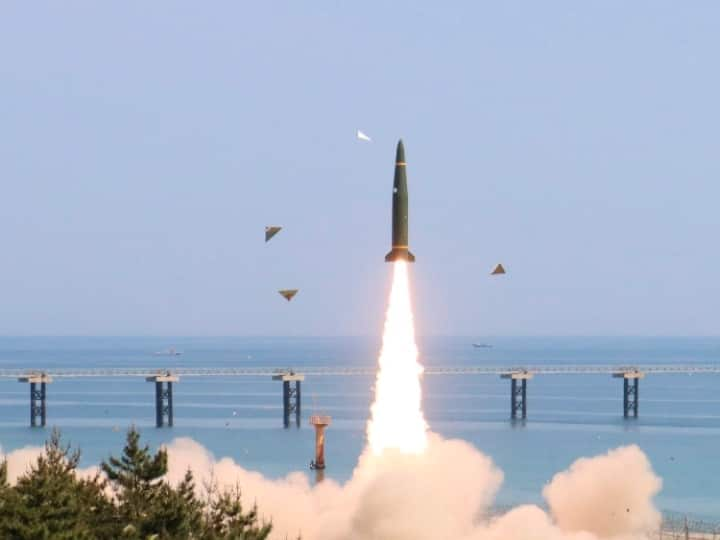

North Korea launched a new solid-fuel hypersonic missile with intermediate range on Sunday, according to official news agency KCNA on Monday, in a move criticised by the US, South Korea, and Japan, Reuters reported. According to KCNA, the launch was intended to test the dependability of new multi-stage, high-thrust solid-fuel engines and an intermediate-range hypersonic manoeuvrable controlled warhead. The test did not represent a security threat to neighbouring nations.
In a statement, South Korea’s military condemned the launch as a breach of United Nations Security Council resolutions and warned that direct provocations by the North will be faced with a “overwhelming response.”
The North’s first ballistic missile launch this year was criticised by the nuclear envoys of South Korea, the United States, and Japan, who stated in a three-way phone call that North Korea’s provocations were a root cause of instability in the area.
The test occurred on the same day as a group led by Foreign Minister Choe Son Hui departing Pyongyang for Russia, according to KCNA.
The missile launch and visit to Russia coincide with rising tensions between the two Koreas as a result of Pyongyang’s series of intercontinental ballistic missile launches and the launch of its first military spy satellite, as well as deepening ties between Pyongyang and Moscow, which have alarmed Washington and its allies.
In an additional KCNA commentary on Monday, North Korea accused Seoul of raising regional tensions through military drills and armament calls by South Korean leaders.
“Even a little spark can be a catalyst for enormous physical conflicts between the two most hostile countries,” the commentary was quoted by Reuters in its report.
North Korea has lately announced policy revisions that classify the South as a distinct, enemy state, reversing decades of policy, with leader Kim Jong Un declaring that peaceful reunification is no longer feasible.
According to analysts, the action might assist legitimise the deployment of nuclear weapons against Seoul in the event of a future confrontation.
South Korea’s military said the missile, which was launched from Pyongyang about 2:55 p.m. (0555 GMT), went roughly 1,000 kilometres (600 miles) off the country’s east coast. According to Japan’s military ministry, the greatest height was at least 50 km (30 miles).
Hypersonic missiles generally fire a warhead at more than five times the speed of sound, or around 6,200 kilometres per hour (3,850 mph), often manoeuvring at low altitudes.

North Korea launched a new solid-fuel hypersonic missile with intermediate range on Sunday, according to official news agency KCNA on Monday, in a move criticised by the US, South Korea, and Japan, Reuters reported. According to KCNA, the launch was intended to test the dependability of new multi-stage, high-thrust solid-fuel engines and an intermediate-range hypersonic manoeuvrable controlled warhead. The test did not represent a security threat to neighbouring nations.
In a statement, South Korea’s military condemned the launch as a breach of United Nations Security Council resolutions and warned that direct provocations by the North will be faced with a “overwhelming response.”
The North’s first ballistic missile launch this year was criticised by the nuclear envoys of South Korea, the United States, and Japan, who stated in a three-way phone call that North Korea’s provocations were a root cause of instability in the area.
The test occurred on the same day as a group led by Foreign Minister Choe Son Hui departing Pyongyang for Russia, according to KCNA.
The missile launch and visit to Russia coincide with rising tensions between the two Koreas as a result of Pyongyang’s series of intercontinental ballistic missile launches and the launch of its first military spy satellite, as well as deepening ties between Pyongyang and Moscow, which have alarmed Washington and its allies.
In an additional KCNA commentary on Monday, North Korea accused Seoul of raising regional tensions through military drills and armament calls by South Korean leaders.
“Even a little spark can be a catalyst for enormous physical conflicts between the two most hostile countries,” the commentary was quoted by Reuters in its report.
North Korea has lately announced policy revisions that classify the South as a distinct, enemy state, reversing decades of policy, with leader Kim Jong Un declaring that peaceful reunification is no longer feasible.
According to analysts, the action might assist legitimise the deployment of nuclear weapons against Seoul in the event of a future confrontation.
South Korea’s military said the missile, which was launched from Pyongyang about 2:55 p.m. (0555 GMT), went roughly 1,000 kilometres (600 miles) off the country’s east coast. According to Japan’s military ministry, the greatest height was at least 50 km (30 miles).
Hypersonic missiles generally fire a warhead at more than five times the speed of sound, or around 6,200 kilometres per hour (3,850 mph), often manoeuvring at low altitudes.

North Korea launched a new solid-fuel hypersonic missile with intermediate range on Sunday, according to official news agency KCNA on Monday, in a move criticised by the US, South Korea, and Japan, Reuters reported. According to KCNA, the launch was intended to test the dependability of new multi-stage, high-thrust solid-fuel engines and an intermediate-range hypersonic manoeuvrable controlled warhead. The test did not represent a security threat to neighbouring nations.
In a statement, South Korea’s military condemned the launch as a breach of United Nations Security Council resolutions and warned that direct provocations by the North will be faced with a “overwhelming response.”
The North’s first ballistic missile launch this year was criticised by the nuclear envoys of South Korea, the United States, and Japan, who stated in a three-way phone call that North Korea’s provocations were a root cause of instability in the area.
The test occurred on the same day as a group led by Foreign Minister Choe Son Hui departing Pyongyang for Russia, according to KCNA.
The missile launch and visit to Russia coincide with rising tensions between the two Koreas as a result of Pyongyang’s series of intercontinental ballistic missile launches and the launch of its first military spy satellite, as well as deepening ties between Pyongyang and Moscow, which have alarmed Washington and its allies.
In an additional KCNA commentary on Monday, North Korea accused Seoul of raising regional tensions through military drills and armament calls by South Korean leaders.
“Even a little spark can be a catalyst for enormous physical conflicts between the two most hostile countries,” the commentary was quoted by Reuters in its report.
North Korea has lately announced policy revisions that classify the South as a distinct, enemy state, reversing decades of policy, with leader Kim Jong Un declaring that peaceful reunification is no longer feasible.
According to analysts, the action might assist legitimise the deployment of nuclear weapons against Seoul in the event of a future confrontation.
South Korea’s military said the missile, which was launched from Pyongyang about 2:55 p.m. (0555 GMT), went roughly 1,000 kilometres (600 miles) off the country’s east coast. According to Japan’s military ministry, the greatest height was at least 50 km (30 miles).
Hypersonic missiles generally fire a warhead at more than five times the speed of sound, or around 6,200 kilometres per hour (3,850 mph), often manoeuvring at low altitudes.
North Korea launched a new solid-fuel hypersonic missile with intermediate range on Sunday, according to official news agency KCNA on Monday, in a move criticised by the US, South Korea, and Japan, Reuters reported. According to KCNA, the launch was intended to test the dependability of new multi-stage, high-thrust solid-fuel engines and an intermediate-range hypersonic manoeuvrable controlled warhead. The test did not represent a security threat to neighbouring nations.
In a statement, South Korea’s military condemned the launch as a breach of United Nations Security Council resolutions and warned that direct provocations by the North will be faced with a “overwhelming response.”
The North’s first ballistic missile launch this year was criticised by the nuclear envoys of South Korea, the United States, and Japan, who stated in a three-way phone call that North Korea’s provocations were a root cause of instability in the area.
The test occurred on the same day as a group led by Foreign Minister Choe Son Hui departing Pyongyang for Russia, according to KCNA.
The missile launch and visit to Russia coincide with rising tensions between the two Koreas as a result of Pyongyang’s series of intercontinental ballistic missile launches and the launch of its first military spy satellite, as well as deepening ties between Pyongyang and Moscow, which have alarmed Washington and its allies.
In an additional KCNA commentary on Monday, North Korea accused Seoul of raising regional tensions through military drills and armament calls by South Korean leaders.
“Even a little spark can be a catalyst for enormous physical conflicts between the two most hostile countries,” the commentary was quoted by Reuters in its report.
North Korea has lately announced policy revisions that classify the South as a distinct, enemy state, reversing decades of policy, with leader Kim Jong Un declaring that peaceful reunification is no longer feasible.
According to analysts, the action might assist legitimise the deployment of nuclear weapons against Seoul in the event of a future confrontation.
South Korea’s military said the missile, which was launched from Pyongyang about 2:55 p.m. (0555 GMT), went roughly 1,000 kilometres (600 miles) off the country’s east coast. According to Japan’s military ministry, the greatest height was at least 50 km (30 miles).
Hypersonic missiles generally fire a warhead at more than five times the speed of sound, or around 6,200 kilometres per hour (3,850 mph), often manoeuvring at low altitudes.

North Korea launched a new solid-fuel hypersonic missile with intermediate range on Sunday, according to official news agency KCNA on Monday, in a move criticised by the US, South Korea, and Japan, Reuters reported. According to KCNA, the launch was intended to test the dependability of new multi-stage, high-thrust solid-fuel engines and an intermediate-range hypersonic manoeuvrable controlled warhead. The test did not represent a security threat to neighbouring nations.
In a statement, South Korea’s military condemned the launch as a breach of United Nations Security Council resolutions and warned that direct provocations by the North will be faced with a “overwhelming response.”
The North’s first ballistic missile launch this year was criticised by the nuclear envoys of South Korea, the United States, and Japan, who stated in a three-way phone call that North Korea’s provocations were a root cause of instability in the area.
The test occurred on the same day as a group led by Foreign Minister Choe Son Hui departing Pyongyang for Russia, according to KCNA.
The missile launch and visit to Russia coincide with rising tensions between the two Koreas as a result of Pyongyang’s series of intercontinental ballistic missile launches and the launch of its first military spy satellite, as well as deepening ties between Pyongyang and Moscow, which have alarmed Washington and its allies.
In an additional KCNA commentary on Monday, North Korea accused Seoul of raising regional tensions through military drills and armament calls by South Korean leaders.
“Even a little spark can be a catalyst for enormous physical conflicts between the two most hostile countries,” the commentary was quoted by Reuters in its report.
North Korea has lately announced policy revisions that classify the South as a distinct, enemy state, reversing decades of policy, with leader Kim Jong Un declaring that peaceful reunification is no longer feasible.
According to analysts, the action might assist legitimise the deployment of nuclear weapons against Seoul in the event of a future confrontation.
South Korea’s military said the missile, which was launched from Pyongyang about 2:55 p.m. (0555 GMT), went roughly 1,000 kilometres (600 miles) off the country’s east coast. According to Japan’s military ministry, the greatest height was at least 50 km (30 miles).
Hypersonic missiles generally fire a warhead at more than five times the speed of sound, or around 6,200 kilometres per hour (3,850 mph), often manoeuvring at low altitudes.
North Korea launched a new solid-fuel hypersonic missile with intermediate range on Sunday, according to official news agency KCNA on Monday, in a move criticised by the US, South Korea, and Japan, Reuters reported. According to KCNA, the launch was intended to test the dependability of new multi-stage, high-thrust solid-fuel engines and an intermediate-range hypersonic manoeuvrable controlled warhead. The test did not represent a security threat to neighbouring nations.
In a statement, South Korea’s military condemned the launch as a breach of United Nations Security Council resolutions and warned that direct provocations by the North will be faced with a “overwhelming response.”
The North’s first ballistic missile launch this year was criticised by the nuclear envoys of South Korea, the United States, and Japan, who stated in a three-way phone call that North Korea’s provocations were a root cause of instability in the area.
The test occurred on the same day as a group led by Foreign Minister Choe Son Hui departing Pyongyang for Russia, according to KCNA.
The missile launch and visit to Russia coincide with rising tensions between the two Koreas as a result of Pyongyang’s series of intercontinental ballistic missile launches and the launch of its first military spy satellite, as well as deepening ties between Pyongyang and Moscow, which have alarmed Washington and its allies.
In an additional KCNA commentary on Monday, North Korea accused Seoul of raising regional tensions through military drills and armament calls by South Korean leaders.
“Even a little spark can be a catalyst for enormous physical conflicts between the two most hostile countries,” the commentary was quoted by Reuters in its report.
North Korea has lately announced policy revisions that classify the South as a distinct, enemy state, reversing decades of policy, with leader Kim Jong Un declaring that peaceful reunification is no longer feasible.
According to analysts, the action might assist legitimise the deployment of nuclear weapons against Seoul in the event of a future confrontation.
South Korea’s military said the missile, which was launched from Pyongyang about 2:55 p.m. (0555 GMT), went roughly 1,000 kilometres (600 miles) off the country’s east coast. According to Japan’s military ministry, the greatest height was at least 50 km (30 miles).
Hypersonic missiles generally fire a warhead at more than five times the speed of sound, or around 6,200 kilometres per hour (3,850 mph), often manoeuvring at low altitudes.
North Korea launched a new solid-fuel hypersonic missile with intermediate range on Sunday, according to official news agency KCNA on Monday, in a move criticised by the US, South Korea, and Japan, Reuters reported. According to KCNA, the launch was intended to test the dependability of new multi-stage, high-thrust solid-fuel engines and an intermediate-range hypersonic manoeuvrable controlled warhead. The test did not represent a security threat to neighbouring nations.
In a statement, South Korea’s military condemned the launch as a breach of United Nations Security Council resolutions and warned that direct provocations by the North will be faced with a “overwhelming response.”
The North’s first ballistic missile launch this year was criticised by the nuclear envoys of South Korea, the United States, and Japan, who stated in a three-way phone call that North Korea’s provocations were a root cause of instability in the area.
The test occurred on the same day as a group led by Foreign Minister Choe Son Hui departing Pyongyang for Russia, according to KCNA.
The missile launch and visit to Russia coincide with rising tensions between the two Koreas as a result of Pyongyang’s series of intercontinental ballistic missile launches and the launch of its first military spy satellite, as well as deepening ties between Pyongyang and Moscow, which have alarmed Washington and its allies.
In an additional KCNA commentary on Monday, North Korea accused Seoul of raising regional tensions through military drills and armament calls by South Korean leaders.
“Even a little spark can be a catalyst for enormous physical conflicts between the two most hostile countries,” the commentary was quoted by Reuters in its report.
North Korea has lately announced policy revisions that classify the South as a distinct, enemy state, reversing decades of policy, with leader Kim Jong Un declaring that peaceful reunification is no longer feasible.
According to analysts, the action might assist legitimise the deployment of nuclear weapons against Seoul in the event of a future confrontation.
South Korea’s military said the missile, which was launched from Pyongyang about 2:55 p.m. (0555 GMT), went roughly 1,000 kilometres (600 miles) off the country’s east coast. According to Japan’s military ministry, the greatest height was at least 50 km (30 miles).
Hypersonic missiles generally fire a warhead at more than five times the speed of sound, or around 6,200 kilometres per hour (3,850 mph), often manoeuvring at low altitudes.
North Korea launched a new solid-fuel hypersonic missile with intermediate range on Sunday, according to official news agency KCNA on Monday, in a move criticised by the US, South Korea, and Japan, Reuters reported. According to KCNA, the launch was intended to test the dependability of new multi-stage, high-thrust solid-fuel engines and an intermediate-range hypersonic manoeuvrable controlled warhead. The test did not represent a security threat to neighbouring nations.
In a statement, South Korea’s military condemned the launch as a breach of United Nations Security Council resolutions and warned that direct provocations by the North will be faced with a “overwhelming response.”
The North’s first ballistic missile launch this year was criticised by the nuclear envoys of South Korea, the United States, and Japan, who stated in a three-way phone call that North Korea’s provocations were a root cause of instability in the area.
The test occurred on the same day as a group led by Foreign Minister Choe Son Hui departing Pyongyang for Russia, according to KCNA.
The missile launch and visit to Russia coincide with rising tensions between the two Koreas as a result of Pyongyang’s series of intercontinental ballistic missile launches and the launch of its first military spy satellite, as well as deepening ties between Pyongyang and Moscow, which have alarmed Washington and its allies.
In an additional KCNA commentary on Monday, North Korea accused Seoul of raising regional tensions through military drills and armament calls by South Korean leaders.
“Even a little spark can be a catalyst for enormous physical conflicts between the two most hostile countries,” the commentary was quoted by Reuters in its report.
North Korea has lately announced policy revisions that classify the South as a distinct, enemy state, reversing decades of policy, with leader Kim Jong Un declaring that peaceful reunification is no longer feasible.
According to analysts, the action might assist legitimise the deployment of nuclear weapons against Seoul in the event of a future confrontation.
South Korea’s military said the missile, which was launched from Pyongyang about 2:55 p.m. (0555 GMT), went roughly 1,000 kilometres (600 miles) off the country’s east coast. According to Japan’s military ministry, the greatest height was at least 50 km (30 miles).
Hypersonic missiles generally fire a warhead at more than five times the speed of sound, or around 6,200 kilometres per hour (3,850 mph), often manoeuvring at low altitudes.

