

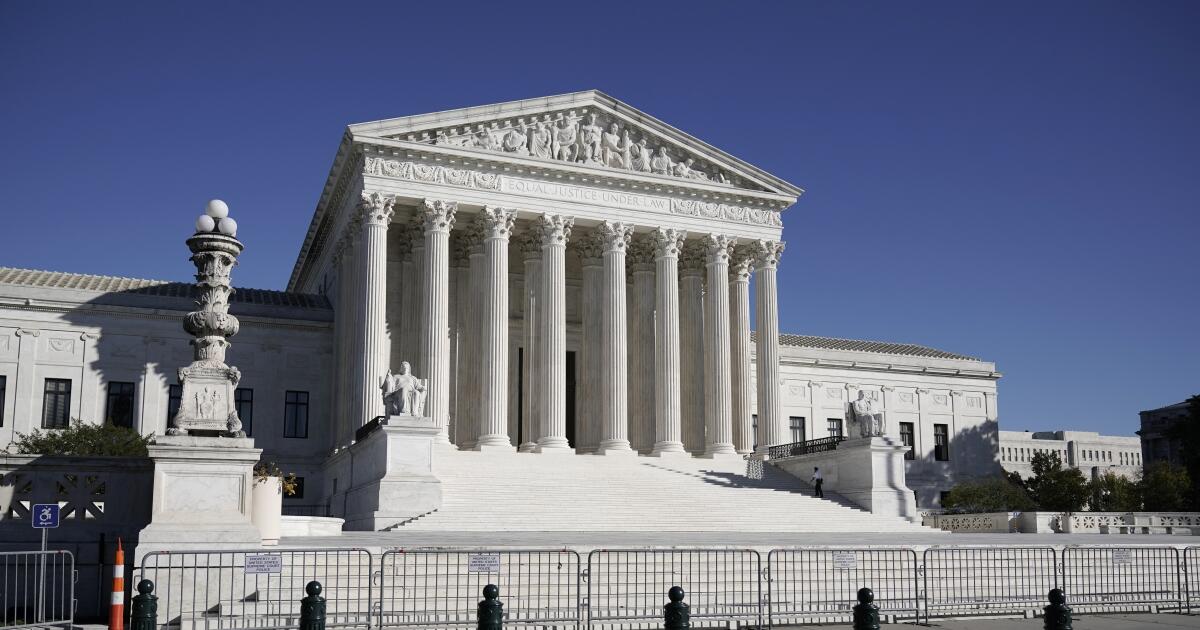
The Supreme Court cast some doubt Wednesday on hundreds of criminal charges and convictions arising from the Jan. 6 mob attack on the U.S. Capitol, including one of the charges pending against former President Trump.
Many defendants who broke into the Capitol were charged under a law that makes it a crime to “corruptly … obstruct … an official proceeding.”
Prosecutors said the mob was seeking to block Congress from certifying now-President Biden’s election.
That provision was part of a law adopted in 2002 after the collapse of Enron in a financial scandal, and it refers to destroying documents or records.
The Supreme Court agreed Wednesday to hear an appeal from one of the Jan. 6 defendants whose lawyers claim he did not violate the law in question because he was not seeking to destroy documents or evidence.
Joseph Fischer, a former Pennsylvania police officer, said he came late to the Capitol attack and was in the building for only four minutes.
He has not been tried yet, but the justices agreed to hear his legal appeal contending the 2002 obstruction law does not apply to him.
Trump has also been indicted for violating the 2002 law, though he also faces other charges.
It is the second time this week the justices agreed to consider legal claims that involve the pending case against Trump that grew out of the Jan. 6 attack.
The justices said they will consider making a fast-track ruling on Trump’s claim that he is immune from criminal charges for his actions as president.
It is not clear whether the new case will move quickly. If the justices hear the case in the spring, they are not likely to rule until June. It’s possible justices think it is better to rule quickly on the legal questions behind the Jan. 6 prosecutions, rather than wait until more of the cases are decided and appealed.
Questions had been raised earlier about whether the law against obstructing a proceeding could be used broadly against Jan. 6 defendants.
A federal judge in Washington had dismissed charges on that basis, but the U.S. Court of Appeals ruled on a 2-1 vote that the charges may go forward.

The Supreme Court cast some doubt Wednesday on hundreds of criminal charges and convictions arising from the Jan. 6 mob attack on the U.S. Capitol, including one of the charges pending against former President Trump.
Many defendants who broke into the Capitol were charged under a law that makes it a crime to “corruptly … obstruct … an official proceeding.”
Prosecutors said the mob was seeking to block Congress from certifying now-President Biden’s election.
That provision was part of a law adopted in 2002 after the collapse of Enron in a financial scandal, and it refers to destroying documents or records.
The Supreme Court agreed Wednesday to hear an appeal from one of the Jan. 6 defendants whose lawyers claim he did not violate the law in question because he was not seeking to destroy documents or evidence.
Joseph Fischer, a former Pennsylvania police officer, said he came late to the Capitol attack and was in the building for only four minutes.
He has not been tried yet, but the justices agreed to hear his legal appeal contending the 2002 obstruction law does not apply to him.
Trump has also been indicted for violating the 2002 law, though he also faces other charges.
It is the second time this week the justices agreed to consider legal claims that involve the pending case against Trump that grew out of the Jan. 6 attack.
The justices said they will consider making a fast-track ruling on Trump’s claim that he is immune from criminal charges for his actions as president.
It is not clear whether the new case will move quickly. If the justices hear the case in the spring, they are not likely to rule until June. It’s possible justices think it is better to rule quickly on the legal questions behind the Jan. 6 prosecutions, rather than wait until more of the cases are decided and appealed.
Questions had been raised earlier about whether the law against obstructing a proceeding could be used broadly against Jan. 6 defendants.
A federal judge in Washington had dismissed charges on that basis, but the U.S. Court of Appeals ruled on a 2-1 vote that the charges may go forward.

The Supreme Court cast some doubt Wednesday on hundreds of criminal charges and convictions arising from the Jan. 6 mob attack on the U.S. Capitol, including one of the charges pending against former President Trump.
Many defendants who broke into the Capitol were charged under a law that makes it a crime to “corruptly … obstruct … an official proceeding.”
Prosecutors said the mob was seeking to block Congress from certifying now-President Biden’s election.
That provision was part of a law adopted in 2002 after the collapse of Enron in a financial scandal, and it refers to destroying documents or records.
The Supreme Court agreed Wednesday to hear an appeal from one of the Jan. 6 defendants whose lawyers claim he did not violate the law in question because he was not seeking to destroy documents or evidence.
Joseph Fischer, a former Pennsylvania police officer, said he came late to the Capitol attack and was in the building for only four minutes.
He has not been tried yet, but the justices agreed to hear his legal appeal contending the 2002 obstruction law does not apply to him.
Trump has also been indicted for violating the 2002 law, though he also faces other charges.
It is the second time this week the justices agreed to consider legal claims that involve the pending case against Trump that grew out of the Jan. 6 attack.
The justices said they will consider making a fast-track ruling on Trump’s claim that he is immune from criminal charges for his actions as president.
It is not clear whether the new case will move quickly. If the justices hear the case in the spring, they are not likely to rule until June. It’s possible justices think it is better to rule quickly on the legal questions behind the Jan. 6 prosecutions, rather than wait until more of the cases are decided and appealed.
Questions had been raised earlier about whether the law against obstructing a proceeding could be used broadly against Jan. 6 defendants.
A federal judge in Washington had dismissed charges on that basis, but the U.S. Court of Appeals ruled on a 2-1 vote that the charges may go forward.
The Supreme Court cast some doubt Wednesday on hundreds of criminal charges and convictions arising from the Jan. 6 mob attack on the U.S. Capitol, including one of the charges pending against former President Trump.
Many defendants who broke into the Capitol were charged under a law that makes it a crime to “corruptly … obstruct … an official proceeding.”
Prosecutors said the mob was seeking to block Congress from certifying now-President Biden’s election.
That provision was part of a law adopted in 2002 after the collapse of Enron in a financial scandal, and it refers to destroying documents or records.
The Supreme Court agreed Wednesday to hear an appeal from one of the Jan. 6 defendants whose lawyers claim he did not violate the law in question because he was not seeking to destroy documents or evidence.
Joseph Fischer, a former Pennsylvania police officer, said he came late to the Capitol attack and was in the building for only four minutes.
He has not been tried yet, but the justices agreed to hear his legal appeal contending the 2002 obstruction law does not apply to him.
Trump has also been indicted for violating the 2002 law, though he also faces other charges.
It is the second time this week the justices agreed to consider legal claims that involve the pending case against Trump that grew out of the Jan. 6 attack.
The justices said they will consider making a fast-track ruling on Trump’s claim that he is immune from criminal charges for his actions as president.
It is not clear whether the new case will move quickly. If the justices hear the case in the spring, they are not likely to rule until June. It’s possible justices think it is better to rule quickly on the legal questions behind the Jan. 6 prosecutions, rather than wait until more of the cases are decided and appealed.
Questions had been raised earlier about whether the law against obstructing a proceeding could be used broadly against Jan. 6 defendants.
A federal judge in Washington had dismissed charges on that basis, but the U.S. Court of Appeals ruled on a 2-1 vote that the charges may go forward.

The Supreme Court cast some doubt Wednesday on hundreds of criminal charges and convictions arising from the Jan. 6 mob attack on the U.S. Capitol, including one of the charges pending against former President Trump.
Many defendants who broke into the Capitol were charged under a law that makes it a crime to “corruptly … obstruct … an official proceeding.”
Prosecutors said the mob was seeking to block Congress from certifying now-President Biden’s election.
That provision was part of a law adopted in 2002 after the collapse of Enron in a financial scandal, and it refers to destroying documents or records.
The Supreme Court agreed Wednesday to hear an appeal from one of the Jan. 6 defendants whose lawyers claim he did not violate the law in question because he was not seeking to destroy documents or evidence.
Joseph Fischer, a former Pennsylvania police officer, said he came late to the Capitol attack and was in the building for only four minutes.
He has not been tried yet, but the justices agreed to hear his legal appeal contending the 2002 obstruction law does not apply to him.
Trump has also been indicted for violating the 2002 law, though he also faces other charges.
It is the second time this week the justices agreed to consider legal claims that involve the pending case against Trump that grew out of the Jan. 6 attack.
The justices said they will consider making a fast-track ruling on Trump’s claim that he is immune from criminal charges for his actions as president.
It is not clear whether the new case will move quickly. If the justices hear the case in the spring, they are not likely to rule until June. It’s possible justices think it is better to rule quickly on the legal questions behind the Jan. 6 prosecutions, rather than wait until more of the cases are decided and appealed.
Questions had been raised earlier about whether the law against obstructing a proceeding could be used broadly against Jan. 6 defendants.
A federal judge in Washington had dismissed charges on that basis, but the U.S. Court of Appeals ruled on a 2-1 vote that the charges may go forward.
The Supreme Court cast some doubt Wednesday on hundreds of criminal charges and convictions arising from the Jan. 6 mob attack on the U.S. Capitol, including one of the charges pending against former President Trump.
Many defendants who broke into the Capitol were charged under a law that makes it a crime to “corruptly … obstruct … an official proceeding.”
Prosecutors said the mob was seeking to block Congress from certifying now-President Biden’s election.
That provision was part of a law adopted in 2002 after the collapse of Enron in a financial scandal, and it refers to destroying documents or records.
The Supreme Court agreed Wednesday to hear an appeal from one of the Jan. 6 defendants whose lawyers claim he did not violate the law in question because he was not seeking to destroy documents or evidence.
Joseph Fischer, a former Pennsylvania police officer, said he came late to the Capitol attack and was in the building for only four minutes.
He has not been tried yet, but the justices agreed to hear his legal appeal contending the 2002 obstruction law does not apply to him.
Trump has also been indicted for violating the 2002 law, though he also faces other charges.
It is the second time this week the justices agreed to consider legal claims that involve the pending case against Trump that grew out of the Jan. 6 attack.
The justices said they will consider making a fast-track ruling on Trump’s claim that he is immune from criminal charges for his actions as president.
It is not clear whether the new case will move quickly. If the justices hear the case in the spring, they are not likely to rule until June. It’s possible justices think it is better to rule quickly on the legal questions behind the Jan. 6 prosecutions, rather than wait until more of the cases are decided and appealed.
Questions had been raised earlier about whether the law against obstructing a proceeding could be used broadly against Jan. 6 defendants.
A federal judge in Washington had dismissed charges on that basis, but the U.S. Court of Appeals ruled on a 2-1 vote that the charges may go forward.
The Supreme Court cast some doubt Wednesday on hundreds of criminal charges and convictions arising from the Jan. 6 mob attack on the U.S. Capitol, including one of the charges pending against former President Trump.
Many defendants who broke into the Capitol were charged under a law that makes it a crime to “corruptly … obstruct … an official proceeding.”
Prosecutors said the mob was seeking to block Congress from certifying now-President Biden’s election.
That provision was part of a law adopted in 2002 after the collapse of Enron in a financial scandal, and it refers to destroying documents or records.
The Supreme Court agreed Wednesday to hear an appeal from one of the Jan. 6 defendants whose lawyers claim he did not violate the law in question because he was not seeking to destroy documents or evidence.
Joseph Fischer, a former Pennsylvania police officer, said he came late to the Capitol attack and was in the building for only four minutes.
He has not been tried yet, but the justices agreed to hear his legal appeal contending the 2002 obstruction law does not apply to him.
Trump has also been indicted for violating the 2002 law, though he also faces other charges.
It is the second time this week the justices agreed to consider legal claims that involve the pending case against Trump that grew out of the Jan. 6 attack.
The justices said they will consider making a fast-track ruling on Trump’s claim that he is immune from criminal charges for his actions as president.
It is not clear whether the new case will move quickly. If the justices hear the case in the spring, they are not likely to rule until June. It’s possible justices think it is better to rule quickly on the legal questions behind the Jan. 6 prosecutions, rather than wait until more of the cases are decided and appealed.
Questions had been raised earlier about whether the law against obstructing a proceeding could be used broadly against Jan. 6 defendants.
A federal judge in Washington had dismissed charges on that basis, but the U.S. Court of Appeals ruled on a 2-1 vote that the charges may go forward.
The Supreme Court cast some doubt Wednesday on hundreds of criminal charges and convictions arising from the Jan. 6 mob attack on the U.S. Capitol, including one of the charges pending against former President Trump.
Many defendants who broke into the Capitol were charged under a law that makes it a crime to “corruptly … obstruct … an official proceeding.”
Prosecutors said the mob was seeking to block Congress from certifying now-President Biden’s election.
That provision was part of a law adopted in 2002 after the collapse of Enron in a financial scandal, and it refers to destroying documents or records.
The Supreme Court agreed Wednesday to hear an appeal from one of the Jan. 6 defendants whose lawyers claim he did not violate the law in question because he was not seeking to destroy documents or evidence.
Joseph Fischer, a former Pennsylvania police officer, said he came late to the Capitol attack and was in the building for only four minutes.
He has not been tried yet, but the justices agreed to hear his legal appeal contending the 2002 obstruction law does not apply to him.
Trump has also been indicted for violating the 2002 law, though he also faces other charges.
It is the second time this week the justices agreed to consider legal claims that involve the pending case against Trump that grew out of the Jan. 6 attack.
The justices said they will consider making a fast-track ruling on Trump’s claim that he is immune from criminal charges for his actions as president.
It is not clear whether the new case will move quickly. If the justices hear the case in the spring, they are not likely to rule until June. It’s possible justices think it is better to rule quickly on the legal questions behind the Jan. 6 prosecutions, rather than wait until more of the cases are decided and appealed.
Questions had been raised earlier about whether the law against obstructing a proceeding could be used broadly against Jan. 6 defendants.
A federal judge in Washington had dismissed charges on that basis, but the U.S. Court of Appeals ruled on a 2-1 vote that the charges may go forward.

The Supreme Court cast some doubt Wednesday on hundreds of criminal charges and convictions arising from the Jan. 6 mob attack on the U.S. Capitol, including one of the charges pending against former President Trump.
Many defendants who broke into the Capitol were charged under a law that makes it a crime to “corruptly … obstruct … an official proceeding.”
Prosecutors said the mob was seeking to block Congress from certifying now-President Biden’s election.
That provision was part of a law adopted in 2002 after the collapse of Enron in a financial scandal, and it refers to destroying documents or records.
The Supreme Court agreed Wednesday to hear an appeal from one of the Jan. 6 defendants whose lawyers claim he did not violate the law in question because he was not seeking to destroy documents or evidence.
Joseph Fischer, a former Pennsylvania police officer, said he came late to the Capitol attack and was in the building for only four minutes.
He has not been tried yet, but the justices agreed to hear his legal appeal contending the 2002 obstruction law does not apply to him.
Trump has also been indicted for violating the 2002 law, though he also faces other charges.
It is the second time this week the justices agreed to consider legal claims that involve the pending case against Trump that grew out of the Jan. 6 attack.
The justices said they will consider making a fast-track ruling on Trump’s claim that he is immune from criminal charges for his actions as president.
It is not clear whether the new case will move quickly. If the justices hear the case in the spring, they are not likely to rule until June. It’s possible justices think it is better to rule quickly on the legal questions behind the Jan. 6 prosecutions, rather than wait until more of the cases are decided and appealed.
Questions had been raised earlier about whether the law against obstructing a proceeding could be used broadly against Jan. 6 defendants.
A federal judge in Washington had dismissed charges on that basis, but the U.S. Court of Appeals ruled on a 2-1 vote that the charges may go forward.
The Supreme Court cast some doubt Wednesday on hundreds of criminal charges and convictions arising from the Jan. 6 mob attack on the U.S. Capitol, including one of the charges pending against former President Trump.
Many defendants who broke into the Capitol were charged under a law that makes it a crime to “corruptly … obstruct … an official proceeding.”
Prosecutors said the mob was seeking to block Congress from certifying now-President Biden’s election.
That provision was part of a law adopted in 2002 after the collapse of Enron in a financial scandal, and it refers to destroying documents or records.
The Supreme Court agreed Wednesday to hear an appeal from one of the Jan. 6 defendants whose lawyers claim he did not violate the law in question because he was not seeking to destroy documents or evidence.
Joseph Fischer, a former Pennsylvania police officer, said he came late to the Capitol attack and was in the building for only four minutes.
He has not been tried yet, but the justices agreed to hear his legal appeal contending the 2002 obstruction law does not apply to him.
Trump has also been indicted for violating the 2002 law, though he also faces other charges.
It is the second time this week the justices agreed to consider legal claims that involve the pending case against Trump that grew out of the Jan. 6 attack.
The justices said they will consider making a fast-track ruling on Trump’s claim that he is immune from criminal charges for his actions as president.
It is not clear whether the new case will move quickly. If the justices hear the case in the spring, they are not likely to rule until June. It’s possible justices think it is better to rule quickly on the legal questions behind the Jan. 6 prosecutions, rather than wait until more of the cases are decided and appealed.
Questions had been raised earlier about whether the law against obstructing a proceeding could be used broadly against Jan. 6 defendants.
A federal judge in Washington had dismissed charges on that basis, but the U.S. Court of Appeals ruled on a 2-1 vote that the charges may go forward.
The Supreme Court cast some doubt Wednesday on hundreds of criminal charges and convictions arising from the Jan. 6 mob attack on the U.S. Capitol, including one of the charges pending against former President Trump.
Many defendants who broke into the Capitol were charged under a law that makes it a crime to “corruptly … obstruct … an official proceeding.”
Prosecutors said the mob was seeking to block Congress from certifying now-President Biden’s election.
That provision was part of a law adopted in 2002 after the collapse of Enron in a financial scandal, and it refers to destroying documents or records.
The Supreme Court agreed Wednesday to hear an appeal from one of the Jan. 6 defendants whose lawyers claim he did not violate the law in question because he was not seeking to destroy documents or evidence.
Joseph Fischer, a former Pennsylvania police officer, said he came late to the Capitol attack and was in the building for only four minutes.
He has not been tried yet, but the justices agreed to hear his legal appeal contending the 2002 obstruction law does not apply to him.
Trump has also been indicted for violating the 2002 law, though he also faces other charges.
It is the second time this week the justices agreed to consider legal claims that involve the pending case against Trump that grew out of the Jan. 6 attack.
The justices said they will consider making a fast-track ruling on Trump’s claim that he is immune from criminal charges for his actions as president.
It is not clear whether the new case will move quickly. If the justices hear the case in the spring, they are not likely to rule until June. It’s possible justices think it is better to rule quickly on the legal questions behind the Jan. 6 prosecutions, rather than wait until more of the cases are decided and appealed.
Questions had been raised earlier about whether the law against obstructing a proceeding could be used broadly against Jan. 6 defendants.
A federal judge in Washington had dismissed charges on that basis, but the U.S. Court of Appeals ruled on a 2-1 vote that the charges may go forward.
The Supreme Court cast some doubt Wednesday on hundreds of criminal charges and convictions arising from the Jan. 6 mob attack on the U.S. Capitol, including one of the charges pending against former President Trump.
Many defendants who broke into the Capitol were charged under a law that makes it a crime to “corruptly … obstruct … an official proceeding.”
Prosecutors said the mob was seeking to block Congress from certifying now-President Biden’s election.
That provision was part of a law adopted in 2002 after the collapse of Enron in a financial scandal, and it refers to destroying documents or records.
The Supreme Court agreed Wednesday to hear an appeal from one of the Jan. 6 defendants whose lawyers claim he did not violate the law in question because he was not seeking to destroy documents or evidence.
Joseph Fischer, a former Pennsylvania police officer, said he came late to the Capitol attack and was in the building for only four minutes.
He has not been tried yet, but the justices agreed to hear his legal appeal contending the 2002 obstruction law does not apply to him.
Trump has also been indicted for violating the 2002 law, though he also faces other charges.
It is the second time this week the justices agreed to consider legal claims that involve the pending case against Trump that grew out of the Jan. 6 attack.
The justices said they will consider making a fast-track ruling on Trump’s claim that he is immune from criminal charges for his actions as president.
It is not clear whether the new case will move quickly. If the justices hear the case in the spring, they are not likely to rule until June. It’s possible justices think it is better to rule quickly on the legal questions behind the Jan. 6 prosecutions, rather than wait until more of the cases are decided and appealed.
Questions had been raised earlier about whether the law against obstructing a proceeding could be used broadly against Jan. 6 defendants.
A federal judge in Washington had dismissed charges on that basis, but the U.S. Court of Appeals ruled on a 2-1 vote that the charges may go forward.
The Supreme Court cast some doubt Wednesday on hundreds of criminal charges and convictions arising from the Jan. 6 mob attack on the U.S. Capitol, including one of the charges pending against former President Trump.
Many defendants who broke into the Capitol were charged under a law that makes it a crime to “corruptly … obstruct … an official proceeding.”
Prosecutors said the mob was seeking to block Congress from certifying now-President Biden’s election.
That provision was part of a law adopted in 2002 after the collapse of Enron in a financial scandal, and it refers to destroying documents or records.
The Supreme Court agreed Wednesday to hear an appeal from one of the Jan. 6 defendants whose lawyers claim he did not violate the law in question because he was not seeking to destroy documents or evidence.
Joseph Fischer, a former Pennsylvania police officer, said he came late to the Capitol attack and was in the building for only four minutes.
He has not been tried yet, but the justices agreed to hear his legal appeal contending the 2002 obstruction law does not apply to him.
Trump has also been indicted for violating the 2002 law, though he also faces other charges.
It is the second time this week the justices agreed to consider legal claims that involve the pending case against Trump that grew out of the Jan. 6 attack.
The justices said they will consider making a fast-track ruling on Trump’s claim that he is immune from criminal charges for his actions as president.
It is not clear whether the new case will move quickly. If the justices hear the case in the spring, they are not likely to rule until June. It’s possible justices think it is better to rule quickly on the legal questions behind the Jan. 6 prosecutions, rather than wait until more of the cases are decided and appealed.
Questions had been raised earlier about whether the law against obstructing a proceeding could be used broadly against Jan. 6 defendants.
A federal judge in Washington had dismissed charges on that basis, but the U.S. Court of Appeals ruled on a 2-1 vote that the charges may go forward.
The Supreme Court cast some doubt Wednesday on hundreds of criminal charges and convictions arising from the Jan. 6 mob attack on the U.S. Capitol, including one of the charges pending against former President Trump.
Many defendants who broke into the Capitol were charged under a law that makes it a crime to “corruptly … obstruct … an official proceeding.”
Prosecutors said the mob was seeking to block Congress from certifying now-President Biden’s election.
That provision was part of a law adopted in 2002 after the collapse of Enron in a financial scandal, and it refers to destroying documents or records.
The Supreme Court agreed Wednesday to hear an appeal from one of the Jan. 6 defendants whose lawyers claim he did not violate the law in question because he was not seeking to destroy documents or evidence.
Joseph Fischer, a former Pennsylvania police officer, said he came late to the Capitol attack and was in the building for only four minutes.
He has not been tried yet, but the justices agreed to hear his legal appeal contending the 2002 obstruction law does not apply to him.
Trump has also been indicted for violating the 2002 law, though he also faces other charges.
It is the second time this week the justices agreed to consider legal claims that involve the pending case against Trump that grew out of the Jan. 6 attack.
The justices said they will consider making a fast-track ruling on Trump’s claim that he is immune from criminal charges for his actions as president.
It is not clear whether the new case will move quickly. If the justices hear the case in the spring, they are not likely to rule until June. It’s possible justices think it is better to rule quickly on the legal questions behind the Jan. 6 prosecutions, rather than wait until more of the cases are decided and appealed.
Questions had been raised earlier about whether the law against obstructing a proceeding could be used broadly against Jan. 6 defendants.
A federal judge in Washington had dismissed charges on that basis, but the U.S. Court of Appeals ruled on a 2-1 vote that the charges may go forward.
The Supreme Court cast some doubt Wednesday on hundreds of criminal charges and convictions arising from the Jan. 6 mob attack on the U.S. Capitol, including one of the charges pending against former President Trump.
Many defendants who broke into the Capitol were charged under a law that makes it a crime to “corruptly … obstruct … an official proceeding.”
Prosecutors said the mob was seeking to block Congress from certifying now-President Biden’s election.
That provision was part of a law adopted in 2002 after the collapse of Enron in a financial scandal, and it refers to destroying documents or records.
The Supreme Court agreed Wednesday to hear an appeal from one of the Jan. 6 defendants whose lawyers claim he did not violate the law in question because he was not seeking to destroy documents or evidence.
Joseph Fischer, a former Pennsylvania police officer, said he came late to the Capitol attack and was in the building for only four minutes.
He has not been tried yet, but the justices agreed to hear his legal appeal contending the 2002 obstruction law does not apply to him.
Trump has also been indicted for violating the 2002 law, though he also faces other charges.
It is the second time this week the justices agreed to consider legal claims that involve the pending case against Trump that grew out of the Jan. 6 attack.
The justices said they will consider making a fast-track ruling on Trump’s claim that he is immune from criminal charges for his actions as president.
It is not clear whether the new case will move quickly. If the justices hear the case in the spring, they are not likely to rule until June. It’s possible justices think it is better to rule quickly on the legal questions behind the Jan. 6 prosecutions, rather than wait until more of the cases are decided and appealed.
Questions had been raised earlier about whether the law against obstructing a proceeding could be used broadly against Jan. 6 defendants.
A federal judge in Washington had dismissed charges on that basis, but the U.S. Court of Appeals ruled on a 2-1 vote that the charges may go forward.
The Supreme Court cast some doubt Wednesday on hundreds of criminal charges and convictions arising from the Jan. 6 mob attack on the U.S. Capitol, including one of the charges pending against former President Trump.
Many defendants who broke into the Capitol were charged under a law that makes it a crime to “corruptly … obstruct … an official proceeding.”
Prosecutors said the mob was seeking to block Congress from certifying now-President Biden’s election.
That provision was part of a law adopted in 2002 after the collapse of Enron in a financial scandal, and it refers to destroying documents or records.
The Supreme Court agreed Wednesday to hear an appeal from one of the Jan. 6 defendants whose lawyers claim he did not violate the law in question because he was not seeking to destroy documents or evidence.
Joseph Fischer, a former Pennsylvania police officer, said he came late to the Capitol attack and was in the building for only four minutes.
He has not been tried yet, but the justices agreed to hear his legal appeal contending the 2002 obstruction law does not apply to him.
Trump has also been indicted for violating the 2002 law, though he also faces other charges.
It is the second time this week the justices agreed to consider legal claims that involve the pending case against Trump that grew out of the Jan. 6 attack.
The justices said they will consider making a fast-track ruling on Trump’s claim that he is immune from criminal charges for his actions as president.
It is not clear whether the new case will move quickly. If the justices hear the case in the spring, they are not likely to rule until June. It’s possible justices think it is better to rule quickly on the legal questions behind the Jan. 6 prosecutions, rather than wait until more of the cases are decided and appealed.
Questions had been raised earlier about whether the law against obstructing a proceeding could be used broadly against Jan. 6 defendants.
A federal judge in Washington had dismissed charges on that basis, but the U.S. Court of Appeals ruled on a 2-1 vote that the charges may go forward.

