

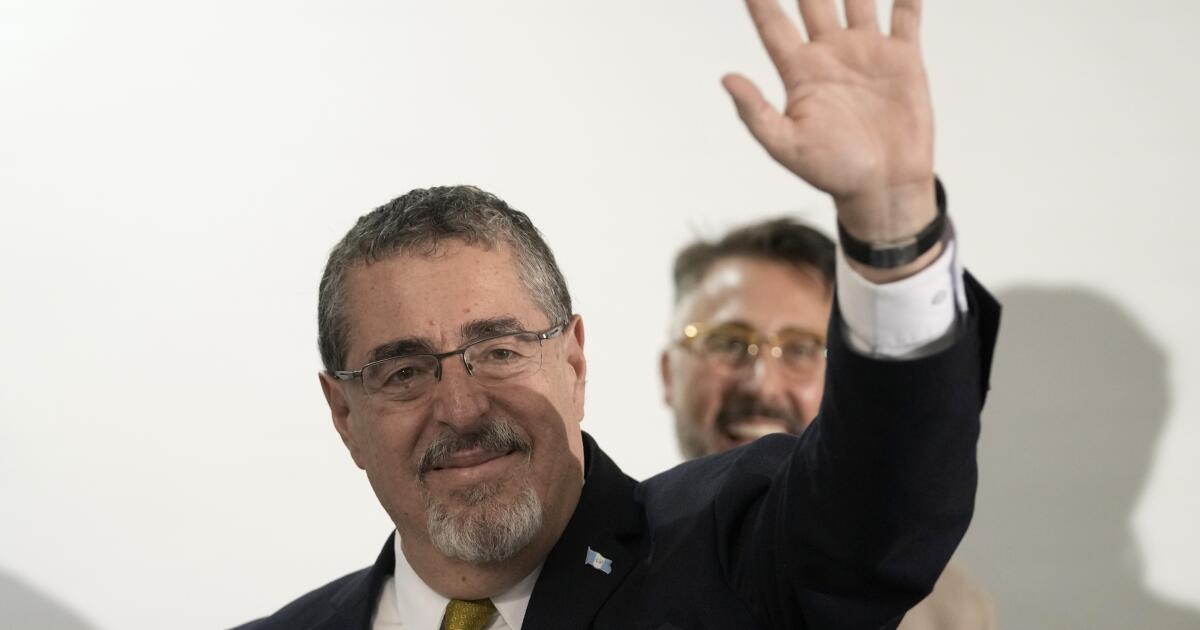

Two months out, Bernardo Arevalo says he is confident he will be sworn in as president of Guatemala, on time and peacefully, despite powerful establishment forces arrayed against him.
Since his landslide runoff electoral victory in August over a former first lady backed by the government, Arevalo has faced one legal challenge after another attempting to disqualify him from office.
Arevalo calls the moves an attempted coup. He has opponents in Guatemala’s Congress and judiciary and in some segments of the economic elite.
“They will continue using any means possible to try to block us,” he said of his foes.
Despite ongoing hostility toward his ascendance, “the inauguration on Jan. 14 is inevitable,” Arevalo said last week during a visit to Washington, where he met with Biden administration officials and members of the U.S. Congress and the Guatemalan diaspora.
A center-left politician, former diplomat and expert in post-conflict peace-building who vowed to fight Guatemala’s endemic corruption, Arevalo, 65, stunned the conservative powers that be in Central America’s most populated country with his victory.
Since then, judicial officials, led by Atty. Gen. María Consuelo Porras, have attempted to invalidate Arevalo’s political party, Semilla, and push forward unsubstantiated claims of fraud in the August vote. Porras is one of several dozen Guatemalan officials who have been blacklisted by the U.S. State Department over alleged corruption.
An Arevalo presidency could signify a sea change in the oppressive and oligarch-based politics of Guatemala, and become a model for the rest of the region.
The runoff election was judged free and fair by observers from the U.S., the European Union and the Organization of American States.
Crucial to Arevalo’s ability to assume office is international support. The Biden administration has been vocal in urging Guatemalan officials to respect the democratic process and the will of the people, and to refrain from attempts to overturn the election results.
But does Arevalo believe the U.S., which in the past has overlooked and even contributed to corruption in Central America, done enough?
“The United States has been part of that broad consensus in support of democracy in Guatemala, and they have been very effective in supporting us,” Arevalo said at a news conference last week in Washington.
He said members of his future government had already held planning sessions with American agencies such as United States Agency for International Development so they can hit the ground running.
Assistant Secretary of State Brian Nichols, who oversees Western Hemisphere affairs, reiterated last week that the U.S. “stands firmly” with the Guatemalan people and their overwhelming vote for Arevalo.
“Those who defend democracy will succeed,” Nichols said on X, the platform formerly known as Twitter, after holding meetings with the president-elect.
Arevalo has also been buoyed by massive demonstrations in his favor organized by Guatemala’s large and long-oppressed Indigenous communities. “It’s historic,” he said.
Yet another force that Arevalo will have to confront is rampant organized crime and narcotics trafficking, a regional scourge that he said had deeply tainted his country’s political system.
“On the issue of narco-trafficking, we have a huge problem,” Arevalo said. “When you have a corrupt system, it is extremely easy for organized crime and trafficking to penetrate that system.”
After decades of corruption in Guatemala, he said, it had reached various levels of government.
“We know there are narco-alcaldes [narco-mayors], we know there are narco-diputados [narco-congressmen], and beyond,” Arevalo said. “So we are very clear that the fight against narco-trafficking is fundamental if we actually want to start claiming the state back.”
Latin America, like other parts of the world, has seen a number of so-called outsider presidents assume office and promise to reverse long trends of corruption, poverty and violence — only to undermine democratic institutions in order to consolidate power and stay in office indefinitely. Arevalo’s supporters hope he will prove to be a departure from that pattern, but before that test begins, he has to take office — which some observers warn is still not guaranteed.
“There are still enormous barriers,” said Eric Olson, policy director for Seattle International Foundation, which specializes in Central America development and democracy-building. “The courts and Congress are not on his side. It’s a huge challenge.”
“These are powerful actors” confronting him, Olson said. “But Arevalo has a powerful mandate.”

Two months out, Bernardo Arevalo says he is confident he will be sworn in as president of Guatemala, on time and peacefully, despite powerful establishment forces arrayed against him.
Since his landslide runoff electoral victory in August over a former first lady backed by the government, Arevalo has faced one legal challenge after another attempting to disqualify him from office.
Arevalo calls the moves an attempted coup. He has opponents in Guatemala’s Congress and judiciary and in some segments of the economic elite.
“They will continue using any means possible to try to block us,” he said of his foes.
Despite ongoing hostility toward his ascendance, “the inauguration on Jan. 14 is inevitable,” Arevalo said last week during a visit to Washington, where he met with Biden administration officials and members of the U.S. Congress and the Guatemalan diaspora.
A center-left politician, former diplomat and expert in post-conflict peace-building who vowed to fight Guatemala’s endemic corruption, Arevalo, 65, stunned the conservative powers that be in Central America’s most populated country with his victory.
Since then, judicial officials, led by Atty. Gen. María Consuelo Porras, have attempted to invalidate Arevalo’s political party, Semilla, and push forward unsubstantiated claims of fraud in the August vote. Porras is one of several dozen Guatemalan officials who have been blacklisted by the U.S. State Department over alleged corruption.
An Arevalo presidency could signify a sea change in the oppressive and oligarch-based politics of Guatemala, and become a model for the rest of the region.
The runoff election was judged free and fair by observers from the U.S., the European Union and the Organization of American States.
Crucial to Arevalo’s ability to assume office is international support. The Biden administration has been vocal in urging Guatemalan officials to respect the democratic process and the will of the people, and to refrain from attempts to overturn the election results.
But does Arevalo believe the U.S., which in the past has overlooked and even contributed to corruption in Central America, done enough?
“The United States has been part of that broad consensus in support of democracy in Guatemala, and they have been very effective in supporting us,” Arevalo said at a news conference last week in Washington.
He said members of his future government had already held planning sessions with American agencies such as United States Agency for International Development so they can hit the ground running.
Assistant Secretary of State Brian Nichols, who oversees Western Hemisphere affairs, reiterated last week that the U.S. “stands firmly” with the Guatemalan people and their overwhelming vote for Arevalo.
“Those who defend democracy will succeed,” Nichols said on X, the platform formerly known as Twitter, after holding meetings with the president-elect.
Arevalo has also been buoyed by massive demonstrations in his favor organized by Guatemala’s large and long-oppressed Indigenous communities. “It’s historic,” he said.
Yet another force that Arevalo will have to confront is rampant organized crime and narcotics trafficking, a regional scourge that he said had deeply tainted his country’s political system.
“On the issue of narco-trafficking, we have a huge problem,” Arevalo said. “When you have a corrupt system, it is extremely easy for organized crime and trafficking to penetrate that system.”
After decades of corruption in Guatemala, he said, it had reached various levels of government.
“We know there are narco-alcaldes [narco-mayors], we know there are narco-diputados [narco-congressmen], and beyond,” Arevalo said. “So we are very clear that the fight against narco-trafficking is fundamental if we actually want to start claiming the state back.”
Latin America, like other parts of the world, has seen a number of so-called outsider presidents assume office and promise to reverse long trends of corruption, poverty and violence — only to undermine democratic institutions in order to consolidate power and stay in office indefinitely. Arevalo’s supporters hope he will prove to be a departure from that pattern, but before that test begins, he has to take office — which some observers warn is still not guaranteed.
“There are still enormous barriers,” said Eric Olson, policy director for Seattle International Foundation, which specializes in Central America development and democracy-building. “The courts and Congress are not on his side. It’s a huge challenge.”
“These are powerful actors” confronting him, Olson said. “But Arevalo has a powerful mandate.”

Two months out, Bernardo Arevalo says he is confident he will be sworn in as president of Guatemala, on time and peacefully, despite powerful establishment forces arrayed against him.
Since his landslide runoff electoral victory in August over a former first lady backed by the government, Arevalo has faced one legal challenge after another attempting to disqualify him from office.
Arevalo calls the moves an attempted coup. He has opponents in Guatemala’s Congress and judiciary and in some segments of the economic elite.
“They will continue using any means possible to try to block us,” he said of his foes.
Despite ongoing hostility toward his ascendance, “the inauguration on Jan. 14 is inevitable,” Arevalo said last week during a visit to Washington, where he met with Biden administration officials and members of the U.S. Congress and the Guatemalan diaspora.
A center-left politician, former diplomat and expert in post-conflict peace-building who vowed to fight Guatemala’s endemic corruption, Arevalo, 65, stunned the conservative powers that be in Central America’s most populated country with his victory.
Since then, judicial officials, led by Atty. Gen. María Consuelo Porras, have attempted to invalidate Arevalo’s political party, Semilla, and push forward unsubstantiated claims of fraud in the August vote. Porras is one of several dozen Guatemalan officials who have been blacklisted by the U.S. State Department over alleged corruption.
An Arevalo presidency could signify a sea change in the oppressive and oligarch-based politics of Guatemala, and become a model for the rest of the region.
The runoff election was judged free and fair by observers from the U.S., the European Union and the Organization of American States.
Crucial to Arevalo’s ability to assume office is international support. The Biden administration has been vocal in urging Guatemalan officials to respect the democratic process and the will of the people, and to refrain from attempts to overturn the election results.
But does Arevalo believe the U.S., which in the past has overlooked and even contributed to corruption in Central America, done enough?
“The United States has been part of that broad consensus in support of democracy in Guatemala, and they have been very effective in supporting us,” Arevalo said at a news conference last week in Washington.
He said members of his future government had already held planning sessions with American agencies such as United States Agency for International Development so they can hit the ground running.
Assistant Secretary of State Brian Nichols, who oversees Western Hemisphere affairs, reiterated last week that the U.S. “stands firmly” with the Guatemalan people and their overwhelming vote for Arevalo.
“Those who defend democracy will succeed,” Nichols said on X, the platform formerly known as Twitter, after holding meetings with the president-elect.
Arevalo has also been buoyed by massive demonstrations in his favor organized by Guatemala’s large and long-oppressed Indigenous communities. “It’s historic,” he said.
Yet another force that Arevalo will have to confront is rampant organized crime and narcotics trafficking, a regional scourge that he said had deeply tainted his country’s political system.
“On the issue of narco-trafficking, we have a huge problem,” Arevalo said. “When you have a corrupt system, it is extremely easy for organized crime and trafficking to penetrate that system.”
After decades of corruption in Guatemala, he said, it had reached various levels of government.
“We know there are narco-alcaldes [narco-mayors], we know there are narco-diputados [narco-congressmen], and beyond,” Arevalo said. “So we are very clear that the fight against narco-trafficking is fundamental if we actually want to start claiming the state back.”
Latin America, like other parts of the world, has seen a number of so-called outsider presidents assume office and promise to reverse long trends of corruption, poverty and violence — only to undermine democratic institutions in order to consolidate power and stay in office indefinitely. Arevalo’s supporters hope he will prove to be a departure from that pattern, but before that test begins, he has to take office — which some observers warn is still not guaranteed.
“There are still enormous barriers,” said Eric Olson, policy director for Seattle International Foundation, which specializes in Central America development and democracy-building. “The courts and Congress are not on his side. It’s a huge challenge.”
“These are powerful actors” confronting him, Olson said. “But Arevalo has a powerful mandate.”
Two months out, Bernardo Arevalo says he is confident he will be sworn in as president of Guatemala, on time and peacefully, despite powerful establishment forces arrayed against him.
Since his landslide runoff electoral victory in August over a former first lady backed by the government, Arevalo has faced one legal challenge after another attempting to disqualify him from office.
Arevalo calls the moves an attempted coup. He has opponents in Guatemala’s Congress and judiciary and in some segments of the economic elite.
“They will continue using any means possible to try to block us,” he said of his foes.
Despite ongoing hostility toward his ascendance, “the inauguration on Jan. 14 is inevitable,” Arevalo said last week during a visit to Washington, where he met with Biden administration officials and members of the U.S. Congress and the Guatemalan diaspora.
A center-left politician, former diplomat and expert in post-conflict peace-building who vowed to fight Guatemala’s endemic corruption, Arevalo, 65, stunned the conservative powers that be in Central America’s most populated country with his victory.
Since then, judicial officials, led by Atty. Gen. María Consuelo Porras, have attempted to invalidate Arevalo’s political party, Semilla, and push forward unsubstantiated claims of fraud in the August vote. Porras is one of several dozen Guatemalan officials who have been blacklisted by the U.S. State Department over alleged corruption.
An Arevalo presidency could signify a sea change in the oppressive and oligarch-based politics of Guatemala, and become a model for the rest of the region.
The runoff election was judged free and fair by observers from the U.S., the European Union and the Organization of American States.
Crucial to Arevalo’s ability to assume office is international support. The Biden administration has been vocal in urging Guatemalan officials to respect the democratic process and the will of the people, and to refrain from attempts to overturn the election results.
But does Arevalo believe the U.S., which in the past has overlooked and even contributed to corruption in Central America, done enough?
“The United States has been part of that broad consensus in support of democracy in Guatemala, and they have been very effective in supporting us,” Arevalo said at a news conference last week in Washington.
He said members of his future government had already held planning sessions with American agencies such as United States Agency for International Development so they can hit the ground running.
Assistant Secretary of State Brian Nichols, who oversees Western Hemisphere affairs, reiterated last week that the U.S. “stands firmly” with the Guatemalan people and their overwhelming vote for Arevalo.
“Those who defend democracy will succeed,” Nichols said on X, the platform formerly known as Twitter, after holding meetings with the president-elect.
Arevalo has also been buoyed by massive demonstrations in his favor organized by Guatemala’s large and long-oppressed Indigenous communities. “It’s historic,” he said.
Yet another force that Arevalo will have to confront is rampant organized crime and narcotics trafficking, a regional scourge that he said had deeply tainted his country’s political system.
“On the issue of narco-trafficking, we have a huge problem,” Arevalo said. “When you have a corrupt system, it is extremely easy for organized crime and trafficking to penetrate that system.”
After decades of corruption in Guatemala, he said, it had reached various levels of government.
“We know there are narco-alcaldes [narco-mayors], we know there are narco-diputados [narco-congressmen], and beyond,” Arevalo said. “So we are very clear that the fight against narco-trafficking is fundamental if we actually want to start claiming the state back.”
Latin America, like other parts of the world, has seen a number of so-called outsider presidents assume office and promise to reverse long trends of corruption, poverty and violence — only to undermine democratic institutions in order to consolidate power and stay in office indefinitely. Arevalo’s supporters hope he will prove to be a departure from that pattern, but before that test begins, he has to take office — which some observers warn is still not guaranteed.
“There are still enormous barriers,” said Eric Olson, policy director for Seattle International Foundation, which specializes in Central America development and democracy-building. “The courts and Congress are not on his side. It’s a huge challenge.”
“These are powerful actors” confronting him, Olson said. “But Arevalo has a powerful mandate.”

Two months out, Bernardo Arevalo says he is confident he will be sworn in as president of Guatemala, on time and peacefully, despite powerful establishment forces arrayed against him.
Since his landslide runoff electoral victory in August over a former first lady backed by the government, Arevalo has faced one legal challenge after another attempting to disqualify him from office.
Arevalo calls the moves an attempted coup. He has opponents in Guatemala’s Congress and judiciary and in some segments of the economic elite.
“They will continue using any means possible to try to block us,” he said of his foes.
Despite ongoing hostility toward his ascendance, “the inauguration on Jan. 14 is inevitable,” Arevalo said last week during a visit to Washington, where he met with Biden administration officials and members of the U.S. Congress and the Guatemalan diaspora.
A center-left politician, former diplomat and expert in post-conflict peace-building who vowed to fight Guatemala’s endemic corruption, Arevalo, 65, stunned the conservative powers that be in Central America’s most populated country with his victory.
Since then, judicial officials, led by Atty. Gen. María Consuelo Porras, have attempted to invalidate Arevalo’s political party, Semilla, and push forward unsubstantiated claims of fraud in the August vote. Porras is one of several dozen Guatemalan officials who have been blacklisted by the U.S. State Department over alleged corruption.
An Arevalo presidency could signify a sea change in the oppressive and oligarch-based politics of Guatemala, and become a model for the rest of the region.
The runoff election was judged free and fair by observers from the U.S., the European Union and the Organization of American States.
Crucial to Arevalo’s ability to assume office is international support. The Biden administration has been vocal in urging Guatemalan officials to respect the democratic process and the will of the people, and to refrain from attempts to overturn the election results.
But does Arevalo believe the U.S., which in the past has overlooked and even contributed to corruption in Central America, done enough?
“The United States has been part of that broad consensus in support of democracy in Guatemala, and they have been very effective in supporting us,” Arevalo said at a news conference last week in Washington.
He said members of his future government had already held planning sessions with American agencies such as United States Agency for International Development so they can hit the ground running.
Assistant Secretary of State Brian Nichols, who oversees Western Hemisphere affairs, reiterated last week that the U.S. “stands firmly” with the Guatemalan people and their overwhelming vote for Arevalo.
“Those who defend democracy will succeed,” Nichols said on X, the platform formerly known as Twitter, after holding meetings with the president-elect.
Arevalo has also been buoyed by massive demonstrations in his favor organized by Guatemala’s large and long-oppressed Indigenous communities. “It’s historic,” he said.
Yet another force that Arevalo will have to confront is rampant organized crime and narcotics trafficking, a regional scourge that he said had deeply tainted his country’s political system.
“On the issue of narco-trafficking, we have a huge problem,” Arevalo said. “When you have a corrupt system, it is extremely easy for organized crime and trafficking to penetrate that system.”
After decades of corruption in Guatemala, he said, it had reached various levels of government.
“We know there are narco-alcaldes [narco-mayors], we know there are narco-diputados [narco-congressmen], and beyond,” Arevalo said. “So we are very clear that the fight against narco-trafficking is fundamental if we actually want to start claiming the state back.”
Latin America, like other parts of the world, has seen a number of so-called outsider presidents assume office and promise to reverse long trends of corruption, poverty and violence — only to undermine democratic institutions in order to consolidate power and stay in office indefinitely. Arevalo’s supporters hope he will prove to be a departure from that pattern, but before that test begins, he has to take office — which some observers warn is still not guaranteed.
“There are still enormous barriers,” said Eric Olson, policy director for Seattle International Foundation, which specializes in Central America development and democracy-building. “The courts and Congress are not on his side. It’s a huge challenge.”
“These are powerful actors” confronting him, Olson said. “But Arevalo has a powerful mandate.”
Two months out, Bernardo Arevalo says he is confident he will be sworn in as president of Guatemala, on time and peacefully, despite powerful establishment forces arrayed against him.
Since his landslide runoff electoral victory in August over a former first lady backed by the government, Arevalo has faced one legal challenge after another attempting to disqualify him from office.
Arevalo calls the moves an attempted coup. He has opponents in Guatemala’s Congress and judiciary and in some segments of the economic elite.
“They will continue using any means possible to try to block us,” he said of his foes.
Despite ongoing hostility toward his ascendance, “the inauguration on Jan. 14 is inevitable,” Arevalo said last week during a visit to Washington, where he met with Biden administration officials and members of the U.S. Congress and the Guatemalan diaspora.
A center-left politician, former diplomat and expert in post-conflict peace-building who vowed to fight Guatemala’s endemic corruption, Arevalo, 65, stunned the conservative powers that be in Central America’s most populated country with his victory.
Since then, judicial officials, led by Atty. Gen. María Consuelo Porras, have attempted to invalidate Arevalo’s political party, Semilla, and push forward unsubstantiated claims of fraud in the August vote. Porras is one of several dozen Guatemalan officials who have been blacklisted by the U.S. State Department over alleged corruption.
An Arevalo presidency could signify a sea change in the oppressive and oligarch-based politics of Guatemala, and become a model for the rest of the region.
The runoff election was judged free and fair by observers from the U.S., the European Union and the Organization of American States.
Crucial to Arevalo’s ability to assume office is international support. The Biden administration has been vocal in urging Guatemalan officials to respect the democratic process and the will of the people, and to refrain from attempts to overturn the election results.
But does Arevalo believe the U.S., which in the past has overlooked and even contributed to corruption in Central America, done enough?
“The United States has been part of that broad consensus in support of democracy in Guatemala, and they have been very effective in supporting us,” Arevalo said at a news conference last week in Washington.
He said members of his future government had already held planning sessions with American agencies such as United States Agency for International Development so they can hit the ground running.
Assistant Secretary of State Brian Nichols, who oversees Western Hemisphere affairs, reiterated last week that the U.S. “stands firmly” with the Guatemalan people and their overwhelming vote for Arevalo.
“Those who defend democracy will succeed,” Nichols said on X, the platform formerly known as Twitter, after holding meetings with the president-elect.
Arevalo has also been buoyed by massive demonstrations in his favor organized by Guatemala’s large and long-oppressed Indigenous communities. “It’s historic,” he said.
Yet another force that Arevalo will have to confront is rampant organized crime and narcotics trafficking, a regional scourge that he said had deeply tainted his country’s political system.
“On the issue of narco-trafficking, we have a huge problem,” Arevalo said. “When you have a corrupt system, it is extremely easy for organized crime and trafficking to penetrate that system.”
After decades of corruption in Guatemala, he said, it had reached various levels of government.
“We know there are narco-alcaldes [narco-mayors], we know there are narco-diputados [narco-congressmen], and beyond,” Arevalo said. “So we are very clear that the fight against narco-trafficking is fundamental if we actually want to start claiming the state back.”
Latin America, like other parts of the world, has seen a number of so-called outsider presidents assume office and promise to reverse long trends of corruption, poverty and violence — only to undermine democratic institutions in order to consolidate power and stay in office indefinitely. Arevalo’s supporters hope he will prove to be a departure from that pattern, but before that test begins, he has to take office — which some observers warn is still not guaranteed.
“There are still enormous barriers,” said Eric Olson, policy director for Seattle International Foundation, which specializes in Central America development and democracy-building. “The courts and Congress are not on his side. It’s a huge challenge.”
“These are powerful actors” confronting him, Olson said. “But Arevalo has a powerful mandate.”
Two months out, Bernardo Arevalo says he is confident he will be sworn in as president of Guatemala, on time and peacefully, despite powerful establishment forces arrayed against him.
Since his landslide runoff electoral victory in August over a former first lady backed by the government, Arevalo has faced one legal challenge after another attempting to disqualify him from office.
Arevalo calls the moves an attempted coup. He has opponents in Guatemala’s Congress and judiciary and in some segments of the economic elite.
“They will continue using any means possible to try to block us,” he said of his foes.
Despite ongoing hostility toward his ascendance, “the inauguration on Jan. 14 is inevitable,” Arevalo said last week during a visit to Washington, where he met with Biden administration officials and members of the U.S. Congress and the Guatemalan diaspora.
A center-left politician, former diplomat and expert in post-conflict peace-building who vowed to fight Guatemala’s endemic corruption, Arevalo, 65, stunned the conservative powers that be in Central America’s most populated country with his victory.
Since then, judicial officials, led by Atty. Gen. María Consuelo Porras, have attempted to invalidate Arevalo’s political party, Semilla, and push forward unsubstantiated claims of fraud in the August vote. Porras is one of several dozen Guatemalan officials who have been blacklisted by the U.S. State Department over alleged corruption.
An Arevalo presidency could signify a sea change in the oppressive and oligarch-based politics of Guatemala, and become a model for the rest of the region.
The runoff election was judged free and fair by observers from the U.S., the European Union and the Organization of American States.
Crucial to Arevalo’s ability to assume office is international support. The Biden administration has been vocal in urging Guatemalan officials to respect the democratic process and the will of the people, and to refrain from attempts to overturn the election results.
But does Arevalo believe the U.S., which in the past has overlooked and even contributed to corruption in Central America, done enough?
“The United States has been part of that broad consensus in support of democracy in Guatemala, and they have been very effective in supporting us,” Arevalo said at a news conference last week in Washington.
He said members of his future government had already held planning sessions with American agencies such as United States Agency for International Development so they can hit the ground running.
Assistant Secretary of State Brian Nichols, who oversees Western Hemisphere affairs, reiterated last week that the U.S. “stands firmly” with the Guatemalan people and their overwhelming vote for Arevalo.
“Those who defend democracy will succeed,” Nichols said on X, the platform formerly known as Twitter, after holding meetings with the president-elect.
Arevalo has also been buoyed by massive demonstrations in his favor organized by Guatemala’s large and long-oppressed Indigenous communities. “It’s historic,” he said.
Yet another force that Arevalo will have to confront is rampant organized crime and narcotics trafficking, a regional scourge that he said had deeply tainted his country’s political system.
“On the issue of narco-trafficking, we have a huge problem,” Arevalo said. “When you have a corrupt system, it is extremely easy for organized crime and trafficking to penetrate that system.”
After decades of corruption in Guatemala, he said, it had reached various levels of government.
“We know there are narco-alcaldes [narco-mayors], we know there are narco-diputados [narco-congressmen], and beyond,” Arevalo said. “So we are very clear that the fight against narco-trafficking is fundamental if we actually want to start claiming the state back.”
Latin America, like other parts of the world, has seen a number of so-called outsider presidents assume office and promise to reverse long trends of corruption, poverty and violence — only to undermine democratic institutions in order to consolidate power and stay in office indefinitely. Arevalo’s supporters hope he will prove to be a departure from that pattern, but before that test begins, he has to take office — which some observers warn is still not guaranteed.
“There are still enormous barriers,” said Eric Olson, policy director for Seattle International Foundation, which specializes in Central America development and democracy-building. “The courts and Congress are not on his side. It’s a huge challenge.”
“These are powerful actors” confronting him, Olson said. “But Arevalo has a powerful mandate.”
Two months out, Bernardo Arevalo says he is confident he will be sworn in as president of Guatemala, on time and peacefully, despite powerful establishment forces arrayed against him.
Since his landslide runoff electoral victory in August over a former first lady backed by the government, Arevalo has faced one legal challenge after another attempting to disqualify him from office.
Arevalo calls the moves an attempted coup. He has opponents in Guatemala’s Congress and judiciary and in some segments of the economic elite.
“They will continue using any means possible to try to block us,” he said of his foes.
Despite ongoing hostility toward his ascendance, “the inauguration on Jan. 14 is inevitable,” Arevalo said last week during a visit to Washington, where he met with Biden administration officials and members of the U.S. Congress and the Guatemalan diaspora.
A center-left politician, former diplomat and expert in post-conflict peace-building who vowed to fight Guatemala’s endemic corruption, Arevalo, 65, stunned the conservative powers that be in Central America’s most populated country with his victory.
Since then, judicial officials, led by Atty. Gen. María Consuelo Porras, have attempted to invalidate Arevalo’s political party, Semilla, and push forward unsubstantiated claims of fraud in the August vote. Porras is one of several dozen Guatemalan officials who have been blacklisted by the U.S. State Department over alleged corruption.
An Arevalo presidency could signify a sea change in the oppressive and oligarch-based politics of Guatemala, and become a model for the rest of the region.
The runoff election was judged free and fair by observers from the U.S., the European Union and the Organization of American States.
Crucial to Arevalo’s ability to assume office is international support. The Biden administration has been vocal in urging Guatemalan officials to respect the democratic process and the will of the people, and to refrain from attempts to overturn the election results.
But does Arevalo believe the U.S., which in the past has overlooked and even contributed to corruption in Central America, done enough?
“The United States has been part of that broad consensus in support of democracy in Guatemala, and they have been very effective in supporting us,” Arevalo said at a news conference last week in Washington.
He said members of his future government had already held planning sessions with American agencies such as United States Agency for International Development so they can hit the ground running.
Assistant Secretary of State Brian Nichols, who oversees Western Hemisphere affairs, reiterated last week that the U.S. “stands firmly” with the Guatemalan people and their overwhelming vote for Arevalo.
“Those who defend democracy will succeed,” Nichols said on X, the platform formerly known as Twitter, after holding meetings with the president-elect.
Arevalo has also been buoyed by massive demonstrations in his favor organized by Guatemala’s large and long-oppressed Indigenous communities. “It’s historic,” he said.
Yet another force that Arevalo will have to confront is rampant organized crime and narcotics trafficking, a regional scourge that he said had deeply tainted his country’s political system.
“On the issue of narco-trafficking, we have a huge problem,” Arevalo said. “When you have a corrupt system, it is extremely easy for organized crime and trafficking to penetrate that system.”
After decades of corruption in Guatemala, he said, it had reached various levels of government.
“We know there are narco-alcaldes [narco-mayors], we know there are narco-diputados [narco-congressmen], and beyond,” Arevalo said. “So we are very clear that the fight against narco-trafficking is fundamental if we actually want to start claiming the state back.”
Latin America, like other parts of the world, has seen a number of so-called outsider presidents assume office and promise to reverse long trends of corruption, poverty and violence — only to undermine democratic institutions in order to consolidate power and stay in office indefinitely. Arevalo’s supporters hope he will prove to be a departure from that pattern, but before that test begins, he has to take office — which some observers warn is still not guaranteed.
“There are still enormous barriers,” said Eric Olson, policy director for Seattle International Foundation, which specializes in Central America development and democracy-building. “The courts and Congress are not on his side. It’s a huge challenge.”
“These are powerful actors” confronting him, Olson said. “But Arevalo has a powerful mandate.”

