



At least 27 people were killed and four others remained missing a full day after Mexico’s strongest hurricane in recent memory slammed into the resort city of Acapulco, destroying homes, hotels and shopping centers and submerging entire neighborhoods in debris-strewn floodwaters.
“It was very destroyed,” Mexican President Andrés Manuel López Obrador said of Acapulco on Thursday. “There’s no precedent for this in recent times.”
After Hurricane Otis made landfall as a Category 5 storm early Wednesday, communication with the city and nearby regions was still mostly down, and hundreds of thousands of residents were without electricity.
Mexico’s national power utility said the region’s electrical infrastructure was severely damaged, and that crews were working to repair 37 transmission lines, 26 substations and a major power station that had been knocked offline.
Images filtering out of Acapulco showed incredible devastation: Towering condos missing roofs and facades, large yachts lifted from the sea and tossed onto land and miles of roads and neighborhoods under water. The commercial and military airports, both flooded and damaged, remained closed.
In Chilpancingo, the last major city along the highway before Acapulco, people were stocking up on basics to distribute to those battered by the hurricane. A clear sense of solidarity was evident as volunteers filled vehicles with goods for the stricken residents of the coastal city.
“We’re very worried about the people of Acapulco,” said Ulises Castaneda, 48, a businessman at an Oxxo convenience store filling up the bed of his pickup with bottles of water, rolls of toilet paper and other necessities. “This is all a private initiative, paid from our pockets. The government is more worried now about elections, not the people of Acapulco.”
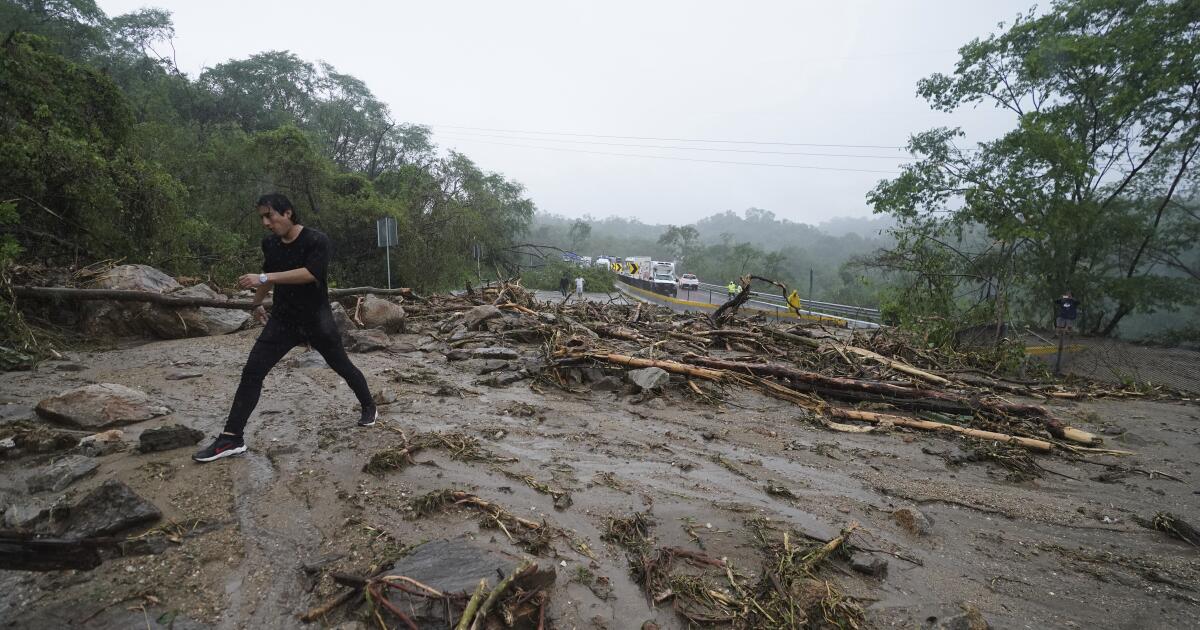
López Obrador managed to visit the city late Wednesday after crews opened the highway connecting Acapulco to Mexico City, which had been closed for hours by a mudslide.
The president said emergency crews were heading to the city to assist residents, restore power and survey the damage. Some seemed frustrated by what they viewed as a slow response.
“When is the government ever going to look after the common people?” Isabel de la Cruz told a journalist with the Associated Press on Thursday as she tried to move a shopping cart loaded with goods taken from a store — diapers, instant noodles and toilet paper — through the mud.
She and her family survived the storm, but it blew off the tin roof of their home, she said.
The intensity of the storm took the government and many residents by surprise.
Just 24 hours before it struck, meteorologists were predicting it would make landfall as a relatively light Category 1 hurricane.
But after hitting a patch of warm ocean water, it quickly picked up power, becoming one of the fastest growing hurricanes ever observed. Many climate experts have agreed that El Niño and human-driven climate change are probably both to blame.
Hours before it hit, the National Hurricane Center warned of a “potentially catastrophic Category 5 hurricane.” The center said a “nightmare scenario” loomed as the storm bore down on a city of nearly 1 million residents who had been given little time to prepare.
Erik Fellini, a 26-year-old magician from Mexico City, didn’t realize that he and his family were about to face a ferocious hurricane.
Fellini, his wife, their two toddlers, his parents, his brother and his brother’s wife got to the resort city on Monday for a four-day vacation. They spent Tuesday on the beach despite the clouds and light rain. At about 10:30 p.m., he turned on the television, his children asleep, and saw that a Category 5 hurricane would soon make landfall.
Around the same time, hotel staffers stuck a paper on their room’s door handle announcing that guests would be losing access to the beach. It didn’t mention a Category 5 hurricane was coming or where to seek shelter, he said.
“The hotel had been functioning normally, so we hadn’t been worried,” he said. “We never imagined this and we hadn’t seen the news.”
At the lobby, a hotel worker said that guests had to stay in their rooms. Shelter how you can, a receptionist told the family.
On the hotel’s eighth floor, they gathered in one of their rooms and piled up mattresses and a desk near the windows. They began to hear glass shatter. Water dripped into the room from the air vents — soon reaching their ankles — and as the wind howled, Fellini worried about his toddlers’ eardrums.
“It felt like it was an earthquake,” he said. “But in an earthquake it’s a minute and it finishes and here it was 30 minutes of the hotel moving from one side to another.”
He ultimately made his way down the stairwell to the lobby to see if there was a safer place to shelter, jumping over rubble.
“The scene is like in the Titanic, you see everything destroyed, the water up to our calves,” he said.
The family joined dozens of other guests in a large salon, where they were given towels to dry themselves. People slept on the floor, exhausted from stress. Fellini and his brother helped elderly people in wheelchairs come down from their hotel rooms. Several had been injured by broken glass.
In the morning, the family decided to leave — their car was undamaged — and drove 14 hours back to Mexico City, traveling through winding mountain roads.
“The truth is that Acapulco is devastated,” said Fellini. “We’re thankful that God let us get out.”
The Associated Press contributed to this report. Times staffers Kate Linthicum and Leila Miller reported from Mexico City and staffer Patrick J. McDonnell reported from Chilpancingo.

At least 27 people were killed and four others remained missing a full day after Mexico’s strongest hurricane in recent memory slammed into the resort city of Acapulco, destroying homes, hotels and shopping centers and submerging entire neighborhoods in debris-strewn floodwaters.
“It was very destroyed,” Mexican President Andrés Manuel López Obrador said of Acapulco on Thursday. “There’s no precedent for this in recent times.”
After Hurricane Otis made landfall as a Category 5 storm early Wednesday, communication with the city and nearby regions was still mostly down, and hundreds of thousands of residents were without electricity.
Mexico’s national power utility said the region’s electrical infrastructure was severely damaged, and that crews were working to repair 37 transmission lines, 26 substations and a major power station that had been knocked offline.
Images filtering out of Acapulco showed incredible devastation: Towering condos missing roofs and facades, large yachts lifted from the sea and tossed onto land and miles of roads and neighborhoods under water. The commercial and military airports, both flooded and damaged, remained closed.
In Chilpancingo, the last major city along the highway before Acapulco, people were stocking up on basics to distribute to those battered by the hurricane. A clear sense of solidarity was evident as volunteers filled vehicles with goods for the stricken residents of the coastal city.
“We’re very worried about the people of Acapulco,” said Ulises Castaneda, 48, a businessman at an Oxxo convenience store filling up the bed of his pickup with bottles of water, rolls of toilet paper and other necessities. “This is all a private initiative, paid from our pockets. The government is more worried now about elections, not the people of Acapulco.”
López Obrador managed to visit the city late Wednesday after crews opened the highway connecting Acapulco to Mexico City, which had been closed for hours by a mudslide.
The president said emergency crews were heading to the city to assist residents, restore power and survey the damage. Some seemed frustrated by what they viewed as a slow response.
“When is the government ever going to look after the common people?” Isabel de la Cruz told a journalist with the Associated Press on Thursday as she tried to move a shopping cart loaded with goods taken from a store — diapers, instant noodles and toilet paper — through the mud.
She and her family survived the storm, but it blew off the tin roof of their home, she said.
The intensity of the storm took the government and many residents by surprise.
Just 24 hours before it struck, meteorologists were predicting it would make landfall as a relatively light Category 1 hurricane.
But after hitting a patch of warm ocean water, it quickly picked up power, becoming one of the fastest growing hurricanes ever observed. Many climate experts have agreed that El Niño and human-driven climate change are probably both to blame.
Hours before it hit, the National Hurricane Center warned of a “potentially catastrophic Category 5 hurricane.” The center said a “nightmare scenario” loomed as the storm bore down on a city of nearly 1 million residents who had been given little time to prepare.
Erik Fellini, a 26-year-old magician from Mexico City, didn’t realize that he and his family were about to face a ferocious hurricane.
Fellini, his wife, their two toddlers, his parents, his brother and his brother’s wife got to the resort city on Monday for a four-day vacation. They spent Tuesday on the beach despite the clouds and light rain. At about 10:30 p.m., he turned on the television, his children asleep, and saw that a Category 5 hurricane would soon make landfall.
Around the same time, hotel staffers stuck a paper on their room’s door handle announcing that guests would be losing access to the beach. It didn’t mention a Category 5 hurricane was coming or where to seek shelter, he said.
“The hotel had been functioning normally, so we hadn’t been worried,” he said. “We never imagined this and we hadn’t seen the news.”
At the lobby, a hotel worker said that guests had to stay in their rooms. Shelter how you can, a receptionist told the family.
On the hotel’s eighth floor, they gathered in one of their rooms and piled up mattresses and a desk near the windows. They began to hear glass shatter. Water dripped into the room from the air vents — soon reaching their ankles — and as the wind howled, Fellini worried about his toddlers’ eardrums.
“It felt like it was an earthquake,” he said. “But in an earthquake it’s a minute and it finishes and here it was 30 minutes of the hotel moving from one side to another.”
He ultimately made his way down the stairwell to the lobby to see if there was a safer place to shelter, jumping over rubble.
“The scene is like in the Titanic, you see everything destroyed, the water up to our calves,” he said.
The family joined dozens of other guests in a large salon, where they were given towels to dry themselves. People slept on the floor, exhausted from stress. Fellini and his brother helped elderly people in wheelchairs come down from their hotel rooms. Several had been injured by broken glass.
In the morning, the family decided to leave — their car was undamaged — and drove 14 hours back to Mexico City, traveling through winding mountain roads.
“The truth is that Acapulco is devastated,” said Fellini. “We’re thankful that God let us get out.”
The Associated Press contributed to this report. Times staffers Kate Linthicum and Leila Miller reported from Mexico City and staffer Patrick J. McDonnell reported from Chilpancingo.

At least 27 people were killed and four others remained missing a full day after Mexico’s strongest hurricane in recent memory slammed into the resort city of Acapulco, destroying homes, hotels and shopping centers and submerging entire neighborhoods in debris-strewn floodwaters.
“It was very destroyed,” Mexican President Andrés Manuel López Obrador said of Acapulco on Thursday. “There’s no precedent for this in recent times.”
After Hurricane Otis made landfall as a Category 5 storm early Wednesday, communication with the city and nearby regions was still mostly down, and hundreds of thousands of residents were without electricity.
Mexico’s national power utility said the region’s electrical infrastructure was severely damaged, and that crews were working to repair 37 transmission lines, 26 substations and a major power station that had been knocked offline.
Images filtering out of Acapulco showed incredible devastation: Towering condos missing roofs and facades, large yachts lifted from the sea and tossed onto land and miles of roads and neighborhoods under water. The commercial and military airports, both flooded and damaged, remained closed.
In Chilpancingo, the last major city along the highway before Acapulco, people were stocking up on basics to distribute to those battered by the hurricane. A clear sense of solidarity was evident as volunteers filled vehicles with goods for the stricken residents of the coastal city.
“We’re very worried about the people of Acapulco,” said Ulises Castaneda, 48, a businessman at an Oxxo convenience store filling up the bed of his pickup with bottles of water, rolls of toilet paper and other necessities. “This is all a private initiative, paid from our pockets. The government is more worried now about elections, not the people of Acapulco.”
López Obrador managed to visit the city late Wednesday after crews opened the highway connecting Acapulco to Mexico City, which had been closed for hours by a mudslide.
The president said emergency crews were heading to the city to assist residents, restore power and survey the damage. Some seemed frustrated by what they viewed as a slow response.
“When is the government ever going to look after the common people?” Isabel de la Cruz told a journalist with the Associated Press on Thursday as she tried to move a shopping cart loaded with goods taken from a store — diapers, instant noodles and toilet paper — through the mud.
She and her family survived the storm, but it blew off the tin roof of their home, she said.
The intensity of the storm took the government and many residents by surprise.
Just 24 hours before it struck, meteorologists were predicting it would make landfall as a relatively light Category 1 hurricane.
But after hitting a patch of warm ocean water, it quickly picked up power, becoming one of the fastest growing hurricanes ever observed. Many climate experts have agreed that El Niño and human-driven climate change are probably both to blame.
Hours before it hit, the National Hurricane Center warned of a “potentially catastrophic Category 5 hurricane.” The center said a “nightmare scenario” loomed as the storm bore down on a city of nearly 1 million residents who had been given little time to prepare.
Erik Fellini, a 26-year-old magician from Mexico City, didn’t realize that he and his family were about to face a ferocious hurricane.
Fellini, his wife, their two toddlers, his parents, his brother and his brother’s wife got to the resort city on Monday for a four-day vacation. They spent Tuesday on the beach despite the clouds and light rain. At about 10:30 p.m., he turned on the television, his children asleep, and saw that a Category 5 hurricane would soon make landfall.
Around the same time, hotel staffers stuck a paper on their room’s door handle announcing that guests would be losing access to the beach. It didn’t mention a Category 5 hurricane was coming or where to seek shelter, he said.
“The hotel had been functioning normally, so we hadn’t been worried,” he said. “We never imagined this and we hadn’t seen the news.”
At the lobby, a hotel worker said that guests had to stay in their rooms. Shelter how you can, a receptionist told the family.
On the hotel’s eighth floor, they gathered in one of their rooms and piled up mattresses and a desk near the windows. They began to hear glass shatter. Water dripped into the room from the air vents — soon reaching their ankles — and as the wind howled, Fellini worried about his toddlers’ eardrums.
“It felt like it was an earthquake,” he said. “But in an earthquake it’s a minute and it finishes and here it was 30 minutes of the hotel moving from one side to another.”
He ultimately made his way down the stairwell to the lobby to see if there was a safer place to shelter, jumping over rubble.
“The scene is like in the Titanic, you see everything destroyed, the water up to our calves,” he said.
The family joined dozens of other guests in a large salon, where they were given towels to dry themselves. People slept on the floor, exhausted from stress. Fellini and his brother helped elderly people in wheelchairs come down from their hotel rooms. Several had been injured by broken glass.
In the morning, the family decided to leave — their car was undamaged — and drove 14 hours back to Mexico City, traveling through winding mountain roads.
“The truth is that Acapulco is devastated,” said Fellini. “We’re thankful that God let us get out.”
The Associated Press contributed to this report. Times staffers Kate Linthicum and Leila Miller reported from Mexico City and staffer Patrick J. McDonnell reported from Chilpancingo.