

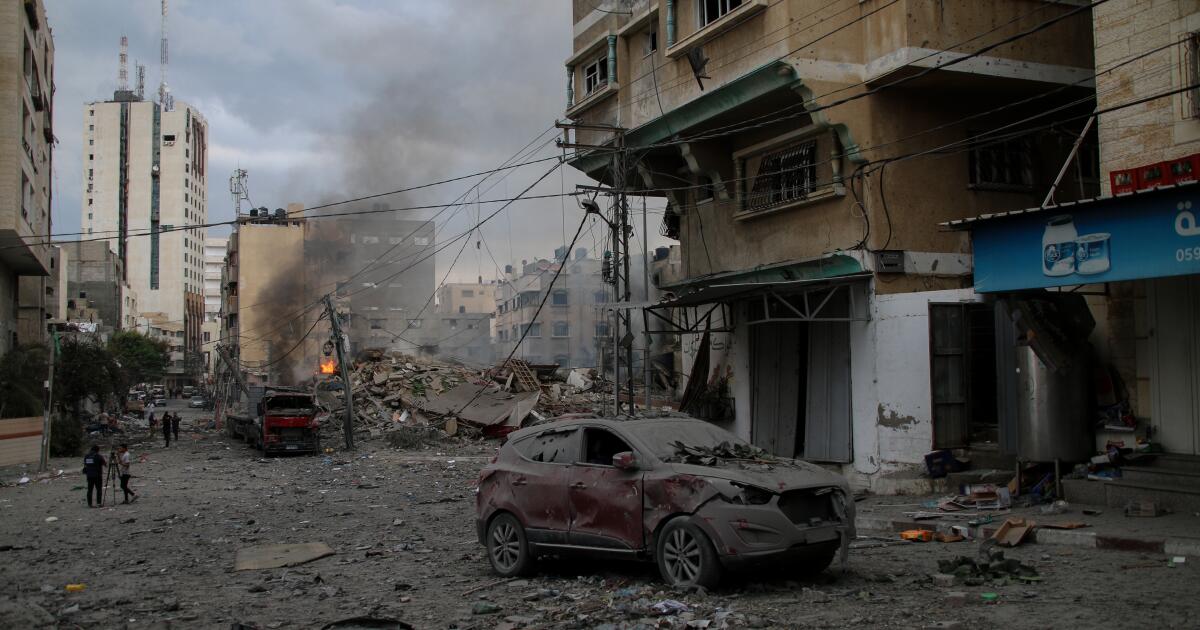

Sooner or later, Israeli Prime Minister Benjamin Netanyahu’s destructive political magic, which has kept him in power for 15 years, was bound to usher in a major tragedy. A year ago, he formed the most radical and incompetent government in Israel’s history. Don’t worry, he assured his critics, I have “two hands firmly on the steering wheel.”
But by ruling out any political process in Palestine and boldly asserting, in his government’s guidelines, that “the Jewish people have an exclusive and inalienable right to all parts of the Land of Israel,” Netanyahu’s fanatical government made bloodshed inevitable.
Admittedly, blood flowed in Palestine even when peace-seekers such as Yitzhak Rabin and Ehud Barak were in office. But Netanyahu recklessly invited violence by paying his coalition partners any price for their support. He let them grab Palestinian lands, expand illegal settlements, scorn Muslim sensibilities regarding the sacred mosque on the Temple Mount and promote suicidal delusions about the reconstruction of the biblical Temple in Jerusalem. Meanwhile, he also sidelined the more moderate Palestinian leadership of Mahmoud Abbas in the West Bank, effectively beefing up the radical Hamas in Gaza.
According to Netanyahu’s twisted logic, strong Islamist rule in Gaza would be the ultimate argument against a political solution in Palestine. By rewarding the extremists and castigating the moderates, Netanyahu believed that he, unlike the soft leftists, had finally found the solution to the conflict. The Abraham Accords, which normalized Israel’s relations with four Arab states (and will probably soon include Saudi Arabia), blinded him to the Palestinian volcano beneath his feet.
But, in the ruthless, barbaric massacre of Israeli civilians in the villages surrounding Gaza, Netanyahu’s hubris met its nemesis in the form of Hamas’ savagery. Fifty years and a day after Egypt and Syria launched their surprise attack in what became known as the Yom Kippur War, Hamas stormed Gaza’s borders with Israel and slaughtered hundreds of defenseless civilians.
Many have expressed surprise that Hamas so easily penetrated Israel’s defenses along the border with Gaza. But there were no such defenses. When Hamas began slaughtering hundreds of defenseless civilians, Israel’s glorious army was mostly deployed elsewhere. Many were assigned to the West Bank to protect religious settlers in clashes (sometimes initiated by the settlers themselves) with local Palestinians, and in festivals around their shrines.
The assumption was always that Gaza was not a vital priority. An underground wall of sensors and fortified concrete that Israel has built around the enclave was supposed to block the tunnels through which Hamas tried in the past to penetrate Israeli border villages. It was of no use. Hamas militias simply stormed the fences on the surface.
The attack by Hamas was not just a tactical surprise, but also a strategic bombshell. In the last two years, Hamas was creating the impression that it was becoming a government more interested in meeting its people’s material needs than in presumably ineffective armed resistance. And the Israelis believed what they wanted to believe: that subsidies from Qatar and their own gestures would dissuade Hamas from future military adventures.
And now what? Restore deterrence? How, exactly? Self-punishment in the form of a renewed occupation of Gaza? A land invasion is difficult to imagine. The atrocious level of destruction and casualties this would entail is one reason, with the many Israeli hostages now in Gaza providing additional insurance. The risk of Hezbollah opening an additional front from Lebanon in the north is another. Hezbollah’s capabilities dwarf those of Hamas, and a two-front war, with Iran possibly backing Israel’s foes, is an apocalyptic scenario.
This is why President Biden warned Israel’s enemies “not to exploit the crisis.” To drive home the point, Biden has ordered a Navy aircraft carrier group to the eastern Mediterranean.
But then when has the Israel-Palestine conflict ever responded to logic?
We learned from Clausewitz that war is supposed to make sense in the context of a political objective. Hamas’ current war has such objectives: securing its hegemony in the Palestinian national movement, freeing its men from Israeli prisons by trading hostages for them, and preventing Palestine’s plight from being forsaken by the “Arab brethren” in their rush to normalize relations with the Jewish state. For Netanyahu’s government, however, this is a purely reactive war with no political objective beyond that of reaching a pause until the next round of hostilities.
When the fighting ends, negotiations for an exchange of hostages and prisoners are inevitable. Possibly, the clearly ineffective blockade on Gaza should be lifted. In any case, a different question will remain: whether the barbarity that the Hamas militias displayed in the killing fields around Gaza is the right path to Palestinian redemption. Their moment of supposed glory will live in infamy for many years to come.
Shlomo Ben-Ami, a former Israeli foreign minister, is the author of “Prophets Without Honor: The 2000 Camp David Summit and the End of the Two-State Solution.”

Sooner or later, Israeli Prime Minister Benjamin Netanyahu’s destructive political magic, which has kept him in power for 15 years, was bound to usher in a major tragedy. A year ago, he formed the most radical and incompetent government in Israel’s history. Don’t worry, he assured his critics, I have “two hands firmly on the steering wheel.”
But by ruling out any political process in Palestine and boldly asserting, in his government’s guidelines, that “the Jewish people have an exclusive and inalienable right to all parts of the Land of Israel,” Netanyahu’s fanatical government made bloodshed inevitable.
Admittedly, blood flowed in Palestine even when peace-seekers such as Yitzhak Rabin and Ehud Barak were in office. But Netanyahu recklessly invited violence by paying his coalition partners any price for their support. He let them grab Palestinian lands, expand illegal settlements, scorn Muslim sensibilities regarding the sacred mosque on the Temple Mount and promote suicidal delusions about the reconstruction of the biblical Temple in Jerusalem. Meanwhile, he also sidelined the more moderate Palestinian leadership of Mahmoud Abbas in the West Bank, effectively beefing up the radical Hamas in Gaza.
According to Netanyahu’s twisted logic, strong Islamist rule in Gaza would be the ultimate argument against a political solution in Palestine. By rewarding the extremists and castigating the moderates, Netanyahu believed that he, unlike the soft leftists, had finally found the solution to the conflict. The Abraham Accords, which normalized Israel’s relations with four Arab states (and will probably soon include Saudi Arabia), blinded him to the Palestinian volcano beneath his feet.
But, in the ruthless, barbaric massacre of Israeli civilians in the villages surrounding Gaza, Netanyahu’s hubris met its nemesis in the form of Hamas’ savagery. Fifty years and a day after Egypt and Syria launched their surprise attack in what became known as the Yom Kippur War, Hamas stormed Gaza’s borders with Israel and slaughtered hundreds of defenseless civilians.
Many have expressed surprise that Hamas so easily penetrated Israel’s defenses along the border with Gaza. But there were no such defenses. When Hamas began slaughtering hundreds of defenseless civilians, Israel’s glorious army was mostly deployed elsewhere. Many were assigned to the West Bank to protect religious settlers in clashes (sometimes initiated by the settlers themselves) with local Palestinians, and in festivals around their shrines.
The assumption was always that Gaza was not a vital priority. An underground wall of sensors and fortified concrete that Israel has built around the enclave was supposed to block the tunnels through which Hamas tried in the past to penetrate Israeli border villages. It was of no use. Hamas militias simply stormed the fences on the surface.
The attack by Hamas was not just a tactical surprise, but also a strategic bombshell. In the last two years, Hamas was creating the impression that it was becoming a government more interested in meeting its people’s material needs than in presumably ineffective armed resistance. And the Israelis believed what they wanted to believe: that subsidies from Qatar and their own gestures would dissuade Hamas from future military adventures.
And now what? Restore deterrence? How, exactly? Self-punishment in the form of a renewed occupation of Gaza? A land invasion is difficult to imagine. The atrocious level of destruction and casualties this would entail is one reason, with the many Israeli hostages now in Gaza providing additional insurance. The risk of Hezbollah opening an additional front from Lebanon in the north is another. Hezbollah’s capabilities dwarf those of Hamas, and a two-front war, with Iran possibly backing Israel’s foes, is an apocalyptic scenario.
This is why President Biden warned Israel’s enemies “not to exploit the crisis.” To drive home the point, Biden has ordered a Navy aircraft carrier group to the eastern Mediterranean.
But then when has the Israel-Palestine conflict ever responded to logic?
We learned from Clausewitz that war is supposed to make sense in the context of a political objective. Hamas’ current war has such objectives: securing its hegemony in the Palestinian national movement, freeing its men from Israeli prisons by trading hostages for them, and preventing Palestine’s plight from being forsaken by the “Arab brethren” in their rush to normalize relations with the Jewish state. For Netanyahu’s government, however, this is a purely reactive war with no political objective beyond that of reaching a pause until the next round of hostilities.
When the fighting ends, negotiations for an exchange of hostages and prisoners are inevitable. Possibly, the clearly ineffective blockade on Gaza should be lifted. In any case, a different question will remain: whether the barbarity that the Hamas militias displayed in the killing fields around Gaza is the right path to Palestinian redemption. Their moment of supposed glory will live in infamy for many years to come.
Shlomo Ben-Ami, a former Israeli foreign minister, is the author of “Prophets Without Honor: The 2000 Camp David Summit and the End of the Two-State Solution.”

Sooner or later, Israeli Prime Minister Benjamin Netanyahu’s destructive political magic, which has kept him in power for 15 years, was bound to usher in a major tragedy. A year ago, he formed the most radical and incompetent government in Israel’s history. Don’t worry, he assured his critics, I have “two hands firmly on the steering wheel.”
But by ruling out any political process in Palestine and boldly asserting, in his government’s guidelines, that “the Jewish people have an exclusive and inalienable right to all parts of the Land of Israel,” Netanyahu’s fanatical government made bloodshed inevitable.
Admittedly, blood flowed in Palestine even when peace-seekers such as Yitzhak Rabin and Ehud Barak were in office. But Netanyahu recklessly invited violence by paying his coalition partners any price for their support. He let them grab Palestinian lands, expand illegal settlements, scorn Muslim sensibilities regarding the sacred mosque on the Temple Mount and promote suicidal delusions about the reconstruction of the biblical Temple in Jerusalem. Meanwhile, he also sidelined the more moderate Palestinian leadership of Mahmoud Abbas in the West Bank, effectively beefing up the radical Hamas in Gaza.
According to Netanyahu’s twisted logic, strong Islamist rule in Gaza would be the ultimate argument against a political solution in Palestine. By rewarding the extremists and castigating the moderates, Netanyahu believed that he, unlike the soft leftists, had finally found the solution to the conflict. The Abraham Accords, which normalized Israel’s relations with four Arab states (and will probably soon include Saudi Arabia), blinded him to the Palestinian volcano beneath his feet.
But, in the ruthless, barbaric massacre of Israeli civilians in the villages surrounding Gaza, Netanyahu’s hubris met its nemesis in the form of Hamas’ savagery. Fifty years and a day after Egypt and Syria launched their surprise attack in what became known as the Yom Kippur War, Hamas stormed Gaza’s borders with Israel and slaughtered hundreds of defenseless civilians.
Many have expressed surprise that Hamas so easily penetrated Israel’s defenses along the border with Gaza. But there were no such defenses. When Hamas began slaughtering hundreds of defenseless civilians, Israel’s glorious army was mostly deployed elsewhere. Many were assigned to the West Bank to protect religious settlers in clashes (sometimes initiated by the settlers themselves) with local Palestinians, and in festivals around their shrines.
The assumption was always that Gaza was not a vital priority. An underground wall of sensors and fortified concrete that Israel has built around the enclave was supposed to block the tunnels through which Hamas tried in the past to penetrate Israeli border villages. It was of no use. Hamas militias simply stormed the fences on the surface.
The attack by Hamas was not just a tactical surprise, but also a strategic bombshell. In the last two years, Hamas was creating the impression that it was becoming a government more interested in meeting its people’s material needs than in presumably ineffective armed resistance. And the Israelis believed what they wanted to believe: that subsidies from Qatar and their own gestures would dissuade Hamas from future military adventures.
And now what? Restore deterrence? How, exactly? Self-punishment in the form of a renewed occupation of Gaza? A land invasion is difficult to imagine. The atrocious level of destruction and casualties this would entail is one reason, with the many Israeli hostages now in Gaza providing additional insurance. The risk of Hezbollah opening an additional front from Lebanon in the north is another. Hezbollah’s capabilities dwarf those of Hamas, and a two-front war, with Iran possibly backing Israel’s foes, is an apocalyptic scenario.
This is why President Biden warned Israel’s enemies “not to exploit the crisis.” To drive home the point, Biden has ordered a Navy aircraft carrier group to the eastern Mediterranean.
But then when has the Israel-Palestine conflict ever responded to logic?
We learned from Clausewitz that war is supposed to make sense in the context of a political objective. Hamas’ current war has such objectives: securing its hegemony in the Palestinian national movement, freeing its men from Israeli prisons by trading hostages for them, and preventing Palestine’s plight from being forsaken by the “Arab brethren” in their rush to normalize relations with the Jewish state. For Netanyahu’s government, however, this is a purely reactive war with no political objective beyond that of reaching a pause until the next round of hostilities.
When the fighting ends, negotiations for an exchange of hostages and prisoners are inevitable. Possibly, the clearly ineffective blockade on Gaza should be lifted. In any case, a different question will remain: whether the barbarity that the Hamas militias displayed in the killing fields around Gaza is the right path to Palestinian redemption. Their moment of supposed glory will live in infamy for many years to come.
Shlomo Ben-Ami, a former Israeli foreign minister, is the author of “Prophets Without Honor: The 2000 Camp David Summit and the End of the Two-State Solution.”
Sooner or later, Israeli Prime Minister Benjamin Netanyahu’s destructive political magic, which has kept him in power for 15 years, was bound to usher in a major tragedy. A year ago, he formed the most radical and incompetent government in Israel’s history. Don’t worry, he assured his critics, I have “two hands firmly on the steering wheel.”
But by ruling out any political process in Palestine and boldly asserting, in his government’s guidelines, that “the Jewish people have an exclusive and inalienable right to all parts of the Land of Israel,” Netanyahu’s fanatical government made bloodshed inevitable.
Admittedly, blood flowed in Palestine even when peace-seekers such as Yitzhak Rabin and Ehud Barak were in office. But Netanyahu recklessly invited violence by paying his coalition partners any price for their support. He let them grab Palestinian lands, expand illegal settlements, scorn Muslim sensibilities regarding the sacred mosque on the Temple Mount and promote suicidal delusions about the reconstruction of the biblical Temple in Jerusalem. Meanwhile, he also sidelined the more moderate Palestinian leadership of Mahmoud Abbas in the West Bank, effectively beefing up the radical Hamas in Gaza.
According to Netanyahu’s twisted logic, strong Islamist rule in Gaza would be the ultimate argument against a political solution in Palestine. By rewarding the extremists and castigating the moderates, Netanyahu believed that he, unlike the soft leftists, had finally found the solution to the conflict. The Abraham Accords, which normalized Israel’s relations with four Arab states (and will probably soon include Saudi Arabia), blinded him to the Palestinian volcano beneath his feet.
But, in the ruthless, barbaric massacre of Israeli civilians in the villages surrounding Gaza, Netanyahu’s hubris met its nemesis in the form of Hamas’ savagery. Fifty years and a day after Egypt and Syria launched their surprise attack in what became known as the Yom Kippur War, Hamas stormed Gaza’s borders with Israel and slaughtered hundreds of defenseless civilians.
Many have expressed surprise that Hamas so easily penetrated Israel’s defenses along the border with Gaza. But there were no such defenses. When Hamas began slaughtering hundreds of defenseless civilians, Israel’s glorious army was mostly deployed elsewhere. Many were assigned to the West Bank to protect religious settlers in clashes (sometimes initiated by the settlers themselves) with local Palestinians, and in festivals around their shrines.
The assumption was always that Gaza was not a vital priority. An underground wall of sensors and fortified concrete that Israel has built around the enclave was supposed to block the tunnels through which Hamas tried in the past to penetrate Israeli border villages. It was of no use. Hamas militias simply stormed the fences on the surface.
The attack by Hamas was not just a tactical surprise, but also a strategic bombshell. In the last two years, Hamas was creating the impression that it was becoming a government more interested in meeting its people’s material needs than in presumably ineffective armed resistance. And the Israelis believed what they wanted to believe: that subsidies from Qatar and their own gestures would dissuade Hamas from future military adventures.
And now what? Restore deterrence? How, exactly? Self-punishment in the form of a renewed occupation of Gaza? A land invasion is difficult to imagine. The atrocious level of destruction and casualties this would entail is one reason, with the many Israeli hostages now in Gaza providing additional insurance. The risk of Hezbollah opening an additional front from Lebanon in the north is another. Hezbollah’s capabilities dwarf those of Hamas, and a two-front war, with Iran possibly backing Israel’s foes, is an apocalyptic scenario.
This is why President Biden warned Israel’s enemies “not to exploit the crisis.” To drive home the point, Biden has ordered a Navy aircraft carrier group to the eastern Mediterranean.
But then when has the Israel-Palestine conflict ever responded to logic?
We learned from Clausewitz that war is supposed to make sense in the context of a political objective. Hamas’ current war has such objectives: securing its hegemony in the Palestinian national movement, freeing its men from Israeli prisons by trading hostages for them, and preventing Palestine’s plight from being forsaken by the “Arab brethren” in their rush to normalize relations with the Jewish state. For Netanyahu’s government, however, this is a purely reactive war with no political objective beyond that of reaching a pause until the next round of hostilities.
When the fighting ends, negotiations for an exchange of hostages and prisoners are inevitable. Possibly, the clearly ineffective blockade on Gaza should be lifted. In any case, a different question will remain: whether the barbarity that the Hamas militias displayed in the killing fields around Gaza is the right path to Palestinian redemption. Their moment of supposed glory will live in infamy for many years to come.
Shlomo Ben-Ami, a former Israeli foreign minister, is the author of “Prophets Without Honor: The 2000 Camp David Summit and the End of the Two-State Solution.”

Sooner or later, Israeli Prime Minister Benjamin Netanyahu’s destructive political magic, which has kept him in power for 15 years, was bound to usher in a major tragedy. A year ago, he formed the most radical and incompetent government in Israel’s history. Don’t worry, he assured his critics, I have “two hands firmly on the steering wheel.”
But by ruling out any political process in Palestine and boldly asserting, in his government’s guidelines, that “the Jewish people have an exclusive and inalienable right to all parts of the Land of Israel,” Netanyahu’s fanatical government made bloodshed inevitable.
Admittedly, blood flowed in Palestine even when peace-seekers such as Yitzhak Rabin and Ehud Barak were in office. But Netanyahu recklessly invited violence by paying his coalition partners any price for their support. He let them grab Palestinian lands, expand illegal settlements, scorn Muslim sensibilities regarding the sacred mosque on the Temple Mount and promote suicidal delusions about the reconstruction of the biblical Temple in Jerusalem. Meanwhile, he also sidelined the more moderate Palestinian leadership of Mahmoud Abbas in the West Bank, effectively beefing up the radical Hamas in Gaza.
According to Netanyahu’s twisted logic, strong Islamist rule in Gaza would be the ultimate argument against a political solution in Palestine. By rewarding the extremists and castigating the moderates, Netanyahu believed that he, unlike the soft leftists, had finally found the solution to the conflict. The Abraham Accords, which normalized Israel’s relations with four Arab states (and will probably soon include Saudi Arabia), blinded him to the Palestinian volcano beneath his feet.
But, in the ruthless, barbaric massacre of Israeli civilians in the villages surrounding Gaza, Netanyahu’s hubris met its nemesis in the form of Hamas’ savagery. Fifty years and a day after Egypt and Syria launched their surprise attack in what became known as the Yom Kippur War, Hamas stormed Gaza’s borders with Israel and slaughtered hundreds of defenseless civilians.
Many have expressed surprise that Hamas so easily penetrated Israel’s defenses along the border with Gaza. But there were no such defenses. When Hamas began slaughtering hundreds of defenseless civilians, Israel’s glorious army was mostly deployed elsewhere. Many were assigned to the West Bank to protect religious settlers in clashes (sometimes initiated by the settlers themselves) with local Palestinians, and in festivals around their shrines.
The assumption was always that Gaza was not a vital priority. An underground wall of sensors and fortified concrete that Israel has built around the enclave was supposed to block the tunnels through which Hamas tried in the past to penetrate Israeli border villages. It was of no use. Hamas militias simply stormed the fences on the surface.
The attack by Hamas was not just a tactical surprise, but also a strategic bombshell. In the last two years, Hamas was creating the impression that it was becoming a government more interested in meeting its people’s material needs than in presumably ineffective armed resistance. And the Israelis believed what they wanted to believe: that subsidies from Qatar and their own gestures would dissuade Hamas from future military adventures.
And now what? Restore deterrence? How, exactly? Self-punishment in the form of a renewed occupation of Gaza? A land invasion is difficult to imagine. The atrocious level of destruction and casualties this would entail is one reason, with the many Israeli hostages now in Gaza providing additional insurance. The risk of Hezbollah opening an additional front from Lebanon in the north is another. Hezbollah’s capabilities dwarf those of Hamas, and a two-front war, with Iran possibly backing Israel’s foes, is an apocalyptic scenario.
This is why President Biden warned Israel’s enemies “not to exploit the crisis.” To drive home the point, Biden has ordered a Navy aircraft carrier group to the eastern Mediterranean.
But then when has the Israel-Palestine conflict ever responded to logic?
We learned from Clausewitz that war is supposed to make sense in the context of a political objective. Hamas’ current war has such objectives: securing its hegemony in the Palestinian national movement, freeing its men from Israeli prisons by trading hostages for them, and preventing Palestine’s plight from being forsaken by the “Arab brethren” in their rush to normalize relations with the Jewish state. For Netanyahu’s government, however, this is a purely reactive war with no political objective beyond that of reaching a pause until the next round of hostilities.
When the fighting ends, negotiations for an exchange of hostages and prisoners are inevitable. Possibly, the clearly ineffective blockade on Gaza should be lifted. In any case, a different question will remain: whether the barbarity that the Hamas militias displayed in the killing fields around Gaza is the right path to Palestinian redemption. Their moment of supposed glory will live in infamy for many years to come.
Shlomo Ben-Ami, a former Israeli foreign minister, is the author of “Prophets Without Honor: The 2000 Camp David Summit and the End of the Two-State Solution.”
Sooner or later, Israeli Prime Minister Benjamin Netanyahu’s destructive political magic, which has kept him in power for 15 years, was bound to usher in a major tragedy. A year ago, he formed the most radical and incompetent government in Israel’s history. Don’t worry, he assured his critics, I have “two hands firmly on the steering wheel.”
But by ruling out any political process in Palestine and boldly asserting, in his government’s guidelines, that “the Jewish people have an exclusive and inalienable right to all parts of the Land of Israel,” Netanyahu’s fanatical government made bloodshed inevitable.
Admittedly, blood flowed in Palestine even when peace-seekers such as Yitzhak Rabin and Ehud Barak were in office. But Netanyahu recklessly invited violence by paying his coalition partners any price for their support. He let them grab Palestinian lands, expand illegal settlements, scorn Muslim sensibilities regarding the sacred mosque on the Temple Mount and promote suicidal delusions about the reconstruction of the biblical Temple in Jerusalem. Meanwhile, he also sidelined the more moderate Palestinian leadership of Mahmoud Abbas in the West Bank, effectively beefing up the radical Hamas in Gaza.
According to Netanyahu’s twisted logic, strong Islamist rule in Gaza would be the ultimate argument against a political solution in Palestine. By rewarding the extremists and castigating the moderates, Netanyahu believed that he, unlike the soft leftists, had finally found the solution to the conflict. The Abraham Accords, which normalized Israel’s relations with four Arab states (and will probably soon include Saudi Arabia), blinded him to the Palestinian volcano beneath his feet.
But, in the ruthless, barbaric massacre of Israeli civilians in the villages surrounding Gaza, Netanyahu’s hubris met its nemesis in the form of Hamas’ savagery. Fifty years and a day after Egypt and Syria launched their surprise attack in what became known as the Yom Kippur War, Hamas stormed Gaza’s borders with Israel and slaughtered hundreds of defenseless civilians.
Many have expressed surprise that Hamas so easily penetrated Israel’s defenses along the border with Gaza. But there were no such defenses. When Hamas began slaughtering hundreds of defenseless civilians, Israel’s glorious army was mostly deployed elsewhere. Many were assigned to the West Bank to protect religious settlers in clashes (sometimes initiated by the settlers themselves) with local Palestinians, and in festivals around their shrines.
The assumption was always that Gaza was not a vital priority. An underground wall of sensors and fortified concrete that Israel has built around the enclave was supposed to block the tunnels through which Hamas tried in the past to penetrate Israeli border villages. It was of no use. Hamas militias simply stormed the fences on the surface.
The attack by Hamas was not just a tactical surprise, but also a strategic bombshell. In the last two years, Hamas was creating the impression that it was becoming a government more interested in meeting its people’s material needs than in presumably ineffective armed resistance. And the Israelis believed what they wanted to believe: that subsidies from Qatar and their own gestures would dissuade Hamas from future military adventures.
And now what? Restore deterrence? How, exactly? Self-punishment in the form of a renewed occupation of Gaza? A land invasion is difficult to imagine. The atrocious level of destruction and casualties this would entail is one reason, with the many Israeli hostages now in Gaza providing additional insurance. The risk of Hezbollah opening an additional front from Lebanon in the north is another. Hezbollah’s capabilities dwarf those of Hamas, and a two-front war, with Iran possibly backing Israel’s foes, is an apocalyptic scenario.
This is why President Biden warned Israel’s enemies “not to exploit the crisis.” To drive home the point, Biden has ordered a Navy aircraft carrier group to the eastern Mediterranean.
But then when has the Israel-Palestine conflict ever responded to logic?
We learned from Clausewitz that war is supposed to make sense in the context of a political objective. Hamas’ current war has such objectives: securing its hegemony in the Palestinian national movement, freeing its men from Israeli prisons by trading hostages for them, and preventing Palestine’s plight from being forsaken by the “Arab brethren” in their rush to normalize relations with the Jewish state. For Netanyahu’s government, however, this is a purely reactive war with no political objective beyond that of reaching a pause until the next round of hostilities.
When the fighting ends, negotiations for an exchange of hostages and prisoners are inevitable. Possibly, the clearly ineffective blockade on Gaza should be lifted. In any case, a different question will remain: whether the barbarity that the Hamas militias displayed in the killing fields around Gaza is the right path to Palestinian redemption. Their moment of supposed glory will live in infamy for many years to come.
Shlomo Ben-Ami, a former Israeli foreign minister, is the author of “Prophets Without Honor: The 2000 Camp David Summit and the End of the Two-State Solution.”
Sooner or later, Israeli Prime Minister Benjamin Netanyahu’s destructive political magic, which has kept him in power for 15 years, was bound to usher in a major tragedy. A year ago, he formed the most radical and incompetent government in Israel’s history. Don’t worry, he assured his critics, I have “two hands firmly on the steering wheel.”
But by ruling out any political process in Palestine and boldly asserting, in his government’s guidelines, that “the Jewish people have an exclusive and inalienable right to all parts of the Land of Israel,” Netanyahu’s fanatical government made bloodshed inevitable.
Admittedly, blood flowed in Palestine even when peace-seekers such as Yitzhak Rabin and Ehud Barak were in office. But Netanyahu recklessly invited violence by paying his coalition partners any price for their support. He let them grab Palestinian lands, expand illegal settlements, scorn Muslim sensibilities regarding the sacred mosque on the Temple Mount and promote suicidal delusions about the reconstruction of the biblical Temple in Jerusalem. Meanwhile, he also sidelined the more moderate Palestinian leadership of Mahmoud Abbas in the West Bank, effectively beefing up the radical Hamas in Gaza.
According to Netanyahu’s twisted logic, strong Islamist rule in Gaza would be the ultimate argument against a political solution in Palestine. By rewarding the extremists and castigating the moderates, Netanyahu believed that he, unlike the soft leftists, had finally found the solution to the conflict. The Abraham Accords, which normalized Israel’s relations with four Arab states (and will probably soon include Saudi Arabia), blinded him to the Palestinian volcano beneath his feet.
But, in the ruthless, barbaric massacre of Israeli civilians in the villages surrounding Gaza, Netanyahu’s hubris met its nemesis in the form of Hamas’ savagery. Fifty years and a day after Egypt and Syria launched their surprise attack in what became known as the Yom Kippur War, Hamas stormed Gaza’s borders with Israel and slaughtered hundreds of defenseless civilians.
Many have expressed surprise that Hamas so easily penetrated Israel’s defenses along the border with Gaza. But there were no such defenses. When Hamas began slaughtering hundreds of defenseless civilians, Israel’s glorious army was mostly deployed elsewhere. Many were assigned to the West Bank to protect religious settlers in clashes (sometimes initiated by the settlers themselves) with local Palestinians, and in festivals around their shrines.
The assumption was always that Gaza was not a vital priority. An underground wall of sensors and fortified concrete that Israel has built around the enclave was supposed to block the tunnels through which Hamas tried in the past to penetrate Israeli border villages. It was of no use. Hamas militias simply stormed the fences on the surface.
The attack by Hamas was not just a tactical surprise, but also a strategic bombshell. In the last two years, Hamas was creating the impression that it was becoming a government more interested in meeting its people’s material needs than in presumably ineffective armed resistance. And the Israelis believed what they wanted to believe: that subsidies from Qatar and their own gestures would dissuade Hamas from future military adventures.
And now what? Restore deterrence? How, exactly? Self-punishment in the form of a renewed occupation of Gaza? A land invasion is difficult to imagine. The atrocious level of destruction and casualties this would entail is one reason, with the many Israeli hostages now in Gaza providing additional insurance. The risk of Hezbollah opening an additional front from Lebanon in the north is another. Hezbollah’s capabilities dwarf those of Hamas, and a two-front war, with Iran possibly backing Israel’s foes, is an apocalyptic scenario.
This is why President Biden warned Israel’s enemies “not to exploit the crisis.” To drive home the point, Biden has ordered a Navy aircraft carrier group to the eastern Mediterranean.
But then when has the Israel-Palestine conflict ever responded to logic?
We learned from Clausewitz that war is supposed to make sense in the context of a political objective. Hamas’ current war has such objectives: securing its hegemony in the Palestinian national movement, freeing its men from Israeli prisons by trading hostages for them, and preventing Palestine’s plight from being forsaken by the “Arab brethren” in their rush to normalize relations with the Jewish state. For Netanyahu’s government, however, this is a purely reactive war with no political objective beyond that of reaching a pause until the next round of hostilities.
When the fighting ends, negotiations for an exchange of hostages and prisoners are inevitable. Possibly, the clearly ineffective blockade on Gaza should be lifted. In any case, a different question will remain: whether the barbarity that the Hamas militias displayed in the killing fields around Gaza is the right path to Palestinian redemption. Their moment of supposed glory will live in infamy for many years to come.
Shlomo Ben-Ami, a former Israeli foreign minister, is the author of “Prophets Without Honor: The 2000 Camp David Summit and the End of the Two-State Solution.”
Sooner or later, Israeli Prime Minister Benjamin Netanyahu’s destructive political magic, which has kept him in power for 15 years, was bound to usher in a major tragedy. A year ago, he formed the most radical and incompetent government in Israel’s history. Don’t worry, he assured his critics, I have “two hands firmly on the steering wheel.”
But by ruling out any political process in Palestine and boldly asserting, in his government’s guidelines, that “the Jewish people have an exclusive and inalienable right to all parts of the Land of Israel,” Netanyahu’s fanatical government made bloodshed inevitable.
Admittedly, blood flowed in Palestine even when peace-seekers such as Yitzhak Rabin and Ehud Barak were in office. But Netanyahu recklessly invited violence by paying his coalition partners any price for their support. He let them grab Palestinian lands, expand illegal settlements, scorn Muslim sensibilities regarding the sacred mosque on the Temple Mount and promote suicidal delusions about the reconstruction of the biblical Temple in Jerusalem. Meanwhile, he also sidelined the more moderate Palestinian leadership of Mahmoud Abbas in the West Bank, effectively beefing up the radical Hamas in Gaza.
According to Netanyahu’s twisted logic, strong Islamist rule in Gaza would be the ultimate argument against a political solution in Palestine. By rewarding the extremists and castigating the moderates, Netanyahu believed that he, unlike the soft leftists, had finally found the solution to the conflict. The Abraham Accords, which normalized Israel’s relations with four Arab states (and will probably soon include Saudi Arabia), blinded him to the Palestinian volcano beneath his feet.
But, in the ruthless, barbaric massacre of Israeli civilians in the villages surrounding Gaza, Netanyahu’s hubris met its nemesis in the form of Hamas’ savagery. Fifty years and a day after Egypt and Syria launched their surprise attack in what became known as the Yom Kippur War, Hamas stormed Gaza’s borders with Israel and slaughtered hundreds of defenseless civilians.
Many have expressed surprise that Hamas so easily penetrated Israel’s defenses along the border with Gaza. But there were no such defenses. When Hamas began slaughtering hundreds of defenseless civilians, Israel’s glorious army was mostly deployed elsewhere. Many were assigned to the West Bank to protect religious settlers in clashes (sometimes initiated by the settlers themselves) with local Palestinians, and in festivals around their shrines.
The assumption was always that Gaza was not a vital priority. An underground wall of sensors and fortified concrete that Israel has built around the enclave was supposed to block the tunnels through which Hamas tried in the past to penetrate Israeli border villages. It was of no use. Hamas militias simply stormed the fences on the surface.
The attack by Hamas was not just a tactical surprise, but also a strategic bombshell. In the last two years, Hamas was creating the impression that it was becoming a government more interested in meeting its people’s material needs than in presumably ineffective armed resistance. And the Israelis believed what they wanted to believe: that subsidies from Qatar and their own gestures would dissuade Hamas from future military adventures.
And now what? Restore deterrence? How, exactly? Self-punishment in the form of a renewed occupation of Gaza? A land invasion is difficult to imagine. The atrocious level of destruction and casualties this would entail is one reason, with the many Israeli hostages now in Gaza providing additional insurance. The risk of Hezbollah opening an additional front from Lebanon in the north is another. Hezbollah’s capabilities dwarf those of Hamas, and a two-front war, with Iran possibly backing Israel’s foes, is an apocalyptic scenario.
This is why President Biden warned Israel’s enemies “not to exploit the crisis.” To drive home the point, Biden has ordered a Navy aircraft carrier group to the eastern Mediterranean.
But then when has the Israel-Palestine conflict ever responded to logic?
We learned from Clausewitz that war is supposed to make sense in the context of a political objective. Hamas’ current war has such objectives: securing its hegemony in the Palestinian national movement, freeing its men from Israeli prisons by trading hostages for them, and preventing Palestine’s plight from being forsaken by the “Arab brethren” in their rush to normalize relations with the Jewish state. For Netanyahu’s government, however, this is a purely reactive war with no political objective beyond that of reaching a pause until the next round of hostilities.
When the fighting ends, negotiations for an exchange of hostages and prisoners are inevitable. Possibly, the clearly ineffective blockade on Gaza should be lifted. In any case, a different question will remain: whether the barbarity that the Hamas militias displayed in the killing fields around Gaza is the right path to Palestinian redemption. Their moment of supposed glory will live in infamy for many years to come.
Shlomo Ben-Ami, a former Israeli foreign minister, is the author of “Prophets Without Honor: The 2000 Camp David Summit and the End of the Two-State Solution.”

