


Washington DC
New York
Toronto
Distribution: (800) 510 9863
Press ID
  • Login
Binghamton Herald
Advertisement
Friday, May 8, 2026
  • Home
  • World
  • Politics
  • Business
  • Technology
  • Culture
  • Health
  • Entertainment
  • Trending
No Result
View All Result
Binghamton Herald
No Result
View All Result
Home Business

How a fight over two jobs pushed the dockworker union into bankruptcy

by Binghamton Herald Report
October 7, 2023
in Business
Share on FacebookShare on Twitter

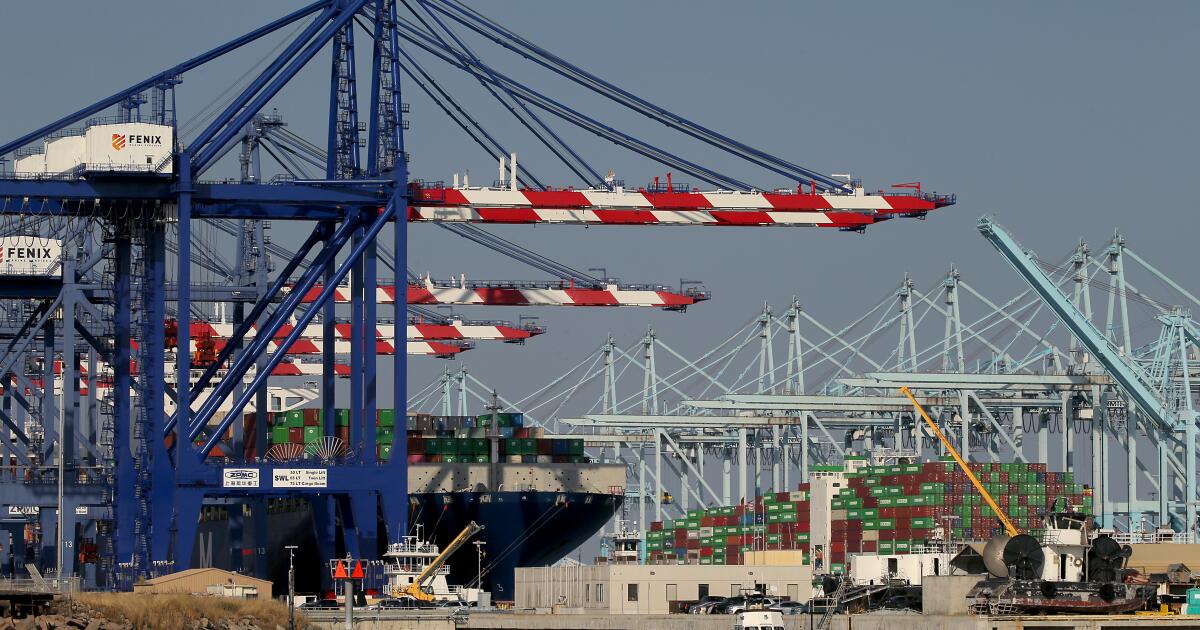
Only weeks ago, the dockworkers union was riding high as its members voted to approve a new six-year contract, ensuring peace at the ports of Los Angeles, Long Beach and 27 other West Coast harbors.

Now, the union has landed in bankruptcy protection as it figures out how to pay a hefty court judgment involving accusations of slowdowns and other labor actions during a 2011 dispute — the same kind of tactics employed during the recent contentious contract negotiation. Labor experts are concerned that a serious precedent is being set.

“We intend to use the Chapter 11 process to implement a plan that will bring this matter to resolution and ensure that our Union continues to do its important work for our members and the community,” said Willie Adams, president of the 40,000-member International Longshore and Warehouse Union, in a news release this week.

The union said it will continue to operate as usual but can no longer afford to defend itself in the lawsuit brought by a former shipping terminal operator at the Port of Portland, Ore.

The company, ICTSI Oregon Inc., which is based in the Philippines, could not be reached for comment. In a statement emailed to Reuters, the terminal operator said that the bankruptcy filing was the union’s “latest maneuver to avoid accountability.”

Ken Jacobs, a labor specialist and chair of the UC Berkeley Center for Labor Research and Education, said “people are very concerned about the precedent this is setting with an employer suing a union over labor activity. The severity of the penalty that was levied was also disconcerting.”

Nelson Lichtenstein, director of the UC Santa Barbara Center for the Study of Work, Labor and Democracy, said: “I think it means that when employers see a legal opening against a union they are going to run with it to bankrupt or weaken existing unions.”

The case involves a bitter labor dispute over just two jobs that pitted the ILWU against terminal operator ICTSI Oregon at a seaport of only minor significance in terms of the number of cargo containers moved.

The obscure feud began when ILWU leaders pushed ICTSI Oregon to give it two jobs previously represented by the electricians’ local after ICTSI signed a lease with the Portland port in 2011 to begin running the container yard. ICTSI, which accused the union of work slowdowns, said it could not reassign the jobs because the port controlled them. During the dispute, international shipping lines stopped sending cargo containers to Portland.

ICTSI paid the port $20 million to get out of its lease and sued the union, listing that amount and other losses as damages.

A federal jury found the union liable for unlawful labor practices and awarded the company $94 million, an amount subsequently reduced by a U.S. District Court judge to $19 million. But ICTSI rejected that amount, and a retrial was set for next year, leading to the bankruptcy filing, ILWU told its members.

“While we have attempted numerous times to resolve the decade-long litigation with ICTSI Oregon, Inc., at this point, the Union can no longer afford to defend against ICTSI’s scorched-earth litigation tactic,” Adams said.

Only weeks ago, the dockworkers union was riding high as its members voted to approve a new six-year contract, ensuring peace at the ports of Los Angeles, Long Beach and 27 other West Coast harbors.

Now, the union has landed in bankruptcy protection as it figures out how to pay a hefty court judgment involving accusations of slowdowns and other labor actions during a 2011 dispute — the same kind of tactics employed during the recent contentious contract negotiation. Labor experts are concerned that a serious precedent is being set.

“We intend to use the Chapter 11 process to implement a plan that will bring this matter to resolution and ensure that our Union continues to do its important work for our members and the community,” said Willie Adams, president of the 40,000-member International Longshore and Warehouse Union, in a news release this week.

The union said it will continue to operate as usual but can no longer afford to defend itself in the lawsuit brought by a former shipping terminal operator at the Port of Portland, Ore.

The company, ICTSI Oregon Inc., which is based in the Philippines, could not be reached for comment. In a statement emailed to Reuters, the terminal operator said that the bankruptcy filing was the union’s “latest maneuver to avoid accountability.”

Ken Jacobs, a labor specialist and chair of the UC Berkeley Center for Labor Research and Education, said “people are very concerned about the precedent this is setting with an employer suing a union over labor activity. The severity of the penalty that was levied was also disconcerting.”

Nelson Lichtenstein, director of the UC Santa Barbara Center for the Study of Work, Labor and Democracy, said: “I think it means that when employers see a legal opening against a union they are going to run with it to bankrupt or weaken existing unions.”

The case involves a bitter labor dispute over just two jobs that pitted the ILWU against terminal operator ICTSI Oregon at a seaport of only minor significance in terms of the number of cargo containers moved.

The obscure feud began when ILWU leaders pushed ICTSI Oregon to give it two jobs previously represented by the electricians’ local after ICTSI signed a lease with the Portland port in 2011 to begin running the container yard. ICTSI, which accused the union of work slowdowns, said it could not reassign the jobs because the port controlled them. During the dispute, international shipping lines stopped sending cargo containers to Portland.

ICTSI paid the port $20 million to get out of its lease and sued the union, listing that amount and other losses as damages.

A federal jury found the union liable for unlawful labor practices and awarded the company $94 million, an amount subsequently reduced by a U.S. District Court judge to $19 million. But ICTSI rejected that amount, and a retrial was set for next year, leading to the bankruptcy filing, ILWU told its members.

“While we have attempted numerous times to resolve the decade-long litigation with ICTSI Oregon, Inc., at this point, the Union can no longer afford to defend against ICTSI’s scorched-earth litigation tactic,” Adams said.

Only weeks ago, the dockworkers union was riding high as its members voted to approve a new six-year contract, ensuring peace at the ports of Los Angeles, Long Beach and 27 other West Coast harbors.

Now, the union has landed in bankruptcy protection as it figures out how to pay a hefty court judgment involving accusations of slowdowns and other labor actions during a 2011 dispute — the same kind of tactics employed during the recent contentious contract negotiation. Labor experts are concerned that a serious precedent is being set.

“We intend to use the Chapter 11 process to implement a plan that will bring this matter to resolution and ensure that our Union continues to do its important work for our members and the community,” said Willie Adams, president of the 40,000-member International Longshore and Warehouse Union, in a news release this week.

The union said it will continue to operate as usual but can no longer afford to defend itself in the lawsuit brought by a former shipping terminal operator at the Port of Portland, Ore.

The company, ICTSI Oregon Inc., which is based in the Philippines, could not be reached for comment. In a statement emailed to Reuters, the terminal operator said that the bankruptcy filing was the union’s “latest maneuver to avoid accountability.”

Ken Jacobs, a labor specialist and chair of the UC Berkeley Center for Labor Research and Education, said “people are very concerned about the precedent this is setting with an employer suing a union over labor activity. The severity of the penalty that was levied was also disconcerting.”

Nelson Lichtenstein, director of the UC Santa Barbara Center for the Study of Work, Labor and Democracy, said: “I think it means that when employers see a legal opening against a union they are going to run with it to bankrupt or weaken existing unions.”

The case involves a bitter labor dispute over just two jobs that pitted the ILWU against terminal operator ICTSI Oregon at a seaport of only minor significance in terms of the number of cargo containers moved.

The obscure feud began when ILWU leaders pushed ICTSI Oregon to give it two jobs previously represented by the electricians’ local after ICTSI signed a lease with the Portland port in 2011 to begin running the container yard. ICTSI, which accused the union of work slowdowns, said it could not reassign the jobs because the port controlled them. During the dispute, international shipping lines stopped sending cargo containers to Portland.

ICTSI paid the port $20 million to get out of its lease and sued the union, listing that amount and other losses as damages.

A federal jury found the union liable for unlawful labor practices and awarded the company $94 million, an amount subsequently reduced by a U.S. District Court judge to $19 million. But ICTSI rejected that amount, and a retrial was set for next year, leading to the bankruptcy filing, ILWU told its members.

“While we have attempted numerous times to resolve the decade-long litigation with ICTSI Oregon, Inc., at this point, the Union can no longer afford to defend against ICTSI’s scorched-earth litigation tactic,” Adams said.

Only weeks ago, the dockworkers union was riding high as its members voted to approve a new six-year contract, ensuring peace at the ports of Los Angeles, Long Beach and 27 other West Coast harbors.

Now, the union has landed in bankruptcy protection as it figures out how to pay a hefty court judgment involving accusations of slowdowns and other labor actions during a 2011 dispute — the same kind of tactics employed during the recent contentious contract negotiation. Labor experts are concerned that a serious precedent is being set.

“We intend to use the Chapter 11 process to implement a plan that will bring this matter to resolution and ensure that our Union continues to do its important work for our members and the community,” said Willie Adams, president of the 40,000-member International Longshore and Warehouse Union, in a news release this week.

The union said it will continue to operate as usual but can no longer afford to defend itself in the lawsuit brought by a former shipping terminal operator at the Port of Portland, Ore.

The company, ICTSI Oregon Inc., which is based in the Philippines, could not be reached for comment. In a statement emailed to Reuters, the terminal operator said that the bankruptcy filing was the union’s “latest maneuver to avoid accountability.”

Ken Jacobs, a labor specialist and chair of the UC Berkeley Center for Labor Research and Education, said “people are very concerned about the precedent this is setting with an employer suing a union over labor activity. The severity of the penalty that was levied was also disconcerting.”

Nelson Lichtenstein, director of the UC Santa Barbara Center for the Study of Work, Labor and Democracy, said: “I think it means that when employers see a legal opening against a union they are going to run with it to bankrupt or weaken existing unions.”

The case involves a bitter labor dispute over just two jobs that pitted the ILWU against terminal operator ICTSI Oregon at a seaport of only minor significance in terms of the number of cargo containers moved.

The obscure feud began when ILWU leaders pushed ICTSI Oregon to give it two jobs previously represented by the electricians’ local after ICTSI signed a lease with the Portland port in 2011 to begin running the container yard. ICTSI, which accused the union of work slowdowns, said it could not reassign the jobs because the port controlled them. During the dispute, international shipping lines stopped sending cargo containers to Portland.

ICTSI paid the port $20 million to get out of its lease and sued the union, listing that amount and other losses as damages.

A federal jury found the union liable for unlawful labor practices and awarded the company $94 million, an amount subsequently reduced by a U.S. District Court judge to $19 million. But ICTSI rejected that amount, and a retrial was set for next year, leading to the bankruptcy filing, ILWU told its members.

“While we have attempted numerous times to resolve the decade-long litigation with ICTSI Oregon, Inc., at this point, the Union can no longer afford to defend against ICTSI’s scorched-earth litigation tactic,” Adams said.


Only weeks ago, the dockworkers union was riding high as its members voted to approve a new six-year contract, ensuring peace at the ports of Los Angeles, Long Beach and 27 other West Coast harbors.

Now, the union has landed in bankruptcy protection as it figures out how to pay a hefty court judgment involving accusations of slowdowns and other labor actions during a 2011 dispute — the same kind of tactics employed during the recent contentious contract negotiation. Labor experts are concerned that a serious precedent is being set.

“We intend to use the Chapter 11 process to implement a plan that will bring this matter to resolution and ensure that our Union continues to do its important work for our members and the community,” said Willie Adams, president of the 40,000-member International Longshore and Warehouse Union, in a news release this week.

The union said it will continue to operate as usual but can no longer afford to defend itself in the lawsuit brought by a former shipping terminal operator at the Port of Portland, Ore.

The company, ICTSI Oregon Inc., which is based in the Philippines, could not be reached for comment. In a statement emailed to Reuters, the terminal operator said that the bankruptcy filing was the union’s “latest maneuver to avoid accountability.”

Ken Jacobs, a labor specialist and chair of the UC Berkeley Center for Labor Research and Education, said “people are very concerned about the precedent this is setting with an employer suing a union over labor activity. The severity of the penalty that was levied was also disconcerting.”

Nelson Lichtenstein, director of the UC Santa Barbara Center for the Study of Work, Labor and Democracy, said: “I think it means that when employers see a legal opening against a union they are going to run with it to bankrupt or weaken existing unions.”

The case involves a bitter labor dispute over just two jobs that pitted the ILWU against terminal operator ICTSI Oregon at a seaport of only minor significance in terms of the number of cargo containers moved.

The obscure feud began when ILWU leaders pushed ICTSI Oregon to give it two jobs previously represented by the electricians’ local after ICTSI signed a lease with the Portland port in 2011 to begin running the container yard. ICTSI, which accused the union of work slowdowns, said it could not reassign the jobs because the port controlled them. During the dispute, international shipping lines stopped sending cargo containers to Portland.

ICTSI paid the port $20 million to get out of its lease and sued the union, listing that amount and other losses as damages.

A federal jury found the union liable for unlawful labor practices and awarded the company $94 million, an amount subsequently reduced by a U.S. District Court judge to $19 million. But ICTSI rejected that amount, and a retrial was set for next year, leading to the bankruptcy filing, ILWU told its members.

“While we have attempted numerous times to resolve the decade-long litigation with ICTSI Oregon, Inc., at this point, the Union can no longer afford to defend against ICTSI’s scorched-earth litigation tactic,” Adams said.

Only weeks ago, the dockworkers union was riding high as its members voted to approve a new six-year contract, ensuring peace at the ports of Los Angeles, Long Beach and 27 other West Coast harbors.

Now, the union has landed in bankruptcy protection as it figures out how to pay a hefty court judgment involving accusations of slowdowns and other labor actions during a 2011 dispute — the same kind of tactics employed during the recent contentious contract negotiation. Labor experts are concerned that a serious precedent is being set.

“We intend to use the Chapter 11 process to implement a plan that will bring this matter to resolution and ensure that our Union continues to do its important work for our members and the community,” said Willie Adams, president of the 40,000-member International Longshore and Warehouse Union, in a news release this week.

The union said it will continue to operate as usual but can no longer afford to defend itself in the lawsuit brought by a former shipping terminal operator at the Port of Portland, Ore.

The company, ICTSI Oregon Inc., which is based in the Philippines, could not be reached for comment. In a statement emailed to Reuters, the terminal operator said that the bankruptcy filing was the union’s “latest maneuver to avoid accountability.”

Ken Jacobs, a labor specialist and chair of the UC Berkeley Center for Labor Research and Education, said “people are very concerned about the precedent this is setting with an employer suing a union over labor activity. The severity of the penalty that was levied was also disconcerting.”

Nelson Lichtenstein, director of the UC Santa Barbara Center for the Study of Work, Labor and Democracy, said: “I think it means that when employers see a legal opening against a union they are going to run with it to bankrupt or weaken existing unions.”

The case involves a bitter labor dispute over just two jobs that pitted the ILWU against terminal operator ICTSI Oregon at a seaport of only minor significance in terms of the number of cargo containers moved.

The obscure feud began when ILWU leaders pushed ICTSI Oregon to give it two jobs previously represented by the electricians’ local after ICTSI signed a lease with the Portland port in 2011 to begin running the container yard. ICTSI, which accused the union of work slowdowns, said it could not reassign the jobs because the port controlled them. During the dispute, international shipping lines stopped sending cargo containers to Portland.

ICTSI paid the port $20 million to get out of its lease and sued the union, listing that amount and other losses as damages.

A federal jury found the union liable for unlawful labor practices and awarded the company $94 million, an amount subsequently reduced by a U.S. District Court judge to $19 million. But ICTSI rejected that amount, and a retrial was set for next year, leading to the bankruptcy filing, ILWU told its members.

“While we have attempted numerous times to resolve the decade-long litigation with ICTSI Oregon, Inc., at this point, the Union can no longer afford to defend against ICTSI’s scorched-earth litigation tactic,” Adams said.

Only weeks ago, the dockworkers union was riding high as its members voted to approve a new six-year contract, ensuring peace at the ports of Los Angeles, Long Beach and 27 other West Coast harbors.

Now, the union has landed in bankruptcy protection as it figures out how to pay a hefty court judgment involving accusations of slowdowns and other labor actions during a 2011 dispute — the same kind of tactics employed during the recent contentious contract negotiation. Labor experts are concerned that a serious precedent is being set.

“We intend to use the Chapter 11 process to implement a plan that will bring this matter to resolution and ensure that our Union continues to do its important work for our members and the community,” said Willie Adams, president of the 40,000-member International Longshore and Warehouse Union, in a news release this week.

The union said it will continue to operate as usual but can no longer afford to defend itself in the lawsuit brought by a former shipping terminal operator at the Port of Portland, Ore.

The company, ICTSI Oregon Inc., which is based in the Philippines, could not be reached for comment. In a statement emailed to Reuters, the terminal operator said that the bankruptcy filing was the union’s “latest maneuver to avoid accountability.”

Ken Jacobs, a labor specialist and chair of the UC Berkeley Center for Labor Research and Education, said “people are very concerned about the precedent this is setting with an employer suing a union over labor activity. The severity of the penalty that was levied was also disconcerting.”

Nelson Lichtenstein, director of the UC Santa Barbara Center for the Study of Work, Labor and Democracy, said: “I think it means that when employers see a legal opening against a union they are going to run with it to bankrupt or weaken existing unions.”

The case involves a bitter labor dispute over just two jobs that pitted the ILWU against terminal operator ICTSI Oregon at a seaport of only minor significance in terms of the number of cargo containers moved.

The obscure feud began when ILWU leaders pushed ICTSI Oregon to give it two jobs previously represented by the electricians’ local after ICTSI signed a lease with the Portland port in 2011 to begin running the container yard. ICTSI, which accused the union of work slowdowns, said it could not reassign the jobs because the port controlled them. During the dispute, international shipping lines stopped sending cargo containers to Portland.

ICTSI paid the port $20 million to get out of its lease and sued the union, listing that amount and other losses as damages.

A federal jury found the union liable for unlawful labor practices and awarded the company $94 million, an amount subsequently reduced by a U.S. District Court judge to $19 million. But ICTSI rejected that amount, and a retrial was set for next year, leading to the bankruptcy filing, ILWU told its members.

“While we have attempted numerous times to resolve the decade-long litigation with ICTSI Oregon, Inc., at this point, the Union can no longer afford to defend against ICTSI’s scorched-earth litigation tactic,” Adams said.

Only weeks ago, the dockworkers union was riding high as its members voted to approve a new six-year contract, ensuring peace at the ports of Los Angeles, Long Beach and 27 other West Coast harbors.

Now, the union has landed in bankruptcy protection as it figures out how to pay a hefty court judgment involving accusations of slowdowns and other labor actions during a 2011 dispute — the same kind of tactics employed during the recent contentious contract negotiation. Labor experts are concerned that a serious precedent is being set.

“We intend to use the Chapter 11 process to implement a plan that will bring this matter to resolution and ensure that our Union continues to do its important work for our members and the community,” said Willie Adams, president of the 40,000-member International Longshore and Warehouse Union, in a news release this week.

The union said it will continue to operate as usual but can no longer afford to defend itself in the lawsuit brought by a former shipping terminal operator at the Port of Portland, Ore.

The company, ICTSI Oregon Inc., which is based in the Philippines, could not be reached for comment. In a statement emailed to Reuters, the terminal operator said that the bankruptcy filing was the union’s “latest maneuver to avoid accountability.”

Ken Jacobs, a labor specialist and chair of the UC Berkeley Center for Labor Research and Education, said “people are very concerned about the precedent this is setting with an employer suing a union over labor activity. The severity of the penalty that was levied was also disconcerting.”

Nelson Lichtenstein, director of the UC Santa Barbara Center for the Study of Work, Labor and Democracy, said: “I think it means that when employers see a legal opening against a union they are going to run with it to bankrupt or weaken existing unions.”

The case involves a bitter labor dispute over just two jobs that pitted the ILWU against terminal operator ICTSI Oregon at a seaport of only minor significance in terms of the number of cargo containers moved.

The obscure feud began when ILWU leaders pushed ICTSI Oregon to give it two jobs previously represented by the electricians’ local after ICTSI signed a lease with the Portland port in 2011 to begin running the container yard. ICTSI, which accused the union of work slowdowns, said it could not reassign the jobs because the port controlled them. During the dispute, international shipping lines stopped sending cargo containers to Portland.

ICTSI paid the port $20 million to get out of its lease and sued the union, listing that amount and other losses as damages.

A federal jury found the union liable for unlawful labor practices and awarded the company $94 million, an amount subsequently reduced by a U.S. District Court judge to $19 million. But ICTSI rejected that amount, and a retrial was set for next year, leading to the bankruptcy filing, ILWU told its members.

“While we have attempted numerous times to resolve the decade-long litigation with ICTSI Oregon, Inc., at this point, the Union can no longer afford to defend against ICTSI’s scorched-earth litigation tactic,” Adams said.

Only weeks ago, the dockworkers union was riding high as its members voted to approve a new six-year contract, ensuring peace at the ports of Los Angeles, Long Beach and 27 other West Coast harbors.

Now, the union has landed in bankruptcy protection as it figures out how to pay a hefty court judgment involving accusations of slowdowns and other labor actions during a 2011 dispute — the same kind of tactics employed during the recent contentious contract negotiation. Labor experts are concerned that a serious precedent is being set.

“We intend to use the Chapter 11 process to implement a plan that will bring this matter to resolution and ensure that our Union continues to do its important work for our members and the community,” said Willie Adams, president of the 40,000-member International Longshore and Warehouse Union, in a news release this week.

The union said it will continue to operate as usual but can no longer afford to defend itself in the lawsuit brought by a former shipping terminal operator at the Port of Portland, Ore.

The company, ICTSI Oregon Inc., which is based in the Philippines, could not be reached for comment. In a statement emailed to Reuters, the terminal operator said that the bankruptcy filing was the union’s “latest maneuver to avoid accountability.”

Ken Jacobs, a labor specialist and chair of the UC Berkeley Center for Labor Research and Education, said “people are very concerned about the precedent this is setting with an employer suing a union over labor activity. The severity of the penalty that was levied was also disconcerting.”

Nelson Lichtenstein, director of the UC Santa Barbara Center for the Study of Work, Labor and Democracy, said: “I think it means that when employers see a legal opening against a union they are going to run with it to bankrupt or weaken existing unions.”

The case involves a bitter labor dispute over just two jobs that pitted the ILWU against terminal operator ICTSI Oregon at a seaport of only minor significance in terms of the number of cargo containers moved.

The obscure feud began when ILWU leaders pushed ICTSI Oregon to give it two jobs previously represented by the electricians’ local after ICTSI signed a lease with the Portland port in 2011 to begin running the container yard. ICTSI, which accused the union of work slowdowns, said it could not reassign the jobs because the port controlled them. During the dispute, international shipping lines stopped sending cargo containers to Portland.

ICTSI paid the port $20 million to get out of its lease and sued the union, listing that amount and other losses as damages.

A federal jury found the union liable for unlawful labor practices and awarded the company $94 million, an amount subsequently reduced by a U.S. District Court judge to $19 million. But ICTSI rejected that amount, and a retrial was set for next year, leading to the bankruptcy filing, ILWU told its members.

“While we have attempted numerous times to resolve the decade-long litigation with ICTSI Oregon, Inc., at this point, the Union can no longer afford to defend against ICTSI’s scorched-earth litigation tactic,” Adams said.

Only weeks ago, the dockworkers union was riding high as its members voted to approve a new six-year contract, ensuring peace at the ports of Los Angeles, Long Beach and 27 other West Coast harbors.

Now, the union has landed in bankruptcy protection as it figures out how to pay a hefty court judgment involving accusations of slowdowns and other labor actions during a 2011 dispute — the same kind of tactics employed during the recent contentious contract negotiation. Labor experts are concerned that a serious precedent is being set.

“We intend to use the Chapter 11 process to implement a plan that will bring this matter to resolution and ensure that our Union continues to do its important work for our members and the community,” said Willie Adams, president of the 40,000-member International Longshore and Warehouse Union, in a news release this week.

The union said it will continue to operate as usual but can no longer afford to defend itself in the lawsuit brought by a former shipping terminal operator at the Port of Portland, Ore.

The company, ICTSI Oregon Inc., which is based in the Philippines, could not be reached for comment. In a statement emailed to Reuters, the terminal operator said that the bankruptcy filing was the union’s “latest maneuver to avoid accountability.”

Ken Jacobs, a labor specialist and chair of the UC Berkeley Center for Labor Research and Education, said “people are very concerned about the precedent this is setting with an employer suing a union over labor activity. The severity of the penalty that was levied was also disconcerting.”

Nelson Lichtenstein, director of the UC Santa Barbara Center for the Study of Work, Labor and Democracy, said: “I think it means that when employers see a legal opening against a union they are going to run with it to bankrupt or weaken existing unions.”

The case involves a bitter labor dispute over just two jobs that pitted the ILWU against terminal operator ICTSI Oregon at a seaport of only minor significance in terms of the number of cargo containers moved.

The obscure feud began when ILWU leaders pushed ICTSI Oregon to give it two jobs previously represented by the electricians’ local after ICTSI signed a lease with the Portland port in 2011 to begin running the container yard. ICTSI, which accused the union of work slowdowns, said it could not reassign the jobs because the port controlled them. During the dispute, international shipping lines stopped sending cargo containers to Portland.

ICTSI paid the port $20 million to get out of its lease and sued the union, listing that amount and other losses as damages.

A federal jury found the union liable for unlawful labor practices and awarded the company $94 million, an amount subsequently reduced by a U.S. District Court judge to $19 million. But ICTSI rejected that amount, and a retrial was set for next year, leading to the bankruptcy filing, ILWU told its members.

“While we have attempted numerous times to resolve the decade-long litigation with ICTSI Oregon, Inc., at this point, the Union can no longer afford to defend against ICTSI’s scorched-earth litigation tactic,” Adams said.

Only weeks ago, the dockworkers union was riding high as its members voted to approve a new six-year contract, ensuring peace at the ports of Los Angeles, Long Beach and 27 other West Coast harbors.

Now, the union has landed in bankruptcy protection as it figures out how to pay a hefty court judgment involving accusations of slowdowns and other labor actions during a 2011 dispute — the same kind of tactics employed during the recent contentious contract negotiation. Labor experts are concerned that a serious precedent is being set.

“We intend to use the Chapter 11 process to implement a plan that will bring this matter to resolution and ensure that our Union continues to do its important work for our members and the community,” said Willie Adams, president of the 40,000-member International Longshore and Warehouse Union, in a news release this week.

The union said it will continue to operate as usual but can no longer afford to defend itself in the lawsuit brought by a former shipping terminal operator at the Port of Portland, Ore.

The company, ICTSI Oregon Inc., which is based in the Philippines, could not be reached for comment. In a statement emailed to Reuters, the terminal operator said that the bankruptcy filing was the union’s “latest maneuver to avoid accountability.”

Ken Jacobs, a labor specialist and chair of the UC Berkeley Center for Labor Research and Education, said “people are very concerned about the precedent this is setting with an employer suing a union over labor activity. The severity of the penalty that was levied was also disconcerting.”

Nelson Lichtenstein, director of the UC Santa Barbara Center for the Study of Work, Labor and Democracy, said: “I think it means that when employers see a legal opening against a union they are going to run with it to bankrupt or weaken existing unions.”

The case involves a bitter labor dispute over just two jobs that pitted the ILWU against terminal operator ICTSI Oregon at a seaport of only minor significance in terms of the number of cargo containers moved.

The obscure feud began when ILWU leaders pushed ICTSI Oregon to give it two jobs previously represented by the electricians’ local after ICTSI signed a lease with the Portland port in 2011 to begin running the container yard. ICTSI, which accused the union of work slowdowns, said it could not reassign the jobs because the port controlled them. During the dispute, international shipping lines stopped sending cargo containers to Portland.

ICTSI paid the port $20 million to get out of its lease and sued the union, listing that amount and other losses as damages.

A federal jury found the union liable for unlawful labor practices and awarded the company $94 million, an amount subsequently reduced by a U.S. District Court judge to $19 million. But ICTSI rejected that amount, and a retrial was set for next year, leading to the bankruptcy filing, ILWU told its members.

“While we have attempted numerous times to resolve the decade-long litigation with ICTSI Oregon, Inc., at this point, the Union can no longer afford to defend against ICTSI’s scorched-earth litigation tactic,” Adams said.

Only weeks ago, the dockworkers union was riding high as its members voted to approve a new six-year contract, ensuring peace at the ports of Los Angeles, Long Beach and 27 other West Coast harbors.

Now, the union has landed in bankruptcy protection as it figures out how to pay a hefty court judgment involving accusations of slowdowns and other labor actions during a 2011 dispute — the same kind of tactics employed during the recent contentious contract negotiation. Labor experts are concerned that a serious precedent is being set.

“We intend to use the Chapter 11 process to implement a plan that will bring this matter to resolution and ensure that our Union continues to do its important work for our members and the community,” said Willie Adams, president of the 40,000-member International Longshore and Warehouse Union, in a news release this week.

The union said it will continue to operate as usual but can no longer afford to defend itself in the lawsuit brought by a former shipping terminal operator at the Port of Portland, Ore.

The company, ICTSI Oregon Inc., which is based in the Philippines, could not be reached for comment. In a statement emailed to Reuters, the terminal operator said that the bankruptcy filing was the union’s “latest maneuver to avoid accountability.”

Ken Jacobs, a labor specialist and chair of the UC Berkeley Center for Labor Research and Education, said “people are very concerned about the precedent this is setting with an employer suing a union over labor activity. The severity of the penalty that was levied was also disconcerting.”

Nelson Lichtenstein, director of the UC Santa Barbara Center for the Study of Work, Labor and Democracy, said: “I think it means that when employers see a legal opening against a union they are going to run with it to bankrupt or weaken existing unions.”

The case involves a bitter labor dispute over just two jobs that pitted the ILWU against terminal operator ICTSI Oregon at a seaport of only minor significance in terms of the number of cargo containers moved.

The obscure feud began when ILWU leaders pushed ICTSI Oregon to give it two jobs previously represented by the electricians’ local after ICTSI signed a lease with the Portland port in 2011 to begin running the container yard. ICTSI, which accused the union of work slowdowns, said it could not reassign the jobs because the port controlled them. During the dispute, international shipping lines stopped sending cargo containers to Portland.

ICTSI paid the port $20 million to get out of its lease and sued the union, listing that amount and other losses as damages.

A federal jury found the union liable for unlawful labor practices and awarded the company $94 million, an amount subsequently reduced by a U.S. District Court judge to $19 million. But ICTSI rejected that amount, and a retrial was set for next year, leading to the bankruptcy filing, ILWU told its members.

“While we have attempted numerous times to resolve the decade-long litigation with ICTSI Oregon, Inc., at this point, the Union can no longer afford to defend against ICTSI’s scorched-earth litigation tactic,” Adams said.

Only weeks ago, the dockworkers union was riding high as its members voted to approve a new six-year contract, ensuring peace at the ports of Los Angeles, Long Beach and 27 other West Coast harbors.

Now, the union has landed in bankruptcy protection as it figures out how to pay a hefty court judgment involving accusations of slowdowns and other labor actions during a 2011 dispute — the same kind of tactics employed during the recent contentious contract negotiation. Labor experts are concerned that a serious precedent is being set.

“We intend to use the Chapter 11 process to implement a plan that will bring this matter to resolution and ensure that our Union continues to do its important work for our members and the community,” said Willie Adams, president of the 40,000-member International Longshore and Warehouse Union, in a news release this week.

The union said it will continue to operate as usual but can no longer afford to defend itself in the lawsuit brought by a former shipping terminal operator at the Port of Portland, Ore.

The company, ICTSI Oregon Inc., which is based in the Philippines, could not be reached for comment. In a statement emailed to Reuters, the terminal operator said that the bankruptcy filing was the union’s “latest maneuver to avoid accountability.”

Ken Jacobs, a labor specialist and chair of the UC Berkeley Center for Labor Research and Education, said “people are very concerned about the precedent this is setting with an employer suing a union over labor activity. The severity of the penalty that was levied was also disconcerting.”

Nelson Lichtenstein, director of the UC Santa Barbara Center for the Study of Work, Labor and Democracy, said: “I think it means that when employers see a legal opening against a union they are going to run with it to bankrupt or weaken existing unions.”

The case involves a bitter labor dispute over just two jobs that pitted the ILWU against terminal operator ICTSI Oregon at a seaport of only minor significance in terms of the number of cargo containers moved.

The obscure feud began when ILWU leaders pushed ICTSI Oregon to give it two jobs previously represented by the electricians’ local after ICTSI signed a lease with the Portland port in 2011 to begin running the container yard. ICTSI, which accused the union of work slowdowns, said it could not reassign the jobs because the port controlled them. During the dispute, international shipping lines stopped sending cargo containers to Portland.

ICTSI paid the port $20 million to get out of its lease and sued the union, listing that amount and other losses as damages.

A federal jury found the union liable for unlawful labor practices and awarded the company $94 million, an amount subsequently reduced by a U.S. District Court judge to $19 million. But ICTSI rejected that amount, and a retrial was set for next year, leading to the bankruptcy filing, ILWU told its members.

“While we have attempted numerous times to resolve the decade-long litigation with ICTSI Oregon, Inc., at this point, the Union can no longer afford to defend against ICTSI’s scorched-earth litigation tactic,” Adams said.

Only weeks ago, the dockworkers union was riding high as its members voted to approve a new six-year contract, ensuring peace at the ports of Los Angeles, Long Beach and 27 other West Coast harbors.

Now, the union has landed in bankruptcy protection as it figures out how to pay a hefty court judgment involving accusations of slowdowns and other labor actions during a 2011 dispute — the same kind of tactics employed during the recent contentious contract negotiation. Labor experts are concerned that a serious precedent is being set.

“We intend to use the Chapter 11 process to implement a plan that will bring this matter to resolution and ensure that our Union continues to do its important work for our members and the community,” said Willie Adams, president of the 40,000-member International Longshore and Warehouse Union, in a news release this week.

The union said it will continue to operate as usual but can no longer afford to defend itself in the lawsuit brought by a former shipping terminal operator at the Port of Portland, Ore.

The company, ICTSI Oregon Inc., which is based in the Philippines, could not be reached for comment. In a statement emailed to Reuters, the terminal operator said that the bankruptcy filing was the union’s “latest maneuver to avoid accountability.”

Ken Jacobs, a labor specialist and chair of the UC Berkeley Center for Labor Research and Education, said “people are very concerned about the precedent this is setting with an employer suing a union over labor activity. The severity of the penalty that was levied was also disconcerting.”

Nelson Lichtenstein, director of the UC Santa Barbara Center for the Study of Work, Labor and Democracy, said: “I think it means that when employers see a legal opening against a union they are going to run with it to bankrupt or weaken existing unions.”

The case involves a bitter labor dispute over just two jobs that pitted the ILWU against terminal operator ICTSI Oregon at a seaport of only minor significance in terms of the number of cargo containers moved.

The obscure feud began when ILWU leaders pushed ICTSI Oregon to give it two jobs previously represented by the electricians’ local after ICTSI signed a lease with the Portland port in 2011 to begin running the container yard. ICTSI, which accused the union of work slowdowns, said it could not reassign the jobs because the port controlled them. During the dispute, international shipping lines stopped sending cargo containers to Portland.

ICTSI paid the port $20 million to get out of its lease and sued the union, listing that amount and other losses as damages.

A federal jury found the union liable for unlawful labor practices and awarded the company $94 million, an amount subsequently reduced by a U.S. District Court judge to $19 million. But ICTSI rejected that amount, and a retrial was set for next year, leading to the bankruptcy filing, ILWU told its members.

“While we have attempted numerous times to resolve the decade-long litigation with ICTSI Oregon, Inc., at this point, the Union can no longer afford to defend against ICTSI’s scorched-earth litigation tactic,” Adams said.

Only weeks ago, the dockworkers union was riding high as its members voted to approve a new six-year contract, ensuring peace at the ports of Los Angeles, Long Beach and 27 other West Coast harbors.

Now, the union has landed in bankruptcy protection as it figures out how to pay a hefty court judgment involving accusations of slowdowns and other labor actions during a 2011 dispute — the same kind of tactics employed during the recent contentious contract negotiation. Labor experts are concerned that a serious precedent is being set.

“We intend to use the Chapter 11 process to implement a plan that will bring this matter to resolution and ensure that our Union continues to do its important work for our members and the community,” said Willie Adams, president of the 40,000-member International Longshore and Warehouse Union, in a news release this week.

The union said it will continue to operate as usual but can no longer afford to defend itself in the lawsuit brought by a former shipping terminal operator at the Port of Portland, Ore.

The company, ICTSI Oregon Inc., which is based in the Philippines, could not be reached for comment. In a statement emailed to Reuters, the terminal operator said that the bankruptcy filing was the union’s “latest maneuver to avoid accountability.”

Ken Jacobs, a labor specialist and chair of the UC Berkeley Center for Labor Research and Education, said “people are very concerned about the precedent this is setting with an employer suing a union over labor activity. The severity of the penalty that was levied was also disconcerting.”

Nelson Lichtenstein, director of the UC Santa Barbara Center for the Study of Work, Labor and Democracy, said: “I think it means that when employers see a legal opening against a union they are going to run with it to bankrupt or weaken existing unions.”

The case involves a bitter labor dispute over just two jobs that pitted the ILWU against terminal operator ICTSI Oregon at a seaport of only minor significance in terms of the number of cargo containers moved.

The obscure feud began when ILWU leaders pushed ICTSI Oregon to give it two jobs previously represented by the electricians’ local after ICTSI signed a lease with the Portland port in 2011 to begin running the container yard. ICTSI, which accused the union of work slowdowns, said it could not reassign the jobs because the port controlled them. During the dispute, international shipping lines stopped sending cargo containers to Portland.

ICTSI paid the port $20 million to get out of its lease and sued the union, listing that amount and other losses as damages.

A federal jury found the union liable for unlawful labor practices and awarded the company $94 million, an amount subsequently reduced by a U.S. District Court judge to $19 million. But ICTSI rejected that amount, and a retrial was set for next year, leading to the bankruptcy filing, ILWU told its members.

“While we have attempted numerous times to resolve the decade-long litigation with ICTSI Oregon, Inc., at this point, the Union can no longer afford to defend against ICTSI’s scorched-earth litigation tactic,” Adams said.

Only weeks ago, the dockworkers union was riding high as its members voted to approve a new six-year contract, ensuring peace at the ports of Los Angeles, Long Beach and 27 other West Coast harbors.

Now, the union has landed in bankruptcy protection as it figures out how to pay a hefty court judgment involving accusations of slowdowns and other labor actions during a 2011 dispute — the same kind of tactics employed during the recent contentious contract negotiation. Labor experts are concerned that a serious precedent is being set.

“We intend to use the Chapter 11 process to implement a plan that will bring this matter to resolution and ensure that our Union continues to do its important work for our members and the community,” said Willie Adams, president of the 40,000-member International Longshore and Warehouse Union, in a news release this week.

The union said it will continue to operate as usual but can no longer afford to defend itself in the lawsuit brought by a former shipping terminal operator at the Port of Portland, Ore.

The company, ICTSI Oregon Inc., which is based in the Philippines, could not be reached for comment. In a statement emailed to Reuters, the terminal operator said that the bankruptcy filing was the union’s “latest maneuver to avoid accountability.”

Ken Jacobs, a labor specialist and chair of the UC Berkeley Center for Labor Research and Education, said “people are very concerned about the precedent this is setting with an employer suing a union over labor activity. The severity of the penalty that was levied was also disconcerting.”

Nelson Lichtenstein, director of the UC Santa Barbara Center for the Study of Work, Labor and Democracy, said: “I think it means that when employers see a legal opening against a union they are going to run with it to bankrupt or weaken existing unions.”

The case involves a bitter labor dispute over just two jobs that pitted the ILWU against terminal operator ICTSI Oregon at a seaport of only minor significance in terms of the number of cargo containers moved.

The obscure feud began when ILWU leaders pushed ICTSI Oregon to give it two jobs previously represented by the electricians’ local after ICTSI signed a lease with the Portland port in 2011 to begin running the container yard. ICTSI, which accused the union of work slowdowns, said it could not reassign the jobs because the port controlled them. During the dispute, international shipping lines stopped sending cargo containers to Portland.

ICTSI paid the port $20 million to get out of its lease and sued the union, listing that amount and other losses as damages.

A federal jury found the union liable for unlawful labor practices and awarded the company $94 million, an amount subsequently reduced by a U.S. District Court judge to $19 million. But ICTSI rejected that amount, and a retrial was set for next year, leading to the bankruptcy filing, ILWU told its members.

“While we have attempted numerous times to resolve the decade-long litigation with ICTSI Oregon, Inc., at this point, the Union can no longer afford to defend against ICTSI’s scorched-earth litigation tactic,” Adams said.

Previous Post

2 Indian Trainee Pilots Dead In Canada Plane Crash: Report

Next Post

Opinion: Why the Kaiser Permanente strike may signal more healthcare labor unrest to come

Leave a Reply Cancel reply

Your email address will not be published. Required fields are marked *

BROWSE BY CATEGORIES

  • Business
  • Culture
  • Entertainment
  • Health
  • Politics
  • Technology
  • Trending
  • Uncategorized
  • World
Binghamton Herald

© 2024 Binghamton Herald or its affiliated companies.

Navigate Site

  • About
  • Advertise
  • Terms & Conditions
  • Privacy Policy
  • Disclaimer
  • Contact

Follow Us

No Result
View All Result
  • Home
  • World
  • Politics
  • Business
  • Technology
  • Culture
  • Health
  • Entertainment
  • Trending

© 2024 Binghamton Herald or its affiliated companies.

Welcome Back!

Login to your account below

Forgotten Password?

Retrieve your password

Please enter your username or email address to reset your password.

Log In