

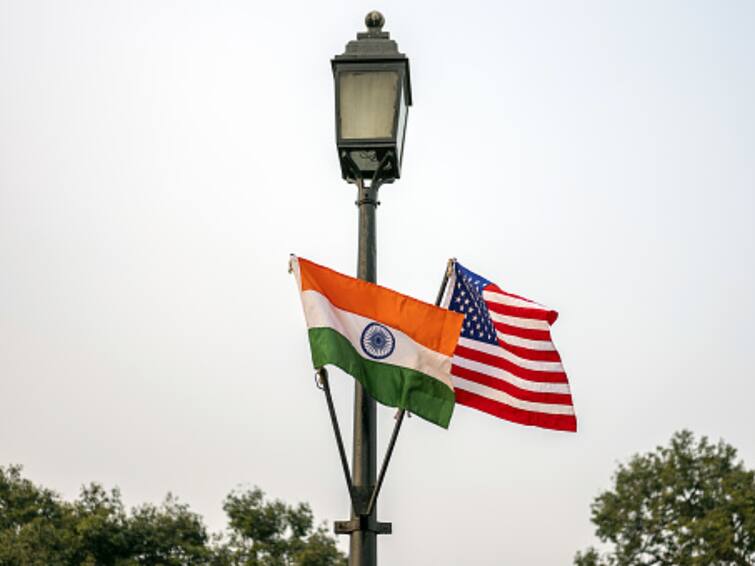

The United States and the Indian government are in active talks for producing military systems in areas related to ISR (Intelligence, Surveillance and Reconnaissance) and ground-based conventional warfare, a senior Pentagon official said. Efforts are also on to establish a reciprocal defence procurement agreement with India, Siddharth Iyer, Director for South Asia Policy, Office of the Secretary of Defence said on Tuesday at an event organised by the Hudson Institute in Washington.
“We are in active talks with the Indian government to look at producing military systems in areas related to ISR (Intelligence, Surveillance and Reconnaissance), and then of course ground-based conventional warfare. And we’ll have more to say on that as they become ripe,” he said.
The Indo-US defence ties have been on an upswing in the last few years.
Indian-American Iyer said that talks are ongoing between the two countries to finalise the security of supply arrangement, which would “create the conditions for US and Indian defence industries to increase and streamline market access.” He further added that this relationship is one of the Pentagon’s top priorities.
“Our belief is that getting the US-India relationship right is not just necessary, it’s essential to achieving our strategy in the Indo-Pacific. There’s a broad and deep commitment to making that happen,” he said.
“I think one of the ways in which we think about the road map is really a manifestation of (Defence) Secretary (Loyd) Austin’s commitment to accelerating India’s military modernisation, and for him, putting the department on the hook to find targeted opportunities to propose to advance India’s indigenous defence production capabilities,” he said.
The “road map” identifies the priority military area where their industries should focus their collaborative efforts. This will identify some concrete mechanism by which they can work together to integrate the supply chains. It also establishes the oversight mechanism to ensure that bureaucratic logjams and regulatory barriers don’t impede progress.
GE-HAL Engine Co-Production Deal
The Pentagon official mentioned the GE engine deal and said that “it is a testament to the significance of the deal”.
In June, American defence major General Electric (GE) Aerospace signed an agreement with Hindustan Aeronautics Limited (HAL) to co-produce F-414 fighter jet engine engines in India, during Prime Minister Narendra Modi’s state visit to the US. The US Congress cleared the deal in August. The deal provides India access to jet engine technology that is some of the most sensitive military technology available to the US and what many consider to be a crown jewel, Iyer said.
“Certainly, it’s an arrangement between private companies but the governments had to work extremely closely with each other, with industry and we had to take a really holistic view about how we think about technology security and what it means to advance our strategic interest and balance tech security and US national security requirements to make this come about,” he said.
Iyer further said that more progress is expected on a number of different fronts.

The United States and the Indian government are in active talks for producing military systems in areas related to ISR (Intelligence, Surveillance and Reconnaissance) and ground-based conventional warfare, a senior Pentagon official said. Efforts are also on to establish a reciprocal defence procurement agreement with India, Siddharth Iyer, Director for South Asia Policy, Office of the Secretary of Defence said on Tuesday at an event organised by the Hudson Institute in Washington.
“We are in active talks with the Indian government to look at producing military systems in areas related to ISR (Intelligence, Surveillance and Reconnaissance), and then of course ground-based conventional warfare. And we’ll have more to say on that as they become ripe,” he said.
The Indo-US defence ties have been on an upswing in the last few years.
Indian-American Iyer said that talks are ongoing between the two countries to finalise the security of supply arrangement, which would “create the conditions for US and Indian defence industries to increase and streamline market access.” He further added that this relationship is one of the Pentagon’s top priorities.
“Our belief is that getting the US-India relationship right is not just necessary, it’s essential to achieving our strategy in the Indo-Pacific. There’s a broad and deep commitment to making that happen,” he said.
“I think one of the ways in which we think about the road map is really a manifestation of (Defence) Secretary (Loyd) Austin’s commitment to accelerating India’s military modernisation, and for him, putting the department on the hook to find targeted opportunities to propose to advance India’s indigenous defence production capabilities,” he said.
The “road map” identifies the priority military area where their industries should focus their collaborative efforts. This will identify some concrete mechanism by which they can work together to integrate the supply chains. It also establishes the oversight mechanism to ensure that bureaucratic logjams and regulatory barriers don’t impede progress.
GE-HAL Engine Co-Production Deal
The Pentagon official mentioned the GE engine deal and said that “it is a testament to the significance of the deal”.
In June, American defence major General Electric (GE) Aerospace signed an agreement with Hindustan Aeronautics Limited (HAL) to co-produce F-414 fighter jet engine engines in India, during Prime Minister Narendra Modi’s state visit to the US. The US Congress cleared the deal in August. The deal provides India access to jet engine technology that is some of the most sensitive military technology available to the US and what many consider to be a crown jewel, Iyer said.
“Certainly, it’s an arrangement between private companies but the governments had to work extremely closely with each other, with industry and we had to take a really holistic view about how we think about technology security and what it means to advance our strategic interest and balance tech security and US national security requirements to make this come about,” he said.
Iyer further said that more progress is expected on a number of different fronts.

The United States and the Indian government are in active talks for producing military systems in areas related to ISR (Intelligence, Surveillance and Reconnaissance) and ground-based conventional warfare, a senior Pentagon official said. Efforts are also on to establish a reciprocal defence procurement agreement with India, Siddharth Iyer, Director for South Asia Policy, Office of the Secretary of Defence said on Tuesday at an event organised by the Hudson Institute in Washington.
“We are in active talks with the Indian government to look at producing military systems in areas related to ISR (Intelligence, Surveillance and Reconnaissance), and then of course ground-based conventional warfare. And we’ll have more to say on that as they become ripe,” he said.
The Indo-US defence ties have been on an upswing in the last few years.
Indian-American Iyer said that talks are ongoing between the two countries to finalise the security of supply arrangement, which would “create the conditions for US and Indian defence industries to increase and streamline market access.” He further added that this relationship is one of the Pentagon’s top priorities.
“Our belief is that getting the US-India relationship right is not just necessary, it’s essential to achieving our strategy in the Indo-Pacific. There’s a broad and deep commitment to making that happen,” he said.
“I think one of the ways in which we think about the road map is really a manifestation of (Defence) Secretary (Loyd) Austin’s commitment to accelerating India’s military modernisation, and for him, putting the department on the hook to find targeted opportunities to propose to advance India’s indigenous defence production capabilities,” he said.
The “road map” identifies the priority military area where their industries should focus their collaborative efforts. This will identify some concrete mechanism by which they can work together to integrate the supply chains. It also establishes the oversight mechanism to ensure that bureaucratic logjams and regulatory barriers don’t impede progress.
GE-HAL Engine Co-Production Deal
The Pentagon official mentioned the GE engine deal and said that “it is a testament to the significance of the deal”.
In June, American defence major General Electric (GE) Aerospace signed an agreement with Hindustan Aeronautics Limited (HAL) to co-produce F-414 fighter jet engine engines in India, during Prime Minister Narendra Modi’s state visit to the US. The US Congress cleared the deal in August. The deal provides India access to jet engine technology that is some of the most sensitive military technology available to the US and what many consider to be a crown jewel, Iyer said.
“Certainly, it’s an arrangement between private companies but the governments had to work extremely closely with each other, with industry and we had to take a really holistic view about how we think about technology security and what it means to advance our strategic interest and balance tech security and US national security requirements to make this come about,” he said.
Iyer further said that more progress is expected on a number of different fronts.
The United States and the Indian government are in active talks for producing military systems in areas related to ISR (Intelligence, Surveillance and Reconnaissance) and ground-based conventional warfare, a senior Pentagon official said. Efforts are also on to establish a reciprocal defence procurement agreement with India, Siddharth Iyer, Director for South Asia Policy, Office of the Secretary of Defence said on Tuesday at an event organised by the Hudson Institute in Washington.
“We are in active talks with the Indian government to look at producing military systems in areas related to ISR (Intelligence, Surveillance and Reconnaissance), and then of course ground-based conventional warfare. And we’ll have more to say on that as they become ripe,” he said.
The Indo-US defence ties have been on an upswing in the last few years.
Indian-American Iyer said that talks are ongoing between the two countries to finalise the security of supply arrangement, which would “create the conditions for US and Indian defence industries to increase and streamline market access.” He further added that this relationship is one of the Pentagon’s top priorities.
“Our belief is that getting the US-India relationship right is not just necessary, it’s essential to achieving our strategy in the Indo-Pacific. There’s a broad and deep commitment to making that happen,” he said.
“I think one of the ways in which we think about the road map is really a manifestation of (Defence) Secretary (Loyd) Austin’s commitment to accelerating India’s military modernisation, and for him, putting the department on the hook to find targeted opportunities to propose to advance India’s indigenous defence production capabilities,” he said.
The “road map” identifies the priority military area where their industries should focus their collaborative efforts. This will identify some concrete mechanism by which they can work together to integrate the supply chains. It also establishes the oversight mechanism to ensure that bureaucratic logjams and regulatory barriers don’t impede progress.
GE-HAL Engine Co-Production Deal
The Pentagon official mentioned the GE engine deal and said that “it is a testament to the significance of the deal”.
In June, American defence major General Electric (GE) Aerospace signed an agreement with Hindustan Aeronautics Limited (HAL) to co-produce F-414 fighter jet engine engines in India, during Prime Minister Narendra Modi’s state visit to the US. The US Congress cleared the deal in August. The deal provides India access to jet engine technology that is some of the most sensitive military technology available to the US and what many consider to be a crown jewel, Iyer said.
“Certainly, it’s an arrangement between private companies but the governments had to work extremely closely with each other, with industry and we had to take a really holistic view about how we think about technology security and what it means to advance our strategic interest and balance tech security and US national security requirements to make this come about,” he said.
Iyer further said that more progress is expected on a number of different fronts.

The United States and the Indian government are in active talks for producing military systems in areas related to ISR (Intelligence, Surveillance and Reconnaissance) and ground-based conventional warfare, a senior Pentagon official said. Efforts are also on to establish a reciprocal defence procurement agreement with India, Siddharth Iyer, Director for South Asia Policy, Office of the Secretary of Defence said on Tuesday at an event organised by the Hudson Institute in Washington.
“We are in active talks with the Indian government to look at producing military systems in areas related to ISR (Intelligence, Surveillance and Reconnaissance), and then of course ground-based conventional warfare. And we’ll have more to say on that as they become ripe,” he said.
The Indo-US defence ties have been on an upswing in the last few years.
Indian-American Iyer said that talks are ongoing between the two countries to finalise the security of supply arrangement, which would “create the conditions for US and Indian defence industries to increase and streamline market access.” He further added that this relationship is one of the Pentagon’s top priorities.
“Our belief is that getting the US-India relationship right is not just necessary, it’s essential to achieving our strategy in the Indo-Pacific. There’s a broad and deep commitment to making that happen,” he said.
“I think one of the ways in which we think about the road map is really a manifestation of (Defence) Secretary (Loyd) Austin’s commitment to accelerating India’s military modernisation, and for him, putting the department on the hook to find targeted opportunities to propose to advance India’s indigenous defence production capabilities,” he said.
The “road map” identifies the priority military area where their industries should focus their collaborative efforts. This will identify some concrete mechanism by which they can work together to integrate the supply chains. It also establishes the oversight mechanism to ensure that bureaucratic logjams and regulatory barriers don’t impede progress.
GE-HAL Engine Co-Production Deal
The Pentagon official mentioned the GE engine deal and said that “it is a testament to the significance of the deal”.
In June, American defence major General Electric (GE) Aerospace signed an agreement with Hindustan Aeronautics Limited (HAL) to co-produce F-414 fighter jet engine engines in India, during Prime Minister Narendra Modi’s state visit to the US. The US Congress cleared the deal in August. The deal provides India access to jet engine technology that is some of the most sensitive military technology available to the US and what many consider to be a crown jewel, Iyer said.
“Certainly, it’s an arrangement between private companies but the governments had to work extremely closely with each other, with industry and we had to take a really holistic view about how we think about technology security and what it means to advance our strategic interest and balance tech security and US national security requirements to make this come about,” he said.
Iyer further said that more progress is expected on a number of different fronts.
The United States and the Indian government are in active talks for producing military systems in areas related to ISR (Intelligence, Surveillance and Reconnaissance) and ground-based conventional warfare, a senior Pentagon official said. Efforts are also on to establish a reciprocal defence procurement agreement with India, Siddharth Iyer, Director for South Asia Policy, Office of the Secretary of Defence said on Tuesday at an event organised by the Hudson Institute in Washington.
“We are in active talks with the Indian government to look at producing military systems in areas related to ISR (Intelligence, Surveillance and Reconnaissance), and then of course ground-based conventional warfare. And we’ll have more to say on that as they become ripe,” he said.
The Indo-US defence ties have been on an upswing in the last few years.
Indian-American Iyer said that talks are ongoing between the two countries to finalise the security of supply arrangement, which would “create the conditions for US and Indian defence industries to increase and streamline market access.” He further added that this relationship is one of the Pentagon’s top priorities.
“Our belief is that getting the US-India relationship right is not just necessary, it’s essential to achieving our strategy in the Indo-Pacific. There’s a broad and deep commitment to making that happen,” he said.
“I think one of the ways in which we think about the road map is really a manifestation of (Defence) Secretary (Loyd) Austin’s commitment to accelerating India’s military modernisation, and for him, putting the department on the hook to find targeted opportunities to propose to advance India’s indigenous defence production capabilities,” he said.
The “road map” identifies the priority military area where their industries should focus their collaborative efforts. This will identify some concrete mechanism by which they can work together to integrate the supply chains. It also establishes the oversight mechanism to ensure that bureaucratic logjams and regulatory barriers don’t impede progress.
GE-HAL Engine Co-Production Deal
The Pentagon official mentioned the GE engine deal and said that “it is a testament to the significance of the deal”.
In June, American defence major General Electric (GE) Aerospace signed an agreement with Hindustan Aeronautics Limited (HAL) to co-produce F-414 fighter jet engine engines in India, during Prime Minister Narendra Modi’s state visit to the US. The US Congress cleared the deal in August. The deal provides India access to jet engine technology that is some of the most sensitive military technology available to the US and what many consider to be a crown jewel, Iyer said.
“Certainly, it’s an arrangement between private companies but the governments had to work extremely closely with each other, with industry and we had to take a really holistic view about how we think about technology security and what it means to advance our strategic interest and balance tech security and US national security requirements to make this come about,” he said.
Iyer further said that more progress is expected on a number of different fronts.
The United States and the Indian government are in active talks for producing military systems in areas related to ISR (Intelligence, Surveillance and Reconnaissance) and ground-based conventional warfare, a senior Pentagon official said. Efforts are also on to establish a reciprocal defence procurement agreement with India, Siddharth Iyer, Director for South Asia Policy, Office of the Secretary of Defence said on Tuesday at an event organised by the Hudson Institute in Washington.
“We are in active talks with the Indian government to look at producing military systems in areas related to ISR (Intelligence, Surveillance and Reconnaissance), and then of course ground-based conventional warfare. And we’ll have more to say on that as they become ripe,” he said.
The Indo-US defence ties have been on an upswing in the last few years.
Indian-American Iyer said that talks are ongoing between the two countries to finalise the security of supply arrangement, which would “create the conditions for US and Indian defence industries to increase and streamline market access.” He further added that this relationship is one of the Pentagon’s top priorities.
“Our belief is that getting the US-India relationship right is not just necessary, it’s essential to achieving our strategy in the Indo-Pacific. There’s a broad and deep commitment to making that happen,” he said.
“I think one of the ways in which we think about the road map is really a manifestation of (Defence) Secretary (Loyd) Austin’s commitment to accelerating India’s military modernisation, and for him, putting the department on the hook to find targeted opportunities to propose to advance India’s indigenous defence production capabilities,” he said.
The “road map” identifies the priority military area where their industries should focus their collaborative efforts. This will identify some concrete mechanism by which they can work together to integrate the supply chains. It also establishes the oversight mechanism to ensure that bureaucratic logjams and regulatory barriers don’t impede progress.
GE-HAL Engine Co-Production Deal
The Pentagon official mentioned the GE engine deal and said that “it is a testament to the significance of the deal”.
In June, American defence major General Electric (GE) Aerospace signed an agreement with Hindustan Aeronautics Limited (HAL) to co-produce F-414 fighter jet engine engines in India, during Prime Minister Narendra Modi’s state visit to the US. The US Congress cleared the deal in August. The deal provides India access to jet engine technology that is some of the most sensitive military technology available to the US and what many consider to be a crown jewel, Iyer said.
“Certainly, it’s an arrangement between private companies but the governments had to work extremely closely with each other, with industry and we had to take a really holistic view about how we think about technology security and what it means to advance our strategic interest and balance tech security and US national security requirements to make this come about,” he said.
Iyer further said that more progress is expected on a number of different fronts.
The United States and the Indian government are in active talks for producing military systems in areas related to ISR (Intelligence, Surveillance and Reconnaissance) and ground-based conventional warfare, a senior Pentagon official said. Efforts are also on to establish a reciprocal defence procurement agreement with India, Siddharth Iyer, Director for South Asia Policy, Office of the Secretary of Defence said on Tuesday at an event organised by the Hudson Institute in Washington.
“We are in active talks with the Indian government to look at producing military systems in areas related to ISR (Intelligence, Surveillance and Reconnaissance), and then of course ground-based conventional warfare. And we’ll have more to say on that as they become ripe,” he said.
The Indo-US defence ties have been on an upswing in the last few years.
Indian-American Iyer said that talks are ongoing between the two countries to finalise the security of supply arrangement, which would “create the conditions for US and Indian defence industries to increase and streamline market access.” He further added that this relationship is one of the Pentagon’s top priorities.
“Our belief is that getting the US-India relationship right is not just necessary, it’s essential to achieving our strategy in the Indo-Pacific. There’s a broad and deep commitment to making that happen,” he said.
“I think one of the ways in which we think about the road map is really a manifestation of (Defence) Secretary (Loyd) Austin’s commitment to accelerating India’s military modernisation, and for him, putting the department on the hook to find targeted opportunities to propose to advance India’s indigenous defence production capabilities,” he said.
The “road map” identifies the priority military area where their industries should focus their collaborative efforts. This will identify some concrete mechanism by which they can work together to integrate the supply chains. It also establishes the oversight mechanism to ensure that bureaucratic logjams and regulatory barriers don’t impede progress.
GE-HAL Engine Co-Production Deal
The Pentagon official mentioned the GE engine deal and said that “it is a testament to the significance of the deal”.
In June, American defence major General Electric (GE) Aerospace signed an agreement with Hindustan Aeronautics Limited (HAL) to co-produce F-414 fighter jet engine engines in India, during Prime Minister Narendra Modi’s state visit to the US. The US Congress cleared the deal in August. The deal provides India access to jet engine technology that is some of the most sensitive military technology available to the US and what many consider to be a crown jewel, Iyer said.
“Certainly, it’s an arrangement between private companies but the governments had to work extremely closely with each other, with industry and we had to take a really holistic view about how we think about technology security and what it means to advance our strategic interest and balance tech security and US national security requirements to make this come about,” he said.
Iyer further said that more progress is expected on a number of different fronts.

