


Washington DC
New York
Toronto
Distribution: (800) 510 9863
Press ID
  • Login
Binghamton Herald
Advertisement
Sunday, April 19, 2026
  • Home
  • World
  • Politics
  • Business
  • Technology
  • Culture
  • Health
  • Entertainment
  • Trending
No Result
View All Result
Binghamton Herald
No Result
View All Result
Home Trending

A Century After Its Discovery, Dinosaur’s Evolutionary Links With Flying Reptiles Established

by Binghamton Herald Report
October 6, 2022
in Trending
Share on FacebookShare on Twitter

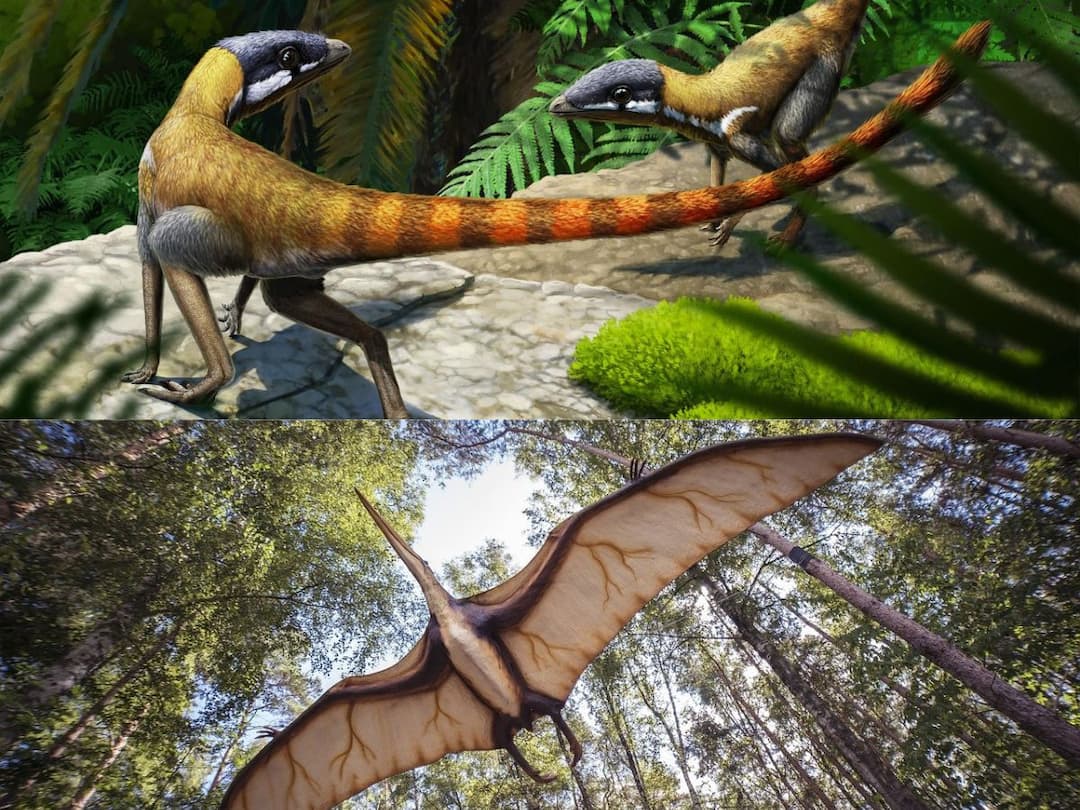
Scientists recently established the evolutionary links of a dinosaur discovered over 100 years ago. A fossil reptile from the Triassic Period (252 to 201 million years ago) has been revealed to be a close relative of pterosaurs, the flying reptiles at the age of dinosaurs, a new study reports. The study, led by Dr Davide Foffa, Research Associate at National Museums Scotland, and a Research Fellow at the University of Birmingham, was recently published in the journal Nature. 

The researchers, along with scientists at Virginia Tech, used computed tomography (CT) to provide the first accurate whole skeleton reconstruction of Scleromochlus taylori, the fossil of which was first found over 100 years ago in the north east of Scotland. 

Scleromochlus taylori is a close relative of pterosaurs

The study authors have found anatomical new details that identify Scleromochlus taylori as a close relative of pterosaurs. Pterosaurs are part of a group called Pterosauromorpha, which also comprises an extinct group of reptiles called lagerpetids. These were small, wingless reptiles from which pterosaurs evolved. Pterosaurs were the first vertebrates to evolve powered flight. 

ALSO READ | An Extinct Lizard-Like Reptile That Lived Among Dinosaurs Newly Discovered

Lagerpetids, which lived approximately 240 to 210 million years ago, were a group of active reptiles the size of a small dog. Scleromochlus taylori was less than 20 centimetres in length. Scientists had hypothesised that the first flying reptiles evolved from small, likely bipedal ancestors, and the new study supports this hypothesis. 

Whether the reptile Scleromochlus taylori represented an evolutionary step in the direction of pterosaurs, dinosaurs or some other reptilian offshoot had been a century-long debate. 

What are the Elgin Reptiles?

It has been difficult to study the fossil of Scleromochlus taylori to identify its anatomical features because it is poorly preserved in a block of sandstone. The fossil belongs to a group known as the Elgin Reptiles. The group comprises Triassic and Permian specimens found in the sandstone of the Morayshire region of North east Scotland around the town of Elgin, the study states.

ALSO READ | Mbiresaurus raathi: Researchers Discover And Name Africa’s Oldest Known Dinosaur

Scleromochlus taylori, which was originally found at Lossiemouth, Scotland, is held by the Natural History Museum. 

In a statement released by University of Birmingham, Dr Foffa said it is “amazing” to be able to see and understand an animal which lived 230 million years ago and its relationship with the first animals ever to have flown.

ALSO READ | Study Claiming T. rex Was Three Separate Species Receives Rebuttal

Professor Paul Barrett at the Natural History Museum said the Elgin Reptiles are not preserved as the pristune, complete skeletons that are often seen in museum displays, but are mainly represented by natural moulds of their bone in sandstone. Until fairly recently, the only way to study the Elgin Reptiles was to use wax or latex to fill the moulds and casts of bones that once occupied them, he added. 

Professor Barrett explained that the use of CT scanning has revolutionised the study of these difficult specimens and has enabled researchers to produce far more detailed, accurate and useful reconstructions of these animals from the deep past.

ALSO READ | T. Rex Was Hot-Blooded, Stegy Was Cold-Blooded: Dinosaur Metabolism Explained By New Chemical Study

Scientists recently established the evolutionary links of a dinosaur discovered over 100 years ago. A fossil reptile from the Triassic Period (252 to 201 million years ago) has been revealed to be a close relative of pterosaurs, the flying reptiles at the age of dinosaurs, a new study reports. The study, led by Dr Davide Foffa, Research Associate at National Museums Scotland, and a Research Fellow at the University of Birmingham, was recently published in the journal Nature. 

The researchers, along with scientists at Virginia Tech, used computed tomography (CT) to provide the first accurate whole skeleton reconstruction of Scleromochlus taylori, the fossil of which was first found over 100 years ago in the north east of Scotland. 

Scleromochlus taylori is a close relative of pterosaurs

The study authors have found anatomical new details that identify Scleromochlus taylori as a close relative of pterosaurs. Pterosaurs are part of a group called Pterosauromorpha, which also comprises an extinct group of reptiles called lagerpetids. These were small, wingless reptiles from which pterosaurs evolved. Pterosaurs were the first vertebrates to evolve powered flight. 

ALSO READ | An Extinct Lizard-Like Reptile That Lived Among Dinosaurs Newly Discovered

Lagerpetids, which lived approximately 240 to 210 million years ago, were a group of active reptiles the size of a small dog. Scleromochlus taylori was less than 20 centimetres in length. Scientists had hypothesised that the first flying reptiles evolved from small, likely bipedal ancestors, and the new study supports this hypothesis. 

Whether the reptile Scleromochlus taylori represented an evolutionary step in the direction of pterosaurs, dinosaurs or some other reptilian offshoot had been a century-long debate. 

What are the Elgin Reptiles?

It has been difficult to study the fossil of Scleromochlus taylori to identify its anatomical features because it is poorly preserved in a block of sandstone. The fossil belongs to a group known as the Elgin Reptiles. The group comprises Triassic and Permian specimens found in the sandstone of the Morayshire region of North east Scotland around the town of Elgin, the study states.

ALSO READ | Mbiresaurus raathi: Researchers Discover And Name Africa’s Oldest Known Dinosaur

Scleromochlus taylori, which was originally found at Lossiemouth, Scotland, is held by the Natural History Museum. 

In a statement released by University of Birmingham, Dr Foffa said it is “amazing” to be able to see and understand an animal which lived 230 million years ago and its relationship with the first animals ever to have flown.

ALSO READ | Study Claiming T. rex Was Three Separate Species Receives Rebuttal

Professor Paul Barrett at the Natural History Museum said the Elgin Reptiles are not preserved as the pristune, complete skeletons that are often seen in museum displays, but are mainly represented by natural moulds of their bone in sandstone. Until fairly recently, the only way to study the Elgin Reptiles was to use wax or latex to fill the moulds and casts of bones that once occupied them, he added. 

Professor Barrett explained that the use of CT scanning has revolutionised the study of these difficult specimens and has enabled researchers to produce far more detailed, accurate and useful reconstructions of these animals from the deep past.

ALSO READ | T. Rex Was Hot-Blooded, Stegy Was Cold-Blooded: Dinosaur Metabolism Explained By New Chemical Study

Scientists recently established the evolutionary links of a dinosaur discovered over 100 years ago. A fossil reptile from the Triassic Period (252 to 201 million years ago) has been revealed to be a close relative of pterosaurs, the flying reptiles at the age of dinosaurs, a new study reports. The study, led by Dr Davide Foffa, Research Associate at National Museums Scotland, and a Research Fellow at the University of Birmingham, was recently published in the journal Nature. 

The researchers, along with scientists at Virginia Tech, used computed tomography (CT) to provide the first accurate whole skeleton reconstruction of Scleromochlus taylori, the fossil of which was first found over 100 years ago in the north east of Scotland. 

Scleromochlus taylori is a close relative of pterosaurs

The study authors have found anatomical new details that identify Scleromochlus taylori as a close relative of pterosaurs. Pterosaurs are part of a group called Pterosauromorpha, which also comprises an extinct group of reptiles called lagerpetids. These were small, wingless reptiles from which pterosaurs evolved. Pterosaurs were the first vertebrates to evolve powered flight. 

ALSO READ | An Extinct Lizard-Like Reptile That Lived Among Dinosaurs Newly Discovered

Lagerpetids, which lived approximately 240 to 210 million years ago, were a group of active reptiles the size of a small dog. Scleromochlus taylori was less than 20 centimetres in length. Scientists had hypothesised that the first flying reptiles evolved from small, likely bipedal ancestors, and the new study supports this hypothesis. 

Whether the reptile Scleromochlus taylori represented an evolutionary step in the direction of pterosaurs, dinosaurs or some other reptilian offshoot had been a century-long debate. 

What are the Elgin Reptiles?

It has been difficult to study the fossil of Scleromochlus taylori to identify its anatomical features because it is poorly preserved in a block of sandstone. The fossil belongs to a group known as the Elgin Reptiles. The group comprises Triassic and Permian specimens found in the sandstone of the Morayshire region of North east Scotland around the town of Elgin, the study states.

ALSO READ | Mbiresaurus raathi: Researchers Discover And Name Africa’s Oldest Known Dinosaur

Scleromochlus taylori, which was originally found at Lossiemouth, Scotland, is held by the Natural History Museum. 

In a statement released by University of Birmingham, Dr Foffa said it is “amazing” to be able to see and understand an animal which lived 230 million years ago and its relationship with the first animals ever to have flown.

ALSO READ | Study Claiming T. rex Was Three Separate Species Receives Rebuttal

Professor Paul Barrett at the Natural History Museum said the Elgin Reptiles are not preserved as the pristune, complete skeletons that are often seen in museum displays, but are mainly represented by natural moulds of their bone in sandstone. Until fairly recently, the only way to study the Elgin Reptiles was to use wax or latex to fill the moulds and casts of bones that once occupied them, he added. 

Professor Barrett explained that the use of CT scanning has revolutionised the study of these difficult specimens and has enabled researchers to produce far more detailed, accurate and useful reconstructions of these animals from the deep past.

ALSO READ | T. Rex Was Hot-Blooded, Stegy Was Cold-Blooded: Dinosaur Metabolism Explained By New Chemical Study

Scientists recently established the evolutionary links of a dinosaur discovered over 100 years ago. A fossil reptile from the Triassic Period (252 to 201 million years ago) has been revealed to be a close relative of pterosaurs, the flying reptiles at the age of dinosaurs, a new study reports. The study, led by Dr Davide Foffa, Research Associate at National Museums Scotland, and a Research Fellow at the University of Birmingham, was recently published in the journal Nature. 

The researchers, along with scientists at Virginia Tech, used computed tomography (CT) to provide the first accurate whole skeleton reconstruction of Scleromochlus taylori, the fossil of which was first found over 100 years ago in the north east of Scotland. 

Scleromochlus taylori is a close relative of pterosaurs

The study authors have found anatomical new details that identify Scleromochlus taylori as a close relative of pterosaurs. Pterosaurs are part of a group called Pterosauromorpha, which also comprises an extinct group of reptiles called lagerpetids. These were small, wingless reptiles from which pterosaurs evolved. Pterosaurs were the first vertebrates to evolve powered flight. 

ALSO READ | An Extinct Lizard-Like Reptile That Lived Among Dinosaurs Newly Discovered

Lagerpetids, which lived approximately 240 to 210 million years ago, were a group of active reptiles the size of a small dog. Scleromochlus taylori was less than 20 centimetres in length. Scientists had hypothesised that the first flying reptiles evolved from small, likely bipedal ancestors, and the new study supports this hypothesis. 

Whether the reptile Scleromochlus taylori represented an evolutionary step in the direction of pterosaurs, dinosaurs or some other reptilian offshoot had been a century-long debate. 

What are the Elgin Reptiles?

It has been difficult to study the fossil of Scleromochlus taylori to identify its anatomical features because it is poorly preserved in a block of sandstone. The fossil belongs to a group known as the Elgin Reptiles. The group comprises Triassic and Permian specimens found in the sandstone of the Morayshire region of North east Scotland around the town of Elgin, the study states.

ALSO READ | Mbiresaurus raathi: Researchers Discover And Name Africa’s Oldest Known Dinosaur

Scleromochlus taylori, which was originally found at Lossiemouth, Scotland, is held by the Natural History Museum. 

In a statement released by University of Birmingham, Dr Foffa said it is “amazing” to be able to see and understand an animal which lived 230 million years ago and its relationship with the first animals ever to have flown.

ALSO READ | Study Claiming T. rex Was Three Separate Species Receives Rebuttal

Professor Paul Barrett at the Natural History Museum said the Elgin Reptiles are not preserved as the pristune, complete skeletons that are often seen in museum displays, but are mainly represented by natural moulds of their bone in sandstone. Until fairly recently, the only way to study the Elgin Reptiles was to use wax or latex to fill the moulds and casts of bones that once occupied them, he added. 

Professor Barrett explained that the use of CT scanning has revolutionised the study of these difficult specimens and has enabled researchers to produce far more detailed, accurate and useful reconstructions of these animals from the deep past.

ALSO READ | T. Rex Was Hot-Blooded, Stegy Was Cold-Blooded: Dinosaur Metabolism Explained By New Chemical Study


Scientists recently established the evolutionary links of a dinosaur discovered over 100 years ago. A fossil reptile from the Triassic Period (252 to 201 million years ago) has been revealed to be a close relative of pterosaurs, the flying reptiles at the age of dinosaurs, a new study reports. The study, led by Dr Davide Foffa, Research Associate at National Museums Scotland, and a Research Fellow at the University of Birmingham, was recently published in the journal Nature. 

The researchers, along with scientists at Virginia Tech, used computed tomography (CT) to provide the first accurate whole skeleton reconstruction of Scleromochlus taylori, the fossil of which was first found over 100 years ago in the north east of Scotland. 

Scleromochlus taylori is a close relative of pterosaurs

The study authors have found anatomical new details that identify Scleromochlus taylori as a close relative of pterosaurs. Pterosaurs are part of a group called Pterosauromorpha, which also comprises an extinct group of reptiles called lagerpetids. These were small, wingless reptiles from which pterosaurs evolved. Pterosaurs were the first vertebrates to evolve powered flight. 

ALSO READ | An Extinct Lizard-Like Reptile That Lived Among Dinosaurs Newly Discovered

Lagerpetids, which lived approximately 240 to 210 million years ago, were a group of active reptiles the size of a small dog. Scleromochlus taylori was less than 20 centimetres in length. Scientists had hypothesised that the first flying reptiles evolved from small, likely bipedal ancestors, and the new study supports this hypothesis. 

Whether the reptile Scleromochlus taylori represented an evolutionary step in the direction of pterosaurs, dinosaurs or some other reptilian offshoot had been a century-long debate. 

What are the Elgin Reptiles?

It has been difficult to study the fossil of Scleromochlus taylori to identify its anatomical features because it is poorly preserved in a block of sandstone. The fossil belongs to a group known as the Elgin Reptiles. The group comprises Triassic and Permian specimens found in the sandstone of the Morayshire region of North east Scotland around the town of Elgin, the study states.

ALSO READ | Mbiresaurus raathi: Researchers Discover And Name Africa’s Oldest Known Dinosaur

Scleromochlus taylori, which was originally found at Lossiemouth, Scotland, is held by the Natural History Museum. 

In a statement released by University of Birmingham, Dr Foffa said it is “amazing” to be able to see and understand an animal which lived 230 million years ago and its relationship with the first animals ever to have flown.

ALSO READ | Study Claiming T. rex Was Three Separate Species Receives Rebuttal

Professor Paul Barrett at the Natural History Museum said the Elgin Reptiles are not preserved as the pristune, complete skeletons that are often seen in museum displays, but are mainly represented by natural moulds of their bone in sandstone. Until fairly recently, the only way to study the Elgin Reptiles was to use wax or latex to fill the moulds and casts of bones that once occupied them, he added. 

Professor Barrett explained that the use of CT scanning has revolutionised the study of these difficult specimens and has enabled researchers to produce far more detailed, accurate and useful reconstructions of these animals from the deep past.

ALSO READ | T. Rex Was Hot-Blooded, Stegy Was Cold-Blooded: Dinosaur Metabolism Explained By New Chemical Study

Scientists recently established the evolutionary links of a dinosaur discovered over 100 years ago. A fossil reptile from the Triassic Period (252 to 201 million years ago) has been revealed to be a close relative of pterosaurs, the flying reptiles at the age of dinosaurs, a new study reports. The study, led by Dr Davide Foffa, Research Associate at National Museums Scotland, and a Research Fellow at the University of Birmingham, was recently published in the journal Nature. 

The researchers, along with scientists at Virginia Tech, used computed tomography (CT) to provide the first accurate whole skeleton reconstruction of Scleromochlus taylori, the fossil of which was first found over 100 years ago in the north east of Scotland. 

Scleromochlus taylori is a close relative of pterosaurs

The study authors have found anatomical new details that identify Scleromochlus taylori as a close relative of pterosaurs. Pterosaurs are part of a group called Pterosauromorpha, which also comprises an extinct group of reptiles called lagerpetids. These were small, wingless reptiles from which pterosaurs evolved. Pterosaurs were the first vertebrates to evolve powered flight. 

ALSO READ | An Extinct Lizard-Like Reptile That Lived Among Dinosaurs Newly Discovered

Lagerpetids, which lived approximately 240 to 210 million years ago, were a group of active reptiles the size of a small dog. Scleromochlus taylori was less than 20 centimetres in length. Scientists had hypothesised that the first flying reptiles evolved from small, likely bipedal ancestors, and the new study supports this hypothesis. 

Whether the reptile Scleromochlus taylori represented an evolutionary step in the direction of pterosaurs, dinosaurs or some other reptilian offshoot had been a century-long debate. 

What are the Elgin Reptiles?

It has been difficult to study the fossil of Scleromochlus taylori to identify its anatomical features because it is poorly preserved in a block of sandstone. The fossil belongs to a group known as the Elgin Reptiles. The group comprises Triassic and Permian specimens found in the sandstone of the Morayshire region of North east Scotland around the town of Elgin, the study states.

ALSO READ | Mbiresaurus raathi: Researchers Discover And Name Africa’s Oldest Known Dinosaur

Scleromochlus taylori, which was originally found at Lossiemouth, Scotland, is held by the Natural History Museum. 

In a statement released by University of Birmingham, Dr Foffa said it is “amazing” to be able to see and understand an animal which lived 230 million years ago and its relationship with the first animals ever to have flown.

ALSO READ | Study Claiming T. rex Was Three Separate Species Receives Rebuttal

Professor Paul Barrett at the Natural History Museum said the Elgin Reptiles are not preserved as the pristune, complete skeletons that are often seen in museum displays, but are mainly represented by natural moulds of their bone in sandstone. Until fairly recently, the only way to study the Elgin Reptiles was to use wax or latex to fill the moulds and casts of bones that once occupied them, he added. 

Professor Barrett explained that the use of CT scanning has revolutionised the study of these difficult specimens and has enabled researchers to produce far more detailed, accurate and useful reconstructions of these animals from the deep past.

ALSO READ | T. Rex Was Hot-Blooded, Stegy Was Cold-Blooded: Dinosaur Metabolism Explained By New Chemical Study

Scientists recently established the evolutionary links of a dinosaur discovered over 100 years ago. A fossil reptile from the Triassic Period (252 to 201 million years ago) has been revealed to be a close relative of pterosaurs, the flying reptiles at the age of dinosaurs, a new study reports. The study, led by Dr Davide Foffa, Research Associate at National Museums Scotland, and a Research Fellow at the University of Birmingham, was recently published in the journal Nature. 

The researchers, along with scientists at Virginia Tech, used computed tomography (CT) to provide the first accurate whole skeleton reconstruction of Scleromochlus taylori, the fossil of which was first found over 100 years ago in the north east of Scotland. 

Scleromochlus taylori is a close relative of pterosaurs

The study authors have found anatomical new details that identify Scleromochlus taylori as a close relative of pterosaurs. Pterosaurs are part of a group called Pterosauromorpha, which also comprises an extinct group of reptiles called lagerpetids. These were small, wingless reptiles from which pterosaurs evolved. Pterosaurs were the first vertebrates to evolve powered flight. 

ALSO READ | An Extinct Lizard-Like Reptile That Lived Among Dinosaurs Newly Discovered

Lagerpetids, which lived approximately 240 to 210 million years ago, were a group of active reptiles the size of a small dog. Scleromochlus taylori was less than 20 centimetres in length. Scientists had hypothesised that the first flying reptiles evolved from small, likely bipedal ancestors, and the new study supports this hypothesis. 

Whether the reptile Scleromochlus taylori represented an evolutionary step in the direction of pterosaurs, dinosaurs or some other reptilian offshoot had been a century-long debate. 

What are the Elgin Reptiles?

It has been difficult to study the fossil of Scleromochlus taylori to identify its anatomical features because it is poorly preserved in a block of sandstone. The fossil belongs to a group known as the Elgin Reptiles. The group comprises Triassic and Permian specimens found in the sandstone of the Morayshire region of North east Scotland around the town of Elgin, the study states.

ALSO READ | Mbiresaurus raathi: Researchers Discover And Name Africa’s Oldest Known Dinosaur

Scleromochlus taylori, which was originally found at Lossiemouth, Scotland, is held by the Natural History Museum. 

In a statement released by University of Birmingham, Dr Foffa said it is “amazing” to be able to see and understand an animal which lived 230 million years ago and its relationship with the first animals ever to have flown.

ALSO READ | Study Claiming T. rex Was Three Separate Species Receives Rebuttal

Professor Paul Barrett at the Natural History Museum said the Elgin Reptiles are not preserved as the pristune, complete skeletons that are often seen in museum displays, but are mainly represented by natural moulds of their bone in sandstone. Until fairly recently, the only way to study the Elgin Reptiles was to use wax or latex to fill the moulds and casts of bones that once occupied them, he added. 

Professor Barrett explained that the use of CT scanning has revolutionised the study of these difficult specimens and has enabled researchers to produce far more detailed, accurate and useful reconstructions of these animals from the deep past.

ALSO READ | T. Rex Was Hot-Blooded, Stegy Was Cold-Blooded: Dinosaur Metabolism Explained By New Chemical Study

Scientists recently established the evolutionary links of a dinosaur discovered over 100 years ago. A fossil reptile from the Triassic Period (252 to 201 million years ago) has been revealed to be a close relative of pterosaurs, the flying reptiles at the age of dinosaurs, a new study reports. The study, led by Dr Davide Foffa, Research Associate at National Museums Scotland, and a Research Fellow at the University of Birmingham, was recently published in the journal Nature. 

The researchers, along with scientists at Virginia Tech, used computed tomography (CT) to provide the first accurate whole skeleton reconstruction of Scleromochlus taylori, the fossil of which was first found over 100 years ago in the north east of Scotland. 

Scleromochlus taylori is a close relative of pterosaurs

The study authors have found anatomical new details that identify Scleromochlus taylori as a close relative of pterosaurs. Pterosaurs are part of a group called Pterosauromorpha, which also comprises an extinct group of reptiles called lagerpetids. These were small, wingless reptiles from which pterosaurs evolved. Pterosaurs were the first vertebrates to evolve powered flight. 

ALSO READ | An Extinct Lizard-Like Reptile That Lived Among Dinosaurs Newly Discovered

Lagerpetids, which lived approximately 240 to 210 million years ago, were a group of active reptiles the size of a small dog. Scleromochlus taylori was less than 20 centimetres in length. Scientists had hypothesised that the first flying reptiles evolved from small, likely bipedal ancestors, and the new study supports this hypothesis. 

Whether the reptile Scleromochlus taylori represented an evolutionary step in the direction of pterosaurs, dinosaurs or some other reptilian offshoot had been a century-long debate. 

What are the Elgin Reptiles?

It has been difficult to study the fossil of Scleromochlus taylori to identify its anatomical features because it is poorly preserved in a block of sandstone. The fossil belongs to a group known as the Elgin Reptiles. The group comprises Triassic and Permian specimens found in the sandstone of the Morayshire region of North east Scotland around the town of Elgin, the study states.

ALSO READ | Mbiresaurus raathi: Researchers Discover And Name Africa’s Oldest Known Dinosaur

Scleromochlus taylori, which was originally found at Lossiemouth, Scotland, is held by the Natural History Museum. 

In a statement released by University of Birmingham, Dr Foffa said it is “amazing” to be able to see and understand an animal which lived 230 million years ago and its relationship with the first animals ever to have flown.

ALSO READ | Study Claiming T. rex Was Three Separate Species Receives Rebuttal

Professor Paul Barrett at the Natural History Museum said the Elgin Reptiles are not preserved as the pristune, complete skeletons that are often seen in museum displays, but are mainly represented by natural moulds of their bone in sandstone. Until fairly recently, the only way to study the Elgin Reptiles was to use wax or latex to fill the moulds and casts of bones that once occupied them, he added. 

Professor Barrett explained that the use of CT scanning has revolutionised the study of these difficult specimens and has enabled researchers to produce far more detailed, accurate and useful reconstructions of these animals from the deep past.

ALSO READ | T. Rex Was Hot-Blooded, Stegy Was Cold-Blooded: Dinosaur Metabolism Explained By New Chemical Study

Scientists recently established the evolutionary links of a dinosaur discovered over 100 years ago. A fossil reptile from the Triassic Period (252 to 201 million years ago) has been revealed to be a close relative of pterosaurs, the flying reptiles at the age of dinosaurs, a new study reports. The study, led by Dr Davide Foffa, Research Associate at National Museums Scotland, and a Research Fellow at the University of Birmingham, was recently published in the journal Nature. 

The researchers, along with scientists at Virginia Tech, used computed tomography (CT) to provide the first accurate whole skeleton reconstruction of Scleromochlus taylori, the fossil of which was first found over 100 years ago in the north east of Scotland. 

Scleromochlus taylori is a close relative of pterosaurs

The study authors have found anatomical new details that identify Scleromochlus taylori as a close relative of pterosaurs. Pterosaurs are part of a group called Pterosauromorpha, which also comprises an extinct group of reptiles called lagerpetids. These were small, wingless reptiles from which pterosaurs evolved. Pterosaurs were the first vertebrates to evolve powered flight. 

ALSO READ | An Extinct Lizard-Like Reptile That Lived Among Dinosaurs Newly Discovered

Lagerpetids, which lived approximately 240 to 210 million years ago, were a group of active reptiles the size of a small dog. Scleromochlus taylori was less than 20 centimetres in length. Scientists had hypothesised that the first flying reptiles evolved from small, likely bipedal ancestors, and the new study supports this hypothesis. 

Whether the reptile Scleromochlus taylori represented an evolutionary step in the direction of pterosaurs, dinosaurs or some other reptilian offshoot had been a century-long debate. 

What are the Elgin Reptiles?

It has been difficult to study the fossil of Scleromochlus taylori to identify its anatomical features because it is poorly preserved in a block of sandstone. The fossil belongs to a group known as the Elgin Reptiles. The group comprises Triassic and Permian specimens found in the sandstone of the Morayshire region of North east Scotland around the town of Elgin, the study states.

ALSO READ | Mbiresaurus raathi: Researchers Discover And Name Africa’s Oldest Known Dinosaur

Scleromochlus taylori, which was originally found at Lossiemouth, Scotland, is held by the Natural History Museum. 

In a statement released by University of Birmingham, Dr Foffa said it is “amazing” to be able to see and understand an animal which lived 230 million years ago and its relationship with the first animals ever to have flown.

ALSO READ | Study Claiming T. rex Was Three Separate Species Receives Rebuttal

Professor Paul Barrett at the Natural History Museum said the Elgin Reptiles are not preserved as the pristune, complete skeletons that are often seen in museum displays, but are mainly represented by natural moulds of their bone in sandstone. Until fairly recently, the only way to study the Elgin Reptiles was to use wax or latex to fill the moulds and casts of bones that once occupied them, he added. 

Professor Barrett explained that the use of CT scanning has revolutionised the study of these difficult specimens and has enabled researchers to produce far more detailed, accurate and useful reconstructions of these animals from the deep past.

ALSO READ | T. Rex Was Hot-Blooded, Stegy Was Cold-Blooded: Dinosaur Metabolism Explained By New Chemical Study

Scientists recently established the evolutionary links of a dinosaur discovered over 100 years ago. A fossil reptile from the Triassic Period (252 to 201 million years ago) has been revealed to be a close relative of pterosaurs, the flying reptiles at the age of dinosaurs, a new study reports. The study, led by Dr Davide Foffa, Research Associate at National Museums Scotland, and a Research Fellow at the University of Birmingham, was recently published in the journal Nature. 

The researchers, along with scientists at Virginia Tech, used computed tomography (CT) to provide the first accurate whole skeleton reconstruction of Scleromochlus taylori, the fossil of which was first found over 100 years ago in the north east of Scotland. 

Scleromochlus taylori is a close relative of pterosaurs

The study authors have found anatomical new details that identify Scleromochlus taylori as a close relative of pterosaurs. Pterosaurs are part of a group called Pterosauromorpha, which also comprises an extinct group of reptiles called lagerpetids. These were small, wingless reptiles from which pterosaurs evolved. Pterosaurs were the first vertebrates to evolve powered flight. 

ALSO READ | An Extinct Lizard-Like Reptile That Lived Among Dinosaurs Newly Discovered

Lagerpetids, which lived approximately 240 to 210 million years ago, were a group of active reptiles the size of a small dog. Scleromochlus taylori was less than 20 centimetres in length. Scientists had hypothesised that the first flying reptiles evolved from small, likely bipedal ancestors, and the new study supports this hypothesis. 

Whether the reptile Scleromochlus taylori represented an evolutionary step in the direction of pterosaurs, dinosaurs or some other reptilian offshoot had been a century-long debate. 

What are the Elgin Reptiles?

It has been difficult to study the fossil of Scleromochlus taylori to identify its anatomical features because it is poorly preserved in a block of sandstone. The fossil belongs to a group known as the Elgin Reptiles. The group comprises Triassic and Permian specimens found in the sandstone of the Morayshire region of North east Scotland around the town of Elgin, the study states.

ALSO READ | Mbiresaurus raathi: Researchers Discover And Name Africa’s Oldest Known Dinosaur

Scleromochlus taylori, which was originally found at Lossiemouth, Scotland, is held by the Natural History Museum. 

In a statement released by University of Birmingham, Dr Foffa said it is “amazing” to be able to see and understand an animal which lived 230 million years ago and its relationship with the first animals ever to have flown.

ALSO READ | Study Claiming T. rex Was Three Separate Species Receives Rebuttal

Professor Paul Barrett at the Natural History Museum said the Elgin Reptiles are not preserved as the pristune, complete skeletons that are often seen in museum displays, but are mainly represented by natural moulds of their bone in sandstone. Until fairly recently, the only way to study the Elgin Reptiles was to use wax or latex to fill the moulds and casts of bones that once occupied them, he added. 

Professor Barrett explained that the use of CT scanning has revolutionised the study of these difficult specimens and has enabled researchers to produce far more detailed, accurate and useful reconstructions of these animals from the deep past.

ALSO READ | T. Rex Was Hot-Blooded, Stegy Was Cold-Blooded: Dinosaur Metabolism Explained By New Chemical Study

Scientists recently established the evolutionary links of a dinosaur discovered over 100 years ago. A fossil reptile from the Triassic Period (252 to 201 million years ago) has been revealed to be a close relative of pterosaurs, the flying reptiles at the age of dinosaurs, a new study reports. The study, led by Dr Davide Foffa, Research Associate at National Museums Scotland, and a Research Fellow at the University of Birmingham, was recently published in the journal Nature. 

The researchers, along with scientists at Virginia Tech, used computed tomography (CT) to provide the first accurate whole skeleton reconstruction of Scleromochlus taylori, the fossil of which was first found over 100 years ago in the north east of Scotland. 

Scleromochlus taylori is a close relative of pterosaurs

The study authors have found anatomical new details that identify Scleromochlus taylori as a close relative of pterosaurs. Pterosaurs are part of a group called Pterosauromorpha, which also comprises an extinct group of reptiles called lagerpetids. These were small, wingless reptiles from which pterosaurs evolved. Pterosaurs were the first vertebrates to evolve powered flight. 

ALSO READ | An Extinct Lizard-Like Reptile That Lived Among Dinosaurs Newly Discovered

Lagerpetids, which lived approximately 240 to 210 million years ago, were a group of active reptiles the size of a small dog. Scleromochlus taylori was less than 20 centimetres in length. Scientists had hypothesised that the first flying reptiles evolved from small, likely bipedal ancestors, and the new study supports this hypothesis. 

Whether the reptile Scleromochlus taylori represented an evolutionary step in the direction of pterosaurs, dinosaurs or some other reptilian offshoot had been a century-long debate. 

What are the Elgin Reptiles?

It has been difficult to study the fossil of Scleromochlus taylori to identify its anatomical features because it is poorly preserved in a block of sandstone. The fossil belongs to a group known as the Elgin Reptiles. The group comprises Triassic and Permian specimens found in the sandstone of the Morayshire region of North east Scotland around the town of Elgin, the study states.

ALSO READ | Mbiresaurus raathi: Researchers Discover And Name Africa’s Oldest Known Dinosaur

Scleromochlus taylori, which was originally found at Lossiemouth, Scotland, is held by the Natural History Museum. 

In a statement released by University of Birmingham, Dr Foffa said it is “amazing” to be able to see and understand an animal which lived 230 million years ago and its relationship with the first animals ever to have flown.

ALSO READ | Study Claiming T. rex Was Three Separate Species Receives Rebuttal

Professor Paul Barrett at the Natural History Museum said the Elgin Reptiles are not preserved as the pristune, complete skeletons that are often seen in museum displays, but are mainly represented by natural moulds of their bone in sandstone. Until fairly recently, the only way to study the Elgin Reptiles was to use wax or latex to fill the moulds and casts of bones that once occupied them, he added. 

Professor Barrett explained that the use of CT scanning has revolutionised the study of these difficult specimens and has enabled researchers to produce far more detailed, accurate and useful reconstructions of these animals from the deep past.

ALSO READ | T. Rex Was Hot-Blooded, Stegy Was Cold-Blooded: Dinosaur Metabolism Explained By New Chemical Study

Scientists recently established the evolutionary links of a dinosaur discovered over 100 years ago. A fossil reptile from the Triassic Period (252 to 201 million years ago) has been revealed to be a close relative of pterosaurs, the flying reptiles at the age of dinosaurs, a new study reports. The study, led by Dr Davide Foffa, Research Associate at National Museums Scotland, and a Research Fellow at the University of Birmingham, was recently published in the journal Nature. 

The researchers, along with scientists at Virginia Tech, used computed tomography (CT) to provide the first accurate whole skeleton reconstruction of Scleromochlus taylori, the fossil of which was first found over 100 years ago in the north east of Scotland. 

Scleromochlus taylori is a close relative of pterosaurs

The study authors have found anatomical new details that identify Scleromochlus taylori as a close relative of pterosaurs. Pterosaurs are part of a group called Pterosauromorpha, which also comprises an extinct group of reptiles called lagerpetids. These were small, wingless reptiles from which pterosaurs evolved. Pterosaurs were the first vertebrates to evolve powered flight. 

ALSO READ | An Extinct Lizard-Like Reptile That Lived Among Dinosaurs Newly Discovered

Lagerpetids, which lived approximately 240 to 210 million years ago, were a group of active reptiles the size of a small dog. Scleromochlus taylori was less than 20 centimetres in length. Scientists had hypothesised that the first flying reptiles evolved from small, likely bipedal ancestors, and the new study supports this hypothesis. 

Whether the reptile Scleromochlus taylori represented an evolutionary step in the direction of pterosaurs, dinosaurs or some other reptilian offshoot had been a century-long debate. 

What are the Elgin Reptiles?

It has been difficult to study the fossil of Scleromochlus taylori to identify its anatomical features because it is poorly preserved in a block of sandstone. The fossil belongs to a group known as the Elgin Reptiles. The group comprises Triassic and Permian specimens found in the sandstone of the Morayshire region of North east Scotland around the town of Elgin, the study states.

ALSO READ | Mbiresaurus raathi: Researchers Discover And Name Africa’s Oldest Known Dinosaur

Scleromochlus taylori, which was originally found at Lossiemouth, Scotland, is held by the Natural History Museum. 

In a statement released by University of Birmingham, Dr Foffa said it is “amazing” to be able to see and understand an animal which lived 230 million years ago and its relationship with the first animals ever to have flown.

ALSO READ | Study Claiming T. rex Was Three Separate Species Receives Rebuttal

Professor Paul Barrett at the Natural History Museum said the Elgin Reptiles are not preserved as the pristune, complete skeletons that are often seen in museum displays, but are mainly represented by natural moulds of their bone in sandstone. Until fairly recently, the only way to study the Elgin Reptiles was to use wax or latex to fill the moulds and casts of bones that once occupied them, he added. 

Professor Barrett explained that the use of CT scanning has revolutionised the study of these difficult specimens and has enabled researchers to produce far more detailed, accurate and useful reconstructions of these animals from the deep past.

ALSO READ | T. Rex Was Hot-Blooded, Stegy Was Cold-Blooded: Dinosaur Metabolism Explained By New Chemical Study

Scientists recently established the evolutionary links of a dinosaur discovered over 100 years ago. A fossil reptile from the Triassic Period (252 to 201 million years ago) has been revealed to be a close relative of pterosaurs, the flying reptiles at the age of dinosaurs, a new study reports. The study, led by Dr Davide Foffa, Research Associate at National Museums Scotland, and a Research Fellow at the University of Birmingham, was recently published in the journal Nature. 

The researchers, along with scientists at Virginia Tech, used computed tomography (CT) to provide the first accurate whole skeleton reconstruction of Scleromochlus taylori, the fossil of which was first found over 100 years ago in the north east of Scotland. 

Scleromochlus taylori is a close relative of pterosaurs

The study authors have found anatomical new details that identify Scleromochlus taylori as a close relative of pterosaurs. Pterosaurs are part of a group called Pterosauromorpha, which also comprises an extinct group of reptiles called lagerpetids. These were small, wingless reptiles from which pterosaurs evolved. Pterosaurs were the first vertebrates to evolve powered flight. 

ALSO READ | An Extinct Lizard-Like Reptile That Lived Among Dinosaurs Newly Discovered

Lagerpetids, which lived approximately 240 to 210 million years ago, were a group of active reptiles the size of a small dog. Scleromochlus taylori was less than 20 centimetres in length. Scientists had hypothesised that the first flying reptiles evolved from small, likely bipedal ancestors, and the new study supports this hypothesis. 

Whether the reptile Scleromochlus taylori represented an evolutionary step in the direction of pterosaurs, dinosaurs or some other reptilian offshoot had been a century-long debate. 

What are the Elgin Reptiles?

It has been difficult to study the fossil of Scleromochlus taylori to identify its anatomical features because it is poorly preserved in a block of sandstone. The fossil belongs to a group known as the Elgin Reptiles. The group comprises Triassic and Permian specimens found in the sandstone of the Morayshire region of North east Scotland around the town of Elgin, the study states.

ALSO READ | Mbiresaurus raathi: Researchers Discover And Name Africa’s Oldest Known Dinosaur

Scleromochlus taylori, which was originally found at Lossiemouth, Scotland, is held by the Natural History Museum. 

In a statement released by University of Birmingham, Dr Foffa said it is “amazing” to be able to see and understand an animal which lived 230 million years ago and its relationship with the first animals ever to have flown.

ALSO READ | Study Claiming T. rex Was Three Separate Species Receives Rebuttal

Professor Paul Barrett at the Natural History Museum said the Elgin Reptiles are not preserved as the pristune, complete skeletons that are often seen in museum displays, but are mainly represented by natural moulds of their bone in sandstone. Until fairly recently, the only way to study the Elgin Reptiles was to use wax or latex to fill the moulds and casts of bones that once occupied them, he added. 

Professor Barrett explained that the use of CT scanning has revolutionised the study of these difficult specimens and has enabled researchers to produce far more detailed, accurate and useful reconstructions of these animals from the deep past.

ALSO READ | T. Rex Was Hot-Blooded, Stegy Was Cold-Blooded: Dinosaur Metabolism Explained By New Chemical Study

Scientists recently established the evolutionary links of a dinosaur discovered over 100 years ago. A fossil reptile from the Triassic Period (252 to 201 million years ago) has been revealed to be a close relative of pterosaurs, the flying reptiles at the age of dinosaurs, a new study reports. The study, led by Dr Davide Foffa, Research Associate at National Museums Scotland, and a Research Fellow at the University of Birmingham, was recently published in the journal Nature. 

The researchers, along with scientists at Virginia Tech, used computed tomography (CT) to provide the first accurate whole skeleton reconstruction of Scleromochlus taylori, the fossil of which was first found over 100 years ago in the north east of Scotland. 

Scleromochlus taylori is a close relative of pterosaurs

The study authors have found anatomical new details that identify Scleromochlus taylori as a close relative of pterosaurs. Pterosaurs are part of a group called Pterosauromorpha, which also comprises an extinct group of reptiles called lagerpetids. These were small, wingless reptiles from which pterosaurs evolved. Pterosaurs were the first vertebrates to evolve powered flight. 

ALSO READ | An Extinct Lizard-Like Reptile That Lived Among Dinosaurs Newly Discovered

Lagerpetids, which lived approximately 240 to 210 million years ago, were a group of active reptiles the size of a small dog. Scleromochlus taylori was less than 20 centimetres in length. Scientists had hypothesised that the first flying reptiles evolved from small, likely bipedal ancestors, and the new study supports this hypothesis. 

Whether the reptile Scleromochlus taylori represented an evolutionary step in the direction of pterosaurs, dinosaurs or some other reptilian offshoot had been a century-long debate. 

What are the Elgin Reptiles?

It has been difficult to study the fossil of Scleromochlus taylori to identify its anatomical features because it is poorly preserved in a block of sandstone. The fossil belongs to a group known as the Elgin Reptiles. The group comprises Triassic and Permian specimens found in the sandstone of the Morayshire region of North east Scotland around the town of Elgin, the study states.

ALSO READ | Mbiresaurus raathi: Researchers Discover And Name Africa’s Oldest Known Dinosaur

Scleromochlus taylori, which was originally found at Lossiemouth, Scotland, is held by the Natural History Museum. 

In a statement released by University of Birmingham, Dr Foffa said it is “amazing” to be able to see and understand an animal which lived 230 million years ago and its relationship with the first animals ever to have flown.

ALSO READ | Study Claiming T. rex Was Three Separate Species Receives Rebuttal

Professor Paul Barrett at the Natural History Museum said the Elgin Reptiles are not preserved as the pristune, complete skeletons that are often seen in museum displays, but are mainly represented by natural moulds of their bone in sandstone. Until fairly recently, the only way to study the Elgin Reptiles was to use wax or latex to fill the moulds and casts of bones that once occupied them, he added. 

Professor Barrett explained that the use of CT scanning has revolutionised the study of these difficult specimens and has enabled researchers to produce far more detailed, accurate and useful reconstructions of these animals from the deep past.

ALSO READ | T. Rex Was Hot-Blooded, Stegy Was Cold-Blooded: Dinosaur Metabolism Explained By New Chemical Study

Scientists recently established the evolutionary links of a dinosaur discovered over 100 years ago. A fossil reptile from the Triassic Period (252 to 201 million years ago) has been revealed to be a close relative of pterosaurs, the flying reptiles at the age of dinosaurs, a new study reports. The study, led by Dr Davide Foffa, Research Associate at National Museums Scotland, and a Research Fellow at the University of Birmingham, was recently published in the journal Nature. 

The researchers, along with scientists at Virginia Tech, used computed tomography (CT) to provide the first accurate whole skeleton reconstruction of Scleromochlus taylori, the fossil of which was first found over 100 years ago in the north east of Scotland. 

Scleromochlus taylori is a close relative of pterosaurs

The study authors have found anatomical new details that identify Scleromochlus taylori as a close relative of pterosaurs. Pterosaurs are part of a group called Pterosauromorpha, which also comprises an extinct group of reptiles called lagerpetids. These were small, wingless reptiles from which pterosaurs evolved. Pterosaurs were the first vertebrates to evolve powered flight. 

ALSO READ | An Extinct Lizard-Like Reptile That Lived Among Dinosaurs Newly Discovered

Lagerpetids, which lived approximately 240 to 210 million years ago, were a group of active reptiles the size of a small dog. Scleromochlus taylori was less than 20 centimetres in length. Scientists had hypothesised that the first flying reptiles evolved from small, likely bipedal ancestors, and the new study supports this hypothesis. 

Whether the reptile Scleromochlus taylori represented an evolutionary step in the direction of pterosaurs, dinosaurs or some other reptilian offshoot had been a century-long debate. 

What are the Elgin Reptiles?

It has been difficult to study the fossil of Scleromochlus taylori to identify its anatomical features because it is poorly preserved in a block of sandstone. The fossil belongs to a group known as the Elgin Reptiles. The group comprises Triassic and Permian specimens found in the sandstone of the Morayshire region of North east Scotland around the town of Elgin, the study states.

ALSO READ | Mbiresaurus raathi: Researchers Discover And Name Africa’s Oldest Known Dinosaur

Scleromochlus taylori, which was originally found at Lossiemouth, Scotland, is held by the Natural History Museum. 

In a statement released by University of Birmingham, Dr Foffa said it is “amazing” to be able to see and understand an animal which lived 230 million years ago and its relationship with the first animals ever to have flown.

ALSO READ | Study Claiming T. rex Was Three Separate Species Receives Rebuttal

Professor Paul Barrett at the Natural History Museum said the Elgin Reptiles are not preserved as the pristune, complete skeletons that are often seen in museum displays, but are mainly represented by natural moulds of their bone in sandstone. Until fairly recently, the only way to study the Elgin Reptiles was to use wax or latex to fill the moulds and casts of bones that once occupied them, he added. 

Professor Barrett explained that the use of CT scanning has revolutionised the study of these difficult specimens and has enabled researchers to produce far more detailed, accurate and useful reconstructions of these animals from the deep past.

ALSO READ | T. Rex Was Hot-Blooded, Stegy Was Cold-Blooded: Dinosaur Metabolism Explained By New Chemical Study

Scientists recently established the evolutionary links of a dinosaur discovered over 100 years ago. A fossil reptile from the Triassic Period (252 to 201 million years ago) has been revealed to be a close relative of pterosaurs, the flying reptiles at the age of dinosaurs, a new study reports. The study, led by Dr Davide Foffa, Research Associate at National Museums Scotland, and a Research Fellow at the University of Birmingham, was recently published in the journal Nature. 

The researchers, along with scientists at Virginia Tech, used computed tomography (CT) to provide the first accurate whole skeleton reconstruction of Scleromochlus taylori, the fossil of which was first found over 100 years ago in the north east of Scotland. 

Scleromochlus taylori is a close relative of pterosaurs

The study authors have found anatomical new details that identify Scleromochlus taylori as a close relative of pterosaurs. Pterosaurs are part of a group called Pterosauromorpha, which also comprises an extinct group of reptiles called lagerpetids. These were small, wingless reptiles from which pterosaurs evolved. Pterosaurs were the first vertebrates to evolve powered flight. 

ALSO READ | An Extinct Lizard-Like Reptile That Lived Among Dinosaurs Newly Discovered

Lagerpetids, which lived approximately 240 to 210 million years ago, were a group of active reptiles the size of a small dog. Scleromochlus taylori was less than 20 centimetres in length. Scientists had hypothesised that the first flying reptiles evolved from small, likely bipedal ancestors, and the new study supports this hypothesis. 

Whether the reptile Scleromochlus taylori represented an evolutionary step in the direction of pterosaurs, dinosaurs or some other reptilian offshoot had been a century-long debate. 

What are the Elgin Reptiles?

It has been difficult to study the fossil of Scleromochlus taylori to identify its anatomical features because it is poorly preserved in a block of sandstone. The fossil belongs to a group known as the Elgin Reptiles. The group comprises Triassic and Permian specimens found in the sandstone of the Morayshire region of North east Scotland around the town of Elgin, the study states.

ALSO READ | Mbiresaurus raathi: Researchers Discover And Name Africa’s Oldest Known Dinosaur

Scleromochlus taylori, which was originally found at Lossiemouth, Scotland, is held by the Natural History Museum. 

In a statement released by University of Birmingham, Dr Foffa said it is “amazing” to be able to see and understand an animal which lived 230 million years ago and its relationship with the first animals ever to have flown.

ALSO READ | Study Claiming T. rex Was Three Separate Species Receives Rebuttal

Professor Paul Barrett at the Natural History Museum said the Elgin Reptiles are not preserved as the pristune, complete skeletons that are often seen in museum displays, but are mainly represented by natural moulds of their bone in sandstone. Until fairly recently, the only way to study the Elgin Reptiles was to use wax or latex to fill the moulds and casts of bones that once occupied them, he added. 

Professor Barrett explained that the use of CT scanning has revolutionised the study of these difficult specimens and has enabled researchers to produce far more detailed, accurate and useful reconstructions of these animals from the deep past.

ALSO READ | T. Rex Was Hot-Blooded, Stegy Was Cold-Blooded: Dinosaur Metabolism Explained By New Chemical Study

Tags: DinosaurDinosaur NewsDinosaursfossilFossilsPalaeontology NewsPterosaurPterosaursReptileScience news
Previous Post

Biden to designate Colorado’s Camp Hale a national monument

Next Post

Your guide to Proposition 26 on the 2022 California midterm ballot

Leave a Reply Cancel reply

Your email address will not be published. Required fields are marked *

BROWSE BY CATEGORIES

  • Business
  • Culture
  • Entertainment
  • Health
  • Politics
  • Technology
  • Trending
  • Uncategorized
  • World
Binghamton Herald

© 2024 Binghamton Herald or its affiliated companies.

Navigate Site

  • About
  • Advertise
  • Terms & Conditions
  • Privacy Policy
  • Disclaimer
  • Contact

Follow Us

No Result
View All Result
  • Home
  • World
  • Politics
  • Business
  • Technology
  • Culture
  • Health
  • Entertainment
  • Trending

© 2024 Binghamton Herald or its affiliated companies.

Welcome Back!

Login to your account below

Forgotten Password?

Retrieve your password

Please enter your username or email address to reset your password.

Log In