

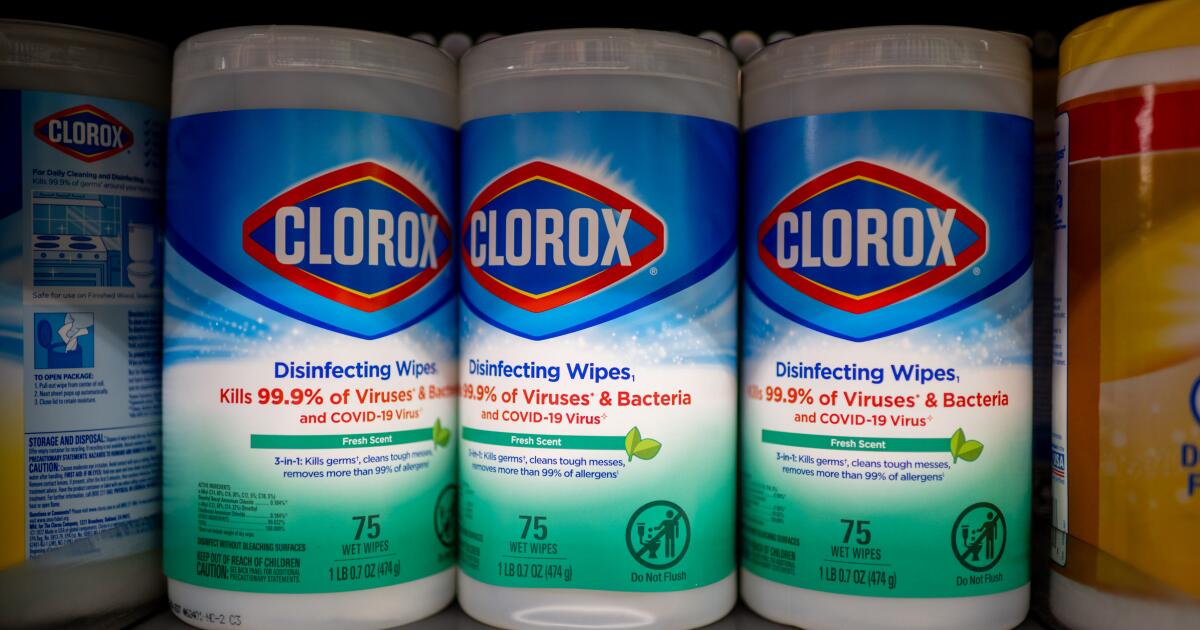

Anyone looking to stock up on Clorox bleach or the brand’s other products may have trouble finding them on store shelves for the next several months after a recent cyberattack upended the company’s production process.
The cybersecurity violation was first discovered Aug. 14 when the company detected unauthorized activity on several IT systems, Clorox said in a Securities and Exchange Commission filing Monday.
In response to the attack, Clorox took the affected systems offline and began operating at a reduced production capacity, resulting in “an elevated level of consumer product availability issues.”
An assessment of the cyberattack revealed widespread damage to the company’s IT infrastructure, causing it to spend the past month repairing its ordering systems and gradually putting them back online. The filing said the company expected to resume its regular order processing by the week of Sept. 25.
The limited output and manual ordering, however, have led Clorox to anticipate shortages affecting sales through March.
“Due to order processing delays and elevated level of product outages, the company now believes the impact will be material on Q1 financial results,” Clorox said.
The filing stated an internal review concluded the unauthorized cyber activity had been “contained” thanks to cybersecurity measures implemented by Clorox. Shares of the Clorox Co. fell about 2.4% Monday after the public filing, closing at $142.70.
The cyberattack is not the only cause of Clorox product shortages in recent years; after the outbreak of the COVID-19 pandemic in 2020, demand for Clorox disinfectant wipes and other sanitizing products spiked beyond the company’s output until well into the following year.

Anyone looking to stock up on Clorox bleach or the brand’s other products may have trouble finding them on store shelves for the next several months after a recent cyberattack upended the company’s production process.
The cybersecurity violation was first discovered Aug. 14 when the company detected unauthorized activity on several IT systems, Clorox said in a Securities and Exchange Commission filing Monday.
In response to the attack, Clorox took the affected systems offline and began operating at a reduced production capacity, resulting in “an elevated level of consumer product availability issues.”
An assessment of the cyberattack revealed widespread damage to the company’s IT infrastructure, causing it to spend the past month repairing its ordering systems and gradually putting them back online. The filing said the company expected to resume its regular order processing by the week of Sept. 25.
The limited output and manual ordering, however, have led Clorox to anticipate shortages affecting sales through March.
“Due to order processing delays and elevated level of product outages, the company now believes the impact will be material on Q1 financial results,” Clorox said.
The filing stated an internal review concluded the unauthorized cyber activity had been “contained” thanks to cybersecurity measures implemented by Clorox. Shares of the Clorox Co. fell about 2.4% Monday after the public filing, closing at $142.70.
The cyberattack is not the only cause of Clorox product shortages in recent years; after the outbreak of the COVID-19 pandemic in 2020, demand for Clorox disinfectant wipes and other sanitizing products spiked beyond the company’s output until well into the following year.

Anyone looking to stock up on Clorox bleach or the brand’s other products may have trouble finding them on store shelves for the next several months after a recent cyberattack upended the company’s production process.
The cybersecurity violation was first discovered Aug. 14 when the company detected unauthorized activity on several IT systems, Clorox said in a Securities and Exchange Commission filing Monday.
In response to the attack, Clorox took the affected systems offline and began operating at a reduced production capacity, resulting in “an elevated level of consumer product availability issues.”
An assessment of the cyberattack revealed widespread damage to the company’s IT infrastructure, causing it to spend the past month repairing its ordering systems and gradually putting them back online. The filing said the company expected to resume its regular order processing by the week of Sept. 25.
The limited output and manual ordering, however, have led Clorox to anticipate shortages affecting sales through March.
“Due to order processing delays and elevated level of product outages, the company now believes the impact will be material on Q1 financial results,” Clorox said.
The filing stated an internal review concluded the unauthorized cyber activity had been “contained” thanks to cybersecurity measures implemented by Clorox. Shares of the Clorox Co. fell about 2.4% Monday after the public filing, closing at $142.70.
The cyberattack is not the only cause of Clorox product shortages in recent years; after the outbreak of the COVID-19 pandemic in 2020, demand for Clorox disinfectant wipes and other sanitizing products spiked beyond the company’s output until well into the following year.
Anyone looking to stock up on Clorox bleach or the brand’s other products may have trouble finding them on store shelves for the next several months after a recent cyberattack upended the company’s production process.
The cybersecurity violation was first discovered Aug. 14 when the company detected unauthorized activity on several IT systems, Clorox said in a Securities and Exchange Commission filing Monday.
In response to the attack, Clorox took the affected systems offline and began operating at a reduced production capacity, resulting in “an elevated level of consumer product availability issues.”
An assessment of the cyberattack revealed widespread damage to the company’s IT infrastructure, causing it to spend the past month repairing its ordering systems and gradually putting them back online. The filing said the company expected to resume its regular order processing by the week of Sept. 25.
The limited output and manual ordering, however, have led Clorox to anticipate shortages affecting sales through March.
“Due to order processing delays and elevated level of product outages, the company now believes the impact will be material on Q1 financial results,” Clorox said.
The filing stated an internal review concluded the unauthorized cyber activity had been “contained” thanks to cybersecurity measures implemented by Clorox. Shares of the Clorox Co. fell about 2.4% Monday after the public filing, closing at $142.70.
The cyberattack is not the only cause of Clorox product shortages in recent years; after the outbreak of the COVID-19 pandemic in 2020, demand for Clorox disinfectant wipes and other sanitizing products spiked beyond the company’s output until well into the following year.

Anyone looking to stock up on Clorox bleach or the brand’s other products may have trouble finding them on store shelves for the next several months after a recent cyberattack upended the company’s production process.
The cybersecurity violation was first discovered Aug. 14 when the company detected unauthorized activity on several IT systems, Clorox said in a Securities and Exchange Commission filing Monday.
In response to the attack, Clorox took the affected systems offline and began operating at a reduced production capacity, resulting in “an elevated level of consumer product availability issues.”
An assessment of the cyberattack revealed widespread damage to the company’s IT infrastructure, causing it to spend the past month repairing its ordering systems and gradually putting them back online. The filing said the company expected to resume its regular order processing by the week of Sept. 25.
The limited output and manual ordering, however, have led Clorox to anticipate shortages affecting sales through March.
“Due to order processing delays and elevated level of product outages, the company now believes the impact will be material on Q1 financial results,” Clorox said.
The filing stated an internal review concluded the unauthorized cyber activity had been “contained” thanks to cybersecurity measures implemented by Clorox. Shares of the Clorox Co. fell about 2.4% Monday after the public filing, closing at $142.70.
The cyberattack is not the only cause of Clorox product shortages in recent years; after the outbreak of the COVID-19 pandemic in 2020, demand for Clorox disinfectant wipes and other sanitizing products spiked beyond the company’s output until well into the following year.
Anyone looking to stock up on Clorox bleach or the brand’s other products may have trouble finding them on store shelves for the next several months after a recent cyberattack upended the company’s production process.
The cybersecurity violation was first discovered Aug. 14 when the company detected unauthorized activity on several IT systems, Clorox said in a Securities and Exchange Commission filing Monday.
In response to the attack, Clorox took the affected systems offline and began operating at a reduced production capacity, resulting in “an elevated level of consumer product availability issues.”
An assessment of the cyberattack revealed widespread damage to the company’s IT infrastructure, causing it to spend the past month repairing its ordering systems and gradually putting them back online. The filing said the company expected to resume its regular order processing by the week of Sept. 25.
The limited output and manual ordering, however, have led Clorox to anticipate shortages affecting sales through March.
“Due to order processing delays and elevated level of product outages, the company now believes the impact will be material on Q1 financial results,” Clorox said.
The filing stated an internal review concluded the unauthorized cyber activity had been “contained” thanks to cybersecurity measures implemented by Clorox. Shares of the Clorox Co. fell about 2.4% Monday after the public filing, closing at $142.70.
The cyberattack is not the only cause of Clorox product shortages in recent years; after the outbreak of the COVID-19 pandemic in 2020, demand for Clorox disinfectant wipes and other sanitizing products spiked beyond the company’s output until well into the following year.
Anyone looking to stock up on Clorox bleach or the brand’s other products may have trouble finding them on store shelves for the next several months after a recent cyberattack upended the company’s production process.
The cybersecurity violation was first discovered Aug. 14 when the company detected unauthorized activity on several IT systems, Clorox said in a Securities and Exchange Commission filing Monday.
In response to the attack, Clorox took the affected systems offline and began operating at a reduced production capacity, resulting in “an elevated level of consumer product availability issues.”
An assessment of the cyberattack revealed widespread damage to the company’s IT infrastructure, causing it to spend the past month repairing its ordering systems and gradually putting them back online. The filing said the company expected to resume its regular order processing by the week of Sept. 25.
The limited output and manual ordering, however, have led Clorox to anticipate shortages affecting sales through March.
“Due to order processing delays and elevated level of product outages, the company now believes the impact will be material on Q1 financial results,” Clorox said.
The filing stated an internal review concluded the unauthorized cyber activity had been “contained” thanks to cybersecurity measures implemented by Clorox. Shares of the Clorox Co. fell about 2.4% Monday after the public filing, closing at $142.70.
The cyberattack is not the only cause of Clorox product shortages in recent years; after the outbreak of the COVID-19 pandemic in 2020, demand for Clorox disinfectant wipes and other sanitizing products spiked beyond the company’s output until well into the following year.
Anyone looking to stock up on Clorox bleach or the brand’s other products may have trouble finding them on store shelves for the next several months after a recent cyberattack upended the company’s production process.
The cybersecurity violation was first discovered Aug. 14 when the company detected unauthorized activity on several IT systems, Clorox said in a Securities and Exchange Commission filing Monday.
In response to the attack, Clorox took the affected systems offline and began operating at a reduced production capacity, resulting in “an elevated level of consumer product availability issues.”
An assessment of the cyberattack revealed widespread damage to the company’s IT infrastructure, causing it to spend the past month repairing its ordering systems and gradually putting them back online. The filing said the company expected to resume its regular order processing by the week of Sept. 25.
The limited output and manual ordering, however, have led Clorox to anticipate shortages affecting sales through March.
“Due to order processing delays and elevated level of product outages, the company now believes the impact will be material on Q1 financial results,” Clorox said.
The filing stated an internal review concluded the unauthorized cyber activity had been “contained” thanks to cybersecurity measures implemented by Clorox. Shares of the Clorox Co. fell about 2.4% Monday after the public filing, closing at $142.70.
The cyberattack is not the only cause of Clorox product shortages in recent years; after the outbreak of the COVID-19 pandemic in 2020, demand for Clorox disinfectant wipes and other sanitizing products spiked beyond the company’s output until well into the following year.

