

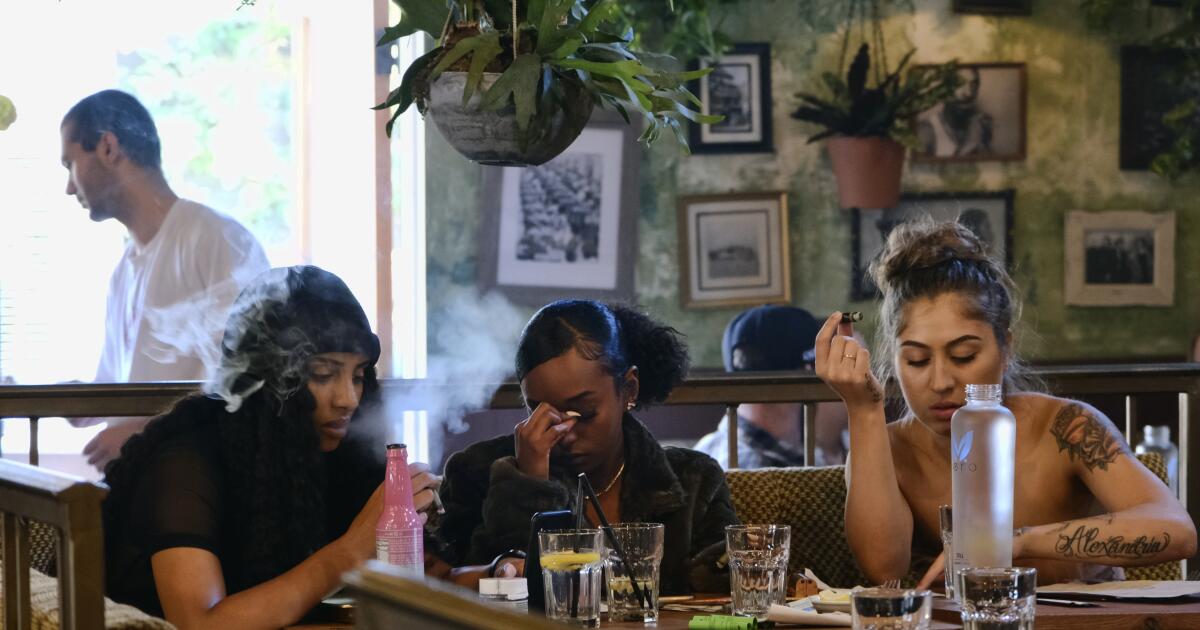
Californians are just one signature away from Amsterdam-style cannabis cafes opening up across the state sometime next year.
Legislation heading to Gov. Gavin Newsom’s desk for final approval will allow weed dispensaries to convert their businesses into cafes where they can sell food and cannabis products and host live concerts. The bill cleared the California State Senate with a 33-to-3 vote and the Assembly with a final vote of 66 to 9 on Monday.
The bill’s author, Assemblyman Matt Haney (D-San Francisco), said the legislation would allow struggling dispensaries to generate more sales tax revenue for the state.
Although it is technically not illegal for customers to consume cannabis at a dispensary, it is illegal for a dispensary to sell non-cannabis products such as coffee or food.
Assembly Bill 374 will allow dispensaries to move away from a pharmacy-like business model to one that is more inviting. The bill will not allow cannabis cafes to serve alcohol, and coffee shops will not be able to sell cannabis. Dispensaries will still need to comply with local jurisdictions and cannot operate where weed shops are prohibited.
The cafe model will give dispensaries another tool to serve customers, Haney said.
“Lots of people want to enjoy legal cannabis in the company of others,” Haney said in a statement. “And many people want to do that while sipping coffee, eating a scone, or listening to music. There’s absolutely no good reason from an economic, health, or safety standpoint that the state should make that illegal. If an authorized cannabis retail store wants to also sell a cup of coffee and a sandwich, we should allow cities to make that possible and stop holding back these small businesses.”
There are more than 700 coffee shops that sell cannabis across the Netherlands, and the businesses see over a billion dollars in sales each year, Haney said.
His bill aims to replace a medical-marijuana-only culture with a more relaxed, social setting similar to those Dutch cafes, Haney said.
“There’s just a huge opportunity to bring people into these establishments to consume cannabis safely and legally, and to create community and culture at the same time,” Haney told The Times.
The city of West Hollywood launched its own cannabis lounge program in 2018 with a limited number of licenses. But Haney said that current regulations hinder how those businesses can operate, because a lounge is not allowed to prepare food on site.
In West Hollywood, cannabis cafes are using workarounds to serve food and drinks. At the Artist Tree Dispensary & Weed Delivery on Santa Monica Boulevard, weed smokers can hang out in the second-floor lounge as if dining at a restaurant. People can order food from Fresh Corn Grill, a restaurant that has a deal with the Artist Tree.
“So we have plated food available. We’re mimicking the experience of being in a restaurant though we are not the actual ones selling the food,” said Lauren Fontein, a co-owner of the Artist Tree. “We just kind of have to jerry-rig the process to get there.”
Although the experience is great for customers, Fontein said, the proceeds go to the restaurant, not her business.
“That’s the big problem, which is why this bill is very important,” she said. “The food and beverages are a big part of the revenue scheme, and we’re not able to take advantage of that now.”
Dispensaries can’t make headway as they try to compete with restaurants, bars and the illegal market, Haney said.
“The current laws are arbitrary and irrational,” he said, “and frankly harmful to this legal cannabis industry that we need to survive and thrive in our state.”
If approved by Newsom, the cannabis cafe law will go into effect starting Jan. 1, 2024.
Los Angeles Times staff writer Noah Gold contributed to this report.

Californians are just one signature away from Amsterdam-style cannabis cafes opening up across the state sometime next year.
Legislation heading to Gov. Gavin Newsom’s desk for final approval will allow weed dispensaries to convert their businesses into cafes where they can sell food and cannabis products and host live concerts. The bill cleared the California State Senate with a 33-to-3 vote and the Assembly with a final vote of 66 to 9 on Monday.
The bill’s author, Assemblyman Matt Haney (D-San Francisco), said the legislation would allow struggling dispensaries to generate more sales tax revenue for the state.
Although it is technically not illegal for customers to consume cannabis at a dispensary, it is illegal for a dispensary to sell non-cannabis products such as coffee or food.
Assembly Bill 374 will allow dispensaries to move away from a pharmacy-like business model to one that is more inviting. The bill will not allow cannabis cafes to serve alcohol, and coffee shops will not be able to sell cannabis. Dispensaries will still need to comply with local jurisdictions and cannot operate where weed shops are prohibited.
The cafe model will give dispensaries another tool to serve customers, Haney said.
“Lots of people want to enjoy legal cannabis in the company of others,” Haney said in a statement. “And many people want to do that while sipping coffee, eating a scone, or listening to music. There’s absolutely no good reason from an economic, health, or safety standpoint that the state should make that illegal. If an authorized cannabis retail store wants to also sell a cup of coffee and a sandwich, we should allow cities to make that possible and stop holding back these small businesses.”
There are more than 700 coffee shops that sell cannabis across the Netherlands, and the businesses see over a billion dollars in sales each year, Haney said.
His bill aims to replace a medical-marijuana-only culture with a more relaxed, social setting similar to those Dutch cafes, Haney said.
“There’s just a huge opportunity to bring people into these establishments to consume cannabis safely and legally, and to create community and culture at the same time,” Haney told The Times.
The city of West Hollywood launched its own cannabis lounge program in 2018 with a limited number of licenses. But Haney said that current regulations hinder how those businesses can operate, because a lounge is not allowed to prepare food on site.
In West Hollywood, cannabis cafes are using workarounds to serve food and drinks. At the Artist Tree Dispensary & Weed Delivery on Santa Monica Boulevard, weed smokers can hang out in the second-floor lounge as if dining at a restaurant. People can order food from Fresh Corn Grill, a restaurant that has a deal with the Artist Tree.
“So we have plated food available. We’re mimicking the experience of being in a restaurant though we are not the actual ones selling the food,” said Lauren Fontein, a co-owner of the Artist Tree. “We just kind of have to jerry-rig the process to get there.”
Although the experience is great for customers, Fontein said, the proceeds go to the restaurant, not her business.
“That’s the big problem, which is why this bill is very important,” she said. “The food and beverages are a big part of the revenue scheme, and we’re not able to take advantage of that now.”
Dispensaries can’t make headway as they try to compete with restaurants, bars and the illegal market, Haney said.
“The current laws are arbitrary and irrational,” he said, “and frankly harmful to this legal cannabis industry that we need to survive and thrive in our state.”
If approved by Newsom, the cannabis cafe law will go into effect starting Jan. 1, 2024.
Los Angeles Times staff writer Noah Gold contributed to this report.

Californians are just one signature away from Amsterdam-style cannabis cafes opening up across the state sometime next year.
Legislation heading to Gov. Gavin Newsom’s desk for final approval will allow weed dispensaries to convert their businesses into cafes where they can sell food and cannabis products and host live concerts. The bill cleared the California State Senate with a 33-to-3 vote and the Assembly with a final vote of 66 to 9 on Monday.
The bill’s author, Assemblyman Matt Haney (D-San Francisco), said the legislation would allow struggling dispensaries to generate more sales tax revenue for the state.
Although it is technically not illegal for customers to consume cannabis at a dispensary, it is illegal for a dispensary to sell non-cannabis products such as coffee or food.
Assembly Bill 374 will allow dispensaries to move away from a pharmacy-like business model to one that is more inviting. The bill will not allow cannabis cafes to serve alcohol, and coffee shops will not be able to sell cannabis. Dispensaries will still need to comply with local jurisdictions and cannot operate where weed shops are prohibited.
The cafe model will give dispensaries another tool to serve customers, Haney said.
“Lots of people want to enjoy legal cannabis in the company of others,” Haney said in a statement. “And many people want to do that while sipping coffee, eating a scone, or listening to music. There’s absolutely no good reason from an economic, health, or safety standpoint that the state should make that illegal. If an authorized cannabis retail store wants to also sell a cup of coffee and a sandwich, we should allow cities to make that possible and stop holding back these small businesses.”
There are more than 700 coffee shops that sell cannabis across the Netherlands, and the businesses see over a billion dollars in sales each year, Haney said.
His bill aims to replace a medical-marijuana-only culture with a more relaxed, social setting similar to those Dutch cafes, Haney said.
“There’s just a huge opportunity to bring people into these establishments to consume cannabis safely and legally, and to create community and culture at the same time,” Haney told The Times.
The city of West Hollywood launched its own cannabis lounge program in 2018 with a limited number of licenses. But Haney said that current regulations hinder how those businesses can operate, because a lounge is not allowed to prepare food on site.
In West Hollywood, cannabis cafes are using workarounds to serve food and drinks. At the Artist Tree Dispensary & Weed Delivery on Santa Monica Boulevard, weed smokers can hang out in the second-floor lounge as if dining at a restaurant. People can order food from Fresh Corn Grill, a restaurant that has a deal with the Artist Tree.
“So we have plated food available. We’re mimicking the experience of being in a restaurant though we are not the actual ones selling the food,” said Lauren Fontein, a co-owner of the Artist Tree. “We just kind of have to jerry-rig the process to get there.”
Although the experience is great for customers, Fontein said, the proceeds go to the restaurant, not her business.
“That’s the big problem, which is why this bill is very important,” she said. “The food and beverages are a big part of the revenue scheme, and we’re not able to take advantage of that now.”
Dispensaries can’t make headway as they try to compete with restaurants, bars and the illegal market, Haney said.
“The current laws are arbitrary and irrational,” he said, “and frankly harmful to this legal cannabis industry that we need to survive and thrive in our state.”
If approved by Newsom, the cannabis cafe law will go into effect starting Jan. 1, 2024.
Los Angeles Times staff writer Noah Gold contributed to this report.
Californians are just one signature away from Amsterdam-style cannabis cafes opening up across the state sometime next year.
Legislation heading to Gov. Gavin Newsom’s desk for final approval will allow weed dispensaries to convert their businesses into cafes where they can sell food and cannabis products and host live concerts. The bill cleared the California State Senate with a 33-to-3 vote and the Assembly with a final vote of 66 to 9 on Monday.
The bill’s author, Assemblyman Matt Haney (D-San Francisco), said the legislation would allow struggling dispensaries to generate more sales tax revenue for the state.
Although it is technically not illegal for customers to consume cannabis at a dispensary, it is illegal for a dispensary to sell non-cannabis products such as coffee or food.
Assembly Bill 374 will allow dispensaries to move away from a pharmacy-like business model to one that is more inviting. The bill will not allow cannabis cafes to serve alcohol, and coffee shops will not be able to sell cannabis. Dispensaries will still need to comply with local jurisdictions and cannot operate where weed shops are prohibited.
The cafe model will give dispensaries another tool to serve customers, Haney said.
“Lots of people want to enjoy legal cannabis in the company of others,” Haney said in a statement. “And many people want to do that while sipping coffee, eating a scone, or listening to music. There’s absolutely no good reason from an economic, health, or safety standpoint that the state should make that illegal. If an authorized cannabis retail store wants to also sell a cup of coffee and a sandwich, we should allow cities to make that possible and stop holding back these small businesses.”
There are more than 700 coffee shops that sell cannabis across the Netherlands, and the businesses see over a billion dollars in sales each year, Haney said.
His bill aims to replace a medical-marijuana-only culture with a more relaxed, social setting similar to those Dutch cafes, Haney said.
“There’s just a huge opportunity to bring people into these establishments to consume cannabis safely and legally, and to create community and culture at the same time,” Haney told The Times.
The city of West Hollywood launched its own cannabis lounge program in 2018 with a limited number of licenses. But Haney said that current regulations hinder how those businesses can operate, because a lounge is not allowed to prepare food on site.
In West Hollywood, cannabis cafes are using workarounds to serve food and drinks. At the Artist Tree Dispensary & Weed Delivery on Santa Monica Boulevard, weed smokers can hang out in the second-floor lounge as if dining at a restaurant. People can order food from Fresh Corn Grill, a restaurant that has a deal with the Artist Tree.
“So we have plated food available. We’re mimicking the experience of being in a restaurant though we are not the actual ones selling the food,” said Lauren Fontein, a co-owner of the Artist Tree. “We just kind of have to jerry-rig the process to get there.”
Although the experience is great for customers, Fontein said, the proceeds go to the restaurant, not her business.
“That’s the big problem, which is why this bill is very important,” she said. “The food and beverages are a big part of the revenue scheme, and we’re not able to take advantage of that now.”
Dispensaries can’t make headway as they try to compete with restaurants, bars and the illegal market, Haney said.
“The current laws are arbitrary and irrational,” he said, “and frankly harmful to this legal cannabis industry that we need to survive and thrive in our state.”
If approved by Newsom, the cannabis cafe law will go into effect starting Jan. 1, 2024.
Los Angeles Times staff writer Noah Gold contributed to this report.

Californians are just one signature away from Amsterdam-style cannabis cafes opening up across the state sometime next year.
Legislation heading to Gov. Gavin Newsom’s desk for final approval will allow weed dispensaries to convert their businesses into cafes where they can sell food and cannabis products and host live concerts. The bill cleared the California State Senate with a 33-to-3 vote and the Assembly with a final vote of 66 to 9 on Monday.
The bill’s author, Assemblyman Matt Haney (D-San Francisco), said the legislation would allow struggling dispensaries to generate more sales tax revenue for the state.
Although it is technically not illegal for customers to consume cannabis at a dispensary, it is illegal for a dispensary to sell non-cannabis products such as coffee or food.
Assembly Bill 374 will allow dispensaries to move away from a pharmacy-like business model to one that is more inviting. The bill will not allow cannabis cafes to serve alcohol, and coffee shops will not be able to sell cannabis. Dispensaries will still need to comply with local jurisdictions and cannot operate where weed shops are prohibited.
The cafe model will give dispensaries another tool to serve customers, Haney said.
“Lots of people want to enjoy legal cannabis in the company of others,” Haney said in a statement. “And many people want to do that while sipping coffee, eating a scone, or listening to music. There’s absolutely no good reason from an economic, health, or safety standpoint that the state should make that illegal. If an authorized cannabis retail store wants to also sell a cup of coffee and a sandwich, we should allow cities to make that possible and stop holding back these small businesses.”
There are more than 700 coffee shops that sell cannabis across the Netherlands, and the businesses see over a billion dollars in sales each year, Haney said.
His bill aims to replace a medical-marijuana-only culture with a more relaxed, social setting similar to those Dutch cafes, Haney said.
“There’s just a huge opportunity to bring people into these establishments to consume cannabis safely and legally, and to create community and culture at the same time,” Haney told The Times.
The city of West Hollywood launched its own cannabis lounge program in 2018 with a limited number of licenses. But Haney said that current regulations hinder how those businesses can operate, because a lounge is not allowed to prepare food on site.
In West Hollywood, cannabis cafes are using workarounds to serve food and drinks. At the Artist Tree Dispensary & Weed Delivery on Santa Monica Boulevard, weed smokers can hang out in the second-floor lounge as if dining at a restaurant. People can order food from Fresh Corn Grill, a restaurant that has a deal with the Artist Tree.
“So we have plated food available. We’re mimicking the experience of being in a restaurant though we are not the actual ones selling the food,” said Lauren Fontein, a co-owner of the Artist Tree. “We just kind of have to jerry-rig the process to get there.”
Although the experience is great for customers, Fontein said, the proceeds go to the restaurant, not her business.
“That’s the big problem, which is why this bill is very important,” she said. “The food and beverages are a big part of the revenue scheme, and we’re not able to take advantage of that now.”
Dispensaries can’t make headway as they try to compete with restaurants, bars and the illegal market, Haney said.
“The current laws are arbitrary and irrational,” he said, “and frankly harmful to this legal cannabis industry that we need to survive and thrive in our state.”
If approved by Newsom, the cannabis cafe law will go into effect starting Jan. 1, 2024.
Los Angeles Times staff writer Noah Gold contributed to this report.
Californians are just one signature away from Amsterdam-style cannabis cafes opening up across the state sometime next year.
Legislation heading to Gov. Gavin Newsom’s desk for final approval will allow weed dispensaries to convert their businesses into cafes where they can sell food and cannabis products and host live concerts. The bill cleared the California State Senate with a 33-to-3 vote and the Assembly with a final vote of 66 to 9 on Monday.
The bill’s author, Assemblyman Matt Haney (D-San Francisco), said the legislation would allow struggling dispensaries to generate more sales tax revenue for the state.
Although it is technically not illegal for customers to consume cannabis at a dispensary, it is illegal for a dispensary to sell non-cannabis products such as coffee or food.
Assembly Bill 374 will allow dispensaries to move away from a pharmacy-like business model to one that is more inviting. The bill will not allow cannabis cafes to serve alcohol, and coffee shops will not be able to sell cannabis. Dispensaries will still need to comply with local jurisdictions and cannot operate where weed shops are prohibited.
The cafe model will give dispensaries another tool to serve customers, Haney said.
“Lots of people want to enjoy legal cannabis in the company of others,” Haney said in a statement. “And many people want to do that while sipping coffee, eating a scone, or listening to music. There’s absolutely no good reason from an economic, health, or safety standpoint that the state should make that illegal. If an authorized cannabis retail store wants to also sell a cup of coffee and a sandwich, we should allow cities to make that possible and stop holding back these small businesses.”
There are more than 700 coffee shops that sell cannabis across the Netherlands, and the businesses see over a billion dollars in sales each year, Haney said.
His bill aims to replace a medical-marijuana-only culture with a more relaxed, social setting similar to those Dutch cafes, Haney said.
“There’s just a huge opportunity to bring people into these establishments to consume cannabis safely and legally, and to create community and culture at the same time,” Haney told The Times.
The city of West Hollywood launched its own cannabis lounge program in 2018 with a limited number of licenses. But Haney said that current regulations hinder how those businesses can operate, because a lounge is not allowed to prepare food on site.
In West Hollywood, cannabis cafes are using workarounds to serve food and drinks. At the Artist Tree Dispensary & Weed Delivery on Santa Monica Boulevard, weed smokers can hang out in the second-floor lounge as if dining at a restaurant. People can order food from Fresh Corn Grill, a restaurant that has a deal with the Artist Tree.
“So we have plated food available. We’re mimicking the experience of being in a restaurant though we are not the actual ones selling the food,” said Lauren Fontein, a co-owner of the Artist Tree. “We just kind of have to jerry-rig the process to get there.”
Although the experience is great for customers, Fontein said, the proceeds go to the restaurant, not her business.
“That’s the big problem, which is why this bill is very important,” she said. “The food and beverages are a big part of the revenue scheme, and we’re not able to take advantage of that now.”
Dispensaries can’t make headway as they try to compete with restaurants, bars and the illegal market, Haney said.
“The current laws are arbitrary and irrational,” he said, “and frankly harmful to this legal cannabis industry that we need to survive and thrive in our state.”
If approved by Newsom, the cannabis cafe law will go into effect starting Jan. 1, 2024.
Los Angeles Times staff writer Noah Gold contributed to this report.
Californians are just one signature away from Amsterdam-style cannabis cafes opening up across the state sometime next year.
Legislation heading to Gov. Gavin Newsom’s desk for final approval will allow weed dispensaries to convert their businesses into cafes where they can sell food and cannabis products and host live concerts. The bill cleared the California State Senate with a 33-to-3 vote and the Assembly with a final vote of 66 to 9 on Monday.
The bill’s author, Assemblyman Matt Haney (D-San Francisco), said the legislation would allow struggling dispensaries to generate more sales tax revenue for the state.
Although it is technically not illegal for customers to consume cannabis at a dispensary, it is illegal for a dispensary to sell non-cannabis products such as coffee or food.
Assembly Bill 374 will allow dispensaries to move away from a pharmacy-like business model to one that is more inviting. The bill will not allow cannabis cafes to serve alcohol, and coffee shops will not be able to sell cannabis. Dispensaries will still need to comply with local jurisdictions and cannot operate where weed shops are prohibited.
The cafe model will give dispensaries another tool to serve customers, Haney said.
“Lots of people want to enjoy legal cannabis in the company of others,” Haney said in a statement. “And many people want to do that while sipping coffee, eating a scone, or listening to music. There’s absolutely no good reason from an economic, health, or safety standpoint that the state should make that illegal. If an authorized cannabis retail store wants to also sell a cup of coffee and a sandwich, we should allow cities to make that possible and stop holding back these small businesses.”
There are more than 700 coffee shops that sell cannabis across the Netherlands, and the businesses see over a billion dollars in sales each year, Haney said.
His bill aims to replace a medical-marijuana-only culture with a more relaxed, social setting similar to those Dutch cafes, Haney said.
“There’s just a huge opportunity to bring people into these establishments to consume cannabis safely and legally, and to create community and culture at the same time,” Haney told The Times.
The city of West Hollywood launched its own cannabis lounge program in 2018 with a limited number of licenses. But Haney said that current regulations hinder how those businesses can operate, because a lounge is not allowed to prepare food on site.
In West Hollywood, cannabis cafes are using workarounds to serve food and drinks. At the Artist Tree Dispensary & Weed Delivery on Santa Monica Boulevard, weed smokers can hang out in the second-floor lounge as if dining at a restaurant. People can order food from Fresh Corn Grill, a restaurant that has a deal with the Artist Tree.
“So we have plated food available. We’re mimicking the experience of being in a restaurant though we are not the actual ones selling the food,” said Lauren Fontein, a co-owner of the Artist Tree. “We just kind of have to jerry-rig the process to get there.”
Although the experience is great for customers, Fontein said, the proceeds go to the restaurant, not her business.
“That’s the big problem, which is why this bill is very important,” she said. “The food and beverages are a big part of the revenue scheme, and we’re not able to take advantage of that now.”
Dispensaries can’t make headway as they try to compete with restaurants, bars and the illegal market, Haney said.
“The current laws are arbitrary and irrational,” he said, “and frankly harmful to this legal cannabis industry that we need to survive and thrive in our state.”
If approved by Newsom, the cannabis cafe law will go into effect starting Jan. 1, 2024.
Los Angeles Times staff writer Noah Gold contributed to this report.
Californians are just one signature away from Amsterdam-style cannabis cafes opening up across the state sometime next year.
Legislation heading to Gov. Gavin Newsom’s desk for final approval will allow weed dispensaries to convert their businesses into cafes where they can sell food and cannabis products and host live concerts. The bill cleared the California State Senate with a 33-to-3 vote and the Assembly with a final vote of 66 to 9 on Monday.
The bill’s author, Assemblyman Matt Haney (D-San Francisco), said the legislation would allow struggling dispensaries to generate more sales tax revenue for the state.
Although it is technically not illegal for customers to consume cannabis at a dispensary, it is illegal for a dispensary to sell non-cannabis products such as coffee or food.
Assembly Bill 374 will allow dispensaries to move away from a pharmacy-like business model to one that is more inviting. The bill will not allow cannabis cafes to serve alcohol, and coffee shops will not be able to sell cannabis. Dispensaries will still need to comply with local jurisdictions and cannot operate where weed shops are prohibited.
The cafe model will give dispensaries another tool to serve customers, Haney said.
“Lots of people want to enjoy legal cannabis in the company of others,” Haney said in a statement. “And many people want to do that while sipping coffee, eating a scone, or listening to music. There’s absolutely no good reason from an economic, health, or safety standpoint that the state should make that illegal. If an authorized cannabis retail store wants to also sell a cup of coffee and a sandwich, we should allow cities to make that possible and stop holding back these small businesses.”
There are more than 700 coffee shops that sell cannabis across the Netherlands, and the businesses see over a billion dollars in sales each year, Haney said.
His bill aims to replace a medical-marijuana-only culture with a more relaxed, social setting similar to those Dutch cafes, Haney said.
“There’s just a huge opportunity to bring people into these establishments to consume cannabis safely and legally, and to create community and culture at the same time,” Haney told The Times.
The city of West Hollywood launched its own cannabis lounge program in 2018 with a limited number of licenses. But Haney said that current regulations hinder how those businesses can operate, because a lounge is not allowed to prepare food on site.
In West Hollywood, cannabis cafes are using workarounds to serve food and drinks. At the Artist Tree Dispensary & Weed Delivery on Santa Monica Boulevard, weed smokers can hang out in the second-floor lounge as if dining at a restaurant. People can order food from Fresh Corn Grill, a restaurant that has a deal with the Artist Tree.
“So we have plated food available. We’re mimicking the experience of being in a restaurant though we are not the actual ones selling the food,” said Lauren Fontein, a co-owner of the Artist Tree. “We just kind of have to jerry-rig the process to get there.”
Although the experience is great for customers, Fontein said, the proceeds go to the restaurant, not her business.
“That’s the big problem, which is why this bill is very important,” she said. “The food and beverages are a big part of the revenue scheme, and we’re not able to take advantage of that now.”
Dispensaries can’t make headway as they try to compete with restaurants, bars and the illegal market, Haney said.
“The current laws are arbitrary and irrational,” he said, “and frankly harmful to this legal cannabis industry that we need to survive and thrive in our state.”
If approved by Newsom, the cannabis cafe law will go into effect starting Jan. 1, 2024.
Los Angeles Times staff writer Noah Gold contributed to this report.

Californians are just one signature away from Amsterdam-style cannabis cafes opening up across the state sometime next year.
Legislation heading to Gov. Gavin Newsom’s desk for final approval will allow weed dispensaries to convert their businesses into cafes where they can sell food and cannabis products and host live concerts. The bill cleared the California State Senate with a 33-to-3 vote and the Assembly with a final vote of 66 to 9 on Monday.
The bill’s author, Assemblyman Matt Haney (D-San Francisco), said the legislation would allow struggling dispensaries to generate more sales tax revenue for the state.
Although it is technically not illegal for customers to consume cannabis at a dispensary, it is illegal for a dispensary to sell non-cannabis products such as coffee or food.
Assembly Bill 374 will allow dispensaries to move away from a pharmacy-like business model to one that is more inviting. The bill will not allow cannabis cafes to serve alcohol, and coffee shops will not be able to sell cannabis. Dispensaries will still need to comply with local jurisdictions and cannot operate where weed shops are prohibited.
The cafe model will give dispensaries another tool to serve customers, Haney said.
“Lots of people want to enjoy legal cannabis in the company of others,” Haney said in a statement. “And many people want to do that while sipping coffee, eating a scone, or listening to music. There’s absolutely no good reason from an economic, health, or safety standpoint that the state should make that illegal. If an authorized cannabis retail store wants to also sell a cup of coffee and a sandwich, we should allow cities to make that possible and stop holding back these small businesses.”
There are more than 700 coffee shops that sell cannabis across the Netherlands, and the businesses see over a billion dollars in sales each year, Haney said.
His bill aims to replace a medical-marijuana-only culture with a more relaxed, social setting similar to those Dutch cafes, Haney said.
“There’s just a huge opportunity to bring people into these establishments to consume cannabis safely and legally, and to create community and culture at the same time,” Haney told The Times.
The city of West Hollywood launched its own cannabis lounge program in 2018 with a limited number of licenses. But Haney said that current regulations hinder how those businesses can operate, because a lounge is not allowed to prepare food on site.
In West Hollywood, cannabis cafes are using workarounds to serve food and drinks. At the Artist Tree Dispensary & Weed Delivery on Santa Monica Boulevard, weed smokers can hang out in the second-floor lounge as if dining at a restaurant. People can order food from Fresh Corn Grill, a restaurant that has a deal with the Artist Tree.
“So we have plated food available. We’re mimicking the experience of being in a restaurant though we are not the actual ones selling the food,” said Lauren Fontein, a co-owner of the Artist Tree. “We just kind of have to jerry-rig the process to get there.”
Although the experience is great for customers, Fontein said, the proceeds go to the restaurant, not her business.
“That’s the big problem, which is why this bill is very important,” she said. “The food and beverages are a big part of the revenue scheme, and we’re not able to take advantage of that now.”
Dispensaries can’t make headway as they try to compete with restaurants, bars and the illegal market, Haney said.
“The current laws are arbitrary and irrational,” he said, “and frankly harmful to this legal cannabis industry that we need to survive and thrive in our state.”
If approved by Newsom, the cannabis cafe law will go into effect starting Jan. 1, 2024.
Los Angeles Times staff writer Noah Gold contributed to this report.
Californians are just one signature away from Amsterdam-style cannabis cafes opening up across the state sometime next year.
Legislation heading to Gov. Gavin Newsom’s desk for final approval will allow weed dispensaries to convert their businesses into cafes where they can sell food and cannabis products and host live concerts. The bill cleared the California State Senate with a 33-to-3 vote and the Assembly with a final vote of 66 to 9 on Monday.
The bill’s author, Assemblyman Matt Haney (D-San Francisco), said the legislation would allow struggling dispensaries to generate more sales tax revenue for the state.
Although it is technically not illegal for customers to consume cannabis at a dispensary, it is illegal for a dispensary to sell non-cannabis products such as coffee or food.
Assembly Bill 374 will allow dispensaries to move away from a pharmacy-like business model to one that is more inviting. The bill will not allow cannabis cafes to serve alcohol, and coffee shops will not be able to sell cannabis. Dispensaries will still need to comply with local jurisdictions and cannot operate where weed shops are prohibited.
The cafe model will give dispensaries another tool to serve customers, Haney said.
“Lots of people want to enjoy legal cannabis in the company of others,” Haney said in a statement. “And many people want to do that while sipping coffee, eating a scone, or listening to music. There’s absolutely no good reason from an economic, health, or safety standpoint that the state should make that illegal. If an authorized cannabis retail store wants to also sell a cup of coffee and a sandwich, we should allow cities to make that possible and stop holding back these small businesses.”
There are more than 700 coffee shops that sell cannabis across the Netherlands, and the businesses see over a billion dollars in sales each year, Haney said.
His bill aims to replace a medical-marijuana-only culture with a more relaxed, social setting similar to those Dutch cafes, Haney said.
“There’s just a huge opportunity to bring people into these establishments to consume cannabis safely and legally, and to create community and culture at the same time,” Haney told The Times.
The city of West Hollywood launched its own cannabis lounge program in 2018 with a limited number of licenses. But Haney said that current regulations hinder how those businesses can operate, because a lounge is not allowed to prepare food on site.
In West Hollywood, cannabis cafes are using workarounds to serve food and drinks. At the Artist Tree Dispensary & Weed Delivery on Santa Monica Boulevard, weed smokers can hang out in the second-floor lounge as if dining at a restaurant. People can order food from Fresh Corn Grill, a restaurant that has a deal with the Artist Tree.
“So we have plated food available. We’re mimicking the experience of being in a restaurant though we are not the actual ones selling the food,” said Lauren Fontein, a co-owner of the Artist Tree. “We just kind of have to jerry-rig the process to get there.”
Although the experience is great for customers, Fontein said, the proceeds go to the restaurant, not her business.
“That’s the big problem, which is why this bill is very important,” she said. “The food and beverages are a big part of the revenue scheme, and we’re not able to take advantage of that now.”
Dispensaries can’t make headway as they try to compete with restaurants, bars and the illegal market, Haney said.
“The current laws are arbitrary and irrational,” he said, “and frankly harmful to this legal cannabis industry that we need to survive and thrive in our state.”
If approved by Newsom, the cannabis cafe law will go into effect starting Jan. 1, 2024.
Los Angeles Times staff writer Noah Gold contributed to this report.
Californians are just one signature away from Amsterdam-style cannabis cafes opening up across the state sometime next year.
Legislation heading to Gov. Gavin Newsom’s desk for final approval will allow weed dispensaries to convert their businesses into cafes where they can sell food and cannabis products and host live concerts. The bill cleared the California State Senate with a 33-to-3 vote and the Assembly with a final vote of 66 to 9 on Monday.
The bill’s author, Assemblyman Matt Haney (D-San Francisco), said the legislation would allow struggling dispensaries to generate more sales tax revenue for the state.
Although it is technically not illegal for customers to consume cannabis at a dispensary, it is illegal for a dispensary to sell non-cannabis products such as coffee or food.
Assembly Bill 374 will allow dispensaries to move away from a pharmacy-like business model to one that is more inviting. The bill will not allow cannabis cafes to serve alcohol, and coffee shops will not be able to sell cannabis. Dispensaries will still need to comply with local jurisdictions and cannot operate where weed shops are prohibited.
The cafe model will give dispensaries another tool to serve customers, Haney said.
“Lots of people want to enjoy legal cannabis in the company of others,” Haney said in a statement. “And many people want to do that while sipping coffee, eating a scone, or listening to music. There’s absolutely no good reason from an economic, health, or safety standpoint that the state should make that illegal. If an authorized cannabis retail store wants to also sell a cup of coffee and a sandwich, we should allow cities to make that possible and stop holding back these small businesses.”
There are more than 700 coffee shops that sell cannabis across the Netherlands, and the businesses see over a billion dollars in sales each year, Haney said.
His bill aims to replace a medical-marijuana-only culture with a more relaxed, social setting similar to those Dutch cafes, Haney said.
“There’s just a huge opportunity to bring people into these establishments to consume cannabis safely and legally, and to create community and culture at the same time,” Haney told The Times.
The city of West Hollywood launched its own cannabis lounge program in 2018 with a limited number of licenses. But Haney said that current regulations hinder how those businesses can operate, because a lounge is not allowed to prepare food on site.
In West Hollywood, cannabis cafes are using workarounds to serve food and drinks. At the Artist Tree Dispensary & Weed Delivery on Santa Monica Boulevard, weed smokers can hang out in the second-floor lounge as if dining at a restaurant. People can order food from Fresh Corn Grill, a restaurant that has a deal with the Artist Tree.
“So we have plated food available. We’re mimicking the experience of being in a restaurant though we are not the actual ones selling the food,” said Lauren Fontein, a co-owner of the Artist Tree. “We just kind of have to jerry-rig the process to get there.”
Although the experience is great for customers, Fontein said, the proceeds go to the restaurant, not her business.
“That’s the big problem, which is why this bill is very important,” she said. “The food and beverages are a big part of the revenue scheme, and we’re not able to take advantage of that now.”
Dispensaries can’t make headway as they try to compete with restaurants, bars and the illegal market, Haney said.
“The current laws are arbitrary and irrational,” he said, “and frankly harmful to this legal cannabis industry that we need to survive and thrive in our state.”
If approved by Newsom, the cannabis cafe law will go into effect starting Jan. 1, 2024.
Los Angeles Times staff writer Noah Gold contributed to this report.
Californians are just one signature away from Amsterdam-style cannabis cafes opening up across the state sometime next year.
Legislation heading to Gov. Gavin Newsom’s desk for final approval will allow weed dispensaries to convert their businesses into cafes where they can sell food and cannabis products and host live concerts. The bill cleared the California State Senate with a 33-to-3 vote and the Assembly with a final vote of 66 to 9 on Monday.
The bill’s author, Assemblyman Matt Haney (D-San Francisco), said the legislation would allow struggling dispensaries to generate more sales tax revenue for the state.
Although it is technically not illegal for customers to consume cannabis at a dispensary, it is illegal for a dispensary to sell non-cannabis products such as coffee or food.
Assembly Bill 374 will allow dispensaries to move away from a pharmacy-like business model to one that is more inviting. The bill will not allow cannabis cafes to serve alcohol, and coffee shops will not be able to sell cannabis. Dispensaries will still need to comply with local jurisdictions and cannot operate where weed shops are prohibited.
The cafe model will give dispensaries another tool to serve customers, Haney said.
“Lots of people want to enjoy legal cannabis in the company of others,” Haney said in a statement. “And many people want to do that while sipping coffee, eating a scone, or listening to music. There’s absolutely no good reason from an economic, health, or safety standpoint that the state should make that illegal. If an authorized cannabis retail store wants to also sell a cup of coffee and a sandwich, we should allow cities to make that possible and stop holding back these small businesses.”
There are more than 700 coffee shops that sell cannabis across the Netherlands, and the businesses see over a billion dollars in sales each year, Haney said.
His bill aims to replace a medical-marijuana-only culture with a more relaxed, social setting similar to those Dutch cafes, Haney said.
“There’s just a huge opportunity to bring people into these establishments to consume cannabis safely and legally, and to create community and culture at the same time,” Haney told The Times.
The city of West Hollywood launched its own cannabis lounge program in 2018 with a limited number of licenses. But Haney said that current regulations hinder how those businesses can operate, because a lounge is not allowed to prepare food on site.
In West Hollywood, cannabis cafes are using workarounds to serve food and drinks. At the Artist Tree Dispensary & Weed Delivery on Santa Monica Boulevard, weed smokers can hang out in the second-floor lounge as if dining at a restaurant. People can order food from Fresh Corn Grill, a restaurant that has a deal with the Artist Tree.
“So we have plated food available. We’re mimicking the experience of being in a restaurant though we are not the actual ones selling the food,” said Lauren Fontein, a co-owner of the Artist Tree. “We just kind of have to jerry-rig the process to get there.”
Although the experience is great for customers, Fontein said, the proceeds go to the restaurant, not her business.
“That’s the big problem, which is why this bill is very important,” she said. “The food and beverages are a big part of the revenue scheme, and we’re not able to take advantage of that now.”
Dispensaries can’t make headway as they try to compete with restaurants, bars and the illegal market, Haney said.
“The current laws are arbitrary and irrational,” he said, “and frankly harmful to this legal cannabis industry that we need to survive and thrive in our state.”
If approved by Newsom, the cannabis cafe law will go into effect starting Jan. 1, 2024.
Los Angeles Times staff writer Noah Gold contributed to this report.
Californians are just one signature away from Amsterdam-style cannabis cafes opening up across the state sometime next year.
Legislation heading to Gov. Gavin Newsom’s desk for final approval will allow weed dispensaries to convert their businesses into cafes where they can sell food and cannabis products and host live concerts. The bill cleared the California State Senate with a 33-to-3 vote and the Assembly with a final vote of 66 to 9 on Monday.
The bill’s author, Assemblyman Matt Haney (D-San Francisco), said the legislation would allow struggling dispensaries to generate more sales tax revenue for the state.
Although it is technically not illegal for customers to consume cannabis at a dispensary, it is illegal for a dispensary to sell non-cannabis products such as coffee or food.
Assembly Bill 374 will allow dispensaries to move away from a pharmacy-like business model to one that is more inviting. The bill will not allow cannabis cafes to serve alcohol, and coffee shops will not be able to sell cannabis. Dispensaries will still need to comply with local jurisdictions and cannot operate where weed shops are prohibited.
The cafe model will give dispensaries another tool to serve customers, Haney said.
“Lots of people want to enjoy legal cannabis in the company of others,” Haney said in a statement. “And many people want to do that while sipping coffee, eating a scone, or listening to music. There’s absolutely no good reason from an economic, health, or safety standpoint that the state should make that illegal. If an authorized cannabis retail store wants to also sell a cup of coffee and a sandwich, we should allow cities to make that possible and stop holding back these small businesses.”
There are more than 700 coffee shops that sell cannabis across the Netherlands, and the businesses see over a billion dollars in sales each year, Haney said.
His bill aims to replace a medical-marijuana-only culture with a more relaxed, social setting similar to those Dutch cafes, Haney said.
“There’s just a huge opportunity to bring people into these establishments to consume cannabis safely and legally, and to create community and culture at the same time,” Haney told The Times.
The city of West Hollywood launched its own cannabis lounge program in 2018 with a limited number of licenses. But Haney said that current regulations hinder how those businesses can operate, because a lounge is not allowed to prepare food on site.
In West Hollywood, cannabis cafes are using workarounds to serve food and drinks. At the Artist Tree Dispensary & Weed Delivery on Santa Monica Boulevard, weed smokers can hang out in the second-floor lounge as if dining at a restaurant. People can order food from Fresh Corn Grill, a restaurant that has a deal with the Artist Tree.
“So we have plated food available. We’re mimicking the experience of being in a restaurant though we are not the actual ones selling the food,” said Lauren Fontein, a co-owner of the Artist Tree. “We just kind of have to jerry-rig the process to get there.”
Although the experience is great for customers, Fontein said, the proceeds go to the restaurant, not her business.
“That’s the big problem, which is why this bill is very important,” she said. “The food and beverages are a big part of the revenue scheme, and we’re not able to take advantage of that now.”
Dispensaries can’t make headway as they try to compete with restaurants, bars and the illegal market, Haney said.
“The current laws are arbitrary and irrational,” he said, “and frankly harmful to this legal cannabis industry that we need to survive and thrive in our state.”
If approved by Newsom, the cannabis cafe law will go into effect starting Jan. 1, 2024.
Los Angeles Times staff writer Noah Gold contributed to this report.
Californians are just one signature away from Amsterdam-style cannabis cafes opening up across the state sometime next year.
Legislation heading to Gov. Gavin Newsom’s desk for final approval will allow weed dispensaries to convert their businesses into cafes where they can sell food and cannabis products and host live concerts. The bill cleared the California State Senate with a 33-to-3 vote and the Assembly with a final vote of 66 to 9 on Monday.
The bill’s author, Assemblyman Matt Haney (D-San Francisco), said the legislation would allow struggling dispensaries to generate more sales tax revenue for the state.
Although it is technically not illegal for customers to consume cannabis at a dispensary, it is illegal for a dispensary to sell non-cannabis products such as coffee or food.
Assembly Bill 374 will allow dispensaries to move away from a pharmacy-like business model to one that is more inviting. The bill will not allow cannabis cafes to serve alcohol, and coffee shops will not be able to sell cannabis. Dispensaries will still need to comply with local jurisdictions and cannot operate where weed shops are prohibited.
The cafe model will give dispensaries another tool to serve customers, Haney said.
“Lots of people want to enjoy legal cannabis in the company of others,” Haney said in a statement. “And many people want to do that while sipping coffee, eating a scone, or listening to music. There’s absolutely no good reason from an economic, health, or safety standpoint that the state should make that illegal. If an authorized cannabis retail store wants to also sell a cup of coffee and a sandwich, we should allow cities to make that possible and stop holding back these small businesses.”
There are more than 700 coffee shops that sell cannabis across the Netherlands, and the businesses see over a billion dollars in sales each year, Haney said.
His bill aims to replace a medical-marijuana-only culture with a more relaxed, social setting similar to those Dutch cafes, Haney said.
“There’s just a huge opportunity to bring people into these establishments to consume cannabis safely and legally, and to create community and culture at the same time,” Haney told The Times.
The city of West Hollywood launched its own cannabis lounge program in 2018 with a limited number of licenses. But Haney said that current regulations hinder how those businesses can operate, because a lounge is not allowed to prepare food on site.
In West Hollywood, cannabis cafes are using workarounds to serve food and drinks. At the Artist Tree Dispensary & Weed Delivery on Santa Monica Boulevard, weed smokers can hang out in the second-floor lounge as if dining at a restaurant. People can order food from Fresh Corn Grill, a restaurant that has a deal with the Artist Tree.
“So we have plated food available. We’re mimicking the experience of being in a restaurant though we are not the actual ones selling the food,” said Lauren Fontein, a co-owner of the Artist Tree. “We just kind of have to jerry-rig the process to get there.”
Although the experience is great for customers, Fontein said, the proceeds go to the restaurant, not her business.
“That’s the big problem, which is why this bill is very important,” she said. “The food and beverages are a big part of the revenue scheme, and we’re not able to take advantage of that now.”
Dispensaries can’t make headway as they try to compete with restaurants, bars and the illegal market, Haney said.
“The current laws are arbitrary and irrational,” he said, “and frankly harmful to this legal cannabis industry that we need to survive and thrive in our state.”
If approved by Newsom, the cannabis cafe law will go into effect starting Jan. 1, 2024.
Los Angeles Times staff writer Noah Gold contributed to this report.
Californians are just one signature away from Amsterdam-style cannabis cafes opening up across the state sometime next year.
Legislation heading to Gov. Gavin Newsom’s desk for final approval will allow weed dispensaries to convert their businesses into cafes where they can sell food and cannabis products and host live concerts. The bill cleared the California State Senate with a 33-to-3 vote and the Assembly with a final vote of 66 to 9 on Monday.
The bill’s author, Assemblyman Matt Haney (D-San Francisco), said the legislation would allow struggling dispensaries to generate more sales tax revenue for the state.
Although it is technically not illegal for customers to consume cannabis at a dispensary, it is illegal for a dispensary to sell non-cannabis products such as coffee or food.
Assembly Bill 374 will allow dispensaries to move away from a pharmacy-like business model to one that is more inviting. The bill will not allow cannabis cafes to serve alcohol, and coffee shops will not be able to sell cannabis. Dispensaries will still need to comply with local jurisdictions and cannot operate where weed shops are prohibited.
The cafe model will give dispensaries another tool to serve customers, Haney said.
“Lots of people want to enjoy legal cannabis in the company of others,” Haney said in a statement. “And many people want to do that while sipping coffee, eating a scone, or listening to music. There’s absolutely no good reason from an economic, health, or safety standpoint that the state should make that illegal. If an authorized cannabis retail store wants to also sell a cup of coffee and a sandwich, we should allow cities to make that possible and stop holding back these small businesses.”
There are more than 700 coffee shops that sell cannabis across the Netherlands, and the businesses see over a billion dollars in sales each year, Haney said.
His bill aims to replace a medical-marijuana-only culture with a more relaxed, social setting similar to those Dutch cafes, Haney said.
“There’s just a huge opportunity to bring people into these establishments to consume cannabis safely and legally, and to create community and culture at the same time,” Haney told The Times.
The city of West Hollywood launched its own cannabis lounge program in 2018 with a limited number of licenses. But Haney said that current regulations hinder how those businesses can operate, because a lounge is not allowed to prepare food on site.
In West Hollywood, cannabis cafes are using workarounds to serve food and drinks. At the Artist Tree Dispensary & Weed Delivery on Santa Monica Boulevard, weed smokers can hang out in the second-floor lounge as if dining at a restaurant. People can order food from Fresh Corn Grill, a restaurant that has a deal with the Artist Tree.
“So we have plated food available. We’re mimicking the experience of being in a restaurant though we are not the actual ones selling the food,” said Lauren Fontein, a co-owner of the Artist Tree. “We just kind of have to jerry-rig the process to get there.”
Although the experience is great for customers, Fontein said, the proceeds go to the restaurant, not her business.
“That’s the big problem, which is why this bill is very important,” she said. “The food and beverages are a big part of the revenue scheme, and we’re not able to take advantage of that now.”
Dispensaries can’t make headway as they try to compete with restaurants, bars and the illegal market, Haney said.
“The current laws are arbitrary and irrational,” he said, “and frankly harmful to this legal cannabis industry that we need to survive and thrive in our state.”
If approved by Newsom, the cannabis cafe law will go into effect starting Jan. 1, 2024.
Los Angeles Times staff writer Noah Gold contributed to this report.
Californians are just one signature away from Amsterdam-style cannabis cafes opening up across the state sometime next year.
Legislation heading to Gov. Gavin Newsom’s desk for final approval will allow weed dispensaries to convert their businesses into cafes where they can sell food and cannabis products and host live concerts. The bill cleared the California State Senate with a 33-to-3 vote and the Assembly with a final vote of 66 to 9 on Monday.
The bill’s author, Assemblyman Matt Haney (D-San Francisco), said the legislation would allow struggling dispensaries to generate more sales tax revenue for the state.
Although it is technically not illegal for customers to consume cannabis at a dispensary, it is illegal for a dispensary to sell non-cannabis products such as coffee or food.
Assembly Bill 374 will allow dispensaries to move away from a pharmacy-like business model to one that is more inviting. The bill will not allow cannabis cafes to serve alcohol, and coffee shops will not be able to sell cannabis. Dispensaries will still need to comply with local jurisdictions and cannot operate where weed shops are prohibited.
The cafe model will give dispensaries another tool to serve customers, Haney said.
“Lots of people want to enjoy legal cannabis in the company of others,” Haney said in a statement. “And many people want to do that while sipping coffee, eating a scone, or listening to music. There’s absolutely no good reason from an economic, health, or safety standpoint that the state should make that illegal. If an authorized cannabis retail store wants to also sell a cup of coffee and a sandwich, we should allow cities to make that possible and stop holding back these small businesses.”
There are more than 700 coffee shops that sell cannabis across the Netherlands, and the businesses see over a billion dollars in sales each year, Haney said.
His bill aims to replace a medical-marijuana-only culture with a more relaxed, social setting similar to those Dutch cafes, Haney said.
“There’s just a huge opportunity to bring people into these establishments to consume cannabis safely and legally, and to create community and culture at the same time,” Haney told The Times.
The city of West Hollywood launched its own cannabis lounge program in 2018 with a limited number of licenses. But Haney said that current regulations hinder how those businesses can operate, because a lounge is not allowed to prepare food on site.
In West Hollywood, cannabis cafes are using workarounds to serve food and drinks. At the Artist Tree Dispensary & Weed Delivery on Santa Monica Boulevard, weed smokers can hang out in the second-floor lounge as if dining at a restaurant. People can order food from Fresh Corn Grill, a restaurant that has a deal with the Artist Tree.
“So we have plated food available. We’re mimicking the experience of being in a restaurant though we are not the actual ones selling the food,” said Lauren Fontein, a co-owner of the Artist Tree. “We just kind of have to jerry-rig the process to get there.”
Although the experience is great for customers, Fontein said, the proceeds go to the restaurant, not her business.
“That’s the big problem, which is why this bill is very important,” she said. “The food and beverages are a big part of the revenue scheme, and we’re not able to take advantage of that now.”
Dispensaries can’t make headway as they try to compete with restaurants, bars and the illegal market, Haney said.
“The current laws are arbitrary and irrational,” he said, “and frankly harmful to this legal cannabis industry that we need to survive and thrive in our state.”
If approved by Newsom, the cannabis cafe law will go into effect starting Jan. 1, 2024.
Los Angeles Times staff writer Noah Gold contributed to this report.

