

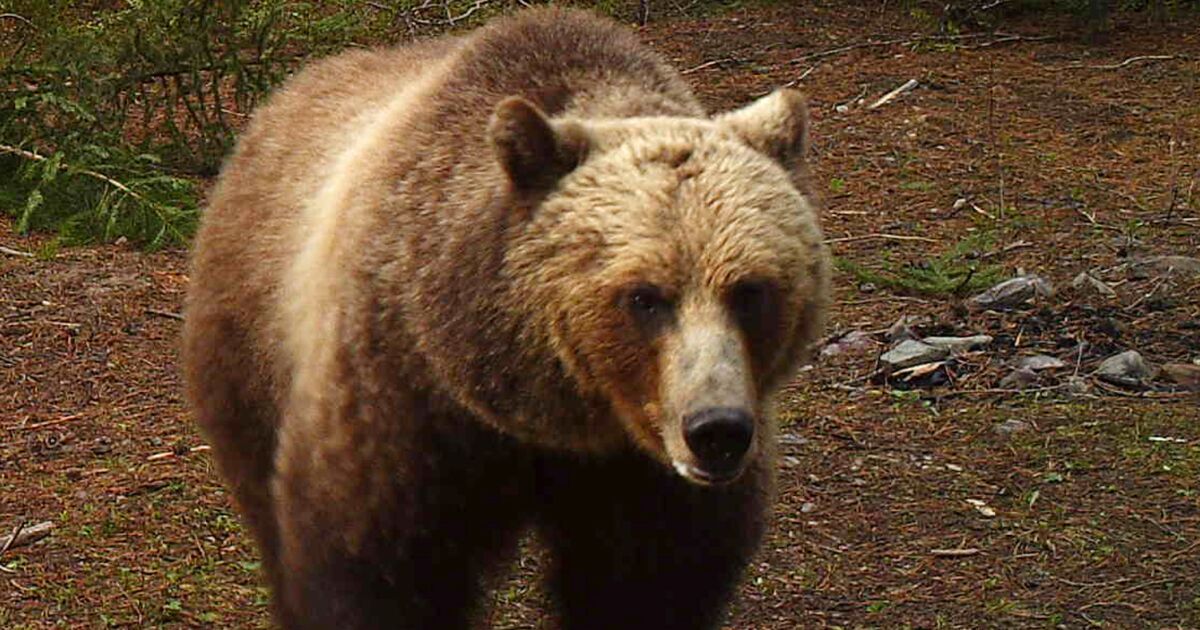
A grizzly bear attacked and killed a woman over the weekend outside the Montana town of West Yellowstone, officials said, forcing the closure of a national forest while trackers searched for the animal.
The Montana Fish, Wildlife and Parks Department issued a news release Monday morning confirming that a hiker had notified officials at 8 a.m. Saturday of the discovery of a body.
Injuries and wounds suffered by the woman were consistent with those of a bear attack, wildlife wardens and specialists said.
The Gallatin County Sheriff’s Office confirmed Monday afternoon that the victim was 48-year-old Amie Adamson of Derby, Kan.
Adamson, according to an ABC report, is a former teacher who backpacked across the country and wrote a book about the subject.
Experts found tracks made by an adult grizzly bear and at least one cub, though the total number of bears present was unknown. No animal carcasses or day beds — favored spots where grizzlies nap during daylight hours — were around, notes parks officials, which are telltale signs of a longer-term presence of bears.
Forest Service Supervisor Mary Erickson shut down Custer Gallatin National Forest; it was closed beginning Saturday and won’t reopen until Aug. 23.
“The purpose of this order is to protect public health and safety from unsafe conditions resulting from bear activity in the area,” wrote Erickson in her order Saturday. A follow-up call to her office was not immediately returned.
The attack happened along the forest’s Buttermilk Trail about eight miles west of West Yellowstone. Roughly 4 million visitors pass through the town of about 1,300 residents annually. West Yellowstone serves as the gateway to Yellowstone National Park, home to popular attractions such as the famed Old Faithful geyser.
Fish, Wildlife and Parks Department staff notified residents and visitors to the town of the attack and park closure.
Wildlife officials and specialists then began trapping operations since the killing occurred near campgrounds and park visitors. Park officials eventually employed aircraft in the search but hadn’t located the bear as of Monday afternoon.
Morgan Jacobsen, a Montana Fish, Wildlife and Parks Department information officer, said it was still unknown what would happen to the bear when it was caught.
“Each incident is unique, and we have yet to determine what we’ll do,” Jacobsen said. “We first have to identify the bear, and then we’ll make a joint decision with [U.S.] Fish and Wildlife Services.”
Jacobsen did confirm that euthanasia was a possibility.
Jon T. Coleman, a University of Notre Dame professor of American history with an emphasis on environmental issues, said that an occasional animal attack — even a fatal one — would not deter patrons from visiting parks.
“There has always been an expectation, going back to the 19th century when these parks were founded, that people would have close encounters with wild animals,” said Coleman, author of the book “Vicious: Wolves and Men in America.” “When you have that expectation, you’re going to at least have a couple of these incidents and accidents a year. It seems like that’s a trade-off most people live with.”
Coleman noted that park visits continued to trend upward. Even though Americans are spending more time at home and on screens each year, the number of visitors to national parks is increasing and reaching near pre-pandemic levels.
“It’s a remarkable trend that I can’t explain,” Coleman said. “Maybe people have more resources to do this type of traveling or maybe being stuck inside makes these places even more attractive.”
Montana Fish, Wildlife and Parks Department officials said the grizzly bear population would “only become denser and more widespread” in the coming years, “increasing the likelihood that residents and recreationists will encounter them in more places each year.”
Jacobsen said this was the third bear fatality in as many years in the same national forest. Hiker Craig Clouatre was killed in March 2022, while Carl Mock succumbed to injuries suffered in a bear attack in April 2021.
In recent months, other violent human-animal encounters have happened across the nation.
Two women were attacked by bison in separate incidents that occurred within a three-day span earlier this month.
A 47-year-old hiker was gored while walking on Yellowstone Lake’s north shore, near the northwestern tip of Wyoming, on July 17. She survived but suffered significant injuries to her chest and abdomen.
The previous Saturday, a Minnesota woman was attacked but survived, with injuries to one foot and her stomach, in an incident at North Dakota’s Theodore Roosevelt National Park.
In June, a 300-pound black bear mauled and killed 66-year-old camper Steve Jackson outside a Prescott, Ariz., campsite.
On July 11, another black bear severely injured a 35-year-old man inside the Weminuche Wilderness in southwestern Colorado. The man survived bites to his head, the Colorado Sun reported.

A grizzly bear attacked and killed a woman over the weekend outside the Montana town of West Yellowstone, officials said, forcing the closure of a national forest while trackers searched for the animal.
The Montana Fish, Wildlife and Parks Department issued a news release Monday morning confirming that a hiker had notified officials at 8 a.m. Saturday of the discovery of a body.
Injuries and wounds suffered by the woman were consistent with those of a bear attack, wildlife wardens and specialists said.
The Gallatin County Sheriff’s Office confirmed Monday afternoon that the victim was 48-year-old Amie Adamson of Derby, Kan.
Adamson, according to an ABC report, is a former teacher who backpacked across the country and wrote a book about the subject.
Experts found tracks made by an adult grizzly bear and at least one cub, though the total number of bears present was unknown. No animal carcasses or day beds — favored spots where grizzlies nap during daylight hours — were around, notes parks officials, which are telltale signs of a longer-term presence of bears.
Forest Service Supervisor Mary Erickson shut down Custer Gallatin National Forest; it was closed beginning Saturday and won’t reopen until Aug. 23.
“The purpose of this order is to protect public health and safety from unsafe conditions resulting from bear activity in the area,” wrote Erickson in her order Saturday. A follow-up call to her office was not immediately returned.
The attack happened along the forest’s Buttermilk Trail about eight miles west of West Yellowstone. Roughly 4 million visitors pass through the town of about 1,300 residents annually. West Yellowstone serves as the gateway to Yellowstone National Park, home to popular attractions such as the famed Old Faithful geyser.
Fish, Wildlife and Parks Department staff notified residents and visitors to the town of the attack and park closure.
Wildlife officials and specialists then began trapping operations since the killing occurred near campgrounds and park visitors. Park officials eventually employed aircraft in the search but hadn’t located the bear as of Monday afternoon.
Morgan Jacobsen, a Montana Fish, Wildlife and Parks Department information officer, said it was still unknown what would happen to the bear when it was caught.
“Each incident is unique, and we have yet to determine what we’ll do,” Jacobsen said. “We first have to identify the bear, and then we’ll make a joint decision with [U.S.] Fish and Wildlife Services.”
Jacobsen did confirm that euthanasia was a possibility.
Jon T. Coleman, a University of Notre Dame professor of American history with an emphasis on environmental issues, said that an occasional animal attack — even a fatal one — would not deter patrons from visiting parks.
“There has always been an expectation, going back to the 19th century when these parks were founded, that people would have close encounters with wild animals,” said Coleman, author of the book “Vicious: Wolves and Men in America.” “When you have that expectation, you’re going to at least have a couple of these incidents and accidents a year. It seems like that’s a trade-off most people live with.”
Coleman noted that park visits continued to trend upward. Even though Americans are spending more time at home and on screens each year, the number of visitors to national parks is increasing and reaching near pre-pandemic levels.
“It’s a remarkable trend that I can’t explain,” Coleman said. “Maybe people have more resources to do this type of traveling or maybe being stuck inside makes these places even more attractive.”
Montana Fish, Wildlife and Parks Department officials said the grizzly bear population would “only become denser and more widespread” in the coming years, “increasing the likelihood that residents and recreationists will encounter them in more places each year.”
Jacobsen said this was the third bear fatality in as many years in the same national forest. Hiker Craig Clouatre was killed in March 2022, while Carl Mock succumbed to injuries suffered in a bear attack in April 2021.
In recent months, other violent human-animal encounters have happened across the nation.
Two women were attacked by bison in separate incidents that occurred within a three-day span earlier this month.
A 47-year-old hiker was gored while walking on Yellowstone Lake’s north shore, near the northwestern tip of Wyoming, on July 17. She survived but suffered significant injuries to her chest and abdomen.
The previous Saturday, a Minnesota woman was attacked but survived, with injuries to one foot and her stomach, in an incident at North Dakota’s Theodore Roosevelt National Park.
In June, a 300-pound black bear mauled and killed 66-year-old camper Steve Jackson outside a Prescott, Ariz., campsite.
On July 11, another black bear severely injured a 35-year-old man inside the Weminuche Wilderness in southwestern Colorado. The man survived bites to his head, the Colorado Sun reported.

A grizzly bear attacked and killed a woman over the weekend outside the Montana town of West Yellowstone, officials said, forcing the closure of a national forest while trackers searched for the animal.
The Montana Fish, Wildlife and Parks Department issued a news release Monday morning confirming that a hiker had notified officials at 8 a.m. Saturday of the discovery of a body.
Injuries and wounds suffered by the woman were consistent with those of a bear attack, wildlife wardens and specialists said.
The Gallatin County Sheriff’s Office confirmed Monday afternoon that the victim was 48-year-old Amie Adamson of Derby, Kan.
Adamson, according to an ABC report, is a former teacher who backpacked across the country and wrote a book about the subject.
Experts found tracks made by an adult grizzly bear and at least one cub, though the total number of bears present was unknown. No animal carcasses or day beds — favored spots where grizzlies nap during daylight hours — were around, notes parks officials, which are telltale signs of a longer-term presence of bears.
Forest Service Supervisor Mary Erickson shut down Custer Gallatin National Forest; it was closed beginning Saturday and won’t reopen until Aug. 23.
“The purpose of this order is to protect public health and safety from unsafe conditions resulting from bear activity in the area,” wrote Erickson in her order Saturday. A follow-up call to her office was not immediately returned.
The attack happened along the forest’s Buttermilk Trail about eight miles west of West Yellowstone. Roughly 4 million visitors pass through the town of about 1,300 residents annually. West Yellowstone serves as the gateway to Yellowstone National Park, home to popular attractions such as the famed Old Faithful geyser.
Fish, Wildlife and Parks Department staff notified residents and visitors to the town of the attack and park closure.
Wildlife officials and specialists then began trapping operations since the killing occurred near campgrounds and park visitors. Park officials eventually employed aircraft in the search but hadn’t located the bear as of Monday afternoon.
Morgan Jacobsen, a Montana Fish, Wildlife and Parks Department information officer, said it was still unknown what would happen to the bear when it was caught.
“Each incident is unique, and we have yet to determine what we’ll do,” Jacobsen said. “We first have to identify the bear, and then we’ll make a joint decision with [U.S.] Fish and Wildlife Services.”
Jacobsen did confirm that euthanasia was a possibility.
Jon T. Coleman, a University of Notre Dame professor of American history with an emphasis on environmental issues, said that an occasional animal attack — even a fatal one — would not deter patrons from visiting parks.
“There has always been an expectation, going back to the 19th century when these parks were founded, that people would have close encounters with wild animals,” said Coleman, author of the book “Vicious: Wolves and Men in America.” “When you have that expectation, you’re going to at least have a couple of these incidents and accidents a year. It seems like that’s a trade-off most people live with.”
Coleman noted that park visits continued to trend upward. Even though Americans are spending more time at home and on screens each year, the number of visitors to national parks is increasing and reaching near pre-pandemic levels.
“It’s a remarkable trend that I can’t explain,” Coleman said. “Maybe people have more resources to do this type of traveling or maybe being stuck inside makes these places even more attractive.”
Montana Fish, Wildlife and Parks Department officials said the grizzly bear population would “only become denser and more widespread” in the coming years, “increasing the likelihood that residents and recreationists will encounter them in more places each year.”
Jacobsen said this was the third bear fatality in as many years in the same national forest. Hiker Craig Clouatre was killed in March 2022, while Carl Mock succumbed to injuries suffered in a bear attack in April 2021.
In recent months, other violent human-animal encounters have happened across the nation.
Two women were attacked by bison in separate incidents that occurred within a three-day span earlier this month.
A 47-year-old hiker was gored while walking on Yellowstone Lake’s north shore, near the northwestern tip of Wyoming, on July 17. She survived but suffered significant injuries to her chest and abdomen.
The previous Saturday, a Minnesota woman was attacked but survived, with injuries to one foot and her stomach, in an incident at North Dakota’s Theodore Roosevelt National Park.
In June, a 300-pound black bear mauled and killed 66-year-old camper Steve Jackson outside a Prescott, Ariz., campsite.
On July 11, another black bear severely injured a 35-year-old man inside the Weminuche Wilderness in southwestern Colorado. The man survived bites to his head, the Colorado Sun reported.
A grizzly bear attacked and killed a woman over the weekend outside the Montana town of West Yellowstone, officials said, forcing the closure of a national forest while trackers searched for the animal.
The Montana Fish, Wildlife and Parks Department issued a news release Monday morning confirming that a hiker had notified officials at 8 a.m. Saturday of the discovery of a body.
Injuries and wounds suffered by the woman were consistent with those of a bear attack, wildlife wardens and specialists said.
The Gallatin County Sheriff’s Office confirmed Monday afternoon that the victim was 48-year-old Amie Adamson of Derby, Kan.
Adamson, according to an ABC report, is a former teacher who backpacked across the country and wrote a book about the subject.
Experts found tracks made by an adult grizzly bear and at least one cub, though the total number of bears present was unknown. No animal carcasses or day beds — favored spots where grizzlies nap during daylight hours — were around, notes parks officials, which are telltale signs of a longer-term presence of bears.
Forest Service Supervisor Mary Erickson shut down Custer Gallatin National Forest; it was closed beginning Saturday and won’t reopen until Aug. 23.
“The purpose of this order is to protect public health and safety from unsafe conditions resulting from bear activity in the area,” wrote Erickson in her order Saturday. A follow-up call to her office was not immediately returned.
The attack happened along the forest’s Buttermilk Trail about eight miles west of West Yellowstone. Roughly 4 million visitors pass through the town of about 1,300 residents annually. West Yellowstone serves as the gateway to Yellowstone National Park, home to popular attractions such as the famed Old Faithful geyser.
Fish, Wildlife and Parks Department staff notified residents and visitors to the town of the attack and park closure.
Wildlife officials and specialists then began trapping operations since the killing occurred near campgrounds and park visitors. Park officials eventually employed aircraft in the search but hadn’t located the bear as of Monday afternoon.
Morgan Jacobsen, a Montana Fish, Wildlife and Parks Department information officer, said it was still unknown what would happen to the bear when it was caught.
“Each incident is unique, and we have yet to determine what we’ll do,” Jacobsen said. “We first have to identify the bear, and then we’ll make a joint decision with [U.S.] Fish and Wildlife Services.”
Jacobsen did confirm that euthanasia was a possibility.
Jon T. Coleman, a University of Notre Dame professor of American history with an emphasis on environmental issues, said that an occasional animal attack — even a fatal one — would not deter patrons from visiting parks.
“There has always been an expectation, going back to the 19th century when these parks were founded, that people would have close encounters with wild animals,” said Coleman, author of the book “Vicious: Wolves and Men in America.” “When you have that expectation, you’re going to at least have a couple of these incidents and accidents a year. It seems like that’s a trade-off most people live with.”
Coleman noted that park visits continued to trend upward. Even though Americans are spending more time at home and on screens each year, the number of visitors to national parks is increasing and reaching near pre-pandemic levels.
“It’s a remarkable trend that I can’t explain,” Coleman said. “Maybe people have more resources to do this type of traveling or maybe being stuck inside makes these places even more attractive.”
Montana Fish, Wildlife and Parks Department officials said the grizzly bear population would “only become denser and more widespread” in the coming years, “increasing the likelihood that residents and recreationists will encounter them in more places each year.”
Jacobsen said this was the third bear fatality in as many years in the same national forest. Hiker Craig Clouatre was killed in March 2022, while Carl Mock succumbed to injuries suffered in a bear attack in April 2021.
In recent months, other violent human-animal encounters have happened across the nation.
Two women were attacked by bison in separate incidents that occurred within a three-day span earlier this month.
A 47-year-old hiker was gored while walking on Yellowstone Lake’s north shore, near the northwestern tip of Wyoming, on July 17. She survived but suffered significant injuries to her chest and abdomen.
The previous Saturday, a Minnesota woman was attacked but survived, with injuries to one foot and her stomach, in an incident at North Dakota’s Theodore Roosevelt National Park.
In June, a 300-pound black bear mauled and killed 66-year-old camper Steve Jackson outside a Prescott, Ariz., campsite.
On July 11, another black bear severely injured a 35-year-old man inside the Weminuche Wilderness in southwestern Colorado. The man survived bites to his head, the Colorado Sun reported.

A grizzly bear attacked and killed a woman over the weekend outside the Montana town of West Yellowstone, officials said, forcing the closure of a national forest while trackers searched for the animal.
The Montana Fish, Wildlife and Parks Department issued a news release Monday morning confirming that a hiker had notified officials at 8 a.m. Saturday of the discovery of a body.
Injuries and wounds suffered by the woman were consistent with those of a bear attack, wildlife wardens and specialists said.
The Gallatin County Sheriff’s Office confirmed Monday afternoon that the victim was 48-year-old Amie Adamson of Derby, Kan.
Adamson, according to an ABC report, is a former teacher who backpacked across the country and wrote a book about the subject.
Experts found tracks made by an adult grizzly bear and at least one cub, though the total number of bears present was unknown. No animal carcasses or day beds — favored spots where grizzlies nap during daylight hours — were around, notes parks officials, which are telltale signs of a longer-term presence of bears.
Forest Service Supervisor Mary Erickson shut down Custer Gallatin National Forest; it was closed beginning Saturday and won’t reopen until Aug. 23.
“The purpose of this order is to protect public health and safety from unsafe conditions resulting from bear activity in the area,” wrote Erickson in her order Saturday. A follow-up call to her office was not immediately returned.
The attack happened along the forest’s Buttermilk Trail about eight miles west of West Yellowstone. Roughly 4 million visitors pass through the town of about 1,300 residents annually. West Yellowstone serves as the gateway to Yellowstone National Park, home to popular attractions such as the famed Old Faithful geyser.
Fish, Wildlife and Parks Department staff notified residents and visitors to the town of the attack and park closure.
Wildlife officials and specialists then began trapping operations since the killing occurred near campgrounds and park visitors. Park officials eventually employed aircraft in the search but hadn’t located the bear as of Monday afternoon.
Morgan Jacobsen, a Montana Fish, Wildlife and Parks Department information officer, said it was still unknown what would happen to the bear when it was caught.
“Each incident is unique, and we have yet to determine what we’ll do,” Jacobsen said. “We first have to identify the bear, and then we’ll make a joint decision with [U.S.] Fish and Wildlife Services.”
Jacobsen did confirm that euthanasia was a possibility.
Jon T. Coleman, a University of Notre Dame professor of American history with an emphasis on environmental issues, said that an occasional animal attack — even a fatal one — would not deter patrons from visiting parks.
“There has always been an expectation, going back to the 19th century when these parks were founded, that people would have close encounters with wild animals,” said Coleman, author of the book “Vicious: Wolves and Men in America.” “When you have that expectation, you’re going to at least have a couple of these incidents and accidents a year. It seems like that’s a trade-off most people live with.”
Coleman noted that park visits continued to trend upward. Even though Americans are spending more time at home and on screens each year, the number of visitors to national parks is increasing and reaching near pre-pandemic levels.
“It’s a remarkable trend that I can’t explain,” Coleman said. “Maybe people have more resources to do this type of traveling or maybe being stuck inside makes these places even more attractive.”
Montana Fish, Wildlife and Parks Department officials said the grizzly bear population would “only become denser and more widespread” in the coming years, “increasing the likelihood that residents and recreationists will encounter them in more places each year.”
Jacobsen said this was the third bear fatality in as many years in the same national forest. Hiker Craig Clouatre was killed in March 2022, while Carl Mock succumbed to injuries suffered in a bear attack in April 2021.
In recent months, other violent human-animal encounters have happened across the nation.
Two women were attacked by bison in separate incidents that occurred within a three-day span earlier this month.
A 47-year-old hiker was gored while walking on Yellowstone Lake’s north shore, near the northwestern tip of Wyoming, on July 17. She survived but suffered significant injuries to her chest and abdomen.
The previous Saturday, a Minnesota woman was attacked but survived, with injuries to one foot and her stomach, in an incident at North Dakota’s Theodore Roosevelt National Park.
In June, a 300-pound black bear mauled and killed 66-year-old camper Steve Jackson outside a Prescott, Ariz., campsite.
On July 11, another black bear severely injured a 35-year-old man inside the Weminuche Wilderness in southwestern Colorado. The man survived bites to his head, the Colorado Sun reported.
A grizzly bear attacked and killed a woman over the weekend outside the Montana town of West Yellowstone, officials said, forcing the closure of a national forest while trackers searched for the animal.
The Montana Fish, Wildlife and Parks Department issued a news release Monday morning confirming that a hiker had notified officials at 8 a.m. Saturday of the discovery of a body.
Injuries and wounds suffered by the woman were consistent with those of a bear attack, wildlife wardens and specialists said.
The Gallatin County Sheriff’s Office confirmed Monday afternoon that the victim was 48-year-old Amie Adamson of Derby, Kan.
Adamson, according to an ABC report, is a former teacher who backpacked across the country and wrote a book about the subject.
Experts found tracks made by an adult grizzly bear and at least one cub, though the total number of bears present was unknown. No animal carcasses or day beds — favored spots where grizzlies nap during daylight hours — were around, notes parks officials, which are telltale signs of a longer-term presence of bears.
Forest Service Supervisor Mary Erickson shut down Custer Gallatin National Forest; it was closed beginning Saturday and won’t reopen until Aug. 23.
“The purpose of this order is to protect public health and safety from unsafe conditions resulting from bear activity in the area,” wrote Erickson in her order Saturday. A follow-up call to her office was not immediately returned.
The attack happened along the forest’s Buttermilk Trail about eight miles west of West Yellowstone. Roughly 4 million visitors pass through the town of about 1,300 residents annually. West Yellowstone serves as the gateway to Yellowstone National Park, home to popular attractions such as the famed Old Faithful geyser.
Fish, Wildlife and Parks Department staff notified residents and visitors to the town of the attack and park closure.
Wildlife officials and specialists then began trapping operations since the killing occurred near campgrounds and park visitors. Park officials eventually employed aircraft in the search but hadn’t located the bear as of Monday afternoon.
Morgan Jacobsen, a Montana Fish, Wildlife and Parks Department information officer, said it was still unknown what would happen to the bear when it was caught.
“Each incident is unique, and we have yet to determine what we’ll do,” Jacobsen said. “We first have to identify the bear, and then we’ll make a joint decision with [U.S.] Fish and Wildlife Services.”
Jacobsen did confirm that euthanasia was a possibility.
Jon T. Coleman, a University of Notre Dame professor of American history with an emphasis on environmental issues, said that an occasional animal attack — even a fatal one — would not deter patrons from visiting parks.
“There has always been an expectation, going back to the 19th century when these parks were founded, that people would have close encounters with wild animals,” said Coleman, author of the book “Vicious: Wolves and Men in America.” “When you have that expectation, you’re going to at least have a couple of these incidents and accidents a year. It seems like that’s a trade-off most people live with.”
Coleman noted that park visits continued to trend upward. Even though Americans are spending more time at home and on screens each year, the number of visitors to national parks is increasing and reaching near pre-pandemic levels.
“It’s a remarkable trend that I can’t explain,” Coleman said. “Maybe people have more resources to do this type of traveling or maybe being stuck inside makes these places even more attractive.”
Montana Fish, Wildlife and Parks Department officials said the grizzly bear population would “only become denser and more widespread” in the coming years, “increasing the likelihood that residents and recreationists will encounter them in more places each year.”
Jacobsen said this was the third bear fatality in as many years in the same national forest. Hiker Craig Clouatre was killed in March 2022, while Carl Mock succumbed to injuries suffered in a bear attack in April 2021.
In recent months, other violent human-animal encounters have happened across the nation.
Two women were attacked by bison in separate incidents that occurred within a three-day span earlier this month.
A 47-year-old hiker was gored while walking on Yellowstone Lake’s north shore, near the northwestern tip of Wyoming, on July 17. She survived but suffered significant injuries to her chest and abdomen.
The previous Saturday, a Minnesota woman was attacked but survived, with injuries to one foot and her stomach, in an incident at North Dakota’s Theodore Roosevelt National Park.
In June, a 300-pound black bear mauled and killed 66-year-old camper Steve Jackson outside a Prescott, Ariz., campsite.
On July 11, another black bear severely injured a 35-year-old man inside the Weminuche Wilderness in southwestern Colorado. The man survived bites to his head, the Colorado Sun reported.
A grizzly bear attacked and killed a woman over the weekend outside the Montana town of West Yellowstone, officials said, forcing the closure of a national forest while trackers searched for the animal.
The Montana Fish, Wildlife and Parks Department issued a news release Monday morning confirming that a hiker had notified officials at 8 a.m. Saturday of the discovery of a body.
Injuries and wounds suffered by the woman were consistent with those of a bear attack, wildlife wardens and specialists said.
The Gallatin County Sheriff’s Office confirmed Monday afternoon that the victim was 48-year-old Amie Adamson of Derby, Kan.
Adamson, according to an ABC report, is a former teacher who backpacked across the country and wrote a book about the subject.
Experts found tracks made by an adult grizzly bear and at least one cub, though the total number of bears present was unknown. No animal carcasses or day beds — favored spots where grizzlies nap during daylight hours — were around, notes parks officials, which are telltale signs of a longer-term presence of bears.
Forest Service Supervisor Mary Erickson shut down Custer Gallatin National Forest; it was closed beginning Saturday and won’t reopen until Aug. 23.
“The purpose of this order is to protect public health and safety from unsafe conditions resulting from bear activity in the area,” wrote Erickson in her order Saturday. A follow-up call to her office was not immediately returned.
The attack happened along the forest’s Buttermilk Trail about eight miles west of West Yellowstone. Roughly 4 million visitors pass through the town of about 1,300 residents annually. West Yellowstone serves as the gateway to Yellowstone National Park, home to popular attractions such as the famed Old Faithful geyser.
Fish, Wildlife and Parks Department staff notified residents and visitors to the town of the attack and park closure.
Wildlife officials and specialists then began trapping operations since the killing occurred near campgrounds and park visitors. Park officials eventually employed aircraft in the search but hadn’t located the bear as of Monday afternoon.
Morgan Jacobsen, a Montana Fish, Wildlife and Parks Department information officer, said it was still unknown what would happen to the bear when it was caught.
“Each incident is unique, and we have yet to determine what we’ll do,” Jacobsen said. “We first have to identify the bear, and then we’ll make a joint decision with [U.S.] Fish and Wildlife Services.”
Jacobsen did confirm that euthanasia was a possibility.
Jon T. Coleman, a University of Notre Dame professor of American history with an emphasis on environmental issues, said that an occasional animal attack — even a fatal one — would not deter patrons from visiting parks.
“There has always been an expectation, going back to the 19th century when these parks were founded, that people would have close encounters with wild animals,” said Coleman, author of the book “Vicious: Wolves and Men in America.” “When you have that expectation, you’re going to at least have a couple of these incidents and accidents a year. It seems like that’s a trade-off most people live with.”
Coleman noted that park visits continued to trend upward. Even though Americans are spending more time at home and on screens each year, the number of visitors to national parks is increasing and reaching near pre-pandemic levels.
“It’s a remarkable trend that I can’t explain,” Coleman said. “Maybe people have more resources to do this type of traveling or maybe being stuck inside makes these places even more attractive.”
Montana Fish, Wildlife and Parks Department officials said the grizzly bear population would “only become denser and more widespread” in the coming years, “increasing the likelihood that residents and recreationists will encounter them in more places each year.”
Jacobsen said this was the third bear fatality in as many years in the same national forest. Hiker Craig Clouatre was killed in March 2022, while Carl Mock succumbed to injuries suffered in a bear attack in April 2021.
In recent months, other violent human-animal encounters have happened across the nation.
Two women were attacked by bison in separate incidents that occurred within a three-day span earlier this month.
A 47-year-old hiker was gored while walking on Yellowstone Lake’s north shore, near the northwestern tip of Wyoming, on July 17. She survived but suffered significant injuries to her chest and abdomen.
The previous Saturday, a Minnesota woman was attacked but survived, with injuries to one foot and her stomach, in an incident at North Dakota’s Theodore Roosevelt National Park.
In June, a 300-pound black bear mauled and killed 66-year-old camper Steve Jackson outside a Prescott, Ariz., campsite.
On July 11, another black bear severely injured a 35-year-old man inside the Weminuche Wilderness in southwestern Colorado. The man survived bites to his head, the Colorado Sun reported.
A grizzly bear attacked and killed a woman over the weekend outside the Montana town of West Yellowstone, officials said, forcing the closure of a national forest while trackers searched for the animal.
The Montana Fish, Wildlife and Parks Department issued a news release Monday morning confirming that a hiker had notified officials at 8 a.m. Saturday of the discovery of a body.
Injuries and wounds suffered by the woman were consistent with those of a bear attack, wildlife wardens and specialists said.
The Gallatin County Sheriff’s Office confirmed Monday afternoon that the victim was 48-year-old Amie Adamson of Derby, Kan.
Adamson, according to an ABC report, is a former teacher who backpacked across the country and wrote a book about the subject.
Experts found tracks made by an adult grizzly bear and at least one cub, though the total number of bears present was unknown. No animal carcasses or day beds — favored spots where grizzlies nap during daylight hours — were around, notes parks officials, which are telltale signs of a longer-term presence of bears.
Forest Service Supervisor Mary Erickson shut down Custer Gallatin National Forest; it was closed beginning Saturday and won’t reopen until Aug. 23.
“The purpose of this order is to protect public health and safety from unsafe conditions resulting from bear activity in the area,” wrote Erickson in her order Saturday. A follow-up call to her office was not immediately returned.
The attack happened along the forest’s Buttermilk Trail about eight miles west of West Yellowstone. Roughly 4 million visitors pass through the town of about 1,300 residents annually. West Yellowstone serves as the gateway to Yellowstone National Park, home to popular attractions such as the famed Old Faithful geyser.
Fish, Wildlife and Parks Department staff notified residents and visitors to the town of the attack and park closure.
Wildlife officials and specialists then began trapping operations since the killing occurred near campgrounds and park visitors. Park officials eventually employed aircraft in the search but hadn’t located the bear as of Monday afternoon.
Morgan Jacobsen, a Montana Fish, Wildlife and Parks Department information officer, said it was still unknown what would happen to the bear when it was caught.
“Each incident is unique, and we have yet to determine what we’ll do,” Jacobsen said. “We first have to identify the bear, and then we’ll make a joint decision with [U.S.] Fish and Wildlife Services.”
Jacobsen did confirm that euthanasia was a possibility.
Jon T. Coleman, a University of Notre Dame professor of American history with an emphasis on environmental issues, said that an occasional animal attack — even a fatal one — would not deter patrons from visiting parks.
“There has always been an expectation, going back to the 19th century when these parks were founded, that people would have close encounters with wild animals,” said Coleman, author of the book “Vicious: Wolves and Men in America.” “When you have that expectation, you’re going to at least have a couple of these incidents and accidents a year. It seems like that’s a trade-off most people live with.”
Coleman noted that park visits continued to trend upward. Even though Americans are spending more time at home and on screens each year, the number of visitors to national parks is increasing and reaching near pre-pandemic levels.
“It’s a remarkable trend that I can’t explain,” Coleman said. “Maybe people have more resources to do this type of traveling or maybe being stuck inside makes these places even more attractive.”
Montana Fish, Wildlife and Parks Department officials said the grizzly bear population would “only become denser and more widespread” in the coming years, “increasing the likelihood that residents and recreationists will encounter them in more places each year.”
Jacobsen said this was the third bear fatality in as many years in the same national forest. Hiker Craig Clouatre was killed in March 2022, while Carl Mock succumbed to injuries suffered in a bear attack in April 2021.
In recent months, other violent human-animal encounters have happened across the nation.
Two women were attacked by bison in separate incidents that occurred within a three-day span earlier this month.
A 47-year-old hiker was gored while walking on Yellowstone Lake’s north shore, near the northwestern tip of Wyoming, on July 17. She survived but suffered significant injuries to her chest and abdomen.
The previous Saturday, a Minnesota woman was attacked but survived, with injuries to one foot and her stomach, in an incident at North Dakota’s Theodore Roosevelt National Park.
In June, a 300-pound black bear mauled and killed 66-year-old camper Steve Jackson outside a Prescott, Ariz., campsite.
On July 11, another black bear severely injured a 35-year-old man inside the Weminuche Wilderness in southwestern Colorado. The man survived bites to his head, the Colorado Sun reported.

A grizzly bear attacked and killed a woman over the weekend outside the Montana town of West Yellowstone, officials said, forcing the closure of a national forest while trackers searched for the animal.
The Montana Fish, Wildlife and Parks Department issued a news release Monday morning confirming that a hiker had notified officials at 8 a.m. Saturday of the discovery of a body.
Injuries and wounds suffered by the woman were consistent with those of a bear attack, wildlife wardens and specialists said.
The Gallatin County Sheriff’s Office confirmed Monday afternoon that the victim was 48-year-old Amie Adamson of Derby, Kan.
Adamson, according to an ABC report, is a former teacher who backpacked across the country and wrote a book about the subject.
Experts found tracks made by an adult grizzly bear and at least one cub, though the total number of bears present was unknown. No animal carcasses or day beds — favored spots where grizzlies nap during daylight hours — were around, notes parks officials, which are telltale signs of a longer-term presence of bears.
Forest Service Supervisor Mary Erickson shut down Custer Gallatin National Forest; it was closed beginning Saturday and won’t reopen until Aug. 23.
“The purpose of this order is to protect public health and safety from unsafe conditions resulting from bear activity in the area,” wrote Erickson in her order Saturday. A follow-up call to her office was not immediately returned.
The attack happened along the forest’s Buttermilk Trail about eight miles west of West Yellowstone. Roughly 4 million visitors pass through the town of about 1,300 residents annually. West Yellowstone serves as the gateway to Yellowstone National Park, home to popular attractions such as the famed Old Faithful geyser.
Fish, Wildlife and Parks Department staff notified residents and visitors to the town of the attack and park closure.
Wildlife officials and specialists then began trapping operations since the killing occurred near campgrounds and park visitors. Park officials eventually employed aircraft in the search but hadn’t located the bear as of Monday afternoon.
Morgan Jacobsen, a Montana Fish, Wildlife and Parks Department information officer, said it was still unknown what would happen to the bear when it was caught.
“Each incident is unique, and we have yet to determine what we’ll do,” Jacobsen said. “We first have to identify the bear, and then we’ll make a joint decision with [U.S.] Fish and Wildlife Services.”
Jacobsen did confirm that euthanasia was a possibility.
Jon T. Coleman, a University of Notre Dame professor of American history with an emphasis on environmental issues, said that an occasional animal attack — even a fatal one — would not deter patrons from visiting parks.
“There has always been an expectation, going back to the 19th century when these parks were founded, that people would have close encounters with wild animals,” said Coleman, author of the book “Vicious: Wolves and Men in America.” “When you have that expectation, you’re going to at least have a couple of these incidents and accidents a year. It seems like that’s a trade-off most people live with.”
Coleman noted that park visits continued to trend upward. Even though Americans are spending more time at home and on screens each year, the number of visitors to national parks is increasing and reaching near pre-pandemic levels.
“It’s a remarkable trend that I can’t explain,” Coleman said. “Maybe people have more resources to do this type of traveling or maybe being stuck inside makes these places even more attractive.”
Montana Fish, Wildlife and Parks Department officials said the grizzly bear population would “only become denser and more widespread” in the coming years, “increasing the likelihood that residents and recreationists will encounter them in more places each year.”
Jacobsen said this was the third bear fatality in as many years in the same national forest. Hiker Craig Clouatre was killed in March 2022, while Carl Mock succumbed to injuries suffered in a bear attack in April 2021.
In recent months, other violent human-animal encounters have happened across the nation.
Two women were attacked by bison in separate incidents that occurred within a three-day span earlier this month.
A 47-year-old hiker was gored while walking on Yellowstone Lake’s north shore, near the northwestern tip of Wyoming, on July 17. She survived but suffered significant injuries to her chest and abdomen.
The previous Saturday, a Minnesota woman was attacked but survived, with injuries to one foot and her stomach, in an incident at North Dakota’s Theodore Roosevelt National Park.
In June, a 300-pound black bear mauled and killed 66-year-old camper Steve Jackson outside a Prescott, Ariz., campsite.
On July 11, another black bear severely injured a 35-year-old man inside the Weminuche Wilderness in southwestern Colorado. The man survived bites to his head, the Colorado Sun reported.
A grizzly bear attacked and killed a woman over the weekend outside the Montana town of West Yellowstone, officials said, forcing the closure of a national forest while trackers searched for the animal.
The Montana Fish, Wildlife and Parks Department issued a news release Monday morning confirming that a hiker had notified officials at 8 a.m. Saturday of the discovery of a body.
Injuries and wounds suffered by the woman were consistent with those of a bear attack, wildlife wardens and specialists said.
The Gallatin County Sheriff’s Office confirmed Monday afternoon that the victim was 48-year-old Amie Adamson of Derby, Kan.
Adamson, according to an ABC report, is a former teacher who backpacked across the country and wrote a book about the subject.
Experts found tracks made by an adult grizzly bear and at least one cub, though the total number of bears present was unknown. No animal carcasses or day beds — favored spots where grizzlies nap during daylight hours — were around, notes parks officials, which are telltale signs of a longer-term presence of bears.
Forest Service Supervisor Mary Erickson shut down Custer Gallatin National Forest; it was closed beginning Saturday and won’t reopen until Aug. 23.
“The purpose of this order is to protect public health and safety from unsafe conditions resulting from bear activity in the area,” wrote Erickson in her order Saturday. A follow-up call to her office was not immediately returned.
The attack happened along the forest’s Buttermilk Trail about eight miles west of West Yellowstone. Roughly 4 million visitors pass through the town of about 1,300 residents annually. West Yellowstone serves as the gateway to Yellowstone National Park, home to popular attractions such as the famed Old Faithful geyser.
Fish, Wildlife and Parks Department staff notified residents and visitors to the town of the attack and park closure.
Wildlife officials and specialists then began trapping operations since the killing occurred near campgrounds and park visitors. Park officials eventually employed aircraft in the search but hadn’t located the bear as of Monday afternoon.
Morgan Jacobsen, a Montana Fish, Wildlife and Parks Department information officer, said it was still unknown what would happen to the bear when it was caught.
“Each incident is unique, and we have yet to determine what we’ll do,” Jacobsen said. “We first have to identify the bear, and then we’ll make a joint decision with [U.S.] Fish and Wildlife Services.”
Jacobsen did confirm that euthanasia was a possibility.
Jon T. Coleman, a University of Notre Dame professor of American history with an emphasis on environmental issues, said that an occasional animal attack — even a fatal one — would not deter patrons from visiting parks.
“There has always been an expectation, going back to the 19th century when these parks were founded, that people would have close encounters with wild animals,” said Coleman, author of the book “Vicious: Wolves and Men in America.” “When you have that expectation, you’re going to at least have a couple of these incidents and accidents a year. It seems like that’s a trade-off most people live with.”
Coleman noted that park visits continued to trend upward. Even though Americans are spending more time at home and on screens each year, the number of visitors to national parks is increasing and reaching near pre-pandemic levels.
“It’s a remarkable trend that I can’t explain,” Coleman said. “Maybe people have more resources to do this type of traveling or maybe being stuck inside makes these places even more attractive.”
Montana Fish, Wildlife and Parks Department officials said the grizzly bear population would “only become denser and more widespread” in the coming years, “increasing the likelihood that residents and recreationists will encounter them in more places each year.”
Jacobsen said this was the third bear fatality in as many years in the same national forest. Hiker Craig Clouatre was killed in March 2022, while Carl Mock succumbed to injuries suffered in a bear attack in April 2021.
In recent months, other violent human-animal encounters have happened across the nation.
Two women were attacked by bison in separate incidents that occurred within a three-day span earlier this month.
A 47-year-old hiker was gored while walking on Yellowstone Lake’s north shore, near the northwestern tip of Wyoming, on July 17. She survived but suffered significant injuries to her chest and abdomen.
The previous Saturday, a Minnesota woman was attacked but survived, with injuries to one foot and her stomach, in an incident at North Dakota’s Theodore Roosevelt National Park.
In June, a 300-pound black bear mauled and killed 66-year-old camper Steve Jackson outside a Prescott, Ariz., campsite.
On July 11, another black bear severely injured a 35-year-old man inside the Weminuche Wilderness in southwestern Colorado. The man survived bites to his head, the Colorado Sun reported.
A grizzly bear attacked and killed a woman over the weekend outside the Montana town of West Yellowstone, officials said, forcing the closure of a national forest while trackers searched for the animal.
The Montana Fish, Wildlife and Parks Department issued a news release Monday morning confirming that a hiker had notified officials at 8 a.m. Saturday of the discovery of a body.
Injuries and wounds suffered by the woman were consistent with those of a bear attack, wildlife wardens and specialists said.
The Gallatin County Sheriff’s Office confirmed Monday afternoon that the victim was 48-year-old Amie Adamson of Derby, Kan.
Adamson, according to an ABC report, is a former teacher who backpacked across the country and wrote a book about the subject.
Experts found tracks made by an adult grizzly bear and at least one cub, though the total number of bears present was unknown. No animal carcasses or day beds — favored spots where grizzlies nap during daylight hours — were around, notes parks officials, which are telltale signs of a longer-term presence of bears.
Forest Service Supervisor Mary Erickson shut down Custer Gallatin National Forest; it was closed beginning Saturday and won’t reopen until Aug. 23.
“The purpose of this order is to protect public health and safety from unsafe conditions resulting from bear activity in the area,” wrote Erickson in her order Saturday. A follow-up call to her office was not immediately returned.
The attack happened along the forest’s Buttermilk Trail about eight miles west of West Yellowstone. Roughly 4 million visitors pass through the town of about 1,300 residents annually. West Yellowstone serves as the gateway to Yellowstone National Park, home to popular attractions such as the famed Old Faithful geyser.
Fish, Wildlife and Parks Department staff notified residents and visitors to the town of the attack and park closure.
Wildlife officials and specialists then began trapping operations since the killing occurred near campgrounds and park visitors. Park officials eventually employed aircraft in the search but hadn’t located the bear as of Monday afternoon.
Morgan Jacobsen, a Montana Fish, Wildlife and Parks Department information officer, said it was still unknown what would happen to the bear when it was caught.
“Each incident is unique, and we have yet to determine what we’ll do,” Jacobsen said. “We first have to identify the bear, and then we’ll make a joint decision with [U.S.] Fish and Wildlife Services.”
Jacobsen did confirm that euthanasia was a possibility.
Jon T. Coleman, a University of Notre Dame professor of American history with an emphasis on environmental issues, said that an occasional animal attack — even a fatal one — would not deter patrons from visiting parks.
“There has always been an expectation, going back to the 19th century when these parks were founded, that people would have close encounters with wild animals,” said Coleman, author of the book “Vicious: Wolves and Men in America.” “When you have that expectation, you’re going to at least have a couple of these incidents and accidents a year. It seems like that’s a trade-off most people live with.”
Coleman noted that park visits continued to trend upward. Even though Americans are spending more time at home and on screens each year, the number of visitors to national parks is increasing and reaching near pre-pandemic levels.
“It’s a remarkable trend that I can’t explain,” Coleman said. “Maybe people have more resources to do this type of traveling or maybe being stuck inside makes these places even more attractive.”
Montana Fish, Wildlife and Parks Department officials said the grizzly bear population would “only become denser and more widespread” in the coming years, “increasing the likelihood that residents and recreationists will encounter them in more places each year.”
Jacobsen said this was the third bear fatality in as many years in the same national forest. Hiker Craig Clouatre was killed in March 2022, while Carl Mock succumbed to injuries suffered in a bear attack in April 2021.
In recent months, other violent human-animal encounters have happened across the nation.
Two women were attacked by bison in separate incidents that occurred within a three-day span earlier this month.
A 47-year-old hiker was gored while walking on Yellowstone Lake’s north shore, near the northwestern tip of Wyoming, on July 17. She survived but suffered significant injuries to her chest and abdomen.
The previous Saturday, a Minnesota woman was attacked but survived, with injuries to one foot and her stomach, in an incident at North Dakota’s Theodore Roosevelt National Park.
In June, a 300-pound black bear mauled and killed 66-year-old camper Steve Jackson outside a Prescott, Ariz., campsite.
On July 11, another black bear severely injured a 35-year-old man inside the Weminuche Wilderness in southwestern Colorado. The man survived bites to his head, the Colorado Sun reported.
A grizzly bear attacked and killed a woman over the weekend outside the Montana town of West Yellowstone, officials said, forcing the closure of a national forest while trackers searched for the animal.
The Montana Fish, Wildlife and Parks Department issued a news release Monday morning confirming that a hiker had notified officials at 8 a.m. Saturday of the discovery of a body.
Injuries and wounds suffered by the woman were consistent with those of a bear attack, wildlife wardens and specialists said.
The Gallatin County Sheriff’s Office confirmed Monday afternoon that the victim was 48-year-old Amie Adamson of Derby, Kan.
Adamson, according to an ABC report, is a former teacher who backpacked across the country and wrote a book about the subject.
Experts found tracks made by an adult grizzly bear and at least one cub, though the total number of bears present was unknown. No animal carcasses or day beds — favored spots where grizzlies nap during daylight hours — were around, notes parks officials, which are telltale signs of a longer-term presence of bears.
Forest Service Supervisor Mary Erickson shut down Custer Gallatin National Forest; it was closed beginning Saturday and won’t reopen until Aug. 23.
“The purpose of this order is to protect public health and safety from unsafe conditions resulting from bear activity in the area,” wrote Erickson in her order Saturday. A follow-up call to her office was not immediately returned.
The attack happened along the forest’s Buttermilk Trail about eight miles west of West Yellowstone. Roughly 4 million visitors pass through the town of about 1,300 residents annually. West Yellowstone serves as the gateway to Yellowstone National Park, home to popular attractions such as the famed Old Faithful geyser.
Fish, Wildlife and Parks Department staff notified residents and visitors to the town of the attack and park closure.
Wildlife officials and specialists then began trapping operations since the killing occurred near campgrounds and park visitors. Park officials eventually employed aircraft in the search but hadn’t located the bear as of Monday afternoon.
Morgan Jacobsen, a Montana Fish, Wildlife and Parks Department information officer, said it was still unknown what would happen to the bear when it was caught.
“Each incident is unique, and we have yet to determine what we’ll do,” Jacobsen said. “We first have to identify the bear, and then we’ll make a joint decision with [U.S.] Fish and Wildlife Services.”
Jacobsen did confirm that euthanasia was a possibility.
Jon T. Coleman, a University of Notre Dame professor of American history with an emphasis on environmental issues, said that an occasional animal attack — even a fatal one — would not deter patrons from visiting parks.
“There has always been an expectation, going back to the 19th century when these parks were founded, that people would have close encounters with wild animals,” said Coleman, author of the book “Vicious: Wolves and Men in America.” “When you have that expectation, you’re going to at least have a couple of these incidents and accidents a year. It seems like that’s a trade-off most people live with.”
Coleman noted that park visits continued to trend upward. Even though Americans are spending more time at home and on screens each year, the number of visitors to national parks is increasing and reaching near pre-pandemic levels.
“It’s a remarkable trend that I can’t explain,” Coleman said. “Maybe people have more resources to do this type of traveling or maybe being stuck inside makes these places even more attractive.”
Montana Fish, Wildlife and Parks Department officials said the grizzly bear population would “only become denser and more widespread” in the coming years, “increasing the likelihood that residents and recreationists will encounter them in more places each year.”
Jacobsen said this was the third bear fatality in as many years in the same national forest. Hiker Craig Clouatre was killed in March 2022, while Carl Mock succumbed to injuries suffered in a bear attack in April 2021.
In recent months, other violent human-animal encounters have happened across the nation.
Two women were attacked by bison in separate incidents that occurred within a three-day span earlier this month.
A 47-year-old hiker was gored while walking on Yellowstone Lake’s north shore, near the northwestern tip of Wyoming, on July 17. She survived but suffered significant injuries to her chest and abdomen.
The previous Saturday, a Minnesota woman was attacked but survived, with injuries to one foot and her stomach, in an incident at North Dakota’s Theodore Roosevelt National Park.
In June, a 300-pound black bear mauled and killed 66-year-old camper Steve Jackson outside a Prescott, Ariz., campsite.
On July 11, another black bear severely injured a 35-year-old man inside the Weminuche Wilderness in southwestern Colorado. The man survived bites to his head, the Colorado Sun reported.
A grizzly bear attacked and killed a woman over the weekend outside the Montana town of West Yellowstone, officials said, forcing the closure of a national forest while trackers searched for the animal.
The Montana Fish, Wildlife and Parks Department issued a news release Monday morning confirming that a hiker had notified officials at 8 a.m. Saturday of the discovery of a body.
Injuries and wounds suffered by the woman were consistent with those of a bear attack, wildlife wardens and specialists said.
The Gallatin County Sheriff’s Office confirmed Monday afternoon that the victim was 48-year-old Amie Adamson of Derby, Kan.
Adamson, according to an ABC report, is a former teacher who backpacked across the country and wrote a book about the subject.
Experts found tracks made by an adult grizzly bear and at least one cub, though the total number of bears present was unknown. No animal carcasses or day beds — favored spots where grizzlies nap during daylight hours — were around, notes parks officials, which are telltale signs of a longer-term presence of bears.
Forest Service Supervisor Mary Erickson shut down Custer Gallatin National Forest; it was closed beginning Saturday and won’t reopen until Aug. 23.
“The purpose of this order is to protect public health and safety from unsafe conditions resulting from bear activity in the area,” wrote Erickson in her order Saturday. A follow-up call to her office was not immediately returned.
The attack happened along the forest’s Buttermilk Trail about eight miles west of West Yellowstone. Roughly 4 million visitors pass through the town of about 1,300 residents annually. West Yellowstone serves as the gateway to Yellowstone National Park, home to popular attractions such as the famed Old Faithful geyser.
Fish, Wildlife and Parks Department staff notified residents and visitors to the town of the attack and park closure.
Wildlife officials and specialists then began trapping operations since the killing occurred near campgrounds and park visitors. Park officials eventually employed aircraft in the search but hadn’t located the bear as of Monday afternoon.
Morgan Jacobsen, a Montana Fish, Wildlife and Parks Department information officer, said it was still unknown what would happen to the bear when it was caught.
“Each incident is unique, and we have yet to determine what we’ll do,” Jacobsen said. “We first have to identify the bear, and then we’ll make a joint decision with [U.S.] Fish and Wildlife Services.”
Jacobsen did confirm that euthanasia was a possibility.
Jon T. Coleman, a University of Notre Dame professor of American history with an emphasis on environmental issues, said that an occasional animal attack — even a fatal one — would not deter patrons from visiting parks.
“There has always been an expectation, going back to the 19th century when these parks were founded, that people would have close encounters with wild animals,” said Coleman, author of the book “Vicious: Wolves and Men in America.” “When you have that expectation, you’re going to at least have a couple of these incidents and accidents a year. It seems like that’s a trade-off most people live with.”
Coleman noted that park visits continued to trend upward. Even though Americans are spending more time at home and on screens each year, the number of visitors to national parks is increasing and reaching near pre-pandemic levels.
“It’s a remarkable trend that I can’t explain,” Coleman said. “Maybe people have more resources to do this type of traveling or maybe being stuck inside makes these places even more attractive.”
Montana Fish, Wildlife and Parks Department officials said the grizzly bear population would “only become denser and more widespread” in the coming years, “increasing the likelihood that residents and recreationists will encounter them in more places each year.”
Jacobsen said this was the third bear fatality in as many years in the same national forest. Hiker Craig Clouatre was killed in March 2022, while Carl Mock succumbed to injuries suffered in a bear attack in April 2021.
In recent months, other violent human-animal encounters have happened across the nation.
Two women were attacked by bison in separate incidents that occurred within a three-day span earlier this month.
A 47-year-old hiker was gored while walking on Yellowstone Lake’s north shore, near the northwestern tip of Wyoming, on July 17. She survived but suffered significant injuries to her chest and abdomen.
The previous Saturday, a Minnesota woman was attacked but survived, with injuries to one foot and her stomach, in an incident at North Dakota’s Theodore Roosevelt National Park.
In June, a 300-pound black bear mauled and killed 66-year-old camper Steve Jackson outside a Prescott, Ariz., campsite.
On July 11, another black bear severely injured a 35-year-old man inside the Weminuche Wilderness in southwestern Colorado. The man survived bites to his head, the Colorado Sun reported.
A grizzly bear attacked and killed a woman over the weekend outside the Montana town of West Yellowstone, officials said, forcing the closure of a national forest while trackers searched for the animal.
The Montana Fish, Wildlife and Parks Department issued a news release Monday morning confirming that a hiker had notified officials at 8 a.m. Saturday of the discovery of a body.
Injuries and wounds suffered by the woman were consistent with those of a bear attack, wildlife wardens and specialists said.
The Gallatin County Sheriff’s Office confirmed Monday afternoon that the victim was 48-year-old Amie Adamson of Derby, Kan.
Adamson, according to an ABC report, is a former teacher who backpacked across the country and wrote a book about the subject.
Experts found tracks made by an adult grizzly bear and at least one cub, though the total number of bears present was unknown. No animal carcasses or day beds — favored spots where grizzlies nap during daylight hours — were around, notes parks officials, which are telltale signs of a longer-term presence of bears.
Forest Service Supervisor Mary Erickson shut down Custer Gallatin National Forest; it was closed beginning Saturday and won’t reopen until Aug. 23.
“The purpose of this order is to protect public health and safety from unsafe conditions resulting from bear activity in the area,” wrote Erickson in her order Saturday. A follow-up call to her office was not immediately returned.
The attack happened along the forest’s Buttermilk Trail about eight miles west of West Yellowstone. Roughly 4 million visitors pass through the town of about 1,300 residents annually. West Yellowstone serves as the gateway to Yellowstone National Park, home to popular attractions such as the famed Old Faithful geyser.
Fish, Wildlife and Parks Department staff notified residents and visitors to the town of the attack and park closure.
Wildlife officials and specialists then began trapping operations since the killing occurred near campgrounds and park visitors. Park officials eventually employed aircraft in the search but hadn’t located the bear as of Monday afternoon.
Morgan Jacobsen, a Montana Fish, Wildlife and Parks Department information officer, said it was still unknown what would happen to the bear when it was caught.
“Each incident is unique, and we have yet to determine what we’ll do,” Jacobsen said. “We first have to identify the bear, and then we’ll make a joint decision with [U.S.] Fish and Wildlife Services.”
Jacobsen did confirm that euthanasia was a possibility.
Jon T. Coleman, a University of Notre Dame professor of American history with an emphasis on environmental issues, said that an occasional animal attack — even a fatal one — would not deter patrons from visiting parks.
“There has always been an expectation, going back to the 19th century when these parks were founded, that people would have close encounters with wild animals,” said Coleman, author of the book “Vicious: Wolves and Men in America.” “When you have that expectation, you’re going to at least have a couple of these incidents and accidents a year. It seems like that’s a trade-off most people live with.”
Coleman noted that park visits continued to trend upward. Even though Americans are spending more time at home and on screens each year, the number of visitors to national parks is increasing and reaching near pre-pandemic levels.
“It’s a remarkable trend that I can’t explain,” Coleman said. “Maybe people have more resources to do this type of traveling or maybe being stuck inside makes these places even more attractive.”
Montana Fish, Wildlife and Parks Department officials said the grizzly bear population would “only become denser and more widespread” in the coming years, “increasing the likelihood that residents and recreationists will encounter them in more places each year.”
Jacobsen said this was the third bear fatality in as many years in the same national forest. Hiker Craig Clouatre was killed in March 2022, while Carl Mock succumbed to injuries suffered in a bear attack in April 2021.
In recent months, other violent human-animal encounters have happened across the nation.
Two women were attacked by bison in separate incidents that occurred within a three-day span earlier this month.
A 47-year-old hiker was gored while walking on Yellowstone Lake’s north shore, near the northwestern tip of Wyoming, on July 17. She survived but suffered significant injuries to her chest and abdomen.
The previous Saturday, a Minnesota woman was attacked but survived, with injuries to one foot and her stomach, in an incident at North Dakota’s Theodore Roosevelt National Park.
In June, a 300-pound black bear mauled and killed 66-year-old camper Steve Jackson outside a Prescott, Ariz., campsite.
On July 11, another black bear severely injured a 35-year-old man inside the Weminuche Wilderness in southwestern Colorado. The man survived bites to his head, the Colorado Sun reported.
A grizzly bear attacked and killed a woman over the weekend outside the Montana town of West Yellowstone, officials said, forcing the closure of a national forest while trackers searched for the animal.
The Montana Fish, Wildlife and Parks Department issued a news release Monday morning confirming that a hiker had notified officials at 8 a.m. Saturday of the discovery of a body.
Injuries and wounds suffered by the woman were consistent with those of a bear attack, wildlife wardens and specialists said.
The Gallatin County Sheriff’s Office confirmed Monday afternoon that the victim was 48-year-old Amie Adamson of Derby, Kan.
Adamson, according to an ABC report, is a former teacher who backpacked across the country and wrote a book about the subject.
Experts found tracks made by an adult grizzly bear and at least one cub, though the total number of bears present was unknown. No animal carcasses or day beds — favored spots where grizzlies nap during daylight hours — were around, notes parks officials, which are telltale signs of a longer-term presence of bears.
Forest Service Supervisor Mary Erickson shut down Custer Gallatin National Forest; it was closed beginning Saturday and won’t reopen until Aug. 23.
“The purpose of this order is to protect public health and safety from unsafe conditions resulting from bear activity in the area,” wrote Erickson in her order Saturday. A follow-up call to her office was not immediately returned.
The attack happened along the forest’s Buttermilk Trail about eight miles west of West Yellowstone. Roughly 4 million visitors pass through the town of about 1,300 residents annually. West Yellowstone serves as the gateway to Yellowstone National Park, home to popular attractions such as the famed Old Faithful geyser.
Fish, Wildlife and Parks Department staff notified residents and visitors to the town of the attack and park closure.
Wildlife officials and specialists then began trapping operations since the killing occurred near campgrounds and park visitors. Park officials eventually employed aircraft in the search but hadn’t located the bear as of Monday afternoon.
Morgan Jacobsen, a Montana Fish, Wildlife and Parks Department information officer, said it was still unknown what would happen to the bear when it was caught.
“Each incident is unique, and we have yet to determine what we’ll do,” Jacobsen said. “We first have to identify the bear, and then we’ll make a joint decision with [U.S.] Fish and Wildlife Services.”
Jacobsen did confirm that euthanasia was a possibility.
Jon T. Coleman, a University of Notre Dame professor of American history with an emphasis on environmental issues, said that an occasional animal attack — even a fatal one — would not deter patrons from visiting parks.
“There has always been an expectation, going back to the 19th century when these parks were founded, that people would have close encounters with wild animals,” said Coleman, author of the book “Vicious: Wolves and Men in America.” “When you have that expectation, you’re going to at least have a couple of these incidents and accidents a year. It seems like that’s a trade-off most people live with.”
Coleman noted that park visits continued to trend upward. Even though Americans are spending more time at home and on screens each year, the number of visitors to national parks is increasing and reaching near pre-pandemic levels.
“It’s a remarkable trend that I can’t explain,” Coleman said. “Maybe people have more resources to do this type of traveling or maybe being stuck inside makes these places even more attractive.”
Montana Fish, Wildlife and Parks Department officials said the grizzly bear population would “only become denser and more widespread” in the coming years, “increasing the likelihood that residents and recreationists will encounter them in more places each year.”
Jacobsen said this was the third bear fatality in as many years in the same national forest. Hiker Craig Clouatre was killed in March 2022, while Carl Mock succumbed to injuries suffered in a bear attack in April 2021.
In recent months, other violent human-animal encounters have happened across the nation.
Two women were attacked by bison in separate incidents that occurred within a three-day span earlier this month.
A 47-year-old hiker was gored while walking on Yellowstone Lake’s north shore, near the northwestern tip of Wyoming, on July 17. She survived but suffered significant injuries to her chest and abdomen.
The previous Saturday, a Minnesota woman was attacked but survived, with injuries to one foot and her stomach, in an incident at North Dakota’s Theodore Roosevelt National Park.
In June, a 300-pound black bear mauled and killed 66-year-old camper Steve Jackson outside a Prescott, Ariz., campsite.
On July 11, another black bear severely injured a 35-year-old man inside the Weminuche Wilderness in southwestern Colorado. The man survived bites to his head, the Colorado Sun reported.
A grizzly bear attacked and killed a woman over the weekend outside the Montana town of West Yellowstone, officials said, forcing the closure of a national forest while trackers searched for the animal.
The Montana Fish, Wildlife and Parks Department issued a news release Monday morning confirming that a hiker had notified officials at 8 a.m. Saturday of the discovery of a body.
Injuries and wounds suffered by the woman were consistent with those of a bear attack, wildlife wardens and specialists said.
The Gallatin County Sheriff’s Office confirmed Monday afternoon that the victim was 48-year-old Amie Adamson of Derby, Kan.
Adamson, according to an ABC report, is a former teacher who backpacked across the country and wrote a book about the subject.
Experts found tracks made by an adult grizzly bear and at least one cub, though the total number of bears present was unknown. No animal carcasses or day beds — favored spots where grizzlies nap during daylight hours — were around, notes parks officials, which are telltale signs of a longer-term presence of bears.
Forest Service Supervisor Mary Erickson shut down Custer Gallatin National Forest; it was closed beginning Saturday and won’t reopen until Aug. 23.
“The purpose of this order is to protect public health and safety from unsafe conditions resulting from bear activity in the area,” wrote Erickson in her order Saturday. A follow-up call to her office was not immediately returned.
The attack happened along the forest’s Buttermilk Trail about eight miles west of West Yellowstone. Roughly 4 million visitors pass through the town of about 1,300 residents annually. West Yellowstone serves as the gateway to Yellowstone National Park, home to popular attractions such as the famed Old Faithful geyser.
Fish, Wildlife and Parks Department staff notified residents and visitors to the town of the attack and park closure.
Wildlife officials and specialists then began trapping operations since the killing occurred near campgrounds and park visitors. Park officials eventually employed aircraft in the search but hadn’t located the bear as of Monday afternoon.
Morgan Jacobsen, a Montana Fish, Wildlife and Parks Department information officer, said it was still unknown what would happen to the bear when it was caught.
“Each incident is unique, and we have yet to determine what we’ll do,” Jacobsen said. “We first have to identify the bear, and then we’ll make a joint decision with [U.S.] Fish and Wildlife Services.”
Jacobsen did confirm that euthanasia was a possibility.
Jon T. Coleman, a University of Notre Dame professor of American history with an emphasis on environmental issues, said that an occasional animal attack — even a fatal one — would not deter patrons from visiting parks.
“There has always been an expectation, going back to the 19th century when these parks were founded, that people would have close encounters with wild animals,” said Coleman, author of the book “Vicious: Wolves and Men in America.” “When you have that expectation, you’re going to at least have a couple of these incidents and accidents a year. It seems like that’s a trade-off most people live with.”
Coleman noted that park visits continued to trend upward. Even though Americans are spending more time at home and on screens each year, the number of visitors to national parks is increasing and reaching near pre-pandemic levels.
“It’s a remarkable trend that I can’t explain,” Coleman said. “Maybe people have more resources to do this type of traveling or maybe being stuck inside makes these places even more attractive.”
Montana Fish, Wildlife and Parks Department officials said the grizzly bear population would “only become denser and more widespread” in the coming years, “increasing the likelihood that residents and recreationists will encounter them in more places each year.”
Jacobsen said this was the third bear fatality in as many years in the same national forest. Hiker Craig Clouatre was killed in March 2022, while Carl Mock succumbed to injuries suffered in a bear attack in April 2021.
In recent months, other violent human-animal encounters have happened across the nation.
Two women were attacked by bison in separate incidents that occurred within a three-day span earlier this month.
A 47-year-old hiker was gored while walking on Yellowstone Lake’s north shore, near the northwestern tip of Wyoming, on July 17. She survived but suffered significant injuries to her chest and abdomen.
The previous Saturday, a Minnesota woman was attacked but survived, with injuries to one foot and her stomach, in an incident at North Dakota’s Theodore Roosevelt National Park.
In June, a 300-pound black bear mauled and killed 66-year-old camper Steve Jackson outside a Prescott, Ariz., campsite.
On July 11, another black bear severely injured a 35-year-old man inside the Weminuche Wilderness in southwestern Colorado. The man survived bites to his head, the Colorado Sun reported.

