



Starbucks has been ordered to pay tens of millions of dollars to a former regional manager who sued the company for wrongful termination, saying she was fired because she is white.
The former employee, Shannon Phillips, said in a 2019 complaint that she had become a scapegoat in the company’s damage control efforts after a viral video showed two Black men being arrested at one of its Philadelphia shops. The incident sparked outrage across the country and led the corporate behemoth to temporarily close down its operations to conduct anti-bias training for employees.
After a six-day trial, a federal jury in New Jersey voted unanimously Monday to award Phillips $25 million in punitive damages and $600,000 in compensatory damages, according to Console Mattiacci Law, which represented her.
In a statement after the verdict, the law firm said Phillips proved “by clear and convincing evidence” that punitive damages were warranted under New Jersey’s anti-discrimination law, and noted that she is also seeking damages for back pay and future pay, which will be decided by the judge. Laura Mattiaci, the lead attorney for Phillips, declined to comment Wednesday, saying the case is “still open.”
Starbucks has denied firing Phillips due to her race, and declined to comment Wednesday.
The incident at the center of the case happened in April 2018, when Rashon Nelson and Donte Robinson, who are Black, went to a Starbucks in the Rittenhouse Square area of Philadelphia. Nelson said he asked to use a bathroom and was told it was for paying customers only. An employee came to the men’s table and asked if they wanted to order drinks. Robinson said he told the employee they were OK and waiting for a business meeting.
A manager then called 911 to report “two gentlemen at [the] cafe refusing to make a purchase or leave,” according to a recording of the call obtained by “Good Morning America,” which interviewed Nelson and Robinson about the arrest.
Nelson and Robinson said they never heard the manager inform them they had to leave.
An eight-minute video of the arrest shows three police officers in bicycle helmets standing around Nelson and Robinson’s table, asking questions before eventually arresting them and leading them away in handcuffs.
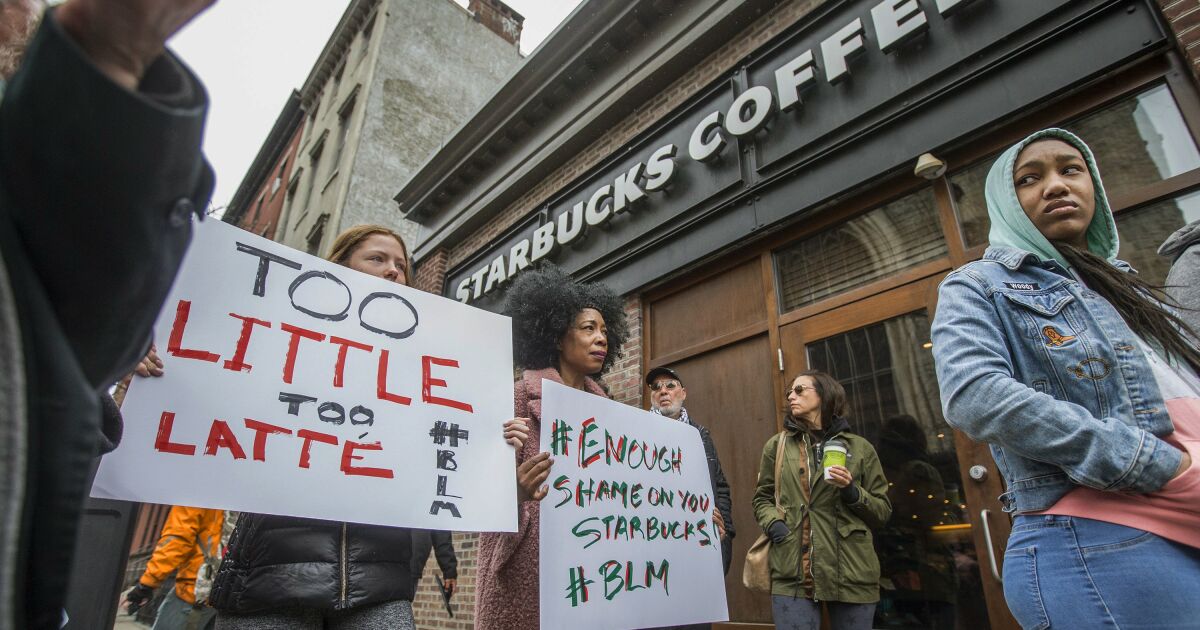
The video sparked national outrage, leading to protests inside and outside the Rittenhouse cafe, and became a public relations crisis for Starbucks. Its chief executive issued a public apology, and the company shuttered its stores for a day to hold anti-bias training for its 175,000 U.S. employees.
After the arrest, Phillips, who as a regional manager oversaw nearly 100 locations across Philadelphia, south New Jersey, Delaware and parts of Maryland, said in a 2019 complaint that she had taken steps to allay the community’s concerns and to keep staff and customers safe. She said those efforts included arranging a roundtable meeting with CEO Howard Schultz in Philadelphia and organizing teams of management-level employees to work at the approximately 20 Philadelphia locations because hourly workers feared going to work amid all the protests.
A few weeks after the arrest, after the company had reached a settlement with Nelson and Robinson in which it pledged to continue taking actions to address the incident, Phillips said she was ordered to suspend a white manager who oversaw some Philadelphia stores and who had been accused of discriminatory conduct. The manager did not oversee the Rittenhouse store. Phillips fought the allegations against the manager, which she said were “factually untrue.”
No action was taken against the manager of the Rittenhouse location, who is Black and who had promoted the store manager who had made the 911 call that led to the men’s arrest, according to Phillips’ complaint.
Phillips said she was fired soon after she pushed back against the white manager’s suspension. The only reason she was given was that “the situation is not recoverable,” according to her complaint.
In her complaint, Phillips said her race “was a motivating and/or determinative factor” in her termination.
Starbucks denied firing Phillips due to her race. According to Console Mattiacci’s statement, the company said she had shown a lack of leadership during the crisis.
Nelson and Robinson did not face charges in the arrest. The men reached an undisclosed settlement with the company and an offer to complete their college degrees through Starbucks’ covered college tuition program for employees.

Starbucks has been ordered to pay tens of millions of dollars to a former regional manager who sued the company for wrongful termination, saying she was fired because she is white.
The former employee, Shannon Phillips, said in a 2019 complaint that she had become a scapegoat in the company’s damage control efforts after a viral video showed two Black men being arrested at one of its Philadelphia shops. The incident sparked outrage across the country and led the corporate behemoth to temporarily close down its operations to conduct anti-bias training for employees.
After a six-day trial, a federal jury in New Jersey voted unanimously Monday to award Phillips $25 million in punitive damages and $600,000 in compensatory damages, according to Console Mattiacci Law, which represented her.
In a statement after the verdict, the law firm said Phillips proved “by clear and convincing evidence” that punitive damages were warranted under New Jersey’s anti-discrimination law, and noted that she is also seeking damages for back pay and future pay, which will be decided by the judge. Laura Mattiaci, the lead attorney for Phillips, declined to comment Wednesday, saying the case is “still open.”
Starbucks has denied firing Phillips due to her race, and declined to comment Wednesday.
The incident at the center of the case happened in April 2018, when Rashon Nelson and Donte Robinson, who are Black, went to a Starbucks in the Rittenhouse Square area of Philadelphia. Nelson said he asked to use a bathroom and was told it was for paying customers only. An employee came to the men’s table and asked if they wanted to order drinks. Robinson said he told the employee they were OK and waiting for a business meeting.
A manager then called 911 to report “two gentlemen at [the] cafe refusing to make a purchase or leave,” according to a recording of the call obtained by “Good Morning America,” which interviewed Nelson and Robinson about the arrest.
Nelson and Robinson said they never heard the manager inform them they had to leave.
An eight-minute video of the arrest shows three police officers in bicycle helmets standing around Nelson and Robinson’s table, asking questions before eventually arresting them and leading them away in handcuffs.
The video sparked national outrage, leading to protests inside and outside the Rittenhouse cafe, and became a public relations crisis for Starbucks. Its chief executive issued a public apology, and the company shuttered its stores for a day to hold anti-bias training for its 175,000 U.S. employees.
After the arrest, Phillips, who as a regional manager oversaw nearly 100 locations across Philadelphia, south New Jersey, Delaware and parts of Maryland, said in a 2019 complaint that she had taken steps to allay the community’s concerns and to keep staff and customers safe. She said those efforts included arranging a roundtable meeting with CEO Howard Schultz in Philadelphia and organizing teams of management-level employees to work at the approximately 20 Philadelphia locations because hourly workers feared going to work amid all the protests.
A few weeks after the arrest, after the company had reached a settlement with Nelson and Robinson in which it pledged to continue taking actions to address the incident, Phillips said she was ordered to suspend a white manager who oversaw some Philadelphia stores and who had been accused of discriminatory conduct. The manager did not oversee the Rittenhouse store. Phillips fought the allegations against the manager, which she said were “factually untrue.”
No action was taken against the manager of the Rittenhouse location, who is Black and who had promoted the store manager who had made the 911 call that led to the men’s arrest, according to Phillips’ complaint.
Phillips said she was fired soon after she pushed back against the white manager’s suspension. The only reason she was given was that “the situation is not recoverable,” according to her complaint.
In her complaint, Phillips said her race “was a motivating and/or determinative factor” in her termination.
Starbucks denied firing Phillips due to her race. According to Console Mattiacci’s statement, the company said she had shown a lack of leadership during the crisis.
Nelson and Robinson did not face charges in the arrest. The men reached an undisclosed settlement with the company and an offer to complete their college degrees through Starbucks’ covered college tuition program for employees.

Starbucks has been ordered to pay tens of millions of dollars to a former regional manager who sued the company for wrongful termination, saying she was fired because she is white.
The former employee, Shannon Phillips, said in a 2019 complaint that she had become a scapegoat in the company’s damage control efforts after a viral video showed two Black men being arrested at one of its Philadelphia shops. The incident sparked outrage across the country and led the corporate behemoth to temporarily close down its operations to conduct anti-bias training for employees.
After a six-day trial, a federal jury in New Jersey voted unanimously Monday to award Phillips $25 million in punitive damages and $600,000 in compensatory damages, according to Console Mattiacci Law, which represented her.
In a statement after the verdict, the law firm said Phillips proved “by clear and convincing evidence” that punitive damages were warranted under New Jersey’s anti-discrimination law, and noted that she is also seeking damages for back pay and future pay, which will be decided by the judge. Laura Mattiaci, the lead attorney for Phillips, declined to comment Wednesday, saying the case is “still open.”
Starbucks has denied firing Phillips due to her race, and declined to comment Wednesday.
The incident at the center of the case happened in April 2018, when Rashon Nelson and Donte Robinson, who are Black, went to a Starbucks in the Rittenhouse Square area of Philadelphia. Nelson said he asked to use a bathroom and was told it was for paying customers only. An employee came to the men’s table and asked if they wanted to order drinks. Robinson said he told the employee they were OK and waiting for a business meeting.
A manager then called 911 to report “two gentlemen at [the] cafe refusing to make a purchase or leave,” according to a recording of the call obtained by “Good Morning America,” which interviewed Nelson and Robinson about the arrest.
Nelson and Robinson said they never heard the manager inform them they had to leave.
An eight-minute video of the arrest shows three police officers in bicycle helmets standing around Nelson and Robinson’s table, asking questions before eventually arresting them and leading them away in handcuffs.
The video sparked national outrage, leading to protests inside and outside the Rittenhouse cafe, and became a public relations crisis for Starbucks. Its chief executive issued a public apology, and the company shuttered its stores for a day to hold anti-bias training for its 175,000 U.S. employees.
After the arrest, Phillips, who as a regional manager oversaw nearly 100 locations across Philadelphia, south New Jersey, Delaware and parts of Maryland, said in a 2019 complaint that she had taken steps to allay the community’s concerns and to keep staff and customers safe. She said those efforts included arranging a roundtable meeting with CEO Howard Schultz in Philadelphia and organizing teams of management-level employees to work at the approximately 20 Philadelphia locations because hourly workers feared going to work amid all the protests.
A few weeks after the arrest, after the company had reached a settlement with Nelson and Robinson in which it pledged to continue taking actions to address the incident, Phillips said she was ordered to suspend a white manager who oversaw some Philadelphia stores and who had been accused of discriminatory conduct. The manager did not oversee the Rittenhouse store. Phillips fought the allegations against the manager, which she said were “factually untrue.”
No action was taken against the manager of the Rittenhouse location, who is Black and who had promoted the store manager who had made the 911 call that led to the men’s arrest, according to Phillips’ complaint.
Phillips said she was fired soon after she pushed back against the white manager’s suspension. The only reason she was given was that “the situation is not recoverable,” according to her complaint.
In her complaint, Phillips said her race “was a motivating and/or determinative factor” in her termination.
Starbucks denied firing Phillips due to her race. According to Console Mattiacci’s statement, the company said she had shown a lack of leadership during the crisis.
Nelson and Robinson did not face charges in the arrest. The men reached an undisclosed settlement with the company and an offer to complete their college degrees through Starbucks’ covered college tuition program for employees.
Starbucks has been ordered to pay tens of millions of dollars to a former regional manager who sued the company for wrongful termination, saying she was fired because she is white.
The former employee, Shannon Phillips, said in a 2019 complaint that she had become a scapegoat in the company’s damage control efforts after a viral video showed two Black men being arrested at one of its Philadelphia shops. The incident sparked outrage across the country and led the corporate behemoth to temporarily close down its operations to conduct anti-bias training for employees.
After a six-day trial, a federal jury in New Jersey voted unanimously Monday to award Phillips $25 million in punitive damages and $600,000 in compensatory damages, according to Console Mattiacci Law, which represented her.
In a statement after the verdict, the law firm said Phillips proved “by clear and convincing evidence” that punitive damages were warranted under New Jersey’s anti-discrimination law, and noted that she is also seeking damages for back pay and future pay, which will be decided by the judge. Laura Mattiaci, the lead attorney for Phillips, declined to comment Wednesday, saying the case is “still open.”
Starbucks has denied firing Phillips due to her race, and declined to comment Wednesday.
The incident at the center of the case happened in April 2018, when Rashon Nelson and Donte Robinson, who are Black, went to a Starbucks in the Rittenhouse Square area of Philadelphia. Nelson said he asked to use a bathroom and was told it was for paying customers only. An employee came to the men’s table and asked if they wanted to order drinks. Robinson said he told the employee they were OK and waiting for a business meeting.
A manager then called 911 to report “two gentlemen at [the] cafe refusing to make a purchase or leave,” according to a recording of the call obtained by “Good Morning America,” which interviewed Nelson and Robinson about the arrest.
Nelson and Robinson said they never heard the manager inform them they had to leave.
An eight-minute video of the arrest shows three police officers in bicycle helmets standing around Nelson and Robinson’s table, asking questions before eventually arresting them and leading them away in handcuffs.
The video sparked national outrage, leading to protests inside and outside the Rittenhouse cafe, and became a public relations crisis for Starbucks. Its chief executive issued a public apology, and the company shuttered its stores for a day to hold anti-bias training for its 175,000 U.S. employees.
After the arrest, Phillips, who as a regional manager oversaw nearly 100 locations across Philadelphia, south New Jersey, Delaware and parts of Maryland, said in a 2019 complaint that she had taken steps to allay the community’s concerns and to keep staff and customers safe. She said those efforts included arranging a roundtable meeting with CEO Howard Schultz in Philadelphia and organizing teams of management-level employees to work at the approximately 20 Philadelphia locations because hourly workers feared going to work amid all the protests.
A few weeks after the arrest, after the company had reached a settlement with Nelson and Robinson in which it pledged to continue taking actions to address the incident, Phillips said she was ordered to suspend a white manager who oversaw some Philadelphia stores and who had been accused of discriminatory conduct. The manager did not oversee the Rittenhouse store. Phillips fought the allegations against the manager, which she said were “factually untrue.”
No action was taken against the manager of the Rittenhouse location, who is Black and who had promoted the store manager who had made the 911 call that led to the men’s arrest, according to Phillips’ complaint.
Phillips said she was fired soon after she pushed back against the white manager’s suspension. The only reason she was given was that “the situation is not recoverable,” according to her complaint.
In her complaint, Phillips said her race “was a motivating and/or determinative factor” in her termination.
Starbucks denied firing Phillips due to her race. According to Console Mattiacci’s statement, the company said she had shown a lack of leadership during the crisis.
Nelson and Robinson did not face charges in the arrest. The men reached an undisclosed settlement with the company and an offer to complete their college degrees through Starbucks’ covered college tuition program for employees.

