

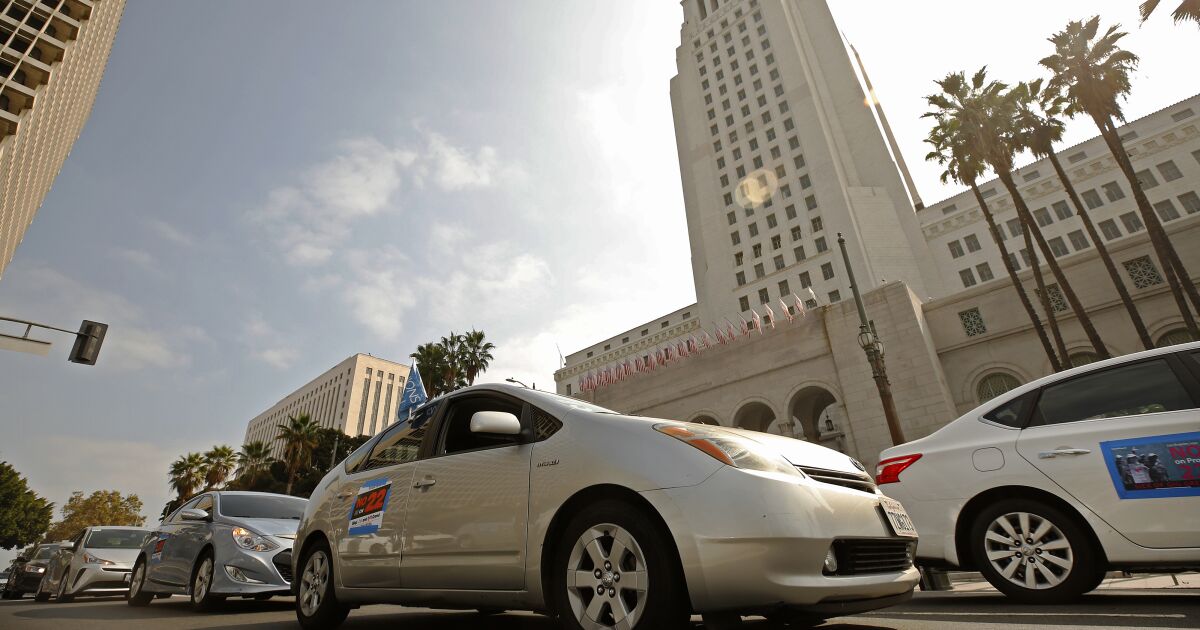

Plaintiffs in a lawsuit challenging California’s gig economy law Proposition 22 have made good on their promise to take the case to the state’s highest court.
The Service Employees International Union and a group of rideshare drivers on Friday petitioned the California Supreme Court to review a recent appeals court ruling that largely upheld the 2020 law, the union said.
Proposition 22, which has been in effect since December 2020, allows giant ride-hailing and delivery companies, including Uber, Lyft and DoorDash, to classify their workers as independent contractors rather than employees. The companies spent upwards of $200 million funding the voter initiative in a move to legalize their business model. Californians approved the ballot measure with a clear majority.
SEIU’s attorneys argue primarily that Proposition 22 unconstitutionally revokes the state legislature’s authority over California’s workers’ compensation system.
“Uber, Lyft and Doordash have used Prop. 22 to carve out gig workers from our state’s workers compensation system and deprive those same workers of paid sick leave, meaningful health care coverage, overtime pay and more,” said David Huerta, President of SEIU California and SEIU United Service Workers West in an emailed statement on Friday.
SEIU, SEIU California and a handful of drivers first brought the lawsuit in January 2021. They sought to take the case directly to the California Supreme Court, filing a petition for review that was quickly declined, but left open the option for plaintiffs to pursue the case in a lower court — which plaintiffs did.
Alameda County Superior Court Judge Frank Roesch in August 2021 dealt a blow to gig companies with a ruling that deemed Proposition 22 unconstitutional and unenforceable.
An appeals court last month largely reversed the lower court ruling, upholding the law almost in its entirety.
The union said it timed its petition with the first International Gig Workers Congress, a convening of drivers and delivery workers from across 15 countries scheduled in Los Angeles for Monday. The California Gig Workers Union, a statewide gig worker group affiliated with union locals SEIU 721 and SEIU 1021 in Southern California and Northern California, respectively, organized the event and plans to hold rallies next week in downtown Los Angeles as well as outside Uber’s headquarters in San Francisco.
A coalition of gig companies that backs Proposition 22, Protect App-based Drivers & Services, celebrated the appeals court ruling last month and has said invalidating the law would infringe on voters direct democracy rights.
The California Supreme Court, once it receives a petition, has 60 days to decide whether to review the case, but can request a 30-day extension.

Plaintiffs in a lawsuit challenging California’s gig economy law Proposition 22 have made good on their promise to take the case to the state’s highest court.
The Service Employees International Union and a group of rideshare drivers on Friday petitioned the California Supreme Court to review a recent appeals court ruling that largely upheld the 2020 law, the union said.
Proposition 22, which has been in effect since December 2020, allows giant ride-hailing and delivery companies, including Uber, Lyft and DoorDash, to classify their workers as independent contractors rather than employees. The companies spent upwards of $200 million funding the voter initiative in a move to legalize their business model. Californians approved the ballot measure with a clear majority.
SEIU’s attorneys argue primarily that Proposition 22 unconstitutionally revokes the state legislature’s authority over California’s workers’ compensation system.
“Uber, Lyft and Doordash have used Prop. 22 to carve out gig workers from our state’s workers compensation system and deprive those same workers of paid sick leave, meaningful health care coverage, overtime pay and more,” said David Huerta, President of SEIU California and SEIU United Service Workers West in an emailed statement on Friday.
SEIU, SEIU California and a handful of drivers first brought the lawsuit in January 2021. They sought to take the case directly to the California Supreme Court, filing a petition for review that was quickly declined, but left open the option for plaintiffs to pursue the case in a lower court — which plaintiffs did.
Alameda County Superior Court Judge Frank Roesch in August 2021 dealt a blow to gig companies with a ruling that deemed Proposition 22 unconstitutional and unenforceable.
An appeals court last month largely reversed the lower court ruling, upholding the law almost in its entirety.
The union said it timed its petition with the first International Gig Workers Congress, a convening of drivers and delivery workers from across 15 countries scheduled in Los Angeles for Monday. The California Gig Workers Union, a statewide gig worker group affiliated with union locals SEIU 721 and SEIU 1021 in Southern California and Northern California, respectively, organized the event and plans to hold rallies next week in downtown Los Angeles as well as outside Uber’s headquarters in San Francisco.
A coalition of gig companies that backs Proposition 22, Protect App-based Drivers & Services, celebrated the appeals court ruling last month and has said invalidating the law would infringe on voters direct democracy rights.
The California Supreme Court, once it receives a petition, has 60 days to decide whether to review the case, but can request a 30-day extension.

Plaintiffs in a lawsuit challenging California’s gig economy law Proposition 22 have made good on their promise to take the case to the state’s highest court.
The Service Employees International Union and a group of rideshare drivers on Friday petitioned the California Supreme Court to review a recent appeals court ruling that largely upheld the 2020 law, the union said.
Proposition 22, which has been in effect since December 2020, allows giant ride-hailing and delivery companies, including Uber, Lyft and DoorDash, to classify their workers as independent contractors rather than employees. The companies spent upwards of $200 million funding the voter initiative in a move to legalize their business model. Californians approved the ballot measure with a clear majority.
SEIU’s attorneys argue primarily that Proposition 22 unconstitutionally revokes the state legislature’s authority over California’s workers’ compensation system.
“Uber, Lyft and Doordash have used Prop. 22 to carve out gig workers from our state’s workers compensation system and deprive those same workers of paid sick leave, meaningful health care coverage, overtime pay and more,” said David Huerta, President of SEIU California and SEIU United Service Workers West in an emailed statement on Friday.
SEIU, SEIU California and a handful of drivers first brought the lawsuit in January 2021. They sought to take the case directly to the California Supreme Court, filing a petition for review that was quickly declined, but left open the option for plaintiffs to pursue the case in a lower court — which plaintiffs did.
Alameda County Superior Court Judge Frank Roesch in August 2021 dealt a blow to gig companies with a ruling that deemed Proposition 22 unconstitutional and unenforceable.
An appeals court last month largely reversed the lower court ruling, upholding the law almost in its entirety.
The union said it timed its petition with the first International Gig Workers Congress, a convening of drivers and delivery workers from across 15 countries scheduled in Los Angeles for Monday. The California Gig Workers Union, a statewide gig worker group affiliated with union locals SEIU 721 and SEIU 1021 in Southern California and Northern California, respectively, organized the event and plans to hold rallies next week in downtown Los Angeles as well as outside Uber’s headquarters in San Francisco.
A coalition of gig companies that backs Proposition 22, Protect App-based Drivers & Services, celebrated the appeals court ruling last month and has said invalidating the law would infringe on voters direct democracy rights.
The California Supreme Court, once it receives a petition, has 60 days to decide whether to review the case, but can request a 30-day extension.
Plaintiffs in a lawsuit challenging California’s gig economy law Proposition 22 have made good on their promise to take the case to the state’s highest court.
The Service Employees International Union and a group of rideshare drivers on Friday petitioned the California Supreme Court to review a recent appeals court ruling that largely upheld the 2020 law, the union said.
Proposition 22, which has been in effect since December 2020, allows giant ride-hailing and delivery companies, including Uber, Lyft and DoorDash, to classify their workers as independent contractors rather than employees. The companies spent upwards of $200 million funding the voter initiative in a move to legalize their business model. Californians approved the ballot measure with a clear majority.
SEIU’s attorneys argue primarily that Proposition 22 unconstitutionally revokes the state legislature’s authority over California’s workers’ compensation system.
“Uber, Lyft and Doordash have used Prop. 22 to carve out gig workers from our state’s workers compensation system and deprive those same workers of paid sick leave, meaningful health care coverage, overtime pay and more,” said David Huerta, President of SEIU California and SEIU United Service Workers West in an emailed statement on Friday.
SEIU, SEIU California and a handful of drivers first brought the lawsuit in January 2021. They sought to take the case directly to the California Supreme Court, filing a petition for review that was quickly declined, but left open the option for plaintiffs to pursue the case in a lower court — which plaintiffs did.
Alameda County Superior Court Judge Frank Roesch in August 2021 dealt a blow to gig companies with a ruling that deemed Proposition 22 unconstitutional and unenforceable.
An appeals court last month largely reversed the lower court ruling, upholding the law almost in its entirety.
The union said it timed its petition with the first International Gig Workers Congress, a convening of drivers and delivery workers from across 15 countries scheduled in Los Angeles for Monday. The California Gig Workers Union, a statewide gig worker group affiliated with union locals SEIU 721 and SEIU 1021 in Southern California and Northern California, respectively, organized the event and plans to hold rallies next week in downtown Los Angeles as well as outside Uber’s headquarters in San Francisco.
A coalition of gig companies that backs Proposition 22, Protect App-based Drivers & Services, celebrated the appeals court ruling last month and has said invalidating the law would infringe on voters direct democracy rights.
The California Supreme Court, once it receives a petition, has 60 days to decide whether to review the case, but can request a 30-day extension.

Plaintiffs in a lawsuit challenging California’s gig economy law Proposition 22 have made good on their promise to take the case to the state’s highest court.
The Service Employees International Union and a group of rideshare drivers on Friday petitioned the California Supreme Court to review a recent appeals court ruling that largely upheld the 2020 law, the union said.
Proposition 22, which has been in effect since December 2020, allows giant ride-hailing and delivery companies, including Uber, Lyft and DoorDash, to classify their workers as independent contractors rather than employees. The companies spent upwards of $200 million funding the voter initiative in a move to legalize their business model. Californians approved the ballot measure with a clear majority.
SEIU’s attorneys argue primarily that Proposition 22 unconstitutionally revokes the state legislature’s authority over California’s workers’ compensation system.
“Uber, Lyft and Doordash have used Prop. 22 to carve out gig workers from our state’s workers compensation system and deprive those same workers of paid sick leave, meaningful health care coverage, overtime pay and more,” said David Huerta, President of SEIU California and SEIU United Service Workers West in an emailed statement on Friday.
SEIU, SEIU California and a handful of drivers first brought the lawsuit in January 2021. They sought to take the case directly to the California Supreme Court, filing a petition for review that was quickly declined, but left open the option for plaintiffs to pursue the case in a lower court — which plaintiffs did.
Alameda County Superior Court Judge Frank Roesch in August 2021 dealt a blow to gig companies with a ruling that deemed Proposition 22 unconstitutional and unenforceable.
An appeals court last month largely reversed the lower court ruling, upholding the law almost in its entirety.
The union said it timed its petition with the first International Gig Workers Congress, a convening of drivers and delivery workers from across 15 countries scheduled in Los Angeles for Monday. The California Gig Workers Union, a statewide gig worker group affiliated with union locals SEIU 721 and SEIU 1021 in Southern California and Northern California, respectively, organized the event and plans to hold rallies next week in downtown Los Angeles as well as outside Uber’s headquarters in San Francisco.
A coalition of gig companies that backs Proposition 22, Protect App-based Drivers & Services, celebrated the appeals court ruling last month and has said invalidating the law would infringe on voters direct democracy rights.
The California Supreme Court, once it receives a petition, has 60 days to decide whether to review the case, but can request a 30-day extension.
Plaintiffs in a lawsuit challenging California’s gig economy law Proposition 22 have made good on their promise to take the case to the state’s highest court.
The Service Employees International Union and a group of rideshare drivers on Friday petitioned the California Supreme Court to review a recent appeals court ruling that largely upheld the 2020 law, the union said.
Proposition 22, which has been in effect since December 2020, allows giant ride-hailing and delivery companies, including Uber, Lyft and DoorDash, to classify their workers as independent contractors rather than employees. The companies spent upwards of $200 million funding the voter initiative in a move to legalize their business model. Californians approved the ballot measure with a clear majority.
SEIU’s attorneys argue primarily that Proposition 22 unconstitutionally revokes the state legislature’s authority over California’s workers’ compensation system.
“Uber, Lyft and Doordash have used Prop. 22 to carve out gig workers from our state’s workers compensation system and deprive those same workers of paid sick leave, meaningful health care coverage, overtime pay and more,” said David Huerta, President of SEIU California and SEIU United Service Workers West in an emailed statement on Friday.
SEIU, SEIU California and a handful of drivers first brought the lawsuit in January 2021. They sought to take the case directly to the California Supreme Court, filing a petition for review that was quickly declined, but left open the option for plaintiffs to pursue the case in a lower court — which plaintiffs did.
Alameda County Superior Court Judge Frank Roesch in August 2021 dealt a blow to gig companies with a ruling that deemed Proposition 22 unconstitutional and unenforceable.
An appeals court last month largely reversed the lower court ruling, upholding the law almost in its entirety.
The union said it timed its petition with the first International Gig Workers Congress, a convening of drivers and delivery workers from across 15 countries scheduled in Los Angeles for Monday. The California Gig Workers Union, a statewide gig worker group affiliated with union locals SEIU 721 and SEIU 1021 in Southern California and Northern California, respectively, organized the event and plans to hold rallies next week in downtown Los Angeles as well as outside Uber’s headquarters in San Francisco.
A coalition of gig companies that backs Proposition 22, Protect App-based Drivers & Services, celebrated the appeals court ruling last month and has said invalidating the law would infringe on voters direct democracy rights.
The California Supreme Court, once it receives a petition, has 60 days to decide whether to review the case, but can request a 30-day extension.
Plaintiffs in a lawsuit challenging California’s gig economy law Proposition 22 have made good on their promise to take the case to the state’s highest court.
The Service Employees International Union and a group of rideshare drivers on Friday petitioned the California Supreme Court to review a recent appeals court ruling that largely upheld the 2020 law, the union said.
Proposition 22, which has been in effect since December 2020, allows giant ride-hailing and delivery companies, including Uber, Lyft and DoorDash, to classify their workers as independent contractors rather than employees. The companies spent upwards of $200 million funding the voter initiative in a move to legalize their business model. Californians approved the ballot measure with a clear majority.
SEIU’s attorneys argue primarily that Proposition 22 unconstitutionally revokes the state legislature’s authority over California’s workers’ compensation system.
“Uber, Lyft and Doordash have used Prop. 22 to carve out gig workers from our state’s workers compensation system and deprive those same workers of paid sick leave, meaningful health care coverage, overtime pay and more,” said David Huerta, President of SEIU California and SEIU United Service Workers West in an emailed statement on Friday.
SEIU, SEIU California and a handful of drivers first brought the lawsuit in January 2021. They sought to take the case directly to the California Supreme Court, filing a petition for review that was quickly declined, but left open the option for plaintiffs to pursue the case in a lower court — which plaintiffs did.
Alameda County Superior Court Judge Frank Roesch in August 2021 dealt a blow to gig companies with a ruling that deemed Proposition 22 unconstitutional and unenforceable.
An appeals court last month largely reversed the lower court ruling, upholding the law almost in its entirety.
The union said it timed its petition with the first International Gig Workers Congress, a convening of drivers and delivery workers from across 15 countries scheduled in Los Angeles for Monday. The California Gig Workers Union, a statewide gig worker group affiliated with union locals SEIU 721 and SEIU 1021 in Southern California and Northern California, respectively, organized the event and plans to hold rallies next week in downtown Los Angeles as well as outside Uber’s headquarters in San Francisco.
A coalition of gig companies that backs Proposition 22, Protect App-based Drivers & Services, celebrated the appeals court ruling last month and has said invalidating the law would infringe on voters direct democracy rights.
The California Supreme Court, once it receives a petition, has 60 days to decide whether to review the case, but can request a 30-day extension.
Plaintiffs in a lawsuit challenging California’s gig economy law Proposition 22 have made good on their promise to take the case to the state’s highest court.
The Service Employees International Union and a group of rideshare drivers on Friday petitioned the California Supreme Court to review a recent appeals court ruling that largely upheld the 2020 law, the union said.
Proposition 22, which has been in effect since December 2020, allows giant ride-hailing and delivery companies, including Uber, Lyft and DoorDash, to classify their workers as independent contractors rather than employees. The companies spent upwards of $200 million funding the voter initiative in a move to legalize their business model. Californians approved the ballot measure with a clear majority.
SEIU’s attorneys argue primarily that Proposition 22 unconstitutionally revokes the state legislature’s authority over California’s workers’ compensation system.
“Uber, Lyft and Doordash have used Prop. 22 to carve out gig workers from our state’s workers compensation system and deprive those same workers of paid sick leave, meaningful health care coverage, overtime pay and more,” said David Huerta, President of SEIU California and SEIU United Service Workers West in an emailed statement on Friday.
SEIU, SEIU California and a handful of drivers first brought the lawsuit in January 2021. They sought to take the case directly to the California Supreme Court, filing a petition for review that was quickly declined, but left open the option for plaintiffs to pursue the case in a lower court — which plaintiffs did.
Alameda County Superior Court Judge Frank Roesch in August 2021 dealt a blow to gig companies with a ruling that deemed Proposition 22 unconstitutional and unenforceable.
An appeals court last month largely reversed the lower court ruling, upholding the law almost in its entirety.
The union said it timed its petition with the first International Gig Workers Congress, a convening of drivers and delivery workers from across 15 countries scheduled in Los Angeles for Monday. The California Gig Workers Union, a statewide gig worker group affiliated with union locals SEIU 721 and SEIU 1021 in Southern California and Northern California, respectively, organized the event and plans to hold rallies next week in downtown Los Angeles as well as outside Uber’s headquarters in San Francisco.
A coalition of gig companies that backs Proposition 22, Protect App-based Drivers & Services, celebrated the appeals court ruling last month and has said invalidating the law would infringe on voters direct democracy rights.
The California Supreme Court, once it receives a petition, has 60 days to decide whether to review the case, but can request a 30-day extension.

