

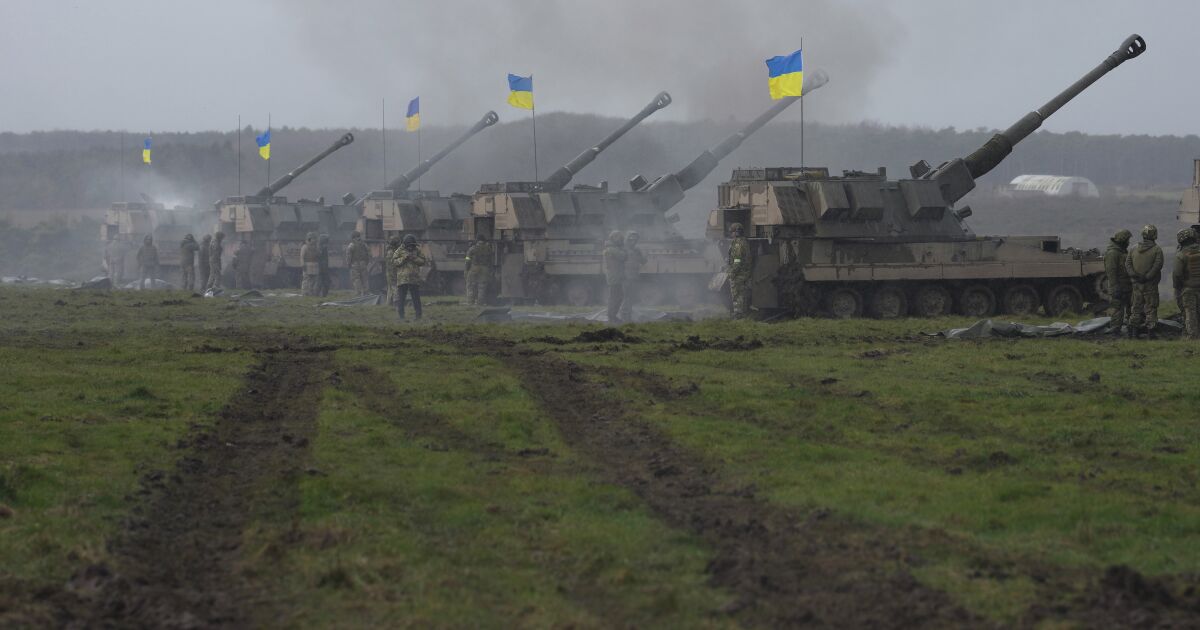

After a winter of punishing but indecisive battles, Ukraine is preparing a long-promised spring offensive that officials hope will change the course of the war against Russia.
The goal is to break Russia’s hold on southern and eastern Ukraine and convince Russian President Vladimir Putin that his war has become a losing proposition.
U.S. officials say that if Ukraine succeeds, Putin could eventually agree to peace talks on terms acceptable to Ukraine. But if Ukraine fails, the conflict is likely to devolve into a long war of attrition — and Putin has declared that in that scenario, time is on Russia’s side.
The war also has a Western front in the domestic politics of the United States and its European allies, which have given Ukraine the military and economic aid it needs to survive.
If Ukraine succeeds, its Western supporters will feel vindicated. If it falls short, political support in the West will erode.
Ukrainian President Volodymyr Zelensky isn’t the only leader racing against a clock; President Biden is too.
From a military standpoint, “the longer you wait to [launch the offensive], the harder it will be,” Michael Kofman, an expert on the Russian military at the Center for Naval Analyses, said last month. “The more time is spent, the more Russian units will be able to entrench.”
From a political standpoint, time is not on Biden’s side either. Public opinion in the United States and Europe has broadly backed Ukraine, but support has weakened as the war has become longer and more expensive.
Biden has frequently promised that the United States will support Ukraine for “as long as it takes” to defeat Russia. But that’s a promise he may not be able to keep — and not if he loses his expected reelection bid next year.
Experts say Ukraine’s military offensive may still be weeks away. Much of the country is mired in spring thaw, which turns fields and rural roads into a sea of mud — tough terrain even for armored vehicles.
Bolstered by new tanks and armored troop carriers supplied by the West, Ukraine will try to dislodge Russian forces from the southern and eastern parts of the country.
One likely target will be the Russian-occupied southeastern coast, a land bridge that connects Russia to the Crimean Peninsula, which Putin seized from Ukraine in 2014. Severing the bridge “would have a dramatic impact on Russian morale and motivation,” said Douglas Lute, a retired Army lieutenant general who served as U.S. ambassador to NATO.
Some of the Western equipment Ukraine is counting on is arriving only now: heavy tanks from Germany and Britain, along with armored combat vehicles from the U.S. and half a dozen other countries.
The U.S. and the European Union are sending thousands of rounds of artillery ammunition from newly mobilized munitions plants. And the U.S. is providing a new ground-to-ground missile, the awkwardly named Ground Launched Small Diameter Bomb, with a range of about 90 miles — longer than the missiles Ukraine has now but still only half the reach of another the country has requested.
That’s not enough, critics complain.
“We’re providing the systems they needed six months ago,” Lute said. “War is not a mathematical equation. You need to overprovide.
“Now is the time to give Ukraine what they need in order to avoid the political calendar next year,” he added.
In fact, the U.S. political calendar has already begun.
Former President Trump has complained that American taxpayers are giving Ukraine too much aid and suggested that he would end the war in 24 hours by allowing Putin “to take over something.”
Florida Gov. Ron DeSantis chimed in, saying it was not in our interest to become “further entangled in a territorial dispute between Ukraine and Russia.”
A poll sponsored by the Associated Press found that the share of Americans who support military aid to Ukraine dropped to 48% in February from 60% last May. Responses reflected a partisan divide, with Republicans increasingly opposed to Biden’s policy.
The outcome of the spring offensive is likely to further affect public opinion.
“If this becomes a grinding war with no end in sight, it becomes a lot harder to maintain Western support,” noted Steven Pifer, a former U.S. ambassador to Ukraine.
Putin’s calculation is that he can outlast both Ukraine and the West — that the longer the war continues, the more Ukraine will suffer, and the more fatigued Western voters will be.
That’s why it’s vital that the U.S. and its allies give Ukraine as much help as they can now, when it’s most useful.
Yes, the war has been costly — far more for Ukrainians, who have lost lives and homes, than for American taxpayers.
But the best chance of bringing it to an early end — and avoiding a long and more punishing stalemate — is to make sure Ukraine has what it needs to convince Putin he cannot win.

After a winter of punishing but indecisive battles, Ukraine is preparing a long-promised spring offensive that officials hope will change the course of the war against Russia.
The goal is to break Russia’s hold on southern and eastern Ukraine and convince Russian President Vladimir Putin that his war has become a losing proposition.
U.S. officials say that if Ukraine succeeds, Putin could eventually agree to peace talks on terms acceptable to Ukraine. But if Ukraine fails, the conflict is likely to devolve into a long war of attrition — and Putin has declared that in that scenario, time is on Russia’s side.
The war also has a Western front in the domestic politics of the United States and its European allies, which have given Ukraine the military and economic aid it needs to survive.
If Ukraine succeeds, its Western supporters will feel vindicated. If it falls short, political support in the West will erode.
Ukrainian President Volodymyr Zelensky isn’t the only leader racing against a clock; President Biden is too.
From a military standpoint, “the longer you wait to [launch the offensive], the harder it will be,” Michael Kofman, an expert on the Russian military at the Center for Naval Analyses, said last month. “The more time is spent, the more Russian units will be able to entrench.”
From a political standpoint, time is not on Biden’s side either. Public opinion in the United States and Europe has broadly backed Ukraine, but support has weakened as the war has become longer and more expensive.
Biden has frequently promised that the United States will support Ukraine for “as long as it takes” to defeat Russia. But that’s a promise he may not be able to keep — and not if he loses his expected reelection bid next year.
Experts say Ukraine’s military offensive may still be weeks away. Much of the country is mired in spring thaw, which turns fields and rural roads into a sea of mud — tough terrain even for armored vehicles.
Bolstered by new tanks and armored troop carriers supplied by the West, Ukraine will try to dislodge Russian forces from the southern and eastern parts of the country.
One likely target will be the Russian-occupied southeastern coast, a land bridge that connects Russia to the Crimean Peninsula, which Putin seized from Ukraine in 2014. Severing the bridge “would have a dramatic impact on Russian morale and motivation,” said Douglas Lute, a retired Army lieutenant general who served as U.S. ambassador to NATO.
Some of the Western equipment Ukraine is counting on is arriving only now: heavy tanks from Germany and Britain, along with armored combat vehicles from the U.S. and half a dozen other countries.
The U.S. and the European Union are sending thousands of rounds of artillery ammunition from newly mobilized munitions plants. And the U.S. is providing a new ground-to-ground missile, the awkwardly named Ground Launched Small Diameter Bomb, with a range of about 90 miles — longer than the missiles Ukraine has now but still only half the reach of another the country has requested.
That’s not enough, critics complain.
“We’re providing the systems they needed six months ago,” Lute said. “War is not a mathematical equation. You need to overprovide.
“Now is the time to give Ukraine what they need in order to avoid the political calendar next year,” he added.
In fact, the U.S. political calendar has already begun.
Former President Trump has complained that American taxpayers are giving Ukraine too much aid and suggested that he would end the war in 24 hours by allowing Putin “to take over something.”
Florida Gov. Ron DeSantis chimed in, saying it was not in our interest to become “further entangled in a territorial dispute between Ukraine and Russia.”
A poll sponsored by the Associated Press found that the share of Americans who support military aid to Ukraine dropped to 48% in February from 60% last May. Responses reflected a partisan divide, with Republicans increasingly opposed to Biden’s policy.
The outcome of the spring offensive is likely to further affect public opinion.
“If this becomes a grinding war with no end in sight, it becomes a lot harder to maintain Western support,” noted Steven Pifer, a former U.S. ambassador to Ukraine.
Putin’s calculation is that he can outlast both Ukraine and the West — that the longer the war continues, the more Ukraine will suffer, and the more fatigued Western voters will be.
That’s why it’s vital that the U.S. and its allies give Ukraine as much help as they can now, when it’s most useful.
Yes, the war has been costly — far more for Ukrainians, who have lost lives and homes, than for American taxpayers.
But the best chance of bringing it to an early end — and avoiding a long and more punishing stalemate — is to make sure Ukraine has what it needs to convince Putin he cannot win.

After a winter of punishing but indecisive battles, Ukraine is preparing a long-promised spring offensive that officials hope will change the course of the war against Russia.
The goal is to break Russia’s hold on southern and eastern Ukraine and convince Russian President Vladimir Putin that his war has become a losing proposition.
U.S. officials say that if Ukraine succeeds, Putin could eventually agree to peace talks on terms acceptable to Ukraine. But if Ukraine fails, the conflict is likely to devolve into a long war of attrition — and Putin has declared that in that scenario, time is on Russia’s side.
The war also has a Western front in the domestic politics of the United States and its European allies, which have given Ukraine the military and economic aid it needs to survive.
If Ukraine succeeds, its Western supporters will feel vindicated. If it falls short, political support in the West will erode.
Ukrainian President Volodymyr Zelensky isn’t the only leader racing against a clock; President Biden is too.
From a military standpoint, “the longer you wait to [launch the offensive], the harder it will be,” Michael Kofman, an expert on the Russian military at the Center for Naval Analyses, said last month. “The more time is spent, the more Russian units will be able to entrench.”
From a political standpoint, time is not on Biden’s side either. Public opinion in the United States and Europe has broadly backed Ukraine, but support has weakened as the war has become longer and more expensive.
Biden has frequently promised that the United States will support Ukraine for “as long as it takes” to defeat Russia. But that’s a promise he may not be able to keep — and not if he loses his expected reelection bid next year.
Experts say Ukraine’s military offensive may still be weeks away. Much of the country is mired in spring thaw, which turns fields and rural roads into a sea of mud — tough terrain even for armored vehicles.
Bolstered by new tanks and armored troop carriers supplied by the West, Ukraine will try to dislodge Russian forces from the southern and eastern parts of the country.
One likely target will be the Russian-occupied southeastern coast, a land bridge that connects Russia to the Crimean Peninsula, which Putin seized from Ukraine in 2014. Severing the bridge “would have a dramatic impact on Russian morale and motivation,” said Douglas Lute, a retired Army lieutenant general who served as U.S. ambassador to NATO.
Some of the Western equipment Ukraine is counting on is arriving only now: heavy tanks from Germany and Britain, along with armored combat vehicles from the U.S. and half a dozen other countries.
The U.S. and the European Union are sending thousands of rounds of artillery ammunition from newly mobilized munitions plants. And the U.S. is providing a new ground-to-ground missile, the awkwardly named Ground Launched Small Diameter Bomb, with a range of about 90 miles — longer than the missiles Ukraine has now but still only half the reach of another the country has requested.
That’s not enough, critics complain.
“We’re providing the systems they needed six months ago,” Lute said. “War is not a mathematical equation. You need to overprovide.
“Now is the time to give Ukraine what they need in order to avoid the political calendar next year,” he added.
In fact, the U.S. political calendar has already begun.
Former President Trump has complained that American taxpayers are giving Ukraine too much aid and suggested that he would end the war in 24 hours by allowing Putin “to take over something.”
Florida Gov. Ron DeSantis chimed in, saying it was not in our interest to become “further entangled in a territorial dispute between Ukraine and Russia.”
A poll sponsored by the Associated Press found that the share of Americans who support military aid to Ukraine dropped to 48% in February from 60% last May. Responses reflected a partisan divide, with Republicans increasingly opposed to Biden’s policy.
The outcome of the spring offensive is likely to further affect public opinion.
“If this becomes a grinding war with no end in sight, it becomes a lot harder to maintain Western support,” noted Steven Pifer, a former U.S. ambassador to Ukraine.
Putin’s calculation is that he can outlast both Ukraine and the West — that the longer the war continues, the more Ukraine will suffer, and the more fatigued Western voters will be.
That’s why it’s vital that the U.S. and its allies give Ukraine as much help as they can now, when it’s most useful.
Yes, the war has been costly — far more for Ukrainians, who have lost lives and homes, than for American taxpayers.
But the best chance of bringing it to an early end — and avoiding a long and more punishing stalemate — is to make sure Ukraine has what it needs to convince Putin he cannot win.
After a winter of punishing but indecisive battles, Ukraine is preparing a long-promised spring offensive that officials hope will change the course of the war against Russia.
The goal is to break Russia’s hold on southern and eastern Ukraine and convince Russian President Vladimir Putin that his war has become a losing proposition.
U.S. officials say that if Ukraine succeeds, Putin could eventually agree to peace talks on terms acceptable to Ukraine. But if Ukraine fails, the conflict is likely to devolve into a long war of attrition — and Putin has declared that in that scenario, time is on Russia’s side.
The war also has a Western front in the domestic politics of the United States and its European allies, which have given Ukraine the military and economic aid it needs to survive.
If Ukraine succeeds, its Western supporters will feel vindicated. If it falls short, political support in the West will erode.
Ukrainian President Volodymyr Zelensky isn’t the only leader racing against a clock; President Biden is too.
From a military standpoint, “the longer you wait to [launch the offensive], the harder it will be,” Michael Kofman, an expert on the Russian military at the Center for Naval Analyses, said last month. “The more time is spent, the more Russian units will be able to entrench.”
From a political standpoint, time is not on Biden’s side either. Public opinion in the United States and Europe has broadly backed Ukraine, but support has weakened as the war has become longer and more expensive.
Biden has frequently promised that the United States will support Ukraine for “as long as it takes” to defeat Russia. But that’s a promise he may not be able to keep — and not if he loses his expected reelection bid next year.
Experts say Ukraine’s military offensive may still be weeks away. Much of the country is mired in spring thaw, which turns fields and rural roads into a sea of mud — tough terrain even for armored vehicles.
Bolstered by new tanks and armored troop carriers supplied by the West, Ukraine will try to dislodge Russian forces from the southern and eastern parts of the country.
One likely target will be the Russian-occupied southeastern coast, a land bridge that connects Russia to the Crimean Peninsula, which Putin seized from Ukraine in 2014. Severing the bridge “would have a dramatic impact on Russian morale and motivation,” said Douglas Lute, a retired Army lieutenant general who served as U.S. ambassador to NATO.
Some of the Western equipment Ukraine is counting on is arriving only now: heavy tanks from Germany and Britain, along with armored combat vehicles from the U.S. and half a dozen other countries.
The U.S. and the European Union are sending thousands of rounds of artillery ammunition from newly mobilized munitions plants. And the U.S. is providing a new ground-to-ground missile, the awkwardly named Ground Launched Small Diameter Bomb, with a range of about 90 miles — longer than the missiles Ukraine has now but still only half the reach of another the country has requested.
That’s not enough, critics complain.
“We’re providing the systems they needed six months ago,” Lute said. “War is not a mathematical equation. You need to overprovide.
“Now is the time to give Ukraine what they need in order to avoid the political calendar next year,” he added.
In fact, the U.S. political calendar has already begun.
Former President Trump has complained that American taxpayers are giving Ukraine too much aid and suggested that he would end the war in 24 hours by allowing Putin “to take over something.”
Florida Gov. Ron DeSantis chimed in, saying it was not in our interest to become “further entangled in a territorial dispute between Ukraine and Russia.”
A poll sponsored by the Associated Press found that the share of Americans who support military aid to Ukraine dropped to 48% in February from 60% last May. Responses reflected a partisan divide, with Republicans increasingly opposed to Biden’s policy.
The outcome of the spring offensive is likely to further affect public opinion.
“If this becomes a grinding war with no end in sight, it becomes a lot harder to maintain Western support,” noted Steven Pifer, a former U.S. ambassador to Ukraine.
Putin’s calculation is that he can outlast both Ukraine and the West — that the longer the war continues, the more Ukraine will suffer, and the more fatigued Western voters will be.
That’s why it’s vital that the U.S. and its allies give Ukraine as much help as they can now, when it’s most useful.
Yes, the war has been costly — far more for Ukrainians, who have lost lives and homes, than for American taxpayers.
But the best chance of bringing it to an early end — and avoiding a long and more punishing stalemate — is to make sure Ukraine has what it needs to convince Putin he cannot win.

After a winter of punishing but indecisive battles, Ukraine is preparing a long-promised spring offensive that officials hope will change the course of the war against Russia.
The goal is to break Russia’s hold on southern and eastern Ukraine and convince Russian President Vladimir Putin that his war has become a losing proposition.
U.S. officials say that if Ukraine succeeds, Putin could eventually agree to peace talks on terms acceptable to Ukraine. But if Ukraine fails, the conflict is likely to devolve into a long war of attrition — and Putin has declared that in that scenario, time is on Russia’s side.
The war also has a Western front in the domestic politics of the United States and its European allies, which have given Ukraine the military and economic aid it needs to survive.
If Ukraine succeeds, its Western supporters will feel vindicated. If it falls short, political support in the West will erode.
Ukrainian President Volodymyr Zelensky isn’t the only leader racing against a clock; President Biden is too.
From a military standpoint, “the longer you wait to [launch the offensive], the harder it will be,” Michael Kofman, an expert on the Russian military at the Center for Naval Analyses, said last month. “The more time is spent, the more Russian units will be able to entrench.”
From a political standpoint, time is not on Biden’s side either. Public opinion in the United States and Europe has broadly backed Ukraine, but support has weakened as the war has become longer and more expensive.
Biden has frequently promised that the United States will support Ukraine for “as long as it takes” to defeat Russia. But that’s a promise he may not be able to keep — and not if he loses his expected reelection bid next year.
Experts say Ukraine’s military offensive may still be weeks away. Much of the country is mired in spring thaw, which turns fields and rural roads into a sea of mud — tough terrain even for armored vehicles.
Bolstered by new tanks and armored troop carriers supplied by the West, Ukraine will try to dislodge Russian forces from the southern and eastern parts of the country.
One likely target will be the Russian-occupied southeastern coast, a land bridge that connects Russia to the Crimean Peninsula, which Putin seized from Ukraine in 2014. Severing the bridge “would have a dramatic impact on Russian morale and motivation,” said Douglas Lute, a retired Army lieutenant general who served as U.S. ambassador to NATO.
Some of the Western equipment Ukraine is counting on is arriving only now: heavy tanks from Germany and Britain, along with armored combat vehicles from the U.S. and half a dozen other countries.
The U.S. and the European Union are sending thousands of rounds of artillery ammunition from newly mobilized munitions plants. And the U.S. is providing a new ground-to-ground missile, the awkwardly named Ground Launched Small Diameter Bomb, with a range of about 90 miles — longer than the missiles Ukraine has now but still only half the reach of another the country has requested.
That’s not enough, critics complain.
“We’re providing the systems they needed six months ago,” Lute said. “War is not a mathematical equation. You need to overprovide.
“Now is the time to give Ukraine what they need in order to avoid the political calendar next year,” he added.
In fact, the U.S. political calendar has already begun.
Former President Trump has complained that American taxpayers are giving Ukraine too much aid and suggested that he would end the war in 24 hours by allowing Putin “to take over something.”
Florida Gov. Ron DeSantis chimed in, saying it was not in our interest to become “further entangled in a territorial dispute between Ukraine and Russia.”
A poll sponsored by the Associated Press found that the share of Americans who support military aid to Ukraine dropped to 48% in February from 60% last May. Responses reflected a partisan divide, with Republicans increasingly opposed to Biden’s policy.
The outcome of the spring offensive is likely to further affect public opinion.
“If this becomes a grinding war with no end in sight, it becomes a lot harder to maintain Western support,” noted Steven Pifer, a former U.S. ambassador to Ukraine.
Putin’s calculation is that he can outlast both Ukraine and the West — that the longer the war continues, the more Ukraine will suffer, and the more fatigued Western voters will be.
That’s why it’s vital that the U.S. and its allies give Ukraine as much help as they can now, when it’s most useful.
Yes, the war has been costly — far more for Ukrainians, who have lost lives and homes, than for American taxpayers.
But the best chance of bringing it to an early end — and avoiding a long and more punishing stalemate — is to make sure Ukraine has what it needs to convince Putin he cannot win.
After a winter of punishing but indecisive battles, Ukraine is preparing a long-promised spring offensive that officials hope will change the course of the war against Russia.
The goal is to break Russia’s hold on southern and eastern Ukraine and convince Russian President Vladimir Putin that his war has become a losing proposition.
U.S. officials say that if Ukraine succeeds, Putin could eventually agree to peace talks on terms acceptable to Ukraine. But if Ukraine fails, the conflict is likely to devolve into a long war of attrition — and Putin has declared that in that scenario, time is on Russia’s side.
The war also has a Western front in the domestic politics of the United States and its European allies, which have given Ukraine the military and economic aid it needs to survive.
If Ukraine succeeds, its Western supporters will feel vindicated. If it falls short, political support in the West will erode.
Ukrainian President Volodymyr Zelensky isn’t the only leader racing against a clock; President Biden is too.
From a military standpoint, “the longer you wait to [launch the offensive], the harder it will be,” Michael Kofman, an expert on the Russian military at the Center for Naval Analyses, said last month. “The more time is spent, the more Russian units will be able to entrench.”
From a political standpoint, time is not on Biden’s side either. Public opinion in the United States and Europe has broadly backed Ukraine, but support has weakened as the war has become longer and more expensive.
Biden has frequently promised that the United States will support Ukraine for “as long as it takes” to defeat Russia. But that’s a promise he may not be able to keep — and not if he loses his expected reelection bid next year.
Experts say Ukraine’s military offensive may still be weeks away. Much of the country is mired in spring thaw, which turns fields and rural roads into a sea of mud — tough terrain even for armored vehicles.
Bolstered by new tanks and armored troop carriers supplied by the West, Ukraine will try to dislodge Russian forces from the southern and eastern parts of the country.
One likely target will be the Russian-occupied southeastern coast, a land bridge that connects Russia to the Crimean Peninsula, which Putin seized from Ukraine in 2014. Severing the bridge “would have a dramatic impact on Russian morale and motivation,” said Douglas Lute, a retired Army lieutenant general who served as U.S. ambassador to NATO.
Some of the Western equipment Ukraine is counting on is arriving only now: heavy tanks from Germany and Britain, along with armored combat vehicles from the U.S. and half a dozen other countries.
The U.S. and the European Union are sending thousands of rounds of artillery ammunition from newly mobilized munitions plants. And the U.S. is providing a new ground-to-ground missile, the awkwardly named Ground Launched Small Diameter Bomb, with a range of about 90 miles — longer than the missiles Ukraine has now but still only half the reach of another the country has requested.
That’s not enough, critics complain.
“We’re providing the systems they needed six months ago,” Lute said. “War is not a mathematical equation. You need to overprovide.
“Now is the time to give Ukraine what they need in order to avoid the political calendar next year,” he added.
In fact, the U.S. political calendar has already begun.
Former President Trump has complained that American taxpayers are giving Ukraine too much aid and suggested that he would end the war in 24 hours by allowing Putin “to take over something.”
Florida Gov. Ron DeSantis chimed in, saying it was not in our interest to become “further entangled in a territorial dispute between Ukraine and Russia.”
A poll sponsored by the Associated Press found that the share of Americans who support military aid to Ukraine dropped to 48% in February from 60% last May. Responses reflected a partisan divide, with Republicans increasingly opposed to Biden’s policy.
The outcome of the spring offensive is likely to further affect public opinion.
“If this becomes a grinding war with no end in sight, it becomes a lot harder to maintain Western support,” noted Steven Pifer, a former U.S. ambassador to Ukraine.
Putin’s calculation is that he can outlast both Ukraine and the West — that the longer the war continues, the more Ukraine will suffer, and the more fatigued Western voters will be.
That’s why it’s vital that the U.S. and its allies give Ukraine as much help as they can now, when it’s most useful.
Yes, the war has been costly — far more for Ukrainians, who have lost lives and homes, than for American taxpayers.
But the best chance of bringing it to an early end — and avoiding a long and more punishing stalemate — is to make sure Ukraine has what it needs to convince Putin he cannot win.
After a winter of punishing but indecisive battles, Ukraine is preparing a long-promised spring offensive that officials hope will change the course of the war against Russia.
The goal is to break Russia’s hold on southern and eastern Ukraine and convince Russian President Vladimir Putin that his war has become a losing proposition.
U.S. officials say that if Ukraine succeeds, Putin could eventually agree to peace talks on terms acceptable to Ukraine. But if Ukraine fails, the conflict is likely to devolve into a long war of attrition — and Putin has declared that in that scenario, time is on Russia’s side.
The war also has a Western front in the domestic politics of the United States and its European allies, which have given Ukraine the military and economic aid it needs to survive.
If Ukraine succeeds, its Western supporters will feel vindicated. If it falls short, political support in the West will erode.
Ukrainian President Volodymyr Zelensky isn’t the only leader racing against a clock; President Biden is too.
From a military standpoint, “the longer you wait to [launch the offensive], the harder it will be,” Michael Kofman, an expert on the Russian military at the Center for Naval Analyses, said last month. “The more time is spent, the more Russian units will be able to entrench.”
From a political standpoint, time is not on Biden’s side either. Public opinion in the United States and Europe has broadly backed Ukraine, but support has weakened as the war has become longer and more expensive.
Biden has frequently promised that the United States will support Ukraine for “as long as it takes” to defeat Russia. But that’s a promise he may not be able to keep — and not if he loses his expected reelection bid next year.
Experts say Ukraine’s military offensive may still be weeks away. Much of the country is mired in spring thaw, which turns fields and rural roads into a sea of mud — tough terrain even for armored vehicles.
Bolstered by new tanks and armored troop carriers supplied by the West, Ukraine will try to dislodge Russian forces from the southern and eastern parts of the country.
One likely target will be the Russian-occupied southeastern coast, a land bridge that connects Russia to the Crimean Peninsula, which Putin seized from Ukraine in 2014. Severing the bridge “would have a dramatic impact on Russian morale and motivation,” said Douglas Lute, a retired Army lieutenant general who served as U.S. ambassador to NATO.
Some of the Western equipment Ukraine is counting on is arriving only now: heavy tanks from Germany and Britain, along with armored combat vehicles from the U.S. and half a dozen other countries.
The U.S. and the European Union are sending thousands of rounds of artillery ammunition from newly mobilized munitions plants. And the U.S. is providing a new ground-to-ground missile, the awkwardly named Ground Launched Small Diameter Bomb, with a range of about 90 miles — longer than the missiles Ukraine has now but still only half the reach of another the country has requested.
That’s not enough, critics complain.
“We’re providing the systems they needed six months ago,” Lute said. “War is not a mathematical equation. You need to overprovide.
“Now is the time to give Ukraine what they need in order to avoid the political calendar next year,” he added.
In fact, the U.S. political calendar has already begun.
Former President Trump has complained that American taxpayers are giving Ukraine too much aid and suggested that he would end the war in 24 hours by allowing Putin “to take over something.”
Florida Gov. Ron DeSantis chimed in, saying it was not in our interest to become “further entangled in a territorial dispute between Ukraine and Russia.”
A poll sponsored by the Associated Press found that the share of Americans who support military aid to Ukraine dropped to 48% in February from 60% last May. Responses reflected a partisan divide, with Republicans increasingly opposed to Biden’s policy.
The outcome of the spring offensive is likely to further affect public opinion.
“If this becomes a grinding war with no end in sight, it becomes a lot harder to maintain Western support,” noted Steven Pifer, a former U.S. ambassador to Ukraine.
Putin’s calculation is that he can outlast both Ukraine and the West — that the longer the war continues, the more Ukraine will suffer, and the more fatigued Western voters will be.
That’s why it’s vital that the U.S. and its allies give Ukraine as much help as they can now, when it’s most useful.
Yes, the war has been costly — far more for Ukrainians, who have lost lives and homes, than for American taxpayers.
But the best chance of bringing it to an early end — and avoiding a long and more punishing stalemate — is to make sure Ukraine has what it needs to convince Putin he cannot win.
After a winter of punishing but indecisive battles, Ukraine is preparing a long-promised spring offensive that officials hope will change the course of the war against Russia.
The goal is to break Russia’s hold on southern and eastern Ukraine and convince Russian President Vladimir Putin that his war has become a losing proposition.
U.S. officials say that if Ukraine succeeds, Putin could eventually agree to peace talks on terms acceptable to Ukraine. But if Ukraine fails, the conflict is likely to devolve into a long war of attrition — and Putin has declared that in that scenario, time is on Russia’s side.
The war also has a Western front in the domestic politics of the United States and its European allies, which have given Ukraine the military and economic aid it needs to survive.
If Ukraine succeeds, its Western supporters will feel vindicated. If it falls short, political support in the West will erode.
Ukrainian President Volodymyr Zelensky isn’t the only leader racing against a clock; President Biden is too.
From a military standpoint, “the longer you wait to [launch the offensive], the harder it will be,” Michael Kofman, an expert on the Russian military at the Center for Naval Analyses, said last month. “The more time is spent, the more Russian units will be able to entrench.”
From a political standpoint, time is not on Biden’s side either. Public opinion in the United States and Europe has broadly backed Ukraine, but support has weakened as the war has become longer and more expensive.
Biden has frequently promised that the United States will support Ukraine for “as long as it takes” to defeat Russia. But that’s a promise he may not be able to keep — and not if he loses his expected reelection bid next year.
Experts say Ukraine’s military offensive may still be weeks away. Much of the country is mired in spring thaw, which turns fields and rural roads into a sea of mud — tough terrain even for armored vehicles.
Bolstered by new tanks and armored troop carriers supplied by the West, Ukraine will try to dislodge Russian forces from the southern and eastern parts of the country.
One likely target will be the Russian-occupied southeastern coast, a land bridge that connects Russia to the Crimean Peninsula, which Putin seized from Ukraine in 2014. Severing the bridge “would have a dramatic impact on Russian morale and motivation,” said Douglas Lute, a retired Army lieutenant general who served as U.S. ambassador to NATO.
Some of the Western equipment Ukraine is counting on is arriving only now: heavy tanks from Germany and Britain, along with armored combat vehicles from the U.S. and half a dozen other countries.
The U.S. and the European Union are sending thousands of rounds of artillery ammunition from newly mobilized munitions plants. And the U.S. is providing a new ground-to-ground missile, the awkwardly named Ground Launched Small Diameter Bomb, with a range of about 90 miles — longer than the missiles Ukraine has now but still only half the reach of another the country has requested.
That’s not enough, critics complain.
“We’re providing the systems they needed six months ago,” Lute said. “War is not a mathematical equation. You need to overprovide.
“Now is the time to give Ukraine what they need in order to avoid the political calendar next year,” he added.
In fact, the U.S. political calendar has already begun.
Former President Trump has complained that American taxpayers are giving Ukraine too much aid and suggested that he would end the war in 24 hours by allowing Putin “to take over something.”
Florida Gov. Ron DeSantis chimed in, saying it was not in our interest to become “further entangled in a territorial dispute between Ukraine and Russia.”
A poll sponsored by the Associated Press found that the share of Americans who support military aid to Ukraine dropped to 48% in February from 60% last May. Responses reflected a partisan divide, with Republicans increasingly opposed to Biden’s policy.
The outcome of the spring offensive is likely to further affect public opinion.
“If this becomes a grinding war with no end in sight, it becomes a lot harder to maintain Western support,” noted Steven Pifer, a former U.S. ambassador to Ukraine.
Putin’s calculation is that he can outlast both Ukraine and the West — that the longer the war continues, the more Ukraine will suffer, and the more fatigued Western voters will be.
That’s why it’s vital that the U.S. and its allies give Ukraine as much help as they can now, when it’s most useful.
Yes, the war has been costly — far more for Ukrainians, who have lost lives and homes, than for American taxpayers.
But the best chance of bringing it to an early end — and avoiding a long and more punishing stalemate — is to make sure Ukraine has what it needs to convince Putin he cannot win.

