



Washington DC
New York
Toronto
Distribution: (800) 510 9863
Press ID
  • Login
Binghamton Herald
Advertisement
Tuesday, April 21, 2026
  • Home
  • World
  • Politics
  • Business
  • Technology
  • Culture
  • Health
  • Entertainment
  • Trending
No Result
View All Result
Binghamton Herald
No Result
View All Result
Home Trending

Sri Lanka Prez Stresses Reevaluation Of Foreign Relations For Island Nation’s Economic Growth

by Binghamton Herald Report
February 7, 2024
in Trending
Share on FacebookShare on Twitter

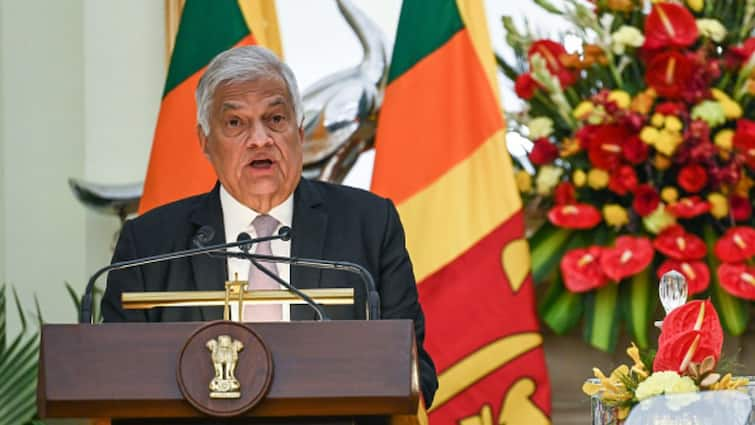
New Delhi: President Ranil Wickremesinghe on Wednesday underlined the need to reassess Sri Lanka’s foreign relations in tune with geopolitical trends and to maximise economic benefits for the bankrupt nation. President Wickremesinghe, during his policy speech at the opening of the new session of Parliament, said a programme that has already been initiated to develop Trincomalee as an economic hub in collaboration with India as a key component of this.

“It is imperative to reassess our foreign relations in light of current needs and geopolitical trends,” Wickremesinghe said and added, “The restructuring of foreign relations should prioritise leveraging economic potentials.” “Therefore, adopting new foreign policies that enhance the country’s economic strength and fostering non-aligned policies and friendships with all states is crucial. 

The direction of our foreign policy is evolving to align with the contemporary era,” he said. He highlighted the steps taken so far “to establish a new network of economic relationships that facilitate our products’ entry into foreign markets,” and added that the goal is to forge free trade agreements (FTAs) with numerous countries.

Incidentally, Sri Lanka’s Foreign Minister Ali Sabry on Tuesday had said it has plans to establish an FTA with India by the end of 2024 even as similar Free Trade Agreements would be worked out for Indonesia, Malaysia, Vietnam, and China too by the year’s end. A recent free trade agreement was signed with Thailand and the free trade agreement with Singapore is fully operational. 

Sri Lanka also hoped to join the Regional Comprehensive Economic Partnership (RCEP), the President said, adding, “We will connect with the common system of trade variations in the European Union (EU).”   Sri Lanka and India resumed talks on the Economic and Technology Cooperation Agreement in Colombo at the 12th round in October last year. The original talks were stalled after several rounds of talks between 2016 and 2018 due to political and trade union opposition. “The main reason behind Sri Lanka’s export struggles is its limited market access. 

While focusing primarily on the domestic market, countries like Vietnam and Bangladesh actively expanded into larger international markets through FTAs. This strategic move fuelled their export-driven growth, leaving Sri Lanka behind,” Sabry had said on Tuesday.
 In April 2022, after Sri Lanka declared its first-ever sovereign default since gaining independence from Britain in 1948, the then President Gotabaya Rajapaksa was thrown out through a public agitation and the incumbent President Ranil Wickremesinghe took over. He put in place unpopular economic reforms to supplement a bailout from the International Monetary Fund. 

(This report has been published as part of the auto-generated syndicate wire feed. Apart from the headline, no editing has been done in the copy by ABP Live.)

New Delhi: President Ranil Wickremesinghe on Wednesday underlined the need to reassess Sri Lanka’s foreign relations in tune with geopolitical trends and to maximise economic benefits for the bankrupt nation. President Wickremesinghe, during his policy speech at the opening of the new session of Parliament, said a programme that has already been initiated to develop Trincomalee as an economic hub in collaboration with India as a key component of this.

“It is imperative to reassess our foreign relations in light of current needs and geopolitical trends,” Wickremesinghe said and added, “The restructuring of foreign relations should prioritise leveraging economic potentials.” “Therefore, adopting new foreign policies that enhance the country’s economic strength and fostering non-aligned policies and friendships with all states is crucial. 

The direction of our foreign policy is evolving to align with the contemporary era,” he said. He highlighted the steps taken so far “to establish a new network of economic relationships that facilitate our products’ entry into foreign markets,” and added that the goal is to forge free trade agreements (FTAs) with numerous countries.

Incidentally, Sri Lanka’s Foreign Minister Ali Sabry on Tuesday had said it has plans to establish an FTA with India by the end of 2024 even as similar Free Trade Agreements would be worked out for Indonesia, Malaysia, Vietnam, and China too by the year’s end. A recent free trade agreement was signed with Thailand and the free trade agreement with Singapore is fully operational. 

Sri Lanka also hoped to join the Regional Comprehensive Economic Partnership (RCEP), the President said, adding, “We will connect with the common system of trade variations in the European Union (EU).”   Sri Lanka and India resumed talks on the Economic and Technology Cooperation Agreement in Colombo at the 12th round in October last year. The original talks were stalled after several rounds of talks between 2016 and 2018 due to political and trade union opposition. “The main reason behind Sri Lanka’s export struggles is its limited market access. 

While focusing primarily on the domestic market, countries like Vietnam and Bangladesh actively expanded into larger international markets through FTAs. This strategic move fuelled their export-driven growth, leaving Sri Lanka behind,” Sabry had said on Tuesday.
 In April 2022, after Sri Lanka declared its first-ever sovereign default since gaining independence from Britain in 1948, the then President Gotabaya Rajapaksa was thrown out through a public agitation and the incumbent President Ranil Wickremesinghe took over. He put in place unpopular economic reforms to supplement a bailout from the International Monetary Fund. 

(This report has been published as part of the auto-generated syndicate wire feed. Apart from the headline, no editing has been done in the copy by ABP Live.)

New Delhi: President Ranil Wickremesinghe on Wednesday underlined the need to reassess Sri Lanka’s foreign relations in tune with geopolitical trends and to maximise economic benefits for the bankrupt nation. President Wickremesinghe, during his policy speech at the opening of the new session of Parliament, said a programme that has already been initiated to develop Trincomalee as an economic hub in collaboration with India as a key component of this.

“It is imperative to reassess our foreign relations in light of current needs and geopolitical trends,” Wickremesinghe said and added, “The restructuring of foreign relations should prioritise leveraging economic potentials.” “Therefore, adopting new foreign policies that enhance the country’s economic strength and fostering non-aligned policies and friendships with all states is crucial. 

The direction of our foreign policy is evolving to align with the contemporary era,” he said. He highlighted the steps taken so far “to establish a new network of economic relationships that facilitate our products’ entry into foreign markets,” and added that the goal is to forge free trade agreements (FTAs) with numerous countries.

Incidentally, Sri Lanka’s Foreign Minister Ali Sabry on Tuesday had said it has plans to establish an FTA with India by the end of 2024 even as similar Free Trade Agreements would be worked out for Indonesia, Malaysia, Vietnam, and China too by the year’s end. A recent free trade agreement was signed with Thailand and the free trade agreement with Singapore is fully operational. 

Sri Lanka also hoped to join the Regional Comprehensive Economic Partnership (RCEP), the President said, adding, “We will connect with the common system of trade variations in the European Union (EU).”   Sri Lanka and India resumed talks on the Economic and Technology Cooperation Agreement in Colombo at the 12th round in October last year. The original talks were stalled after several rounds of talks between 2016 and 2018 due to political and trade union opposition. “The main reason behind Sri Lanka’s export struggles is its limited market access. 

While focusing primarily on the domestic market, countries like Vietnam and Bangladesh actively expanded into larger international markets through FTAs. This strategic move fuelled their export-driven growth, leaving Sri Lanka behind,” Sabry had said on Tuesday.
 In April 2022, after Sri Lanka declared its first-ever sovereign default since gaining independence from Britain in 1948, the then President Gotabaya Rajapaksa was thrown out through a public agitation and the incumbent President Ranil Wickremesinghe took over. He put in place unpopular economic reforms to supplement a bailout from the International Monetary Fund. 

(This report has been published as part of the auto-generated syndicate wire feed. Apart from the headline, no editing has been done in the copy by ABP Live.)


New Delhi: President Ranil Wickremesinghe on Wednesday underlined the need to reassess Sri Lanka’s foreign relations in tune with geopolitical trends and to maximise economic benefits for the bankrupt nation. President Wickremesinghe, during his policy speech at the opening of the new session of Parliament, said a programme that has already been initiated to develop Trincomalee as an economic hub in collaboration with India as a key component of this.

“It is imperative to reassess our foreign relations in light of current needs and geopolitical trends,” Wickremesinghe said and added, “The restructuring of foreign relations should prioritise leveraging economic potentials.” “Therefore, adopting new foreign policies that enhance the country’s economic strength and fostering non-aligned policies and friendships with all states is crucial. 

The direction of our foreign policy is evolving to align with the contemporary era,” he said. He highlighted the steps taken so far “to establish a new network of economic relationships that facilitate our products’ entry into foreign markets,” and added that the goal is to forge free trade agreements (FTAs) with numerous countries.

Incidentally, Sri Lanka’s Foreign Minister Ali Sabry on Tuesday had said it has plans to establish an FTA with India by the end of 2024 even as similar Free Trade Agreements would be worked out for Indonesia, Malaysia, Vietnam, and China too by the year’s end. A recent free trade agreement was signed with Thailand and the free trade agreement with Singapore is fully operational. 

Sri Lanka also hoped to join the Regional Comprehensive Economic Partnership (RCEP), the President said, adding, “We will connect with the common system of trade variations in the European Union (EU).”   Sri Lanka and India resumed talks on the Economic and Technology Cooperation Agreement in Colombo at the 12th round in October last year. The original talks were stalled after several rounds of talks between 2016 and 2018 due to political and trade union opposition. “The main reason behind Sri Lanka’s export struggles is its limited market access. 

While focusing primarily on the domestic market, countries like Vietnam and Bangladesh actively expanded into larger international markets through FTAs. This strategic move fuelled their export-driven growth, leaving Sri Lanka behind,” Sabry had said on Tuesday.
 In April 2022, after Sri Lanka declared its first-ever sovereign default since gaining independence from Britain in 1948, the then President Gotabaya Rajapaksa was thrown out through a public agitation and the incumbent President Ranil Wickremesinghe took over. He put in place unpopular economic reforms to supplement a bailout from the International Monetary Fund. 

(This report has been published as part of the auto-generated syndicate wire feed. Apart from the headline, no editing has been done in the copy by ABP Live.)

New Delhi: President Ranil Wickremesinghe on Wednesday underlined the need to reassess Sri Lanka’s foreign relations in tune with geopolitical trends and to maximise economic benefits for the bankrupt nation. President Wickremesinghe, during his policy speech at the opening of the new session of Parliament, said a programme that has already been initiated to develop Trincomalee as an economic hub in collaboration with India as a key component of this.

“It is imperative to reassess our foreign relations in light of current needs and geopolitical trends,” Wickremesinghe said and added, “The restructuring of foreign relations should prioritise leveraging economic potentials.” “Therefore, adopting new foreign policies that enhance the country’s economic strength and fostering non-aligned policies and friendships with all states is crucial. 

The direction of our foreign policy is evolving to align with the contemporary era,” he said. He highlighted the steps taken so far “to establish a new network of economic relationships that facilitate our products’ entry into foreign markets,” and added that the goal is to forge free trade agreements (FTAs) with numerous countries.

Incidentally, Sri Lanka’s Foreign Minister Ali Sabry on Tuesday had said it has plans to establish an FTA with India by the end of 2024 even as similar Free Trade Agreements would be worked out for Indonesia, Malaysia, Vietnam, and China too by the year’s end. A recent free trade agreement was signed with Thailand and the free trade agreement with Singapore is fully operational. 

Sri Lanka also hoped to join the Regional Comprehensive Economic Partnership (RCEP), the President said, adding, “We will connect with the common system of trade variations in the European Union (EU).”   Sri Lanka and India resumed talks on the Economic and Technology Cooperation Agreement in Colombo at the 12th round in October last year. The original talks were stalled after several rounds of talks between 2016 and 2018 due to political and trade union opposition. “The main reason behind Sri Lanka’s export struggles is its limited market access. 

While focusing primarily on the domestic market, countries like Vietnam and Bangladesh actively expanded into larger international markets through FTAs. This strategic move fuelled their export-driven growth, leaving Sri Lanka behind,” Sabry had said on Tuesday.
 In April 2022, after Sri Lanka declared its first-ever sovereign default since gaining independence from Britain in 1948, the then President Gotabaya Rajapaksa was thrown out through a public agitation and the incumbent President Ranil Wickremesinghe took over. He put in place unpopular economic reforms to supplement a bailout from the International Monetary Fund. 

(This report has been published as part of the auto-generated syndicate wire feed. Apart from the headline, no editing has been done in the copy by ABP Live.)

New Delhi: President Ranil Wickremesinghe on Wednesday underlined the need to reassess Sri Lanka’s foreign relations in tune with geopolitical trends and to maximise economic benefits for the bankrupt nation. President Wickremesinghe, during his policy speech at the opening of the new session of Parliament, said a programme that has already been initiated to develop Trincomalee as an economic hub in collaboration with India as a key component of this.

“It is imperative to reassess our foreign relations in light of current needs and geopolitical trends,” Wickremesinghe said and added, “The restructuring of foreign relations should prioritise leveraging economic potentials.” “Therefore, adopting new foreign policies that enhance the country’s economic strength and fostering non-aligned policies and friendships with all states is crucial. 

The direction of our foreign policy is evolving to align with the contemporary era,” he said. He highlighted the steps taken so far “to establish a new network of economic relationships that facilitate our products’ entry into foreign markets,” and added that the goal is to forge free trade agreements (FTAs) with numerous countries.

Incidentally, Sri Lanka’s Foreign Minister Ali Sabry on Tuesday had said it has plans to establish an FTA with India by the end of 2024 even as similar Free Trade Agreements would be worked out for Indonesia, Malaysia, Vietnam, and China too by the year’s end. A recent free trade agreement was signed with Thailand and the free trade agreement with Singapore is fully operational. 

Sri Lanka also hoped to join the Regional Comprehensive Economic Partnership (RCEP), the President said, adding, “We will connect with the common system of trade variations in the European Union (EU).”   Sri Lanka and India resumed talks on the Economic and Technology Cooperation Agreement in Colombo at the 12th round in October last year. The original talks were stalled after several rounds of talks between 2016 and 2018 due to political and trade union opposition. “The main reason behind Sri Lanka’s export struggles is its limited market access. 

While focusing primarily on the domestic market, countries like Vietnam and Bangladesh actively expanded into larger international markets through FTAs. This strategic move fuelled their export-driven growth, leaving Sri Lanka behind,” Sabry had said on Tuesday.
 In April 2022, after Sri Lanka declared its first-ever sovereign default since gaining independence from Britain in 1948, the then President Gotabaya Rajapaksa was thrown out through a public agitation and the incumbent President Ranil Wickremesinghe took over. He put in place unpopular economic reforms to supplement a bailout from the International Monetary Fund. 

(This report has been published as part of the auto-generated syndicate wire feed. Apart from the headline, no editing has been done in the copy by ABP Live.)

New Delhi: President Ranil Wickremesinghe on Wednesday underlined the need to reassess Sri Lanka’s foreign relations in tune with geopolitical trends and to maximise economic benefits for the bankrupt nation. President Wickremesinghe, during his policy speech at the opening of the new session of Parliament, said a programme that has already been initiated to develop Trincomalee as an economic hub in collaboration with India as a key component of this.

“It is imperative to reassess our foreign relations in light of current needs and geopolitical trends,” Wickremesinghe said and added, “The restructuring of foreign relations should prioritise leveraging economic potentials.” “Therefore, adopting new foreign policies that enhance the country’s economic strength and fostering non-aligned policies and friendships with all states is crucial. 

The direction of our foreign policy is evolving to align with the contemporary era,” he said. He highlighted the steps taken so far “to establish a new network of economic relationships that facilitate our products’ entry into foreign markets,” and added that the goal is to forge free trade agreements (FTAs) with numerous countries.

Incidentally, Sri Lanka’s Foreign Minister Ali Sabry on Tuesday had said it has plans to establish an FTA with India by the end of 2024 even as similar Free Trade Agreements would be worked out for Indonesia, Malaysia, Vietnam, and China too by the year’s end. A recent free trade agreement was signed with Thailand and the free trade agreement with Singapore is fully operational. 

Sri Lanka also hoped to join the Regional Comprehensive Economic Partnership (RCEP), the President said, adding, “We will connect with the common system of trade variations in the European Union (EU).”   Sri Lanka and India resumed talks on the Economic and Technology Cooperation Agreement in Colombo at the 12th round in October last year. The original talks were stalled after several rounds of talks between 2016 and 2018 due to political and trade union opposition. “The main reason behind Sri Lanka’s export struggles is its limited market access. 

While focusing primarily on the domestic market, countries like Vietnam and Bangladesh actively expanded into larger international markets through FTAs. This strategic move fuelled their export-driven growth, leaving Sri Lanka behind,” Sabry had said on Tuesday.
 In April 2022, after Sri Lanka declared its first-ever sovereign default since gaining independence from Britain in 1948, the then President Gotabaya Rajapaksa was thrown out through a public agitation and the incumbent President Ranil Wickremesinghe took over. He put in place unpopular economic reforms to supplement a bailout from the International Monetary Fund. 

(This report has been published as part of the auto-generated syndicate wire feed. Apart from the headline, no editing has been done in the copy by ABP Live.)

New Delhi: President Ranil Wickremesinghe on Wednesday underlined the need to reassess Sri Lanka’s foreign relations in tune with geopolitical trends and to maximise economic benefits for the bankrupt nation. President Wickremesinghe, during his policy speech at the opening of the new session of Parliament, said a programme that has already been initiated to develop Trincomalee as an economic hub in collaboration with India as a key component of this.

“It is imperative to reassess our foreign relations in light of current needs and geopolitical trends,” Wickremesinghe said and added, “The restructuring of foreign relations should prioritise leveraging economic potentials.” “Therefore, adopting new foreign policies that enhance the country’s economic strength and fostering non-aligned policies and friendships with all states is crucial. 

The direction of our foreign policy is evolving to align with the contemporary era,” he said. He highlighted the steps taken so far “to establish a new network of economic relationships that facilitate our products’ entry into foreign markets,” and added that the goal is to forge free trade agreements (FTAs) with numerous countries.

Incidentally, Sri Lanka’s Foreign Minister Ali Sabry on Tuesday had said it has plans to establish an FTA with India by the end of 2024 even as similar Free Trade Agreements would be worked out for Indonesia, Malaysia, Vietnam, and China too by the year’s end. A recent free trade agreement was signed with Thailand and the free trade agreement with Singapore is fully operational. 

Sri Lanka also hoped to join the Regional Comprehensive Economic Partnership (RCEP), the President said, adding, “We will connect with the common system of trade variations in the European Union (EU).”   Sri Lanka and India resumed talks on the Economic and Technology Cooperation Agreement in Colombo at the 12th round in October last year. The original talks were stalled after several rounds of talks between 2016 and 2018 due to political and trade union opposition. “The main reason behind Sri Lanka’s export struggles is its limited market access. 

While focusing primarily on the domestic market, countries like Vietnam and Bangladesh actively expanded into larger international markets through FTAs. This strategic move fuelled their export-driven growth, leaving Sri Lanka behind,” Sabry had said on Tuesday.
 In April 2022, after Sri Lanka declared its first-ever sovereign default since gaining independence from Britain in 1948, the then President Gotabaya Rajapaksa was thrown out through a public agitation and the incumbent President Ranil Wickremesinghe took over. He put in place unpopular economic reforms to supplement a bailout from the International Monetary Fund. 

(This report has been published as part of the auto-generated syndicate wire feed. Apart from the headline, no editing has been done in the copy by ABP Live.)

New Delhi: President Ranil Wickremesinghe on Wednesday underlined the need to reassess Sri Lanka’s foreign relations in tune with geopolitical trends and to maximise economic benefits for the bankrupt nation. President Wickremesinghe, during his policy speech at the opening of the new session of Parliament, said a programme that has already been initiated to develop Trincomalee as an economic hub in collaboration with India as a key component of this.

“It is imperative to reassess our foreign relations in light of current needs and geopolitical trends,” Wickremesinghe said and added, “The restructuring of foreign relations should prioritise leveraging economic potentials.” “Therefore, adopting new foreign policies that enhance the country’s economic strength and fostering non-aligned policies and friendships with all states is crucial. 

The direction of our foreign policy is evolving to align with the contemporary era,” he said. He highlighted the steps taken so far “to establish a new network of economic relationships that facilitate our products’ entry into foreign markets,” and added that the goal is to forge free trade agreements (FTAs) with numerous countries.

Incidentally, Sri Lanka’s Foreign Minister Ali Sabry on Tuesday had said it has plans to establish an FTA with India by the end of 2024 even as similar Free Trade Agreements would be worked out for Indonesia, Malaysia, Vietnam, and China too by the year’s end. A recent free trade agreement was signed with Thailand and the free trade agreement with Singapore is fully operational. 

Sri Lanka also hoped to join the Regional Comprehensive Economic Partnership (RCEP), the President said, adding, “We will connect with the common system of trade variations in the European Union (EU).”   Sri Lanka and India resumed talks on the Economic and Technology Cooperation Agreement in Colombo at the 12th round in October last year. The original talks were stalled after several rounds of talks between 2016 and 2018 due to political and trade union opposition. “The main reason behind Sri Lanka’s export struggles is its limited market access. 

While focusing primarily on the domestic market, countries like Vietnam and Bangladesh actively expanded into larger international markets through FTAs. This strategic move fuelled their export-driven growth, leaving Sri Lanka behind,” Sabry had said on Tuesday.
 In April 2022, after Sri Lanka declared its first-ever sovereign default since gaining independence from Britain in 1948, the then President Gotabaya Rajapaksa was thrown out through a public agitation and the incumbent President Ranil Wickremesinghe took over. He put in place unpopular economic reforms to supplement a bailout from the International Monetary Fund. 

(This report has been published as part of the auto-generated syndicate wire feed. Apart from the headline, no editing has been done in the copy by ABP Live.)

New Delhi: President Ranil Wickremesinghe on Wednesday underlined the need to reassess Sri Lanka’s foreign relations in tune with geopolitical trends and to maximise economic benefits for the bankrupt nation. President Wickremesinghe, during his policy speech at the opening of the new session of Parliament, said a programme that has already been initiated to develop Trincomalee as an economic hub in collaboration with India as a key component of this.

“It is imperative to reassess our foreign relations in light of current needs and geopolitical trends,” Wickremesinghe said and added, “The restructuring of foreign relations should prioritise leveraging economic potentials.” “Therefore, adopting new foreign policies that enhance the country’s economic strength and fostering non-aligned policies and friendships with all states is crucial. 

The direction of our foreign policy is evolving to align with the contemporary era,” he said. He highlighted the steps taken so far “to establish a new network of economic relationships that facilitate our products’ entry into foreign markets,” and added that the goal is to forge free trade agreements (FTAs) with numerous countries.

Incidentally, Sri Lanka’s Foreign Minister Ali Sabry on Tuesday had said it has plans to establish an FTA with India by the end of 2024 even as similar Free Trade Agreements would be worked out for Indonesia, Malaysia, Vietnam, and China too by the year’s end. A recent free trade agreement was signed with Thailand and the free trade agreement with Singapore is fully operational. 

Sri Lanka also hoped to join the Regional Comprehensive Economic Partnership (RCEP), the President said, adding, “We will connect with the common system of trade variations in the European Union (EU).”   Sri Lanka and India resumed talks on the Economic and Technology Cooperation Agreement in Colombo at the 12th round in October last year. The original talks were stalled after several rounds of talks between 2016 and 2018 due to political and trade union opposition. “The main reason behind Sri Lanka’s export struggles is its limited market access. 

While focusing primarily on the domestic market, countries like Vietnam and Bangladesh actively expanded into larger international markets through FTAs. This strategic move fuelled their export-driven growth, leaving Sri Lanka behind,” Sabry had said on Tuesday.
 In April 2022, after Sri Lanka declared its first-ever sovereign default since gaining independence from Britain in 1948, the then President Gotabaya Rajapaksa was thrown out through a public agitation and the incumbent President Ranil Wickremesinghe took over. He put in place unpopular economic reforms to supplement a bailout from the International Monetary Fund. 

(This report has been published as part of the auto-generated syndicate wire feed. Apart from the headline, no editing has been done in the copy by ABP Live.)

New Delhi: President Ranil Wickremesinghe on Wednesday underlined the need to reassess Sri Lanka’s foreign relations in tune with geopolitical trends and to maximise economic benefits for the bankrupt nation. President Wickremesinghe, during his policy speech at the opening of the new session of Parliament, said a programme that has already been initiated to develop Trincomalee as an economic hub in collaboration with India as a key component of this.

“It is imperative to reassess our foreign relations in light of current needs and geopolitical trends,” Wickremesinghe said and added, “The restructuring of foreign relations should prioritise leveraging economic potentials.” “Therefore, adopting new foreign policies that enhance the country’s economic strength and fostering non-aligned policies and friendships with all states is crucial. 

The direction of our foreign policy is evolving to align with the contemporary era,” he said. He highlighted the steps taken so far “to establish a new network of economic relationships that facilitate our products’ entry into foreign markets,” and added that the goal is to forge free trade agreements (FTAs) with numerous countries.

Incidentally, Sri Lanka’s Foreign Minister Ali Sabry on Tuesday had said it has plans to establish an FTA with India by the end of 2024 even as similar Free Trade Agreements would be worked out for Indonesia, Malaysia, Vietnam, and China too by the year’s end. A recent free trade agreement was signed with Thailand and the free trade agreement with Singapore is fully operational. 

Sri Lanka also hoped to join the Regional Comprehensive Economic Partnership (RCEP), the President said, adding, “We will connect with the common system of trade variations in the European Union (EU).”   Sri Lanka and India resumed talks on the Economic and Technology Cooperation Agreement in Colombo at the 12th round in October last year. The original talks were stalled after several rounds of talks between 2016 and 2018 due to political and trade union opposition. “The main reason behind Sri Lanka’s export struggles is its limited market access. 

While focusing primarily on the domestic market, countries like Vietnam and Bangladesh actively expanded into larger international markets through FTAs. This strategic move fuelled their export-driven growth, leaving Sri Lanka behind,” Sabry had said on Tuesday.
 In April 2022, after Sri Lanka declared its first-ever sovereign default since gaining independence from Britain in 1948, the then President Gotabaya Rajapaksa was thrown out through a public agitation and the incumbent President Ranil Wickremesinghe took over. He put in place unpopular economic reforms to supplement a bailout from the International Monetary Fund. 

(This report has been published as part of the auto-generated syndicate wire feed. Apart from the headline, no editing has been done in the copy by ABP Live.)

New Delhi: President Ranil Wickremesinghe on Wednesday underlined the need to reassess Sri Lanka’s foreign relations in tune with geopolitical trends and to maximise economic benefits for the bankrupt nation. President Wickremesinghe, during his policy speech at the opening of the new session of Parliament, said a programme that has already been initiated to develop Trincomalee as an economic hub in collaboration with India as a key component of this.

“It is imperative to reassess our foreign relations in light of current needs and geopolitical trends,” Wickremesinghe said and added, “The restructuring of foreign relations should prioritise leveraging economic potentials.” “Therefore, adopting new foreign policies that enhance the country’s economic strength and fostering non-aligned policies and friendships with all states is crucial. 

The direction of our foreign policy is evolving to align with the contemporary era,” he said. He highlighted the steps taken so far “to establish a new network of economic relationships that facilitate our products’ entry into foreign markets,” and added that the goal is to forge free trade agreements (FTAs) with numerous countries.

Incidentally, Sri Lanka’s Foreign Minister Ali Sabry on Tuesday had said it has plans to establish an FTA with India by the end of 2024 even as similar Free Trade Agreements would be worked out for Indonesia, Malaysia, Vietnam, and China too by the year’s end. A recent free trade agreement was signed with Thailand and the free trade agreement with Singapore is fully operational. 

Sri Lanka also hoped to join the Regional Comprehensive Economic Partnership (RCEP), the President said, adding, “We will connect with the common system of trade variations in the European Union (EU).”   Sri Lanka and India resumed talks on the Economic and Technology Cooperation Agreement in Colombo at the 12th round in October last year. The original talks were stalled after several rounds of talks between 2016 and 2018 due to political and trade union opposition. “The main reason behind Sri Lanka’s export struggles is its limited market access. 

While focusing primarily on the domestic market, countries like Vietnam and Bangladesh actively expanded into larger international markets through FTAs. This strategic move fuelled their export-driven growth, leaving Sri Lanka behind,” Sabry had said on Tuesday.
 In April 2022, after Sri Lanka declared its first-ever sovereign default since gaining independence from Britain in 1948, the then President Gotabaya Rajapaksa was thrown out through a public agitation and the incumbent President Ranil Wickremesinghe took over. He put in place unpopular economic reforms to supplement a bailout from the International Monetary Fund. 

(This report has been published as part of the auto-generated syndicate wire feed. Apart from the headline, no editing has been done in the copy by ABP Live.)

New Delhi: President Ranil Wickremesinghe on Wednesday underlined the need to reassess Sri Lanka’s foreign relations in tune with geopolitical trends and to maximise economic benefits for the bankrupt nation. President Wickremesinghe, during his policy speech at the opening of the new session of Parliament, said a programme that has already been initiated to develop Trincomalee as an economic hub in collaboration with India as a key component of this.

“It is imperative to reassess our foreign relations in light of current needs and geopolitical trends,” Wickremesinghe said and added, “The restructuring of foreign relations should prioritise leveraging economic potentials.” “Therefore, adopting new foreign policies that enhance the country’s economic strength and fostering non-aligned policies and friendships with all states is crucial. 

The direction of our foreign policy is evolving to align with the contemporary era,” he said. He highlighted the steps taken so far “to establish a new network of economic relationships that facilitate our products’ entry into foreign markets,” and added that the goal is to forge free trade agreements (FTAs) with numerous countries.

Incidentally, Sri Lanka’s Foreign Minister Ali Sabry on Tuesday had said it has plans to establish an FTA with India by the end of 2024 even as similar Free Trade Agreements would be worked out for Indonesia, Malaysia, Vietnam, and China too by the year’s end. A recent free trade agreement was signed with Thailand and the free trade agreement with Singapore is fully operational. 

Sri Lanka also hoped to join the Regional Comprehensive Economic Partnership (RCEP), the President said, adding, “We will connect with the common system of trade variations in the European Union (EU).”   Sri Lanka and India resumed talks on the Economic and Technology Cooperation Agreement in Colombo at the 12th round in October last year. The original talks were stalled after several rounds of talks between 2016 and 2018 due to political and trade union opposition. “The main reason behind Sri Lanka’s export struggles is its limited market access. 

While focusing primarily on the domestic market, countries like Vietnam and Bangladesh actively expanded into larger international markets through FTAs. This strategic move fuelled their export-driven growth, leaving Sri Lanka behind,” Sabry had said on Tuesday.
 In April 2022, after Sri Lanka declared its first-ever sovereign default since gaining independence from Britain in 1948, the then President Gotabaya Rajapaksa was thrown out through a public agitation and the incumbent President Ranil Wickremesinghe took over. He put in place unpopular economic reforms to supplement a bailout from the International Monetary Fund. 

(This report has been published as part of the auto-generated syndicate wire feed. Apart from the headline, no editing has been done in the copy by ABP Live.)

New Delhi: President Ranil Wickremesinghe on Wednesday underlined the need to reassess Sri Lanka’s foreign relations in tune with geopolitical trends and to maximise economic benefits for the bankrupt nation. President Wickremesinghe, during his policy speech at the opening of the new session of Parliament, said a programme that has already been initiated to develop Trincomalee as an economic hub in collaboration with India as a key component of this.

“It is imperative to reassess our foreign relations in light of current needs and geopolitical trends,” Wickremesinghe said and added, “The restructuring of foreign relations should prioritise leveraging economic potentials.” “Therefore, adopting new foreign policies that enhance the country’s economic strength and fostering non-aligned policies and friendships with all states is crucial. 

The direction of our foreign policy is evolving to align with the contemporary era,” he said. He highlighted the steps taken so far “to establish a new network of economic relationships that facilitate our products’ entry into foreign markets,” and added that the goal is to forge free trade agreements (FTAs) with numerous countries.

Incidentally, Sri Lanka’s Foreign Minister Ali Sabry on Tuesday had said it has plans to establish an FTA with India by the end of 2024 even as similar Free Trade Agreements would be worked out for Indonesia, Malaysia, Vietnam, and China too by the year’s end. A recent free trade agreement was signed with Thailand and the free trade agreement with Singapore is fully operational. 

Sri Lanka also hoped to join the Regional Comprehensive Economic Partnership (RCEP), the President said, adding, “We will connect with the common system of trade variations in the European Union (EU).”   Sri Lanka and India resumed talks on the Economic and Technology Cooperation Agreement in Colombo at the 12th round in October last year. The original talks were stalled after several rounds of talks between 2016 and 2018 due to political and trade union opposition. “The main reason behind Sri Lanka’s export struggles is its limited market access. 

While focusing primarily on the domestic market, countries like Vietnam and Bangladesh actively expanded into larger international markets through FTAs. This strategic move fuelled their export-driven growth, leaving Sri Lanka behind,” Sabry had said on Tuesday.
 In April 2022, after Sri Lanka declared its first-ever sovereign default since gaining independence from Britain in 1948, the then President Gotabaya Rajapaksa was thrown out through a public agitation and the incumbent President Ranil Wickremesinghe took over. He put in place unpopular economic reforms to supplement a bailout from the International Monetary Fund. 

(This report has been published as part of the auto-generated syndicate wire feed. Apart from the headline, no editing has been done in the copy by ABP Live.)

New Delhi: President Ranil Wickremesinghe on Wednesday underlined the need to reassess Sri Lanka’s foreign relations in tune with geopolitical trends and to maximise economic benefits for the bankrupt nation. President Wickremesinghe, during his policy speech at the opening of the new session of Parliament, said a programme that has already been initiated to develop Trincomalee as an economic hub in collaboration with India as a key component of this.

“It is imperative to reassess our foreign relations in light of current needs and geopolitical trends,” Wickremesinghe said and added, “The restructuring of foreign relations should prioritise leveraging economic potentials.” “Therefore, adopting new foreign policies that enhance the country’s economic strength and fostering non-aligned policies and friendships with all states is crucial. 

The direction of our foreign policy is evolving to align with the contemporary era,” he said. He highlighted the steps taken so far “to establish a new network of economic relationships that facilitate our products’ entry into foreign markets,” and added that the goal is to forge free trade agreements (FTAs) with numerous countries.

Incidentally, Sri Lanka’s Foreign Minister Ali Sabry on Tuesday had said it has plans to establish an FTA with India by the end of 2024 even as similar Free Trade Agreements would be worked out for Indonesia, Malaysia, Vietnam, and China too by the year’s end. A recent free trade agreement was signed with Thailand and the free trade agreement with Singapore is fully operational. 

Sri Lanka also hoped to join the Regional Comprehensive Economic Partnership (RCEP), the President said, adding, “We will connect with the common system of trade variations in the European Union (EU).”   Sri Lanka and India resumed talks on the Economic and Technology Cooperation Agreement in Colombo at the 12th round in October last year. The original talks were stalled after several rounds of talks between 2016 and 2018 due to political and trade union opposition. “The main reason behind Sri Lanka’s export struggles is its limited market access. 

While focusing primarily on the domestic market, countries like Vietnam and Bangladesh actively expanded into larger international markets through FTAs. This strategic move fuelled their export-driven growth, leaving Sri Lanka behind,” Sabry had said on Tuesday.
 In April 2022, after Sri Lanka declared its first-ever sovereign default since gaining independence from Britain in 1948, the then President Gotabaya Rajapaksa was thrown out through a public agitation and the incumbent President Ranil Wickremesinghe took over. He put in place unpopular economic reforms to supplement a bailout from the International Monetary Fund. 

(This report has been published as part of the auto-generated syndicate wire feed. Apart from the headline, no editing has been done in the copy by ABP Live.)

New Delhi: President Ranil Wickremesinghe on Wednesday underlined the need to reassess Sri Lanka’s foreign relations in tune with geopolitical trends and to maximise economic benefits for the bankrupt nation. President Wickremesinghe, during his policy speech at the opening of the new session of Parliament, said a programme that has already been initiated to develop Trincomalee as an economic hub in collaboration with India as a key component of this.

“It is imperative to reassess our foreign relations in light of current needs and geopolitical trends,” Wickremesinghe said and added, “The restructuring of foreign relations should prioritise leveraging economic potentials.” “Therefore, adopting new foreign policies that enhance the country’s economic strength and fostering non-aligned policies and friendships with all states is crucial. 

The direction of our foreign policy is evolving to align with the contemporary era,” he said. He highlighted the steps taken so far “to establish a new network of economic relationships that facilitate our products’ entry into foreign markets,” and added that the goal is to forge free trade agreements (FTAs) with numerous countries.

Incidentally, Sri Lanka’s Foreign Minister Ali Sabry on Tuesday had said it has plans to establish an FTA with India by the end of 2024 even as similar Free Trade Agreements would be worked out for Indonesia, Malaysia, Vietnam, and China too by the year’s end. A recent free trade agreement was signed with Thailand and the free trade agreement with Singapore is fully operational. 

Sri Lanka also hoped to join the Regional Comprehensive Economic Partnership (RCEP), the President said, adding, “We will connect with the common system of trade variations in the European Union (EU).”   Sri Lanka and India resumed talks on the Economic and Technology Cooperation Agreement in Colombo at the 12th round in October last year. The original talks were stalled after several rounds of talks between 2016 and 2018 due to political and trade union opposition. “The main reason behind Sri Lanka’s export struggles is its limited market access. 

While focusing primarily on the domestic market, countries like Vietnam and Bangladesh actively expanded into larger international markets through FTAs. This strategic move fuelled their export-driven growth, leaving Sri Lanka behind,” Sabry had said on Tuesday.
 In April 2022, after Sri Lanka declared its first-ever sovereign default since gaining independence from Britain in 1948, the then President Gotabaya Rajapaksa was thrown out through a public agitation and the incumbent President Ranil Wickremesinghe took over. He put in place unpopular economic reforms to supplement a bailout from the International Monetary Fund. 

(This report has been published as part of the auto-generated syndicate wire feed. Apart from the headline, no editing has been done in the copy by ABP Live.)

Tags: economy growthForeign RelationsFTAsPresident WickremesingheRanil WickremesingheSri Lanka
Previous Post

Michael Jackson, Beyoncé: Choreographer Fatima Robinson gets them moving and shaking

Next Post

Review: A Pulitzer Prize-winning meditation on language and loss at San Diego’s Old Globe

Leave a Reply Cancel reply

Your email address will not be published. Required fields are marked *

BROWSE BY CATEGORIES

  • Business
  • Culture
  • Entertainment
  • Health
  • Politics
  • Technology
  • Trending
  • Uncategorized
  • World
Binghamton Herald

© 2024 Binghamton Herald or its affiliated companies.

Navigate Site

  • About
  • Advertise
  • Terms & Conditions
  • Privacy Policy
  • Disclaimer
  • Contact

Follow Us

No Result
View All Result
  • Home
  • World
  • Politics
  • Business
  • Technology
  • Culture
  • Health
  • Entertainment
  • Trending

© 2024 Binghamton Herald or its affiliated companies.

Welcome Back!

Login to your account below

Forgotten Password?

Retrieve your password

Please enter your username or email address to reset your password.

Log In